Category Archives: Book Reviews

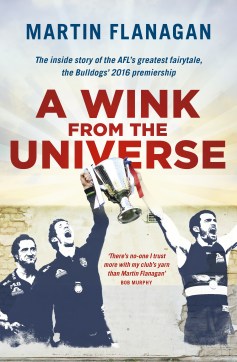
A Wink from the Universe – Martin Flanagan

He’d travelled from Canberra to watch his beloved team that day at Etihad. He was passionate and I enjoyed watching him as much as I relished watching the game itself. I was seated next to him and it was a terrific seat, almost at ground level, where the match proved to be a totally different beast to observing it from higher up or on tele. It was a sensational conflict from two very different teams – enthralling. By the end my new found pal was quite hoarse from all his vociferous barracking – at each break he had needed lubrication from the bar to keep him going. His wife was only mildly interested in the jousting out on the field and we had good chats while he was away. She was a teacher in the capital so we had common ground and she gave me their back story, little of which I recall as it was a few years ago now. Her hubby had grown up a western suburbs lad so his connection with the ultimately victorious team was strong. During his lifetime his lads had never made the big dance at season’s end, but they’d been in the semis a few times, not progressing once, to his disappointment. He told me he had a feeling in his bones about 2016 and on that day they certainly looked the goods. But it was only Round 11 – much could still happen. And it did. Their journey was a rough one. Boy, was my footy mate in for a ride.

In my view this decade, so far, has been a special one for our indigenous sport. Firstly my blokes, the mighty Hawks, stamped themselves as the greatest team of the new century with a three-peat. That, coupled with 2008, put them just above the Brisbane Lions (2001-2003). Then there’s been the introduction of AFLW and I love to watch it. What a revelation that has been – the girls’ massive determination and their hardness at the ball making it such a spectacle. Then last year, 2017, the long suffering, volatile Tiger Army finally had their reward with their team’s precise demolition of the Crows. It occurred due to a forward line innovation of one tall – Jumpin’ Jack – and a mosquito fleet around his feet. But, as footy stories go, 2016 outshone even that. A team that hadn’t won a grand final since 1954 rose from seventh position at the end of the home and away to score at the big one – unheard of till that date. During the end of year games they played a pulsating brand and had us all gasping at their audacity. They defied the footy gods, receiving their very own ‘wink from the universe’.

More joy, for this punter, has been added by the cajoling of an initially reluctant Martin Flanagan to tell this story in print for posterity. He’s been sorely missed since his retirement from The Age. Flanagan’s been the best writer on AFL for decades. It is therefore perhaps fitting that another legend has revived his association with that newspaper, one who was also closely involved in the tale of the Western Bulldogs’ 2016 surge to victory – the Doggies’ captain, Bob Murphy. Dramatically the man who was the heartbeat of the team, never took a mark or had a kick in that rollicking finals series. In the end, for Flanagan, it was too good a story to pass up, so he set about chronicling it – and all lovers of the game should be pleased he did.

Martin F’s book is akin to a footy season itself. The pre-season always gives a foretaste to what lies ahead. In this publication’s introduction the wordsmith sets the scene with an interesting history of the area of Yarra City that the Bulldogs eventually emerged from. Then there follows a pen picture of both the coach and captain that made for great reading, followed by one for each the other players of the premiership year. Then the season proper gets underway. Of course it takes a while for things to take shape and for the contenders to emerge. The author takes us on the journey that was the home and away rounds. We have summaries of each Doggie’s game and the coach’s input into proceedings. Also mixed in are tales of the club’s staff and its fan base. It’s the least successful part of the book with, for the reader, like no doubt for a player, it at times feeling a bit of a slog. Ultimately, though, MF is a spinner of yarns. There are many in this section related of the team and its followers through the tough winter months into spring. Sometimes events occurred that made it difficult to keep the faith, such as the tragedy that occurred very early on in Round 3 against my team. As Flanagan states, ‘Only Hawthorn wanted Hawthorn to win…’ It was a classic encounter, but an incident happened that took the shine off the quality of the play and even the most diehard of Hawk’s follower would have been devastated at the cost of the game to the opposition. Just as the Dogs were mounting a challenge there came an excruciating to watch injury which forced Captain Bob out for the rest of the year. You would expect that to knock the stuffing out of the cohort; for it to be season defining in the negative – but, if anything, it only made them stronger and more determined. Flanagan weaves into this the effect of the injury on a prominent fan, comedian Wil Anderson. He had to go on stage that night and make funny as his heart was crying for his team and its captain – a player respected by all.
The long season and an equally long injury list, by the last round, had taken its toll and the magic had dissolved from the play of the team once known as Footscray. Their finals campaign looked done and dusted. They clung onto a top 8 position by their fingernails. The last roster appearance was in the West and they were thumped, with gutsy backman Dale Morris, essential in holding the defence together, badly hurt. The first elimination final would see them fly back to the West to take on the Eagles, who would be red hot favourites. Then came the eponymous ‘wink from the universe’ – and the rest is history. For the first time the AFL inserted a bye the weekend before the finals. The ‘Scray boys had breathing space – time to regroup, sore bodies to mend and injuries overcome. And it negated the late season impetus of some of the other fancies for the flag. But Morris and others would be fit to play on.

With the playoffs Flanagan’s tome really comes alive. His writing is as pulsating as the four matches the Dogs had to win to take the urn. It’s great sports writing. I loved him on that amazing campaign from the ‘Sons of the West’.

The first one across the Nullabor was against the same team I had seen play earlier in the season at Etihad. In that match, yet again, even given the travel, one sensed the home outfit would be, well, underdogs. Acting captain Easton Wood was a late withdrawal and young gun Marcus Bontempelli would step up. The Eagles had a couple of power forwards, a tall backline and a more than worthy midfield to add to their perceived domination. I couldn’t see any way the Doggies could beat this mob. Coach Beveridge knew the answer though – his side would have a chance if the match was played below the knees, so he issued orders accordingly. I’d never witnessed a game like this one as the ball zapped up and down the ground at lightning speed once it was in the hands of the players in red, white and blue. There was no long bombing of it as the Eagles were doing, giving time for the backs to swarm all over the taller visitors’ forwards. But it was the kicking of the home side that really caught my attention – how close to the ground they were directed. Kicks skimmed through the air, seemingly inches from the surface, so the advantage in size and height of the opposition was eliminated. And to the excitable cheers of my new found friend, they narrowly won the day He and I parted with a hand shake and I assured him that, if they made the GF against anyone other than the Hawks, I would be on their side – so much so that come the end I couldn’t watch it live so keenly did I want them to be victors. But, no doubt, come the final siren there would have been a watcher in Canberra – or maybe he’d scored tickets to the ‘G that day – beside himself. He’d celebrate for the ages, as many did.

The book also features many images from the season, including the iconic moment when the coach presented his Grand Final Medal to his captain.

Since then the tale of the Dogs hasn’t been so magical. The mother of all hangovers seemed to afflict them all through ’17 and this year it is only at time of writing that the Western Bulldogs are starting to display a modicum of promise. Captain Bob is now retired, but he’s back filing a weekly column for the Age. He has as deft a touch with the language as he had with the Sherrin. One day he may be the chronicler of another Doggies’ premiership.

The SMH review = https://www.smh.com.au/entertainment/books/a-wink-from-the-universe-review-martin-flanagan-on-a-dogs-season-to-remember-20180301-h0wua6.html


Formulaic, and then there’s Formulaic

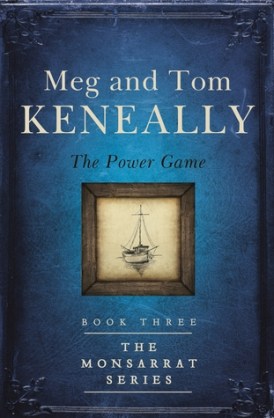
The Power Game – Meg and Tom Keneally     An Unsuitable Match – Joanna Trollope

Initially I felt the father daughter combo Meg and Tom Keneally had hit on a winning formula – and obviously, so did they. They have planned for twelve books, in total, for the ‘Monsarrat’ series and so far have released three. After reading the first two I was hooked – I thought they were really onto something. ‘With the ‘Soldier’s Curse’ we were introduced to soon to be ticket-of-leave man Hugh Llewelyn Monsarrat whom, with his incisive housekeeper, added to his own smarts, was part of quite the investigative team for colonial times in early Australia. By the third novel they had already put away a couple of souls who wouldn’t have faced their comeuppance otherwise without their input. First this occurred in early outstation Port Macquarie, then later, in Sydney, at the Parramatta Female Factory in ‘The Unmourned’. In these we are given a colourful taste of life in the first half of the Nineteenth Century, in a new land (for Europeans), for both convicts and those overseeing them. The sparky relationship between the two redoubtable sleuths was a delight. As a bonus, in the second title, there is more than a hint of developing romance between feisty Grace O’Leary and our main man.

So, with all that, I was looking forward to another knotty problem for the duo to unravel. An added interest would be the promise of a VDL setting with hopefully the romance factor blossoming in Hobart Town. This, on all accounts, was not to be. In ‘The Power Game’ all too soon we were transported from my local turf south(?) to Maria Island where we remained. It therefore became largely reminiscent of the two authors’ first outing, complete with another presumed poisoning of a beautiful commandant’s missus. And Grace was hardly mentioned, being stuck back in Sydney, although our hero did plenty of pining. The two duly solve the case, as is to be expected. For much of the tale the main suspect was Thomas Power, an Irish rebel roughly modeled on William Smith O’Brien (whose real story is well worth investigating.) To me this outing seemed to plod along without any of the freshness of the first two. The only really entertaining elements being the repartee between our two investigators and the antics of the local geese. In the end, job done, we discover that the editor of the Sydney Chronicle has been done away with so our duo set sail for bustling Sydney where (spoiler alert) our dapper hero discovers that Grace has been dispatched to the back country. I’ll take advice, though, but I think this is where I’ll leave the pair to go on solving their crimes without me. I don’t think I’ll be lining up for No.4.

So let’s turn our attention to another author who could be said to write in a formulaic, predictable manner – but, although she’s been doing it for decades, I’ll never leave her. As her work continues to sell well to devoted followers, she has no real need to deviate far away from her template. I’ve been hooked on her for decades and starting on her latest was akin to snuggling down, under the doona, on a chilly winter’s afternoon.

It is decidedly more of the same with Joanna Trollope’s ‘An Unsuitable Match’ as she introduces the reader to sixty-something Rose Woodrowe, whose hubby has just taken up with a much younger model and scarpered off to Oz. Soon into the book she encounters the charming Tyler, who is not backward in admitting he is smitten by her and she, seemingly, with him. But is Tyler the real deal? Rose’s offspring have their doubts – and then there’s Tyler’s two to consider as well. The new beau very quickly seems to have his and Rose’s future together all mapped out – but will Rose go with the flow despite the objections of the family. Some of these are quite needy in the love department too. Ms Trollope ensures we fully get to know them and their foibles as well. This is all magnified as the pair prepare to marry and questions arise over money – or the lack thereof for one. Just what is Tyler bringing to the party? Rose considers him a keeper, but at what cost.

And I lapped it all up, as I always do. That it deals with romance in later life is a bonus. ‘An Unsuitable Match’ is Ms T’s twenty-first novel – all of them aimed at her legion of women fans – and just quietly (Shhhh), me.

Newspaper article Meg and tom Keneally = https://www.smh.com.au/lifestyle/two-of-us-tom-and-meg-keneally-20160309-gnebdz.html

Joanna Trollope’s website = https://www.joannatrollope.com/

The Museum of Modern Love – Heather Rose

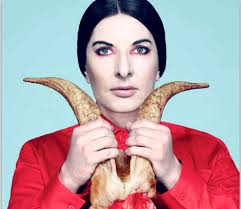
Marina Abramović was born in Belgrade the year after the end of World War 2. Both her parents had been partisan heroes during that conflict. Her upbringing, in part by her grandparents, was a deeply restrictive and religious one. But from an early age she developed an interest in art and later, taking this interest further, she graduated from both the Belgrade and Zagreb academies of fine arts, specialising in performance art. All throughout her now long career she has attempted to extend the boundaries as to the definition of art. ‘Using her own body as a vehicle, she has pushed herself to the ultimate limits, often exposing herself to lethal hazards to create performance art that is shocking, challenging and deeply moving.’ Now a resident of of Amsterdam, her fame takes her world-wide to the great galleries. In 2010 she landed in NYC to present a marathon seventy-five day performance piece at MoMA, ‘The Artist is Present’. It consisted of Ms Abramović seated at a table opposite a chair to be filled by patrons willing to sit with her for a while. It attracted large audiences, polarised and for some opposite the main attraction it was a profound experience.

It is around this event that Heather Rose’s 2017 Stella Prize winning novel ‘The Museum of Modern Love’ is framed. I was delighted to see a local take it out, especially as I had so enjoyed ‘The Butterfly Man’ (2005), as well as, to a lesser extent, ‘The River Wife’ (2009). Rose (as Angelina Banks) also writes, with Danielle Wood, the children’s series ‘Tuesday McGillycuddy’.

In Rose’s tome, Arky Levin becomes addicted, as an observer, to Abramović during her New York stay. He’s a composer of musical scores for films with a seriously ill wife. As he works through the issues involved in his life at that time the performance by the artist becomes his salve. He feels he has to see her artistic marathon through to the end. In this process we get to know others similarly drawn, some of whom connect to Arky in various ways. Rose also weaves in the artist’s back story and the strain on herself of the daily ritual she undertakes to present her piece.

Undoubtedly this is a very clever and astute novel on all manner of subjects, ranging from the question of what is art to the nature of friendship and love. Unfortunately it occupied a rarefied atmosphere that this reader had some difficulty with. I can attest to it being something special but I could not connect to it. Perhaps the nature of the performance artist’s oeuvre affected the tone of author’s writing, in a deliberate way, placing it out of my comfort zone. My brain told me I should be enjoying it, but my heart wasn’t in it. I am disappointed in myself for not being able to embrace it – but there you are. Like much of the work of her subject, it just wasn’t my thing.

Of course Marina A is just David Walsh’s thing. It’s wonderful that, when the artistic megastar visited Mona in 2015, as a performance piece Ms Rose read an excerpt from her novel to the great woman. Now that is special

The author’s website = https://heatherrose.com.au/

Robert and Greg

Grant and I – Robert Forster    Tex – Tex Perkins

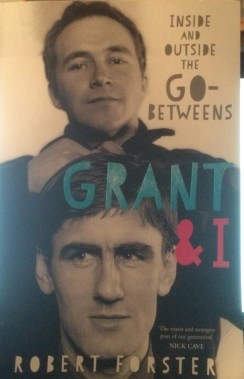
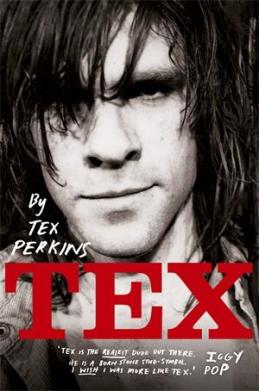
They fronted two of my favourite Aussie bands. They are two legendary outfits – even if, with one in particular, the legend outweighs the legacy. Their bands are not top rung – never came within close proximity to the international sales of, say, AC/DC, INXS, Little River Band, Crowded House and certainly never had the following of Cold Chisel or the Oils. They weren’t perhaps even second tier, but the Go-Betweens and the Cruel Sea are loved by thousands and their respective auras only enhance as the decades pass. And, as to be expected, what you see on stage is what you get reflected in the style of the two books. ‘Grant and Me’ is written by the bombastic, eccentric and cross-dressing co-lead of the band Brisbane City Council, appropriately, named a bridge after. Call it somewhat high-brow if you will. Tex Perkins – only his mum calls him Greg – is the other author, assisted by acclaimed journalist Stuart Coupe. He gets his story sufficiently down there and dirty. Call it low brow.

Forster makes the Go-Betweens sound greater than the sum of the whole. In their first incarnation they were, at best, just staying one step ahead of struggle-town, even succumbing to the enormity of the task on occasions. They never really made it then – just had glimpses of what could be if they could hold their shit together. They rarely did for an extended period. They were the real deal, but the cards they were dealt always weren’t quite the full hand. Commercial success, with the exception of only one certifiable hit (‘The Streets of Your Town’) didn’t really come their way then. The hard graft of paying their dues eventually caught up with them as, in Fleetwood Mac style, relationships tore the group asunder in the end.

Along with that other unique outfit, the Saints, the Go-Betweens were a product of Joh’s Brisbane – Hicksville in other words. Both bands attempted to take their music to the world with shambolic optimism, only to return to Oz with their tail between their legs. Both collapsed in the after-story. Forster’s band did reform around the turn of the millennium, but things were still strained between the personnel, even if their approach was far more professional. They had some success and the future again seemed full of potential, but all that was snuffed out with Grant McClennan’s untimely passing in 2006. Forster struggles on as a solo act and wit about town, still, no doubt, a legend in his own lunchbox. I like the man and I buy his quality albums, but for all the gilding of the lily, the story of that terrific band is one of what might have been. But still their songs were quite sublime – and such treasures as ‘Cattle and Cane’, ‘Lee Remick’ (Forster meets her), ‘Quiet Heart’ and my favourite, ‘Dive For Your Memory’ are timeless.

And, in a lovely segue, Tex Perkins writes of seeing Forster and his mates performing at the Exchange Hotel, Fortitude Valley when he was a young buck, back in ’81. Tex is pure rock’n’roll; perhaps our answer to Keith Richards. He’s had a life, but has never aspired to the glory, unlike Forster – or that’s how he would have us believe it. He is perhaps better known these days for presenting an authentic Johnny Cash tribute to the punters all around Oz. But he is, as well as was, so much more. I’ve seen his impersonation. It’s great and he is touring the land again as I write with it. Tex, living up to his name, has never hid his love of country music, despite fronting some of the best pub-rock bands Australia has produced. He writes candidly of his days with Tex, Don and Charlie, the Dark Horses, the Beasts of Bourbon (a new album on the way) and the one that I’m enamoured of, the Cruel Sea. We even had his take on the supposed piss-take that was the Ladyboyz.

My entry into the joys of Tex came in reverse fashion – with the Cash show, then a duet he did on RocKwiz with Clare Bowditch, ‘Fairytale of New York’, that made me sit up and take notice. Then I discovered the Cruel Sea and I was sold on him. As you would expect, after years in the industry, Perkins tells some great yarns, especially about close encounters with rock royalty that didn’t quite go to plan – Mick J, PJ Proby, Kurt Cobain etc. Tex is as much about the swagger as anything else and that is the way in which this very readable tome is composed.

Along with Forster, he has earnt his place in the local rock pantheon, but unlike the former, I bet he couldn’t really give a dam – or so he would have us believe.

And as to which I relished the most? Well, Tex wins hands down. Telling it how it was will always win hands down.

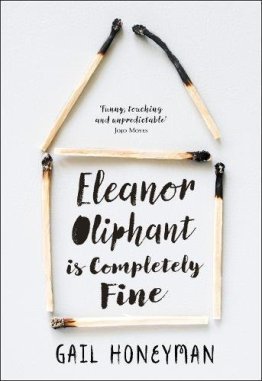
Eleanor Oliphant is Completely Fine – Gail Honeyman

She didn’t like it. I was taken aback. I hadn’t been quite sure if ‘Eleanor Oliphant is Completely Fine’ was given to me by her as a gift or as a loan of one she had very much enjoyed. I love reading what my gorgeous writerly daughter passes on – which is usually of the YA genre. She does have, I must admit, a strong instinct for what I like. But I have requested her to only pass on the tomes she’s relished. So, when I did ask the question of her as to whether she had read it and had given it a high ratting, in reply I received back an emphatic yes to the first and then an equally emphatic no to the second. She said she had a complete lack of connection with it. Needless to say I loved it. Does my daughter know my tastes so intimately that, even with an offering she is less than enamored with, she can see in it something that would appeal to me? I do mightily treasure Katie’s gift in this regard.

I’ll concede the story took a little getting into. But once it grabbed me, I was utterly engaged in Eleanor’s transformation from a disfigured ugly duckling of a social outcast to a swan.

Eleanor initially reminded me of Sofia Helin’s portrayal of the socially inept, but extremely competent, Saga Norén from the original Scandinavian version of ‘The Bridge’, now back on our television sets for a fourth season. Eleanor has a repetitive job in an accountancy firm. She can barely relate to her fellow drones; they are dismissive and just a tad wary of her. In return she doesn’t mince words; doesn’t pull any punches on the few occasions she is called on to give an opinion.

Her boss, as it turns out, sees something in her, as does a nerdy computer guy called to her rescue when the machine she is using misbehaves. The former promotes her, the latter takes her to lunch. Out and about the unlikely couple are first responders to a medical emergency, thus beginning Eleanor’s journey to what will hopefully be a much better place for her. But there is much angst and many horrible memories to let go of once this process commences. And can she break free of her addiction to cheap vodka? At one stage the narrative threatens to become a tale of stalking, such is her irrational attraction to an unpleasant musician in search of super stardom. But her story, thankfully, veers away from that into something far more interesting. And apart from the guitar plucker, there are no real baddies in this.

Since the novel is already a film in production, possibly to star Reese Witherspoon, I am not the only one to fall in love with Eleanor O. In the end we find out all is not as it seems, but that doesn’t take away from a thoroughly enticing effort on the part of author Gail Honeyman.

So darling Kate, if you are holding more tomes akin to this one, even though you haven’t particularly liked them, but something tells you your ever-loving father may, don’t hold back.

Gail Honeyman; ‘I didn’t want Eleanor Oliphant to be portrayed as a victim’ = https://www.theguardian.com/books/2018/jan/12/gail-honeyman-didnt-want-eleanor-oliphant-portrayed-as-victim


An Alex Miller January

Summer is supposedly the time for effortless reads in the sun, so perhaps it was somewhat perverse of me to tackle two of Alex Miller’s tomes at this time of year – his mint new offering ‘The Passage of Love’ and one that had been hanging around on my shelves for a while, ‘Autumn Laing’ (2011). Miller is one of my favourites, up there with Winton. He is also a national literary treasure and I think ‘Journey into Stone Country’ and ‘Coal Creek’ are masterpieces. He won the Miles Franklin for the first title, as well as for ‘Ancestor Game’.

As it turned out, ‘The Passage of Love’ was a breeze, a real effortless read of 500 plus pages that I loved returning to and got through in a flash. ‘Autumn Laing’ was a different matter.

The question to be asked is how much of Robert Croft, the first book’s central character, is Alex Miller? From what I’ve perused, in terms of reviews, the author has conceded they are largely the same person, but not quite. So the offering is quasi-autobiographical I guess. There is some playing around of the time scale that Miller has admitted to. It covers a thirteen year period during Croft’s life – his journey from the UK to jackarooing in the outback to his city factory work, a marriage and trying to make it as a writer. Miller’s first wife Ann was a troubled soul as was Lena, Croft’s wife, who was bookended by two other women in ‘The Passage of Love’. Firstly, in Melbourne, there was Wendy, an older bed partner who had no time for love but plenty for sex with a sex-starved young fellow. After the anorexic Lena, at the end there came the person who was to be his rock, career wise and emotionally – Ann. Overriding these relationships was the one that drives him on in his obsession to be a writer of note, his friendship, during his formative years on a cattle station, with an Aboriginal stock-man.

Much of what happened in Croft’s life is a mirror image of Miller’s, including the close encounter with suicide and a rejection letter that cut both to the quick. How can writing be both very fine but unpublishable?

I keep very few books after I’ve read them, usually passing them on to friends or family; either that or donating them to the local community library. I ripped through ‘The Passage of Love’ in lightning time for me – and it’s definitely a keeper.

But ‘Autumn Laing’ – oh dear, was that a struggle. Till well over the half way mark I wasn’t enjoying it one little bit. But then something kicked in, I was away and started to actually relish it. But it took most of the month to get to that stage.

And it also took a while to twig that this was Miller’s version of the artistic machinations of the Heide story, with his major characters being based on Sunday Reed, her husband and the artist Sidney Nolan. Taking place during one of the golden periods for Australian art, it’s a tale that has fascinated me for years. And, in a link to ‘The Passage of Love’, it was a book of outback images, taken by the great artist unbeknown to Miller, that first enticed the writer to come to Australia.

Autumn (read Reed) is in her dotage, her body increasingly failing her, obsessed by her memories and memoirs, she recalls her affair with the mercurial Pat Donlan (Nolan). At that time the would-be artist was trying to convince himself and the world around him that it was possible to paint in an Australian way. He finds he is bashing his head against a brick wall in conservative Melbourne until it is recommended that he visits a supporter of young talent from outside the art establishment – Arthur Laing (John Reed). Through a series of events Pat eventually moves into the Laing’s residence and commences his affair with the only too willing Autumn. The pair soon take off to the back country of Queensland where Nolan, sorry Donlan, finds his mojo and his art supplants his lover. Both Pat and Mrs Laing are not particularly appealing characters – I was more drawn to the ever-patient Arthur who was prepared to wait out his wife’s infidelity until the artist leaves them both for fame and fortune.

I’m pleased I read ‘The Passage of Love’ first. Had I commenced with the older book the latest may still be sitting on my shelf this time next year. ‘Autumn Laing’ is not a keeper, but I am hoping the eighty year old Miller can continue his semi-autobiography with a sequel, as well as delivering other titles. Long may Alex Miller be around.

The author’s website = http://alexmiller.com.au/

Two Taking a Different Path

‘The Secrets She Keeps’ Michael Robotham ‘Magrit’ – Lee Battersby

I’ve eschewed crime, whodunits, mysteries, sci-fi, dystopian, fantasy for years now – not because I have anything against them, but more from worry that I’d get hooked, when I’m already hooked on so much. But when two writers, usually plying their trade in those areas, veered a little into my territory, I gave them a go.

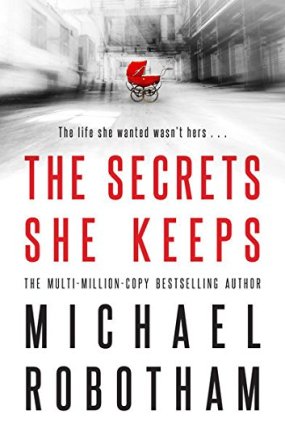
I’d read a review of Michael Robotham’s ‘The Secrets She Keeps’ citing this was a break from his normal output, that being related to the solving of crime. He was lauded as one of the best in that genre going around. With this offering I thought I’d be safely spreading my horizons without being reeled in. I’m not so sure, after it, that that’s the case. Am I entering dangerous territory?

Now, although the book eventually makes it into crime territory, we know who’s going to commit it almost from the commencement. This is not a blow by blow account of coppers, or similar sleuthing heroes, getting to the bottom of it and making the perpetrator pay. No, they are largely in the background until the back end of the story, ramping up as the conclusion nears.

Instead Robotham gives us a close examination of two pregnant ladies whose paths cross – one is wracked with guilt, one is wracked by envy. It doesn’t take long to figure out who is also a tad whacky. And its reasonably clear, early on, where all this will lead us. What’s not so discernible is if there will be a solving or happy ever afters for either of the duo – particularly as, it could be argued, there is no true guilty party.

As the two women career towards the inevitable and then go their separate ways, the dastardly deed being successfully pulled off, we are reminded of another unsolved real life British mystery of the same ilk – then perhaps, as well, the excellent first season of ‘The Missing’ (am hoping there will be a series 3).

There are no real surprises with the narrative, but it was, nevertheless, a page turner as Meg and Agatha, in alternating chapters, played out their tale as the British press feasted on it. I enjoyed ‘The Secrets She Keeps’ very much – but what happens now when Robotham reverts to the usual and presents a new release?

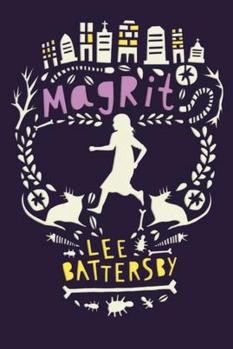
As with the above author, Lee Battersby, a Western Australian wordsmith noted for his sci-fi and fantasy, turns away from his normal fare. He centres this delightful effort in a cemetery which almost becomes a character in its own right. This is a strange and compelling short read – and quite moving. Whole lives are being led within the inner-city confines of the burial ground – but not lives as we know them. The eponymous, ten year old Magrit has found this out. She’s not quite sure what she is, but with her fantastical friend, Master Puppet, she scavenges out an existence of sorts. Then a low-flying avian drops a bundle on an overhanging roof and marked changes occur to how she sees the world.

This is a beautifully wrought tale, its exquisite presentation assisted by the contributions of artist Amy Daoud. It’s a mini-gem of a marvel, aimed at children, but it certainly had this old codger spellbound. ‘Magrit’ is a title that will linger in the synapses.

Michael Robotham’s website – http://www.michaelrobotham.com/

Lee Battersby’s website – https://leebattersby.com/

The Blue Room’s Year in Books 2017

Retirement should have seen me ploughing through the library of books I purchased, in my last few years of teaching, to tide me through when I’d be time rich and too financially poor to be handing over any extra dosh on new releases, or so I’d assumed. I didn’t foresee that, as far as the latter was concerned, I would be comfortably placed, nor that Hobs and multiple televsion platforms would offer me a rich menu from which to choose alternate experience. So I am still roughly reading the same amount of books per year as in my teaching days, as well as coping with being frustrated that favourite authors continue to produce enticing titles – and rave reviews being handed to some new to me. I just can’t help myself. I keep on buying so said library remains in credit at roughly the same amount. I’m not sure whether that is a positive or a negative as far as time management is concerned. All I know is that I am more than happy with my lot in life – and reading great books just enhances it.

So these are the cream of what I picked up in the last twelve months and delighted in consuming:-

1. ‘The Music Shop’ – Rachel Joyce. A tale for all of us who find it hard to give up the way we’ve always done something to embrace new technology, only to discover the what used to be finds a way through in any case. This was just a whimsical delight from cover to cover – one of those lovely, lovely reads you hope will never end.

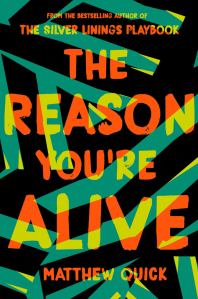
2. ‘The Reason You’re Alive’ – Matthew Quick. Who’d have thought a potty-mouthed Vietnam vet could be such a sweetheart underneath all his bluff, bluster and cussin’.

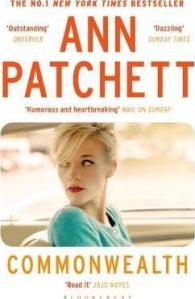
3. ‘Commonwealth’ – Ann Patchett. As with Quick and Joyce, I was new to Ms Patchett’s work, but her tale of familial dysfunction won me over. I’ll be a customer of hers in future, along with the above.

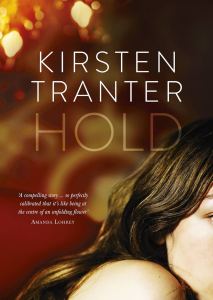
4. ‘Hold’ – Kirsten Tranter. There’s an unexpected death and the rebuilding of a life, with a little assistance from the surreal.

5. ‘Full Bore’ – William McInnes. Always terrific for a good hearty chortle and the former ‘SeaChange’ heartthrob duly delivers.

6. ‘The Dry’ – Jane Harper. Kudos for having your first book, as an Aussie author, optioned by a Hollywood studio. Whether it ends up on the screen or not, this outback police procedural is a dash good read.

7. ‘The Things We Promise’ – JC Burke. The scourge of AIDS is sweeping the globe and it gets up close and personal for Oz YA heroine Gemma.

8. ‘Dumplin’ – Julie Murphy. Hollywood has gotten hold of this novel too, but it’s already been cast. Another feisty teenage heroine, in Willowdean, has the odds stacked against her from the get-go. Can she overcome them? You bet she’ll have a darn good try.

9. ‘Goodwood’ – Holly Throsby. The songsmith demonstrates she’s perfectly adept with wordsmithery, as well, with this very fine coming of age tale.

10. ‘The Rules of Backyard Cricket’ – Jock Serong. You do not have to be a fan of leather on willow to enjoy this slice of Aussie life from Serong.

Hms to Joanna Trollope (Circle of Friends), Jock Serong (On the Java Ridge), Julie Murphy (Ramona Blue), Len Vlahos (Life in a Fishbowl), Roxane Gay (Hunger- a Memoir for My Body), Andrew Daddo (One Step), Laura Barnett (Greatest Hits), Michael Robotham (The Secrets She Keeps), Lee Battersby (Magrite) and TC Boyle (Terranauts)

A Long Weekend at Pat’s

On the Java Ridge – Jock Serong, The Reason You’re Alive – Matthew Quick

Going to Pat’s; being at my lovely Leigh’s mother’s place, has its fair share of pleasures. Apart from my hand-held device, I know I am going to have days largely free from the digital age. There is also only a single platform with which to engage with the television. And in this golden period of that format, that has its upside. Pat also knows how to tempt me with old-fashioned culinary delights such as sugar free rhubarb, stewed pears and trifle – so I know there’s always tasty fare awaiting. Often Pat and Leigh will head out on shopping expeditions, take in a movie or go visiting extended family, leaving me home alone. So all that, together with an accommodating guest room to retreat to, allows me ample opportunity to write and read without distraction. So the last time we visited, as well as putting to paper a story I’ve had floating around in my synapses for some time, I managed to read two rip-snorter novels in, for me, super quick time.

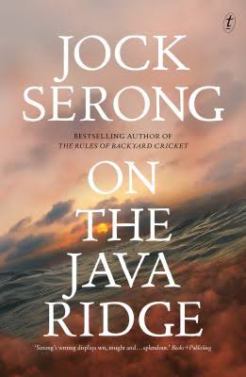
The lesser of the excellent pair was Jock Serong’s ‘On the Java Ridge’; a riveting and rollicking read, even if at the heart of the matter was our abysmal treatment of many poor souls who dare to attempt to improve life for themselves and family by seeking refuge on our shores Their misfortune is to come by sea.

Cassius Calvert is our Minister for Border Integrity. Initially he’s a carbon copy of the odious Dutton, seemingly without one jot of humanity in his heart. With an election coming up Calvert is introducing tough new measures to even further strengthen our security, which, by now, is largely in the hands of a secretive private concern. Of course that’s a sure vote winner if all goes according to plan. It doesn’t.

Meanwhile, out to sea, a collision of sorts is taking place. A state of the art bugi pinisi schooner – look them up, they’re amazing Indonesian vessels – is transporting a group of surfers to a dot in the ocean not far from Ashmore Reef. Heading that way too is the ‘Tukalar’, full of refugees, including a Hazara girl, Roya. With wild weather approaching, Isi Natoli, the skipper of the former boat, seeks shelter at a nearby coral atoll. The storm smashes Roya’s dodgy vessel into the coral outcrops surrounding the safe haven. Isi coordinates the rescue of the survivors, giving them what succor she can from the wealth of supplies in her stores. Luckily she has a doctor on board to assist with the injured.

Little do those struggling out in the ocean realise that this event has triggered a crisis for Calvert to handle. How his government does so is preposterous in the extreme – but then again, once upon a time our country’s present treatment of asylum seekers would have seemed totally at odds with any notion of ‘a fair go’ this nation prides itself on.

The tale is told from the points of view of the aforementioned protagonists, the only downer being the shocking and unexpected conclusion to the saga. But, I guess, sadly with it Serong makes his point. I loved this author’s previous title, ‘The Rules of Backyard Cricket’, but he has written a different beast here. I wonder what’s next for Jack? Whatever he tackles, I’ll be waiting with my hard-earned in hand.

As good a read as the Aussie author’s was, Matthew Quick’s ‘The Reason You’re Alive’ topped it – what an ace novel. It may well be my book of the year. That will take much ruminating, so we’ll see.

This writer’s claim to fame is that he penned the title which became that wonderful film ‘The Silver Lining’s Playbook’. Knowing how much I adored that, darling daughter gave me his latest title as a birthday gift. I was hooked right from page one through to its not so shocking nor unexpected ending. That being said, though, there were more than enough surprises en route – but, be warned, the language from the old fella, the main character – a true scene stealer – is rather fruity.

Yep, I became very enamoured of Vietnam vet David Grainger. He’s an ornery curmudgeon, initially resembling an American Alf Garnett for the digital age. He intensely hates Obama and any governmental interference in his life. Also, on his hit list, are Muslims, his son’s Dutch wife and the ‘gooks’ he fought against in the conflict. No doubt he would have loved Trump as much as he does his guns and the camouflage he chooses to wear in his daily life.

Yet Grainger is surprisingly an easy guy to fall in love with, just as long as you don’t have to live with him. Very early on his touching relationship with granddaughter Ella softens his tough facade. Despite being outwardly homophobic, racist and a misogynist, he has a special relationship with a gay man as well as a woman of Asian extraction. He fervently dislikes his son’s girly-man demeanour, but as we turn the pages, there comes a semblance of a bond. An accident and brain surgery has left ol’ Dave largely reliant on others – and there’s a wrong to be righted revolving around the mysterious Clayton Fire Bear. As well, his beloved wife’s demise weighs mightily on his mind, as does the destruction of her art work

Miramax has already optioned ‘The Reason You’re Alive’ for a proposed movie. Who could play our anti-hero? Jack Nicholson? Jeff Bridges? Bill Murray? Fingers crossed it makes it to the big screen, I’ll certainly be lining up. Not all went well for me on this latest trip to Pat’s, but with such addictive books to read and my lovely lady keeping a good eye on me, I was in the best of hands.

An interview with Jock Serong = https://www.readings.com.au/news/alice-pung-interviews-jock-serong

Matthew Quick’s website = http://matthewquickwriter.com/

Taking All Things French With a Dose of Salt

As I was about to depart to a part of France I decided to get into the mood. No, it wasn’t to be, sadly and unlike Bernard Salt, the City of Love where I was headed to, nor was it to the Riviera, nor the Normandy Coast. No, not even Provence. But I was soon to be promenading around the streets of a French city, nonetheless.

As with BS, I’d also hopefully be people watching in that city as well – ideally from a sidewalk cafe as French speakers strutted by. But I differ from Mr Salt in that I am as far removed from being a follower of fashion as it is possible to get. But, with my gorgeous lady helping out, I intended to be at least spiffy for the occasion in an attempt to be worthy of being by her side as she accompanied me down the rues of said city. So, no, I wouldn’t be disporting in my crocs, as much as I might want to, for our day on French territory, with or without socks – it’s not unknown that I wear the footwear with the latter.

Now, in the weeks leading up to departure for my excursion to this foreign land, I went all francophone-ish, as was fitting. I partook of books and movies to, as I said, get in the groove. So let’s start with the former.

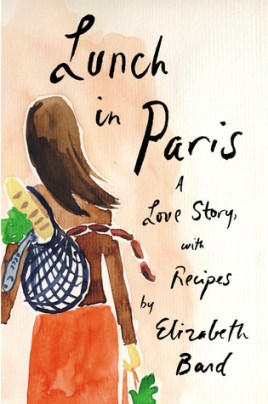
Elizabeth Baird’s memoir’ ‘A Lunch in Paris’, being as it is filled with enough recipes to make me salivate to the max, is a fine entree into the life of one of the world’s gastronomic capitals. Hopefully, I too would be dining on some decent French tucker soon enough, albeit on a fleeting visit.

Baird’s tome was also a love story – not so much about Parisian life (about which she is very candid) – but for a man, a soul mate. The American met him at an academic conference in London. Although her journey, as expressed in print, suffers a tad from the American thing of over-zealous self-examination, it remains a reasonably interesting read. Not engrossing, but there was enough to keep me turning the pages. And actually living in Paris, rather than merely visiting, isn’t all beer and skittles, as many another ex-pat has discovered. For, as Salt points out, there is much frustration to be had, whether it be from unsatisfactory plumbing, grumpy shop-keepers and the intolerance towards one’s inability with the language, matched by the pitfalls of attending soirees as your husband’s partner in the French capital. But there are joys too. There’s the freshness of the food from markets, a far cry from the tired vegies in her home supermarkets (and ours). There’s also the beauty of the place – not only around the touristy areas, but also in the lesser known arrondissements. And of-course, over-arching all the setbacks, there is the love for a fellow at the book’s core. ‘A Lunch in Paris’ does encourage one to visit, rather than perhaps permanently settle down there, whetting my appetite to do the former again.

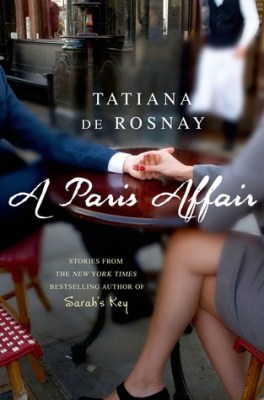
And where would our view of the joie de vivre of the French way of life be if it wasn’t infused with affairs of the heart. Of course, there is their supposed penchant for the extra-marital kind and Tatiana de Rosnay presents numerous takes on these with the stories she gifts us in ‘A Paris Affair’. They are soufflé-light, fluffy vignettes, reminding me of those ‘Erotic Tales’ SBS used to show on Friday nights – naughty but invariably nice (if you’re inclined to go there, I notice they are available on SBS on Demand). Sometimes, in de Rosnay’s tales, those being cuckolded get their own back, sometimes they didn’t. It’s a book that only takes an hour or so to read and it was on special at one of my bookstores of choice so I picked it up. At full price it would be a road too far.

I love French movies – but the following three were from UK and US makers, partly or wholly set in that country.

‘Paris Can Wait’ featured a luminous Diane Lane, an actress who would seem grows even more stunning as she gracefully ages. Alec Baldwin, playing her character’s hubby, is present too, but sadly, for me, it’s little more than a cameo. He has to head off in his private jet, poor dear, to somewhere or other for a work meeting, leaving Anne (Lane), ailing from an ear infection. Her spouse places her in the care of his business partner Jacques (Arnard Viard). His task is to get her to Paris by road as she is unable to fly. Jacques hasn’t a great deal going for him in the looks department, but there’s enough Gallic charm there to unsettle Anne, who is feeling sidelined by her partner’s busy life as a mover and shaker. What should have been a fairly easy drive over a day or so takes forever. That’s because of Jacques’ love of dining at every exceptional restaurant en route, as well as introducing Anne to many other French delights, including the possibility of an affair. I was particularly intrigued by their visit to the Institut Lumière in Lyon, with its illuminating images of the very early days of film making. The journey sees the couple drawn to each other, but there is an uneasy feeling that Jacques isn’t quite whom he makes himself out to be. And if you hate inconclusive endings, then stay away from this title.

The movie was directed by Eleanor Coppola, wife of Francis Ford and mother of Sofia), who is eighty years young. Although it’s possibly ageist to say so, the film is a bit of a throwback to another age.

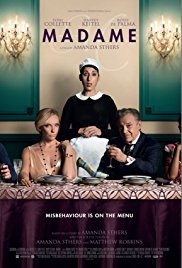
And perhaps the same could be said, regarding the ending, for ‘Madame’. I know many in the audience I was with uttered surprise when it suddenly concluded without anything tied up. It was enjoyable enough up until that point, a romp in French surrounds, but it didn’t set the world on fire for me. Harvey Keitel and Toni Collette play a not overly pleasant wealthy couple taken to throwing up-market dinner parties in their lavish Parisian apartment. When numbers are uneven for one such soirée, the Spanish maid (Rossy de Palma) is roped in to fill the void. Of course, it would be inevitable that one of the wealthy male guests would fall for her. But this is no Cinderella tale as it is all to much for Ms Collette’s character, another Anne, who conspires to torpedo the relationship. She herself is attracted to a younger man and disports herself naked in a pool in an unsuccessful attempt to win him over. Why this terrific actress would agree to a gratuitous nude scene is anyone’s guess, despite her disrobing being nonetheless pleasing to the eye. It was, though, completely unnecessary. The movie never gels, is cut off abruptly, but at least de Palma’s performance as the gawky, out of her depth object of desire, is one to savour.

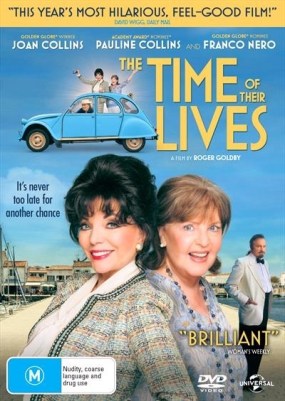
Lastly we have ‘The Time of Their Lives’, a movie pointed straight as a die towards us – the members of the older set. It stars Pauline and Joan Collins, both making making no attempt to hide the ravages of time on their exterior selves, if not the interior. But this is a writ by numbers caper, a sort of ‘Thelma and Louise’ for the aged. Joan plays a faded star; Pauline a put upon housewife. They come together unrealistically through a set of coincidences; then, by devious and unlikely ways, take the ferry to France. There they encounter the mysterious Alberto (Franco Nero) who, it seems, loves being nude for the world to see, including us, full frontally. Whatever possessed Franco N, just as whatever possessed Toni C above? Anyway, he falls for the outwardly plainer Priscilla (Pauline) even if, again, there is much attempted thwarting from Helen (Joan). It is good to see all three of these venerable actors back on the screen, but there’s not much else to recommend this movie – at least it had an ending that came together though. And now, I was ready for the real thing.

But really, the Paris of the South Seas was a bit of a fizzer. The time I had there on shore excursion from the good ship ‘Carnival Spirit’ had to be curtailed, so I had only the merest of glimpses – and what I saw didn’t overly impress. But fellow passengers came back with glowing accounts of their day. A previous stop over in nearby Port Vila had been, much, much more to my liking, even if the French influence was significantly less. It was mainly one of driving helter-skelter on the wrong side of the road. Vanuatu was once administered by both France and the UK. I’d go back there at the drop of a hat.

Maybe one day I’ll relive the times I had in France last century – but as the years pass that seems more and more unlikely. Still, in the digital age, we can do so much now vicariously. I, wistfully, will have to be satisfied with that.

Bernard Salt’s article – http://www.theaustralian.com.au/life/columnists/bernard-salt/french-men-are-going-sockless-and-i-just-dont-get-it/news-story/b0dd707cad0198ef86a2afc13d6f4e7f