Mushroom for the Unexpected

If it’s truly his last it perhaps will not be remembered as his greatest performance, but it connected enough to get a chance for another golden man. He’s already won three – ‘My Left Foot’ (1989), ‘There Will Be Blood’ (2007) and ‘Lincoln’ (2012), His vehicle is in the hunt, but by rights should be blown away by ‘Three Billboards….’. We’ll see.

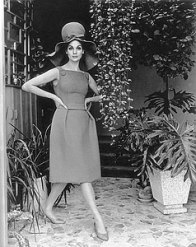
‘Phantom Thread’ is gorgeous to look at with director Paul Thomas Anderson delivering a fifties sensibility that’s quite sensational. He displays as fine a feel for this decade as he did for the seventies, making ‘Inherent Vice’ such a memorable movie back in 2014. This latest offering almost reaches those heights, but remains a very different affair in subject matter.

To say dress designer Reynolds Woodcock (Daniel Day Lewis) is set in his ways and unbearably aloof is an understatement. It’s immediately apparent from the start, once we enter his stultifying world of high-end London fashion. He also possesses a volcanic temper. It’s a marvellously mannered performance from DDL, thus the Oscar nomination. The only person who seems to keep a handle on him is his austere sister Cyril (Lesley Manville – also a nominee). It is not unusual for this highly-strung specimen to have one of his strings broken – and when this occurs he retreats from the capital to the English coast for some salty air. It is on one such occasion he encounters a clumsy waitress, who’s anything but clumsy when it comes to entrapping the hitherto standoffish one. She quickly becomes his lover and eventually a model for his creations, his muse. But life isn’t easy with the great man having sis constantly at his elbow. He patently loves his struggling partner to bits, but she annoys him intensely and his reluctance to bend in any way, shape or form drives her nuts. Can they find a way to live under the one roof? A most unusual solution is eventually hit upon. Belgian actress Vicky Krieps is luminous up on screen as the beguiling and eventually under siege Alma.

Reviewers Stratton and Byrnes both awarded the movie 3.5 stars, both stating it lacked the essential ingredient to take it to the top rung of classics. But it kept me engrossed throughout, although without delivering the number of killer punches the Academy Award favourite throws at you.

And as for mushrooms – well, I’m not letting that cat out of the bag. Suffice to say ‘Phantom Thread’ does give the viewer one killer punch. That’s all I’ll say. Go see it.

Trailer for the movie – https://www.youtube.com/watch?v=xNsiQMeSvMk

Anzac Ada

To be quite honest, she hadn’t thought about home. She had, on all her tours, been amazed at how the local people, though, still thought of England as home – even when most of them had never visited the place, nor were ever likely to. She wondered, as she braced herself against the ship’s rails, peering out over the grey Tasman Sea, if that tie would ever break – the tie that linked her Australians to the land of their forebears. It was only now; now that she could see an end to this latest foray to the antipodes, that she discerned the first twinge of homesickness. There was still much to do before the long and sometimes arduous ocean trip back to Britain. There were her return dates in South Africa to negotiate – but that place never seemed as far away from home and hearth as here.

Part of her loved escaping the winter to the warmer climes of these southern latitudes. And she had to be truthful and admit she was relieved to be away from the close proximity of the war. She felt safer here. The locals didn’t seem as weighed down by it all as back home. She could see the same burden of loss all about, but it seemed to settle with a lighter weight in the colonies. She still referred to them as that, although she knew she’d would never call them this in public. The war had taken too many of the Australian and New Zealand boys she championed. She supposed the conflict would eventually cease, but it was a devilishly long time in coming. She was proud to carry the moniker Anzac Ada, proud of the adulation that had followed her everywhere, on all her trips and this trip in particular.

But, she pondered, in that early morning gloom, how long would this last. Her best years, she assumed, were behind her now and her looks were fading. And she presumed with that she would have to say goodbye to fame and all the rapture she received from her devoted followers. They were mainly men, she had to admit. She knew there were women who were jealous of the hold she attained over their husbands, but really, they had nothing to fear from her.

She had seen the terrible results of the war. She had seen what the war could do to a human body, firstly in Egypt, later in hospitals all over England and even in Melbourne and Sydney. Terrible, just terrible. But seeing it all resolved her. She stiffened her back, rolled up her sleeves and searched around for a cause. She recalled her pre-war tours and the revelation came to her. So many from the Empire had given their lives for Mother England. That would be the focus. And so it had come to pass. She lost count of how much she had raised. That wasn’t the point. It was a small thing compared to their sacrifice. Donations received on her tours largely went to helping the wounded Anzac lads back in hospitals in England. She was also involved with the London Anzac Buffet; that providing warmth, companionship and food for recovering troops and those on leave. She was proud that her efforts had kept it going when it seemed as if, at one stage, it would have to close for lack of funds. She fondly drew up a memory from her last tour when there was a matinee concert for over a thousand returned boys at the Tivoli in Sydney – a triumph. How they cheered her singing and skits. The adulation knew no bounds. Even on board this very boat, on her last trip, she had also given a concert, but this time around she was being a little kinder to herself and taken it easier. She had been doing such acts for over three years now.

This time around she had included an island that seemed as far away from England as it could possibly be. Yet, if anything, it was, of all the places she’d been, perhaps the one that most reminded her of home. Maybe that was the reason for the mild melancholy that seemed to be enveloping her this morn. The island had a more variable climate than its mainland. The countryside was reminiscent, in parts, of the rural landscape she was so used to from the counties of own country. But, most particularly, it was that theatre in the little capital city that struck her. She was told it was the oldest in the Commonwealth. She almost broke down, when, after the ovation at her final performance there, she was presented with souvenirs of the occasion. A moving picture camera recorded that for posterity. Yet, even from there, the lads were dying in the trenches. She was so moved by the beauty of the place – the mountain that kept watch over the premier city, the hospitality that greeted her everywhere and the wildness of the bush, as the locals called the forested regions. She recalled her train trip to the sister city in the north, across a countryside so burnished by the sun, as it rarely was in the British Isles. She cheerily noted that, at every hamlet en route, small crowds had gathered to cheer her passing. She dwelt for a while on the stop, at the halfway point, where she took refreshment in the station’s tea rooms. The villagers were prevented from coming in to watch her and her troupe take their fill of the luscious cream scones. Instead they gawped in from the windows, jostling for a view. Now, what was it’s name? It was in the tongue of the original native inhabitants. She was sure of that, such a strange appellation – starting with a P she thought. She knew the island had its historical dark side too – the decimation of those natives and the convict-days hell holes scattered around the place, as well, the economic sufferings during the straightened decade of the ’90s.

She smiled at the memory of her reception in the big northern town when she arrived – how there was a parade of motorised and horse-drawn transport, taking herself and her fellow performers around to her hotel and later on to the National Theatre where the shows were. Excited crowds lined the thoroughfares. A brass band accompanied them every step of the way. It was glorious. In the southern city she had been taken to a small zoo and shown a very strange animal – half tiger, half wolf it seemed. She had peered into the creature’s eyes and as she did so, a great and inexplicable sadness had come over her. Recalling that moment she gave an involuntary shiver. Then she felt an arm come around her shoulder. It jolted her momentarily from her reveries, but then she settled, realising it was only dear Wilf. She was snuggling in closer to his warm body when she noticed he was pointing to the horizon. A dun smudge could be discerned – New Zealand. ‘Bear up, dear one,’ he encouraged. ‘Another country awaits. When this is over we can both think about our return to Old Blighty.’ With that Anzac Ada took his arm and returned to their cabin to prepare for taking breakfast.

Ada Reeve, in fact, did return to Australia, although I could discover no evidence that she came back to Tasmania. Contrary to the above, her career continued on through the decades, both on stage and later in movies. She appeared in her last film, ‘A Passionate Stranger’, in 1957 at age 83; her farewell to the boards some three years previous. She passed in 1966, but made a television appearance in an early version of ‘This is Your Life’ in 1957 (this can be found on-line). As far as this country is concerned, she remained revered for some time as Anzac Ada before the collective memory of her faded. Some back then even called her ‘The Mother of the Diggers’. She visited again in 1922-24, 1926 and ’29 to ’35, even making films here. One was directed by Frank Thring. Reeve’s two daughters, Bessie and Goody, settled here.

Prior to the Great War Reeve was already a strong presence on the London stage. Born to two theatrical parents, she started off at very young age and gradually made her way up cast lists until she headlined. She had two marriages, the second being to Wilfred Cotton, a fellow actor who took on the role of her manager. Her first glimpse of these shores occurred under the auspices of JC Williamson, 1897-98. And she fell in love with us, as well as with South Africa, travelling constantly to those dominions during her long career. Her life wasn’t all beer and skittles. She nearly died of typhoid fever during a tour to Germany and suffered domestic violence at the hands of her first husband. But it was on stage that she reigned supreme. She was the mistress of innuendo, a suggestive gesture and a knowing wink. Men adored her.

And she in turn adored the Anzacs. Her home on the Isle of Wight became a convalescent facility for her Aussie and Kiwi boys and she raised thousands of pounds to improve their well-being whilst they were away from the front.

YouTube will provide you with her performances and some of her film roles. I first encountered her in a vivid blue dress on a card stand at TMAG, purchasing it, then delving into the ether to discover more about Ada and her link to our city’s Theatre Royal. And now it is the centenary of her triumphant stay on our island in the southern seas. Will anyone else remember that?

Ada Reeve performs – https://www.youtube.com/watch?v=tYO37aH66Bk


An Alex Miller January

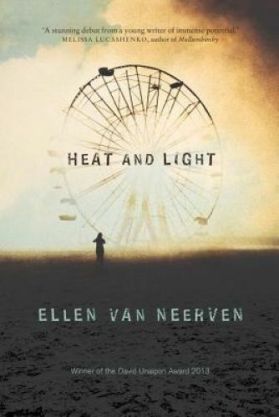
Summer is supposedly the time for effortless reads in the sun, so perhaps it was somewhat perverse of me to tackle two of Alex Miller’s tomes at this time of year – his mint new offering ‘The Passage of Love’ and one that had been hanging around on my shelves for a while, ‘Autumn Laing’ (2011). Miller is one of my favourites, up there with Winton. He is also a national literary treasure and I think ‘Journey into Stone Country’ and ‘Coal Creek’ are masterpieces. He won the Miles Franklin for the first title, as well as for ‘Ancestor Game’.

As it turned out, ‘The Passage of Love’ was a breeze, a real effortless read of 500 plus pages that I loved returning to and got through in a flash. ‘Autumn Laing’ was a different matter.

The question to be asked is how much of Robert Croft, the first book’s central character, is Alex Miller? From what I’ve perused, in terms of reviews, the author has conceded they are largely the same person, but not quite. So the offering is quasi-autobiographical I guess. There is some playing around of the time scale that Miller has admitted to. It covers a thirteen year period during Croft’s life – his journey from the UK to jackarooing in the outback to his city factory work, a marriage and trying to make it as a writer. Miller’s first wife Ann was a troubled soul as was Lena, Croft’s wife, who was bookended by two other women in ‘The Passage of Love’. Firstly, in Melbourne, there was Wendy, an older bed partner who had no time for love but plenty for sex with a sex-starved young fellow. After the anorexic Lena, at the end there came the person who was to be his rock, career wise and emotionally – Ann. Overriding these relationships was the one that drives him on in his obsession to be a writer of note, his friendship, during his formative years on a cattle station, with an Aboriginal stock-man.

Much of what happened in Croft’s life is a mirror image of Miller’s, including the close encounter with suicide and a rejection letter that cut both to the quick. How can writing be both very fine but unpublishable?

I keep very few books after I’ve read them, usually passing them on to friends or family; either that or donating them to the local community library. I ripped through ‘The Passage of Love’ in lightning time for me – and it’s definitely a keeper.

But ‘Autumn Laing’ – oh dear, was that a struggle. Till well over the half way mark I wasn’t enjoying it one little bit. But then something kicked in, I was away and started to actually relish it. But it took most of the month to get to that stage.

And it also took a while to twig that this was Miller’s version of the artistic machinations of the Heide story, with his major characters being based on Sunday Reed, her husband and the artist Sidney Nolan. Taking place during one of the golden periods for Australian art, it’s a tale that has fascinated me for years. And, in a link to ‘The Passage of Love’, it was a book of outback images, taken by the great artist unbeknown to Miller, that first enticed the writer to come to Australia.

Autumn (read Reed) is in her dotage, her body increasingly failing her, obsessed by her memories and memoirs, she recalls her affair with the mercurial Pat Donlan (Nolan). At that time the would-be artist was trying to convince himself and the world around him that it was possible to paint in an Australian way. He finds he is bashing his head against a brick wall in conservative Melbourne until it is recommended that he visits a supporter of young talent from outside the art establishment – Arthur Laing (John Reed). Through a series of events Pat eventually moves into the Laing’s residence and commences his affair with the only too willing Autumn. The pair soon take off to the back country of Queensland where Nolan, sorry Donlan, finds his mojo and his art supplants his lover. Both Pat and Mrs Laing are not particularly appealing characters – I was more drawn to the ever-patient Arthur who was prepared to wait out his wife’s infidelity until the artist leaves them both for fame and fortune.

I’m pleased I read ‘The Passage of Love’ first. Had I commenced with the older book the latest may still be sitting on my shelf this time next year. ‘Autumn Laing’ is not a keeper, but I am hoping the eighty year old Miller can continue his semi-autobiography with a sequel, as well as delivering other titles. Long may Alex Miller be around.

The author’s website = http://alexmiller.com.au/

Of Monsters and Women

It’s a contender, is Guillermo del Toro’s 50’s set ‘The Shape of Water’ – the type of magical vehicle where the director is the true star. Although I’d be disappointed if it won the golden man against ‘Three Billboards Outside Eugene Missouri’, this remarkable film would be in with a chance. It’s deserving of all the accolades it receives. As is Sally Hawkins, who puts in a brave and feisty performance as an aquatic man’s love interest. Most would give her no chance of the Oscar against Frances McDormand, but it wouldn’t surprise me if she causes a boil over. She already has a fine CV behind her (‘Maudie’, ‘Happy Go Lucky’, ‘Vera Drake’, ‘Made in Dagenham’ and let’s not forget the ‘Paddington’ series). This will only add to it.

To Colonel Strickland (Michael Shannon, bringing his tightly strictured ‘Boardwalk Empire’ persona to the big screen) he is a monster, but to mute cleaner Eliza (Hawkins) he is something wondrous and compellingly attractive. She entices the Amazonian water creature into her orb with a boiled egg or two. Later she invites him into something else entirely, once she discovers his treatment by Strickland and his ultimate fate from the US military. She takes on the responsibility of being his saviour, assisted by her house mate, the gay and repressed Giles – a delightful performance by Richard Jenkins. She has her fellow custodian Zelda (Octavia Spencer stealing a few scenes) also by her side in this daring heist.

Del Toro, through his lenses, also gives an insight into how tough it was back then to be either gay or black. There is much loveliness here in this movie to savour – the Jenkins/Hawkins take on a Bill Bojangles classic routine, the dreamy dance between Eliza and Amphibian Man (Doug Jones) and the presentation of the sexual act between the unlikeliest of pairings. There is a funny explanation of the mechanics involved. The opening scenes to this offering are fantastic and the ending is stunning, but I must admit my mind did wander a tad around about half way. I also think the film would have been better without the naff inclusion of a Cold War spying scenario. But, really, this is a film not to be missed.

And shame on Age critic Jake Wilson for only awarding it a measly three stars. And really, Mr Wilson, do you actually truly think it can be an allegory for the relationship between a buffoon President and his icy First Lady?

Trailer for the Movie = https://www.youtube.com/watch?v=XFYWazblaUA


List

She stares blankly back at the camera, her upper torso fully exposed to the lens. It wasn’t so much her that caught my attention, but the caption beneath, on a Tumblr vintage photography site – ‘The Roman Beauty, Vienna, Austria 1944’. Nazi controlled Vienna! That led me, briefly, to dig into the attitude of the Germans to nudity during the Hitler years and I supposed I shouldn’t have been too surprised to find it was fairly liberal, given the work of Leni Riefenstahl. I discovered that a book of nudes was a best seller during the period, it blatantly espousing the physical mastery of the Aryan race.

My attention then turned to the image’s photographer and I discovered a very interesting fellow, Herbert List. He, it turns out, was very focused on photographing his own gender in the altogether – so this young lady was somewhat of an anomaly. The thought did cross my mind that she may have been not quite what she seemed gender-wise, but I knew that’d be a dead-end street for delving. So, what was a gay photographer, who also happened to be a Jew, snapping a photograph of a topless young woman in 1944? I found out quite a bit about the outward man, but zilch about the inner workings. Still, half a story is better than nothing at all.

List was born with a silver spoon in his mouth, not that that counted for much once the Nazis came along – or did it? His family were resident in Hamburg and involved in the coffee trade. For a while this was also Herbert’s vocation, travelling the world, dealing in the lucrative product. During the years of the Weimar Republic he was, as a hobby, recording all of his adventures with a camera. He didn’t take it too seriously until he became caught up in the prolific art scene that was flourishing in his country at the time. He observed that, by now, what he thought of as a mere pastime, was indeed becoming an art form and he decided to push his involvement to the next level. He purchased a Rolleiflex. He played around with it for a while, experimenting on family and friends. But by the 30s he was hooked. Following his proclivities he was now paying male models to pose for him. Also, influenced by the Bauhaus movement, he tried transforming everyday objects into photographic beauty with double exposures and other techniques.

Hitler came to power and List saw that his country was soon to become no place for a Jewish gay man. So he high-tailed it out of there and took his camera to the capitals of Western Europe, his hobby now his calling card. A fellow camerasmith submitted his work to Harpers Bazaar and they took him on board for fashion shoots. But posing the female model irked him so, in 1937, he took off to the temples and landscapes of Greece. As well he landed his first solo exhibition in Paris that same year. ‘Life’ also started to feature his projects. He was getting traction on a real career in the field.

In 1941 the Axis powers invaded Greece, caught List up in their net and returned him to the Fatherland. Being a Jew he was forbidden to carry out his profession, so he took it underground. He was still permitted, though, to travel throughout occupied Europe. HL even rubbed shoulders with Cocteau and Picasso in Paris. For a while he was seconded into the army, working in Norway as a map designer. And in 1944 he was in Vienna, producing a series of images of its famous waxworks. In that city he took the likeness of that mysterious model.

So, all in all, considering the fate that could have awaited him, he had a fairly cushy war, or so it seems. After VE Day, he got back down to business with his camera. Much of his secret trove during the war years had been lost, but he didn’t waste time dwelling on that. He was soon being employed chronicling the destruction of the cityscapes of Germany and was editing the art section of a popular magazine. He became involved with Magnum, for a short while, after meeting Capra, but any notion of ongoing association with them vanished once he came under the influence of the great Cartier-Bresson. He emulated, successfully, his techniques, receiving substantial work opportunities as a result. He travelled extensively, publishing books on various locales, especially the Italian peninsula and on Africa.

However, once the swinging 60s hit, young guns were now in vogue and Herbert’s take on the world began to be regarded as old hat. He figured he was too set in his ways to change, so he retired from pointing the lens. By the time he passed in 1975 he had been largely forgotten. But I discovered him through a girl with vacant, but brazen, stare. She, no doubt, had a story too – but I had to make do with only half of his.

More images from Herbert List (above) here = http://monovisions.com/herbert-list/

Dark Days Indeed

There have been some memorable Churchills in recent times – Brendan Gleeson (‘Into the Storm’ 2000), Albert Finney (‘The Gathering Storm’ 2002), Timothy Spall (‘The King’s Speech’ 2010), John Lithgow (‘The Crown’ 2016) and Brian Cox (‘Churchill’ 2017). Now, on top of all those, we have ‘Darkest Hour’. It’s been acclaimed, particularly as its Churchill has just been nominated for an Oscar. When I queried my lovely lady whether or not she would accompany me to see it at the State she thought a while and then replied in the negative. She reckoned she was all Churchilled out. I still went, but do you know what? She had a point.

There’s no doubt Gary Oldman does a good job in the role. But, for some reason, I just couldn’t wholly believe him as the great man. Maybe that’s because, for large chunks of the movie, he resembled more British hangdog than the British Bulldog needed to beat Hitler. Throughout it all there was the picture in my mind, of the actor being interviewed on one of the British chat shows I’m addicted to, spruiking his role and speaking of the hours he had to spend each day in make-up being transformed into something that resembled the statesman. For my money it showed. He wasn’t a ‘natural’, unlike the aforementioned thesps.


There were other aspects of the show that irked as well. Did it really take a beautiful young woman (Lily James), from the typist pool, to inject some steel into his spine? Even in the fake reality of the big screen, it was obvious that his fictional adventure, unencumbered by any security, into the bowels of the London Underground to test the views, on appeasing Adolf H, from the great English unwashed seemed highly implausible.

But there were aspects I loved, especially the sepia slo-mos of the general public going about their daily business as the country descended into conflict. The supporting cast was a real who’s who and were terrific – Kirstin Scott Thomas (Clemmie), Ronald Pickup (Chamberlain), Stephen Dillance (Halifax), Samuel West (Eden) and particularly Ben Medelsohn as King George VI. The Aussie actor carried the wartime monarch off splendidly. And in Oldman’s voice, those Churchillian speeches still sent a shiver up the spine and bought a tear to the eye.

The movie is worth seeing, if you also don’t feel you are all Churchilled out – it’s just not as fine as it should have been

Trailer for the Movie = https://www.youtube.com/watch?v=4pNOCzV5jG0

In a Cafe, Sitting Down with John and Bernard

Yes, I like my space too. I am removed from my comfort zone if I’m seated, elbow to elbow, with strangers for a dining experience in the cafes and restaurants of my town, of any town. When I am not out and about with my lovely lady or pals, I play it safe, very safe. In company I tend to be a tad more adventurous, but on my tod it’s usually the franchise watering holes, such as Banjos or Hudsons, that see me. In these I know I’ll be able to peruse a book or newspaper in privacy, without the thumpa-thumpa music that afflicts some coffee shops – take note a certain establishment in NoHo. When I am alone I keep to myself and expect others to do the same. And I shudder at the thought of those hipster establishments with their communal tables and as uncomfortable as possible seating as a badge of honour. Hipster-lite is okay. I have no objection to bearded baristas with top-knots. I like a quiet cafe – but, it’s a different matter with restaurants. There a degree of noise is expected, but you shouldn’t have to shout to be heard should you wish to engage in conversation with your companions.

When you are restauranteering you have less control over the situation and I try to be flexible, not obviously displaying it if I am irked by the choice of the venue or the quality of the nosh. But, as with Bernard, I do my best to avoid close table dining. Being a naturally reticent person I find such cheek to jowelness with my fellow humans somewhat confronting. If they are well soused and in expansive moods it can become a nightmare. And if there’s music being constantly increased in volume to compete, as was the case in a recent experience in my home city, then it becomes purgatory.

But I have had a couple of close dining experiences I’d like to relate to you, dear reader, when I actually let my hair down in a claustrophobic situation. One occurred in Adelaide, the other in Yarra City
My lovely lady and I had had a good run of dining out experiences in the City of Churches on the Torrens. We got it into our heads that we must not leave this Earth without having a Jamie Oliver experience. Adelaide had one available – his Italian restaurant on King William Street. It’s described in the blurb we read as a ‘…relaxed venue with rustic menu and antipasto bar.’ but, since our attendance, it has had a fairly up and down history. When my son was in the city, not so long ago, he reported it was on the nose. I think I read recently that the great man has now taken over direct control of it as matters at the eatery bearing his name had become so dire.

Anyway, when we arrived – no bookings taken – it was anything but relaxed. It was jam packed. But, after a considerable wait, we were finally ushered to a small table against a wall. Another couple arrived shortly after us and were practically seated on top of we two against the wall as well. We were so in proximity it seemed not to be an auspicious start as we realised we couldn’t possibly get through the evening without some sort of communication with these folk. It turned out the pair, roughly the same vintage as ourselves, were marvellous company, my tongue was soon loosened and we were away. I remember, as you do in Adelaide, that we soon got on to the topic of footy and they were both passionate on the topic – the fellow being mad for the Crows, she a rusted on Port supporter. How did their union possibly survive? I recall the tucker was adequate there without being anything extraordinary, but the waiter allocated must be one of the most idiosyncratic I have had the pleasure of being served by. He went out of his way to describe the provenance of every morsel on every plate so by the time he’d finish any warmth our selections retained from the lengthy trip from the kitchen soon departed, but it didn’t matter. His quirkiness just added to the loveliness of the evening, no doubt being assisted by liberal lubrication. I do remember the toilets downstairs were a real eye-opener as well. And had it not been for the seating arrangements, I’m sure I would not have retained such fond memories our night.

On the other occasion, I was in Melbourne with my lovely and sorely missed mate, Neville H. He was always the best of company out and about and very voluble, especially if fortified by a few reds. Come time to dine I guided him up to Hardware Lane and told him it was his choice from the array of eateries that stretched down two blocks. We promenaded along, he perused the menu boards, listening intently to the various spruikers cajoling for custom. Soon we were almost at the end. Nev had peered into several possibilities, but had come away shaking his head. I naturally assumed he wasn’t satisfied by what he’d seen on the plates being consumed, either in terms of quality, quantity or both. I was getting a tad restive by the time he stopped at practically the last watering hole. I watched as he examined the menu board in the company of a particularly comely young lady who was talking into his ear. He nodded quite enthusiastically before peering through the doorway. He then turned to me smiling and beckoned me in. As we were being seated I asked what was it about the food that had finally given this establishment the green light. He laughed and told me it was nothing about the tucker – it was the attractiveness of the female waiting staff he was assessing. And as it turned out, they were extremely gorgeous. But they weren’t the only examples of feminine gorgeousness we were to experience on that eve.

Now I cannot recall the name of the brasserie. I know it was something quite funky as it was fitted out in an attempt to attract the younger set. It seemed to be doing that quite successfully. It had a good vibe about it, but when I tried to seek it out on a later excursion across Bass Strait, there was no evidence of it along the dining strip. The reason for that could be implicit in what happened to us next on that joyous night.

Once we were in place the waitress explained to us that, as the venue had only just opened, it was still getting its systems up to scratch and we were asked to be patient. We were provided with a generous complementary drink in recompense. What ensued was the most shambolic experience I’ve ever had, but that didn’t matter. We were all in the same boat, therein being the beauty of the evening. I was hard up against a young couple at the next minuscule table for two. Sort of semi-circled around the four of us was a bevy of young damsels, obviously well tanked and out to make a night of it. Now it was rare for any food order to come to any of us during the course of proceedings that resembled what, in fact, was ordered, so the whole group of us sort of swapped plates around till we had, in front of us, something we were happy with. When these continual errors were pointed out to the servers we were placated by yet another bottle of sparkly stuff by the management. And even though we were old enough to be the fathers of all those vivacious young things seated around us, Nev and I were the best of friends with them by the time we made our departure. We both possessed bloated tummies due to the offerings, liquid and solid, we had consumed. Several of the girls that eve also had ample cleavage on display which added to the event for us two old farts. It is one of my happiest memories of times spent with my best pal – and all because, Bernard, it was an ultra-close dining experience. It brings on a smile to this day

So you see, Bernard and John, yes, close dining can be a pain and is something for me to avoid – but, on occasions, it can also be the exact opposite. Now, Johnny L, would I have been offended by a guy wearing a ‘F***K Fashion’ t-shirt? I doubt it, but you make a point. And as for kids in restaurants/cafes with digital devices, Bernard S, well, think it through, man. What would they be like without those devices? As for listening in to the conversations at other tables, I must admit I’ve been guilty of that. In fact, I’ve sometimes found the basis for a scribbling emerge from what I’ve overheard.

I guess, though, when it’s all said and done, Mr Lethlean gives the best advice – if an eatery isn’t up to scratch on any item on one’s check list then, as Neville H did all those years ago on Hardware Street, move on.

Bernard Salt’s article = https://www.theaustralian.com.au/life/weekend-australian-magazine/restaurant-tables-too-close-together-try-doing-this/news-story/abde24c189fef11bf3291247386a378d

John Leathlean’s article =

Cafe etiquette ain’t what it was – John Lethlean – December 9, 2017
The guy sits down opposite at the cafe where I’m quietly reading a (provided) newspaper, enjoying the music, sipping coffee. He has with him two kids, aged about three and four. One seems self-sufficient; the other is immediately set up with a smartphone (that will soon be in a puddle of chocolate milk) to watch a video. Without headphones.
I’ll leave the whole “children with video screens” subject to one side; my gentle morning – our gentle morning, because I’m not alone at this communal table – just became a multimedia cacophony: Father John Misty vs ABC Me. “Is that OK?” the dad asks us. I consider acquiescence, but decide a point needs to be made. “Not really,” I say. “It’s pretty much spoiling the atmosphere, don’t you think?”
At least he asks; it’s more than most. And turns down the volume. Cafe etiquette just ain’t what it was.
This is how I see it: about $4.50 buys a seat at the table for half an hour; it includes music I like, or can at least tolerate; internet connection; shelter; climate control; water; newspapers; and the difficult-to-value amenity of being around a group of fellow citizens – stimulus to some, distraction to others. Oh, and an excellent long macchiato. The cafe provides all this for a relatively modest sum.
And I reckon that we, in turn, have obligations under an unwritten code of cafe etiquette: to the staff; to our fellow users. Play nice.
I don’t want to sound like a grumpy retiree, but I think the obligation to actively engage in a social space is important. Playing video – by which I mean streamed entertainment, personal footage, FaceTime conversation, social media posts – on devices with the volume up is just the most front-of-mind breach of said code, and it’s certainly not confined to an age group or demographic. It’s amazing, I reckon, that anyone could think turning the volume up on their device to see the latest viral hit or grandkid splashing in the bath is kosher in a public space. But you find it everywhere these days. Ditto the conference call or speakerphone chat.
As users, we have an obligation to respect the cafe as a social space; making no noise is almost as bad as making too much. So don’t sit there with headphones in, tapping at a laptop – it’s not the office, and treating it as such for hours on end for the price of a single coffee only engenders ill-will. Greet the people next to you at that communal table with a smile and a hello. What goes around…
And dress acceptably. Seriously. I had to speak to management at a cafe once because a customer next to me was wearing a cap and a shirt with unbelievable profanities emblazoned on them. It was a family place. He was asked to leave; I don’t think he’d considered that the parents of children present might not want them asking, “What does ‘F**k Fashion’ mean, mummy?”
It all comes down to mutual respect, doesn’t it? And naturally, it cuts both ways. If your cafe isn’t holding up its end of the bargain, even if the coffee’s excellent, cut it loose. Move on.
Read something good, smile at the lady next to you and don’t pull the papers to pieces. Take your phone calls outside. And please, please share video with that little “button” in the screen’s corner. #cafeetiquette starts now.

Three Billboards

It’s a bastard, a total bastard is pancreatic cancer. It took my best mate last year – and it afflicted one of the leading characters in ‘Three Billboards Outside Ebbing, Missouri’.

By February of ’17 I thought I had already pegged the best film for the last year in ‘Manchester by the Sea’. I had, as it turned out. Now, in this mint new one, I think the case may be the same even earlier. ‘Three Billboards…’ is superb – there’s no other word to describe it. It’s hard to imagine I’ll see a better movie in 2018.

Its central core of characters, in Mildred (Frances McDormand), Chief Willoughby (Woody Harrelson) and Deputy Dixon (Sam Rockwell), are all portrayed by wonderful performances by these quality actors. One would have thought that ‘Fargo’ would always remain as the actress’ signature role, but Ms McDormand raises the bar even higher here. Harrelson is her perfect foil and as for Sam Rockwell, well, he just steals the show as the southern redneck, of the worst kind, who, despite his dumb crassness and propensity for violence, wins our sympathy in any case.

Mildred has, in shades of that aforementioned movie, ‘Manchester by the Sea’, suffered the loss of a child in a horrendous fashion. With all her cussing and front, its glaringly obvious that, outwardly, she cannot forgive the local constabulary for failing to nab the person who perpetrated the obscene act on her daughter. As a protest, she rents three billboards on the outskirts of town to bring to the attention of one and all the inaction of Willoughby with the case. In reality, we soon discover, it’s herself she cannot forgive.

Be aware that both the f-bomb and the c-word feature prominently, quite fitting, I feel, given the black as black subject matter. There is also much humour involved – but it is also as dark as dark can be.

Peter Dinklage has a role as a love interest of sorts, with our own Abbie Cornish featuring as the Chief’s much younger wife. All the minor characters, as a matter of fact, are perfect adjuncts to the main guys. Set in a rusted on poverty stricken locale in contemporary US of A, as with the similarly rambunctious ‘Hell or High Water’, we get another inkling as to why Americans elected a buffoon to the White House.

The movie has already won a swag of Golden Globes, perhaps accounting for the fullness of the audience I viewed it with at the State. By rights it should also cash in at the Oscars. We’ll see.

Movie trailer = https://www.youtube.com/watch?v=Jit3YhGx5pU

To Be Sure

Two out of three ain’t bad. Le Parisien magazine describes this delightful bit of fluff as ‘Smart, touching and hilarious.’ The first two it certainly was, but as for the last – there was barely a chuckle at any point from those seated with me in the brand new viewing room at the State, part of this NoHo icon’s continuing upgrading. Yet being so strong in the ‘smart’ and ‘touching’ categories are enough to place ‘Just To Be Sure’ in the top bracket. It was an excellent treat with which to commence a new year in film watching. Hugely popular in its home country, French director Carine Tardieu delivers a product that gives out the warm and fuzzies in large doses.

And the question that could be asked is related to its leading man – is he the new Depardieu? François Damiens, recently so superb in ‘The Bélier Family’, again shines in this. Not attractive at first glance, he does possess that certain something, an X factor. Here he plays a lonely widower whose world is turned upside down when he discovers he has another father – and sets out to find him. Parallel to this a chain smoking, feisty family doctor comes into his life as a love interest. She also hungers for the human touch. Only trouble is, her genes are potentially much closer to his than would be comfortable. She’s played by the usually radiant on screen Cécile de France who glams down for this production

This is a comedy of coincidences and crossed purposes – and if that isn’t enough, Erwan (Damiens) is also about to become a grandfather. His daughter, though, refuses to divulge the name of the dad. Could it possibly be the dolt who assists our almost overwhelmed lead in his day job as a bomb disposal expert? This film doesn’t exactly go off with a bang, but it urges all of us to take our chances in life as it subtly infiltrates its way into our hearts.

It was one of the success stories from last year’s Cannes film festival and perhaps I’d be at fault if I didn’t mention that both the main leads are not French. Indeed, they are Belgian.

Trailer of ‘Just to be Sure’ = https://www.youtube.com/watch?v=fN46DCFr2Y0

Kitty and the Pav

Pork chops. For years I hated pork chops – or at least I thought I did. Then, recently, my brother announced he was doing pork chops on the Weber for me whilst I was staying with him and my sister-in-law at Sisters Beach – their place a little piece of heaven on this planet for me. Turns out the chops were a little bit of culinary heaven as well. But, I must admit, immediately after his announcement, I was a tad worried as I couldn’t really blurt out my up until then presumed abhorrence for what he was offering. But I knew I could put on a brave face and feign pleasure in the consumption. What Kim served up, though, was barbecued perfection.

So now, methinks, parsnips and walnuts are the only items of tucker I cannot truly abide. Pumpkin was a vegie I disdained for years too, like the pork chop, but now I love it. But there are some foods I think are totally overrated and if a choice is on offer they would take a back seat. One of these that I can’t particularly take too – sorry Kitty, sorry Australia – is pavlova.

I am not in any way akin to Ms Flanagan’s acquaintance who couldn’t keep quiet in mixed company about his similar opinion of pav. After all, it is a cherished national dish – and there are very few of those we can call our own. It’s up on a pedestal along with vegemite and chicko rolls. I am not overly fond of those either. With the pav I cannot see – or, should I say, taste – what all the fuss is about. I’ll consume it if it is served up, but, if there are alternatives on offer, I’ll bolt to them. To me the lauded pav is a bit like the strawberry, they are berry much the poor cousin when compared to blueberries and raspberries. I feel the pav will never match a cheesecake, a trifle or my dear mother’s sago plum pud. And sadly, pavlovas and strawberries seem to go together.

To me the confection that is a pavlova tastes little more than being of air and sugar – in other words, tasting of very little. Besides which, these days, sugar is the enemy. Our abode, to my sorrow, has been declared a Tim Tam-free zone. See there is a certain patriotism in me after all, tucker-wise. Super-market shopping takes much longer, these days, due to me checking out the very small print re sugar content. Brownies, Kitty, are also a no-go area for the same reason. As far as pork crackling and anchovies are concerned, I am ambivalent, but not totally opposed.

It’d be a dull old world if all tastes were exactly the same, but with some food I also wonder, well, how he/she could possibly not like that? I guess our individual collections of taste buds are all arranged differently. I once loved placing whole bunches of coriander in my stir fries. My buds would pulsate in ecstasy at the result. Unfortunately my lovely lady cannot abide my enthusiasm for this pungent herb. Everything with a bit of subtlety is her motto. So these days, with my Asian cookery, I substitute other flavours for it for fear of getting carried away. And I thought nobody could dislike the luxuriously delicious unctuousness of the avocado. Recently I gave my beloved mother her first sample of this fruit of the gods, now smashed worldwide, only to see her precious face screw up and I could tell she was doing level best not to spit it out. Safe to say she will not become added to its legions of fans. To her the magnificent av is what the walnut is to me.

Now don’t tell anybody Ms Flanagan, but, just quietly, I tend to agree with you on your other topic. More and more these days I prefer winter beaches to their summer mode when I now, in my dotage, escape to a strand nearby or far away. It’s all swings and roundabouts, swings and roundabouts in this life of ours.

The Kitty Flanagan opinion piece in question = http://www.smh.com.au/comment/whats-not-to-love-about-pavlova-plenty-actually-20171229-h0bc72.html