Category Archives: Book Reviews

Turtles All the Way Down – John Green

When you spend time with J Green you are in the company of YA royalty. Since the movie of ‘The Fault in Our Stars’ appeared his fame has been stratospheric. Of his tomes, ‘Looking for Alaska’ is my fav and whilst ‘Turtles All the Way Down’ isn’t quite up there, for me, with the two already mentioned, it is still a very fine piece of writing in anybody’s language, seeing him flying well above the pack. Is it a bleaker effort than what he has served up earlier? I think so, with this being backed up by a few reviews I perused online. Jennifer Senior, writing for the New York Times agrees that this title is ‘…far darker, not so much because of its subject matter – though that’s dark too – but because of how he chooses to write about it.’ There was much more a lightness of touch to his other offerings, especially ‘The Fault in Our Stars’, despite it’s grim possibilities – youths afflicted by cancer. This isn’t the case here, with what one would normally assume to be a milder affliction, anxiety, at its core. In reality, though, as in the book, milder is completely the incorrect term to use. Perhaps this work is a reflection of the darker place JG himself has been in recent times due to his own battles with OCD. Perhaps it’s because this one is personal.

Reading the cover blurb, though, for this novel, you could think it was likely to be trite in nature – two teens pursuing a reward for information regarding the disappearance of millionnaire, Russell Pickett. As Aza and her fearless mate Daisy attempt to track down the dodgy tycoon, their relationship is sorely tested – and Aza manages to fall for the fugitive’s son, Davis. But love, what’s that? Aza is not quite sure, not aided by the fact actually kissing her guy is, in itself, fraught with danger. You see pashing enables the transfer of saliva. Swimming around in that viscous liquid are zillions of micro-nasties – horrible things that give Aza the heebie-jeebies. She’s suffers from anxiety attacks They are nothing to be flippant about. The issue is very real and disgusting for her. To cleanse her system she drinks hand sanitiser. Aza knows this is a dangerous solution, but nonetheless she is compelled to do it. She is a captive of her compulsions. At times, Aza feels, she cannot even control her own thoughts. And by the time we reach this stage of the novel the finding of a high flying white collar crim is only a relatively minor thread. That is eventually solved tidily enough.

But Aza’s problems are not, on the other hand, to be remedied in the usual Hollywood fashion. The ending most readers will expect to play out simply doesn’t, a fact that didn’t go down well with some reviewers. But, for my money, it fits the nature of the lessons John Green is trying to pass on – that they may, in themselves, be the ones he has found hard to adhere to in his own experience. With this offering we are perhaps closer to Mr Green the man than John Green the novelist.

The author’s website = http://www.johngreenbooks.com/
The Father/Daughter Thing

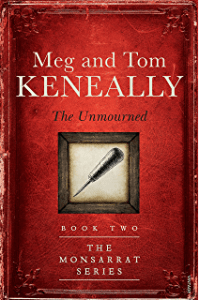
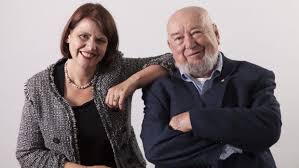
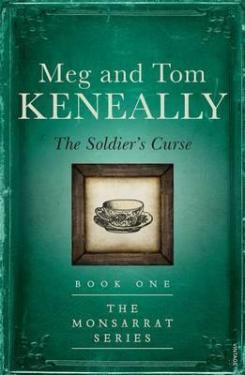
‘The Soldiers Curse’ ‘The Unmourned’ – Meg and Tom Keneally

Monsarrat is a ‘special’ when we first meet him. He’s a convict who, because of a much required talent, is bestowed upon with special privileges denied his cohorts in chains. Monsarrat possesses a thorough knowledge of legal matters, due to his UK background; has a way with words and a fine copperplate hand – in the days when that counted for something. In Port Macquarie he has aspirations, but before he gets ahead of himself there are those who make sure he never forgets his all too lowly station in life – even if, perhaps, they would be lost in that life without him. But, all in all, his existence there isn’t too bad. There’s Mrs Mulrooney, the camp commandant’s cook, who’s a good mate; as well as there being, somewhere up ahead, the possibility of a ticket-of-leave, but only if he can continue to keep his nose clean. ‘The Soldier’s Curse’ is supposedly the first of twelve planned novels revolving on Monsarrat’s adventures sleuthing around in early Oz. It’s set in the first half of the Nineteenth Century. And the combination of esteemed writer Tom Keneally and his daughter Meg are, with this initial one, off to a ripper start.

Now I’ve never been a huge fan of the senior writer. I’ve read a few of his output over the decades, but a new release from him is never a must-have. But I had perused some good notices for ‘The Soldier’s Curse’ and with the early years of our founding always fascinating, I decided, when the cheaper paperback version appeared, to give it a burl. I knew, once I started, that I was onto something a little different for me, but it was also something that was going to keep me thoroughly engrossed for the duration. I was soon out buying ‘The Unmourned’, not the least interested in waiting for a cheaper edition further down the track. I am now eagerly awaiting the third in the series. But back to the first.

There were very few women amongst the 1500 free and not so free souls at the Port Macquarie settlement during Monsarrat’s time, but of course the most prominent was the wife of the man in charge, our hero’s ultimate boss. But the seemingly virtuous and beauteous young woman is ailing – and there’s more to her mysterious illness than meets the eye. Of course the good (seemingly) and privileged felon and Mrs M are soon on the case, especially after her demise. Perhaps, they discover, she wasn’t so lily-white after all, but why do her in? There are soon a number of suspects with, of course, eventually our dynamic duo sniffing out the real culprit. As a whodunnit, it’s about as far away from airport fare as one could get. The two investigators are also far from daringly heroic and the pace is leisurely, making it all the more to savour. The suspects take some sifting through. Best of all though, this tome and its follow up bring to life what life must have been akin to in early colonial times for all levels of society. We have vicious floggings and violent stabbings in eye sockets as well as sadistic officers. These are countered by a fair share of do-gooders. The system, at its lower level, still provided a modicum of hope that there was a chance to better oneself in a way that wasn’t possible back home in England. There is more of the same in ‘The Unmourned’ with, as a reward for his efforts up on the northern coast, Monsarrat, along with his sidekick, returning to Sydney. Now the focus switches to the plight of female convicts. Just who was responsible for the aforementioned skewering of notoriously evil overseer Robert Church at the Paramatta Female Factory? It all points to Grace O’Leary, a sparky rabble-rouser who, with her guile, has emerged as a leader of sorts amongst those in an olden days ‘Orange is the New Black’ situation. The authorities want her to swing as soon as possible, but they don’t count on a feisty, dogged pair having other ideas.

The Keneallys, in their interviews, have suggested their lead character is based on one James Tucker who, like Monsarrat, was a cut above the average transportee. After successfully applying for his ticket he wrote ‘Ralph Rashleigh’ in the 1840s, giving a fictionalised account of convict ordeals.

I’m excited that the makers of ‘The Doctor Blake Mysteries’ are keen to work their magic on the product of the father/daughter act for the small screen. I am also excited that, at the end of ‘The Unmourned’, Monsarrat is informed that he is again being moved on. Where to, you might ask. Why to our very own once upon a time not so fair island.

Interview with Meg and Tom K about the Series – http://www.abc.net.au/radio/melbourne/programs/afternoons/meg-and-tom-keneally-commit-to-12-books-in-the-monsarrat-series/8388996

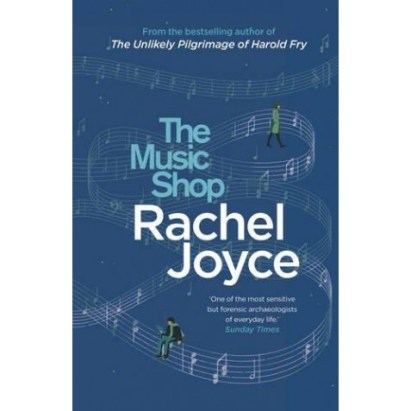
The Music Shop – Rachel Joyce

Music is about silence…Music comes out of silence and at the end goes back into it. It’s a journey…And of course the silence at the beginning of the piece is always different from the silence at the end.’

Clapton, up on stage bathed in a lone spotlight; in the darkness behind are massed an array of musicians and backing singers. Clapton knows the power of silence, or, in this case, a pause. He evokes it on a CD of a performance I have. At a live concert silence is impossible, but a pause is a powerful tool with which to manipulate an audience. He strums the first couple of notes from the riff. The crowd have been waiting for it, expectantly. They know the ropes. Clapton then stops. He doesn’t continue. He stands stock-still. The noise within the silence starts to reach fever pitch. Chants break out. The single word is exhorted out in unison – anything to get his pluckin’ hand picking the notes again, but still the guitar-slinger is unmoved. By the time he reaches back into the riff and all the lights come on, the pregnant pause has almost hurt. Then, finally, Old Slowhand launches it. ‘Layla’. In the crowd the relief is almost orgasmic. ‘Layla’ is up and running, the throng beside themselves with joyousness. The classic from Derek and the Dominos, that timeless ode to a beautiful lady who, back in the once upon a time, seemed unattainable, is the most perfect tune in the musical cannon of the man referred to and known as God. Perhaps it is the most perfect rock/pop song ever written. But it’s that pause that gets me every time I listen to the track. It sums up all the pleasure music has given me over all these umpteen years.

And another sheer joy, musically associated – specifically the realm of vinyl – is Rachel Joyce’s ‘The Music Shop’. If it is not my best read of ’17, it’s pretty close to it.

Frank. Big, shambolic Frank runs a music retail outlet at a time, in the eighties, when the CD is first making inroads into the market. It was small and shiny and it was about to thrust vinyl into the dustbin of history – or at least that was the theory. We all know what happened there. Frank refuses to have anything to do with the new-fangled discs, despite pressure from the music reps to get him to change his ways. How could he? He is a true believer – one of many as it has since turned out. He feels nothing can convey the intimate soul of recorded music like vinyl. Nor will he sell cassette tapes for the same reason. Frank is a loner with a love of people – just as long as they do not get too close. Mostly these are his customers. He catalogues his vinyl according to feeling, not alphabetically or by genre. Thus Sibelius can be next to Aretha next to the Duke and so on. And he can magically bring together people with musical tastes they had no idea they possessed. He knows just the track for any given moment. Music can solve all the problems of the world.

Frank also loves the other shop owners on dead-ended, down-at-heel Unity Street. With these Joyce has created some truly lovely characters such as presumably defrocked Father Anthony with his religious iconography business and the Williams Brothers, undertakers who have been noted holding hands. There’s a baker and a florist and unbeknown to Frank, a tattooist who loves him. And then there’s Kit; totally, totally useless Kit – the assistant Frank employs because nobody else will. All is cosy. Frank is set in his ways, has a modicum of peace of mind and does without the real love between man and woman. Then along comes an elegant dame in a green dress. She peers in the shop’s window and promptly faints – and Frank’s world is turned upside down. He has been fortunate enough to find himself on Unity Street. But can he cope with what Ilse Briuchmann brings to the table?

Frank’s wobbly relationship with the planet has its roots in his upbringing. His single parent mother, a bohemian type, knew little about giving love, but a great deal about pontificating on the topic of music. She interferes when Frank starts to put together a life for himself, doing irreparable damage to his state of mind. But she taught him well for what became his lifelong passion, The book is laced with trivia, some of it heartbreaking, about the movers and shakers who gave us all the gift of their talent, from classical composers to rock gods. And it was mostly fresh news to me.

I suppose, if I was picky, the only discordant note (clever) was the Hollywood style grand finale, a tad out of kilter with the tone of the rest of the tale. No matter, this is a beautiful read putting me in mind of ‘Rosie’s Project’. It’s full of whimsy in a saga where confusion and cross-purposes drive the narrative. I just simply loved Frank, the poor bugger.

The author’s FB page = https://www.facebook.com/RachelJoyceBooks/

Ramona Blue – Julie Murphy

With her last publication, ‘Dumplin’, reaching the top of the best seller charts and now soon to appear in Hollywood guise, Julie Murphy’s star has deservedly risen. What would she follow up that fresh and vital winner of a book with? The answer is the intriguing ‘Ramona Blue’. Initially I would have labelled this as, naively, a reverse coming-out book, but that would be too simplistic. It would also play into the hands of those in the good ol’ US of A (and here) who are of the feeling that all a girl/woman who feels she is attracted to the same sex needs to do is to meet the right fella. So this take, far more subtle than falling out of love with girls and into love with boys, caused a bit of a shit-storm on social media in the States, particularly amongst those (who probably hadn’t taken the trouble to even read the thing) who felt Murphy was selling out the sisterhood or some such. I was alerted to all this by reading an on-line review by Danika Ellis on Bookriot. She claimed that RB had only received two types of critical responses – one star ones and five star. There was nothing in between.

It seemed for those who hated (or loved?) Ramona and her exploration of her sexuality had a problem with the fact that the answer wasn’t clear cut. It was still a work in progress, if you like. Ms Leroux, with her blue hair, initially assumed that she was an all girls’ gal. She did some hot and bothered canoodling with holiday-maker Gracie and she felt that was that. But when distance failed to make the heart grow tenderer, along comes early childhood friend and black lad Freddie. Soon she’s developing feelings for him. She is no longer quite sure that she is one of only two lesbian girls in her run-down Mississippi resort town of Eulogy, post Cyclone Katrina. She feels bad for the other one, Ruth, also a pal. Added to all this, her family lives in a trailer, her big sis is pregnant to her no-account boyfriend and her parents are separated, being only just functional. Ramona has to take on more than any young lady should at her age, but she finds her way out of the various crises that arise, at least till another apocalyptic storm comes along. Ramona is indefatigable, an easy main character to fall in love with, no matter your gender. Murphy’s third novel gets a very fine four stars from me. I felt it could have been trimmed down a tad, but as one commentator wrote, she has ‘…solidified herself as a Big Time YA author…’ with ‘Ramona Blue’. And we do need more homoromantic demisexuals in the world, like Ramona’s mate Ruth.

The author’s website = http://juliemurphywrites.com/


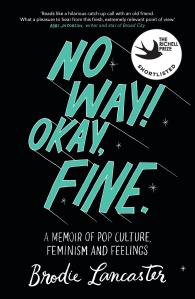
No Way! Okay, Fine– Brodie Lancaster

Zayne Malik – know him? I had no idea who Zayne Malik is? If you’re in the dark, as much as I am, be it known he was once a member of One Direction. Yep, I’d heard of them. Are they still around – One Direction, or are they a boy band who, like many of their ilk, took over the world for a year or two before fading away? But Zayne Malik left the band in March, 2015 and this was, for Brodie Lancaster, as she reports in ‘No Way! Okay, Fine’, a major life event. From the distance of the generous age gap between the author and myself it would be easy to tell her to ‘Get Real’ or ‘Get a Life’. But, then, I think how shattered I would have been if the rumours were true, back in the day, of Paul McCartney leaving the Beatles. At least there had been considerable telegraphing of the split when it eventually came. The planet, as well as myself, was prepared. Another guiding force in Ms Lancaster’s world is Kayne West. Now the little I know of this man revolves around him dissing Taylor Swift at some award ceremony, so I guess from that little effort I’ve formed a negative opinion of the man. So illogically negative is that opinion I couldn’t bring myself to read the laudatory chapter in her memoir revolving around his influence on the way she tries to live her life. It may have afforded me a totally different view of the rapper, but I think by that stage I’d probably had enough.

Ms Lancaster writes with passion about what she loves and hates about the society around her. Entitled men do not come out of it very well – and nor should they. Given I was out of my league with the icons that inform her world, for much of the time, some of her essays made little sense to me. Shows like ‘The Gilmore Girls’, ‘Here Comes Honey Boo Boo’ and ‘Keeping up with the Kardashians’ never have featured on my bucket list of shows of the past I must watch before I, in turn, am past it. What an old fart I am. Clearly I am not the demographic for this book.

Brodie Lancaster is a Melbourne writer, mainly operating in the blogosphere. This is her first book. As a larger sized person, she has also met her fair share of challenges, but she is not Australia’s version of Roxane Gay, nor is this book an antipodean ‘Hunger’. Her weight isn’t front and centre. There is little to fault with this young lady’s fine wordsmithery, although in tone she can be a tad ranty, if I am permitted to state. And she does redeem herself in my eyes through her love of Elvis and that remarkable young songstress Courtney Barnett, someone I also admire very much.

My beautiful daughter passed her copy of this book over to me, stating something like that I may find it interesting – and I certainly did. At least till I got to Kanye West. But I also remember that with Kate I failed to see the logic once behind her adoration of the Spice Girls and another boy band, Take That. For me the latter was indistinguishable from the plethora of similar musical dross at the time. But from that band Robbie Williams emerged and for me he is a marvel of modern day popular entertainment. My Katie loved him from the get-go – it just took this old codger a while to catch on. Who knows – in a year or two Zayne Malik maybe the new Robbie Williams.

The author’s website – http://www.brodielancaster.com/

‘Greatest Hits’ – Laura Barnett

One of the loveliest musical purchases I made last year was the Joan Baez 75th Anniversay Tribute Concert CD. All Joan’s mates/admirers came together to pay homage to the great lady by placing their own imprint on her impressive back catalogue. I remember buying her very early recordings on Vanguard when the winds of change were blowing across the US and around the world during the sixties. Soon after, I also picked up on Judy Collins. Between them they put the folk back into Peter, Paul and Mary and the Kingston Trio, as did Cass Wheeler, the folkster/musician at the core of Laura Barnett’s ‘Greatest Hits’.

Kathy Guest, in her review of this tome for the Guardian, reflects, ‘When it comes to listening to music, there are two types of people: those who pay attention to the lyrics and those who don’t notice them. The former are drawn to artists such as Joni Mitchell and Leonard Cohen. The latter end up choosing a song about breaking up as the first dance at their wedding.’ I’d like to think, with my love of Cohen, Dylan, Australia’s Paul Kelly and that Idaho troubadour Josh Ritter, that I’m in the former category. I was certainly in the category of those who thought the Barnett book was a pretty cool read.

Cass Wheeler’s a UK singer/songwriter in the mold of all the aforementioned with her life span roughly paralleling my own. She had great musical success; beloved by millions back in the day when she was in her pomp. Since then, though, her life had not been so shiny as a result of a dysfunctional marriage. This was a causal factor for the battles with life of her only offspring, all resulting in Cass’ own mental issues. As the novel opens we discover Ms Wheeler leading a semi-reclusive life, in an isolated farmhouse, struggling valiantly, with a small circle of friends/employees, to give her existence back some meaning. As a goal she wants to recapture some of her glory years – to mount a comeback to savour even a small portion of that earlier success. From that point we receive a tour of her backstory, from her fractured upbringing, then paying her dues until she is spotted by talent scouts and given a recording contract. The rest, as they say is history, in this case, fictional. On her coattails rides her to-be-hubby, an excellent muso himself, but one who saw a much better future for himself than playing second fiddle to his superstar missus. Later he goes solo, has some success too and he feels a whole lot better about himself – enough for him to break away and indulge even more heavily in sex, drugs and alcohol. The wheels eventually fall off for both parties with a devastating effect on their only child, a sensitive daughter.

An interesting feature of the book is that each section opens with lyrics from a Cass Wheeler classic, composed by the author herself. Another of my favourites in the folk tradition, Kathryn Williams, has put out a CD album of these tracks as a companion piece.

The novel name-checks many famous identities from these times, but it only takes liberties with the imaginary ones. ‘Greatest Hits’ is a worthy read, maintaining interest throughout. I know fellow music lovers will greatly enjoy it. It mirrors what befell many who were on top and who managed to avoid Club27. In short, good stuff.

The author’s website = http://www.laura-barnett.co.uk/

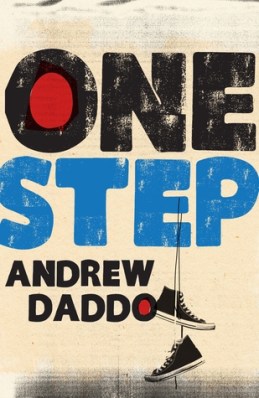
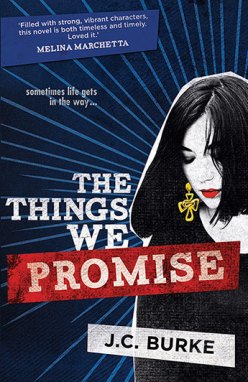
Cruisin’ with YA ‘One Step’ – Andrew Daddo, ‘The Things We Promise’ – JC Burke

My beautiful writerly daughter passes on to me the best of her reading of YA. She knows what I enjoy, so she rarely lets me down regarding that. A ten day cruise to the South Pacific was the ideal time to enjoyably plough through several of her recommendations – Andrew Daddo’s ‘One Step’ and JC Burke’s ‘The Things We Promise’. I knew, from the experience of my first time on an ocean liner, deliberately eschewing social media for the duration and finding a quiet sunny spot on board, that being there with a book in hand is bliss. Last time I ran out before the cruise ended and had to stock up on a shore excursion. This time I ensured I had enough along, but it was a close run thing.

The Daddo family have been big names in the popular culture of our country and as it seems almost obligatory for celebrities to try their hand at this writing caper, why should a Daddo be any exception? Most go for the biography or memoir, often ghost written – but a few have had a go at writing for kids, many – you can probably name them, as could I – have made a fair fist of it. Andrew Daddo is no exception – he has obviously found another calling to add to his talents. Name recognition possibly gives him a head start, but he needs the talent to back it up. Daddo has it on the evidence of ‘One Step’. The mood of dread he created as his tale headed towards its conclusion convinced me.

A constant theme in YA is the scourge of schoolyard bullying, a fact the main protagonist of this tome, Dylan, knows only too well. Just when he thinks he’s making progress in the girlfriend department (he’s finally been noticed by Gracie), despite his constant battles with an acne-ravaged face, along comes his arch-nemesis, Hamish Banning, to make his life hell. The situation is not helped by his best buddy going all weird on him. Dylan thinks, though, an invitation to a party will see him finally become part of the cool set and he’ll be able to hang out with the object of his desire. But all is not as it seems, with disastrous results. With his self opinion plunging, not assisted by his worrisome parents and the embarrassment of actually being good at something (creative writing) preying on his mind, where can a lad seek refuge. The answer doesn’t make for pleasant reading.

Some reviewers have stated the necessity for parents of teenagers to engage with the books of ‘One Step’s’ ilk being currently written for that age group. This is to better understand what’s going on in the lives of young people at such a critical age. It is perhaps a forlorn hope, even if they are as immensely enjoyable as anything written for older age brackets. So if it’s Daddo for the lads, then a worthy recommendation for the lasses would be JC Burke, even if the title under discussion here is set back in the Nineties.

Ms Burke has been around for a while now, perfecting her wordsmithery. ‘The Things We Promise’ takes us back to a time when the Grim Reaper was instilling fear into communities all around Oz. It was a period when the HIV/AIDS epidemic was getting into full gear. Gemma gets swept up in it all because her brother, Billy, is gay and at the epicentre of events in NYC, plying his trade as a make-up artist. He has promised to return home to work his wonders on his sister’s face for her leavers’ dinner.

We forget the impact the then deadly outcomes of this invidious disease had on the world. When this author discovered that her own offspring had little idea about it all, now we’re into the second decade of a new century, she decided a novel was the best way of informing today’s teens. Into it she has woven the confusions afflicting tender souls in those years when one comes of age – the same issues largely as the present, minus the impact of hand held digital devices. With the recent plebiscite, homophobia has again crawled out form the gutters, so ‘The Things We Promise’ is a timely tome. And it is also a reminder of how far we have come, in the positive sense. But ignorance still abounds, just as it did back in Gemma’s day. She’s a spirited lead character and as the waves rolled by, with the sun soaking this body that was fresh from the icebox that had been Hobart this winter on that sunny cruise, I immensely enjoyed this young lady’s journey. So I took two good ‘uns on the cruise with me. Ta muchly darling daughter.

Review of ‘One Step’ = http://www.smh.com.au/entertainment/books/andrew-daddos-young-adult-fiction-a-must-read-for-all-parents-20160714-gq5knw.html

JC Burke’s website = https://www.jcburke.com.au/

Commonwealth – Ann Patchett

Bert Cousins is a shit. There’s no other way of saying it. He’s a shit husband, a shit father and a serial philanderer. He concocts ways of spending as much time as possible away from his missus and three, soon to be four, children. He works long hours and turns up uninvited at parties, just so he he can have a continual break from paternal responsibilities. At one such party, thrown by cop Fix Keating, he meets his host’s wife. He is immediately smitten, kisses her in a darkened room and two years later he’s moved from California to Virginia. He is now married to Fix’s Beverley. Their new state is one of four in the US that terms itself a commonwealth – like us; thus, partly, Ann Patchett’s title. Her expansive tome is a detailing of the long term repercussions of Bert’s stolen kiss for both participants, their deserted spouses and their six blended children.

Patchett deftly weaves back and forwards through time to bring the reader vignettes of life for the various family members post-pash, with a focus on Fanny, Fix and Bev’s daughter. She’s a cocktail waitress who falls for a much older man, author Leon Posen. She confides to him the stormy story of the two entwined family’s tentative co-existence and the childhood event that rocked all of them to the core. Unfortunately for her Posen, who had been under the curse of writer’s block, suddenly defrosts and scribes a novel based on Fanny’s revelations. The proverbial hits the fan when his work becomes a mega-hit on the book-stands. It – and how clever is this – is titled ‘Commonwealth’ too. It cannot be doubted that Ms P’s ‘Commonwealth’ is a terrific book as well – it had me hooked from the first page and I’ll be definitely seeking out her back catalogue, including the well-gonged ‘Bel Canto’.

The tome has much to say about the American state of mind – especially where it concerns parental accountability and the ever-present illogicality of their gun culture. No character escapes a very close examination by our author, with few emerging squeaky clean. There’s some lovely writing here – a mother/daughter reunion in a Swiss commune, the adventures of kids free in a less restrictive age and a positive take on inter-racial marriage in a state once noted for its miscegenation laws. And in ‘Commonwealth’ we even receive a reference to the parlous state of our own Tassie devils – page 279.

I don’t think miracles occurred for me as the New York Times stated they would if I read this marvellous product of Patchett’s skills, but I certainly found it to be ‘…generous, fearless and startlingly wise…’ too, just as that august broadsheet promised.

The author’s website = http://www.annpatchett.com/

Zappaesque ‘The Harder They Come’ ‘Terranauts’ – TC Boyle

I didn’t get Frank Zappa when I was at uni and he was all the vogue – but then I didn’t get a lot of the stuff that was going down back then. Some of my mates were into him big time though. To my ear his music was discordant, his lyrics obviously the result of an acid trip or such like. Maybe, if I listened to him these days, I’d have a different take for there’s someone I now like immensely who’s been likened to him. He’s described by one critic as ‘…the Frank Zappa of American literature.’ That someone is TC Boyle – the C being for Coraghessan – now that’s a name worthy of FZ. No, I prefer another critic’s description of this vibrant US wordsmith, one more to my own disposition in that he is a writer of ‘…caffeinated energy.’ And that is what attracted me to him in the first place – that and his command of rare and wonderful words.

For ‘The Harder They Come’ and ‘Terranauts’, though, he has toned his language down and for this reader both these recent outings suffered as a consequence. Maybe his eccentricity with our language just wasn’t doing it for him anymore in terms of sales – he needed product aimed at the mainstream. Still, both books, particularly the long, but always engrossing, ‘Terranauts’, certainly cut the mustard. The literary pyrotechnics may have diminished – but old TC can still relate a rattlingly good yarn.

I’d meet them occasionally during my teaching career – perfectly normal, pleasant and capable parents who, in an ideal world, would produce mirrors of themselves in their children – except they didn’t. Sometimes it may have been only one bad egg in a few, sometimes, perhaps even more troubling, the bad egg may have been an only child. And we’re not talking anything remotely like autism here (never bad eggs), we’re talking genuinely unpleasant souls – born criminals if you like. From an early age, if somebody or something couldn’t straighten them out, they’d end up in the clink. Of course mum and dad would be at their wits’ end and often I, or the school, would have no solution. They were just wired that way. So I felt for Sten and Carolee in ‘The Harder They Fall’ with their son Adam. He seemed rotten to the core.

Michiko Kakutani of the New York Times likens this novel to an award winning television series I particularly care for, ‘The Affair’ (can’t wait to pick up S3 just released), in the book’s structuring as TC presents the story from several perspectives, meaning it all doesn’t quite add up.

Sten himself is a bit of an all-American hero. The Vietnam vet was on a shore excursion from a Caribbean cruise when his party was attacked by a bunch of wastrels in the Costa Rican jungle. Sten Stensen almost accidentally kills one of them, thwarting their evil intentions – and he gets his fifteen minutes of fame when he becomes an overnight sensation. But, as much as he may want to, Sten cannot sink back into total obscurity as his son, with whom he cannot relate to one iota, goes on a rampage. Soon every sheriff in the county is after him, even his dad. We all know where this is headed, don’t we? But TC Boyle cuts us off at the pass.

Some time is devoted to the seemingly implausible relationship Adam (or, as he prefers to be called, Colter – and that’s a whole other tale) has with the older Sara. This lady, in her own way, is a bit of a fruit loop too. But, for me, their misshapen attraction for each other is the real nub of the novel, rather than the father/son disengagement that Sten wants to put an end to once and for all.

The title of the book comes from a DH Lawrence quote that opens TCB’s saga. ‘The essential American soul is hard, isolate, stoic, and a killer. It has never yet melted.’ And I suppose that well may be as true today as when the great literary figure scribed those words. ‘The Harder They Come’ sees T Coraghessan B manfully ruminate on that notion.

You’ve no doubt read about humans practising to colonise another planet by recreating their environments here on Earth. ‘The Terranauts’ is a riff on that, actually based on real events late last century in Arizona. But the ability to survive in these situations largely requires us to co-exist with each other as much as what a hostile artificial mother nature can throw at us. Can we do it? That is the first step in the process and is what the author investigates in this offering.

Boyle’s heavy tome tells of the Ecosphere 2 – the first, ES1, having given a decidedly negative answer to the above question. Eight brave, or foolhardy, souls will venture into a microcosm of our planet’s various habitats to see how they fare, almost completely cut off from the outside world. It’s all related to us through the eyes of two terranauts and one would be one. Linda Ryu was unsuccessful in her application to enter ES2, but is hopeful of a guernsey for ES3. There’s attractive, buoyant and perhaps somewhat naive Dawn Chapman, as well as her eventual love interest, Ramsey Roothorpe, a great name for a really sleazy root-rat, who are on the inside. This is Summer Bay transferred to a situation where food, sex and dealing with adversity are everyday considerations.

Ramsey seems set to work his way through all the female characters, inside and out, before he comes to dead stop with Dawn. What happens between them threatens to send ES2 down the same ignominious path as its predecessor. Can strength of character prevail to keep the operation afloat? The answer lies with Ms Chapman as she nears a shattering decision.

TCB has great fun with this scenario, taking his readers along for an enjoyable romp with him. It’s lengthy (for me), but he never loses traction en route. Why anyone would put themselves through what the terranauts do is beyond me – perhaps some are really, unlike Sten, intent on their fifteen minutes. And as a chronicler of US life and mores over the last hundred or so years, even if in Zappaesque fashion, I reckon TC has earnt his too.

TC Boyle’s website = https://www.tcboyle.com/


Love Letters to the Dead – Ava Dellaira

For a novice it is pretty okay – but I wouldn’t rave. I’m an adult, though, an adult male who, at 65 moreover, is as probably as far away from the intended audience as I can get. So maybe I am no judge.

Reading a few of the gushing reviews of ‘Love Letters to the Dead’ on-line, it seems I am way in the minority. And the author has gone on, since this 2014 effort, to scribe ‘In Search Of’, with ’17 Years’ coming in 2018. ‘Love Letters to the Dead’ would seem like a great idea – tell a story through letters to notables who have departed the planet. This Laura undertakes, initially, as a part of an English assignment for her teacher, Mr Buster – the only character I took to, again displaying my age and previous vocation. The author/Laura uses all the usual suspects: Kurt Cobain, Jim Morrison, Amy Winehouse, Janis Joplin – you get the picture. But in the mix were also Amelia Earhart, Judy Garland, ee cummings, the poets John Keats and Elizabeth Bishop with Alan Lane tacked in as well. Never heard of him? Nor had I, but he is the voice of ‘Mr Ed’.

Laura doesn’t hand in her initial letter, addressed to Kurt C, to her teacher. But it starts off a frenzy of epistle writing as her way of coping with all the issues of life that have occurred, in the digital age, to this young person of such tender years. This sort of format has been done before, of course, but in Dellaira’s hands we have nothing really out of the ordinary, despite this means of conveying the narrative. There’s the angst of her grief for a dead older sister, the requisite love interest and these days, the seemingly almost requisite gay relationship all involved. It seems all very ‘he/she did this’ and ‘I then did that’ and should I or shouldn’t I give him what he wants.’

To me it is all pretty soapish without the class of writing that would place this with the best YA wordsmithery. The author, a SoCal resident, had Stephen Chbosky (‘The Perks of being a Wallflower’) as a mentor and guiding light – but with the plethora of quality stuff out there for the age group I’d suggest there’s better to be had. But I suspect ‘Love letters to the Dead’ has appealed to many much, much younger readers and the Dellaira oeuvre will continue to do so.

The author’s website – https://avadellaira.com/