Departing (or Not) from the Norm

We all know that there are many ways we depart from the norm sexually. Pornography thrives on it. ’50 Shades of Grey’, in book and movie form, has made copious coin from it too. And, of course, you can make humour out of it, like everything.

I must say I was not a fan, not one little bit, of Josh Lawson’s 2014 attempt to do the latter with the quirky sexual deviance featured in his half dozen or so vignettes for ‘Little Death’. This Aussie movie had a limited cinema release and ran to lukewarm reviews.

But strangely, almost illogically, it was picked up by Spanish comedian Paco Leon and given an Almodóvar-ian makeover. Leon stuck to Lawson’s basic premises, including acting out a rape fantasy, being turned on by drugging a sexually repressed rather boorish wife and another about a man in crisis when his partner shows lesbian proclivities. Seemingly disparate adventures come together in the end in a manner patently, but cleverly, stolen from ‘Slumdog Millionaire’. At the commencement we are introduced to Leon’s film by joyous evocations of the sexual act, templated from the equivalent for television’s ‘Masters of Sex’. If it’s all not taken too seriously ‘Kiki Love to Love’ is enjoyable enough but, as Jake Wilson in his Age review remarks, it is not a movie to take a potential lover to, out on a first date.

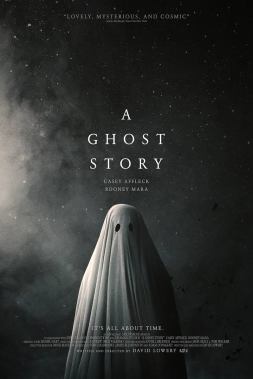
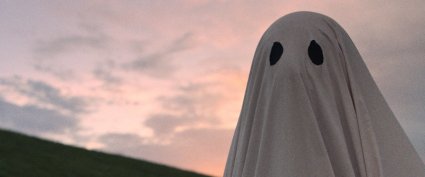
Now, what if ghosts really do wear a white sheet? That is the nub of David Lowery’s ‘A Ghost Story’. If you’re expecting ‘Ghost’ or ‘Truly, Madly, Deeply’ with this one, you’d be severely disappointed. It wasn’t remotely akin to these two, but I was disappointed nonetheless. I was keen to see what Casey Affleck followed up his remarkable and heart-rendering performance in ‘Manchester by the Sea’ with. He did so with an outing retaining essentially the same downbeat demeanour before throwing said sheet over his head. He then took us through a helter-skelter, back and forth journey through the history of a house. It’s weird, but in my opinion not good weird.

Affleck’s sad-sack, vague character is killed in a freak accident, but comes back to the house he cannot leave to watch his partner (Rooney Mara) do just that. Then he proceeds to haunt it, as retribution, in all the stereotypical ways.

In their own ways ‘Kiki Love to Love’ and ‘A Ghost Story’ aim to challenge – one does presenting uncomfortable sexual manners in a mildly entertaining way, the other by just making its audience uncomfortable.

Tralier for ‘Kiki Love to Love = https://www.youtube.com/watch?v=kuciY0jnHxc

Trailer for ‘A Ghost Story’ = https://www.youtube.com/watch?v=c_3NMtxeyfk

Commonwealth – Ann Patchett

Bert Cousins is a shit. There’s no other way of saying it. He’s a shit husband, a shit father and a serial philanderer. He concocts ways of spending as much time as possible away from his missus and three, soon to be four, children. He works long hours and turns up uninvited at parties, just so he he can have a continual break from paternal responsibilities. At one such party, thrown by cop Fix Keating, he meets his host’s wife. He is immediately smitten, kisses her in a darkened room and two years later he’s moved from California to Virginia. He is now married to Fix’s Beverley. Their new state is one of four in the US that terms itself a commonwealth – like us; thus, partly, Ann Patchett’s title. Her expansive tome is a detailing of the long term repercussions of Bert’s stolen kiss for both participants, their deserted spouses and their six blended children.

Patchett deftly weaves back and forwards through time to bring the reader vignettes of life for the various family members post-pash, with a focus on Fanny, Fix and Bev’s daughter. She’s a cocktail waitress who falls for a much older man, author Leon Posen. She confides to him the stormy story of the two entwined family’s tentative co-existence and the childhood event that rocked all of them to the core. Unfortunately for her Posen, who had been under the curse of writer’s block, suddenly defrosts and scribes a novel based on Fanny’s revelations. The proverbial hits the fan when his work becomes a mega-hit on the book-stands. It – and how clever is this – is titled ‘Commonwealth’ too. It cannot be doubted that Ms P’s ‘Commonwealth’ is a terrific book as well – it had me hooked from the first page and I’ll be definitely seeking out her back catalogue, including the well-gonged ‘Bel Canto’.

The tome has much to say about the American state of mind – especially where it concerns parental accountability and the ever-present illogicality of their gun culture. No character escapes a very close examination by our author, with few emerging squeaky clean. There’s some lovely writing here – a mother/daughter reunion in a Swiss commune, the adventures of kids free in a less restrictive age and a positive take on inter-racial marriage in a state once noted for its miscegenation laws. And in ‘Commonwealth’ we even receive a reference to the parlous state of our own Tassie devils – page 279.

I don’t think miracles occurred for me as the New York Times stated they would if I read this marvellous product of Patchett’s skills, but I certainly found it to be ‘…generous, fearless and startlingly wise…’ too, just as that august broadsheet promised.

The author’s website = http://www.annpatchett.com/

Where’s the Romance?

My father was a tinkerer when it came to cars. He’d spend hours under a bonnet, often with me at his elbow at his beck and call to pass him what he required as he adjusted and fine tuned various components that made a car get from A to B. But none of that has rubbed off – these days I’d now struggle to accurately identify those parts that once fascinated my Dad. Nor have I ever possessed the remote inclination to make those numerous automobiles I have possessed over the decades to go more efficiently or, heaven forbid, faster.

My dear old father was also a serious exchanger of cars. It seemed that, as soon as he had tinkered one to peak condition; to getting a motor purring to perfection, he’d be looking around for the next challenge. Each generation of vehicles, as they added on greater complexity of innovation, would provide more opportunity for an even higher level of tinkering.

I had no idea where those genes of his had disappeared to in the family until, only recently, it was revealed to me that my youngest brother is a member of the fair dinkum ‘Top Gear’ club. I am glad they went somewhere. They certainly didn’t come in this direction. My latest car is a Protege; that I do know. But when asked I struggle to recall whether it is a Mitsubishi, Mazda or Ford. At least I know it isn’t a Holden. I barely noticed that, over the years, every time I’ve caught up with brother Dean, he is behind the wheel of a different, perhaps even flashier, make or model – just like Dad.

But I must admit, as with Jan Etherington, initially owning an automobile meant freedom. Typical of my father, before I even gained my licence, he had already purchased a succession of cars for me ready for the big day. What I actually ended up with, going for that rite of passage, was a blue, or was it grey, Fiat – a model that had suicide doors at the front. After some time researching in the ether, I think it may have been a 110/103 model. With a pleasant copper by my side I proceeded to drive said car around the block, nearly knocking some poor sod on his push bike into a ditch. The guy in blue pronounced that, apart from giving him a scare, I had done exceedingly well and eventually a little book arrived in the mail allowing me to take to the byways of Tassie. They were different days. A mate of mine simply received his because an officer of the constabulary had seen him driving around in his dad’s paddock.

Yep, the Fiat, with the suicide doors, was my ticket to cart around my less fortunate mates, pick up (admittedly very few) girls and it got me to and from uni. But I soon found that being in control of an auto wasn’t all it was cracked up to be for, you see, I kept running into things or, inexplicably, driving off the road. Over the years I’ve connected with letter boxes, flying ducks and a pole in Burnie K-Mart – twice. I once, with a very loud noise, collected the impressive car of Tasmania’s chief magistrate. He was none too pleased and later sued me. The highlight of all my mis-endeavours, the one that still has all those who know me shaking their heads in disbelief, occurred one dark and stormy night. I cannot reverse in a straight line to save myself and the manoeuvre I was attempting was simply to back down a driveway – one that was just a tad on the steep side. With the weather and incline limiting my vision, I managed to park my jalopy on a low wall between my partner’s property and the one next door. My car – it was orange, don’t ask the make – was stuck fast, immovable, resulting in a call to the RACT. The guy who turned up initially was gobsmacked, but in the end he had the solution. This was a combination of a complicated pulley system and tree that eventually worked, to the applause of a small crowd who had gathered to watch proceedings. I have it on good authority that I was referred to as a dip-stick by my saviour who related the tale to all and sundry.

The thought of attempting a reverse park gives me the heebie jeebies and city driving the palpitations. I hate the boredom of the Midlands Highway as my mind wanders all over the place to various reveries, especially if I’m doing it alone without my lovely lady to keep me focused. Nah, for this fellow the driving experience quickly palled.

The figures Jan E based her column on are obviously ones for the UK where choices for public transport and small distances abound. Here in Oz it is the opposite. I often dream what a joy it would be to live in a place, say Melbourne, where a reasonably functional transport system would mean far less reliance on private means of getting around – not that I’d ever swap Hobs in reality. I’m eternally thankful that Leigh is a great driver and confident/competent enough to give me stress free transport on many occasions, She also has a son who knows one or two things about what goes on in the mystery to me that is a car’s engine – for, you see, driving has completely lost its romance for me.

Jan Etherington’s column = http://www.telegraph.co.uk/women/life/no-wonder-teens-have-given-driving-lost-romance/

Those Churchillian Years

Nobody does pomp, pageantry and upstairs/downstairs on the screen, big and small, better than the Brits. And with such a long and rich history, they have plenty to work with. And nobody strode the stage of Twentieth Century history like Winston Churchill. From the Boer War till his death in 1965 he was a formidable figure – the man who saved his country from Nazi domination. But it was his overseeing of the Gallipoli campaign, in the previous war, that left the indelible mark on his psyche (and ours), causing his life long battle against another tough opponent, the black dog – but more of this later.

The great man also left his imprint on the greatest human mass migration of his times with the Partition of India, the setting for the first film I viewed from the years of WC’s pomp, even if he was having a hiatus at the time between prime ministerships.

As for upstairs/downstairs, ‘Downton’ set the bar pretty high, but transfer it to India as the events unfolded on the sub-continent and we have the same great divide in ‘The Viceroy’s House’.

We pick up the story as the momentous climax to this episode of history approaches. Lord Mountbatten, the last viceroy, has just arrived to oversee independence. All the major players are present – his Lady (Gillian Anderson), Nehru, Gandhi and Jinnah. Substitute the viceroy’s palatial abode for ‘Downton Abbey’, add in some star-crossed lovers from two religious backgrounds – both from the downstairs – with political machinations in the state rooms, then we have all the ingredients for a show approaching the calibre of the television behemoth. And there’s another connection. Hugh Bonneville plays, with aplomb, Lord Louis.

By far and away what went on upstairs is the interesting bit, more so than the soon to be doomed (isn’t it obvious) romance going on in the bowels. The two hirelings are torn apart as events, from 1947, gather momentum. We don’t directly see the inhuman consequences and mass slaughter that went on, but what Churchill secretly set in place for India has diabolical results on the ground.

For many critics Anderson stole the show, but the ‘Downton’ veteran is as serviceable as ever. Michael Gambon also has a presence, surrounded by an array of other familiar faces of Brit thespians and their not so familiar local counterparts. It’s an intriguing yarn. It’s not ‘Downton’, but nonetheless is terrific value for the ticket price. And if, after viewing it, you would think the conclusion a tad fanciful and Hollywood, just wait for the end credits featuring the director Gurinder Chadha’s own story. You might just think again.

And now to the great man himself. In ‘Churchill’ it is the spouse (Natasha Richardson’s Clemmie) who, yet again, is the gel that holds her man together. Brian Cox makes a fine Winston, up there with John Lithgow’s performance in ‘The Crown’. James Purefoy, as King George VI, also catches the eye. I also enjoyed Mad Men’s John Slattery as Eisenhower, seemingly more at home in this role than he was in ‘Spotlight’.

Churchill has the war-time blues big time as the D-Day landings approach. He has flash backs to the time he ordered another sea-borne assault on enemy territory and is not being helpful in the planning of this new event. Montgomery and co aren’t happy with him as he descends into a funk. No one can snap him out of it – not Clementine nor his constant companion, South African PM Jan Smuts. Assistance here comes from an unlikely source.

Battle lines again were drawn up in the UK as the film bent facts to make a more engrossing tale. Many railed against its inaccuracies. We know WC did indeed suffer mightily from the dog and had doubts about sending all those young men into the teeth of Nazi machine guns on various Normandy beaches. The ingredients were definitely there, so does it matter if history is massaged a little into the unlikely and strictly untrue? It’s an entertainment after all. And ‘Churchill’ does mightily entertain, even if it didn’t create the same waves as ‘Dunkirk’. I was engrossed.

Trailer for ‘The Viceroy’s House’ = https://www.youtube.com/watch?v=id_ZyNdvXKQ

Trailer for ‘Churchill’ = https://www.youtube.com/watch?v=df1JB4dBsiA

Zappaesque ‘The Harder They Come’ ‘Terranauts’ – TC Boyle

I didn’t get Frank Zappa when I was at uni and he was all the vogue – but then I didn’t get a lot of the stuff that was going down back then. Some of my mates were into him big time though. To my ear his music was discordant, his lyrics obviously the result of an acid trip or such like. Maybe, if I listened to him these days, I’d have a different take for there’s someone I now like immensely who’s been likened to him. He’s described by one critic as ‘…the Frank Zappa of American literature.’ That someone is TC Boyle – the C being for Coraghessan – now that’s a name worthy of FZ. No, I prefer another critic’s description of this vibrant US wordsmith, one more to my own disposition in that he is a writer of ‘…caffeinated energy.’ And that is what attracted me to him in the first place – that and his command of rare and wonderful words.

For ‘The Harder They Come’ and ‘Terranauts’, though, he has toned his language down and for this reader both these recent outings suffered as a consequence. Maybe his eccentricity with our language just wasn’t doing it for him anymore in terms of sales – he needed product aimed at the mainstream. Still, both books, particularly the long, but always engrossing, ‘Terranauts’, certainly cut the mustard. The literary pyrotechnics may have diminished – but old TC can still relate a rattlingly good yarn.

I’d meet them occasionally during my teaching career – perfectly normal, pleasant and capable parents who, in an ideal world, would produce mirrors of themselves in their children – except they didn’t. Sometimes it may have been only one bad egg in a few, sometimes, perhaps even more troubling, the bad egg may have been an only child. And we’re not talking anything remotely like autism here (never bad eggs), we’re talking genuinely unpleasant souls – born criminals if you like. From an early age, if somebody or something couldn’t straighten them out, they’d end up in the clink. Of course mum and dad would be at their wits’ end and often I, or the school, would have no solution. They were just wired that way. So I felt for Sten and Carolee in ‘The Harder They Fall’ with their son Adam. He seemed rotten to the core.

Michiko Kakutani of the New York Times likens this novel to an award winning television series I particularly care for, ‘The Affair’ (can’t wait to pick up S3 just released), in the book’s structuring as TC presents the story from several perspectives, meaning it all doesn’t quite add up.

Sten himself is a bit of an all-American hero. The Vietnam vet was on a shore excursion from a Caribbean cruise when his party was attacked by a bunch of wastrels in the Costa Rican jungle. Sten Stensen almost accidentally kills one of them, thwarting their evil intentions – and he gets his fifteen minutes of fame when he becomes an overnight sensation. But, as much as he may want to, Sten cannot sink back into total obscurity as his son, with whom he cannot relate to one iota, goes on a rampage. Soon every sheriff in the county is after him, even his dad. We all know where this is headed, don’t we? But TC Boyle cuts us off at the pass.

Some time is devoted to the seemingly implausible relationship Adam (or, as he prefers to be called, Colter – and that’s a whole other tale) has with the older Sara. This lady, in her own way, is a bit of a fruit loop too. But, for me, their misshapen attraction for each other is the real nub of the novel, rather than the father/son disengagement that Sten wants to put an end to once and for all.

The title of the book comes from a DH Lawrence quote that opens TCB’s saga. ‘The essential American soul is hard, isolate, stoic, and a killer. It has never yet melted.’ And I suppose that well may be as true today as when the great literary figure scribed those words. ‘The Harder They Come’ sees T Coraghessan B manfully ruminate on that notion.

You’ve no doubt read about humans practising to colonise another planet by recreating their environments here on Earth. ‘The Terranauts’ is a riff on that, actually based on real events late last century in Arizona. But the ability to survive in these situations largely requires us to co-exist with each other as much as what a hostile artificial mother nature can throw at us. Can we do it? That is the first step in the process and is what the author investigates in this offering.

Boyle’s heavy tome tells of the Ecosphere 2 – the first, ES1, having given a decidedly negative answer to the above question. Eight brave, or foolhardy, souls will venture into a microcosm of our planet’s various habitats to see how they fare, almost completely cut off from the outside world. It’s all related to us through the eyes of two terranauts and one would be one. Linda Ryu was unsuccessful in her application to enter ES2, but is hopeful of a guernsey for ES3. There’s attractive, buoyant and perhaps somewhat naive Dawn Chapman, as well as her eventual love interest, Ramsey Roothorpe, a great name for a really sleazy root-rat, who are on the inside. This is Summer Bay transferred to a situation where food, sex and dealing with adversity are everyday considerations.

Ramsey seems set to work his way through all the female characters, inside and out, before he comes to dead stop with Dawn. What happens between them threatens to send ES2 down the same ignominious path as its predecessor. Can strength of character prevail to keep the operation afloat? The answer lies with Ms Chapman as she nears a shattering decision.

TCB has great fun with this scenario, taking his readers along for an enjoyable romp with him. It’s lengthy (for me), but he never loses traction en route. Why anyone would put themselves through what the terranauts do is beyond me – perhaps some are really, unlike Sten, intent on their fifteen minutes. And as a chronicler of US life and mores over the last hundred or so years, even if in Zappaesque fashion, I reckon TC has earnt his too.

TC Boyle’s website = https://www.tcboyle.com/


Cruisin’

She came up to me and stood beside me at the open portal up on Deck 9. It was during that half hour or so, out there in Sydney, as the sun sets, when the cityscape is coated with that burnished glow so beloved of artists and camera pointers. She was slim, dressed in black leisure wear with a blonde bob – thirty to forty-ish I suspect. She asked if she could share the open window with me. I stepped back as she pointed her hand held device out of it, towards the towers surrounding Circular Quay, snapping away. She then turned and asked, ‘How good is this? How glorious is that sight out there?’ And, as she turned to leave me, she gave me a smile of such wattage it lit up her face to transform it into something as golden as the glow the sun was bequeathing to the Emerald city that evening. ‘You have a great cruise now,’ were her parting words.

I kept an eye out for her during the course of our eleven night sojourn across the South Pacific. We were off to an island country that once was a condominium, shared by the imperial powers of the UK and France, as well as to an island still officially part of the latter. I never spotted the lady at the portal again though. Perhaps, as dusk morphed into night on that first day, she really wasn’t there at all.

But I did. I had a great cruise. It wasn’t the life changing affair that 2011’s had been, with the Pacific Pearl, as the Carnival Spirit was a different beast entirely. It was bigger, noisier, with a decidedly more varied demographic than the more sedate, intimate and stress-killing affair that was the Pearl. But you couldn’t knock the plus features and experiences of the Spirit. It heralds itself, not as the ‘love boat’, but as the ‘fun boat’ and it delivered. On it too much occurred to write it all up in diary form, but stuff happens – so what follows are some snapshots of the good (by a mile in the majority) and the not so good of life afloat on our cruising city of a ship.

The Beautiful
I’d read that it was over-rated. I assure you, it isn’t. The Ile des Pins (Isle of Pines) is sublime. It was our first land destination since leaving Oz and it is a real show stopper. The second, Mystery Island, may be the stereotypical tropical paradise but, at the southern tip of New Caledonia, these pine clad islands floating in the azure are something else. You’ve probably seen the pictures, so I won’t set about describing their beauty here, but sailing in and actually landing on one beats all the net images hands down. And just possibly I do not have the words to conjure up a depiction of what I saw there to give them their due. They were beyond beautiful.

The Red Frog pub was one of my favourite places on board, particularly when the house bands were thumping out their classic beats to much gyrating and singing along. I really liked standing, for a seat was often hard to find, sipping on a generous ale and watching the dancers – and there were some great movers amongst them. Many were more vintage than I, but still put together some cool rock ‘n’ roll moves on the dance floor. There were some talented guys revving up the night in that venue, particularly a band from Manila and a Liverpudlian duo. On one night my lovely Leigh and her lovely Mum joined me at a hard won table. Before they arrived, I had noticed an elegant lady, possibly in her seventies, sitting alone nearby. In the breaks I was soon caught up in the doings of Leigh’s adventures that day, but when I turned back to to the septuagenarian across the way, I noticed that the woman had been joined by another – obviously her partner as his hand rested on hers. The music from the aforementioned pair from Liverpool cranked up again with a set of tunes from decades past – all well known by the punters who could well remember those same decades. At one stage they slowed it down and started harmonising on Elvis’ ‘Can’t Help Falling in Love’. I turned to the couple and observed them deep in a passionate kiss; a very, very deep pash. In their minds, no doubt, they had been taken back to when the King was at his peak and they were young and in love. Back then, they would have thought, like all of us, that they’d be forever young. And for a short time, in the Red Frog that night, they were. It was a beautiful thing to behold – discreetly.

On the big stage of Pharaoh’s Palace, the liner’s vast auditorium, the singer/dancers and dancer/singers performed most evenings. At a meet and greet session we learnt that nobody in the Carnival Company’s entertainment troupes could be just one or the other – they had to be skilled in both. They belted out tunes from pop history to flashy choreography and certainly were energetic even if, for some, their performances didn’t last long enough – generally because the masses watching were having such a good time with it all. I attended on several occasions and on the first I espied her. Now, just in case you think I am totally fixated on the fairer gender on board, just wait. She was perched on the edge of her seat, very erect, her brunette tresses piled on her head. She was dressed in slinky black, her gorgeous face heavily made up and she was mouthing the lyrics to every song. It seemed to me that, in her heavily mascaraed eyes, she was up there herself on that stage, being part of the show. I found she was almost as stimulating to look at as the dazzling scenes on said stage. The following night, to my delight, she was in the same row as my lady and I, just a few seats away. This time her lips were still violently rouged in red, but now her hair was down to her waist, covering an uncovered back. There was the same tense posture, the same mesmerised look as she she fully focused on the lads and lasses under the disco lights, frenetically entertaining us all. I gawped at her over and over as she, in turn, mesmerised me. But then, slowly, the realisation dawned. She wasn’t a she. She was a she/he. Waking up to this didn’t in any way shake me. It probably made her even more fascinating. I never saw her after that – perhaps during daylight hours she wandered the ship in her boy guise. Perhaps, like a wanton vampire, she only came out at night. She was beautiful – and that’s all that matters in the end.

Until this voyage I hadn’t experienced anything quite like it. Of course, over my long years, I’d observed many a sunset, but never one when the whole horizon was consumed by the briny meeting the sky. On the second eve of our travels afloat I watched one such vibrant display of nature from the balcony of our cabin. It seemed the blood red sun was being sucked down by the Pacific – right down into Davy Jones’ domain. Amongst my humble image making there are some sunset shots from later in the voyage. But neither I, nor, I suggest, even far more proficient camerasmiths would be capable of doing justice to those dazzlements. Nothing beats the naked eye. It was simply and marvellously beautiful.

There were many more beautiful moments. Take the drop-kick looking teen, all cap on backwards with long, stringy and greasy hair, who poked his acned face into the cruise-ship’s piano lounge, took a look at the chartreuse warbling there and was quickly on his way. Patently this was not his scene, or so it seemed. Surprisingly, he was back a few minutes later, his mother held by the hand. For the rest of the evening they were together, singing along to the songs they obviously both knew by heart.

But by far and away the most wonderful person on that boat sailing to and from the tropics was my beautiful Leigh. Many, many times during the voyage I was thankful that she was with me, enjoying what we saw. She is bliss to travel with. I hope I have many, many more years of doing so. She is just so giving towards those around her; just so understandingly generous towards me, the luckiest fella on the planet.

The Not So Beautiful
We’ll call them the entitled ones. The first dip-stick on the list we’ll call Basil. I kid you not, he, both in looks and demeanour, was the dead spit of John Cleese in ‘Fawlty Towers’ mode. Now I first encountered him in the Chippendale Library on Deck 3. This was one of the few places of refuge in a noisy environment, a haven I would go in the early mornings while Leigh and her Mum made ready for their day up in our well appointed cabin. I’d write, read or simply watch the sea passing by. I was always joined by other like-minded people – some doing as I, a few meditating and one guy worked hard most mornings on architectural plans. Now you’d think the words ‘library’ and ‘please be quiet’ would mean something. Not so for Basil. In he promenaded, his wife in trail, together with another couple. He strode to a sofa, the one that backed on to where I was engaged with my latest novel. He had decided this was the ideal place for a chat – but, as it turned out, he did most of the yakking as he was obviously the alpha-male. He pontificated on the weather, the cruise so far (mainly negative), his plans for the day and curiously, his admiration for Tom Gleeson’s new ABC show, Hard Quiz. I’d imagine he’d be a keen fan of Tom’s put-downs of the lesser mortals attempting to win the night’s cup. It was impossible to concentrate on anything but his booming voice. Despite the vast array of locations around the vessel, designed for the purpose, he and his acolytes were engaged in, it was where I was starting my day with hoped-for quietude he chose. In the end he won. I got up and left. You see, he’d paid his money and was entitled to sit anywhere he deemed appropriate.

I came across him later in the trip. Again I was reading, this time in the Fountain Lounge on Deck 2. Yes, now he chose well. It was a place for sitting and chewing the fat, but it was a quiet afternoon all the same. He sat down with his missus and proceeded to expound on all the inadequacies of, for him, this cruising life. His wife contributed very little. Along to the coffee bar opposite came a gaggle of teens to partake of some liquid sustenance. To say they were skylarking would be to overstate the case, but they were loudish. I noticed they ordered politely from the lovely baristas serving at the best place to go for coffee on the Spirit. But obviously they had interrupted Basil’s train of thought. He hadn’t paid his money for this. He was entitled to have a place where such interjection of clamour should not occur. He stood up, bellowed at the youngsters, screeching ‘Where do you lot think you are? You’re not in some suburban pub now you know.’ The kids turned, stunned expressions on their countenances, mouthing, ‘Who, us?’
‘Yes you lot.’ came the stentorian reply. ‘Now off you go, the lot of you.’
And go they did, their tails between their legs, their fun blunted. He sat down with a harrumph. He’d won again. His wife, though, promptly got up and left. Apart from glaring, at one stage, to a family nearby with an upset baby, he spent the rest of the time I was there staring into space. I wonder who had really won.

The tucker on board was plentiful, varied and tasty. For those that liked that sort of thing there was high end gourmand-style available for a fee, but the no excess charge formal dining room was there as well, vastly spread out over two levels. It even had a singing waiter on its staff, as we found out when we witnessed, along with hundreds of others, a proposal (she said yes – her beau must have been pretty certain given his audience). The waiter had an angelic voice. He would be very worthy of a gig on, well, ‘The Voice’. Breakfasts in the Empire Room were a joy – the salmon bagels, yum! But we mainly stuck to the array of food stations up on Deck 9. You could only call them modern day trenchers, the vast plates there with which we could could select and tuck into our selected grub – and there’s the rub. Because some felt they were entitled, as they had paid for the privilege, these peons would return to their tables with veritable pyramids of fare. Mostly it was far too much for the average human to consume in one sitting, nevertheless they shovelled it in. Most unedifying – and the wastage was phenomenal. It was not uncommon to find such gargantuan meals hardly touched. I can only imagine what the largely third world attendants must think of us, despite their smiles and graciousness.

Here’s one example. It may have been an emergency, but it sure didn’t look like it from where I was sitting. A family grouping of three had obviously been to the hamburger station, returning with the lot between their split buns, as well as a large array of sides. They sat down and had taken a mere nibble of each before a mobile summoned them to somewhere else. Off they trooped, leaving their meal on the tables. After all, they could come back at any time to replenish their appetites. They were entitled. They’d paid their dosh. The poor lass cleaning up the uneaten remains just sadly shook her head.

Trivia competitions were a load of fun, played out for laughs as much as anything. The ones to do with music were rollicking affairs, the participants joining in, chorusing along, with gusto and good humour. That is, except for the big ginger American guy and his small entourage. No, trivia events were not a matter to be trifled with. They were serious business. He was out to win and nothing would stand in his way. One of his colleagues had a trusty i-pad, or something similar, with her at all times and seemed to spend an inordinate amount of time during contests tapping away at it. Naturally he won gold – gold being a cheap medal on a ribbon – at most competitions – and he attended them all, four or five a day. He’d obnoxiously query the host’s answers, interrupt if he felt the questions weren’t precise enough and indulge in much fist pumping when he won through at the end. He did his level best to turn what should have been a fun interlude into something of Olympic proportions in which, yet again, Americans can show their superiority to all-comers. I was so proud of my beautiful Leigh in winning two gold against such a, excuse the language, dick.

It’s difficult to fault what we received for our money. The ship’s staff were delightful and it was fun for me checking out their country of origin and chatting with them. There were some who stood out, such as the vibrant Fillipino attendant who gave us the heads up about avoiding the duty free on board. Instead we should stock up, as many did big time, on shore. All the musicians and performers were approachable and our deck steward, I Made – yep, that’s his name – was just a joy. He’s Balinese so enough said – just a pity, as he says, that he cannot find work on his island so has to take such long contracts away from his family. We loved him – him and the towel animals he left in our cabin daily. I suppose the only real negative I found was, given that it was a cruise to tropical islands, why is it that the air conditioning on the public decks transformed them into a temperature akin what I had left behind in Hobs. I took several pairs of shorts along with me but only wore one sparingly such were the Arctic conditions. I also think it went in someway to contributing to the lurgie many picked up on board, including Leigh’s dear Mum. Not cool at all Carnival.

My Kind of Town
Now and again you just find a place that feels right – that you’d love to spend longer in. Perhaps, in your dreams, you may like a second home in. As much as I’m content being by the river, there are a few locations I’d consider. My second home in Bridport is one. So was Byron before it was ‘discovered’. Port Douglas, from the last cruise, is definitely a contender too, as was Ubud from our Bali sojourn. And now there’s Port Vila. I just felt at home in its laid-back vibe. We based ourselves at the Beach Shack, a local, island style. Here we supped on Vanuatu’s finest, Tusker beer, making regular forays out to the nearby shops. There were bargains to be had at the much recommended duty-free next door (Burnie’s Hellyer Road whiskey, around $90 a pop at home, here was a mere $32). There were the vivacious Vanuatuans around the streets, giving lovely smiles of welcome, saying hello. The shop assistants, when making a sale, were just wonderful. All in all it was bliss to be there. At one stage I took my beer out the back of the Shack to a small terrace overlooking the foreshore. I sat down and watched the passing parade of children, in their school uniforms, on their way home. Many yelled out a greeting to me or waved. Some laughed at the crazy tourists who were sitting inside drinking when they could be outside promenading, as they were. I took their advice myself and set off towards the town’s centre. En route I saw numerous kids in the water, enjoying the 28 degrees as I was. In a younger time I might have considered joining them, PV is the only world capital with coral in its port. Couples were taking the air, arm in arm, the women attired in tropical florals. When I reached the market I was amazed by the produce – the taro laid out on the ground, the brightly hued flowers for sale and the vast dining space at the rear. In it the customers were dining off big trenchers too, just as on the Spirit. Their fare was mainly vegetarian in nature, from what I could deduce, but I bet the hundreds of them under canvas that day wouldn’t have left a scrap. Port Vila is on my bucket list to return to.

Earwiggin’
I couldn’t believe it. A strident American female voice at the pizza station – ‘I’ll have a Hawaiian please, only hold the pineapple.’ Hawaiian. Without pineapple. What would be the point?
Three days in, up on Serenity, where the pods (private sunbathing baskets) were, a flustered twenty-ish lass goes rushing back to the one she and her mates were sharing. ‘Guess what guys? We’ve already spent all our money. All of it! I’ve just checked!‘ Howls of abject horror greeted her announcement. Of course cruising can be a trap for the unwary and how it can all mount up. The booze, the pokies, the shops. If you are not careful it might ruin the whole affair. One tip worth remembering is that the shops often have sales, with very generous markdowns, during the last days afloat.
Two admittedly quite plain (sorry) young ladies examining their photos by the franchise for taking of and developing them – ‘Geez Elaine, we’re not very photogenic, are we?’
‘No Doreen, we’re certainly not. And what’s worse is we are four days in and we haven’t hooked a gentleman yet?’ Maybe they did by cruise end. I hope so, anyway, if that was their aim.

Sydney On Return
There were highlights, too, on our return to our port of departure, although the start wasn’t all that auspicious. On arrival Leigh was informed that our booked hotel had no rooms awaiting us. There was a glitch in the way their website had been set up. They knew they had a problem with it but had done nothing about to remedy the fault so it cost us our accommodation. Thankfully the wonderful people at Travelodge rescued us and we were set up in style at their Wentworth Avenue (27-33) hostelry. It turned out we liked the position in Surrey Hills too, a few bocks from World Square and the Museum station, for the rail network, was a short walk away. Across the road from it was an amazing pub, at least when you went upstairs, where we dined out first night back. Hotel Harry (40-44 Wentworth Ave) is incredibly popular at weekends, but during the week is quieter and the upstairs dining rooms are real eye-openers – a different world in each. I had a most interesting time at the National Maritime Museum (Darling Harbour), wandering around its exhibits, including the warships out the front. The main reason for taking the light rail around there was to view ‘The Wildlife Photographer of the Year 2016’ on show. On my last day I saw the local equivalent, ‘The Ausrtralian Geographic Nature Photographer of the Year’ at our country’s oldest museum, the Australian (1 William Street). Both were totally worth it – a double whammy. I am a fan of the work of Margaret Preston and she was on show at the Art Gallery of NSW (Art Gallery Road), along with her contemporaries Grace Cossington Smith and Georgia O’Keeffe. It was a treat. Whilst there I also took in a retrospective of the work of Mervyn Bishop, our most prolific indigenous photographer, famous for that moment between Whitlam and Vincent Lingiari. Another delight was Jenny Watson’s oeuvre at the Museum of Contemporary Art (140 George Street), down in the Rocks. I bought up big on postcards of her rendering of a young Nick Cave. After all that I was in need of some liquid refreshment and I was lucky enough to score an outside table at the Endeavour Tap House (39-43 Argyle St, The Rocks) where the informative bar-tender told me I’d soon be partaking of a creamy American-style dark brewed on the premises. It was a delicious, much needed pick-me-up and the bar’s well worth a pit stop in that historic part of Sydney. And if you want a wild ride, take the Manly ferry on a rough day as I did. Exhilarating.

The Turnip Head Affair
That’s what she called me, my wonderful lady, in lovely, affectionate jest. I was making ready to go out with my usual lack of commitment to the finer details when Leigh spotted the unkempt nature of what remains of my my cranial thatch. She reckoned what it looked like reminded her of that much maligned vegetable and told me so. I attended to the problem and we were still laughing about the likeness of my noggin to the legume as we entered the elevator to take us down to the ground floor of our hotel and out into the night. In the lift was a young Sydney metro-sexual, very nattily attired, who seemed bemused by our hilarity. I informed him of the atrocious fun the love of my life was having at my expense and he cracked a wide smile. He gave my head the once over and informed the provider of the harsh judgement that he reckoned I still had a few worthy tufts on top. Well that caused my my beloved Leigh to further crack up. It was reflective of the good humour we met in Sydney. Another example was our welcoming host at Gazzi, a lunch venue for us on World Square (Shop 10.28), up for as much repartee as we could muster. There were two marvellous taxi drivers who transported us to the airport at various stages The first was a Ghanian who told us the giggle-inducing tale of how the coppers go about catching criminals in his homeland – by hiring taxis. We concluded that was a win-win situation for all concerned, except for the would-be felons, who were charged for the police transport as well as their crimes. Should be tried here I reckon. The black South African, of Scottish descent, who had my fare a few days later, engaged me with his philosophical views on life. From a doctor back in RSA to a taxi driver in Oz, he reckoned life couldn’t be better.

Memories – Yes, I retain many fine memories of my time on the Carnival Spirit in the company of Leigh, Pat, Phil and Julie whilst on the boat – and of my stay in our most populous city. But there was special one the Sunday morning before I was about to fly home. I was meandering around Hyde Park, snapping away when, up ahead, I espied the Shrine of Remembrance. I made my way inside this art deco edifice and faced the eternal flame. For a quiet moment or two I communed with my father – long gone but still missed. A perfect ending.

Carnival Spirit on-line = https://www.carnival.com.au/cruise-ships/carnival-spirit.

 

Love Letters to the Dead – Ava Dellaira

For a novice it is pretty okay – but I wouldn’t rave. I’m an adult, though, an adult male who, at 65 moreover, is as probably as far away from the intended audience as I can get. So maybe I am no judge.

Reading a few of the gushing reviews of ‘Love Letters to the Dead’ on-line, it seems I am way in the minority. And the author has gone on, since this 2014 effort, to scribe ‘In Search Of’, with ’17 Years’ coming in 2018. ‘Love Letters to the Dead’ would seem like a great idea – tell a story through letters to notables who have departed the planet. This Laura undertakes, initially, as a part of an English assignment for her teacher, Mr Buster – the only character I took to, again displaying my age and previous vocation. The author/Laura uses all the usual suspects: Kurt Cobain, Jim Morrison, Amy Winehouse, Janis Joplin – you get the picture. But in the mix were also Amelia Earhart, Judy Garland, ee cummings, the poets John Keats and Elizabeth Bishop with Alan Lane tacked in as well. Never heard of him? Nor had I, but he is the voice of ‘Mr Ed’.

Laura doesn’t hand in her initial letter, addressed to Kurt C, to her teacher. But it starts off a frenzy of epistle writing as her way of coping with all the issues of life that have occurred, in the digital age, to this young person of such tender years. This sort of format has been done before, of course, but in Dellaira’s hands we have nothing really out of the ordinary, despite this means of conveying the narrative. There’s the angst of her grief for a dead older sister, the requisite love interest and these days, the seemingly almost requisite gay relationship all involved. It seems all very ‘he/she did this’ and ‘I then did that’ and should I or shouldn’t I give him what he wants.’

To me it is all pretty soapish without the class of writing that would place this with the best YA wordsmithery. The author, a SoCal resident, had Stephen Chbosky (‘The Perks of being a Wallflower’) as a mentor and guiding light – but with the plethora of quality stuff out there for the age group I’d suggest there’s better to be had. But I suspect ‘Love letters to the Dead’ has appealed to many much, much younger readers and the Dellaira oeuvre will continue to do so.

The author’s website – https://avadellaira.com/

Hunger – Roxane Gay

It’s a word, well, two actually, that should be chucked in the dustbin of unpalatable and unnecessary labels that consign added punishment to people who have been and still, in some cases, are sadly classified and defined by their connotations. Think ‘coloured’, ‘spinster’, ‘retarded’. Should the same happen to one so often cited as the epidemic of our modern society – ‘obesity’, with its big brother/sister, ‘morbid obesity’?

Roxane Gay, author of the remarkable ‘Hunger’, prefers the term ‘woman of size’. It, or ‘man of size’, has a better ring about it, doesn’t it? When beautiful daughter handed me this book I didn’t then realise its creator was the same person towards whom, back in May this year, an insensitive Mia Freedman (of Mamamia fame) caused a brouhaha by putting in the public domain Ms Gay’s list of requirements, on her part, to allow for the smooth running of an interview. Naturally the requirements were weight related. Related to Roxane Gay’s weight.

With ‘This is Us’ on our televisions screens this year, scooping awards right, left and centre, often it is Chrissy Metz’s role as the weight-challenged (???) Kate Pearson that is the most talked about around the office water station. With it and Ms Gay’s book, the world is seeing this issue from the point of views of women of size, rather that society’s hither too unfavourable perception of them. ‘Hunger – A Memoir of (My) Body’ is the literary equivalent of ‘This is Us’. Both Chrissy/Kate and Roxane get us to see modern life in a new light, with the restrictiveness it imposes on their ilk – the physical all too often leading to a negative impact on the mental.

The now accomplished wordsmith’s own journey commenced with a shocking act of sexual violence, impacting on her before she even reached her teenage years. As a result, to this day, her life has been an extremely taxing one and despite her latter day success, she still has her battles, as the Mia F incident pointed to. Prior to this book, recognition for her has also come from previous publications ‘Bad Feminist’ and novel ‘An Untamed State’.

The shame she has felt over the years should have been soul crushing – indeed it was at many stages. The shame forced her to try and hide or disguise a body she couldn’t control. It was the shame of it and the horrible transforming event of her youth that has so marked her attitudes towards sex, towards men and her love/hate relationship towards food. That a few good men and women have entered her life and loved her has been a salve to some extent, but she remains fixated on the one particular boy who so betrayed her at her most impressionable time of life. It is hard to imagine anyone ever coming to terms with such a repugnant act being perpetrated on one’s body. Being able to write about it, in such a brave and open way, hopefully has assuaged the damage somewhat. In ‘Hunger’ her chapters are short and sharp, succinct and often hard-hitting. That being said, it is an easy read even if, at times, the reading isn’t easy, if that makes sense.

Which brings me to the ‘…glaring, harsh, often cruel’ (her words) way reality television compounds the issues for those suffering with being what the producers thereof obviously consider as vastly over-weight. One of her best serves in this book is saved for ‘The Biggest Loser’ and its spin-offs, such as ‘Extreme Makeover: Weight Loss’, ‘Fit to Fat to Fit’, ‘My 600lb Life’ and ‘Revenge Body’. All this small screen dross only serves to encourage the trolls of this world who seemingly rejoice in inflicting as much pain as possible on women of size in their visits to social media. They also reinforce the view ‘…that self-worth and happiness are inextricably linked to thinness.’ The shows simplify an issue that is bound up in so much more than ‘how could these people allow themselves to get into the shape they’re in?’

Also revelatory is how so much this planet, despite the so-called epidemic, is not geared up to cater for those with larger bodies. Gay relates that even going out for a meal with mates is fraught with traps such as whether the seating can bear her weight and of course, the unpleasantness of other diners with their stares and tut-tutting over the amount of tucker she has on her plate. There’s also the ignorance of the fashion industry and retailers who rarely cater for women of size with anything remotely wearable, in stylish terms. This despite given these days a large amount of their demographic is plus sized. Attitudes are changing, but at glacial pace.

No, ‘Hunger’ is not a fun read for light entertainment, but it such an enlightening one. Kudos to Gay for having the courage to be the one enlightening us – and let’s hope the mass of humanity can become kinder to men and women of size.

Ms Gay’s website – http://www.roxanegay.com/

Drought in Oz, Drought in Maine The Dry – Jane Harper The Stars are Fire – Anita Shreve

Australia is the land of drought, but one doesn’t usually associate the far north-eastern state of Maine, in the US, with that climatic affliction. But a dry spell, with serious consequences, occurred in the autumn, or should I say fall, of 1947. The land became tinder arid, seeing forest fires break out, soon raging beyond control. 200,000 acres of the state burned, whole towns and half of Arcadia National Park were lost, as were the lives of sixteen souls. 2500 were rendered homeless. The events at Shreve’s Bar Harbor, in ‘The Stars are Fire’, put me in mind of the happenings at Dunalley, in the south of my island, only a few years back. In fact, the scenario the author conjures of the ’47 conflagration with the Holland family sheltering on the beach bought back the iconic image of a mother and her children, attempting to escape from the flames in armpit deep water, under the little Tassie town’s jetty. That family survived; as did Grace Holland and her little ones, but only just. The effects of the drought and the resulting wildfires are, though, the main focus of the novel. Throughout we wonder what happened to her ‘difficult’ hubby. He was on the other side of the town fighting back the flames. Gene was last seen walking towards them as his colleagues fled. Naturally everyone assumes he perished, but no body was found. So Grace gets on with her life as best she can. A caring doctor and a mysterious piano man enter her orb as romantic possibilities – and then the unthinkable happens.

As with all Anita S’s output, ‘The Stars are Fire’ is immensely readable – it should be, she’s been successfully at it for long enough. It’s just not one of her best – it does stretch for plausibility as we wait for what most suspect will come to pass – and it does. That doesn’t mean it rings true.

Sadly Shreve is battling cancer and not for the first time. She trusts she will again beat it, but she was unable to travel to promote this, her latest work. She has been a reading staple of mine for decades so fingers crossed she survives to write on.

Jane Harper, in contrast, has just one novel to her name – but what an impact it has had. It’s won awards, been optioned by Hollywood and published (or about to be) in, at last count, twenty overseas countries. It’s truly a rip-snorter. It is perhaps not the greatest example of wordsmithery going around, but it is a yarn this reader couldn’t put down from get-go to last paragraph. One reviewer likened it to Peter Temple’s ‘The Broken Shore’ or Garry Disher’s ‘Bitter Wash Road’ as this country’s great crime novel of recent times. As I haven’t read these, I’ll throw in Craig Silvey’s ‘Jasper Jones’ or, another stunning debut, Holly Throsby’s ‘Goodwood’. Both are set, like ‘The Dry’ in parched and thirsty country towns.

In Harper’s offering it’s Kiewarra, ravaged by an endless drought, with the local men and women on the land at their wit’s end about how they’re going to make it through till the rains come. One, Luke Hadley, guns down his wife and all bar one of his kids before putting a rifle to his head in a paddock. It’s thought to be a cut and shut murder/suicide – that is until city cop, Aaron Falk, turns up for the funeral of his childhood friend. He starts digging and it all doesn’t quite add up. As far as the locals are concerned he already has a cloud over his head. You see, he too was once a local and left town after another of his former mates, this time a girl, disappeared in mysterious circumstances. It again is a presumed suicide. Before long there’s a whole range of motives and possibilities concerning the two, perhaps in some way, linked events. Our jaded (aren’t they always?) returned policeman tries to nut his way through it all and eventually a culprit emerges, but it’s an enjoyably convoluted process. Just when you think he’s nailed it, up pops another prospective murderer. I must admit I didn’t pick it – but looking back there were clues dotted along the way.

This is a story well told and in Aaron Falk Harper has a protagonist worth a few more whodunits. Her sophomore publication, ‘Force of Nature’, due October ’17, again features Falk investigating the disappearance of a whistle blower. As for Harper, I reckon she will become a real force of nature herself on the Australian writing scene.

Anita Shreve’s website – http://anitashrevebooks.com/

Jane Harper’s website – http://janeharper.com.au/

This Abluting Life

Breakfast television largely passes me by. It’s not that I don’t like it, it is just that I’d rather start the day in a different fashion. I know in recent times, via the New Idea (I only take it for the recipes, puzzles and to pass on to a darling daughter who claims to love to read the celebrity false news), breakfast host Karl Stefanovic has millions of my fellow Australians almost breathless with each installment of his fascinating private life. I also know that the general consensus is that Auntie’s show, around the same time, is pretty good, but certainly doesn’t drag in the ratings like the two behemoths ‘Sunrise’ and ‘Today’. And thanks to my lovely mother and my lovely lady’s equally lovely daughter, both fans of the former, that show has entered my life.

So picture this. Not so long ago I was calmly sitting at my mother’s breakfast table, possibly reading or writing or puzzling over ‘That’s Life’, when some words emanated from the screen behind me, causing me to spin around, aghast and disbelieving.

Now I had no idea what the subject matter was. I did ask said mother – Nan to all – what was going on on the Koch-helmed show, but, as she wasn’t really concentrating on it, she couldn’t help me out. When I focused on what was beaming out I espied three ladies in a row, perched on a sofa, straight-backed like three parrots in incandescent plumage. They were going at it hammer and tongs, verbally, with much laughter and eye-rolling. They seemed to be competing with each other to be heard and whatever they were on about made little sense to me, but had Mr Koch mildly bemused by their squawkings. This trio of gaudy macaws (they are probably very, very lovely, sweet-natured ladies and I know I am being just a little bit naughty with my avian references) had Kochie’s co-host in stitches over the goings-on on the sofa and the inanities being uttered by the perky cockatiels holding the floor.

And the words that one of these anything but dun-coloured peahens uttered, causing me abruptly to choke on my morning coffee? Well, they were of great personal affront to my sensitivities and all because they dissed an important part of my morning routine. That is, I always have been; hopefully will continue to be until my dying day; a bathtub person. I have written before of my total aversion to taking a shower. I have an inability to understand why masses of humanity prefer to do so. What joy is there to be had standing under spurting drops when one can be immersed in scented, warm and sudsy water for half an hour or so. Once upon a time I planned my school day while I lolled in blissful comfort. These days, well, I ruminate on my humble scribblings. So, yes folks, I bathe in perfumed waters – never in anything, I hasten to add, that would cross the line into rose, lavender or other florals. I choose the more manly ones such as certain fruits – mango, coconut, pineapple, etc. At the moment I use the Original Source range, available at any chemist or supermarket. The labeling assures me they are 100% natural fragrances. My favourite is the mint and tea-tree option. Imagine, they pack 7,927 leaves of both into each bottle! How do I know? It tells you that on the container. Yep, it’s only the masculine smells that I wallow in, which brings me back to those three shrieking galahs – very comely ones admittedly, on David K’s settee that morning whilst I was up north. The words that I heard – and I have no idea which lorikeet espoused them – if you can imagine, were, ‘I have real problems with any man who takes a bath.’ And then, the person in question, went on to say that any fellow who does so has ‘…real issues.’ Issues with what, I wanted to know – but she didn’t elaborate.

So, dear reader, you will understand why I was mortified. All these years I’ve been broadcasting to the world around me about my morning ritual, with, particularly the female cohort thereof, probably thinking to themselves, ‘Gee, poor old Steve has real issues.’ Was the wagtail in question, on the tele, casting aspersions on my manhood? Am I less of a male than those hairy-chested showerers who are, presumably, able to go forth into the world scot-free of ‘issues’ due to their preference for getting under a shower rose? Oh dear. Oh dear.

Thinking about all this later (yes, in the bath – I refused to be shamed into taking a shower by the words of some know it all, strident bustard sitting on a couch), I wonder if she, that morning, realised the fine and outstanding history of the ceramic bathtub? A past that is far more worthy than that of johnny-come-lately the shower.

Baths, dear friends, have been around since the Bronze Age, whereas artificially produced showers, as opposed to standing under a waterfall or successfully shouting, ‘Send ‘er down Hughie.’, came later on. And remember, here, with the latter, we’re talking about standing in a cubicle with water raining down on one’s body through some form of plumbing. That came much later, with the Greeks, who had spray tepidly descending from above over naked bodies, much in the same way as some communal sporting facilities provide today. But still no cubicle. They were invented by William Feetham around 1810 – for cold water only. The fortunate had been luxuriating in warm baths from well before that.

I blame the French Army. In 1872 one François Merry Delabost ordered that bathing for soldiers would have to replaced by showering as a cost cutting method – thus commencing the modern trend towards the quick dousing of one’s body. Delabost had invented a newly devised apparatus for such purposes, thereby lining his own pockets in the process. Showers replaced baths, then, in prisons, followed on by boarding schools – thus adding more to the pain involved in the atrocious habit of sending young children away from home for their schooling – and by the 1920’s were in many US homes. The English, bless them, were slow to catch on. They only became common there in the ’60s. Americans are always in such a rush so quick showers suited their frenetic lifestyle. Now the water-scrooges play around with the size of the holes in shower roses and sternly recommend how long this form of ablution should take. They leave us, who prefer the older method, largely alone.

Yes, I know some claim the shower is more hygienic, but where is the bliss factor? And, having bathed all my life, I am still around and still, touch wood, healthy. In a bath a poor man can feel he’s as rich and as spoilt as the Kardashians. In a bath he/she can let one’s mind run rampant, just wallowing in the luxuriousness of the experience. We could even imagine ourselves back in the Middle Ages where servants would ply their masters with food and alcoholic beverages whilst in the tub. Or we could wander back to Roman times when scantily clad maidens would meet all needs for those bathing – just check out the recent television series ‘Spartacus’ for some eye-popping examples of this practice.

Of course, way back in the mists, most weren’t as scrupulous with their cleanliness as we have become. When Columbus returned from the New World he bought back news of the Taino people who bathed, to the shock of his gobsmacked audiences, daily. His Queen Isabella, for instance, had only taken to her bath twice in her life. The Tudor Queen Elizabeth was much more modern – she insisted on hopping into scented waters a couple of times a month. The Spanish Inquisition completely banned bathing, preferring to go smelly than indulge in habits associated with the sweeter smelling Jews and Muslims. Henry VIII bathed in musk of civet in order to alleviate his leg ulcers which were a right royal pain in the ass. Propaganda from the Republicans claimed Versailles was a filthy place, but it had running water for tubs since the time of Louis XV (1715-1774). By 1860 plumbed water was so common that baths, for the average person, no longer had to be portable and could be made of any material – in other words, like our own household essential.

Sadly though, I admit, it is sometimes necessary to take a shower. Nowadays, with travelling, unfortunately few hotel rooms now have a bath. Oh my unalloyed joy when I find I’ve booked one that does! New houses are finished without them – and old bathrooms are renovated, doing away with much pleasure, to be replaced by flashier showering facilities. My son and daughter-in-law have recently done this – but with what they have installed the showering experience in their abode is, well, maybe just a tiny bit joyful.

But, back to my ‘Sunrise’ shock. I do apologise to all the wonderful women that have and still do inhabit my life for being a man with such obvious issues. But, come hell or high water, there is no way I’ll forsake my lifelong indulgence. I’d rather have the issues – just tell me what they are. Please!