Category Archives: Book Reviews

Fatherhood: Stories about being a dad by William McInnes

The author’s a RCNR and wants to form a support group. I reckon I’m a bit of a one too. I’m fairly okay with my own, but over the years I’ve had great issues with my beautiful lady’s. It’s the colours you see. She likes grey tones – and so it seems do most of the rest of the population. On occasions I’ve been sent to deposit or collect and that’s when the RCNR thing hits me. It has done so to the degree that I have at times found myself attempting to break-in and enter. So for a serial RCNRer like William McInnes and those as far along the spectrum as he is, it’s a terrific move that the wordsmith-come-actor is considering. I may join as an associate member.

As one may readily discern from his current work in ‘Rake’, the star of stage and screen is no longer the epitome of manliness that gave Laura Gibson the will to live again after the departure of Diver Dan in the iconic ‘SeaChange’. He’s still picking up roles, but is no longer leading man material. He’s the first to admit this, as he does several times in ‘Fatherhood: Stories About Being a Dad’. Maybe writing should become his main gig in light of that, although, in terms of memoirs, it is hard to imagine that there are many more guffaw inducing tales from his life remaining to tell. His first collection, ‘A Man’s Got to Have a Hobby’ (2005) was a cracker. ‘Holidays’ (2014), together with 2016’s ‘Full Bore’, were not far behind. In this one he tells many more, often self-deprecating, yarns, but there seems now much ‘boofheaded’ philosophising as filler.

f01

McInnes never takes himself too seriously and regales us with delightful memories of teaching his kids to drive, their errors producing ‘the underhand of involuntary self-protection’. Then there’s the explaining as to how, at his stage of life, one goes about engaging in a sex scene with a comely actress for television. Perhaps it’s the one on display in the latest season of Cleaver Greene’s misadventures – not a pretty sight. He riffs on sunsets, the delicious taste of the much maligned mullet and the confusion that can come when he is repeatedly mistaken for fellow thesps Ben Mendelsohn and Noah Taylor by the punters. Once he was even mistaken for himself, a hilarious recollection. It reflects the downside of being both writer and actor. In the tome are also included the touching missives he wrote to both his offspring on the completion of their secondary education. He also recalls some more of the crazy characters he met during his formative years growing up in Queensland. Not the least of these was his own father, so prominently featured in previous publications. He writes on death and dying before informing us that going orienteering is perhaps not the best cover for having an affair.

f02

No book of the non-fiction variety from this Aussie larrikin can be passed up by me, even if the laughs were not as forthcoming as previous efforts. Perhaps they are even more precious for that.But now, getting back to being a Recidivist Carpark Non-Rememberer, it is worth noting that Leigh and I are about to head, at time of writing, to the Gold Coast, scene of our worst case of echoing the proposed founding member’s exhortation of frustration, ‘Who designs these bloody carparks!’ Our story of a lost car in the vast expanse of the Pacific Fair parking facility will serve as my opening gambit to apply for membership. If that’s not enough, there’s the time I opened a door to a sedan and proceeded to sit in the passenger seat, only to discover there was a young lady aside me who, indeed, was not my Leigh. There are, added on, the countless times I’ve attempted to open the boots of vehicles that, on closer examination, were patently not hers. I think joining my fellow RCNR is a given.
Then and Now, Coming Out in the US of A

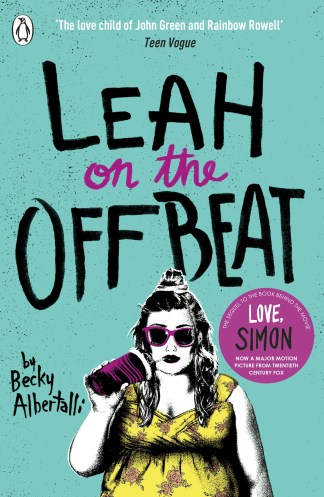
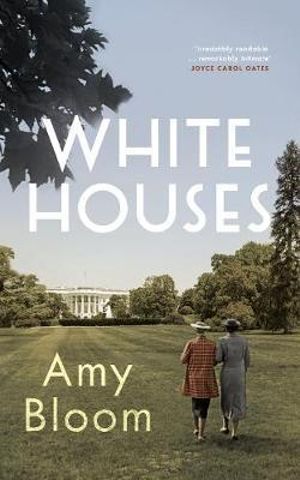
White Houses – Amy Bloom Leah on the Offbeat – Becky Abertalli

Under our breasts and in our creases, we smelled like fresh baked bread in the mornings. We slept naked as babies, breasts and bellies rolling towards each other, our legs entwined like climbing roses. We used to say, we’re no beauties, because it was impossible to tell the truth. In bed we were beauties. We were goddesses. We were the little girls we’d never were: loved, saucy, delighted and delightful.’White Houses’- Amy Bloom

I just look at her. I just can’t believe I’m allowed to do this. I can just stare at her face without it being creepy. I want to memorise every inch of Abby – the shine of her cheekbones and the brightness of her eyes. There are tears in her lashes and her cheeks are sort of puffy. I don’t know how this girl can go from laughing to crying to kissing and back, and still come out of it looking like an actual moonbeam.’ ‘Leah on the Offbeat’ – Becky Abertalli

Such tenderness.

It goes without saying that it can’t be easy to come out and for centuries it had to be hidden. That’s still a necessity in many, many countries – but thankfully, here and America, despite Abbott and Trump, it has become a non-issue as far as the law is concerned. Not that it makes announcing it to friends and family any easier as a result.

white-houses

Of course, in mid-C20th America, the setting for ‘White Houses’, the option wasn’t there for either gender, but I suspect the authorities were tougher on the males. Naturally, getting away with it was much easier if you were the wife of the President. As stated, the FLOTUS was not the beauty, in the classic sense, she was in her youth by the time of her liaison with the lover in this semi-factual tome. But then, nor was that lover – although the latter blamed that on the unflattering photography of the era. Not that attractiveness is in any way important, except in that perhaps plainness doesn’t conform to male fantasy. In any case hubby, POTUS, was in a semi-open relationship with his secretary and those in the know, including the media, turned a blind eye. Wouldn’t happen in this age of shock-jocks and gutter media. In that period the White House kept its secrets closely guarded, including FDR’s paralysis. Eleanor was a much admired figure, even loved, by the general public; noted for her good works and lack of airs. Compare that to today. The two led separate lives – maybe that’s still relevant – and Mrs Roosevelt’s close companion, during the years Bloom is writing about, was former journalist Lorena Hickok. Despite the crowded first lady’s schedule, the couple do find time to be intimate.

The pair are from entirely different backgrounds – possibly accounting for the mutual attraction. Hick’s early years were hardscrabble with an abusive father. She ran away to join the circus in her teens, losing her virginity to one of the ‘freaks’ on display at a time she was fast discovering she had a way with the written word. That leads to her career – a career that had to be curtailed when she became too close to a powerful woman.

The novel is told in a hard-boiled style from the lover’s perspective. Most characters are historical, but there are a few invented ones such as Parker Fiske. He loses his cabinet position due to his sexual proclivities, perhaps pointing to a few double standards.

Amy-Bloom-Slider-crop

This reasonably short novel is a compelling enough read, leading one to delve to deduce fact from fiction by sussing out other interpretations of the same tale.

Fast forward to the present and the YA book by Becky Albertalli (who found fame with ‘Simon vs the Homo Sapiens Agenda’), ‘Leah and the Offbeat’. This story is as contemporary as can be. I suspect its target audience will rush to it as they obviously did to the first novel, heightened by the fact that Simon is also a character in this.

wh

Leah is in her final year of high school, is a drummer in a band, is definitely not one of the in crowd and is potentially a talented artist, although the latter is kept well hidden. She is also coming to the conclusion that it is not only boys she is attracted to. In the heady weeks leading up to the prom Leah’s support group is fracturing over a racial comment by one of her cohort. It’s offended her to the core, although it was directed at another. Leah is outwardly feisty and opinionated, but inwardly torn between the lad who’s taken a fancy to her and Abby, the hot girl who is everything, it seems to her, she is not. As the group decide on their college options Abby and Leah are drawn together, especially once the former dumps her jerk boyfriend.

wh01

As a read for a sixty-something fella, this wasn’t usual fare, but it carried me along to the end well enough. But girls of a certain age, as well as a discerning lad or two, will love it, as evidenced by the gushing but wholeheartedly felt positive reviews on-line. And if it helps even one young person struggling with their sexuality – well then, despite being a cliché, it’s worth it’s weight in gold.

Amy Bloom’s official site = http://www.amybloom.com/

Becky Abertalli’s official site = https://beckyalbertalli.com/

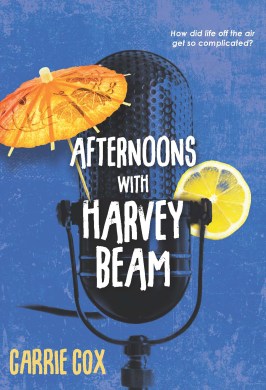
Afternoons with Harvey Beam – Carrie Cox

On a trip away to Mangoland I spent a few most pleasant late afternoons with Harvey Beam, resting up from forays to the scenic temptations of the Tweed and Byron Shires. He was terrific company, even if he had come down in the world.

I discovered that, since gaining a foothold in big city radio, he had progressed to being the king-pin of the breakfast slot. Even then it was much to his father’s disgust. He was earmarked for far, far better than that tawdry profession. All this Harvey confided to me those sunny afternoons.

hb

Nothing lasts forever for any of us – not prime time nor life. Eventually Harvey’s ratings decline and he’s shunted to the sleepy afternoon slot, a new sycophantic, fawning and golden-tonsilled brekkie host is unearthed with old Harv starting to feel he’s on a downward slippery slope. And then, to cap it all off, he’d recalled to Shorten, the country town of his upbringing. Here his disapproving old man is gravely ill. On arriving his dad doesn’t want to know him and his brother’s being an arse. His two sisters, to add more to his woes, are cat fighting like there’s no tomorrow. Back home his daughter decides this is the time to have a major crisis and Harvey confides it’s all getting a bit too much.

It sounds dire, but there’s an up-side. He can take a breather and re-calibrate, he tells me. En route he had also met Grace and that may amount to something too. And then, guess what? The local radio boss offers him a time-slot. Could this be a blessing in disguise?

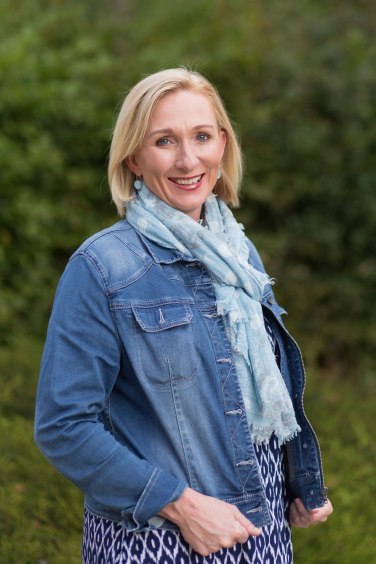
Is Carrie Cox the new Nick Earls? Her style of writing reminded me of the Sunshine State’s scribe at his best. Needless to say, then, I revelled in ‘Afternoons with Harvey Beam’. Earls has been around for quite a while now, but Cox is only starting out. The Perth wordsmith has several other publications under her belt, but this is her first novel. Stick at it young lady. You’ve all the attributes.

carrie_cox_author_image

One afternoon I was about to doze off when Beam confided to me that his nick-name within the family was Pencil. It took a while for the penny to drop. Harvey Beam. HB. Get it? Clever one that.

An interview with the author = https://www.betterreading.com.au/news/qa-with-journalist-turned-author-carrie-cox-talks-about-her-novel-afternoons-with-harvey-beam/ =

A Sand Archive by Gregory Day

I’ve had a life-long love of sand – beach sand that is. For most of this life I’ve loved disporting myself on it, soaking up the sun half-naked till scare campaigns and age put an end to all that hedonism on my part. These days I perambulate along strands rather than being supine. My island is blessed by stunning beaches – and right now I am close to two of the best – Boat Harbour and Sisters. But there’s wilder sand too. Dune Sand. Coastal dune sand, at places such as Henty on the West Coast and Boobyalla up the North-east, is formed by wind into ever-moving nature-built monoliths. The latter was a favourite of my father as he explored, foraged and hunted around those parts, entranced by its wildness.

day

Now we have a novel about a fellow who himself spent a life time in studying such dunes. He concentrated on how to control their steady march to prevent valuable land and infrastructure being submerged. Now this may seem dry fare, to say the least, as the basis for an engaging read, but in the hands of Gregory Day it becomes enthralling. His talent as a wordsmith first came to my attention in his previous tome, ‘Archipelago of Souls’, set on another wild place, King Island. So I knew he could make this arid subject matter come alive. I was not let down. I loved it. It will no doubt be one of my reads for the year.

FB Herschell was a minor engineering functionary for the Victorian Country Roads Board of Works, operating out of Geelong in the 1960s. He was tasked to stablise the sand dunes on a section of the Great Ocean Road. To garner the best knowledge possible, as to how to go about this, he successfully applies to go to Paris to consult a leading expert on sand shifting, as well as to visit a major project in the south west of France. The year he embarks on his fact finding mission is significant – 1968. As fate would have it, in the City of Love, he meets and falls under the spell of Mathilde, a student revolutionary. She just happens to hail from Arcachon. It’s in the heart of the dune country he is about to visit, near the ginormous Grande Dune du Pyla, the most massive in Europe. Of course marram grass is the answer there, as he expects it to be back home. Its suitability in Australian conditions becomes a bone of contention later in the book.

But what happens to his love affair with his captivating, but conflicted, young lady? I’ll only say she is not the woman he spends his later years with back in Oz. In his dotage he realizes his life work has had only minimal impact on the planet for he had, ‘… sat, year after year, in the McKillop Street (Geelong) office, attempting to widen the parameters of sand. He well understood the public purpose of these activities, but there was a private universe in them as well. And in that private universe was a city of his imagination, where the tall elegant gates of the Jardin des Plantes slowly opened onto a humid darkness.’

day03

Paris played large in his remaining days as FB composed a summation of his endeavours, ‘The Great Ocean Road: Dune Stabilisation and Other Engineering Difficulties’. But, in the between the lines of the parched sentences he wrote on the topic, in this rarely read small publication, are the clues that provide the basis for this sad, joyous, poetic and erudite rendering from another mind capable of ‘…bravura work’. It is lovely, just lovely.

The Sydney Morning Herald’s review of the novel = https://www.smh.com.au/entertainment/books/a-sand-archive-review-gregory-days-novel-of-the-consolations-of-a-solitary-man-20180712-h12l02.html

Leather Soul: A Half-Back Flanker’s Rhythm and Blues by Bob Murphy

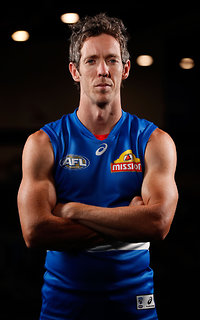
In this year’s Herald Sun popularity poll for most popular AFL player, Adelaide’s indigenous, buzzing goal-sneak, Eddie Betts, was the clear and expected winner. He is a ‘character’ in what some (not me) claim is becoming a characterless robotic game. It’s hard not being drawn to Eddie’s big smile, the passion with which he plays and his delight in scoring a major. But, for several years on the trot, the Sun’s accolade went to a Western Bulldog’s player. Just as the Doggies were most people’s second favourite team, so Bob Murphy was the player all and sundry admired – me included. He was always second on my list behind Luke Hodge, just above Cyril.

He was rated highly for his loyalty to his guernsey for a team that had a long history of occasionally challenging for, but never making, the big dance – that is, until the fairy tale that was 2016. Mostly, though, they were cellar dwellers. Their previous premiership was way back in the fifties. They were the team from the oft struggle towns that formed the western suburbs. And arguably the heart and soul of the ‘Sons of the West’ was Captain Bob. But he has another string to his bow that earns equal kudos from me. He can write.
Mentored by Martin Flanagan and other doyens at the Age, he developed his own voice and style. Fingers crossed, he looks set to take on Flanagan’s mantle. So, unlike most from the world of footy,

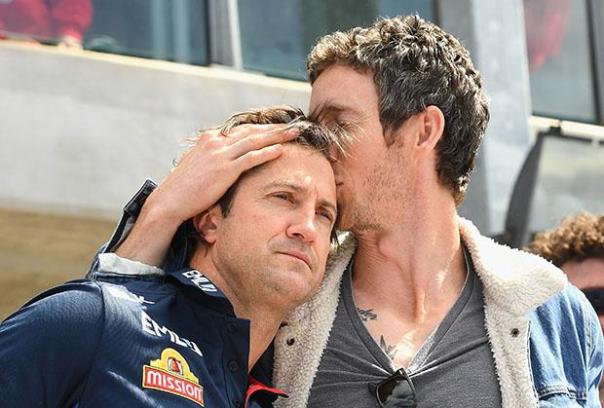
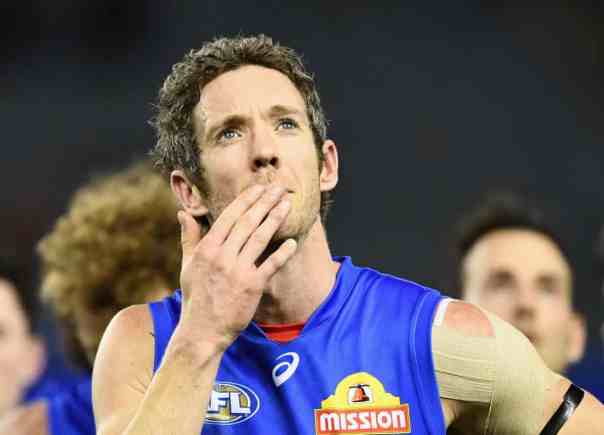
bobRobert Daniel Murphy would need no ghost writer for the saga of his career. He has hung up his boots, involved himself in the media, is more often than not sporting a flannie and now has ‘Leather Soul – a Half-back Flanker’s Rhythm and Blues’ on his CV. He has written with great aplomb to produce a page-turner. There’s candour, tales to tickle the funny bone and poignancy. What we sense from it all is Bob’s love of team, history, family, humanity and Aussie Rules. I urge all footy-lovers to purchase a copy, kick back and enjoy, as I did.Reading ‘Leather Soul’ I found that I had a couple of very tenuous connections to the great Bulldog, nonetheless of which is the fact that a few weeks ago my Hawks-loving daughter actually got to meet him at a book signing. But there were also other cases of the two degrees of separation thing. Back in the eighties I was teaching in the north-western Tasmanian town of Wynyard. I was reasonably able in the classroom and had a handle on most aspects of the art of teaching. But, over the years, there was one skill I never mastered – the ability to tell identical twins apart. My colleagues always managed to do it, carefully explaining their subtle differences, but it was beyond me. So when the Atkins twins came along during those years I was all at sea – and they knew it. They milked my hopelessness for all they were worth too. Their talent lay more outside of the classroom though – revolving around the leather ball. Both, the experts predicted, would make the big league and soon after leaving school both Paul and Simon headed to VFL central – Melbourne. In the end only one climbed the mountain to the top.
bob02

Simon Atkins appears on page 47 of the book, but by the time he met the scrawny young lad turning out for Werribee, his own playing days at the pinnacle were over. The team was coached by Alistair Clarkson and Simon’s job was to make sure the young buck made it to training on time. My ex-pupil later became a runner for Footscray after contributing 127 games to their cause. He has a spot in the folklore of another team as well. He kicked the last goal for the Fitzroy Football Club. These days he manages a firm supplying cranes to construction sites.

The other link comes much later on in the memoir when the author relates a tale, in turn told to him by another ex-Taswegian in Butch Gale. It starred legendary bush coach, Frog Newman, who once used a dead (or alive depending on who’s telling) possum in an address to lacklustre players to spur them on to use more guts. Need I say more? Anyway, for a long time I taught in a school in a little village in the hills behind Wynyard and had the pleasure of instructing Frog’s two offspring in my classes – and lovely kids they were too.

Simon Atkins’ nickname, in his football days, was Axe and a highlight of this publication is Murphy’s list of the best monikers given out to often unwilling recipients during his time in the game. You’ll have to make a transaction of money to find out why certain identities were labeled ‘Lacka’, ‘Harvey Norman’ ‘The Mailman’, ‘The Lantern’ and best of all, ‘Clock’.

bob04

Bob’s adoration of his last coach Luke Beveridge resonates throughout the volume. LB is a bit of an eccentric in his own right, but certainly no Frog Newman. And the wordsmith also dishes out quite a deal of love to his teammates, particularly Matty Boyd and Ben (the Beard) Hudson. He fails to mention another noted eccentric, Brian Lake – perhaps because of his defection to my team – and is scathing with his assessment of Jason Akermanis. The latter seemed to have managed, during his time with the team, to get everyone completely offside.

bob06

Like Murphy himself as a footballing wizard, this is a lithe and immensely likeable read. The hero was known for his ‘…astounding performances on and off the field’ according to Beveridge. To my mind, in his action, Bob was a ‘glider’. He always seems to have eons of time on his side, despite the commotion going on around him, to glide away from packs, scanning upfield for options, hitting leading forwards with pinpoint accuracy.
And I glided through this product in print in a couple of sittings and I relished doing so. The writer now has his own show on Fox but it is my hope that the future will lead him to concentrate on his writing for, as Martin Flanagan tells us, ‘…there is only one Bob Murphy’.

Book details here =https://www.blackincbooks.com.au/books/leather-soul

Teacher: One woman’s struggle to keep the heart in teaching by Gabbie Stroud

It’s simple. For thirty-five plus years I loved teaching. I loved teaching kids.

And then ’…, under the guise of equity and excellence standardised NAPLAN testing and the My School website infiltrated classrooms around Australia. Infiltrated the profession I loved. Infiltrated the classroom my baby would one day attend.’ So wrote Gabby Stroud. In my case, though, it’s my beloved granddaughters. I live in hope it will soon be consigned to the dustbin, along with the many other previously misguided notions inflicted on our nation’s kids by the ‘experts’ and the dullards in the higher, rarefied echelons of Education Departments all over Australia. I live in hope of that happening before its damage gets to be inflicted on those precious, unique and tender minds so close to my heart.

teacher

Now I could spend the rest of this review railing against other travesties such as National Curriculums, IWBs, A-E assessments, rubrics that came on-stream in the later years of my career, alongside my by now obvious abhorrence of NAPLAN. Instead, I’ll urge every interested parent and practitioner I can influence to simply read Ms Stroud’s ‘Teacher’. With a slow death NAPLAN killed off her career as far as a classroom teaching was concerned. Fortunately she has found success in other fields and has delivered this tome as a wake-up call. I suspect it will strike a chord with many front line educators in schools across our wide brown land. It’s well reported the frustration that exists with a system it has encouraged that focuses on student failure as opposed to strengths, on conformity rather than difference and which, in its wake, is destructive to the art of teaching.
After I finished the final page I reported to my beloved that I could write a book on Gabbie Stroud’s tale of her short-lived stint as a drillmaster when all she wanted to be was a teacher. My lovely lady’s response was ‘Why don’t you?’ Well, it would make me too angry to start with. And, besides, those who need to read her plea for common sense, those who put and keep NAPLAN in place, have not listened to date. We know those who impose their politically motivated, self-serving notions on the wonderful kids of our country will be deaf to any plea. That would take something they lack, something most out front of a classroom have in spades – empathy. As much as I look back with fondness I am far happier and less stressed as a retired person.

There are differences between the author and myself. An ocean cruise made me see the light. Apart from in my first year I never struggled as a teacher, but I largely operated in more benign times. I was, I realized on that Pacific sojourn, mentally on my way out and as the full negative impact of NAPLAN hadn’t really affected me, it was only a minor consideration in my decision. I really struggled after that cruise. I only lasted one more term. I didn’t want to be in the classroom anymore. It was time. I was done.

NAPLAN didn’t kill me off. There are other contrasts as well. I had no tickets on myself that I was inspirational in front of a cohort of students, but I was competent, in control and had a good knowledge base. I ran, generally speaking, a tight and comfortable ship. I lasted far longer than she did, although that’s in no way her fault – just luck and timing. Hers was an excruciating burn-out to resignation, the impositions from on high grinding her down. I did not have the significantly profound relationships with my students she claims she had, but the student/teacher relationship was at the core of my practice. Nothing, I would think, could be more central than that – but then, my confrontation with NAPLAN was not up close and personal. Like the best in her field Gabrielle Stroud possessed a soft soul encased by a brittle shell. And, as she states, to be a teacher who truly engages you need to possess a little crazy too. The best I worked with had that – or at least they put on a convincing act. They had the ability to keep the troops guessing, to produce the unexpected. The art of it should never be undersold as novices quickly discover. You either have it or you don’t. ‘Teacher’ is infused with the type of humanity so lacking in those pulling the strings in Canberra and to a lesser degree on this island. It makes me sad that it seems their view is that a teacher’s main role is to test and produce data on what they already are fully aware of. With NAPLAN in operation young esteem and self worth is crushed for many, with parent and teacher left to pick up the pieces. The role of a teacher as a nurturer is fundamentally impeded.

On a recent trip back to Burnie I had the need to visit a real estate office. At reception I vaguely recognised the beautiful face looking back at me as I requested time with the agent. She took me to his office and said to her boss, ‘I expect you to really look after this gentleman. He taught me. He was one of the good ones.’ Bugger profound relationships. ‘Good’ will do me just fine. If my career is defined by that, I’m chuffed.

teacher01

Ms Stroud writes with heart about some of the students, colleagues, places and schools she worked with and in. Please read this book.

Ms Stroud’s website = https://gabbiestroud.com/

In the Garden of the Fugitives – Ceridwen Dovey

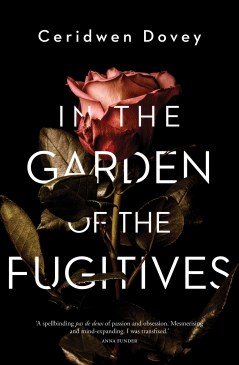
It took me a while to warm up to Ms Dovey’s creation, although I never doubted her aptitude to wend together, with able wordsmithery, the two dominant strands of her tale. It just took a time for me to become engrossed in it – right up to the final chapters in fact. For much of the reading of it I found the history involved in the archaeological dig around Vesuvius, an aspect of one of the threads, far more interesting than the interlocking saga of the two main protagonists.

Vita is a middle-aged academic living in, of all places, Mudgee. After a life rotating around Oz, RSA and the US, why choose this place to settle down? In the end it becomes clear. Her birthplace was South Africa, a country she returns to as a younger woman to pursue her art in a somewhat desultory way. I should imagine this nation these days isn’t an easy one to love. It would have perhaps not so been the case during the apartheid days, depending on what side of the equation one was on. She gives her returns to her home country her best shot and challenges its outside perceptions.

Her old mentor Royce is not a well man and it soon becomes evident that, what he had with Vita, was of a closer nature then purely to guide her in the ways of academia. After a long estrangement he reconnects with her in the old fashioned way – by letter. Initially the book is in the form of a reproduction of their missives to each other, but soon its alternating chapters morph into the story of, for a time, their shared lives. But Royce has something on his conscience – his unrequited infatuation with a fellow university class mate, Kitty. He later follows her to a scientific excavation in Pompeii – her special interest being the Roman gardens of the time. Despite Royce’s best efforts, Kitty falls in love with a most alluring fellow who is not the solid, devoted beau Royce feels he could be to her. So, in his correspondence with Vita, there’s a secret he just has to laden her with.

It all made for a very interesting piece of work but, despite the surety of Dovey’s construction, it was a slow burn for me, measured by the weeks it took me to get through it. It was not a novel I rushed back to each day.

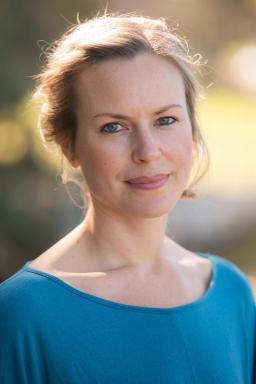
The author’s website = http://www.ceridwendovey.com/

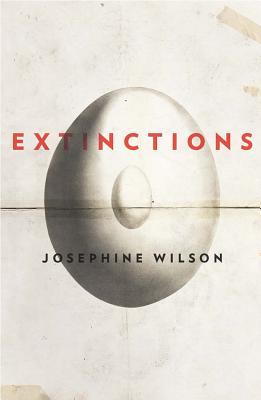
Extinctions – Josephine Wilson

Worthy. That’s the best description of Wilson’s novel. It was a worthy winner of last year’s Miles Franklin. It will never be looked back on as a great winner, but there’s no doubt of the author’s worthiness in turning a collection of words worth our while perusing. This tome, unlike many other winners of the prestigious award, had not been purchased but passed on to me. The words my writerly daughter used were, ‘You’ll enjoy this.’ She knows. I did.

There is a worthy trend in British film making at the moment, with many of their great thesps getting on in years, to produce for us in the older demographic. Usually they are fairly mushy, but nonetheless enjoyable for that. They are tales about falling in love again when that was felt something for earlier decades. Cite the ‘Marigold Hotel’ duo and the more recent ‘Hampstead’. There’s numerous others. Also, some ponder on the meaning of love itself at our age. ‘Extinctions’, the novel, constantly reminded me of, not an English speaking movie, but the Swedish gem, ‘A Man Called Ove’. A curmudgeon is softened by a female influence.

And Fred, in ‘Extinctions’, has Jan for this – maybe. A tragic event has bought them together, even though they’re next door neighbours. Fred’s life has been marked by misfortune – the passing of his wife; the accident causing his son to be in high-dependency care. As a result Fred has retreated to a retirement village, pulling his past behind him to wait out his own extinction. He is going to stew in his own juices, but Jan attempts to jolt him into action, to get him into gear. It is, without giving anything away, a transformed Fred we have at novel’s end – but transformed in a positive way?

Frank’s previous work was high in academia, in the field of concrete no less. Oh dear, we might all sigh, but there’s more to cement than meets the eye. Design fascinates the old fellow and in the past he has collected significant examples, some of which he cannot bear to part with as he downsizes. He drags them into his gated community.

Jan also has a tale to tell about her life. She can see what Fred could be and doesn’t give him an inch. His daughter has a back story as well. She’s affected by her origins and has temporarily escaped to England.

No, there’s little lovey-doveyness to be had here like those Brit cinema offerings. But that doesn’t mean there isn’t light – and perhaps, just perhaps, a few second chances as well.

A Feast of Winton

Is Tim Winton our greatest living author? With his latest print offering a case could be mounted for this accolade. His Australianness makes him unique, particularly when he comes up with such use of the vernacular, in such crude poetic glory, as in ‘The Shepherd’s Hut’. It’s up there with ‘The Riders’ and ‘Dirt Music’; its Jackson (Jaxie) Clackton with Scully, Luther Fox and the denizens of ‘Cloudstreet’. This outback centred stunner will linger long in the synapses. After the relative disappointment of ‘Eyrie’ and his memoirs, for this fan, our GLA is back on song.

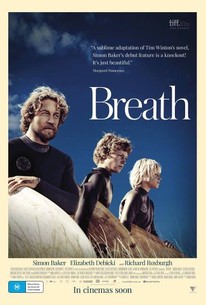
Just as we can celebrate this, we can also re-celebrate ‘Breath’ anew. His 2008 publication sang of the sea, the coastal littoral and some of the mystique of surfing culture. Simon Baker’s directoral debut for the big screen has bought this Winton work back to life – and it’s a beautiful thing to behold.

The movie takes us to a surfers’ paradise, but as far removed from sun blasted beaches as it is possible to be. Set around Denmark, on the south coast of WA, I do not think the sun settled once, for the duration of the film, on the bleached hair and kombis of this part of the surfing landscape. There, like my own island, could be considered as part of the Australian sport’s new frontier. Pikelet (Samson Coulter) and Loonie (Ben Spence) are in their early teens, just putting their toe in the water as far as this recreational outlet is concerned. Along comes former surfing god Sando, Baker himself, as their mentor – and he’s full of it. He’s a bit of a dick, actually, as he challenges the lads’ manhood, virtually forcing them to take on monster breaks that would make any parent shake in their boots at – if they knew. Loonie, as his name suggests, is up for anything and knows no fear, but the far more reticent Pikelet isn’t so swayed by Sando’s reputation (just who did leave those old surfing mags lying around?) and bullshit.

Sando has a missus. Eva, a former skiing champ, is recovering from a possible career ending accident on the piste. She is a distant and dissatisfied figure, clearly not all that enamoured of Sando’s big-noting to the boys. When he pisses off to Indonesia, the susceptible Loonie in tow, Eva seduces the at-a-loss Pikelet. He starts to see the world, as a result, from a different perspective and begins to become the man, we suspect, neither Loonie or Sando could ever be. Although the sex aspect caused some minor gnashing of teeth, it was tastefully handled by Baker.

The brooding coastline, capable of producing maelstroms with little notice; the surfing under grey and always foreboding skies, were a masterful, evocative aspect of both the book and film. At times, though, the lack of acting chops by the two young thesps – they were chosen for their looks and prowess in the swell – is on show. As well, the movie almost outlasted my bladder – there could have been a bit more judicious editing. But it is a worthy match to the great man’s own words – and as a bonus the writer himself is the adult narrating voice of Pikelet.

And his words don’t get much better than in ‘The Shepherds Hut’. With young Clackton he has gifted us a character for the ages. With verbal brilliance the author takes us on a journey with Jaxie to the great beyond of nothingness that outwardly are the West Australian deserts. Inwardly, Winton’s wordsmithery makes them come alive, giving up their primal burnished beauty, becoming the exact opposite.

Winton’s hard done by, but bush savvy, hero flees out into the scrub when he discovers his violent excuse for a piece of shit father squashed and lifeless under the Hilux. He calls his obnoxious old man Captain Wankbag and has had a lifetime of being belted mercilessly by him. It’s a fact well known around the blowfly blown community that’s the pair’s home. His mother, similarly pummelled by the vicious Sid, has, perhaps thankfully, succumbed to cancer a while back. The old bastard is the town’s provider of meat – to call him a butcher would denigrate that profession – and is therefore tolerated despite his unpalatable ways. Jaxie knows a suspicious eye will be placed on his culpability for what occurred to the scumbag beneath the ute, so off he goes. Besides, there is a solitary shining light in his life and she lives in another blighted collection of buildings on up the road a fair distance. He knows he must avoid civilisation at all costs, but he’s woefully under-prepared for a bush bash, although he is at peace with the lie of the land and that must count for something.

Even so, he’s on his last legs when he encounters the wonderfully monikered Fintan MacGillis. He’s a mystery, seemingly biblically banished to the arid wastelands to largely live off the land, as barren as it is. He is slowly addling-up through loneliness. But such is their collective predicament, when Jaxie comes across him, they very soon discover they are in dire need of what the other can give. The worn, fat ex-priest has a hut – and that’s salvation for the boy. But can the unlikely duo cope with such a harsh, unforgiving environment and survive, given its about to give up a few secrets?

Like the best of Winton ‘The Shepherd’s Hut’ compels; it mesmerises in a way akin to the mirages on the salt lake that is close company to the shanty the two protagonists share in wary proximity. It’s a truly beautiful work, even in its brutality and brutal language. It tells us there has to be hope – there just has to be.

The author’s FaceBook page = https://www.facebook.com/timwintonauthor/

Trailer for ‘Breath’ = https://www.youtube.com/watch?v=MOGrFNaTaao

Wildwood – Colin Meloy

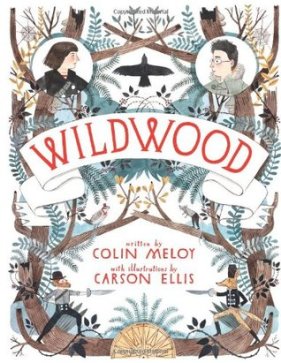
I didn’t intend to read the book straight away. It was described as America’s ‘Narnia’. I hadn’t ever read any of the that esteemed series and I’d already earmarked a local great’s latest as next on my list. ‘Wildwood’ was with a number of tomes my beautiful daughter had handed over to me in the expectation that I would enjoy them. I usually did, but ‘Wildwood’, on initial appearances, didn’t appear to be my thing. Besides, it was hardly newly published, dating from 2011. As well, it was long. Anything over 500 pages, for me, is long. It would take me forever to get through. Nup, it looked suspiciously like a non-starter.

Meanwhile, Katie had also been telling me about a new, to her, band she had discovered that she also thought I’d enjoy – the Decemberists. And I did, when she sent me a link to them. She informed me that the lead singer, Colin Meloy, was also quite the wordsmith, as songwriters have to be. He had also tried his hand at writing novels and had had a few published. She was currently reading one and would pass it on when she had completed it. Initially I didn’t make the connection when she handed it over, in amongst a collection of other tomes, further down the track.

So I put ‘Wildwood’ aside, thinking maybe I’d get to it one day, when I’d finished some more pressing titles.

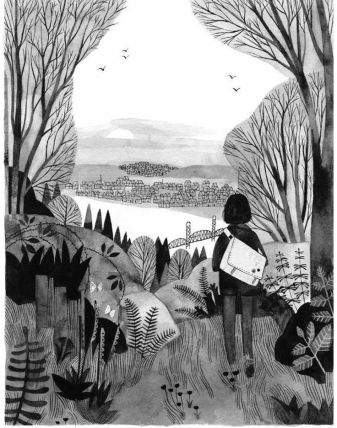
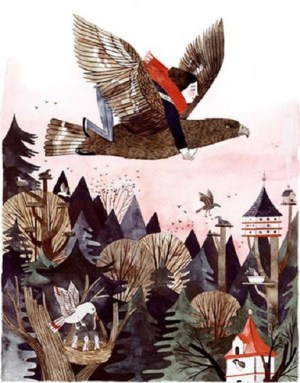
Last week I was about to start the Winton, but beforehand had a look at Katie’s pile. Flipping through ‘Wildwood’, I was struck by the illustrations it contained – retro gorgeousness. They were akin to something from my own childhood. When I sought out information about the illustrator, Carson Ellis, turns out she is the author’s wife. Then the penny dropped. That guy was the Decemberists’ front man. Well that was worth reading the first few pages for. I’d get a feel for it before tackling ‘The Shepherd’s Hut’. Then I was hooked, wasn’t I? Tim W would have to wait.

I did enjoy ‘Wildwood’ very much. It was a real page turner and I was through it in less than a week. Good going for me. Meloy has struck the right chord (hum) with a style suited to his target audience. The tweenies, I suspect, would immediately be attracted to it. He doesn’t pander to them – he sets challenges as far as the language he chooses is concerned. It also had this ancient adult enthralled. It was a lively narrative of daring-do in an alternate world where animals can talk and live on equal terms with the human inhabitants. Eagles and owls, to my delight, play a prominent part. Our lead girl, Prue McKee (adore the name), is a feisty construction from Meloy. She is determined to save her baby brother from evil forces after he had been stolen from our world by a murder of crows. I was particularly drawn to Prue’s offsider, Curtis, who found himself embroiled in the girl’s adventures all because he indulged in a bit of harmless stalking. He’s a real nerd hero.

It’s a wonderful collection of principalities invented for us in the Impossible Wilderness. Katie, you handed me a ripper. Thank you.

The Wildwood Chronicles’ site = http://www.wildwoodchronicles.com/