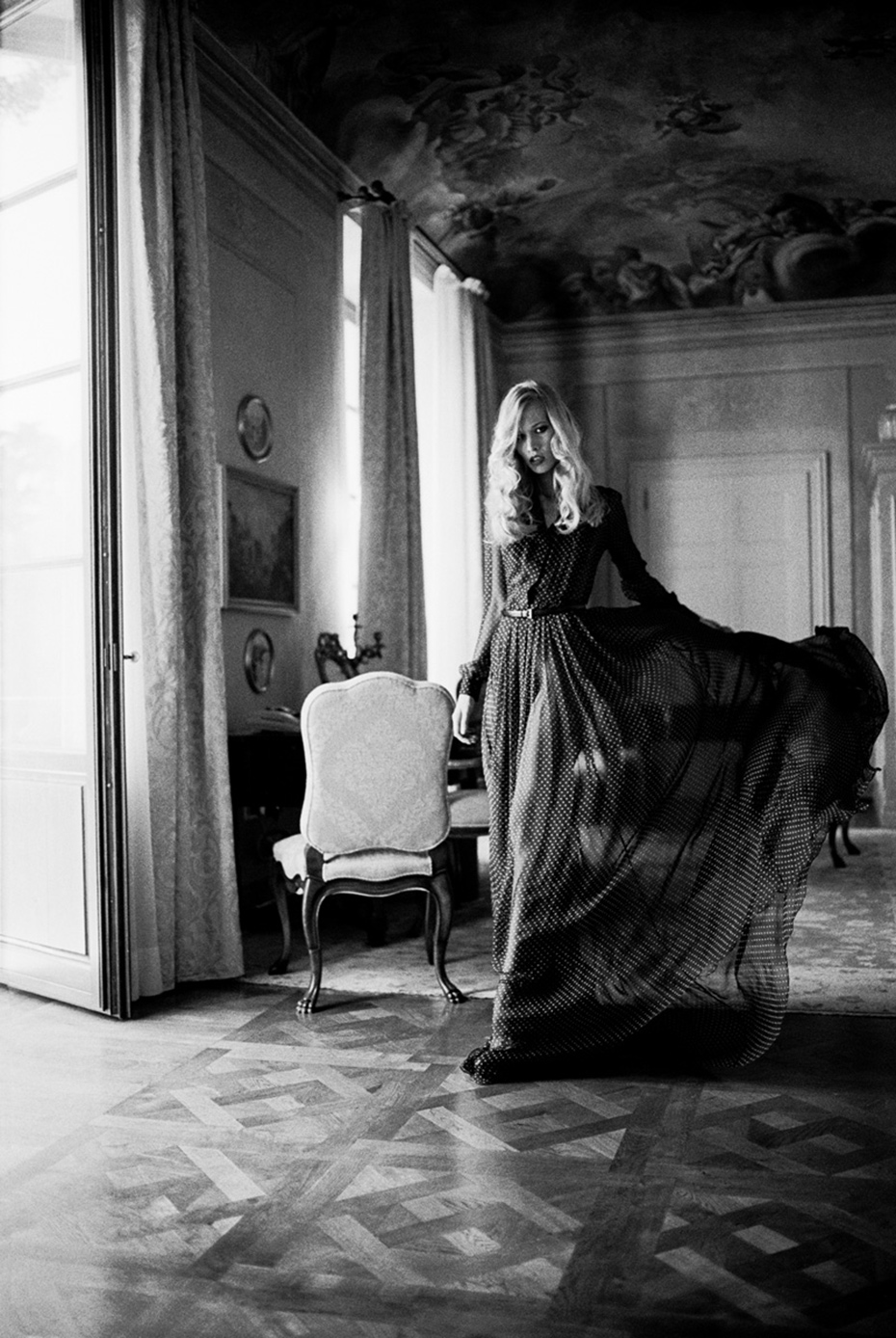
Category Archives: art and photography

Young, Italian, Talented

Marta was telling how she had her start, ‘I was looking for some photos and drawings for my characters in a role-play game on-line,…(browsing) on websites such as Flickr and DeviantArt…because I loved looking at beautiful images.’ She was so taken by what she found she wondered if she could become involved in that scene too. In a remarkably short time photography became her hobby, then vocation. So, going full circle, I was meandering around the latter mentioned in the ether when I discovered, for myself, the attributes of Ms Bevacqua and her ethereal art.

Marta Bevacqua01

Just fancy – so young and she has already garnered quite a standing. It’s hard to imagine, I guess, for my generation that what is viewed on-line now inspires artistic careers. In my day that sort of thing was found in real art galleries, in the traditional popular media or from books. Nowadays the world is just so accessible and those of Marta’s tender years take to it as if it’s the most natural activity there is. She only graduated from high-school in 2008, for heaven’s sake. It still seems amazing to me, the digital landscape – I wonder what will be ‘amazing’ when her generation is as far as I am down the track? This year she will turn 27, yet this native of Rome has already been in the world of her creative passion for a decade or more, earning monetary recompense from it. If she’s this proficient now, what will she be capable of by the time she reaches the ages of most of the purveyors of her craft I check out on my laptop.

Marta Bevacqua05

There always seems to be the one image that eye-enchants enough to stimulate further investigation. If you do visit her profile page on Deviant you will possibly encounter this image, the one that led me to delve somewhat further by clicking on Marta B’s ‘galleries’ icon. If not, it will surely be within, on her own site or the other places that host her product, such as Instagram and Behance. As for the particular picture, there’s a girl and a dog/wolf together peering out into the distance. Was it because the human subject appeared as lupine as the canine beside her I was attracted? I was soon finding other images of this photographer I could appreciate just as much.

Where has this camerasmith found the necessary stimulus to provoke such gorgeous finished products? ‘I live in a beautiful country house surrounded by green trees everywhere. I think that I would never have started taking photographs at all if I didn’t live there.’

Marta Bevacqua06

Books, movies, music and the work of other artists also get her mojo running. There are a preponderance of portraits in her oeuvre and that’s how she found her start when she was a mere slip of sixteen. She made portraits of herself, her two sisters and a number of close friends; made up a portfolio and duly submitted it to agencies – at least one being impressed enough to start her on her way. Her stuff is popular with many book publishers for covers and observing her images, they do seem the bees’ knees for enhancing chic lit/romantic genre fare. Now days commissions also come in from fashion houses to promote their brands in magazine shoots. Naturally she exhibits as well. She has also spent time in Paris to discover if an immersion in that city will open her up to new directions in her work.

Marta Bevacqua08

She is the first to admit she is still on a learning curve to hone her technique, but when asked to produce three words to describe what she wants from each photograph she offers up ‘dreamy, storytelling, imagination.’ Simple words maybe, but for this youthful Italian, if the stars align, could she be on the cusp of being a significant player?

Marta’s DeviantArt gallery = http://m0thart.deviantart.com/

On location with Marta = https://www.youtube.com/watch?v=AhiDHoPS4C0

Kiss

And then I turned the page in The Age – it was a while back now – and saw it. I was, to be honest, mildly shocked. Had I been standing, I would have taken, I think, a backward step. I shouldn’t have initially recoiled in that manner in this day and age, but I did. Showing my advanced years, I guess. Two women kissing – what’s that now? It was deemed fit to print in a daily newspaper so my reaction should have been more matter of fact. And, once I caught my breath and examined it more closely, I realised that this had none of the salaciousness that’s only a click away on-line. In fact, the image was nothing if not beautiful. But it still sent a frisson through me – and continues to intrigue, so much so I’ve been back to it repeatedly. Eventually I had to find out more.

sophia hewson

I still think to shock was the artist’s aim. Yes, artist. It’s not, as I assumed, a photograph. In fact it was a finalist for the Archibald Prize for Portraiture in 2014. And it seems I wasn’t the only one to sit up and take notice. It was a talking point at the time in artistic circles – but it didn’t achieve the ultimate gong in the awards. Pity.

A certain amount of its notoriety, if that’s the right word, came from the identity of one of the subjects of ‘The Artist Kisses’ being songstress Missy Higgins. I remember at the time there was a fair amount of conjecture around Missy’s sexuality – as if that’s anyone’s business but her own. She had been, up till then, coy on the subject – so what was she saying agreeing to sit for the portrait? These days she is married, heterosexually.

sophia hewson01

The other, the bespectacled figure, is the artist herself, Sophia Hewson. Explaining her goals in submitting the piece for judgement in the award she states the aim was to ‘…create something equally portrait, self portrait, and examination of post-feminist self-objectification(??)’ Why Ms Higgins? ‘I sought out working with Missy because I belt out her songs in the car (I understand that bit). ‘I know her to be genuinely egoless with a deep respect for the artisitc autonomy, which meant she was willing to work with me outside the traditional portrait structure.’ She certainly did that.

Sophia Hewson 20

Sophia H only graduated, with a first class honours degree from the Victorian College of the Arts, in 2007. Already ‘Art Collector’ magazine has listed her as one of its top 50 collectable artists. She’s a multi-disciplinarian, engaging in sculpting and installations, as well as daubing. She has had a six month residency in NYC, met pornography stars in LA in research for future works and exhibited within her home state and without. She is not hugely represented in on-line galleries that I could discern, but she is obviously a talent to watch going forward. As to why she is an artist? Here’s how she responded in a 2010 interview:-
‘It seems to me artists need to get something out of themselves, I suppose they call it expression, but I don’t think it’s as pleasant a process as that, perhaps it is like that quote, a kind of exorcism. I think also for me there is a need to try and get down to the core of things, and there is a freedom I associate with being an artist or at least the possibility of a freedom.’

sophia hewson

The artist’s web-site = http://www.sophiahewson.com/

Hallmark Cards? What's Wrong With Them Turi?

Those who know me know of my generous support of the greeting card industry. I love purchasing what catches my attention, mailing them off to the folks I care about. So, I’m wondering Turi, what’s wrong with the Hallmark variety – apart from their ever escalating cost? Yes, yes – I agree that some of the artwork is quite twee, or to use her word – sentimental; so much so they border on being kitsch. And those are not my cup of tea either. But there’s variety with Hallmark – and many of them carry art or photographic work that is tasteful; pleasantly engaging the finer of our senses.

But Turi was worried that her response to the difficult months of her annus horribilis skirted the very fine line between Hallmarkish sentimentality and something that was acceptable to the more discerning buying public. Would they appreciate her ravens circling various beasts?

maccombie01

The worst year in Turi’s longish life saw the death of her husband as well as her forty year old daughter. Even more shattering, perhaps, was the decision of her son-in-law to take her beloved grandchild away from her locality. With all this – her past, present and future, in a short span, had been impacted on, leaving her reeling.

Turi did the sensible thing and sought guidance from a shock that would have sent many spiralling to a dark place. A counsellor put to her that she needed to take on a task that would offer a challenge, that would take her mind off her woes. Something, in other words, that would also have real meaning for her.

And thus she came up with ravens – angry ravens. Ravens attacking, or at least worrying at, various beasts. The latter, admittedly, seemed to be just bemused by all the attention. It helped. As time passed her canvases for this series morphed into a more benign tone as her mind settled. And, despite her doubts about them, these large scale paintings – their majesty so difficult to pick up just with an on-line perusal – did strike a chord with many. So the death of loved ones did have an up in the end. It gave her artistic pursuits a new lease of life.

maccombie02

And what makes her offerings to us in this series so special? It’s the lack of sky – or, conversely, the large amount of blank whiteness. Turi MacCombie is the first to admit she has issues with sky – therefore much simpler to leave it out completely. Doing so tends to give the works more immediacy, the critics opined. Perhaps sky would have made them more generic, perhaps even sentimental.

It was the gift of a book on birds, illustrated, that gave Turi the impetus for a life long infatuation – and this occurred around age ten. When she attempted to draw the avians for herself, to her eyes she didn’t make such a bad fist of it. She began to think that maybe some sort of artistic pursuit could be her vocation. It was a while before her dream was fully realised.

In school she displayed talent and later on, during her painterly education at Syracuse University School of Art, New York State, she came under the influence of a mentor in Douglas Unger. He showed her how to instil more depth in her work with a defter use of watercolours, fast becoming her favoured medium. She started gaining some success as an illustrator of children’s books, her work on display in an edition of Margery Williams’ classic ‘The Velveteen Rabbit’, as well as other co-productions with writers and some put together solely under her own name. And then she fell in love, marrying her Bruce, a composer and academic. Much later, when he was promoted to dean, she was at last free to pursue her dream. She now had the financial security to move from illustrating to the big canvas.

maccombie03

Today Turi lives in Amherst Massachusetts and thanks to that sage advice from her counsellor, she continues to work on the aforementioned series she terms ‘Confrontations’. And if Hallmark ever decide to commission her skills for a series of their own, then I’d reckon they’d be onto a good thing. I’d buy them, for to me they’re not at all .

turi macc

On-line galleries of Turi’s work = http://www.rmichelson.com/artists/turi-maccombie/

Exquisite

She must be some exquisite woman, must Cheryl Hodges. I can only surmise that, I don’t actually know the veracity of that for a fact as I’ve never met the lady. But what she produces is exquisite and I figure that a person of in-exquisiteness could never create product of such sublime beauty. Therefore Cheryl Hodges is exquisite to my mind.

Somebody else who is undeniably exquisite is my wondrous granddaughter Tessa Tiger Gordon. One of her favourite hanging out places is Basket and Green, up Elizabeth Street. It’s a delightful café and provides an array of playthings for the little folk. Tiges is very attached to the Mr Potato Head set to be found there, as well as an old telephone on which she can place calls to the important people in her world.

Another attraction here, apart from seeing Tess so engaged with conjuring up fun as only a three-year old can, is its Avant postcard rack. Particularly to my interest, from its free samplings, are those portraying the artistic endeavours by up and coming practitioners of artistic pursuits from the four corners of the land. On my last visit I gathered a couple of handfuls for closer inspection later. Once back in my abode by the river I discovered one depicting a collection of plant parts and a single insect. It was entitled ‘Australian Native Collection 2015’ and it was an offering from Ms Hodges. I am now ruing the fact I didn’t garner more of her exquisite image. In my amblings around the city I checked out all known locations of said card racks, but there was nary an extra one to be found. Undoubtedly they’d been snapped up by others with an eye for botanical (and zoological) beauty.

hodges05

From childhood this artist has always enjoyed drawing during her growing up on the outskirts of Canberra. The earliest examples she can recall were her renderings of the characters from ‘The Muppets’ television show. Her love affair with this medium has now evolved into a full-time career. She enjoyed her art classes at school and moved into exploring calligraphy. photography, ceramics and painting – the latter using both oils and watercolours. After school she pursued a career in finance, but marriage and the delights of two young ones in the house saw her revitalise her art.

hodges02

Around the turn of the millennium it was her then boyfriend who turned her on to botanical art. She had found her calling. The fellow was obviously a keeper for doing this so she wedded him. She has now included depictions of insects in her repertoire, but her mainstay are her gorgeous images featuring Australian native plants. She gathers specimens from the bush and finds it is necessary to always photograph them as many will wilt before she has had time to fully do them justice. She also uses her talent to educate on the many species that, unless action is taken, may not be around for much longer. She exhibits regularly and her works on paper and vellum are attractive to collectors, as well as galleries. Commissions continue to keep her busy.

Her process is quite demanding, consisting of the layering on of watercolours with tiny brushes and then filling in detail with dry-brush. Some more complex tasks can take a month or more to complete.

hodges03

Although my knowledge of the flora of this great land is lamentably abysmal, I can certainly appreciate its beauty when presented to me in the exquisite manner that Cheryl Hodges is able to muster. I urge you to check into her website or Facebook page. I am sure you will be as charmed by her talent as I have been. She offers a range of product for sale, including cards. Perhaps you may like to take advantage of that, as well, to attain a piece of this exquisite woman’s work.

 hodges07

Artist’s website = http://www.cherylhodges.com/

Artist’s FB page = https://www.facebook.com/cherylhodgesartist/info/?tab=page_info

cheryl hodges

Perdita

‘You know he promised me, don’t you Mr Gainsborough. Promised me the world he did – my prince, my Florizel. And now he’s thrown me over for that wicked slattern, that foul strumpet Elizabeth Armistead. But you’d know all about that wouldn’t you, Mr Gainsborough? It’s been in the daily gazettes. They’re doing well from my woes, they are. I’ve made sure of that. I have connections you know. And I have his letters too, Mr Gainsborough. Those letters are a godsend to me. And very saucy they are too. He was absolutely besotted – and I will use them too if needs be, Mr Gainsborough. If needs be I’ll cause much embarrassment for his royal person. Him a future king and all. Why, he’ll be a laughing stock forever and a day. Some of the things, sir, that young scallywag wanted me to do you would not believe. Fair maiden that I am, I could hardly contemplate them myself. Begged me to do them, he did. But I am a proper girl with a proper upbringing, as you can no doubt tell, Mr Gainsborough, being a well lived man yourself, sir. And that young hare-brain knows I will tell. Tell all I will. I’ll hold nothing back if I do not get what has been guaranteed to me. If I cannot return to him he’ll rue the day what he promised me after he saw me on Mr Garrick’s stage and wished for some favours from me. Conspired to meet me he did. Made it his business then to insure that we were alone before he put his proposition to me. What was a fair maid to do in that situation? I told him, I did, that I was a married woman with a daughter, but he insisted, he truly did. Twenty thousand pounds he promised if I were to fulfil his needs, Mr Gainsborough. Twenty thousand on him reaching his coming of age he would pass to me in bank notes for my labours. Have I seen a penny of it, sir? Wretchedly done by I am. Wretchedly treated by him. He’s reneged and I want justice. He was so very green back then. Only seventeen. I taught him well in the boudoir, I did, perhaps too well. Methinks I shouldn’t be talking to you like this, but you are of an age to be worldly, Mr Gainsborough. Surely you do not object. And that is why I am here, Mr Gainsborough. I am imploring you to assist me in getting back what is rightfully mine.

Florizel_and_Perdita_1783

And now, look what has become of me. That bitch only had to flash her boobies and what-not at him and he was goggle-eyed for her, he was. He treated me like a fat tub of lard, he did. I am not having it, sir! He tells me I’m finished, he does. And after all I done for him. Silly fool. But I’ll not be bettered Mr Gainsborough, I will not.

Now, as to why I am here in your studio, Mr Gainsborough, you ask? Well I want to show him, I do. Show him what he is missing, for you see, I still have feelings for my Florizel, good sir. You are the greatest painter in the land. No, don’t shake your head at me. You are and I am not the only one who says it. You have painted many a pretty woman and made them bedazzle, made them most comely indeed. And many not so pretty, I dare say, as well. You’d made them appear ever so beautiful too, although no doubt it took great mastery of your art to do so. Tizzy them up you do and make them look fit for a king. Now I don’t need too much of that dabbing here and dabbing there to improve my looks, Mr Gainsborough. I just ask you to paint what you see and I will do the rest. I want the whole of London to see what that silly boy has done to me, tossing me aside for that scarlet floozy. And if he still hasn’t come to his senses after he appraises my painting when it is finished, I’ll publish those letters. I truly will Mr Gainsborough. He’ll be red-faced. He’ll be a laughing stock. He will. I’ll not be bettered by him – or anyone else.

Maybe it went something like that – maybe it was completely different. There’s no way of knowing, but the above is my imagining of it – the conversation between the most famous mistress in the land and a renowned artist, one whose fame lasts till this day. The outcome was an art work that helped symbolise an age.

Mrs-Mary-Robinson-Perdita-001

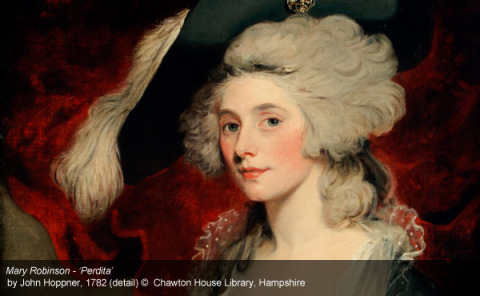
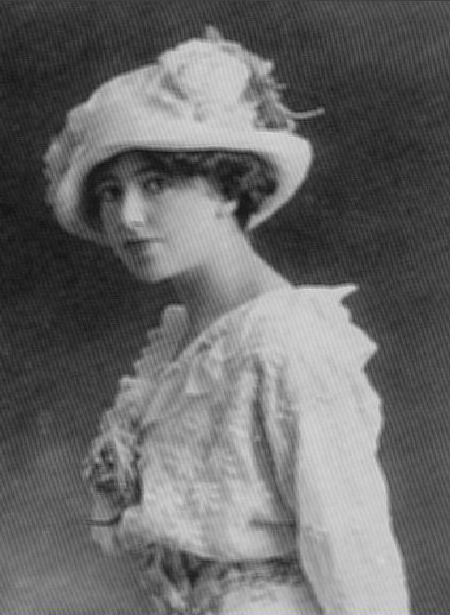
Mary Robinson, Mrs Robinson – known to all as Perdita, was the future George IV’s first mistress, well before the Regency and his eventual crowning as king. The woman, born Mary Darby, was around the twenty mark when she returned to London. Her triumph was in the David Garrick’s adaptation of Shakespeare’s ‘The Winter’s Tale’. As well as all of the city, she dazzled the young prince and he made it his business to arrange a clandestine meeting with the beguiling actress. Mary, disastrously married to a gold-digging wastrel to whom she had borne a daughter, jumped at the opportunities such a connection would provide for her. He became her Florziel, after the play’s hero. He also made generous monetary promises to her in return for her presence in his chamber, on the proviso she left the stage. Her star rose very quickly, but only for a few brief years was she a future monarch’s plaything. Her fame, as opposed to infamy, was to lay elsewhere – after she acquired a more sophisticated relationship with the language of her realm. But it was during these years on a prince’s arm, however, that she became a trend-setter, equivalent to today’s celebrities. She introduced to society ladies a looser style of fashion, the Perdita. This eponymous item was a flowing Grecian-style gown revolutionising the look of a woman of society.

The Prince, now educated, soon tired of her and began his liaisons with a long list of beauties out to make the most of their charms while they still possessed them. Later on this was to even involve a secret marriage with a commoner (Mrs Herbert), before he gained the throne with poor Caroline of Brunswick as his Queen. He loathed her.

george

But Mrs Robinson, like her famous cinematic namesake last century, was a force to be reckoned with. Gainsborough, for whatever reason, painted her – several times. Look closely in the  image and one can see a miniature held in Perdita’s hand – this in turn a likeness of the lover who jilted her, her prince. That sent a powerful message to the future highness concerning his promises made to her, as well as to the public who’d soon pick up on a certain fact. This lady never forgets.

It dawned on the Prince that she was fully prepared to bring him down. He initiated discussions to prevent his name being further dragged through the mud. Eventually the two came to an agreement over the letters – but she only ended up receiving a minuscule amount compared to the sum signed off on. But by then she had other irons in the fire – she had moved on.

Despite being partially paralysed by an infection, caused by a miscarriage, Mrs Robinson was now engaged in a long, lust-ridden affair with a hero of the American Revolutionary Wars, one Banastre Tarleton – she was later to base her novel, ‘The Patriot’, around his exploits. This relationship didn’t end happily for her either, but at least it took fifteen years to play out. Tarleton took a less blemished maiden to the altar.

And then she had this:- London’s Summer Morning

Who has not waked to list the busy sounds
Of summer’s morning, in the sultry smoke
Of noisy London? On the pavement hot
The sooty chimney-boy, with dingy face
And tattered covering, shrilly bawls his trade,
Rousing the sleepy housemaid. At the door
The milk-pail rattles, and the tinkling bell
Proclaims the dustman’s office; while the street
Is lost in clouds impervious. Now begins
The din of hackney-coaches, waggons, carts;
While tinmen’s shops, and noisy trunk-makers,
Knife-grinders, coopers, squeaking cork-cutters,
Fruit-barrows, and the hunger-giving cries
Of vegetable-vendors, fill the air.
Now every shop displays its varied trade,
And the fresh-sprinkled pavement cools the feet
Of early walkers. At the private door
The ruddy housemaid twirls the busy mop,
Annoying the smart ’prentice, or neat girl,
Tripping with band-box lightly. Now the sun
Darts burning splendor on the glittering pane,

Save where the canvas awning throws a shade
On the gay merchandise. Now, spruce and trim,
In shops (where beauty smiles with industry)
Sits the smart damsel; while the passenger
Peeps through the window, watching every charm.
Now pastry dainties catch the eye minute
Of humming insects, while the limy snare
Waits to enthrall them. Now the lamp-lighter
Mounts the tall ladder, nimbly venturous,
To trim the half-filled lamps, while at his feet
The pot-boy yells discordant! All along
The sultry pavement, the old-clothes-man cries
In tone monotonous, while sidelong views
The area for his traffic: now the bag
Is slyly opened, and the half-worn suit
(Sometimes the pilfered treasure of the base
Domestic spoiler), for one half its worth,
Sinks in the green abyss. The porter now
Bears his huge load along the burning way;
And the poor poet wakes from busy dreams,
To paint the summer morning

In later life she became known, by one and all, not for her Kardashian lifestyle, but for her literary achievements. Perdita was put aside for a new appellation, the ‘English Sappho’, in tribute of her poetry. In all she penned six novels on top of her versifying. Her crowning glory is that, along with her contemporary, Mary Wollstonecraft, she was a leading advocate for women’s rights of the era. Eventually, though, her affliction worsened. In 1800 she succumbed to it.

hoppner mary robinson

For us there is a certain notoriety attached to the name Mrs Robinson, but I doubt that even the subject of Benjamin Braddock’s ardour in ‘The Graduate’ could match the original Mrs Robinson’s place in the annals of women to be reckoned with.

The Collage-ist

Where I found him some would argue perhaps he shouldn’t have been there. Initially, I too thought he was a camera-pointer, being on a site for esteemed snappers – but no, he works in the medium of collage, integrating the images of others to create his product.

Sammy Slabbnick comes from an artistic family, but dropped out of art school himself, eventually ending up starting a postcard company. It’s still going today. This enterprise gave Sammy S the genesis for his own claim to fame now. He found his love for postcards and vintage magazines could be combined into what quickly became an obsession for him. He reigned this in so it now doesn’t totally dominate his existence – he became more disciplined with beneficial results in terms of success.

sammy Slabbinck - specs

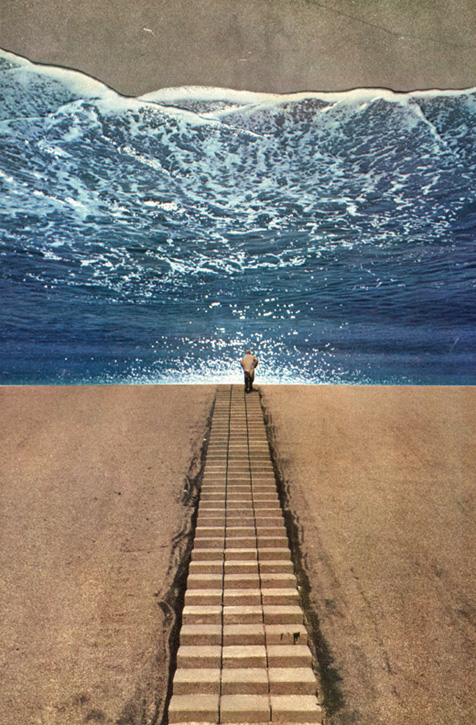
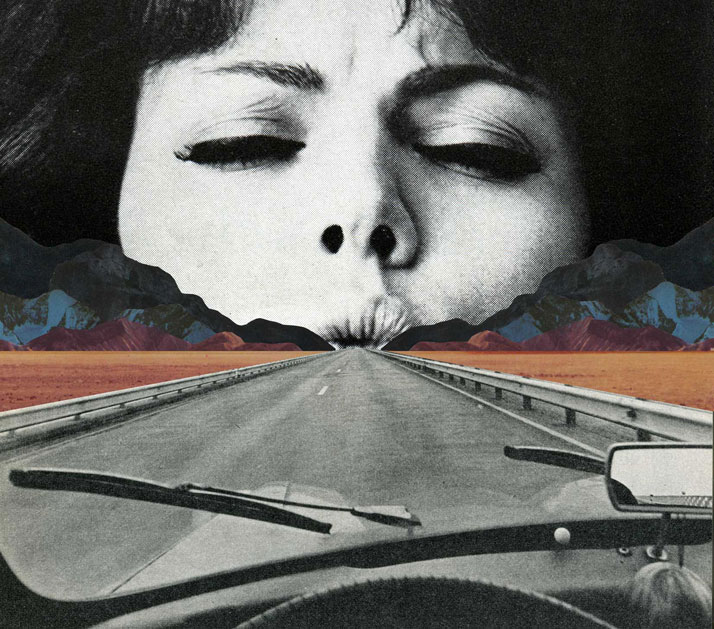
He adores garage sales as this is where he can often pick up the raw materials for his product. A picture in any mag could trigger his creative spark and away he goes. He loves stuff from the fifties through to the seventies, focusing on those decades to build up his collages. He attempts to juxtaposition pictures from the advertising of those times with what he finds in both retro men’s and women’s publications to create surprising effects. Sometimes his results may carry a political message, but mostly he’s just looking to surprise and intrigue. He certainly did that for me when I clicked on his name to expose an on-line gallery of his offerings. This quickly led down the googling path until I had accessed more about this unique artist.

sammy slabbinck - vantage point

Now approaching forty, the Belgian is in demand by a new generation of magazine editors, as well as by gallery owners. He tries to keep what he produces as simple as possible, using far fewer images than many other operators in his field. Those others seem to believe in the notion that the more individual components they can squeeze in the better the outcome. Slabbnick uses his sense of humour, as well as a love of pop-art and surrealism, to influence his own take on the world around us. He aims at what he refers to as a complex appreciation of simplicity from the viewer, but most of all he hopes to put a smile on faces when he or she eventually ‘gets it’. That might require some time standing before one of his collages pondering ‘what’s this all about?’ I invite you to do the same in the ether and engage in a little pondering of your own.

Sammy-Slabbinck-yatzer

Sammy S’s website = http://sammyslabbinck.tumblr.com/

sammy slabnick self p

Chern

Yes, we’ll call him Chern. I reckon most English speakers would call him that to his face in any case. His name’s a real mouthful – Gennadiy Chernomashintsev. See what I mean?

One of the joys of my on-line perusings is looking at professional photography websites. I’d never be as expert at pointing the camera as those guys, but a fella can dream. There are countless out there in the ether so it takes something special to stand out. His did. Chern’s.

chern01

With those that tease my senses I then tend to delve a tad deeper. In doing so I found an article about Chern. It stated that he was a throwback to a golden age of fashion photography – the period the great Bailey encapsulated. In Chern’s work there was ‘…not a drop of colour to be found, plenty of grain and a style that was immediately recognisable.’ This photographer takes his cues from the past, from the ’50s through to the ’80s, but unlike many purists he does not eschew digital technology. He reckons both can co-exist, so when the new paraphernalia came along he worked assiduously to ensure that, for him, the change over would be seamless.

chern02

Chern was born in the old USSR back in 1968. His father purchased him a camera at a young age and he was immediately captivated. On leaving school he found himself trying a variety of ways to earn a crust – as a poet (as if), composing music (maybe); before ending up in advertising (jackpot). In this he gradually realised that, with photography, a future was there for him to grasp.

After Russia lost the Cold War Chern moved to Ukraine – to Donetsk in fact. Not a place to be, I would have thought, at the present time. But these days his fame has allowed him to practise his art globally, but still one cannot but hope he has not been caught up in the mess that is the eastern part of his country. At present, as well as taking up freelance jobs for fashion houses and mags, he’s an art director for one of the latter – ‘Domino’, popular in his homeland.

chern03

Beautiful women in beautiful attire are his bread and butter, but he also likes to use his signature high contrast black and white to dabble in the nude – and here he aims at being provocative so, be warned, some galleries of his work on-line are NSFW. You can also find Chern at his calling in the fashion field on YouTube. He’d like to become more involved in film-making, but concedes the scope for that is limited in Ukraine in the present climate. However, he has produced some shorts, attainable on Vimeo – but the aforementioned proviso applies. In all this there’s nothing shabby or salacious. With Chern be assured – it’s class all the way.

chern04

A Chern Gallery – one of many on-line = http://ndmagazine.net/photographer/gennadiy-chernomashintsev/

Chern on YouTube = https://www.youtube.com/watch?v=60BbMorLEDE

Chern on Vimeo = https://vimeo.com/user8254704

That Jimmy – Will He Ever grow Up

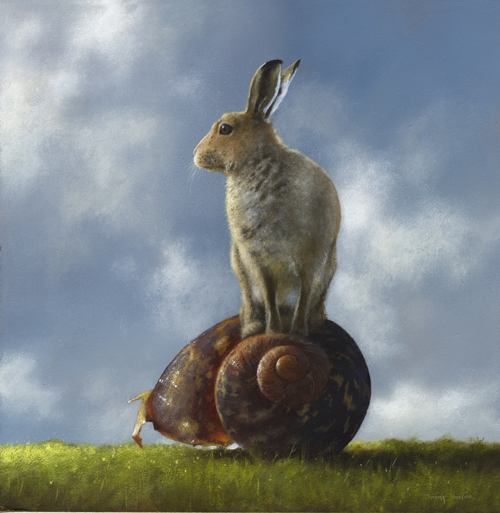
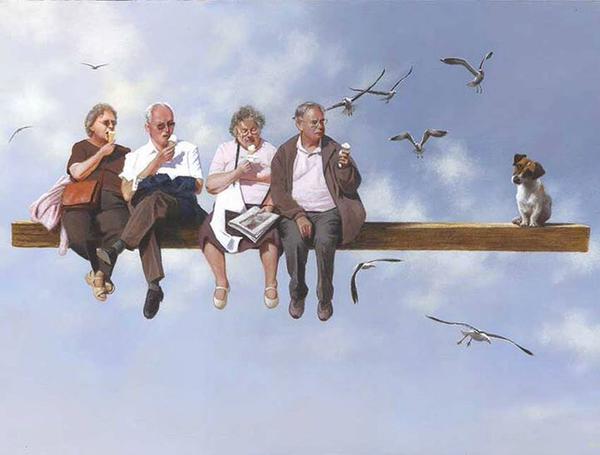
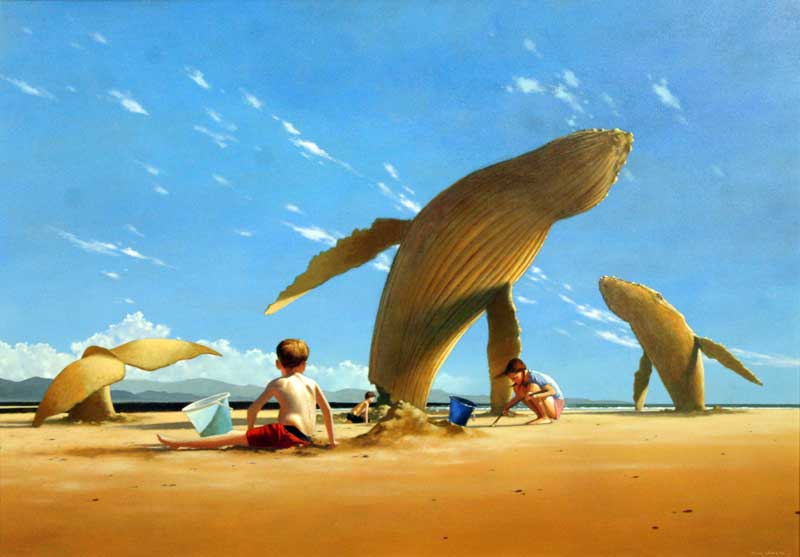
A rabbit perched on the shell of a giant snail; a group of Brit excursioners – they could only be Poms given their attire – floating through the air on a wooden plank, counter-balanced by a cute doggie; oarsmen rowing their way through a sea of denim or, this scribe’s pick, a super, super cuddly ted with boy and dog. It’s all the dreams of childhood before reality quells.

lawlor03

It’s the planet as Jimmy Lawlor imagines it. ‘His paintings are so delightfully executed that he confirms the beauty of countryside life, but he picks his nose with his nationality brush and pokes fun at the constructed Ireland.’

The Irish surrealist was born in Wexford in 1967 and now lives in the pluvially glorious west of the country. Here the Atlantic gales sweep in and the sea has created a landscape like no other – a place where the whiff of a leprechaun can still be noted if one sniffs its wind-blasted hedgerows. It’s a perfect for a chronicler of the absurd such as Lawlor. He aims at the child in all of us – and hopes the child never becomes us.

My first whiff of him came via an art-savvy friend on Facebook – and I had to discover more. This seemed particularly the case as I now have a granddaughter whose take on the world and all its wonder has reawakened mine.

lawlor02

Lawlor reportedly mourns the disappearance of the old ways of the Emerald Isle. It too has become a member of our generic globalised environment, but his paintings keep something of the whimsical spirit of the Irish alive – a race who can still, on occasions, snub

lawlor01

their nose at the political correctness so rampant everywhere. They can observe and lampoon the stupidity of, through Guinness tinted goggles, the big knobs in charge. One just has to cite, to discern that, the calibre of their comedic talent for taking the mickey. Such like is placed on canvas by Jimmy L. His works are now sought after world-wide, demonstrating we’re still not quite ready to let go the traditions of Dali and the type of adventures of the mind he indulged in. I love the magic in the contemporary version’s art.

jimmy lawlor

To my mind each painting asks for a story to be constructed around it. Here logic perhaps takes second place to imaginings. I can’t wait for Tessa Tiger Gordon to tell her Poppy what is going on in some of these daubings by a painter prepared to sit whales in giant goldfish bowls; or produce traffic cones, with wings on, over the quiet unsuspecting byways of his homeland.

Jimmy Lawlor’s website = http://www.jimmylawlor.com/

The Songstress and the Dauber

‘I love Angus like a blood brother…’

She was doing it tough, was Abbe May. The Bunbury born singer was in trouble. Mid tour, the musician had, in her own words, ‘…a stress seizure…I went from being high functioning, calm, collected, creative, optimistic and athletic to lethargic, depressed, anxious and easily panicked.’ It hit her for six, instituting unwelcome changes, not only mentally, but physically as well. She made it through, but it took courage, the support of family, a loving partner – and Angus.

Angus McDonald, a painter residing in NSW’s stunning far northern coastline township of Lennox Head, has been plying his calling successfully for over two decades now. As an artist, he states he ‘…continually seek(s) to understand more about the world through …(his) art than I already know and use that to build a story of my practice.’

Abbe-May

It’s no accident that his capturing of Abbe, for canvas, has gained nearly as much publicity as the magnificent painting of Michael Caton by Bruno Jean Grasswill in this year’s lead-up to the Archibald Awards. Travel through the ether to the Art Gallery of New South Wales’ website and check out the 2015 finalists – see which entrants take your eye. The Caton certainly did mine – we are probably attracted to figures we know – and it won the Packing Room Prize. But second to that it was McDonald’s take on Ms May. What a searing, revealing portrait.

abbe

Now, despite my pride in being reasonably up to date with today’s music, I’d only vaguely heard of Abbe May – proving I am perhaps deluding myself that I am in touch. But that is beside the point. Reading the singer’s back story on-line of what went awry in her world around the same time as she sat for the artist, it is easy to see that her recent struggles are reflected in his portrait.

Abbe’s affliction had seen her being admitted to hospital on several occasions as her immune system broke down. During this period she struggled to leave her house for any reason. Making eye-contact, at times, with others was beyond her.

Yet there is far more to the end-product that McDonald presented to the Archibald judges than her bout of mental illness – it doesn’t, by any means, define the picture. The singer tells ‘…, his insight and talent allowed him to see what I was feeling at the time…,I don’t find this portrait confronting…A friend could still see me and want to celebrate me. It shows in his portrait and I am eternally grateful.’

angus

I wanted to discover exactly why McDonald chose her as a subject or whether it was the reverse that applied. I was unable to ascertain that information although May describes him as a friend, as well as one of her favourite artists. She also relates that he appeared in her life just at the right time.

The painting moved me the first time I laid eyes on it on that web page. Reading its provenance only increases it specialness. At a time when the funding of the Arts is under threat due to the machination’s of one of Abbott’s ministers – a problem when a peon gets hold of the purse strings – the painting is a reminder of the power of art. It points to how it is so essential to have a vibrant cultural hub at the heart of any civilised nation. It is so vital to our communal health and well being, just as Angus’ rendering of her was to Abbe May’s.

Angus McDonald website = http://www.angusmcdonald.com.au/

Abbe May website = http://www.abbemay.com/

Abbe May YouTube = https://www.youtube.com/watch?v=Iq0yBgHlW6s

No Drover's Wife, She

Yes, I know Mr Twenty-first Century Man, I can see how you you might deduce we did her wrong back here in my time. From where you stand, way up there in 2015, we did treat her unfairly; didn’t recognise her true talent. But that was not the case at the start – certainly not. And some may argue she had only herself to blame for what occurred later. But I don’t concur with that notion, Mr Twenty-first Century Man – and I did try. Believe me when I tell you – I really did try. You must bear in mind, good sir, that it is a very different world when I was on the planet last century. People had different attitudes to a woman’s role in the world – but I do grant you – what that country girl did with a paintbrush, few could equal at the time. Perhaps that was part of the problem. Yes, yes, yes, you’re right Mr Twenty-first Century Man – but that was the way it was. And, given my standing, I take some of the blame myself. I can see now I should have tried somewhat harder.

And who am I to judge? I can sense you are dying to ask me that. Perhaps it will help you understand the veracity of what I am saying if I first tell you a little of my own story. Then I will relate to you what I know of her. For you see, in the end, she was no Lawson’s drover’s wife archetype. She was not thrust into the background. She refused to be. She wasn’t trampled down as many others of her gender were back in my era. And perhaps that also counted against her.

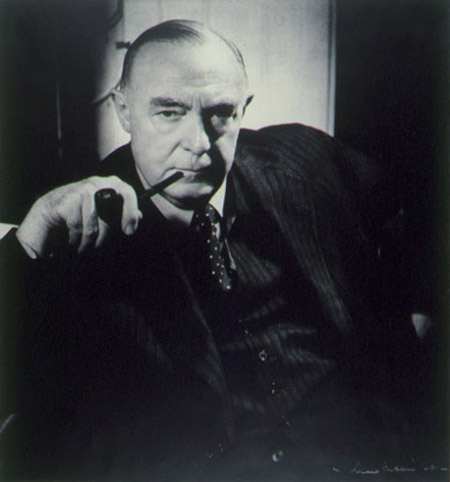
My name is Ure Smith. No, Ure is not my Christian name, Mr Twenty-first Century Man, although you may think so as many assumed the same back in my time. You see, my father took my mother’s surname as part of his own, except, like the woman under discussion, without the hyphen. It wasn’t official. It wasn’t on paper, but it wasn’t an unknown occurrence, even then. My full name? Since you asked it’s Sydney George and no, I am not named after the city. I am a Londoner by birth. Truth be known, though, I like Ure better than my documented appellation – and most called me by it in any case. But Sydney certainly was where I have spent the most productive years of my life, immersing myself in its art and literary scene.

ure

What bought the family out to Australia in the first place, you ask? Well, my father came to the antipodes to manage hotels – first the Menzies in Melbourne and then the Australian in its northern sister city. I went to art school after Sydney Grammar. I’d always been a pretty handy sketcher, my good man, but, although I fiddled around with being an amateur artist all my adult life, I soon became attracted to other associated fields. You see, I had no desire to be some penniless, half-starved artist down in some dingy garret in the Rocks. I wanted to make money – and make it I succeeded in doing. Early on I developed a taste for the good life, for the great wine and food Sydney admittedly came more famous for after I passed-on. In fact, that was perhaps the death of me. I went before my time in 1949. I was only fifty-two. But don’t feel sorry for me. I led life to the full while I was around.

Anyway, that is by the by. By the age of nineteen I was already charting my course for the future, taking Viola as my wife and developing my first commercial enterprise with some mates – an art studio under the moniker of Smith and Julius. Working out the technicalities of how to display a client’s art output to its best advantage soon became my forte. Some of the people we started to employ included the likes of Lloyd Rees and photographer Harold Casneaux. We linked them up with companies, such as Berlei and Dunlop, to formulate advertising campaigns. We were soon leaders in the field. When I tired of that I tried my hand at publishing, also keeping artists in gainful employment. I started a magazine called ‘The Home Monthly’. It became Australia’s version of something like Vanity Fair and it ran for over twenty years. I’m as proud as punch over that.

I admit, most of the artists who worked with me on it and the books I simultaneously put out into the market place were indeed men, Mr Twenty-first Century Man. But I did champion a few of the fairer sex too – for instance, Grace Cossington Smith – you’d know of her – and Thea Proctor too. On my rota were also the likes of William Dobell – yes, that fellow who caused a scandal at the Archibalds. They were so staid and strictured in my era before he came along to set the cat among the pigeons. There was Norman Lindsay too – another I published. Some considered Norman the devil incarnate with his penchant for voluptuous maidens, in nary a stitch, frolicking around. Rumour had it that his models, up at his property in the bush, were altogether most brazen in their disdain for any form of clothing. So scandalous! Let’s see – there were also Donald Friend, Arthur Streeton and Hans Heysen I recall. I looked after them well and they did quite nicely out of it too. For most of them I published lavish, expensive-looking volumes full of plates of their art work – coffee table books you would call them up there in your century. I did one for Margaret Preston too – tried to give her a leg up, but it seemed harder to accomplish with the women I represented. It truly was a man’s era. Women who attempted to make headway in the art world just seemed not to be taken too seriously. The perception with many was that it could only be a hobby for them – not something to make money with. That was left up to the menfolk. Look at that lady from down Mornington way in Melbourne – the one whose art trove was found in a barn somewhere and now, in 2015, where you’re coming from, her work is worth a fortune. When she was around it was dismissed as worthless. No, it was all so different for us, Mr Twenty-first Century Man.

And, as for Hilda – well she was something, she really was. She was tough, resilient and would not deviate one iota from what she thought was right and proper for her. She could ride a steed as well as any male and crack a whip, in both senses of the saying, up there with the best of them. And she could paint – my word, she could paint. But you know all that, Mr Twenty-first Century Man. What you want to know is how we came to fail her – considering the flying start she got off to. Well. good sir, I firmly believe it was simply a matter of, for better or worse, tastes changing.

hilda01

She was Ballarat born and displayed an early proclivity towards artistic pursuits. I know you know all this with your instant knowledge, from what you call being on-line, up there in your century – but indulge me. I am going to tell you anyway. I think it will illustrate what I said about where the fault lay for her rejections in her later years – that I, Ure Smith and my ilk weren’t all misogynists failing to see the sheep from the goats.

Anyway, the talent was there so off to Melbourne Art School she went, once her local education was complete. Following that came the usual rite of passage for most affluent Aussies back in her day – the trip to Europe to broaden one’s mind. She used it, of course, to further enhance her skills on canvas. She went to Morocco and produced some remarkable work out of that. She also set herself up in Paris, as any self-respecting artist wanting to hit the big time would do There she could feed off the greats already trundling their easels around the boulevards and the surrounding countryside. She travelled to all the recommended places in France that supposedly produced the type of light that seduced painters. As a result of her unstinting efforts she also discovered, to her joy, that the Paris of La Belle Epoque enjoyed Miss Rix and all she produced. She exhibited and sold quite well.

hilda

But, as we know, the war clouds were gathering and in the end she fled to the safety of England as the Hun advanced. She left most of her oeuvre cached away, in her wake, on the French coast. At this stage she lost both her sister and mother, who were accompanying her in her foreign adventures, to typhoid. Shrouded in grief, she soon thought she had found her saviour. That is when George Nicholas swept her off her feet. He was serving in France when he heard rumours of a fellow Australian, a lady artist, who had escaped the war leaving her paintings behind. He sought them out, liked what he espied and communicated his admiration to her – no mean feat in the days well before the ease of your social networking, Mr Twenty-first Century Man. Taking leave, he came to London, met her and then one thing led to another, as they did during those times of conflict. All too soon he was walking her down the aisle. Her awakening from grief was fleeting though. Within six weeks the Western Front had claimed him.

Hilda_Rix_Nicholas_painting_'In_Australia'

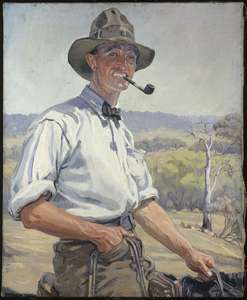
You can imagine, good sir, what that did to her state of mind. But she had backbone. She resolved to return to Australia and throw herself into the one love that remained to her – her art. Almost unheard of back then, she decided to buy a car and by herself, travel the byways of Australia Felix, painting what she found en route. Her mode of transport had to be modified to be up to the task. She took a gamble and it bore success. Australia was still in the grip of post-Impressionism and she soon found there was a market for what she sent back to her dealers. Then, in her travels around the Southern Tablelands, she met a returned soldier, Edgar Wright. Suddenly the world was a better place for her. He removed all her burdens, took her to his property, Knockalong, near Delegate, then wedded her, Mr Twenty-first Century Man. She took to the lifestyle of a grazier’s wife like a duck to water. He built her a fine studio for her art, but she was just as happy out mustering and bringing in the sheep on horseback as she was with brush in hand.

All was tickety-boo for a time, Mr Twenty-first Century Man, but then came the Depression and the bottom fell out of the art market. It also seemed, to many, that the gains made by women became more muted in the thirties. The jobs weren’t there any more and often there was little choice but to knuckle down and just do what it took to survive. Hilda was fine out in the country, but there was little appetite for her paintings with the public in those straightened times. And when the country emerged from the tough years there was another war. By that stage, a new type of artist had emerged. Modernism took hold and all of a sudden daubers like our subject were very much old school, were passe, if you will. She kept on producing and of course, after our mutual demises – hers way after mine in ’61 – she became searched out again. But in her last years she became quite bitter about her, if you like, forgottenness. Her son, Rix, wrote about it at the time so all knew how she felt. The fact remains the market had just moved on and she refused to move with it. Am I to blame for that? She hated the new vogue for painters like Drysdale and Dobell.

hilda02

But, my dear man, it is good that so many have come back into their own during your time – my old chum Lindsay, John Russell and so on. But I am particularly pleased about the ladies. There’s not just Hilda, but as well that woman, Clarice Beckett – you know, the one I mentioned earlier.

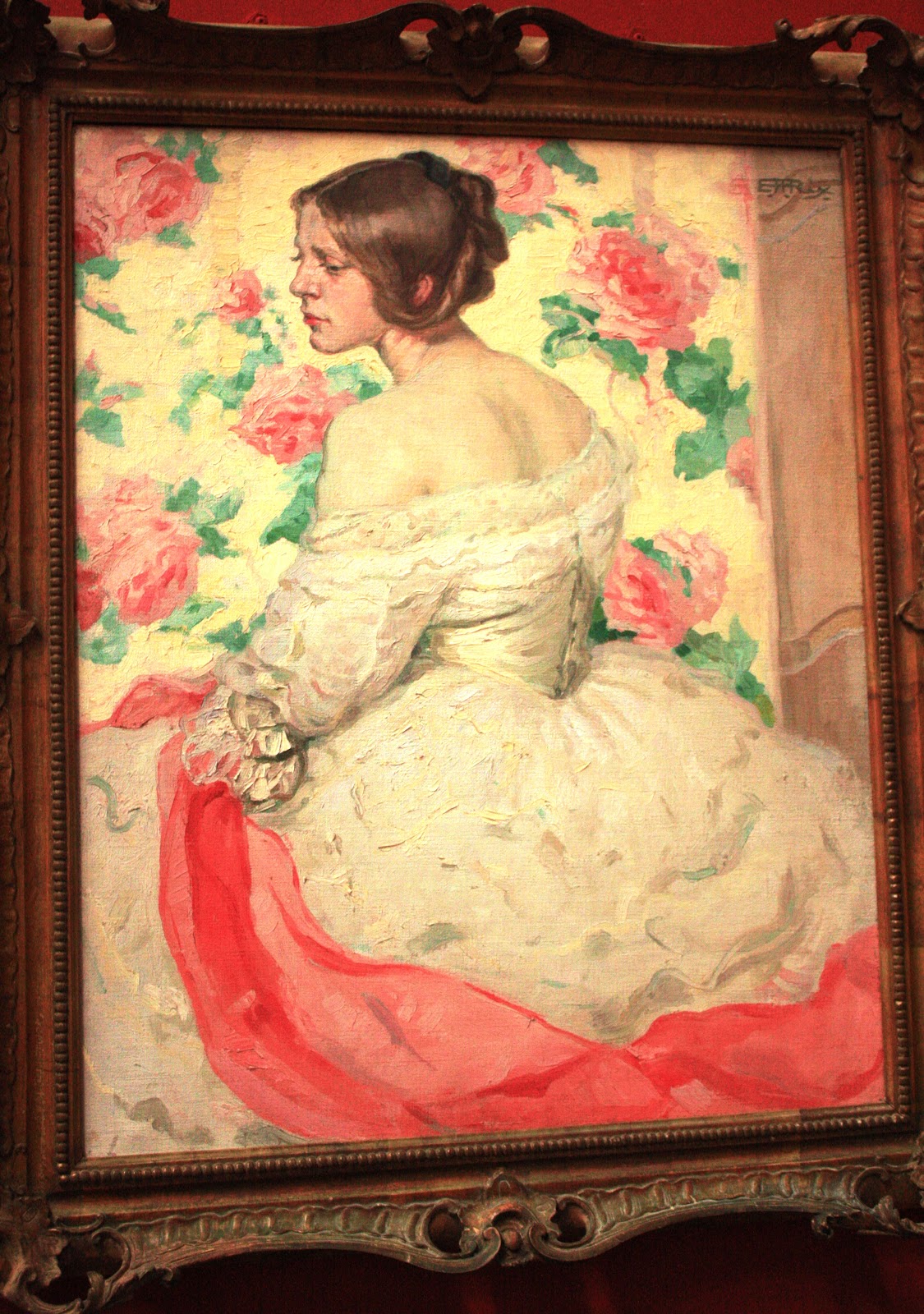
But, anyway Mr Twenty-first Century Man, I remember Mrs Rix Nicholas fondly. She was a stunning woman in her earlier years. Use that internet machine you have and take a look at some of the photos that captured her in her prime and you will see what I mean. And her art – well some of her paintings really stand out – are timeless. I am particularly fond of the ‘The Pink Scarf’. She produced that delight just before the Great War while she was still overseas. It now hangs in the Art Gallery of South Australia and lights up the room. I know you value that one too. Close to where she lived, ‘Bringing in the Sheep’ is housed in a Bega gallery. I’m told that’s her up on the steed doing the mustering. It’s a self-portrait of sorts then. There’s also the rendering, ‘In Australia’, of a Wright family member that has, I feel, so much of the character of the landowners who inhabited the bush in those days.

At one stage though, she became furious when a work of hers didn’t win a prize she was aiming for to reassert herself. That really had her dander up. She knew it was more technically stronger than the eventual winner – it ticked far more boxes, as it is said in your time, as far as the guidelines went. But, of course, she was up against it because she was female – or at least that’s the way she saw it. The winner was male – and I believe is now quite obscure up there in 2015. The whole farrago bought out Hilda’s pugnacious side, Mr Twenty-first Century Man. The judges never heard the end of it for months. But it didn’t help her cause at all – it just served to get those pulling the strings off-side. She could be a bit of a spitfire when it wasn’t going her way and they didn’t take too kindly to that.

hilda03

I feel, my friend up there looking back, she would be pretty chuffed to know the regard in which your generation of art-lovers hold her. From what you tell me, she now has her rightful place in the pantheon of artists who have enhanced your time’s understanding of what it was like back in my years – particularly out in the bush. I’m pleased that in 2015 she is seen as a pioneer, a true modern breaker of boundaries. She was a woman from the back blocks who refused to be pigeon-holed. Now, rightfully and finally, she has made a name for herself out in the light, away from the shadows we placed her in back in our day. You tell me that gender matters far less in your new century. I cannot but applaud those who made it so. Ergo thank you, Mr Twenty-first Century Man. Hilda, I now know, is one of those.