All posts by Steve Lovell

Peter of the Bay

The exhibition wasn’t shouty shouty like the seasonal masterpieces at our nation’s great galleries, but it did make my in-flight mag as I flew my way to Harbour City. I took note and duly visited. It was, on reflection, somewhat more ‘how’s your father’ to those curated within-an-inch-of themselves behemoths of the annual arts calendar of must sees. But I’m glad this more cobbled together affair I went to on Virgin’s recommendation at the dusty Sydney Museum was on, for I loved it – the possibly deliberate cobbled togetherness being part of its charm for me. Maybe the SM’s curators knew something after all.

It was centred around a couple of in your face canvasses by Brett Whiteley, that raucous demon child of the Australian art scene for a couple of decades late last century. We all know him and his precocious talents, his oeuvre ranging from the bombastic to the banal, the latter coming more to the fore as he sank further into his drug induced stupor.

Lavender Bay has a lovely ring to it, doesn’t it? It’s a small indentation in the Harbour, close to Luna Park and the home to Wendy’s Secret Garden, on my wish list for another visit (Wendy being Brett’s wife who managed to drag herself up out of the abyss of drug-taking – something hubby could never manage).

The Sydney Museum, despite its lack of interior grandeur, is a delightful venue for any showing. Last time I’d spent an hour or two perusing a showing about the criminal underbelly of the city in times past, far grittier and greasier than the tele series based on those same felons that was popular a while back. And now there was this one.

SONY DSC

Lavender Bay. It’s not up there with Heide or Heidelberg as an instantly recognised centrepiece for artistic endeavour and the shenanigans of Australia’s art legends – but perhaps it should be. Those curators, at the Museum, did their darnedest to make it so. And yes, Whiteley was the star turn, but it was a lesser known figure whose work fascinated me. He partook of the fun and games at Whiteley’s, but also lived to tell the tale. All gravitated to that rowdy home back in the 70s and 80s – Australian celebs, overseas names wanting a taste of the local wild side of life; as well as the usual hangers-on and wannabes hoping a bit of Whiteley’s bad boy rep would rub off on them.

But, on quieter days, the area and closeness to the icon attracted some with real and lasting artistic chops – Tim Storrier, Gary Shead, John Firth-Smith and Tom Carment. Some of those I encountered for the first time on that balmy Sydney day.

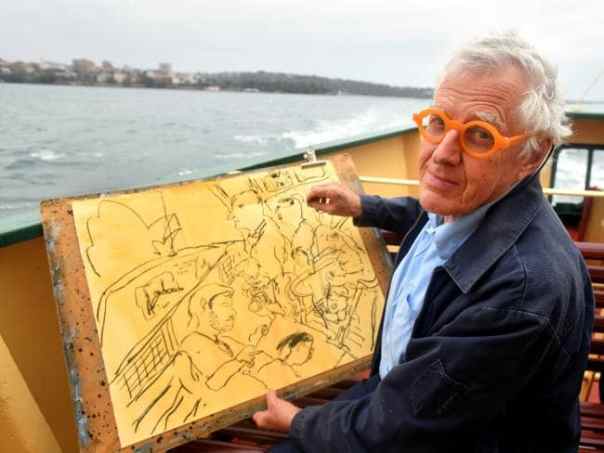
I could do an unhurried ramble around this showing unimpeded by the crush that infects the big galleries when a major is on. There were only a few other souls viewing and I liked that. I could even get up close to the BWs. But for me the day belonged to someone more subdued – almost the antithesis. His name – Peter Kingston.
pk03

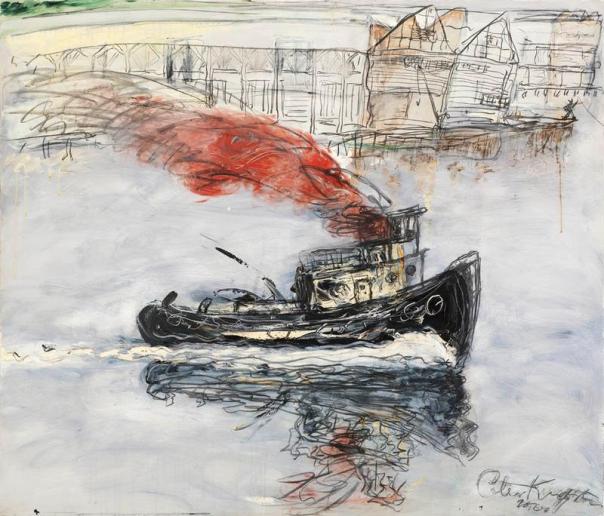
There was a goodly range of his works there – sketches, drawings and what can only be described as cartoons, as well as paintings. He had a whimsical eye for his corner of the metropolis and its denizens, even including the four-legged variety. There was a focus on the harbour too, with special attention given to the little wooden ferries that once serviced Lavender Bay. I was to read later he fought long and hard to keep these old boats running after the bean-counters demanded they be scrapped. To help remember them by, in their hey-day, we have a hokey film that Shead made with a youthful Kingston starring as a Phantom-like figure engaged in daring escapades, some of it set on one of the venerable ferries. I watched a little of it that day, but it was pretty ordinary. There also remains, though, his lovely drawings and paintings of the small vessels.
pk

Today he is still a feature of the city’s art scene. He has an affinity with Luna Park nearby. He was part of the design team working to refurbish it up until the horrific events of 1979 occurred when six children died in the Ghost Train Fire. It still weighs heavily

Made in Plasticine and cast in bronze, the artist now has turned his hand to making unique chess sets on various themes. There’s one based on Popeye and another, an Aussie comic set with Magic Pudding, Snugglepot, Cuddlepie, Ginger Meggs and Blinky Bill to the fore. There is, too, an ssemblage that he keeps close to his heart in a functioning Ghost Train.

pk01

So do go on-line and Google in Peter Kingston’s Artworks, click on images and I assure you that you too will be entranced. The results you’ll find are not flash nor reeking of colour like his mate Whiteley’s. His are toned down, more subtle and detailed. For you see his Lavender Bay wasn’t as brash as that of the more famed dauber. As much as I admire the departed famous one, I’m thankful for that.

More of Peter’s art works = https://www.artgallery.nsw.gov.au/collection/works/?artist_id=kingston-peter
The Black Stuff

You know what umami is? I had to take to the ether (dictionaries being now redundant – and would they carry the word anyway?) and here’s what it said – ‘Umami or savoury taste is one of the five basic tastes. It has been described as savoury and is characteristic of broths and cooked meats.’ It was all news to me, but I checked it out to discern what Terry Durack was on about. I’ll raise it at my next dinner party – ‘Your cooking is terrific. I love the umaniness of this dish I’m relishing now.’ How does that sound? Just goes to show, you’re never too old to learn something new.

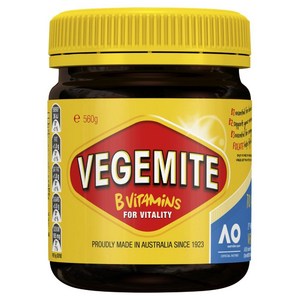
I loved it that food commentator Durack describes the black stuff in question as our national ‘salt-lick’. Like all of my generation, I grew up a Vegemite kid and the accompanying short piece bought viscous memories flooding back. The writer recalls it was quite ubiquitous. In his list of the delectable delights its umaminess would enhance back then he failed to mention how it lit up our school lunches. It was pasted between two slabs of snowy white bread. Maybe it was just the black stuff as it provided filling enough, but occasionally left-over lettuce – iceberg was the only choice back in the day – might have been included. Or, if you’d been especially good, maybe a coveted slice of Kraft cheddar. Just hold the tomato – that turned sangars into squishy mush.

veg

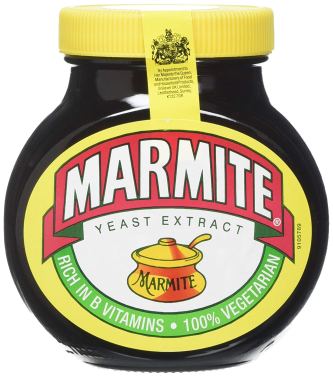
We never partook of Marmite – that was for Poms and wusses. Vegemite was the real deal – as Aussie as Kangaroos and Holden cars. And if the supermarket shelves are anything to go by – see, I’ve done some thorough research for this scribbling – it’s still immensely popular. I’ve noted that Durack adds it to casseroles and stews (what’s the difference?), as well as soups, in a similar way to what I do with that other retro black stuff, Worcestershire sauce.

veg01

But then, by my teenage years, I was revolting. I got gastronomic tickets on myself, announced my disdain of the true blue product and switched to – wait for it – Promite!!! Now I can’t imagine why I thought it top-notch, but my dear, long suffering (of my foibles) mother duly added it regularly to her shopping list. My recall of it was that it was a tad sweeter than Vegemite and yes, it is still on supermarket shelving. I checked – is there no end to the lengths I will go for my art? But it takes up little space in comparison to the front-runner. Perhaps I should have purchased a jar and conducted a taste test, but that was a place too far. My lovely Leigh, now and again, has a yearning for toast and Vegemite, so it features in our larder, but I haven’t sampled either product for a good few decades. And, not since my childhood has the umami of that other black stuff tempted my taste buds.

veg03

This other tarry substance was a rock solid element of my growing up – all the black muck that sank to the bottom of a bowl of dripping. It was religiously made, or added to, from the oily juices and the scratchings of our regular Sunday roasts by our ever-wonderful mum. Used during the week as a regular spread on our toast for brekkie and for snacks when we were ravenous, it was a true belly-filler. It was fatty as – and the charcoal-coloured bottom layer, if mixed in, gave it great piquancy and flavour. Delicious. Culinary heaven. But what additional oomph did it give to the oversupply of no-nos to my cholesterol count through the consumption of the greasy, oily lard – oh dear. Did it contribute to my high fat levels in later life for which I now take pills to contain? Probably, but I’m still here feeling relatively healthy. And it gave me utmost pleasure in simpler times.

And now Vegemite has gone the full circle and is an ingredient in many dishes in up-market restaurants – it being used, would you believe, as a selling point. Even Blumenthal and goddess Nigella have played around with it. So, three cheers for it being back in Aussie ownership. And three cheers for the black stuff of all our youths, no matter what form it took. Even the tack at the bottom of a bowl of dripping.

Terry Durack’s column + https://www.smh.com.au/lifestyle/the-chefs-making-a-toast-to-vegemite-20181205-h18rp0.html

Silvio and Don

January was drawing to a close and soon I’d be off to several trips up north and a couple of house/dog sit gigs. Movies at the cinemas would be replaced by small screen ones and television series. There was still time, though, for a couple of trips into NoHo and the State.

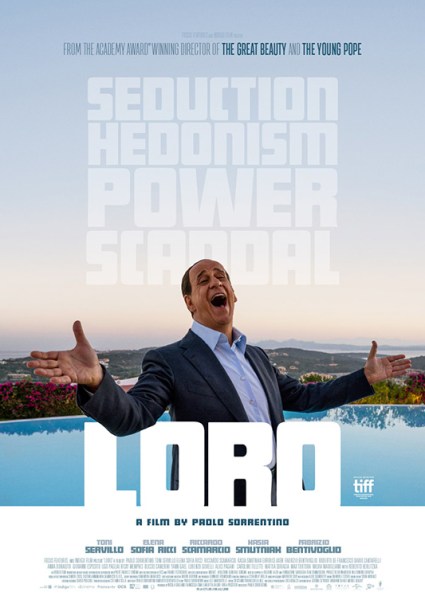
I’d been looking forward to seeing new product from one of my favourite directors for some time. Paolo Sorentino is a master. Delivering us ‘Youth’ and ‘The Great Beauty’ in recent years, as well as the wonderful ‘The Young Pope’ into our lounge rooms, his work is visually a feast for the senses. Coupled with solid story lines, that cause us to ponder on the ways of the world, with his lush and vivid styling, he can be quite compelling.

loro01

Well, the latter was there with ‘Loro’, Italian for them. The lush and vivid was almost lurid. It’s a none too flattering, yet not too destructive, take on the lifestyle of that behemoth of Italian politics, Silvio Berlusconi (Tony Servillo)he of the bunga bunga sex parties and never ending appetite for nubile young things seemingly willing to throw themselves at him in various stages of undress.

We are introduced to the world of the great man by a provider of said women, Sergio (Riccardo Scamarcio). In its initial stages the film concentrates on him. Wanting to advance his standing in the only way he knows, Sergio rents a villa next door to the then opposition leader, constantly scheming to get back into the top job. The wannabe pimp to the rich and famous thinks he’ll catch the eye of the former Italian leader by throwing outrageous parties of his own in hope of an invitation to do the same for Berlusconi. The screen is drenched in colour and topless damsels as Sergio goes all out to achieve his aim – and it eventually occurs. But by now the emphasis has switched to SB as he parades, like an emperor, through his domain. He’s accompanied by his long suffering wife, who has just about had a gut-full, as well as a range of sycophants and wily manipulators. But now the man isn’t the force of nature he once was – his waning energy, an earthquake and a soulless party, organised by his neighbour, start to bring him down. Nothing can hide the fact he now looks and smells of old age.

loro-sorrentino

Personally, despite rave reviews, I found this outing the least satisfying of the Sorrentino offerings I’ve seen to date. It’s hard to find heart in this showpiece. It’s empty – and that’s perhaps is how it was meant to be.

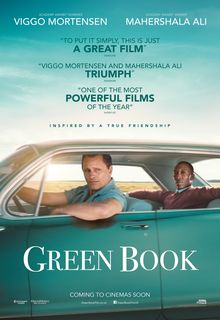
In comparison ‘Green Book had crept up on me – and as an Oscar contender. As far as heart, this road movie boasts it in great dollops. It is based on a true story – much, but not all, of what you see happened. Afro-American piano-playing star-turn Don Shirley (Mahershala Ali) hires Frank ‘Tony Lip’ Vallelonga (Viggo Mortensen) to drive him on a tour of the Deep South – perhaps parallels with ‘Driving Miss Daisy’ here? We are soon to find out how a black man, having a white chauffeur, will go down over the Mason-Dixon Line. After all, it is 1962. Viggo is terrific as the white guy in the role of driver come trouble-shooter (with emphasis on the shooter bit) for his charge. He earned the job due to his reputation as a fixer. This two-hander, under the obviously astute guidance of director Peter Farrelly, sees a duo of great thesps almost compete with each other to come out tops in the acting chops department. Will either of them take home the big gong for 2019?

green

The bullish, street smart Tony gradually charms his aloof gay boss to lighten up and in turn his close proximity to this cultured black musician starts to change his own world view.

gree

It’s a predictable, but nonetheless, lovely Hollywood ending this movie has in store for us and along the way there’s also a laugh or two. Compared to the other much hyped Oscar nominees, ‘Green Book’ has flown under the radar. But late betting has it in with a shot up against the likes of ‘Bohemian Rhapsody’, ‘A Star is Born’ et al. That late betting was on the money.

Trailer for ‘Loro’ = https://www.youtube.com/watch?v=0Bj8voOPacE

Trailer fro ‘Green Book’ = https://www.youtube.com/watch?v=QkZxoko_HC0

Wife and Husband

The Whole Bright year – Debra Oswald The Land Before Avocado – Richard Glover

We’d have to go back to ‘The Secret Life of Us’ for a more engaging home grown tele comedy-drama series than ‘Offspring’. We’d have to go back to Clive James’ ‘Unreliable Memoirs’ for a funnier and more engrossing chronicle of growing up in Oz than ‘Flesh Wounds’. The award winning small-screen success that ran for seven seasons was written by Debra Oswald. The autobiography came from the pen of Richard Glover, Sydney newspaper columnist and radio identity. Both had new books, that I’ve just caught up with, in ‘18. They are wife and husband.

debra

Sometimes it’s no easy task to move from one form of writing to another, so I am led to believe, but Oswald does it seamlessly. She has produced another gem, to accompany her small screen offering, with her new novel ‘The Whole Bright Year’. This the author developed from her stage play, ‘The Peach Season’. An offspring too is front and centre. Zoe, only child of widowed orchard owning Celia, hasn’t caused a great deal of angst for her mother during her teenagerhood. That changes when hard-bitten Sheena and her ‘all over the shop’ step-brother, Keiran, arrive to do some peach picking. It’s not a peach from a tree that the 18 year lad starts to take liberties with. As for Zoe, she turns out to be no shrinking violet either. The mother daughter relationship starts to go awry as Zoe takes a shine to the unreliable young man with the law on his tail. He’s been rescued from his bad big city influences by his half-sister and Sheena is determined to keep him on the straight and narrow. But she hadn’t reckoned with Zoe. When his past does catch up with him, Celia has a crisis on her hands – how much can she interfere in her daughter’s affairs? Neighbour Roza and her unhappily married son Joe are good guys to have in your corner as events spiral out of hand.

Debra-Oswald

Single motherhood, first love and the kindness of friends all figure in this warm novel of ripe fruit and unsavoury city life versus the healing powers of going bush. I enjoyed it so much.

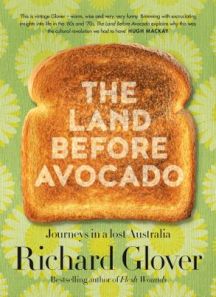
Hubby does pretty well with ‘The Land Before Avocado’ as well. It’s hard to imagine that, in the decade that produced safari suits, the wine cask and non-compulsory seat-belt wearing, avocados were still to emerge in their rightful place as top of the food chain for the scene setters of today. Glover takes us back to a time when homosexuality was outlawed, kids roamed freely from breakfast to dark and the execrable fondue was the height of dining sophistication. The author takes our hand as we transverse the landscape looking for its pluses and minuses – and the latter wins hands down. He gives us plenty of evidence for this – sometimes too much – to show we have it far better these days of digitality and hand-held connection to the planet, despite their pitfalls. Glover conducted much of his research in the magazines of the time, designed for the fairer gender, particularly the Women’s Weekly. He was very interested in the recipes. Most contained huge dollops of mayonnaise. In the book he’s at his best when writing on such topics as the family diet, life for kids and the archaic divorce laws. But his assertion that the only aspect of the 70s that was superior to today was the music. Really? What a fuddy-duddy. There’s no qualms when it comes to the 21st Century being better for gays, indigenous peoples, gender balance, attitudes to migration and multiculturalism as well as equality of the sexes. But, boys and girls, we still have a way to go. Oh, and our tucker’s improved immensely.

gloverrichard glover

So, if you can’t remember or imagine what life was like before the av and social media, take a trip back in time with Richard Glover. He presents a world that would be almost alien to the millennials. I survived it, almost unscathed. Maybe you did too. Would I want to go back there? No way. This book answered that.

More on Debra Oswald = https://www.penguin.com.au/authors/debra-oswald

More on Richard Glover = http://www.richardglover.com.au/

Frank, Iris and Paul

Put your sweet lips a little closer to the phone
Let’s pretend that we’re together, all alone
I’ll tell the man to turn the jukebox way down low
And you can tell your friend there with you he’ll have to go

The singer from Down Under had wowed the audience that evening at the Liverpool Empire, treating them to his string of UK hits. His finale was meant to be the Number 1 song that made his reputation, but when the applause died down he had a brief word with his backing band and announced there was another tune he wanted to croon. It was a Jim Reeves classic. As he reached the last line of the chorus, the singer stepped to the edge of the stage and pointed down into the front stalls to a young man, holding the hand of a lass who was slunk down into her seat as far as she could possibly go, as if she wished to disappear.

Well she was just seventeen
You know what I mean
And the way she looked
Was way beyond compare
So how could I dance with another,
Oh, when I saw her standing there

For a while George Harrison was unlucky in love. Most of us know the tale of how his wife, Patti Boyd, was stolen from him by another rock god, Eric Clapton. But a decade earlier George also lost out in love to a muso even closer to home.

Iris Caldwell was born in 1945 into a working class Liverpudlian family. The only advantage she had over thousands like her was attractiveness, vivacity and an elder brother who possessed some musical talent. Alan, her sibling, had taken the stage name Rory Storm and put together a back-up group, the Hurricanes. They had some success in the early sixties. Their drummer was a young fella by the name of Richard Starkey, although most called him Ringo. One evening another lad came calling to the Caldwell home, hoping to entice Rory to allow him to join the band due to his guitar skills. He failed in that aim, but gained the affection of his sister instead. In fact, George Harrison gave Iris her first romantic kiss. The relationship never advanced much more than that, but they were together for several years. George was to retain a soft spot for her for years to come.

iris

Their lives came together again when she was seventeen – he a member of a band trying to make headway in the burgeoning Liverpool scene. By this time Iris was an established dancer and was booked to demonstrate a new sensation, the Twist, at a New Brighton dance hall. Providing the music for her, on this occasion, was a live band, the up and coming Beatles. George wasn’t quick enough off the mark this time around. In fact, it was his fellow band mate, Paul McCartney, who asked her out on a date – to see them perform at an upcoming engagement for a television show. Paul was already smitten even before that occurred and had quickly written a song stating so, commencing with her age.

In the end their relationship lasted a couple of years, George seething with jealousy. It was during this period that Paul produced tickets to the Empire to see the hottest singer in the land – but there was something Paul had no idea about when it came to his Iris.

Paul-McCartney

Overnight radio often delivers up gems to further investigate during the waking hours. A Rod Quinn interview with 81 year old Frank Ifield was one such. He told the tale which set in motion the notion for this piece. And many of you of a certain age, no doubt, had already worked out that he was the Aussie vocalist up there up on stage that night at the Empire pointing the finger The thing was that he too was in a relationship with the comely Iris.

In Paul she had a young bloke who still hadn’t really made a name for himself – whereas she had in the world of dance. So when she met Ifield, both performing in pantomime, that great British tradition, in, of all places, Stockton on Tees (in ‘Dick Whittington’), she felt she was onto someone who was more her equal. He had a string of hits to his name – ‘I Remember You’, ‘She Taught Me To How to Yodel’, ‘The Wayward Wind’ and ‘Confessin’. He was soon to be the biggest name in the land, but it is ironic, in light of this story, it would not be long before his style of music would be submerged forever by the brash pop coming out of Liverpool with one PMcC to the fore. But that was in the future. Then Paul’s idea of a night out was a pint in the pub followed by fish‘n’chips. The Australian beau, on the other hand, had sophistication down pat. With him she could dress up in her best glad rags for he took her to all the flash places to down expensive tucker, accompanied by Mateus Rosé – the height of sophistication. She had a strong idea that Paul was playing around. That didn’t overly concern her as long as she could do the same. Paul, it seems, had different ideas, as did Frank.

iris01

When the truth came out that evening at the Liverpool music hall, Frank was obviously not impressed, so their liaison was terminated. One night Paul and Ringo, driving back from a show, ran over a dog. When Iris found out that the duo thought it was all a bit of a joke, she let rip and that was the almost end of Paul. At various stages George thought he might be in with a chance of getting together again with her, but Paul always wormed his way back into her good books and such was the case on this occasion. George was due to call on her, but she couldn’t resist the temptation to see her other love interest perform. Knowing Paul was tight with his money, they would be in the cheap seats in any case. Wrong. Paul lashed out and that was that. But she and the Beatle, whose popularity was growing, didn’t last long after that. Some time, later on from severing ties, Iris’ mum received a call from Paul saying that he had written a song for her daughter. Could she ensure that Iris watched its first performance on the tele? She duly passed on the message and Iris did as asked.

Why she had to go, I don’t know
She wouldn’t say
I said something wrong
Now I long for yesterday

Paul could keep a grudge too. One day Frank noticed Paul, in a group of people, coming toward him at some music venue or other. When the Beatle spotted the hitster he yelled something to the fact he had intentions of terminating the Australian’s life. His mates restrained him, but what if? Rock’n’roll history could had been changed forever.

At one time, just as the Beatles were on the cusp of fame, they were booked to support Ifield. They were booed off stage – for being too loud! All that was about to change.

Frank had hits in the US too. On a trip there to support sales his label asked him to record an album. He didn’t have enough new material to support that. Capitol requested twelve songs, he only had eight. The project was shelved – or so he thought. After his return to the UK his manager informed him that he had had a new ‘copulation’ – he meant compilation – record released in the US, his eight tracks plus four from a new band about to make their mark – you guessed it. Beatles again. Frank thought his manager’s slip extremely funny considering his relationship with Iris. That release, if you can find a copy, is now worth a princely sum.

At the highest point of his career the Aussie songster was asked by the Palace to appear in a Royal Command Performance with the Queen Mum in attendance. As it was being televised, Frank was ordered not to yodel as it was thought too old-fashioned and his career would be ruined, despite having hits with his prowess at the art. Frank was in a quandary when her Royal Highness sent him a note saying yodelling was exactly what she expected from him during his time on stage. What was a poor man to do? He yodelled!

In 1969 Iris met another muso, also a lead singer in a band. He went by the name of Shane Fenton. They married and later on Shane changed his stage moniker – to Alvin Stardust.

iris-caldwell-alvin-stardust1

And here’s a little touch of nostalgia just to finish it all off. During their time together, after a long day playing guitar and singing his lungs out trying to get his band established, Paul would often visit Iris’ home afterwards. He got on very well with her mother (later to meet a very sad end) and she helped him relax. What could be more soothing than rolling up your trouser legs and getting your girlfriend’s mother to gently brush your leg hairs? True. Would I lie to you?

Sylvia, Charlotte and Aley

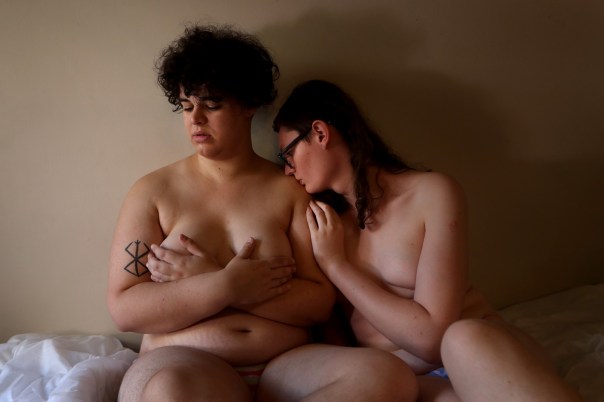
I wanted this to be about them, but in the end it was about her. The ether didn’t deliver – and perhaps, for Charlotte and Aley, that’s how it should be. The photo stands for itself.

sylvia

The State Library of NSW delivered up many pathways to investigate during my visit last year. A winning photograph, on display there for the 2018 Nikon-Walkley, certainly stopped me in my tracks as I perused the entries on show at the august institution. ‘Trapped in the Wrong Body’ was challenging to look at, but that was nothing compared to the challenges in setting it up. In turn, the image-sitters, Charlotte and Aley, were courageous, beautiful and ultimately, compelling.

The shooter, Sylvia Liber, graduated in fine arts in 1994 and began her career in photo-journalism at the Illawarra Mercury. She’s won other awards before, doubling up with two wins for this prize, the second being ‘Deep Love for Dance’ in the Community/Regional section. But let her tell the story of capturing the winning image for the Portraiture section:-

sylvia liber b deep love of the dance

For “Trapped in the Wrong Body”, I hoped to gain a greater understanding of the lives of transgender people. To most, someone’s sex is something determined by biology and gender is entirely separate. For many transgender people their gender identity is the way they feel they should fit into society, and does not align with the sex the doctor put on their birth certificate. I wanted to tell a story in an intimate way through the raw passion and love Charlotte and Aley share for each other. I wanted to push social boundaries in a way that would challenge and educate our community.

The biggest challenge for “Trapped in the Wrong Body” was my lack of understanding. I found I needed to educate myself on the subjects and gain their trust. The girls thought I was gravitating towards tired transgender tropes. I had to try and emphasise how that didn’t ring true in their lives.

It makes me proud to know these stories have the potential to open minds or inspire others in some way by pushing the boundaries. Being able to document these stories in time forever also gives me a deep sense of pride.

sylvia liber

The photographer’s website  = http://www.sylvialiberphotography.com/Artist.asp?ArtistID=38713&Akey=4WAFJ7YF

Vice Thrice in January

This time last year, post-Boxing Day, as is usual, the pick of the crop were showing in the cinema houses around the country. Many of the award winners-to-be were on delayed release to capitalise on the holiday time-slot Down Under. They were of such quality, these gems viewed into the weeks of the first month of a new year, that several made my ‘best of’ for ‘18. These were exceptional movies.

Fast forward to the start of this mint new year and the same quality has not been provided – in other words, movies that will live long in the synapses. ‘Cold War’ was exquisite and has been the standout, but these other three, though well-represented in the current awards season, were eminently watchable, but didn’t make one marvel.

col

New Year’s Day took me to the State to see ‘Colette’. I’d been looking forward to it for various reasons, not the least of them being the lead, Keira Knightley. Most will know of the French literary sensation of the first half of last century. I knew the bare bones of her story and was relishing the prospect of flesh being added, for I knew her lifestyle was immeasurably unconventional for those times. And there was some fleshing out in real style.

As with most aspiring women back when Colette was in her late teenagerhood, breaking through the glass ceiling, even in a more liberal France, was not going to be easy. Initially her best hope would be to marry well – and in the much older Henry, she felt, she had hit the jackpot. Under the pseudonym of Willy he was a popular writer in Paris. In reality his scribings were produced by a group of aspiring young authors – he just replaced their names with his to ensure sales. Colette soon shows she has aptitude, as well, with the written word and joins his assembly line. Eventually she starts to produce her wildly successful ‘Claudine’ novels, which Henry (played by ‘The Affair’s’ Dominic West, endowed with a goatee that almost has as much life as its owner) naturally takes full credit for. Of course, its raciness for the times only enhances his cachet with the beautiful people of the city. He’s easy prey for women who want a piece of him. Henry declares this is only to be expected for, after all, a man has his needs outside of his marital duty. Colette starts to chaff under his philandering, misuse of the proceeds from her labours and his increasing fame on her back. She also breaks out sexually, taking lovers of all genders, although she still retains affection for her husband, despite his sins. Eventually, though, enough is enough, when he takes liberties that she comes to find totally unacceptable, even for him.

colette

One of these is bedding the gorgeous southern belle Georgie Raoul-Duva. She’s played by the ravishing Eleanor Tomlinson of ‘Poldark’ fame. Problem is, she’s been in lust with Colette for some time as well. And if I may quietly tell you a little secret, the loves scenes between Knightley and Tomlinson are something to behold.

But for all its attributes Walsh Westmoreland’s Belle Époque offering doesn’t quite crack it into the top league. That a love scene is the lasting memory says it all.

And the same could be said for ‘Vice’, not the love scene – there aren’t any – but not being a top notch contender for greatness. Again there were praiseworthy turns, this time from Christian Bale, Steve Carrell and Sam Rockwell. But, compared with director Adam McKay’s ‘The Big Short’, it comes up, well, short.

vice_(2018_film_poster)

This could have been a demolition job on Dick Cheney – the film presents enough reason, but such is the nature of Bale’s performance in the role the outcome is one of close to grudging admiration for the powerful man. Carrell’s Donald Rumsfeld is less so as he and Cheney take a green POTUS, George W (Sam Rockwell), under their wings, with the latter emerging as the supreme power behind the throne.

And they knew. They knew – although the narration makes clear, in the manner of ‘The Big Short’, that it’s not possible to be definitive for so much of the evidence has ‘disappeared’. For a time it’s difficult to discern how the character playing the narrator fits into the picture, but we should have known that dodgy decisions taken at the highest level have ramifications for those at the coalface – sometimes terrible ramifications.

Those with an interest in the political machinations of men, prepared to stretch the ethical envelope for their own ends, will get their money’s worth from ‘Vice’. And at least their White House was always functional. Could even Cheney and Rumsfeld have handled the Trumpster?

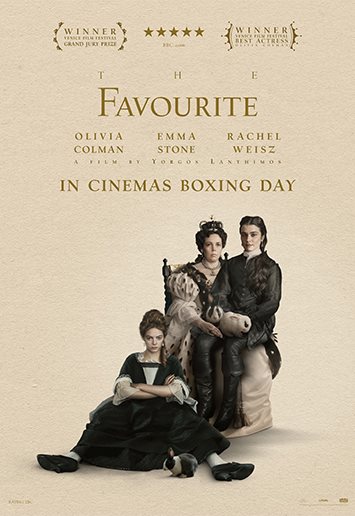
We were eager to see ‘The Favourite’, Leigh and I, although I did have some reservations, having unsuccessfully tried to watch several other of director Yorgos Lanthimos’ offerings. Certainly I lasted to the end of this new one and certainly there were again three thesps with winning portrayals front and centre of it, this time of the opposite gender to the previous. Olivia Coleman, as an addled Queen Anne, was brilliant, with Rachel Weisz playing her partner in governance and in in the royal bed chamber not far behind. Emma Stone played the latter’s wannabe usurper Abigail Hill. Abi’s family had fallen on hard times, so she’s forced to seek employment at the palace in a downstairs role. She has, however, a knowledge of herbal medicine that brings her close to the ailing Queen and gradually she works her way upstairs and to a position to challenge the Duchess of Marlborough as Anne’s favourite caressor of private parts. Occasionally, despite being a few sheep short, her majesty rises to the occasion to stamp her authority, including, at one stage, casting the Duchess out of the boudoir to the outer margins. Hubby, though, is the Duke in charge of the war against France, one of the few men in the movie to be other than a rouged-up dandified fop. Good to have him in her corner.

fav

So, as with ‘Vice’, we have three powerful figures at the pointy end of decision-making, but ‘The Favourite’ left both Leigh and I feeling underwhelmed, even if this period piece will no doubt pick up a few gongs in its journey through the awards season for director and actresses.

None of the trio of films should be dismissed from a looksee, but neither do they set the world on fire. ‘18 was a great year so hopefully it will improve. Maybe there are a few surprises like Lady Gaga and Rami Malek just around the corner.

Trailer for ‘Colette’ = https://www.youtube.com/watch?v=JnTNgZz4Sm0

Trailer for  ‘Vice’ = https://www.youtube.com/watch?v=jO3GsRQO0dM

Trailer for ‘The Favourite’ = https://www.youtube.com/watch?v=EOySDafIE74

Warwick and I Against the World

At last I’ve found someone who thinks like me – but is it now time to confess?

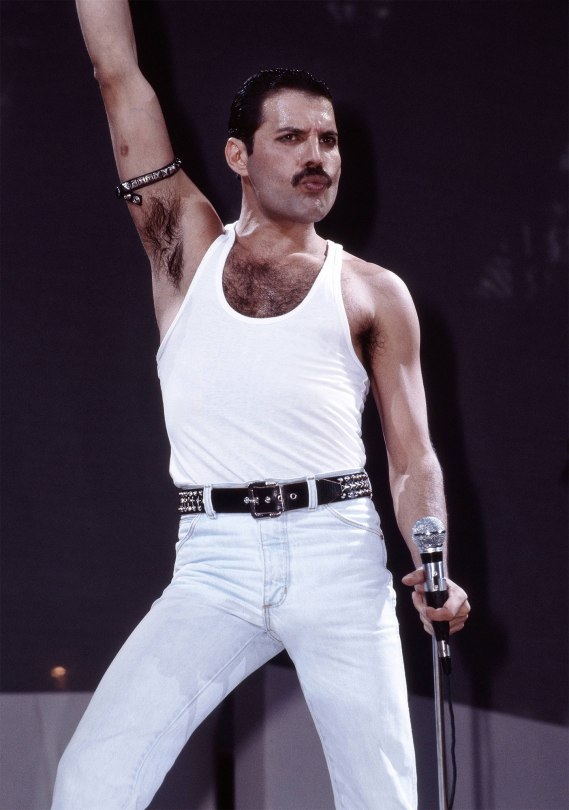
Before I really get into it, I must make clear that, unlike with Mr McFadyen, I am only half bad. For, you see, I love Freddie and I love Queen. Perhaps, too, my musical tastes have always been limited, but ‘Bohemian Rhapsody’, the song, not the movie I hasten to add, has driven me to distraction from 1975, on its release, till the present day – well, almost. It’s a song that seems as hard to escape today as it was back in those late seventies times into the eighties. It had another resurgence in the nineties, after the death of the man who can strut like no other. Yes, I hated the never seeming-to-end ditty – its changing of gears, unlike with my favourite of all times, ‘Layla’, seemed discordant, a sacrilege to my aural senses. And don’t get me started on the lyrics – those nonsensical combinations of words that must have been conjured under the influence of something or other. And when the film clip arrived on ‘Countdown’, I almost reached for the off button to that iconic show.

fred

Down through the years my dislike of ‘BR’ has served me well at dinner parties, though, I must admit. Whenever the conversation lags I have only to throw in, ‘I think ‘Bohemian Rhapsody’ must have to be the worst song ever to assail the airwaves.’ Then I sit back and wait for the horrified response, with the next half hour or so being spent by the assembled guests trying to convince me of its grandeur and exalted place in the rock pantheon. I, of course, always refuse to be swayed. Love doing that.

Queen At Live Aid

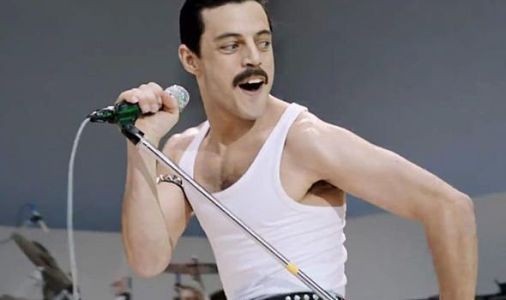
But, don’t tell anyone in case they have a chair at some sit down with me in the future, that I’m slowly coming around to see it does have a smidgen of something. Thanks to the movie and a lovely gift from my beautiful Leigh to see a stage production of ‘We Will Rock You’ recently, I am less strident in my abhorrence of it. It’ll never rate for me up there with the other Queen classics, but now I find I can at least sit through a rendition. And I guess I’ve finally realised, unlike WMcF, that 1.6 billion streamers can’t be totally wrong. One does soften in old age and after all, it was/is Freddie’s signature.

freddie-mercury-1070359

For a while, with Rami Malek, we had Freddie back again. I have lived long enough to witness most of the great front men from Buddy to Bon to the Boss – but none come with a within a bull’s roar to Freddie for pure theatre. He was a one off.

Warwick McFadyen’s article = https://www.smh.com.au/entertainment/movies/is-there-something-i-m-missing-bohemian-rhapsody-leaves-me-cold-20190101-p50p2e.html

The Lost Man – Jane Harper

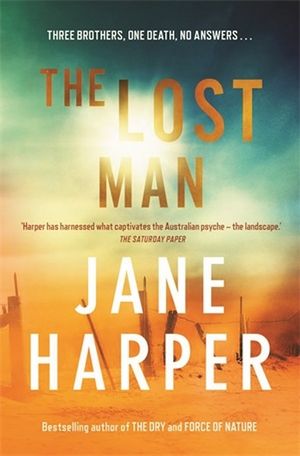
Whether it was the busyness of the festive season, when I was trying to read Harper’s ‘The Lost Man’, or the lack of charismatic lead Aaron Falk from her first two novels (‘The Dry’ is currently being made into a movie), it did take a while for this offering to truly engage me. It was not until about half way through that, yes, I had to up the ante because I needed to find out just what exactly was the solution to the mystery of Cam Bright’s inexplicable death in the wastelands. Why commit suicide the way he did it? There must be easier ways, surely.

xthe-lost-man

Eventually it dawns on brother Nathan that maybe it wasn’t self-inflicted. He figures out there’s more to this outback tragedy than meets the eye – there’s just so much that doesn’t add up. Nathan himself is damaged goods. The woman he took a shine to is now married to Cam – or was. His own missus has long fled the family property way, way back of beyond, taking their son with them. At least he still gets to see him. Nathan has also committed one of the desert’s major sins and thus has been sent to Coventry by all the neighbours and townsfolk in his sparsely populated community. He’s virtually living a life as a semi-hermit until his brother’s terrible passing. This rips him out of his negative mind-set and he begins to realise that maybe a change is possible.

But if it wasn’t by Cam’s own doing, who orchestrated it and why? As this is processed the deeper we delve into the novel, the more it is realised that Cam wasn’t exactly who his nearest and dearest thought he was. In fact, Nathan may not be the only black sheep. Younger brother Lee, or Bub as he is known, emerges as someone who may have reason to have perpetrated the foul deed, but then, it turns out, something also doesn’t make sense with the behaviour of ‘Uncle’ Harry. And was the departed one’s marriage to Ilse as strong a union as had been thought? There’s also those two Brit backpackers, always on the fringe of events. As well, a blast from the past presents herself in an unsettling manner. Liz, the matriarch, is grieving, for her son, the fracturing of the family and the gradual whittling away of what her late husband had built up. All this keeps Nathan and the reader guessing to the end.

janeharperauthorx2

Set where agriculture is a fragile activity, ‘The Lost Man’ has a whiff of Winton’s ‘The Shepherd’s Hut’ about it, containing, as it does too, a dominant and challenging landscape. Its harshness is as foreign to most of us littoral dwellers as the other side of the moon. This is not the equal of ‘The Dry’, but Harper’s reputation will not be diminished by this cracking (once we get going) Aussie whodunit.

The authors web-site = http://janeharper.com.au/

Polish Gem

Wonderful’ – Margaret Pomeranz

Winner of five European Film Awards, ‘Cold War’ certainly has the critics swooning.

A swooning, searing film.’ – the Observer

Whether or not it will gain director Paweł Pawlikowski his second Oscar remains to be seen, but it is a stunner.

cold

The movie is crafted in glorious, atmospheric black and white; every shot of figure or landscape a feast for the eye. It has a glow, an aura of radiance and as well, at times, sublime bleakness. It’s the height of the cinematic art.

It opens in a wintry rural Poland overrun by mud and communist operatives. Our hero, middle-aged Wiktor (Tomasz Kot), is searching the villages in the back blocks for authentic Polish folk music. He and his team assemble a bevy of hopefuls in a decrepit country house and proceed to audition them. He soon becomes smitten by a young performer, Zula (Joanna Kulig), who naturally makes the cut and goes on to perform glorious heritage music and dance for the masses in the big cities. But the authenticity is soon compromised when the powers-to-be decide to piggyback onto the troupe’s popularity for propaganda purposes. Feeling compromised, Wiktor resolves to flee to the West with Zula at his side, but at the last moment she demurs and goes on to find fame on the eastern side of the Iron Curtain.

cold w

Over the next decades their relationship splutters on as their lives take a wholly different course, his in the cafes of Paris, hers in the Russian dominated nations of Europe. Occasionally their schedules come together and they continue on where they left off – but these are entirely brief encounters. Then Wiktor decides he must have her, regardless of the cost – and what a cost it is.

The director packs so much into the 88 minute running length, with ‘Cold War’ featuring in many of the ‘best ofs’ for 2018. I am sure it’ll be in mine for this mint new year. Already it has stolen the show at Cannes. Almost as remarkable as the look of the piece is the soundtrack – from earthy folk to Wiktor’s jazz ensemble in Paris to the start of rock ‘n’ roll. To see Zula’s exuberant response to the latter – well, I almost swooned too. This alone is almost worth the entrance price. See it if you can.

cold-war1

Trailer for ‘Cold War’ = https://www.youtube.com/watch?v=BvPkDdFeTk8