Grace, Life and Loomis

Grace: We all know her. She was luminous. Her time in Tinsel Town was truncated because she was soon wedded to a prince. Yet she still found time for some legendary movies – ‘High Noon’, ‘Rear Window’, ‘Dial M for Murder’ – and to win an Oscar for ‘Mogambo’. She met a tragic end in 1982. And he, Loomis, reflected the beauty of her and bought it into our lives.

dean - kelly

Life: I remember my family had a subscription for a while. I vaguely recall it as an Australian edition, but when I checked the ether I could find no mention of there being such a thing. For decades Life was the vehicle for the best in photojournalism world wide. It was also, I suspect, a contributory factor to my lifelong fascination with the photographic image. When I think back, I know I was always excited when it arrived in our mail box. I have a specific memory of taking an issue to the beach, to peruse, one summer’s day. That was long ago, that time of yore when ‘the beach was the place to go’ for myself as well as the Wilson Brothers. All this occurred in my youthful pre-uni Burnie days. Such quality, even then, would have been cruelly expensive to print and Life Magazine didn’t see much of the new millennium before folding – but, of course, on-line is the place to go these days for what this mag once provided. It started life (poor pun) in 1883, but it wasn’t until Henry Luce took over in 1936 that it gained its reputation for excellence. At its height Luce made sure it was staffed by the best in the business – and he, Loomis, was certainly up there in the mix. This employee, unlike some of his colleagues, wasn’t interested in the fripperies of camera-smithery. Just getting an image up to the standard the editors expected was his sole aim. He was the go-to guy when a photo of the greats of Hollywood or of European royalty was required. His bosses knew he would make them look human, accessible even – with just a hint of show-biz to mark them out from the rest of us. And he presented Grace to us, numerous times, via Life. And look at his capturings of her. Wasn’t she something? She was special and he only enhanced her specialness, turning her into the sublime.
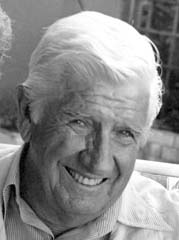
Obituary photo of Loomis Dean.

Loomis: Good name, isn’t it. It’s his Christian name, not surname. Loomis Dean. Googling him, he often comes up as Dean Loomis, but that’s not right. Loomis Dean it is.

Grace’s photographic capturer was born in Florida in 1917. His dad ran a museum celebrating circuses – and that was an early fascination for Loomis too as a lad. Circuses were big business back then – having their own museums, schools even. In fact Loomis studied at one – the Ringling Bros Art School. He couldn’t draw to save himself, but he later stated it gave him an eye for composition. He then moved on to engineering – and that was even less to his liking. But during that time came his light-bulb moment when a fellow student took him into his darkroom and Loomis watched as a print emerged from a bath of chemicals. He was hooked. He was soon enrolling at the Mechanics Institute of Rochester, NY to study at its famous photography department. On graduation, what was his first job? Why, working as a camera-snapper for circuses. With Ringling Bros and Barnum and Bailey he started to develop his signature style, a style a critic once described as ‘…photography with a twinkle in the eye.’ Then along came the war and he signed up with the army air force – as an aerial photographer. This had the side effect of giving him a life long fear of flying. Of course many future assignments meant doing just that.

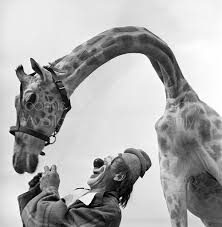
After the war he started off doing some freelance work and soon came on Life’s radar. His second commission for them landed him a coveted cover – and it was so Loomis, a giraffe peering over the shoulder of a clown. Yes, he had been commissioned to do a series on circuses. Realising his talent, the editors at Life soon had him on permanent staff, operating out of their LA office. He didn’t take a backward step after that. He was the first photographer at the scene when the liner Andrea Doria went down in the Atlantic. He photographed Hemingway in his beloved Spain not long before his self-induced death. His crowning glory was to convince a mad Englishman, Noel Coward, to indeed go out, dressed to the nines, into the midday sun of Nevada to help promote a certain song into being a world-wide hit.
loomis giraffenoel

In all Loomis Dean contributed fifty-two covers for Life. He left the organisation in 1961 only to return five years later. He stayed with them until 1969, then again went freelance. One of his favourite jobs later in his career was a gig as set photographer for James Bond movies.

In 2005 he passed away, aged 88. Just before his death he was asked what was the greatest moment in a long, illustrious career. He answered it was a photograph from a series he did on the Vatican. The Pope, Paul VI, obviously liked it too for he awarded LD a medal for it as well as granting him an audience. The snap in question showed white-robed bishops, bearing the Pope’s tiara, marching through St Peter’s Square.

dean kelly

This camera-smith had, in the days before television really took a stranglehold on the public’s imagination, one of the most glamorous jobs in the business. Although he hobnobbed with the world’s glitterati, he never lost his common touch. He was just as happy capturing images of, as he put it, the ‘…ski bums and the beach bums…’ of his world. He loved people of any persuasion and his photos, whether they be of rich or poor, demonstrate his affinity with all humankind – that’s what really shines. And he certainly made Grace shine for Life – and I thank him for that.

dean kelly01

An on-line Loomis Dean gallery = https://www.photographersgallery.com/by_artist.asp?id=215

From NYC to LA, Fifties Style

Both vehicles were strong releases – one even strong enough to garner an Academy nomination. Both were dominated by leads who, without doubt, were also worthy of their respective consideration for gold statues due to their fine performances. As I have seen neither ‘The Room’ nor ‘The Revenant’ I cannot pronounce on the decision to go with their stars for the top acting gongs, but without doubt DiCaprio has been overdue for some time. As for ‘Spotlight’ being the best film of the last twelve months, I really have my doubts. It was a story that needed to be told, but the telling thereof had its faults in my view. It lacked the quality of the other nominated offerings I have viewed – indeed it lacked the quality of the two examined here – one set in the famous New York borough of Brooklyn in the 50s, the other in a quite well known suburb of Los Angeles, also in the 50s. Increasing the pleasure of going to the cinema to take in these two movies, I was accompanied my my lovely lady. It always makes for a better experience receiving her opinions on what was projected up there on the silver screens at the State.

Let’s start with the one that took us back to a dark period in the story of last century’s film-making – the blacklisting of the Hollywood 10. I guess the climate in those years would be similar to our own present one with the so-called Wall on Terror. As is the case today with Muslim extremism, many pollies back then saw it was in their political interest to beat up the threat of communism for all it was worth. It was the Cold War. ‘Reds under the bed’, ‘the only good commie a dead commie’ and all that nonsense. They were all undesirables to be ferreted out and at all costs, revealed for all to see. Even if the connection was only tenuous, or there had been a mere flirtation with the Communist Party in the heady days of youth, it mattered not. And some of Hollywood’s finest became caught up in the net. Many were imprisoned and all were blacklisted, i.e. they lost their livelihoods. One of the victims was Dalton Trumbo, a scriptwriter with a golden touch.

Trumbo

Although perhaps a tad slow to get going, once this movie had a head of steam up it was quite a ride. ‘Breaking Bad’s’ Bryan Cranston was superb as the idiosyncratic, workaholic Trumbo – a whiskey fuelled wordsmith and force of nature. He often produced his scripts in the bath due to a bad back. Many, I find, like Trumbo, do their best work in a sudsy tub. But then, almost stealing the show, was John Goodman as a B-grade movie mogul. He didn’t give a toss about who he should or shouldn’t employ. He just needed people to churn out scripts that only had to be literate to get the thumbs up. Enter Trumbo, fresh out of prison, in desperate need of work so he took on all Goodman’s character had to offer. And some of what he produced turned out to be purlers – so word started getting around. Goodman provides most of the levity in what otherwise could have been a pretty depressing journey, despite the ultimate outcome. Diane Lane is solid as Trumbo’s loyal, stoic wife and as we’d expect, Helen Mirren is all class as gossip columnist Hedda Hopper. She’s a red hater from way back. Her part in the movie, though, was historically inaccurate.

Paul Byrnes makes this point in a recent review and marks ‘Trumbo’ down as a result. He objected to the fact that the film introduced characters that didn’t exist in real life, ignoring others who had a major role in proceedings. Regular readers will know my take on all that. John Wayne doesn’t come out smelling of roses here and we get an interesting performance from Michael Stuhlbarg as Edward G Robinson, caught between a rock and a hard place as the McCarthy hearings probe the communist affiliations of the film world. No doubt Michael Douglas would be rapt as it turns out his venerable dad (Dean O’Gorman) truly was the great American hero (in this telling, that is).

trumbo-still-959x640

As well as dissing director Jay Roach for the film’s historical porkies, the Age critic also had a go at the screenwriter John McNamara’s failure in making Louis CK’s fictional role a composite of the other nine victims imprisoned for their political leanings. So, out of five stars, here are the ratings:-

Paul Byrnes ***½ Lovely Lady ****½ Blue Room ****

Now lets jump across to the Atlantic side of the US of A to NYC where, in the post-war years, that country, as well as persecuting undesirables, was allowing in many desirables in the guise of refugees from yet another Irish diaspora. It was hard times back in Eire and Eilis Lacey was hoping it would all be better for her across the ocean. She’s a reserved, small town gal – bit of a mouse to look at, you’d think, on first impressions. But look closely, especially at those eyes. There’s verification if one needs it that first impressions can deceive. Almost as soon as she’s through those Ellis Island doors a gorgeousness emerges that’s plain for all the world to see. Mentoring her on the other side is warm-hearted priest Father Flood (a warm-heated turn from Jim Broadbent) and soon she is set with accommodation, boarding-house style, with a job thrown in. Julie Walter’s landlady is a star performance, so much so that it’s reportedly the basis for a new television series being developed for the Beeb. Mad Man’s Jessica Paré also catches the eye as her soft-centred floor-walking overseer, keeping her on her toes behind a department store counter. Miss Fortini knows more about her charges than they could ever suspect.

brooklyn

The movie has, in itself, been described as a throwback to those golden years of Tinsel Town in the fifties when its product did not require lashings of beneath the sheets activity to establish a relationship between the leads in a movie with romantic pretensions. The first of Eilis’ beaux is not a fellow Irish fella but Tony (Emory Cohen), a plumber of Italian stock. His role, for me, is one of this offering’s highlights. How could she not be charmed by him? Our bonny lass is eventually, but it took some doing on Tony’s part. As the relationship develops director John Crowley warms up the film’s colour palette and Eilis emerges from dowdy garb to become quite the girl about town.

But a sudden death back home changes all this, causing Eilis to rush back to the Emerald Isle. Now she stands out for her sophistication in her grey little burb. Soon she’s the centre of attention with one and all conspiring to keep her away from boarding a liner back to the New World. And it’s made harder to do so by the entry of another love interest, played with sensitivity by up-and-comer Domhnall Gleeson. We know Eilis has taken a secret with her back to Erin. And that really puts a spanner in the works.

brooklyn-movie-900

As with yours truly, Paul B fell head over heels for the charms of this recent release, one that missed out on the best picture gong at the Oscars. I would have been joyous if it had bettered the lacklustre ‘Spotlight’, but that was not to be. Byrnes describes Nick Hornby’s script work, based on Colm Toibin’s 2009 novel as ‘…one of his best: economic, unforced, expressive, not in the least theatrical.’ He states that Hornby left room for ‘…shiploads (pun?) of emotion, distributed widely across the characters.’ ‘Brooklyn’ was, for this viewer, one lovely cinematic experience. If only there were more of its ilk.

Paul Brynes ****½ Lovely Lady ***½ Blue Room ****½

‘Trumbo’ trailer = https://www.youtube.com/watch?v=_y_Pj–igG4

‘Brooklyn’ trailer = https://www.youtube.com/watch?v=szRFS4NO6f8

Hope Farm – Peggy Frew

He’s a greasy little sleazeball, is the young Charlie Manson – as portrayed in ‘Aquarius’. But he is seemingly a charismatic figure to the impressionable young maidens who bound around him. They hang out and do the drug thing at his urban commune – such a happening place. Eventually he coerces his teenage acolytes to do deeds for him that he perceives will contribute to him reaching his destiny – later on these will become the epitome of evil. For now his vicious streak is already starting to show – he’s not a person you cross without expecting retribution. I’ve only watched one episode of the series to date. It seemed somewhat cheesy in places, but I’ll stick with it. For you see it stars David Duchovny as your stereotypical rumpled cop, and after ‘Californication’, I am besotted by David D and the roles he makes his own.

But, I suppose, in the strictest sense, Gippsland’s Hope Farm, back in the eighties, was not a commune. It labelled itself an ashram, and I presume there is a difference, despite both being filled with a loose idea about boundaries within personal relationships. In Frew’s eponymous novel the height of flower power is long past, but a group of disparate, mostly ageing, hippies are hanging on at Hope Farm. The place has seen better days, as have most of its communards, but in the novel they are being introduced to New Age mumbo-jumbo by another charismatic figure – Miller. In contrast to Manson, his intent was purer, but still he seemed to have an effect on the ladies, managing to wheedle money out of them. He’s a big hairy bear of a man. Ishtar was soon in his thrall.

frew hope farm

Mostly, in Peggy Frew’s ‘Hope Farm’, the hardscrabble life at the commune was seen through the eyes of an adult Silver, casting her mind back to her childhood there. Then she wanted a normal existence and she wanted a loving touch, but what she received from her distant mother, Ishtar, was a transitory existence. She moved from one ashram to another as her parent followed her dreams and men of uncertain quality. But at least at Hope Farm it all improved somewhat for Silver. She meets a mysterious boy down by the creek and he becomes a yearned-for friend of sorts. At the farm she experiences her first crush on a guy who, in turn, is besotted by Ishtar. And in the end an abandoned mine-shaft became Silver’s salvation, leading to an anchored life.

Frew displayed, with her first novel, ‘House of Sticks’, an ability to present a story of the human condition that looks at fractured relationships amongst urban Australians who haven’t quite made it into the mainstream. ‘Hope Farm’ is a very strong follow-up. It kept this reader engaged from cover to cover. I’m not completely sure if the device of having the diary entries of semi-literate Ishtah, interspersed throughout most of Silver’s narrative, is completely convincing. That aside, Frew has shown that she is a vibrant new voice on our recent national condition, conveyed in fiction form.

In the end Miller was no Charlie Manson. The hold he had over those around him was no where near as total as Manson’s, so errors along the way soon caused his world start to unravel. Once he lost control of those he expected to pander to his mental well-being – they being never fully convinced in the first place – his end is inglorious. The put-upon figure of Ian, the lad by the creek, comes out of it all very well as maybe the hero of the piece. Help arrives for Silver from an unlikely source. Frew is skilled with juggling all the threads and is considerate to her readers in not allowing any to dangle. She leaves her surely growing list of fans well sated. I like her for that. Roll on novel three.

peggyfrew

And Then I Saw Her Face – Anna A

It was initially to be all about Laura – that was my intention. So what happened? I liked her work – it was in a semi-realistic style I am drawn to. As usual, it was one particular image that stood out for me – and as it turned out, that was Laura’s downfall. Two factors put me off doing a complete scribbling about her obvious talents. The first was that she became a dame so therefore was not so much emerging from deep in the shadows of history as do the stories of those I normally like to chase through the ether. And then I checked out the background to this particular daubing of hers.

Ruby-Loftus.laura knight a

My beautiful writerly daughter knows pretty well what I am into when it comes to my writings, such as they are. I always bookmark her sendings – and invariably, when I return to them later, I find there is usually a good yarn to be had from them – as was the case here. When she linked me to Arifar Akbar’s article, she knew I would be fascinated. So I will let the columnist herself tell the story of the subject of Laura’s striking painting:- ‘Ruby Loftus (was) a 21-year-old “shop girl” who mastered the difficult skill of screwing the breech ring of the anti-aircraft Bofors gun, a technique that normally took men almost a decade of dedicated experience. Her story was picked up by the Ministry of Information, which was trying to encourage women into weapons production at that point. Her portrait was painted by Knight and promptly exhibited at the Royal Academy.’

The problem was how the already Dame chose, or was pressured into, painting Ruby. Laura had had controversy erupting before regarding her work when, back in 1913, as a woman (shock horror), she chose to paint a nude. With Ruby she came full circle. Now it was the feminist brigade she was upsetting, not her male betters. This contretemps obviously did not develop till more recent times, but did demonstrate how under the male thumb lady painters, doing official work, were in the war years. So the problem with Laura’s image was that it was not ‘feminist’ enough – the Dame had supposedly glamoured Ruby up. There was a hint of lipstick, for heaven’s sake; she was beautiful and her machinery gleamed. It was even suggested that Ruby was some sort of poster girl imported for the occasion, as surely there could be no woman strong or intelligent enough to do the type of task this assembly line worker had the hide to be expert at. Of course, in reality, the work place would more than likely be fiendishly hot, sweaty and grimy – as Ruby would be herself. That type of image, though, would not be good for morale, nor would it entice womanhood into that type of war occupation.

The women who painted the two world wars, with perhaps the exception of Knight, have been largely forgotten. Not for them was the ‘glamour’ of capturing real fighting in oils or watercolour like their male colleagues did. The indelible images we have of these two great conflicts, together with other wars throughout history, have come from men. In our own nation’s experience, think Will Longstaff ‘s ‘Menin Gate at Midnight’ and the work of Ben Quilty in Afghanistan. There were a few women, working as nurses or ambulance drivers, who sketched/painted, in an unofficial capacity, their personal take on events closer to the fronts of both wars, an example being Olive Mudie-Cooke. Evelyn Dunbar, in the second conflict, was commissioned to visit battlefields, but well after the fighting had moved on. So, for the women, it was largely the home front they concentrated on. And once I had forsaken Laura, I decided to see who else amongst them had a story I could tell.

In the end I found one and it really was a case of – ‘And then I saw her face’. In fact it was that capturing my eye, once I typed Anna’s name into Google Images, before I even sighted her product. Statuesque, with a beauty that defied time, I was hooked. Somewhat disappointingly, mostly what on-line delivered was about her painting – little of her personally, but what was there was still worth passing on.

anna airey

In giving birth to Anna Airy (1882-1964), her mother died. Her father, Wilfred, who was to become the Astronomer General, was thoroughly supportive of his daughter’s artistic ambitions/adventures. She trained at London’s Slade School of Fine Art and was one of the very few women painters to be commissioned by a government body to record the war effort at home. In 1918 the Munitions Commission of the Imperial War Museum and the Ministry for Information – War Memorials Committee both engaged her to produce propaganda pieces. She was posted to Whitney Army Camp in Surrey where she worked along side Laura Knight. Who knows, they may have become friends. And here’s the rub. Anna’s contracts were of far less value than those awarded to forty-seven men doing the same work; the penalty clauses, if she did not meet the allocated time-frames, considerably harsher. She was to required to work under very difficult conditions and although her life was never in danger from a bullet, the places she painted were very primitive by modern day standards. There is a notation to the effect that in a projectile factory, near the Hackney Marshes, the floor was so hot it burnt the soles of her shoes. Due to her gender, it is recorded that there was a deep suspicion of Anna by her immediate superiors who felt put out that a woman had been foisted on them. She was also the only commissioned artist to have an official work rejected. This happened in 1919 – it affected her deeply and she destroyed the offending rendering, one depicting working girls leaving their place of work at the end of a day.

airy01

Of course she needed to have some sort of track record to receive a commission in the first place. After she left the Slade School in 1905 she successfully submitted her first work for exhibition at the Royal Academy. She continued to do so at this venue, most years, right up until 1956, exhibiting around eighty paintings there in total. Her first one-woman exhibition was held in 1908. Around this time she married fellow painter Geoffrey Buckingham Pocock. By the end of the decade she was regarded as one of the nation’s most promising painters of the fairer gender. Throughout her career she also took on students and in the end found a vocation in the teaching of art in her eventual home, Ipswich. Here she is well remembered with several schools to this day having bursaries in her name. Many former pupils have recalled how inspirational she was in this role. Later she also became President of the Ipswich Art Club. In the artistic sense she was admired for her draughts(wo)manship – and we are pointed to her exquisite botanical studies as proof of her capabilities in this aspect. She was also a more than competent portraitist with, as well, painting many a bucolic country scene in contrast to her war work in the harsh industrial landscape. ‘The Blackberry Harvest’ is an attractive example. Later in her career she settled down to become a contributor to Ipswichian life using her talents in art and pedagogy. An off-shoot of this was the publication of two books on her practices, ‘The Art of the Pastel’ and ‘Making a Start in Art’. She exhibited overseas and a jubilee exhibition of her oeuvre was held in 1952 by the Royal Society of British Artists.

anna-airy_blackberry-harvest

One of her works that intrigues is the fetching ‘The Little Mirror’. Garlanded by blooms, if one looks closely into the looking glass a figure may be discerned. Is it of the artist herself? Do the masses of flowers symbolise the marking of an important life milestone? Of course, Airy is not well known enough to have each of her works examined in digital-print detail but, even so, this particular work, for me, is a thing of beauty worth closer investigation.

anna_airy_the_little_mirror

I suppose, in the end, these words have been as much about why not Laura as they have why Anna. In any case they were both pioneers in their field, even if what they produced had to reflect an establishment and decidedly not a woman’s point of view about what was going on in a time of war. But they did pave the way for those who followed and who did have the freedom to present a feminine, even a feminist, perspective. Now photo-journalism has largely made the notion of war artists somewhat redundant, but it has also freed up practitioners, now awarded the right to visit war zones, to interpret as much as to relate. In her article ‘Women at War: The Female British Artists who were Written out of History’, Akbar mentions several who followed on in Knight and Airy’s wake. Examples cited were Mona Hatoum, Rita Duffy and the German Frauke Eigen. Hopefully the current Imperial War Museum’s exhibition, ‘Women War Artists’, will bring Anna and her lesser known colleagues in from those shadows of history.

airy03

Arifa Akbar article = http://www.independent.co.uk/arts-entertainment/art/features/women-at-war-the-female-british-artists-who-were-written-out-of-history-2264670.html

Kino Delights

One of the joys of having a JBs close at hand, apart from the obvious if you know me, is its monthly in-house magazine, ‘Stack’. Essentially this is a platform to sing the praises of the company’s popular media offerings, but at least it keeps me informed of the latest CD/DVD releases. Each issue, though, also contains the latest movie reviews. As these don’t impact on sales, at least in the short term, they can be honest. I was intrigued by those penned by John Roebuck in the latest issue. One of my favourites for the slim new year to date, ‘The Big Short’, could only manage two stars out of five. He also critiqued the pair of offerings I just happened to see during my recent Melbourne trip. His opinion of them was the exact opposite to mine.

If ever I am at a loose end in Yarra City and do not feel like a quiet night back at the hotel with a book or the tele, its off to the Kino I head. It doesn’t have the ambiance of our own State – there’s popcorn to be had – but, positioned at the Paris end of Collins, its central and can be relied on to have a range of movies of the type I like. As it turned out, this time I had two evenings free so I took in a duo of what I hoped would be treats, each also featuring in the big awards this year. Their titles – ‘Spotlight’ and ‘The Danish Girl’.

spotlight5

As for Mr Roebuck and the first film, he rates it a strong four stars, claiming it is ‘…as illuminating as it is engrossing.’ My best description for it would be ‘mildly interesting; just watchable’. ‘Spotlight’ is about the uncovering of the evil deeds, going right to the top, that members of the Boston clergy perpetrated on young children. If they were not participating, they were just as culpable by sweeping it under the carpet. That city’s Globe newspaper had a crack investigative team, going under the banner of Spotlight. Once they received a whiff of what some truly awful men of the Catholic church had done in the past to innocents, at the behest of their new editor Marty Baron (Liev Schreiber), they were on to it. That some of the crew also had an inkling, in prior years, about these despicable goings on was a pertinent side issue. One knows, either from historical fact or Hollywood precedent, how this will all work out. Despite the evasiveness of the power brokers at the head office of the church, it will no doubt be a case of good winning out over evil in the great American tradition. This duly occurs, well, sort of. Really there can be no winners in this scenario. Schreiber is pitch perfect in his role as the head of the newspaper, as is Michael Keaton portraying the chief reporter for the team. Mark Ruffalo won an Oscar nod as another on the case, but I really thought he was all over the shop. Nowhere is this more evident than in the scene where we are told of all his life woes – quite excruciating. Ex-Mad Men alumnus John Slattery just seems completely out of his depth in this field as well. Rachel McAdams, in contrast to some of her other fare, turns in an attractive performance as one deeply affected by what the team is turning up. Kudos to director Tom McCarthy for keeping the tone from being too chest-thumping. The tale is competent in its telling and it is a story that certainly needs to be told – it just didn’t set the world on fire for me. John R obviously disagreed. Four stars though? I don’t think so.

spotlight

And our friend did not like ‘The Danish Girl’ at all. It’s a cinematic recording of the recipient of world’s first sex-change operation, way back in the 1920s. Roebuck felt it smacked of ‘…prestige-mongering.’ He was also offended that the historical participants were placed on a canvas not remotely resembling the true story. He went so far as to say that the director, Tom Hooper of ‘The King’s Speech’ fame, turned in an effort lacking in any inspiration. He may have a point or two with his panning, but all of it totally overlooks the performances of two amazing thesps as its leads, Eddie Redmayne and the luminous Alicia Vikander. The former, as a woman (Lili Elbe), is simply mesmeric. For my money his showing of his capabilities in this was superior to his star turn in ‘The Theory of Everything’ as Stephen Hawking. Its worthy of another Oscar win, as is Alicia V for her role as Lili’s wife.

Danish_Girl_(film)_poster

This movie grabbed my attention far more profoundly than ‘Spotlight’. Does it really matter so much that it veered so far away from factual events? Any viewer worth their salt these days will know that one does not take as gospel what is viewed up there on the silver screen – as well as being perfectly competent to do their own background checks if so desired.

danish-girl

Unfortunately the Kino also has the State’s habit of thrusting ice cold air onto patrons during summer screenings. The first night it was hot and humid and I came dressed accordingly in a t-shirt and shorts. I froze. On the second occasion, despite the temperature, I rugged up. Guess what? Of course. There was nary a whisper of chilled air.

Trailer for Spotlight = https://www.youtube.com/watch?v=EwdCIpbTN5g

Trailer for ‘The Danish Girl’ = https://www.youtube.com/watch?v=d88APYIGkjk

Modern Love – Lesley Harding & Kendrah Morgan, The Strays – Emily Bitto

From the preface of ‘Modern Love’,- ‘When John and Sunday Reed purchased their semi-rural property on the outskirts of Melbourne in 1931, they could hardly imagine that eighty years later it would be the site of a renowned museum and widely regarded as the birthplace of Australian modernism. The intricate way in which the Reeds’ lives unfolded has given rise to beguiling mythology – the romanticised tale of Heide and its bohemian inhabitants – that has long captured the imagination of the public and scholars alike.’

Heide’s mythology has certainly beguiled me over the years. I thought I knew a fair bit about it. For a while I toyed with the idea of a story, written from a child’s perspective – a watcher; drawn to the very different people she espied at the farmstead; reporting on the comings and goings there on the property then fringing Melbourne. Nothing came of it, being replaced by other fascinations in my post-retirement world. Then Emily Bitto’s book ‘The Strays’ up and won the Vogel, the award for female writers, last year. This authorly bar-owner (of Heartattack and Vine, near Readings in Carlton) had the honour of having this, her first book, published by Affirm Press’ new fiction list. She, too, is obviously steeped in that aforementioned mystique of the Reeds. What she has come up with, though, is a paralleling story of the Trenthams, a similar couple who operated a sort of open house for their ‘strays’. These were bods of artistic intent, picked up along the way. As it turned out, the fictional Trenthams were a far more conservative couple than the Reeds, as I discerned from ‘Modern Love’. Evan T is not John Reed. The former was an artist with the temperament that stereotypically goes with those taking to that vocation. Reed, a man of independent means (wife, Sunday, possessed a silver spoon background as well), was an artistic mentor – a word he disliked – of talent; a sometime lawyer and a writer/editor to boot. Unlike the Reeds, who adopted Joy Hester/Albert Tucker’s child, the couple of Bitto’s imagination had three daughters before semi-adopting ‘The Stray’s’ narrator, Lily. The latter befriended one intriguing daughter, Eva, with, in doing so, joining the family’s fluctuating circle. The matriarch, Helena, was a charismatic figure, letting all the children have the run of the place. But as the quartet mature, sexual attraction raises its head and the real world intrudes on Eden. Bitto traces the narrative through to present-day times. Whereas once often reviled, by the artistic establishment, the pair eventually become the darlings of modernism – a resurgence of Aussie art that had its flowering in the forties as war raged around the world. It petered out under the stifling conservatism of the Menzies years when many of our best deserted for the more progressive UK scene. Finally they become lauded gods as they were embraced by the mainstream in the latter decades of last century. Some of the events that affected the Trenthams are factual, such as when, in 1937 RGM, as Attorney-General, formed plans for an Academy of Art to provide a bastion against modern, ie communist, influences, then gaining some traction locally. The Reeds, as well as fictionally, the Trenthams, were outraged by this and were at the vanguard of opposition, forming the Contemporary Art Society (CAS). This period of discourse has prominence in both publications. As one would expect, Lesley Harding’s and Kendrah Morgan’s ‘Modern Love – The Lives of John and Sunday Reed’ is full of the who’s-who of the art world during their lifetime. As well there are other prominent identities, one such being Doc Evatt – a friend and valued confidante. He gets a mention in the fictional take as well.

the-strays-emily-bitto

‘The Strays’ is described in its advertorial blurb as ‘…a beautifully written novel, lyrical and wondrous. Emily Bitto is an elegant writer who knows how to sustain suspense.’ This humble scribe would definitely agree. The book is structured beautifully and her wordsmithery is quite sublime in places. The reader is led through the vicissitudes that play out for the Trenthams and their four girls, if we count Lily, as the years advance. It was a fascinating read, a positive page-turner. Ms Bitto’s follow-up will be eagerly anticipated.

modern love02

Fascinating as well is ‘Modern Love’. What an incredible story – if this was fiction it would be difficult to believe. I ploughed my way at, for me, a very fast clip through it over a couple of days. I was transfixed. I had prior knowledge of some of the goings on at Heide – Sunday’s affair with Sidney Nolan, for instance – but, dear me, the sexual machinations that went on at that place and within their circle. Sidney’s passion for Mrs Reed was only the tip of the iceberg. It seems Sunday had an attraction for both genders. There were also some other intriguing combinations involving her, as well as some other pairings, mentioned in passing, that would be interesting to investigate further. The authors, both curators at Heide, did state that they refrained from using some particularly sensitive material available to them, so ‘Modern Love’ will not be the last word on the Reeds – that will have to wait till the parties concerned are further in the past. But this tome didn’t only dwell on the politics of attraction. The contribution the Reeds made to Australian art, just as it was rediscovering its own uniqueness, was astronomical and fully examined here.

Modern_Love cover

Other enlightenments provided by the publication included the damage the constant threat of conscription did to the Heide residents during the war years. There was also the role of the couple in the Ern Malley Affair and the way the pair morphed from being privileged gilded youths to the best known representatives of Bohemian free-spiritedness our country has produced. Then there were the vast array of household names (art-wise today) who succumbed to the bucolic charms of their household. It was also interesting that there were Tasmanian connections as well. John R was born here. His family owned a substantial pile, by our standards, at Mt Pleasant, outside Launceston and Nolan also spent time on the island. Examined were the trips the Reeds made to other parts of Oz and overseas. Then there was the curious question of John’s sexuality – just what did he receive in turn from the sexual dalliances of his wife. Finally, heart-breakingly, was the battle to keep their adopted son on the relative straight and narrow before his tragic end.

modern love

And to join it all full circle, it was more than interesting to read Emily Bitto’s review of ‘Modern Love’, as published recently in the Fairfax Press. She points to the thoroughness of the research involved and its readability, even if, from her point of view, nothing earth-shatteringly new was added to their legend. ‘Modern Love’, she concurs, had all the rigour of an academic text, but its lightness of touch ensures it will reach a wider audience as well. There is a judicious use of photographic images, some quite touchingly intimate, bringing to life the major players. Added are some of the seminal works of art of the period. These include paintings by Sam Alyeo (Sunday’s initial lover at Heide), Moya Dyring’s beautiful portrait of her, Adrian Lawlor’s ‘John Reed’ and several notable daubings by Joy Hester who, with Albert Tucker, are prominent in the book’s pages. There’s Charles Blackman, John Perceval, Mirka Moya and Arthur Boyd featuring as well. They are all participants in Heide’s tale, a riveting account of a couple whose iconic status in the cultural history of Australia is unrivalled. And I submit that it will only grow in stature and mystique – there’s that word again – as time progresses.

And for this punter, there’s only one thing left to do now that I am fully versed in the life and times of the Reeds, thanks to Bitto, Harding and Morgan – and that’s to visit Heide myself. I’ve been promising myself to do it each time I visit Yarra City, but the transport logistics to actually getting there so far have proven too daunting. I’ll eventually sort it out and make it – one day.

Heide Museum of Modern Art website = https://www.heide.com.au/

Emily Bitto’s review of ‘Modern Love’ = http://www.smh.com.au/entertainment/books/modern-love-by-lesley-harding-and-kendrah-morgan-the-couple-at-the-heart-of-the-magic-circle-20151027-gkiuo0.html

Young, Italian, Talented

Marta was telling how she had her start, ‘I was looking for some photos and drawings for my characters in a role-play game on-line,…(browsing) on websites such as Flickr and DeviantArt…because I loved looking at beautiful images.’ She was so taken by what she found she wondered if she could become involved in that scene too. In a remarkably short time photography became her hobby, then vocation. So, going full circle, I was meandering around the latter mentioned in the ether when I discovered, for myself, the attributes of Ms Bevacqua and her ethereal art.

Marta Bevacqua01

Just fancy – so young and she has already garnered quite a standing. It’s hard to imagine, I guess, for my generation that what is viewed on-line now inspires artistic careers. In my day that sort of thing was found in real art galleries, in the traditional popular media or from books. Nowadays the world is just so accessible and those of Marta’s tender years take to it as if it’s the most natural activity there is. She only graduated from high-school in 2008, for heaven’s sake. It still seems amazing to me, the digital landscape – I wonder what will be ‘amazing’ when her generation is as far as I am down the track? This year she will turn 27, yet this native of Rome has already been in the world of her creative passion for a decade or more, earning monetary recompense from it. If she’s this proficient now, what will she be capable of by the time she reaches the ages of most of the purveyors of her craft I check out on my laptop.

Marta Bevacqua05

There always seems to be the one image that eye-enchants enough to stimulate further investigation. If you do visit her profile page on Deviant you will possibly encounter this image, the one that led me to delve somewhat further by clicking on Marta B’s ‘galleries’ icon. If not, it will surely be within, on her own site or the other places that host her product, such as Instagram and Behance. As for the particular picture, there’s a girl and a dog/wolf together peering out into the distance. Was it because the human subject appeared as lupine as the canine beside her I was attracted? I was soon finding other images of this photographer I could appreciate just as much.

Where has this camerasmith found the necessary stimulus to provoke such gorgeous finished products? ‘I live in a beautiful country house surrounded by green trees everywhere. I think that I would never have started taking photographs at all if I didn’t live there.’

Marta Bevacqua06

Books, movies, music and the work of other artists also get her mojo running. There are a preponderance of portraits in her oeuvre and that’s how she found her start when she was a mere slip of sixteen. She made portraits of herself, her two sisters and a number of close friends; made up a portfolio and duly submitted it to agencies – at least one being impressed enough to start her on her way. Her stuff is popular with many book publishers for covers and observing her images, they do seem the bees’ knees for enhancing chic lit/romantic genre fare. Now days commissions also come in from fashion houses to promote their brands in magazine shoots. Naturally she exhibits as well. She has also spent time in Paris to discover if an immersion in that city will open her up to new directions in her work.

Marta Bevacqua08

She is the first to admit she is still on a learning curve to hone her technique, but when asked to produce three words to describe what she wants from each photograph she offers up ‘dreamy, storytelling, imagination.’ Simple words maybe, but for this youthful Italian, if the stars align, could she be on the cusp of being a significant player?

Marta’s DeviantArt gallery = http://m0thart.deviantart.com/

On location with Marta = https://www.youtube.com/watch?v=AhiDHoPS4C0

Melbourne Vignettes – Luna Park and an Addled Canadian

She was tiny and she was exquisite. She was dressed appropriately – head scarf covering her hair and with long concealing attire to her feet. She spotted me observing her. I smiled and she smiled back. Her already beautiful face glowed. Beside her he noticed. He instinctively moved in protectively, but without laying a finger on her. When he saw the recipient of her favour was an old fellow he relaxed, just nodded and moved away from her. He was a huge guy – rugby player huge. He wore a black singlet, shorts and thongs. Tattoos and muscles abounded. Brother? Husband? I had no idea – but the contrast between the two was striking. She seemed a happy soul, comfortable in her skin – if one can deduce as much in a fleeting moment. I imagine she was delighted to be in such a place on such a glorious day – as I was.
And Luna Park was, to me, such a pleasant surprise. I expected a run down, down-at-heel crumbling amusement arcade affair – a throwback to the days when entertainment for the masses took a simpler form. Yes, it had obviously seen better times, but there was something very beguiling about its retro feel. I had merely come to watch so there was consideration for that as no entrance fee was required from me. On this Sunday it was busy, but certainly not crowded. And it appeared to me that on that day the place formed a microcosm of what our country is all about. From the well-heeled, judged on dress, to the hipster and bogan; with every skin hue imaginable being represented. Many languages could be discerned. Best of all, laughter abounded.
I was also there to watch a little girl in action. At an age when fear is unknown, Tessa Tiger was up for anything. She ran and rode the rides and ran some more. It was unbridled glee – those blue eyes sparkled with the fun of it all. Later, exhausted from all that exhilaration, after it was all over, she had fallen asleep on her mother’s shoulder before even the exit was reached. Her Poppy had been entranced by the wonder of her small frame going for it.
But amazing me as well were the Amazons of the roller coaster. These were the lasses who rode the brake as the ancient ‘car’ whizzed its way, albeit creakily, around the perimeter high above as I sat in the sun. They stood tall in their naff purple uniforms, these girls. Seated beneath them the punters screamed for all they were worth. The two that particularly appealed had long pony-tails protruding from their equally naff caps. As their conveyance started each downward thrust they’d brace themselves, move the brake-stick forward into position and down they would ride, long hair flowing behind them in the updraught created. They sort of reminded me of those maidens in bygone days who rode the wings of bi-plans in aviation stunts. I thought these purple princesses were almost as magnificent as my magnificent almost four-year old granddaughter.
So, dear reader, if there is at some stage a possibility of visiting this St Kilda icon with your kiddies – or, even better, grandchildren, do not demur. To see it all through their small persons is priceless.

SONY DSC

It was warm and sweaty during my five days in Yarra City, first down in Fitzroy Street, St Kilda, then later up by Bourke Street Mall. And I had a ball. I’d read Fitzroy Street was dying commercially, but the nights we were there it seemed vibrant and alive. The pubs, restaurants and cafes along the thoroughfare were full and doing great business. Katie chose the eateries we graced and each, in their own way, were purlers. Her old man enjoyed her selections immensely. One introduced me to tapas – United Kitchen (2/52 Fitzroy), another to Tex-Mex fajitas (Elbow Room, 19 Fitzroy). I’m yet to be convinced that I am a tapas type of guy, but both these tucker outlets presented delicious fare. And then my beautiful daughter suggested I try the latest legume sensation, edamame beans. I could become addicted.
Whilst on food, while I was there the Age, in its food guide, listed its top ten fish-‘n’-chips outlets in the city – and one was very central so easy for me to access and sample. Tank (Level 3, The Emporium, 287 Lonsdale) lived up to its description in that august former broadsheet:-
Melbourne’s best fish and chips 2016 – Sophia Levin – February 9, 2016
Tank Fish & Chips
Don’t be fooled by the paleness of this beer batter; it’s quite possibly Melbourne’s best. It’s the crunchiest casing of them all but the seasoning, reminiscent of Arnott’s Barbecue Shapes, is what will win you over. It’s peppered all over the thin, golden chips and flawless potato cake ($1.20), along with a sprinkling of deep-fried parsley. Expect two moist pieces of the fish of the day in the Old School Fish N’ Chips pack ($11, usually blue grenadier). Both stores are also beautifully designed, a collection of blue Victorian tiles juxtaposed against neon.
Emporium food court, 287 Lonsdale Street, Melbourne CBD, 03 9020 4342; also at 149-151 Lygon Street, Carlton, 03 9040 2124
And everywhere she put in an appearance the little one charmed. One of the Elbow Room guys introduced her to the art of bar-tending and a waitress at an Acland Street pit stop presented her with a free milk shake because of her ability to place an order at so young an age. A lovely matronly ‘witch’ at Spellbox (Shop 7, Royal Arcade) let her wish so many spells I didn’t think we’d ever convince our darling to depart the wonderful small realm of her imagination.

Edamame_beans

There was much else to rave about during my five days in a city that once in its past was threatened with the name Bearbrass (apparently a mis-rendering of Birrarung, meaning ‘river of mists’ in the language of the Wurundjeri people). I suitably experienced the Andy Warhol/Ai Weiwei Experience at the NGV St Kilda Road – well worth the effort if you’re in that neck of the woods before it closes April 24th. With Tess I was gobsmacked by the denizens of watery environments at Melbourne Aquarium. Alone, I found myself saddened by Melbourne Museum’s World War One exhibition, but later delighted by the Lunar Festival at Victoria Harbour in front of Etihad Stadium. At the latter, on the cusp of Chinese New Year, I took the 86 into Docklands and observed all the Asian culinary delights on offer in the pop-up stalls. I made my selection and retired to the water’s edge where several pretty young ladies plied me with pale ale. There, beside the briny, I contemplated how good life is. T’was bliss.

SONY DSC

As always when travelling to places known and unknown, there are the people one meets along the way. There had been a collective search, unsuccessful, to find a Kikki K (a Typo clone) outlet. When time was less pressing and I was solo, I came across one on the third level of The Emporium. I entered and was immediately greeted by an effusive, effervescent, enthusiastic and obviously bored sales assistant who plied me with her charm and practically demanded to know my complete personal history. This Melbourne belle was a delight and I enjoyed my time perusing her wares – and spent a few bob too I might add. There was the French family I met at Tullamarine waiting to travel to this lovely isle – the dad, the only one speaking English, about to take up a secondment to the Antarctic Division at Kingston. He plied me with questions, seemed impressed with the fact I knew a little of France and I entertained his two very fractious kiddies with mobile images of my son’s fishing exploits. But the corker of all my fleeting meetings was the encounter with the addled Canadian. She was from deepest Saskatchewan and we were seated opposite on the No16, returning to the city. When I took my place she smiled and said hello. I noticed her accent and away we went. She was attractive in that wholesome American way, in her mid-thirties I would guess, had two children back home and was up for a chat. She told me her flight out was horrendous – she’d never been on a plane before and had no intention repeating the experience. I wondered, then, how she planned to return – tramp steamer perhaps? She had never seen a train nor a tram prior to this Melbourne excursion. She was staying only two days before three in Adelaide to see a friend. Then she was returning home to a snowy winter – somehow. After booking into to her CBD hostelry she noticed, on a map, that there was a beach – St Kilda I presume – that didn’t look too far from the city, thought a dip would refresh her after her nightmare up in the air and resolved she’d perambulate down to the strand. She had no idea of the distance involved, nor the impact of the summer heat in Oz. She soon realised she’d bitten off more than she could chew and hopped on a tram to return to the city and presumably a plan B. Only trouble was she became discombobulated by the fact that the roads here operate in opposite fashion to those back in the land of the maple leaf and she found she was again heading towards the bay rather than away from it. She figured it out and was on her way home when she regaled me with the statement that we sure live in a confusing country. Addled Canadian was all very bemused by her own travails, was in good cheer despite them and she seemed unfazed by the fact she had already wasted one-fifth of her stay Downunder. She gave me a lovely smile as she disembarked at Flinders Street to thank me for the sympathy I expressed at her woes.

SONY DSC

During my stay I impressed myself by adding a few more tram routes to those already travelled on. I spent my last morning happily pointing my camera around Gertrude Street. And, as icing on the cake, I caught up with old mates Carolyn and Brother James, as well as soon to be married niece Peta and her beau Troy. But being with Tessa – well that was simply the best and hopefully, it will be not the last time I’ll travel in her company by a long shot.

Ai Weiwei/Andy Warhol exhibition NGV = http://www.ngv.vic.gov.au/exhibition/andy-warhol-ai-wei-wei/

United Kitchen website = http://www.unitedkitchen.com.au/

Elbow Room website = http://www.elbowroomstkilda.com/

The Road to Little Dribbling – Bill Bryson

In summer it’s gridlock on the roads into and through Cornwall. To cope, most of the little seaside villages that charm – and even if we may never visit them they still do (‘Doc Martin’) – have giant holding areas on their outskirts. From them holiday makers/day trippers are then taken by bus into into these tiny, narrow-streeted places to witness their joys. It was at one such that Bill Bryson met Matthew Facey.

The latter was a parking attendant at the facility outside Mevagissey. Bill had endured an interminable drive into the duchy – Cornwall is not a county. He was heartily sick of constant hold-ups on the freeway so, on the spur of the moment, decided a quiet country lane into the Cornish resort would be preferable. Mistake. It was bumper to bumper chockers and it took him forever to get to its carpark. On arrival, not only was it packed to the gunnels, but there was a long queue waiting. Bill realised it was pointless to wait as to do so would mean he wouldn’t make his ultimate destination before nightfall – but, of course, he was trapped. So it was Matthew F to the rescue. He orchestrated the author’s about turn. In their manoeuvrings Bill discovered Facey did camera-pointing on the side. Bryson resolved to check out his rescuer’s on-line gallery and was impressed with what he saw. Turns out he is one of Cornwall’s most esteemed snappers and his work is quite lovely. I know. I checked it out too.

facey03

Needless to say, as with all of Bill Bryson’s publications, ‘The Road to Little Dribbling’ is a gem. It’s a belated sequel to the tome that set him on the way – ‘Notes From a Small Country’. And it’s also a celebration, being that it’s twenty years since that break-through publication descended on us, making his name. This latest offering was to give Bill an opportunity to note and riff on all the changes in those years to the places he visited first time around – or at least that was his agent’s notion of what he should do. Bill, after some musing, decided he would take a different approach. He resolved to travel from the south to the north of the UK – but taking as his guide a vague following of longest possible straight line that can be drawn between those two compass points that doesn’t cross any water of the salted kind. We should emphasise the ‘vaguely’ bit. In the end he sort of criss-crossed the Bryson Line, working his way up from south to north – with numerous side excursions en route. The result of all this is an engrossing, funny and at times, even worrying read. Worrying because of the stupidity of humankind – numerous examples of which Bill is only too happy to point out to his readers.

bryson

There’s a lovely review of the Anglo-American’s effort this time around, to be found on-line, by Richard Glover – himself having received some recent kudos as a writer of memoirs. RG claims there is a game of one-upmanship played by Bill B devotees revolving around which is the funniest passage to be found in all of author’s now numerous list of titles. These Brysonists are able to reel their anecdotes off word perfect. The reviewer cites some examples. It’s worth reading. I will never get out of my own mind the image of our man as a new arrival in the UK. He fronts up in Dover, landing on the doorstep of a prospective bed and breakfast and greeting its host with his underpants firmly attached to his noggin. The self-deprecating description of him reluctantly dipping his toe into the Pacific Ocean at Bondi, in his account of his travels in Oz, is pretty memorable too. He’d read of all the creatures in it that are out to kill unsuspecting bathers and doubted his prospects of survival – despite the thousands of fellow humans frolicking off the same stretch of strand. And, likewise, he doesn’t let us down in ‘…Little Dribbling’. He regales us with the account, early on, of how he bravely, without fear, walked up to the counter, during an infrequent visit to a McDonalds, intending to place a family order. Despite numerous attempts to get it right and having to deal with a clueless and incompetent pimpled dolt taking and entering said order, he is left enraged and had to be led away quivering by his ever-patient wife before blood was spilt. It was vintage Bryson and the choked chortles I was emitting reading it led my lovely lady to come post haste from another room as she feared I was suffering some form of apoplectic fit.

And also, with this wordsmith, there is always a background story to most of the sights he sees. One that particularly intrigues this time was the snippet of information he gave about a Taswegian. In the 1860s a railway company, the Midland, was searching for a new route into Scotland. Competitors had taken up the two seaboard options, so the controllers of the new player decided to construct right up the middle, receiving parliamentary approval to do so. Trouble was, right up the middle meant a section of the Pennines that was particularly inhospitable. The company had a go, but soon realised building a railway there was such a challenge it would more than likely bankrupt them. They asked the country’s lawmakers to give them permission to desist. As this was against the provisions of the contract they were refused and the company was forced to plough on. Fortunately they found someone willing to accept responsibility for the completion of the task. I’ll let Bill take up the story at this point:-
‘Almost nothing is known about Sharland other than that he came from Tasmania and was only in his early twenties. The immensity of the task confronting him was almost unimaginable and made all the harder by the privations of labouring in the wilderness. Sharland slept in a wagon and often worked for hours in drenching rain or driving snow. Even more remarkable, he did all this while suffering acutely from tuberculous. Inevitably, it caught up with him and, with his work almost finished, he retired to Torquay at the age of just twenty-five. He died soon after, having never seen a train run on the line he helped to create.’
That line, through the Yorkshire Dales, is now regarded as the most dramatic and scenic in the UK – but Bill’s right. I checked to see if the ether held any more on Charles Stanley Sharland and came up with zilch extra information, although there does seem to have been a UK book about him back in 2012.

Bryson has been chided by some critics for being so crabby in this latest release. He is very unhappy in many sections, dropping the f-bomb with unprecedented frequency in his ire. His piss-offedness knows no bounds as he vents his spleen at the state of humanity in the world around him. But in places he still finds the old-fashioned Englishness of the sort that first attracted him back in ‘Notes From a Small Country’ – a quality he feels, to his distress, is fast disappearing. But his delight in renewing acquaintanceship with it in some locations is palpable in his writing.

bryson_1724978c

In ‘…Little Dribbling’ he indulges in a fair amount of railing about the pressure the money-makers are placing on government to do away with the famous green belts of British cities – they want to cover them with mass housing and already are having some success in shearing off the green bits to allow this to happen. The author is most vociferous, persistent and eloquent in placing his arguments down on paper as to why continuing to do so would be a travesty. He laments the increasingly ‘Black Booksian’ nature of the service to be found in the retail outlets of his adopted country, contrasting it with the intrusive inanity of customer service in his birth nation. Which is worse is the question. He produces an extended list of his pet hates at one stage – these include people who say ‘stonking’; salmon coloured trousers and the men who wear them; the parents of any child named Tarquin and Meryl Streep when she’s being ‘adorable’. He despises the new ‘loudness’ to be found around a country once noted for its quietude, again likening it to what’s always been in the brasher US of A. He blames the mobile phone into which moronic chavs have to shout on the public transport and streets of the once more restrained UK. And don’t get him stated on the Chinese made tat that passes for souvenirs found in tourist hot-spots all around the country.

But amongst much ranting he gives us some marvellous yarns as well. There’s the story of the invention of the public park by the redoubtable Joseph Paxton and how a visit to it in Birmingham inspired the creation of NYC’s Central Park as a result. And he gives us a close encounter with a Beatle. He was gobsmacked at one stage to discover his home bordered on Ringo Starr’s estate and that his wife was encountering the legendary drummer in their village all the time, conveying to a stunned husband that she found him ‘…quite a nice man’ in their chats. Bryson, to his disgust, never laid eyes on him when out and about. There’s the tale of how the tongue twister ‘She sells sea shells by the sea shore’ became part of the parlance – and just who the real Eliza Doolittle truly was.

Spending time with Bill Bryson and one of his books is like shooting the breeze with an old mate. There’s only been one of his oeuvre I haven’t taken to and that’s the one they made the recent movie about. There are a handful of writers these days I would term global, as opposed to national, living treasures. I think this bloke has just about reached that stage.

Bill B’s website = http://www.billbrysonbooks.com/

Richard Glover’s review = http://www.smh.com.au/entertainment/books/road-to-little-dribbling-review-bill-bryson-has-another-romp-through-england-20151020-gkcjbr.html

Women Against the Stream

They all featured strong performances from female thesps, at the peak of their craft, in the central roles did these three movies. One would expect as much from Carey Mulligan, Cate Blanchett, Rooney Mara and Jennifer Lawrence. Their vehicles weren’t exceptional I would have thought, but three of the above, nonetheless, garnered Oscar nominations. And all played women who fought against/defied expectations as to how their gender should conduct themselves in a male controlled environment.

In viewing order, ‘Suffragette’, ‘Carole’ and ‘Joy’ entertained, but none of the three will leave a lasting impression on this viewer as the very best offerings on the silver screen do. Good competent film-making was patently evident in the trio – but none were correctly deserving of being amongst those listed for the best movie ultimate gong in the eyes of those sitting in judgement.

suffragette-poster.

In ‘Suffragette’, Mulligan’s character, Maud Adams, was a fictional battler who rose to some minor prominence in the movement and managed to be present at its historically defining moment. The setting was the immediate pre-war years of last century, just before an atrocious conflict stymied the momentum for female enfranchisement – a momentum that had been building over the previous decade. Maud was employed for peanuts as a washer-woman in an industrial laundry; she and her fellow workers considered fair game by the bosses for all sorts of exploitation, including sexual. As with Jennifer Lawrence’s Joy, Maud decides to find a way out from a hard scrabble existence. The suffrage leagues offered that for her, but in joining her local branch she loses the respect of her husband (Ben Whishaw), contact with her son (Adam Michael Dodd) and at times, her freedom – such as it was.

The Sarah Gauron directed movie conveyed well enough the view that these radical women constituted a threat to normal society and were treated in much the same way by the authorities as Islamic terrorists are today, especially once their bombing campaign commenced. The venerable Streep had a cameo as the venerable Pankhurst. Helena Bonham Carter was in fine fettle as a cause-supportive pharmacist – one who aspired to be a doctor, except that for women this was frowned on by the establishment. The devious patriarchal duplicity countering these ground-breaking female warriors for change was a police inspector by the name of Steed (Brendan Gleeson). His unrelenting persecution of these women became softened once he took a particular interest in Maud and for this film devotee, despite all of Mulligan’s considerable presence, the Irish actor stole the show.

carol-movie-poster

The next attraction left me wondering how the Academy could choose between them – and on what basis. Was it screen time; age; or the fact the senior woman had won previously and therefore was deserving of the higher category? We have come to expect sterling performances from Blanchett, so it really was Mara who was the revelation. Yet she has been considered to be in the lesser role so therefore relegated to the supporting category. Couldn’t split them myself. Of course Aussie Cate was pitch perfect in every way in her cool, reserved portrayal of a mature married woman manipulating Mara’s obviously attracted, but somewhat naive, Therese, into a lesbian relationship. For Cate B this, to my mind, was no where near the searing calibre of what she turned in for Woody Allen to receive the Best Actress Oscar a few years back.

The Eisenhower fifties weren’t the best of times to be engaging in not so discreet same sex coupling and soon the film morphs into a ‘Thelma and Louise’ type affair as the blighted duo take to the road. They are pursued by an unscrupulous representative of the older woman’s spouse. Hubby is out to get back what was rightfully his. Rooney Mara is eye-opening as the younger of the pair, playing the would be lover with a mixture of Audrey Hepburn and a doe-eyed ingenue caught in the headlights. The film was beautifully lit to be of its era, but the narrative, despite its subject matter, was somewhat laboured in places. ‘Rolling Stone’ described it as ‘One of the year’s best film’s.’ It’s not the end of January yet but already more than one offering has easily outshone it to my mind. I suppose it is all a matter of taste, but this is far from a classic.

joy

Joy Mangano invented a mop. The eponymous adaptation of her remarkable story is one of a woman whose revolutionary, but nonetheless humble, cleaning appliance became the fulcrum around which a business empire was built. She presented her domestic breakthrough to the world just when it was all turning better for the female in the workplace. But there was still a long way to go and Joy had many hoops to jump through to achieve her success. There’s much to enjoy in this ‘Erin Brokovich’-like saga – a small woman against a world of manipulating and grafting men. In the capable hands of David O Russell, ‘Joy’ never reaches the heights of his previous acclaimed productions, ‘Silver Linings Playbook’ and ‘American Hustle’, but with her same foil in those two outings, Bradley Cooper shining, Lawrence reigned supreme. The whole shebang is not a bad way to spend an hour and then some in a darkened room. There’s the added bonus of Robert de Niro as the father and Isabella Rossalini as Joy’s reluctant financial backer. The movie features some interesting family dynamics as Joy’s plans threaten to spectacularly unravel, also threatening to fracture the already fragile relationships between her not always supportive closest relatives. All very enjoyable, but it does descend into cheesiness on occasions and some aspects of the story do stretch belief. Had I cared enough about it I would have checked out the story of the real Joy to discern how much was fact and how much fiction – but I didn’t.

Would it be unpatriotic of me to say that I will be quite pleased if our hope for best actress is bested on this occasion? Nobody doubts her talent any more, but really – apart from maybe the sex scene – I felt ‘Carole’ was no real stretch for our leading lady. I haven’t seen all contenders in action, but I have my fingers crossed in the unseen there is more worthiness from a nominee than the above actresses delivered in these reviewed titles. Hope I am not being too harsh on Cate.

‘Suffragette’ trailer = https://www.youtube.com/watch?v=3HdQ0iVrl2Y

‘Carole’ trailer = https://www.youtube.com/watch?v=EH3zcuRQXNo

‘Joy’ trailer = https://www.youtube.com/watch?v=Ng7qMsbX3zM