Mary, Joan and the Elusive Girl

I wondered and wondered and am still not exactly sure I pinned her correctly.
To feel you all around me and to take your hand
Along the sand
Ah, but I may as well try and catch the wind
Perhaps catch the girl more like, but which girl?

Down through the years and decades Donovan’s ‘Catch the Wind’, through its several versions and umpteen covers, has always been a favourite ditty for me. So when it re-entered my world recently, via a mint new take, listening to it drew my thoughts back to a faraway place when it encapsulated my yearnings for her. But I couldn’t place exactly who that ‘her’ was, but it must have been someone pretty special to get me so worked up that I pined for her in tune with the Donovan classic. Maybe checking out the song’s provenance would assist me in identifying her – for mysteries like it tend to play on my mind. I was sure it would hark back to a time in my life when there was a hiatus – a time when the cupboard was bare, so to speak. It wasn’t for lack of trying, but you see, for a few years I’d lost the art. And it was/is an art and I have always been pretty artless in what appeals to the opposite gender – but since then I have been luckier in my life

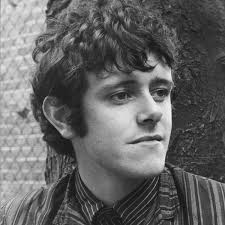
Now those of you with memories that stretch back as far as mine may recall the song – or it may have been in a parent’s collection, even if you cannot place its composer/performer. ‘Catch the Wind’ came into being in 1965, put together by one Donovan Leitch who, perhaps understandably, chose to be known around the traps simply by his first name. It reached No.4 in the UK and 23 in the US. Born in 1946, Donovan’s still around, but his glory years were long ago, ’65 till ’69. He was mates with Brian Jones and taught John Lennon how to finger-pick. For a time he had a close friendship with Joan Baez – instrumental in causing my pondering on yesteryear. His string of hits included ‘Colours’ and ‘Universal Soldier’ early on, but then he really hit his straps with ‘Sunshine Superman’, ‘Hurdy-Gurdy Man’, with the biggie being ‘Mellow Yellow’.
baez04

Was I aware of it way back in 1965? I may have been, but at a callow 14 I was just developing my interest in music. The opposite sex, though, wasn’t really on my radar then, so I doubt there would have been much cause for angst over a girl in my Grade 8 year.

Because of label issues, the song was revamped and re-released for a ‘Greatest Hits’ package in ’68. Now this is more like it. The new version was produced by Mickie Most and became a more complex entity. It was probably this adaptation that so caught my ear back then – that so impacted.

Personally, in the opposite sex department, 1968 was a good year for me, having a relationship with two lovely young ladies over the course of that year into ’69 – then came the fallow times. I’d have ‘crushes’, I’d give and occasionally receive ‘looks’ from across a classroom or lecture theatre that would seem promising; conversations that I felt could have led to something. But nothing developed – zilch. Yep. In that period I may have as well ‘tried to catch the wind‘ as had anything remotely meaningful with any of those lasses I had my eye on.

There were several that aroused my passions in my final year of education in Burnie, followed by more whilst at a Hobart university hall of residence – sadly not co-ed. But which one caused me to curl up on my bed in the foetal position with unrequited love on my mind, having ‘Catch the Wind’ on repeat playings. Back then this required frequent lifting and dropping of the stylus, or constant cassette rewindings – quite labour intensive. She was so elusive, whoever she was – just giving me enough to keep me interested, but back then I had become obtuse in reading the signs. My confidence was shot.

After listening to the tune anew recently, I spent several sessions in my morning bath, trying to figure out which one from that faraway period was her? Who was that girl in the late sixties/early seventies who had me wallowing? She no doubt was someone who I truly wanted to cause me to ‘leave all my blues behind‘ because it so seemed ‘everywhere I’d look…(her) eyes I’d find‘. But it, obviously, was never to be. And eventually, in amongst the suds, I think I figured it out.

In fact, I have previously scribbled about her before in one of my Burnie Tales, ‘Honey’. She was Ellen – not her real name I hasten to add. In fact, Ellen was an amalgam of several girls I knew during that barren period. It was a ‘what if’ tale – what if I had succeeded in attracting her, or even one of those girls, then? In reality Ellen and I never made it to anywhere near the stage of ‘taking her hand along the sand’, for she was drawn to more sporty types – ace footballers and surfer-dudes; the in-crowd. I was no match. But she was one of a number back then – but I seem to recall I was partially attracted to her because she, like me, was a olive-hued sun-worshipper, a habitué of the beaches around Burnie.

The direct reason for this visitation to a song and a girl of long ago was listening to a brand new cover of the former, sung by two glorious troubadours who have been around for a considerable time – in fact one was celebrating her seventy-fifth birthday in concert. In it Joan was perhaps recalling her days when the writer of the tune was her mate, Mary perhaps thinking how fortunate she was to be on stage singing along with a legend.

baez01

Joan Baez has just released a double album of songs, mostly in tandem with a guested notable, from her pomp. I reckon most know of her, if not for her music, perhaps because of her relationship with Bob Dylan. She was an early champion as well as lover. Her biggest hits – surely you will recall her now – ‘We Shall Overcome’, ‘The Night they Drove Old Dixie Down’. I was reclining in the man-cave, listening to the anniversary suite of songs for the first time when ‘Catch the Wind’ lilted into my aural appendages.

baez03

On this she was accompanied by Mary Chapin Carpenter – perhaps not such a familiar name. This artist’s most successful years were from ’89 till ’96. Her triumph was the 1992 collection ‘Come On, Come On’ yielding seven hits on the US country charts. She has won five Grammys over the years, but during this new millennium has largely sunk from view as her albums became deemed not radio-friendly enough, whatever that means. But early this year I purchased her latest, ‘Things that We Are Made Of ‘. I reckon it’s up there with her best.

baez02

And yours truly started trying to figure out who that elusive girl was as the duo trilled to the beat of ‘Catch the Wind’; the one who caused so much early adult longing. On that early spring afternoon, with the sun coming in on me, I was immediately transported anew to those times when I fretted about being left out as, unlike most of my mates, I could not find myself a girlfriend. That’s what came back to me, caused by an old song sung by two consummate performers. Of course, eventually it all changed for me – but in the deep recess of my mind she still flutters – that elusive girl.

Donovan sings the song = https://www.youtube.com/watch?v=C-c9sr_qF8I

There's Nothing Like AFL Footy

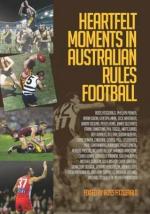
Heartfelt Moments in Australian Rules Football – edited by Ross Fitzgerald
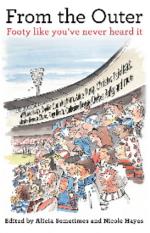
From the Outer – Edited by Alicia Sometimes and Nicole Hayes

My Dad liked Wally Clark. Ostensibly my father supported Cooee in my region’s local footy comp – a club, that, like so many others, did not survive into the new millennium. But, of course, he admired any good footballer playing for our coastal teams. This was particularly the case when they donned the maroon and gold of the North West Football Union to take on the NTFL, from up Launceston way or, more specifically, those high and mighty Cascade swilling southerners from the TFL. If our men managed to beat them – a rarity, but it did happen, celebrations were long, my father was ecstatic and much Boags was quaffed.

outer02Wally Clark and Kevin Murray 1963

Wally Clark was a rover. It’s a term no longer in use, submerged by the generic one – midfielder. Gone are the days of the rover, along with ruck-rover, wingman, flanker, centreman or pivot, drop kick, stab pass, flick pass and so many others. With the saturation coverage of the AFL, today regional football in the south, north and north-west is a mere shadow of its former self. I remember, as a callow teenager, watching Wally Clark when his team, Latrobe (later to boast the magnificent Darrel Baldock as its captain-coach), travelled to Burnie’s West Park to take on my mob, the Tigers. I recall him as a short, close to the ground, beer-barrel shaped player; the captain coach of the coastal Demons from ’64 till ’67. He won the local equivalent of the Brownlow, the Wander medal, in ’65 and no doubt would have donned the maroon and gold – maybe even being selected for ‘the map’; selected in the state side to take on interstate rivals. Occasionally our little island could even match it with the Big V.

In those days our teams would welcome back locals who had made a name for themselves over in Melbourne, such as the Doc. With robust finances, as healthy numbers supported the local clubs, big names could also be attracted to play out their twilight competitive years here. Wally Clark was one such.

Reading ‘Heartfelt Moments in Australian Rules Football’ and ‘From the Outer’, I found Wally Clark mentioned in both. Here’s Barry Dickins writing on his beloved Royboys in the former – ‘My hero, Butch Gale, rots (sic) (Yes, ‘Heartfelt Moments…’ could have done with more thorough editing) on with a big barrel chest out and lots of people reaching over the concrete race to pat him on the back, he is glossy with Deep Heat Muscle Ointment which I forever associate with courage and determination and agonizing ligaments; his rover trots on next who is wearing the very first example of the famous Flat Top Hair Cut and he is Wally Clark; and Fitzroy fans all yell out excitedly on viewing him, ‘Good on yer Wal!’

Tony Birch, recounting in ‘From the Outer’, had a similar addiction to Dickins for the Roys. Here he is on Wally, ‘As a kid my maroon and navy football jumper warmed me with the number 7 in honour of Wally Clark,…Wally was built like a butcher’s apprentice and played 105 games for the club.’ Later Birch was to forsake Clark for the great Kevin Murray in his affections. I knew Wally Clark had come to Tassie’s northern shores from the VFL back then, but until I read these two tomes recently had no idea that he was the ‘real deal’ amongst the big guns in his day. I checked him out on a VFL/AFL website in the ether and discovered he was a star, playing eight seasons with Fitzroy, giving ‘gutsy and commendable service.’ He debuted in 1955 and saved his best for his team’s unsuccessful finals campaigns in ’58 and ’60. He was their top goal scorer in ’62 with the slim total of 21. But the following year he was back in the reserves, therefore his decision to seek greener pastures elsewhere across the Strait as his powers waned. Yep, my Dad was correct in regarding Wal so highly. He stayed on the coast after retirement and could often be found in footy club-rooms, entertaining with his fine voice. Like the Cooee Football Club, sadly he didn’t see in the new millennium either.

outer

There is some dross in these two publications, particularly in ‘Heartfelt Moments…’, but there’s also some great wordsmithery as many a notable writes on the effect the native game has had on their lives. ‘From the Outer’ is the better, more attractive publication, with a cover illustrated by the wonderful Oslo Davis. The fairer gender dominate the contributions here, but I loved Jason Tuazon-McCheyne’s item on the formation of the Purple Bombers, a very personal account of the growth in support for the LGBTI community by football bodies across the nation. Sam Pang tells of the day he sat by the Flying Doormat (Bruce Doull) at Carlton’s last game on the Princess Park grass. There was one fine effort that wasn’t all that complimentary of our game. Catherine Deveny would have to rank up there with Keith Dunstan as a footy-hater par-excellence, far preferring her kids to be on computer games than having anything to do with the AFL – to the shock of her Melburnian mates. You see, for someone with no family tradition in the game, growing up in the city was basically a trial. Sophie Cunningham writes glowingly about the Geelong Cats and their frustrating climb, over the decades, to the powerhouse they are today. There’s Alan Duffy’s account of how he coped with, on meeting his new girlfriend’s parents, hearing the words ‘This is a Hawks family, Alan.’ The implied threat involved was obvious – they didn’t seem to care as much about his intentions for their daughter. Also included are reminiscences from role model-umpire Chelsea Roffey, Stan Grant, Christos Tsiolkas, Angela Pippos and Bev O’Connor.

outer01

Alongside Barry Dickins in ‘Heartfelt Moments in Australian Rules Football’ is that great D’ Brian Dixon, as well as Jeff Kennett, Susan Alberti, Chris Bowen and even George Pell. Ken Spillman’s account of the day Lethal Leigh felled Barry Cable is a ripper and we have Richard Allsop recount his favourite Hawthorn moments. He plays tribute to the sublime skills of the indigenous genius of our native sport who is universally simply known as Cyril. Another great, also with a shortened moniker, Roo (Mark Riccuito), is adoringly portrayed by Chris Kenny. Humanising Liberal politicians everywhere is Josh Frydenberg’s paean to his beloved, once mighty Blues. ‘Now a father myself, I have responsibility to pass on that love of the Navy Blues to my little daughter.’

As for my own daughter, I am so proud that Katie is as fervent a fan of the brown and gold as I am. Together we have followed their fortunes in yet another finals campaign, unfortunately an unsuccessful one this time. But what of my granddaughter, Tess? Well now, there is another force at work here. You see her paternal grandmother is a passionate follower of the Hawk’s nemeses from down Corio Bay way and the Tiges, when asked who she barracks for, smiles sweetly and replies, ‘The Cats, Poppy’. And, to my surprise, I don’t care a jot. If she develops the same love of the game as Laurel, her great grandfather and her mother, it is enough for me.

Our Amazons

Very little of the recent Olympics was viewed in our house by the river so not much of it that was positive caught my eye. Drug cheats and athletes, after giving their all, feeling necessary to apologise to a nation for not attaining gold left a sour taste – as did the extremely rarefied expectations of our sports officials and pundits. To me those aspects of the Games were a turn off. But even so, from the little I did espy, one could not fail to be impressed by a beautiful, ever-smiling young lady, Chloe Esposito, who came from nowhere to win the prized gong in a sport few had heard of in Oz. They have now. Modern pentathlon, I would imagine, would be an extremely hard sport to master, with all its various disciplines, so she was superb. And what about our rugby sevens girls? Their helter skelter courage was, well, amazing.

afl01

But there is another team sport, newly emerged, that is turning heads and leaving many, including myself, open-mouthed in awe. Here the girls have had the audacity to take on another arena that was formerly the preserve of the fellas and start to make it their own. No, not the cricket. Forget about that – although they are quite gobsmackingly proficient with bat and ball too. No, it’s our own native born game, Aussie rules!

Now the new AFL national women’s league is about to take off in ’17, but, on a night during the pre-finals bye, we had a foretaste. And it was wonderful to behold. The D’s took on the Doggies – and for four quarters they went at it, full throttle. For me their display was a joy for these ladies possess the same gut running, kicking to position and pack-marking prowess as the opposite gender. Their hands are as quick and their brand is open, with speedy transition. And from their marquee players names are emerging to rival Bontempelli, Dangerfield and Fyfe. Here are two:-

afl02

Daisy Pearce. Do read Martin Flanagan’s paean to her. When she’s not sizzling around the ‘G or Etihad she’s nursing – being a mid-wife in fact. Evidently she brings as much passion to that as she does chasing leather. Already she has a Hodgean ability to read the play, direct traffic and enter the fray to make a critical difference. She magnetises the eye on the footy field.

afl03

Moana Hope – If you haven’t already done so, i-view Australian Story ‘A League of their Own’ from Monday, August 29. It deals with this power forward’s relationship with Susan Alberti, the Doggies’ vice-president. One would expect that the Melbourne socialite would have little in common with the heavily tattooed battler from the other side of the tracks, but she sees in Moana something special – as we all should do after watching her on their episode of this Auntie staple. But there’s nothing frivolous about Alberti – she’s all substance. As well as being a strong advocate for the women’s league, we know she is not afraid to put her money where her mouth is as she took on the odious Sam Newman after his appalling attempt at humour with Caroline Wilson his target. Alberti has developed an affection for Ms Hope who has come out of retirement with the formation of the national league. Moana is a whiz goal-kicker with her hard leading and accuracy. This electrifying young lady is the prime carer for her disabled sister and is working hard to set up a business to ensure her family’s financial future. She is simply inspirational, as are all these incredible girls who love our game and play it with such mesmerising fervour.

Martin Flanagan’s article = http://www.smh.com.au/comment/tonight-well-see-one-of-australias-best-footballers-in-action-20160902-gr76b2.html

‘League of their Own’ Australian Story = http://www.abc.net.au/austory/content/2016/s4525813.htm

Tassie Wild

In truth I preferred the old Wilderness Shop. It was more down market and therefore a more comfortable fit with me, I guess. I’ve scribed before on the putoffedness of some of the galleries around town for the likes of me. Wild Island doesn’t quite have that effect – I will still enter and peruse. It, though, has far less stock than its antecedent and the prices are beyond my budget, apart from the occasional card. But then I am not their preferred demographic and topping it off, unfortunately my walls are full. Still, there’s no question they are offering an outstanding product from some of our island in the southern seas’ leading camerasmiths, craftspeople and daubers. So don’t let me put you off. If you haven’t already done so, go in for a squiz, particularly if you do have some of that wall space going. Support local talent please.

So I made one of my rare visits last month. I didn’t purchase anything, but there was, as always, much to admire. On leaving, my eye was drawn to a brochure because of the work of art it featured. It was advertising the store’s latest exhibition, so I cast my eye around the shop in case I had missed the painting during my initial once over. It wasn’t there, but when I examined the card, I realised I was one day too early. Too me the painting portrayed seemed to perfectly capture Tasmania’s winter experience, particularly enhanced by the fact that it was of a snowy wilderness right on our doorstep.

Michael_Weitnauer01

So, duly, a week or so later I went back to see Michael Weitnauer’s ‘Snow Series – Mount Wellington’ in its glory. I was not disappointed – it is a terrific piece, even when measured up against some some great stuff from camera snappers who also took my attention, such as Loic le Guilly and Rob Blakers. Going out to art exhibitions reasonably regularly, I was already quite familiar with Weitnauer’s oeuvre, but this was the one item that projected his abilities for me more so than what I had previously espied.

In an on-line bio the artist states he is strongly influenced by Fred Williams and with ‘Mt Wellington’, even an untrained eye like mine can discern that in a thrice. I remember going to a showing of Williams’ works in Melbourne, if my memory serves me well, but being underwhelmed by much of his product. But then I turned a corner to a room of his desert landscapes and was immediately transfixed by their power and beauty. Had anybody captured the landscape of the Aussie heartland as well? And Weitnauer’s take on kunanyi had the same impact. Added to its entrancing allure is that we, as Hobartians, look at the mountain’s magnificent ramparts everyday.

Michael_Weitnauer

The artist’s surname indicates he is of German heritage and he has spent much time there and in other European locations. He states he is influenced, as well, by some of his homeland’s leading contemporary painters. He has won some serious gongs, including the Wrest Point 2002 Art Award – one of my favourite yearly exhibitions. Weitnauer has been, several times, a finalist for the Glover. His solo shows often sell out – and no wonder. The Hobart born, UTAS educated, practitioner must now rate amongst the island’s most prominent painters and I would definitely include ‘Mount Wellington’ in the art gallery of my mind – the only place I can hang it, given my circumstances. I’d love to look at it daily, but will have to make do with the small facsimile blu-tacked to the wall in my man cave.

Michael_Weitnauer02

Artist’s website = http://www.michaelweitnauer.com/

The Third Script – Stories from Iran, Tasmania and the UK

edited by Shirindokht Nourmanesh, Rachel Edwards and Sean Preston

‘And can you guess which country I come from?’

I was on the 109, heading down to go on a-wandering around Port Melbourne. I was excited – the romance of a new tram-line experience. What would I discover? Little did I know that, as I embarked that tram, I was soon to sit next to the best experience of the day. I didn’t notice her initially when a seat became free as our crammed conveyance clanked its way up Collins towards Southern Cross. It wasn’t until she whispered quietly to me, ‘Can you you let me know where to get off for the Melbourne Convention Centre?’

I turned to face her – and what a beautifully stunning woman it was returning my look. Olive skinned, richly rouged red lips, shining brown eyes and gleaming hair – quite breathtaking. Clearly, judging from her exotic appearance and accent, she was from a faraway origin.

I explained to her that I was not a local – that I was from Tasmania in fact, but I knew for certain she was on the right tram, even if I was unsure of exactly which stop she required. Then an ever helpful local interrupted and gave her that information. It was then I asked her for her provenance and she asked for my take on it.

third script

I had bought the ‘Third Script’ along with me that day. I had only a few stories left to read and I expected to do so in a coffee stop at my destination. – and as it turned out I found a most delightful one, the Urban Garden Espresso on Bay Street. The Transportation Press publication had been rewarding reading. There were only a couple of contributions I hadn’t completed as they were, in my view, too try-hard at being edgy that they lost this particular reader. For me the pick was ‘The Punchline’ by Londoner Lisa Fontaine. It was a take on an old chestnut, but a strikingly original one. You know the one, where lovers part but agree to meet some time in the future to see how they were travelling; how their lives had turned out. Fontaine’s tale was decidedly real world, devoid of Hollywood gloss; grittier and much the better for that. Robbie Arnott’s ‘The Tiger Quoll’ (be warned, the end is gruesome) threw light on a blight on our society in the way we lose so many of our young people – men in particular. You know where this is going almost from the get-go, but it doesn’t make it any less powerful. Zane Pinner’s ‘Sing kunanyi’ did, in contrast, have a big surprise in store. I suppose it could be considered a comment on the current cable car dispute – a no-brainer in my mind. I am pro, to the disgust of many of my associates. Pinner’s alternative suggestion is far-fetched, but with David Walsh in our midst, who knows? I enjoyed the result very much. Nottingham’s Matt G Turpin gave us ‘Tom’s Eyes’, taking a salutary look at the underbelly of all those Med resorts the Brits flock to due to their appalling weather. It’s the saga of a friendship turning to dust over that other blight, drugs – but in doing so delivered a rattlin’ good yarn. And lastly, picking the eyes out of the tome, was ‘In the Afternoon, the Goat has All the Answers’ (Ramin Zahid) from the Iranian selection. It told of an ex-pat superstar from that country, residing in the US. Today’s Iran is a far cry from when she was in her zenith during the days of the Shah and that is bought home to her when she gets up close and personal with a human right’s issue emanating from her homeland.

And that, dear reader, should give you the answer to the question posed to me on the 109 that Friday morning in Yarra City. I really had no idea of this gorgeous person’s origin. For me the beauty chatting away to me could have hailed from anywhere around the Mediterranean shore across to the sub-continent. But then she proffered up the answer herself, ‘I know. You’ll never guess. I am from Iran.’

Yep, a coincidence. I explained to her I was reading a publication containing stories from her country of origin and withdrew it from my bag to show her. She was plainly excited at this and examined it intently, exclaiming her recognition of some of the authors. She snapped away at the book with her mobile, saying she’d definitely try and get hold of it for herself.

I had little time left with her as we had turned the corner into Spencer with her departure point being just up ahead. She related to me that she’d been in Australia for just six years and was proud to say she was now a citizen. She loved the freedom afforded to her by her residence here, particularly by the city I was visiting. I expressed my abhorrence at the behaviour of many of our politicians and how appallingly such as her were treated by the cold-hearts who drone away behind desks in government departments, given the often grotesque conditions in the countries from which they flee.

All too soon the tram was lurching to a stop and she gifted me a radiant smile as she said her thank yous and farewells. Then those shining eyes were lost to mine. I watched out the window as she became lost in the Southbank masses, but for a moment in time we had bonded over ‘The Third Script’ and I am thankful for that. It made a fleeting connection with a ravishingly beautiful and intelligent woman who will no doubt grace our land of democracy, making a worthwhile contribution; as do the vast majority of her ilk, despite the small mindedness and prejudices in some pockets of our community. I didn’t even get her name, but she’d left an indelible impression – I only wished we had more time for the stories she could tell.

Transportation Press website = https://transportationbook.com/

le Carré Rules

Back in the day I was a le Carré man – did you know his real name is David Cornwell? I didn’t, so I just thought I’d throw that in there. Anyway, I felt ‘The Spy Who Came in From the Cold’ was a rattlin’ good tale, so I stuck with him for a while. And for a time I was entranced by him in print – the way he disentangled the suspenseful webs of intrigue he wove into his narrative. But then, I guess, I must have struck an offering that palled and so went off him, moving on to other literary heroes.

But I’m back now, hooked again on le Carré. This time it’s not his tomes. It’s the filmatic adaptations thereof. The first of these, recently, for the big screen, was ‘Bridge of Spies’, with Tom Hanks. Leigh and I caught it on DVD sometime after its cinema release, so when I read the excellent reviews for ‘The Night Manager’, I was soon purchasing it on the same format. Unfortunately we do not have immediate access to non-free-to-air television.

night-manager

And yes, what a yarn that was too. It appears that the producers of it felt, in their wisdom, to make some changes to JlC’s original as he wrote it way back in the dark ages – 1993. Our version commenced with the Arab Spring in Cairo. There was another change as well – his male Burr became Angela, played by a gloriously pregnant (in real life) Olivia Coleman – one of my favourites after her regular stints in ‘Rev’ and ‘Broadchurch’. She’s an operative in the higher echelons of MI5, or some such, possessing a strong suspicion that above her some of her superiors are not exactly playing the game according to the rules. Our eponymous night manager, played by Tom Hiddlestone, Taylor Swift’s latest squeeze in case you’re interested, is handsomely debonaire. He runs the after hours show at the Egyptian capital’s Nefertiti Hotel. He’s drawn into a web of intrigue via the beautiful Sophie (Aure Atika). Alas, she’s the current squeeze of shady Freddy Hamid (David Avery) who is buying arms from the world’s most evil man, Richard Roper. Here we have Hugh Laurie (‘Fry and Laurie’, ‘House’) having great glee playing a nasty bastard. Sophie has secret documents that the UK government would be incredibly interested in possessing as they implicate connections between Roper, a covert arms dealer, to prominent Britishers. Sophie is desperate and needs the assistance of the night manager, Jonathan Pine, to photocopy them – immediately entangling him in messy conspiracy. And he falls in love/lust with the lustrous lady, despite knowing full well her dangerous connections. She is soon dispatched for her treachery by Roper and his crew of scruple-free thugs. Then there is a hiatus and we rejoin Pine much later at an exclusive alpine resort where Roper and his entourage come to stay.

night-manager-Tom

Now I suspect some of the joy Lawrie had in making this television series was down to his fictional squeeze, played by our own Elizabeth Debinki. His icy blonde and statuesque Jed is stunning in various revealing costumes. She sort of knows that evil is afoot in Roper’s camp, but doesn’t confront it until she too falls for Pine. My, this actress is luminous up there on the screen and no wonder she has two men in raptures over her. It is hard to take one’s eyes of her. I certainly wanted to hit the rewind button when she was on view. And, speaking of camp, ‘Rev’s’ Tom Hollander, plays Lance, one of the uber-crim’s main advisors and the most unsavory of characters. He eventually falls foul of his boss as events reach their crescendo.

‘The Night Manager’ is A-grade stuff, thoroughly engrossing and just made for binge watching. Le Carré’s original here was adapted by David Farr, the writer for ‘Spooks’ – a series I’ve never watched, but intend to once I work my way through ‘The West Wing’ and ‘The Sopranos’ – if life is so long. And as for Ms D, can’t wait to see her in ‘The Kettering Incident’. For the eagle eyed, evidently the great man himself, le Carré, puts in an unacknowledged appearance in ‘The Night Manager’ as a diner.

traitor01

Perhaps not quite the rip-snorter that the above is, as it turned out, next I was off to the movies to see ‘Our Kind of Traitor’. Based on a 2010 novel by the author and directed by Rebecca White, again dirty business is going on as couple Perry (Ewan McGregor), an academic, together with Gail (Naomie Harris), a barrister, are on holiday in Morocco, being drawn into another web. Here they end up getting involved with charismatic money-launderer Dima – a stellar performance by Stellan Skarsgård – yes, poor pun I know. He’s a right scene stealer in this – and of course there are dodgy connections with the English upper echelons in this too. Trouble is, Dima’s having second thoughts, is about to go whistle-blower and the Russian mafia are hot on his tail. For reasons I didn’t quite get, it seems our couple are the only souls that can help him escape their clutches, with, for them, this quickly taking priority over resurrecting their floundering relationship. Who knows, perhaps they thought a little cat and mouse with the mafia would be of benefit. Soon, again for reasons I didn’t comprehend, Dima becomes Perry’s hero, so much so he is willing to risk life and limb for the turncoat – anything, I guess, to avoid saving his marriage or returning to the stifling world of English academia.

traitor02

Still, for all its leaps in logic, ‘Our Kind of Traitor’ is well worthy of a viewing on some format now its cinema run has concluded. It does pale against the previous adaptations such as ‘Tinker, Tailor, Soldier, Spy’ and ‘The Constant Gardener’. Five television series and ten films have been made of le Carré’s books – that just leaves around a dozen or more to go. Hopefully, another take on his oeuvre is not too far away.

Trailer for ‘The Night Manager’ = https://www.youtube.com/watch?v=g-ZcaKdvML8

Trailer for ‘Our Kind of Spy’ = https://www.youtube.com/watch?v=N5k4FBGtbMs

Heady Times for Bruno

Did he even know? And if he did, did it prey on his mind that his photographs led to executions?

Now I knew about the Franco-Prussian War, the monumental defeat at Sedan and the capture of Emperor Napoleon III. The victorious Germans were ready to lay siege to Paris. I had no knowledge of what went on in the City of Light during this period though. When a lecturer, during my university years, launched into an account of the events in that city during those troubled times, it was a revelation. During my formative years it was off the curriculum in France – it was the darkness of the Cold War and it had the stench of ‘Reds under the bed’ and all that malarky, even if it had occurred eighty years previously. What, a society where everyone is equal? We can’t have that.

So I quickly became fascinated with the Paris Commune – perhaps the first example in modern history of ‘people power’. We’ve had the Arab Spring in recent times and mostly that has ended badly – so history repeats. The Commune was an attempt at government from the bottom up, so unlike the top down inflicted on most of the world. And for a while, it looked promising for the Communards. In a nutshell, here’s what happened.

Bruno-Braquehais-08

The French government were very eager to take control of the various cannons that defended Paris before the Hun arrived, but the people of the city and their home guard had other ideas. Barricades were built to prevent this occurring – the people, you see, weren’t too rapt with the ineptitude of recent months from the Emperor’s people and most had republican ideals. When the army duly arrived the motley defenders called on the soldiers to join them. Many did – some even shooting their hapless officers. Of course, all this did not go down well with the high command, already smarting from the indignities foisted on them by the Prussians. They weren’t going to stand for a rag-tag rabble taking over the capital and started to plot the demise of the uprising. The Communards themselves were a real mixture – union officials, members of the local National Guard, hangers-on and a few fiery anarchists just to make the mix more volatile. They elected leaders who issued the declaration that from henceforth Paris was an independent commune and called on all other French municipalities to join in the cause. This was beyond the pale for the authorities who gathered their forces to crush the rebellion. The revolutionary councils in Paris set up then lost the plot – they spent all their time and energy bickering amongst themselves instead of preparing for the threat that was on their doorstep. They were, consequently, smashed. After they had control, the army went on the rampage, joined by members of the privileged classes acting as vigilantes. They killed at will. In the end 30,000 Communards – and many who weren’t – gave their lives for the cause. Eventually the excesses were reigned in, only for the authorities to commence with the executions of those involved who survived the initial carnage. Unfortunately, a quickly put together booklet of 109 photographs of those troubled few weeks, entitled ‘Paris During the Commune’, became a means of identifying the rebels. The soul who compiled the publication was only out to make a few centimes from his prescience of making a record of it, lugging his cumbersome apparatus to get those images of the Commune and its aftermath. Bruno Braquehais’ life went downhill pretty quickly after this attempt to turn a profit for his efforts.

Bruno Braquehais

Prior to that life had been pretty sweet for Bruno. He’d married the boss’ daughter and made a satisfactory living for engaging in what many a male would give their eye tooth to – photographing nude models – and doing so very artistically, you understand. The results of his labours proved, understandably, quite popular in exhibitions around the city on the Seine. Many members of Parisian society also sought him out to capture their features for posterity.

Bruno Braquehais01

Now back in my uni days I remember sitting in the Morris Miller Library on campus, amongst the stacks, pouring over his images of the Commune in dusty books. Back then my main attention was affixed on the causes, course and results of the upheaval, rather than the fellow responsible for recording it. My fascination with the pioneers of photography came much later. The Commune is also noted as a template for the events of ’68 in the same city, as well as all over Europe, when students tried to replicate its aims. This had happened only a few years prior to me being spellbound in that library. Braquehais’ most famous image was of the toppling of the Vendôme column, but he took many others during his days wandering amidst the barricades, as well as the effects on the city once the powers to be were back in charge. It was only after I recently rediscovered his handiwork on-line that finding out more about the person responsible for the pictorial account piqued my interest.

Braquehais was born in Dieppe in 1823. He was profoundly deaf from a young age. Initially he displayed a talent for lithography but, when he met prominent camera-smith Alexis Gouin in 1850, he found his calling. He soon joined the ageing Gouin who specialised in hand-coloured daguerreotypes and the amazingly popular stereoscopic plates. The person who did the hard yards with the colouring-in was Gouin’s step-daughter, Laure. In 1852 Bruno B set up his own studio on the Rue de Richelieu. Gouin died in 1855, so Braquehais returned to the fold, assisting his old friend’s widow to run the place. When she too passed he branched out on his own again, this time setting up on the Rue des Italiens. By now he was heavily into nudes, hand-tinted by Laure, his dutiful good wife. Whether he made a killing with them in the saucy postcard trade, conducted all around the city, is unknown – but I suspect it’s likely.

Place-vendame-bbraquehais

All was progressing quite well for him when, pushing fifty, he made his momentous decision to go out onto the streets controlled by the Communards with his gear. And, unknowingly, along with the great American Civil War camera-men, he became am early instigator of photojournalism.

After his death in 1874 Bruno was largely forgotten with his treasure trove from the Commume languished in the dusty corners of museums. It was in 1971, on the hundredth anniversary of those earth-shattering events he snapped, that his work came back into vogue. His images graced many a commemorative exhibition on those heady times.

Bruno-Braquehais-15

Those who delved through the archives found that the years1871 to 1875 were not kind to our hero-of-sorts. Bruno’s work dried up – perhaps it was thought he was sympathetic to the revolutionaries’ cause. He was declared bankrupt in ’74, leading to a prison stretch. He only lasted after few days after his release.

Of course, he was never to know the esteem in which his work is held today. The nudes have gone by the wayside, in terms of significance, for he was the man who gave us the real Commune for posterity. It is sobering to think that many of those featured, if they survived the holocaust after the surrender, may have met the same demise by posing in group portraits for Bruno. Did that, in turn, weigh heavily on our man? The answer to that the ether did not deliver.


Sweet Caress – William Boyd

Biarritz worked its charms on me, as it did on Amory and her lover, Charbonneau, even further back. My visitation was in the winter of 1981, hers in the immediate post-war. I have no recollection of the hotel where I stayed, but I remember theirs, the du Palais ‘…perched on its rocky promontory at the end of the gentle crescent sweep of the grande plaige.’ And I remember, as her lover stated, that Biarritz had ‘…surf, real ocean – not lapping Mediterranean wavelets (but)… spectacular foaming breakers in endless succession.’ It was here Charbonneau took Amory, away from a Paris, still in aftershock from its wartime privations, to tell her he was about to marry another – but, of course being French, that was certainly no reason to end their liaisons. Amory, though, had a secret all her own too. And what of Biarritz for your scribbler? I loved its winter coat; its wild weather, the Atlantic stretching away towards infinity. I made a metal note to go back some day to see it in its summer guise. Three decades and some on that hasn’t happened. I suspect, now, it never will.

sweet caress

William Boyd’s sixteenth novel is a ripper and he’s on song, delving into the life of one of the great photojournalists of last century. Amory Clay is up there with Dorothea Lang, Lee Miller and Martha Gellhorn in recording the momentous events of their times. Amory covered the exotic erotic cabarets of the Weimer Republic with her camera – and got herself into very hot water – as well as the rise of Mosley’s fascist thugs. This resulted in great personal injury, with serious repercussions for her future well-being. She was embedded in the US army as they pushed towards the Rhine after D-Day and was with the GIs as they fought off the Tet Offensive in Vietnam. Here she fell in love with an Aussie war correspondent. She had her final fling with this larrikin.

In ‘Sweet Caress’ we have a goodly number of her photos reproduced, including ‘The Confrontation’ which garnered her the prestigious Matthew B Brady award for war photography.

clay-1

The Controntation

Boyd’s imagining of her life is revelatory. We have her early years, dominated by a war-damaged father who tried to end it all by driving his jalopy into a lake, taking her along for the ride. He writes of her relationship with her other family members – the brother who did not survived WW2; her famous sister, Dido, a concert pianist. As well there were her own progeny – twins, who unexpectedly came along later in life. Boyd illuminates on the reasoning behind her self-imposed exile to a Hebridean island. He uncovers the men in her life and the wherefores of how she ended, by her own hand. her existence on this planet.

Mystery over 'face' of new William Boyd novel as writer reveals star of book is based on photograph of unknown woman found at bus stop.
The Young Amory

Although Clay had never really been on my radar as one of the greats, possibly because, unlike her more famous contemporaries, she never sought the limelight. So we have Boyd to thank for bringing her back into the light. And in doing so he is quite masterful in spinning a darn good yarn along the way so that perhaps one day her name will be as recognised on the same plane as those other female luminaries of the art of photography. But, at the end of the reading of ‘Sweet Caress’, there is still that one lingering question to set one googling.

The author’s website – http://www.williamboyd.co.uk/

Woody Minus Woody

The first question that comes to mind, after we’ve had a taste of ‘Maggie’s Plan’, is ‘Did Woody write this?’ The answer is no – the screenplay was composed by its director, Rebecca Miller – but it certainly has Woody writ large all over it – no bad thing in my view. You half expected him to appear at any time. I grant you Woody Allen can be an acquired taste for some – but good Woody I just adore. Some of his oeuvre of Jewish idiosyncrasy, though, can veer towards the borders of tedium. This I would rate as a tad above mid-range on the Woody scale. Its no classic, but never remotely approaches tedium.

Maggies-Plan

Maggie wants a bub, but is sans partner. As the film opens, she is investigating a stoner pickle maker as a potential donor. Now it took me a while to figure out where I’d seen this guy before. Then it dawned on me – Travis Fimmel, our lusty chief Viking, in a very different role. He was great, despite his sadly limited screen time. I half expected Maggie to end up with him, but I am not giving the answer to that away. His performance, along with Bill Hader’s voice, is one of the movie’s quirky treats. Throwing in Julianne Moore, playing an icy Danish academic, complete with intriguing accent, means we have all the ingredients for what’s described as a ‘screwball comedy’. And, yep, there are a few chortles to be had as the eponymous plan is put in place, but its hardly lol stuff.

maggies plan

I will never know now what it’s like to be a panty-melter and I sure figure I never was one – not, I think, would I particularly want to be if Ethan Hawke, in his guise as Maggie’s love interest, John, is any example of that so-called class of men. He’s another academic, unhappily married to Ms Moore’s character Georgette, so he falls in love with Maggie, quickly extricating himself from his co-habitation with the preoccupied, distant older woman and his kids. But, as a life partner to Maggie and the child they make together, he’s no great shakes and our heroine soon tires of his self-centred nature. Plus, she’s become a dog’s body for him and his former wife. It’s just not on – thus a conception of a plan – which, I admit, stretches it a little in terms of believability.

I can’t say I didn’t enjoy my time spent in the company of the ensemble living complicated 21st Century lives in NYC. Greta Gerwig is always eminently watchable as our unadorned heroine, reprising her schtick from the delightful ‘Frances Ha’. And my views on the glorious Ms Moore are also well known. Ethan Hawke is intentionally frustrating in his John persona and it’s no wonder Maggie soon wants to be shot of her panty-melter. So if Woody Allen is also your thing, give ‘Maggie’s Plan’ a spin on your DVD player, or whatever, sometime soon.

Trailer for Maggie’s Plan = https://www.youtube.com/watch?v=XbJ49IUyCcA

Trippin' Back Through the Decades

Now Martika was the best of them, so reviewer Michael Dwyer assured me. Of the coterie of one-hit wonders now working their way around Oz, including to this wintery isle, her ‘…powerhouse pop-rap-soul managed to elude the clutches of kitsch to simply sound great. She looked great, too, in her bike shorts and bob. But maybe tunes like ‘Love…Thy Will be Done’ and ‘Tin Soldier’ were always bigger than pants and hair.’ He was not so impressed with the rest of the troupe of semi-has beens from the period, but still gave their show a healthy three and a half stars. And I suppose, for us of the Countdown generation, ‘Totally 80s’ would succeed in taking us back – back trippin’ through time.

Now when the ads for the show appeared on my little screen at home, ad nauseam, over a countless number of weeks, interrupting the footy, I never for a moment thought of heading off to Wrest Point, their venue of choice here. But maybe I should have done. After all, they packed out St Kilda’s venerable Palais. According to Dwyer they evoked ‘…where the 1980s lives in collective consciousness: as an almost satirical world of what-were-we-thinking fashion crimes, good-humoured self-deprecation and songs so bad they’re…well, obviously you had to be there.’ Yes, probably. I’m sorry I now missed their Hobart gig – it would have been fun.

But then again I have done a little trippin’ back through the decades myself in recent weeks – back to those times Molly ruled Sunday nights at six o’clock – in my recent viewings. So let’s go to the start of the ‘Countdown’ era in the 70s with ‘Vinyl’ – an HBO series that makes those times come alive with gusto. If you’d think, on watching it, that it has a similar vibe to the glorious ‘Boardwalk Empire’, that would be down to the involvement of Martin Scorsese and Terrence Winter in both. Throw in Mick Jagger in the mix off-screen and one of Nucky’s off-siders as its rip-roaring, coke snorting star and it would seem there would be a recipe for success. This was truly sex, drugs and rock ‘n’ roll on a stick with lashings of nudity, violence and wonderful music thrown in and I thought it was grouse. Sadly, the American viewing audience didn’t take to it and nor did the critics. After initially commissioning it for a second season, HBO pulled the plug before filming got underway. But it stands okay as a one off and is well worth a gander.

vinyl

Bobby Cannavale is the fulcrum of the show and is hot wired throughout. He is eminently watchable. He radiated charm when he was not high on illegal substances or booze, but out of control otherwise. He’s the head honcho of American Century Records trying to keep the company’s head above water. He makes a play for various artists such as Led Zepplin and even the King, but with the latter he’s no match for the Colonel. He also passes on a certain Swedish quartet as being of little talent, but does sign up a band fronted by a charismatic drug addict played by Mick’s son James, doing a good take on his dad. Ray Romano is excellent as one of Richie Finestra’s (Cannavale) lieutenants with Olivia Wilde and Juno Temple very fetching as Finestra’s put upon trophy wife and a savvy, young go-getter trying to make it in a man’s world respectively. Political correctness is thrown out the window with all the mayhem that goes on. There’s bloody murder; greasing of palms, including payola; as well as lavish ‘The Wolf of Wall Street’ type parties, seventies style.

vinyl-hbo

Especially enjoyable for my lovely lady and yours truly was guessing the rock icons as look-a-likes performed takes on their hits. It’s a terrific ride and the doped-up Cannavale in full flight is a sight to behold. Could it have been that fly by your pants back then? Fair bet it was and it’s truly worth seeing all laid bare on the small screen.

Now if you have fond memories of another time and place, enjoying the smuttiness of fare of the ilk of ‘Porky’s’ and ‘Animal House’, then ‘Everybody Wants Some’ may be for you. Set in the early eighties, this take on the genre from esteemed director Richard Linklater (‘Boyhood’, ‘Before Sunset’), is more modest, in all ways, than the over the top ‘Vinyl’. Here we take a peek at the lives of a group of baseball jocks as they arrive on campus to settle into a frat-house. Classes are still a few days off so its party time. For a great party one needs copious drink, pot and what else? Oh yeah – girls. So our lads head off to check out the local talent and hopefully pick up some willing ladettes to entice back for some wild times. That duly occurs. As the Guardian states in review, ‘…, the air is thick with testosterone, Aramis after-shave and the musk of well-used jockstraps.’ There’s a pumpingly good sound track going with it and as the boys explore the local dives, we are cannily introduced to the musical fads of the day. It does contain a modicum more depth and character development than its aforementioned forebears, but I suspect this will not go down as one of Linklater’s better efforts.

everybodysmall

From the same decade, but from across the Atlantic, we have ‘Sing Street’, a joyous movie that I really, really liked and my Leigh adored – so much so I was out buying her the soundtrack the following day. From the same people who gifted us, last decade, the gem that was ‘Once’ (remember it – a little battler of a movie that made a more than tidy profit on the sniff of an oily rag budget), ‘Sing Street’s’ director, John Carney, is again on song (terrible pun). It is another paean to the pleasures of Irish music. If we can imagine a mix of the guys from U2 starting out, the Commitments plus, as one critic pointed out, even a bit of ‘Gregory’s Girl’ from way, way back, you get the feeling of this uplifting affair. Its the story of how a group of lads – yes, more lads, but a tad younger – get together in high school, form a band and the rest is history. Well, not quite, but that’s beside the point. It’s a lovely, lovely journey this indie takes us on and it’s so amusing to watch our lead, Conor/Cosmo (Ferdia Walsh-Peelo), take on the personas of his latest musical heroes with his appearance – the Cure, Duran Duran, Elvis Costello, Spandau Ballet, Wham, Hall and Oates, they’re all involved. The object of his affection and his muse, Raphina ( Lucy Boynton) is quite luminous. She plays a lost soul and the ‘older woman’ who gradually succumbs to Conor’s charms. His older brother, Brendan, is an inspiration for much of what happens as well. In this role Jack Reynor is a scene-stealer.

sing s

So, how to sum up? It’s true that ‘Vinyl’ looks as though its had squillions spent on it and it’s worth taking the plunge and doing some binging, but for my money (boom-boom), it is outdone by ‘Sing Street’ as pure entertainment. ‘Once’ was a one-off (oh dear), never to be repeated classic, but ‘Sing Street’ lines up pretty well against it. But you be the judge. ‘Vinyl’, on DVD, is out there now and the other two will not be too far off on some form of small screen platform. Did I enjoy going back to those times of flares and platform shoes through these means? You betcha.

Trailer ‘Vinyl’ = https://www.youtube.com/watch?v=b5wbEaqMjKU

Trailer ‘Everybody Wants Some’ = https://www.youtube.com/watch?v=y6raUs0CiCQ

Trailer ‘Sing Street’ = https://www.youtube.com/watch?v=jYk2Vx1z6lk