Coventry Street Love

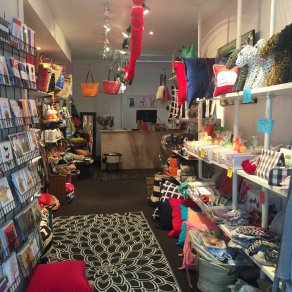
I favour Coventry Street above all others. For me it’s the bee’s knees and always a must when I visit Yarra City. Here the shopping is easy and well suited to my tastes. It’s quite eclectic, with there being a plethora of cafes to choose from, for pit stops, as a bonus. Cafe Dre, The Goodegg and the Bunyip are all ones I have frequented. Sadly the revamped food court at the Markets themselves, for some strange reason, are not nearly as enticing for me as before their make-over, but I am a fan of the paella at Simply Spanish – to be found pavement-edge on the Cecil Street side of the Market. Of course, we’re talking of South Melbourne in all this. Its market, in my opinion, leaves the Victoria version for dead – at least in the latter’s present incarnation.

As for the Markets themselves, I cannot possibly outdo Mr Cameron’s evocation. I have my favourite sites, always ensuring I part with some dosh, there amidst the plentiful array of stalls. Being in the seafood, meat, chicken, and pasta sellers sections, as well as the various delis, craft alcohol outlets and all that fresh fruit and vegies, is one of the few times I ever wish I was a native Melburnian.

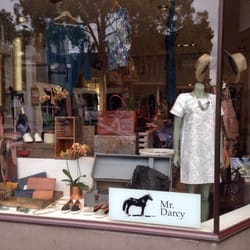
So next time you find yourself with half a day or so to spare in the city across the briny from us, hop on the No.96 heading to St Kilda from the CBD and alight at the South Melbourne stop. Proceeding up the embankment steps will bring you to within a few doors of the Markets and you are already on Coventry. When you can drag yourself away from its delights to wander further up the street, you will find a great bookshop. Further along is Paperpoint, specialising in stationery and cards and a little way up Union Street, running off Coventry, is Licorice Homewares (No.8), with its wonderful display of cheap wooden ducks. There’s arguably the best chocolate shop in the city in Bibelot (285-287) and for upmarket fashion, several Mr Darcys. If you’re feeling energetic and have more time, head down Claredon Street, away from the city, for more interesting outlets, including another of my favs in Made in Japan. This is down a lane-way (Wynyard Street). Several blocks further on the No.1 Tram runs back to the CBD. If you love art then there’s the Australian Centre for Contemporary Art en route to entice – a mini MONA-like experience.

But now, if you need more persuasion, it’s over to Anson :- https://southmelbournemarket.com.au/quickstep-love-bargains/

Cooee Beach and the Hef

It stunned me that summery afternoon. I kept turning to look, then turning away to try and read my book or stare at Table Cape in the distance….and then, repeatedly turning back for short bursts. I was trying my best not to be a perv, but she was seemingly oblivious to me. It was difficult fighting back the urge, to fasten my eyes on her and not let go. But I erred on the side of caution. I liked, really liked what I saw – that was obvious, so much so that I still remember it to this day. There was the initial incredulous shock then, with my peeks, I lapped her up. It couldn’t last forever and I had to leave her, the sole blessing of that was that the path back up to the road would take me even closer to the figure supine on the beach that afternoon. It must have been back in the late seventies or early eighties that this occurred. And I do link it to the Hef- Hugh Hefner – that it did actually happen – that she had the chutzpah to enliven my day. Not directly, of course, was there this linkage, but I don’t think it’s too long a bow to draw. She was there, quite brazen and unfettered, seemingly not caring who saw her. She must of known I was looking, but she remained on her back, eyes closed and what I was fixated on pointing up to the blue sky. Would she had had the confidence to do it in broad daylight had Hef not thrown back the shackles on womanhood a couple of decades previously. Some might say he just replaced them with another set, but I, along with Clem following, do not wholly agree.

Things were already on the turn, thanks to those red-blooded European types, by the mid-fifties, but until Hef came along the strictures were still to be unpicked, at least from where we in the antipodes took our cues from – the UK and the US. There was the Hays Code, you know, with all that hung off it, like the banning of ‘Lady Chatterley’s Lover’ by the beige censorship men. But Hef, with a blond bombshell as his centrepiece, changed all that with the first issue of his magazine. Marilyn, short of a crust before she really struck pay-dirt in the movies, agreed to pose unburdened by clothing. Hef got hold of the prints and the rest is history. Didn’t pay her a cent, of course, nor ever apologised for using her body to bring him fortune and fame. But, to my way of thinking, HH had gone a long way towards placing another comparable golden vision before me that holiday afternoon.

I suppose the first time I did it it was akin to buying condoms at a pharmacy. It took a while to get up the courage. It was the Sandy Bay Newsagency where the monthly periodical waited for me. I’d been on a few scouting forays before I’d actually summoned the pluck to do the deed. I didn’t want to be seen hanging around the girlie section for too long. I didn’t want to be classed as a perv, you realise, for I wasn’t. Definitely not. I remember the issue was a big, thick one; the day I overcame my demons and went for it. I was at uni, of course. I was acutely interested in the freedoms that being on campus entailed, relatively speaking. After all, Tassie was so hicksville back then, even if Hobart had started to emerge a smidge. ‘Hair’ had come and we’d seen nudity on stage, as well as on the silver screen when I made trips to the Elwick Drive-in or the cinema now where Centrepoint is. They did, occasionally, show some pretty racy European product there. And then there was Alvin Purple. But at uni, especially in the degree I was doing (Arts), there was a cornucopia of delights to be had when casting an eye over the female student cohort, especially in the few summer months we were there before one and all rugged up for the long winter. Remember this was the time of cheesecloth and it was hip to not wear a bra. Those young ladies, all being at least reasonably intelligent, knew the power, hard won, they possessed in their futures, thanks to Greer, Friedan, Steinem et al. And they certainly knew the power they had over us poor dribbling males in the way they dressed. You’d be laughed at if Hef was included in that list of feminists – but the notion isn’t as silly as it may first appear. But, yep, he also did much to blot his copy-book as well – just in case you think I’ve completely gone off my trolley. But, at that marvellous time, being quite a shy boy from the sticks, I certainly wasn’t getting much action in my first few years as a boarder at an all male residential hall. I needed an outlet – and, once I found my way to the counter at that newsagency, his mag, hidden amongst various newspapers and a couple of worthy journals in the pile I took to the counter – perhaps a Time or a Rolling Stone – to pass over as well. I wouldn’t want to be outed as a total perv, Hef provided that outlet too.

Hand on my heart, I did read the articles. Everybody knows that Playboy had great writers contributing, as well as great bodies. But for me the mag’s main game was obvious. But I generally couldn’t see much attraction in the centrefolds though. To me those Playmates of the Month weren’t real – in little way did they resemble the girls that attracted me around the lecture theatres and tutorial rooms of uni. Even clothed they were far more alluring. But pictorial collections headed ‘Girls Next Door’ or ‘The Girls of France’ – well, now we’re talking. To me their states of uncladedness were the complete enticement to my imagination. Occasionally there were celebrities of repute – Ursula Andress, Joan Collins, Madonna and so on – but again, for me they were no match for ‘The Girls of UCLA’ or ‘Girls on Spring Break’, back in the day. Perhaps it was because they seemed far more attainable.

Almost as clearly as that captivating vision on Cooee Beach that arvo long, long ago, I vividly recall that purchase of my first Playboy. After that it became easier, but I bet it wasn’t the only item I passed across the counter each time, particularly if it was a lady on duty. And I stuck to Playboy down through the following years. There was a brief flirtation with Penthouse, but that publication’s articles weren’t up to scratch. I’m serious, really. I had little interest in the raunchier breed that followed – Hustler, Mayfair, Club International and so on. Beautiful breasts were what had my blood running – the lasses who appeared in these more revealing spin-offs were far too forward for my liking. No tease at all.

Yep, it was a lovely time to be around, from the early seventies into the eighties until the fun police, ‘slip, slop, slap’ and the digital age took it all away. These eventually combined to end my beach-going days, at least as far as sun-bathing was concerned. But from my earliest years, until well into my fifties, any beach was a magnet for me. I loved getting a tan, reading a book on a beach towel and breaking it up a little by watching the passing parade. With trips to places such as Noosa, Byron and Surfers during this period, my beach-watching included a fair amount of toplessness. At these meccas of brown bodies I’d frequently amble up and down the strands and dip my toes in the Pacific. Actually going for a swim never appealed in the slightest. I can’t deny that seeing half-naked women didn’t tantalise when I came upon them. But I tried to be discreet, in my ogling, by keeping a fair distance from them; giving them a wide berth. I wouldn’t want to be thought of as a perv, being only on the beach for one thing, would I?

Now back to that summer in question. Once upon a time I lived just across the Bass Highway from the shores of Bass Strait and for most of the time Cooee Beach was a peaceful spot, far less crowded than Hilder Parade or West Beach, both fronting Burnie’s CBD. I know, that day, she wasn’t there when I arrived, otherwise my towel wouldn’t have been as close to hers as it was. I would have paraded down the beach to put a more respectable distance between her topless display and myself. But, at some stage, I changed position to face the opposite way and there she was. Fulsome of figure, red bikini bottom and blonde-haired – perhaps early thirties, it seemed to me. She was tanned all over, so obviously dispensing with her top wasn’t anything new for her. I have often thought many times since why she’d positioned herself so close to me when she had an almost empty vista of sand to choose from? I’ll never know the answer to that, perhaps she figured I looked harmless (I was) and that being so near would provide some protection in case a more in-her-face type turned up and gave her a hard time. Eventually I had to depart and again, passing her – but not too closely – I wouldn’t want her thinking I was a perv – afforded me a closer view of her tantalising bosoms.

I went eagerly back across the road for weeks, after that, on sunny days, but she never re-appeared. Her wondrous disporting of herself has never left me though. Please don’t think I’m dwelling on this or that I’m weird. For me, it’s just a lovely memory – so totally unexpected in normally staid Burnie.

Now in recent decades Hefner has become a bit of a joke and he was certainly one of yesterday’s men, wasn’t he? But once upon a time he did create a climate for change and bucked the mores of the period. Not all he did was positive for women, we know that. But, as with Clem B following, seeing old stock of the magazine, from its glory years, still brings back a sense of nostalgia. It’s there for all the times I spent wandering around the university grounds in the four years I lived at that hall of residence. For me the campus was a wonderland of earthly delights and then, of course, there was my own personal blonde bombshell on Cooee Beach. Can we still buy US Playboy here. I know the Aussie version has long ceased publication. If I find the former, will I buy one? I know the ‘Girls of Summer’ won’t be there anymore as all its famed nudity has now been expunged from its pages, but will the articles still stand up? And does Hef deserve to RIP? Well, that’s for you to decide.

Clem Bastow on Hugh Hefner’s legacy = http://www.smh.com.au/lifestyle/celebrity/hugh-hefners-legacy-is-as-much-a-quandary-as-his-playboy-magazine-20170928-gyqy4g.html

‘Greatest Hits’ – Laura Barnett

One of the loveliest musical purchases I made last year was the Joan Baez 75th Anniversay Tribute Concert CD. All Joan’s mates/admirers came together to pay homage to the great lady by placing their own imprint on her impressive back catalogue. I remember buying her very early recordings on Vanguard when the winds of change were blowing across the US and around the world during the sixties. Soon after, I also picked up on Judy Collins. Between them they put the folk back into Peter, Paul and Mary and the Kingston Trio, as did Cass Wheeler, the folkster/musician at the core of Laura Barnett’s ‘Greatest Hits’.

Kathy Guest, in her review of this tome for the Guardian, reflects, ‘When it comes to listening to music, there are two types of people: those who pay attention to the lyrics and those who don’t notice them. The former are drawn to artists such as Joni Mitchell and Leonard Cohen. The latter end up choosing a song about breaking up as the first dance at their wedding.’ I’d like to think, with my love of Cohen, Dylan, Australia’s Paul Kelly and that Idaho troubadour Josh Ritter, that I’m in the former category. I was certainly in the category of those who thought the Barnett book was a pretty cool read.

Cass Wheeler’s a UK singer/songwriter in the mold of all the aforementioned with her life span roughly paralleling my own. She had great musical success; beloved by millions back in the day when she was in her pomp. Since then, though, her life had not been so shiny as a result of a dysfunctional marriage. This was a causal factor for the battles with life of her only offspring, all resulting in Cass’ own mental issues. As the novel opens we discover Ms Wheeler leading a semi-reclusive life, in an isolated farmhouse, struggling valiantly, with a small circle of friends/employees, to give her existence back some meaning. As a goal she wants to recapture some of her glory years – to mount a comeback to savour even a small portion of that earlier success. From that point we receive a tour of her backstory, from her fractured upbringing, then paying her dues until she is spotted by talent scouts and given a recording contract. The rest, as they say is history, in this case, fictional. On her coattails rides her to-be-hubby, an excellent muso himself, but one who saw a much better future for himself than playing second fiddle to his superstar missus. Later he goes solo, has some success too and he feels a whole lot better about himself – enough for him to break away and indulge even more heavily in sex, drugs and alcohol. The wheels eventually fall off for both parties with a devastating effect on their only child, a sensitive daughter.

An interesting feature of the book is that each section opens with lyrics from a Cass Wheeler classic, composed by the author herself. Another of my favourites in the folk tradition, Kathryn Williams, has put out a CD album of these tracks as a companion piece.

The novel name-checks many famous identities from these times, but it only takes liberties with the imaginary ones. ‘Greatest Hits’ is a worthy read, maintaining interest throughout. I know fellow music lovers will greatly enjoy it. It mirrors what befell many who were on top and who managed to avoid Club27. In short, good stuff.

The author’s website = http://www.laura-barnett.co.uk/

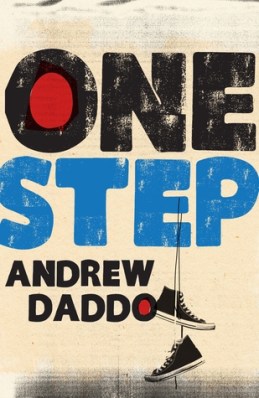
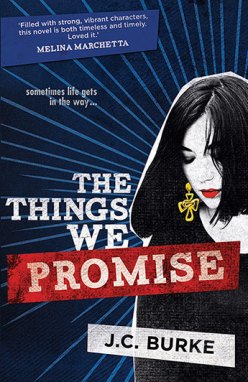
Cruisin’ with YA ‘One Step’ – Andrew Daddo, ‘The Things We Promise’ – JC Burke

My beautiful writerly daughter passes on to me the best of her reading of YA. She knows what I enjoy, so she rarely lets me down regarding that. A ten day cruise to the South Pacific was the ideal time to enjoyably plough through several of her recommendations – Andrew Daddo’s ‘One Step’ and JC Burke’s ‘The Things We Promise’. I knew, from the experience of my first time on an ocean liner, deliberately eschewing social media for the duration and finding a quiet sunny spot on board, that being there with a book in hand is bliss. Last time I ran out before the cruise ended and had to stock up on a shore excursion. This time I ensured I had enough along, but it was a close run thing.

The Daddo family have been big names in the popular culture of our country and as it seems almost obligatory for celebrities to try their hand at this writing caper, why should a Daddo be any exception? Most go for the biography or memoir, often ghost written – but a few have had a go at writing for kids, many – you can probably name them, as could I – have made a fair fist of it. Andrew Daddo is no exception – he has obviously found another calling to add to his talents. Name recognition possibly gives him a head start, but he needs the talent to back it up. Daddo has it on the evidence of ‘One Step’. The mood of dread he created as his tale headed towards its conclusion convinced me.

A constant theme in YA is the scourge of schoolyard bullying, a fact the main protagonist of this tome, Dylan, knows only too well. Just when he thinks he’s making progress in the girlfriend department (he’s finally been noticed by Gracie), despite his constant battles with an acne-ravaged face, along comes his arch-nemesis, Hamish Banning, to make his life hell. The situation is not helped by his best buddy going all weird on him. Dylan thinks, though, an invitation to a party will see him finally become part of the cool set and he’ll be able to hang out with the object of his desire. But all is not as it seems, with disastrous results. With his self opinion plunging, not assisted by his worrisome parents and the embarrassment of actually being good at something (creative writing) preying on his mind, where can a lad seek refuge. The answer doesn’t make for pleasant reading.

Some reviewers have stated the necessity for parents of teenagers to engage with the books of ‘One Step’s’ ilk being currently written for that age group. This is to better understand what’s going on in the lives of young people at such a critical age. It is perhaps a forlorn hope, even if they are as immensely enjoyable as anything written for older age brackets. So if it’s Daddo for the lads, then a worthy recommendation for the lasses would be JC Burke, even if the title under discussion here is set back in the Nineties.

Ms Burke has been around for a while now, perfecting her wordsmithery. ‘The Things We Promise’ takes us back to a time when the Grim Reaper was instilling fear into communities all around Oz. It was a period when the HIV/AIDS epidemic was getting into full gear. Gemma gets swept up in it all because her brother, Billy, is gay and at the epicentre of events in NYC, plying his trade as a make-up artist. He has promised to return home to work his wonders on his sister’s face for her leavers’ dinner.

We forget the impact the then deadly outcomes of this invidious disease had on the world. When this author discovered that her own offspring had little idea about it all, now we’re into the second decade of a new century, she decided a novel was the best way of informing today’s teens. Into it she has woven the confusions afflicting tender souls in those years when one comes of age – the same issues largely as the present, minus the impact of hand held digital devices. With the recent plebiscite, homophobia has again crawled out form the gutters, so ‘The Things We Promise’ is a timely tome. And it is also a reminder of how far we have come, in the positive sense. But ignorance still abounds, just as it did back in Gemma’s day. She’s a spirited lead character and as the waves rolled by, with the sun soaking this body that was fresh from the icebox that had been Hobart this winter on that sunny cruise, I immensely enjoyed this young lady’s journey. So I took two good ‘uns on the cruise with me. Ta muchly darling daughter.

Review of ‘One Step’ = http://www.smh.com.au/entertainment/books/andrew-daddos-young-adult-fiction-a-must-read-for-all-parents-20160714-gq5knw.html

JC Burke’s website = https://www.jcburke.com.au/

Brave Sandra

As far as art and the Salamanca Arts Centre is concerned, my main interest lies with the ‘big’ exhibitions in the Long Gallery. But more and more, in recent times, I have been venturing up to the third level; to the more intimate showing areas to be found there. In doing so I have discovered much to relish and intrigue with the wares produced by my city’s vibrant arts community using these spaces.

So one morning it was the product of Sandra Petersen I was casting my eye over. Now the first feature of being ‘up there’ that struck me, soon after the opening of SAC that day, was how perfectly quiet it was. There seemed not a soul around at all – and nor, during the whole length of my stay, did anyone put in an appearance – unlike other times when I ventured up that extra flight of stairs. I suppose it was akin to a private showing.

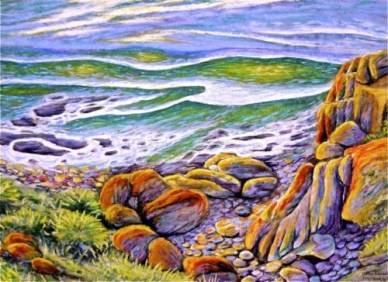
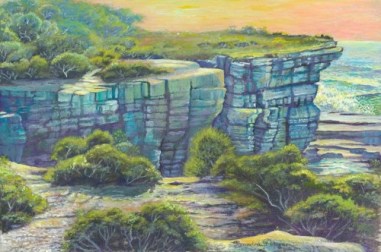
The second aspect of that morning’s perusal to appeal to me was the variety of genre awaiting examination. What first caught my eye were her prints of Tassie fauna and landscapes. She is a refugee from Queensland and is obviously much taken with her new home. As well, Sandra works in oils, pastels and the carving of wood. She has also invested in photography; Ken Duncan referring to her as a natural. More recently has come her stone masonry. The silent exhibition that day followed on from others she has set-up around this state and across the water. A future one would be well worth a visit.

But it wasn’t until I returned to my home by the river and dived into the ether, to see what else I could find out about her, that I discovered just how difficult her journey has been.

Her introduction to art was as a sickly child, beset and often bedridden by seizures, asthma and diabetes, was the gentle whimsy of Beatrix Potter. Attempting to replicate the author/illustrator’s distinctive furry and feathered creatures set her off on her road to a lifelong love of art. Later on came the local library where she borrowed book after book to see what she could glean from the greats. Paralleling all this came her love of music. She tinkled the ivories and began studying opera. At the end of her formal schooling she was accepted into the Queensland Conservatory of Music. Then she received the offer of scholarships – one to train as a music teacher, the other in the same line of work for art. The latter won out. As she began to raise a family she taught her passion at both secondary and tertiary levels.

Then, with three young ones under the age of seven, her life changed remarkably. A huge truck, carrying a full load, ploughed into her station wagon. It was almost the end of the line. She was left with spinal and head injuries, as well as internal bleeding. All this required eight long years of rehabilitation. Her acquired brain affliction left her with a lack of mobility and speech, together with plenty of on-going pain. To her credit she eventually overcame this major trauma to produce what I saw on display that winter morning. There were numerous plastic folders containing the results of her expert labours and an array of work from many fields.

Her inspiring story is available in more detail on-line and there are various websites, as well, to check out her artistic enthusiasms. It all enhanced a lovely time spent in her absent company that morning.

The Artist’s website = http://www.sandrapetersen.net/

Avant has Left the Building

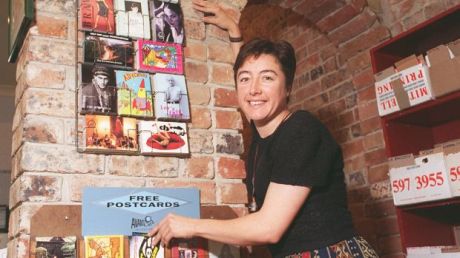
Sad. It made me a tad sad. It was a small thing really, a tiny fragment of my life – but I’ll will miss, nonetheless, the small pleasures it provided. They informed me greatly; introduced me to artists, photographers and were the perfect letter fillers, suitable for short messages to all the wonderful souls on my mailing lists. I knew where they were located in and around the city of Hobart and if in their vicinity, I would visit and select handfuls. But now this minor delight of an activity has been taken away from me, yet another victim of the digital age and funding cuts to the arts.

The idea came to Pat Mackie on her travels last century. She saw something similar during her time in Copenhagen and figured it could work in Oz too. She set up her business around the notion in 1992. And Australia was ready for it as our appreciation of the arts had matured to be the equal of any other western society, even if our governments often had more pressing needs than helping foster artistic talent.

Over the years people like me have savoured the free post-cards Ms Mackie’s company had produced. They were to be found in stands all around our major burbs. For some time they were excellent in getting names out there that otherwise would not have had the same exposure. The cards weren’t solely devoted to the arts; they promoted other products as well, but they were a great advertisement for painters, camerasnappers and our magnificent land, sea and cityscapes. Avant cards gave exposure to the up-and-comers yet to achieve mainstream acceptance or outlets, as well as advertising exhibitions and literary events. The entrepreneur’s idea ended up creating 20,000 campaigns and distributing 250 million post cards. Ms Mackie proudly tells the story of an aunt who wrote weekly letters to her nephew, topping them up with these cards. Said nephew had been battling his ice addiction but he eventually became clean. When the aunt finally visited him he proudly displayed, to her his bedroom, the walls of which were completely covered with the Avant product she had sent him over the duration. He said contemplating his walls focused his mind away from his craving for the substance.

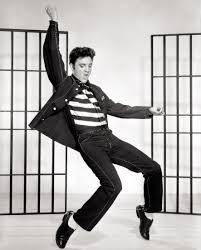
Now I am a wall plasterer from way back so I can relate to the above story, even if my infatuation with the product was/is much smaller in its positive consequence. One of the locations for my collecting was the Moonah Arts Centre and it was there I picked up ‘Elvis Has Left the Building’. Until I closely examined this card I had no idea that it would mark the end of an era. It was Avant’s swan-song.

There is an up-side though. The National Library of Australia is in talks with Pat Mackie to house the complete collection of Avant cards, every lovely issue. Also, another positive is that, because of my penchant for taking handfuls of the freebies, it has left me with a treasure trove that will last me for a few more years of contemplating and researching what strikes my eye – as well as letter filling.

Birds

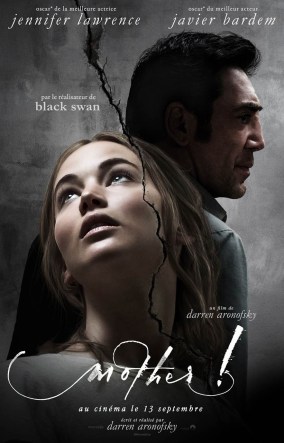
He’d reckoned he’d seen it all, the film critic on Trevor Chappell’s Overnights show for local ABC radio stations all around Oz. He’d seen it all, had Tom Cushing, until he’d came up against the two movies he’d viewed recently. And I’d just happened to be awake to hear his recounting the impact they had on him. They were both from the horror genre and he had surmised he was inured from all that ilk of film could throw at him. But, for very different reasons, ‘It’ and ‘Mother’ got to him. ‘Solid’ was his description of the first offering, a Stephen King adaptation. Australia’s own Hugo Weaving and Ben Mendelsohn were both, at stages, mooted for the lead role, but Tom reckoned Bill Skarsgård, son of Stellan, did a solid (that word again) job as the evil clown. Mr Cushing opined that there was nothing up there on the actual screen that fazed him – he’d seen it all before, as we have mentioned. But what he wasn’t prepared for was the reaction of the guy sitting next to him who was really into it and possibly hadn’t had the same exposure to the shocks that abound in the more frightening scenes of horror fare. When the nasty jokester suddenly appeared out of nowhere, to the children involved, it was too much for the poor fellow seated aside Tom and he grabbed our unsuspecting reviewer for all he was worth to be protected from the excruciating scariness unfolding. That was a first for Tom. The horror jaded critic had another shock in store when he took in the second movie, ‘Mother’. The Jennifer Lawrence vehicle truly, truly unsettled him. It was like no other horror number he’d seen in his long years. He told his listeners that he thought about leaving the cinema several times during its length and warned that, if you are in any way the slightest bit faint of heart, then this may not be the film for you. He continued on by saying he didn’t have the words to describe the terror he witnessed on the screen, nor the feelings for what he saw induced in the pit of his stomach. I myself loved director Darren Aronofsky’s marvellous ‘The Wrestler’ and to a lesser extent, ‘Black Swan’. But listen to these on-line headlines for ‘Mother’. Rolling Stone cautioned ‘It will make your head explode.’ and ‘The Verve’ added its tuppence worth by calling it the year’s most hated film. Patently, it’s not for me.

No, unlike my partner’s daughter (dare you to see ‘Mother’, Ilsa?), who thrives on being frightened out of her wits, I was put off horror long ago. Way back in the misty past, at the Somerset Drive-in to be precise, with avians flying all around in the evening air, I had the misfortune, as with James Norman, of seeing Hitchcock’s ‘The Birds’. From that point on it took something special (‘The Shining’, a few of M. Night Shyamalan’s oeuvre) to entice me to be scared at the cinema again.

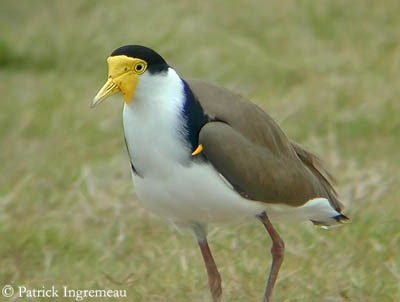
And in reality, there are some birds that bring out a little touch of fear in all of us. For James Norman and my Leigh’s brother Phil, the former Gold Coast postie, it is the magpie during spring’s swooping season. For me and I suspect, dozens of other Tasmanians, it is our own protected spur-winged plover. As a kid, I never felt any joy teasing these, what I thought of then as vicious feathered fiends, till they rose skywards en masse, only to plummet down towards their quarry. My pals would be screaming out in mock terror, running around hell for leather and having the time of their young lives, despite the fact their uncovered noggins were seemingly in acute danger. Yes, some of my mates thrived on the fun of stirring up a congregation of plovers.

I remember once, during my time at Yolla School in country Tasmania, we had, as a guest to address an assembly, a mainland environmentalist who enthused, to the glazed multitude before him, about the amazing number of plovers there were around the school precinct. He related that they were fairly rare in his neck of the woods. But here, especially in rural areas, plovers are a part of the fabric of everyday life, not thought of until the instant realisation strikes that two spurred wings are descending from the heavens with cruel intent. Barely is their time to worry about one’s skull or, heaven forbid, eyes before we are instinctively ducking for cover. Of course the bird is too acting on instinct, namely to protect their nestlings – but it often makes being around our urban fringes and open countryside most uncomfortable on occasions.

Over the years rumours have abounded of deaths caused by a spur penetrating into the brain or a cornea, but methinks that unlikely. But I often wonder what happens when a plover gets its timing slightly wrong?

There was an incident of Hitchcokian potential that happened to me a dozen or so years ago; one that has continued to give me nightmares, along with the original movie. I was far from civilisation that particular day, alone with my camera, on some open wetlands, when I came under stuka-like attack from a bevy of plovers. They dived-bombed me repeatedly as I dashed for the cover of a faraway tree. I felt the disturbance of air caused by the flapping of wings as my assailants flashed in very close in to my ears. Once, under the protection of its branches, they desisted and landed. There ensued a waiting game. Now and again there would be a squawk, a plover no doubt warning me that, if I exposed myself, my demise would be imminent. ‘You poke your ugly visage out mate and we’ll have you.’ They would not go away, I was not game to move. As the afternoon grew greyer and more foreboding I decided to make my escape. Inexplicably, as I crept away as low to the ground as possible, they didn’t bat an eyelid. For some reason they had collectively deduced I was no longer a threat as I made my way cautiously to my automobile. I drove off quite speedily. On my journey home all I could think of was that shocker of a movie where Rod Taylor, Jessica Tandy and Tippi Hendren are terrorised by feathered marauderers. It all came throttling back to me.

Despite coming eye to eye with a deadly flotilla of armoured-faced avians that day, I am now in admiration of these feisty creatures of the skies. Mother nature does bite back and they are its champions. They ensure we, the alpha-males of the natural world, do not have it all our own way. They are not deadly, but they warrant our respect. Its great that there is still so much in the animal world that can replicate the terror that happens in Hollywood horror Here we get the right royal heebie-jeebies from creatures a fraction of our size. It just takes a Hitchcock to start the ball rolling and put the doubt in our minds.

James Norman’s article = http://www.smh.com.au/comment/even-a-swooping-magpie-is-a-reminder-of-the-natural-world-20170911-gyevsi.html

The First Greens and a True Original

They were men of a regional and industrial town, were Fred and Rupert. They were blue collar, white singleted, gladstone bag toting, Labor-leaning and salt of the earth types. They had an affinity with the bush and to them hard yakka was a constant, not a glib expression. One heaved a bus around the burbs of the North West, the other was part of Burnie’s largest workforce, making paper. The raw material for this was wrenched from our island’s pristine forests without thought. Once upon a time paper was king, but not anymore. Once the government owned and operated the bus service, but not any more. During the working lives of Fred and Rupert manufacturing, mining, forestry and fishing knew no bounds – little ruminating time was set aside for tomorrow or future generations. They both had their passions, of course, but money was always tight – little spare for splurges and they knew the great art of making do. Rampant consumerism was decades away. They had known economic depression and world conflict – and well knew what both could do to dreams. Rupert and Fred built lives for themselves in an industrial town, married well and for life, raising a family.

Of course and sadly, the generation that knew Rupert and Fred is almost gone and yes, Bernard Salt, they did display some elements of Green thinking. Out of necessity they did so – because the alternative was the road to ruin. I liked what you scribed, Mr Salt, but, really, it’s drawing a long bow. I wonder, often, what the likes of Fred and Rupert would have made of today’s world. They would have adapted. They were nothing, that generation, if they were unable to adapt.

The eldest sons of Fred and Rupert bonded in that industrial town – a town blighted by belching smoke-stacks and a toxic sea. These two eldest sons shared enough in common to bring them together – the same classes at school and a fondness for the Burnie Football Club. One would take the other, in his car with the suicide doors, to watch the Tigers play, up and down that coast, come rain, hail and those howling winter westerlies. In the big picture one was a Collingwood tragic, the other was in the process of making the change from the Saints to be blessed by following the ‘piss and the poo’, as the other cruelly referred to the mighty Hawks. One loved the gees-gees and tennis – he was almost unbeatable on the local scene in his pomp. The other’s passion fell more the way of music and literature. As adulthood approached they both found themselves in a position to do what would have been unthinkable for Fred and Rupert at the same point in their lives. A generous government made it possible, with some family scrimping and scraping, to head south to university.

At UTAS – it was never called that back then – the duo of eldest sons was joined by a blond-haired, blue-eyed offspring of a Red Hills farmer, thus immeasurably upping the quotient of good looks possessed by the trio. Through the four years of tertiary study, living at a residential hall (lads only), the three were as thick as thieves; the best of mates.

At some stage during these formative years one of the eldest sons was drawn to a movement. The members of it were trying to save a lake; a lake like no other. Pristine, in the wilderness of the South West, its wide beach of shimmering sand was unique. It was earmarked to go under in the name of progress and jobs. An election was imminent and the little group decided to put up candidates as a means of getting the message out. Thus was formed the United Tasmania Group (UTG), now recognised as the planet’s first Green political party. The eldest son of Rupert was, proudly, a founding member.

Uni finished, careers called and the inseparable trio began to drift apart. Marriage and eventually children came their way, new friendships arose; new priorities.

The Original Green married another warrior for the cause – a woman who became leader at both state and federal levels, following the remarkable Bob Brown. This eldest son devoted himself to raising his family and teaching how to be humane and socially conscious to a legion of students down through the decades.

Sadly the marriage didn’t last and times grew harder for the son of Rupert, that original Green. An illness of body and mind took its toll and he made the decision to move back to that industrial town – to family and his roots.

And, one evening, the two old mates reconnected. A new chapter began in both lives. For very different reasons each was in need of companionship and they gave each other that in spades. Fridays nights at 15 Lane Street became something the son of Fred looked forward to every week. He prepared an evening meal, then settled back with the Original Green to watch the footy on tele – as long as Hawthorn wasn’t playing his pal’s beloved Maggies. The OG would become quite animated, particularly if the umpire made a blue. With both fortified by liberal amounts of cheap reds, much bullshit was spoken, grandiose plans were made and world problems solved.

By now the son of Rupert had another passion – the plight of Burmese minorities – and he spent much time in South East Asia helping out with their cause. It was in that region there occurred his watershed moment – the instant that changed his life markedly for the better. In a Bangkok temple he spotted a Thai village girl releasing a dove to the sky. He thought it was a magical instant, that it was a rare and beautiful thing that he was gifted the witnessing of. To his credit he made his feelings known to the young lady – and finally this son of a Burnie Pulp worker had found his soul mate. It was a deep and abiding love that would survive till the end.

When he was back in Tassie, now accompanied by his new partner, ever widening her horizons, the Friday nights continued – continued with the bonus of her company.

The other Burnie son had by now transitioned from a Labor voter to embrace the Greens, but he was definitely a lighter hue to his best mate. Great arguments were had in great spirit, as one couldn’t bring himself to go the whole hog. He was quite happy for there to be roads into the Tarkine, a cable car to proceed up kunanyi’s ramparts and sensitive tourist developments in the wilderness. To the other that was all sacrilege – a line in the sand just had to be drawn and he was prepared to do that. And don’t dare call this original Green dark. He was true Green – end of the matter.

The two eldest sons had much to look forward to. Son of Fred was invited by son of Rupert to join himself and his beautiful lady to sample village life in Thailand. A plan was hatched to travel to Sydney to reconnect with that son of a Red Hills farmer.

At least the latter partly came about. For, you see, that eldest son, that original Green, that son of Rupert is now engaged in a battle that he knows he cannot win. By the time this is read it may already be lost. But he is fighting it valiantly. Radical new drug therapy may give him some more time and for that he has had the need to fly to Harbour City. On one of these trips he was blessed by the third member of the old uni threesome paying him a visit. The Original Green returned to the former industrial town with such joy in his heart from that encounter – and he gave much joy relating it back to the other member.

So my dearest, oldest and most valued friend is preparing to make the journey up there to beyond the silver lining as Fred, Rupert and the Red Hills farmer have done before him. He is slipping away as I write – but throughout these last weeks and months he has been courageous, stoic and positive. His gorgeous Meimi has tendered him all the way with all that bounteous love she possesses. I will, when the final time comes, grieve for an irreplaceable loss, for what now cannot occur and for those raucous Friday nights of blathery and jest. When it comes, something rare and special will have been lost. My life has been immeasurably enhanced by his presence in it and I too, as soon as is possible, will make a journey to Sydney.

RIP Neville H Milne (27th September, 1952 – 28th October, 2017)

Bernard Salt’s Column = http://www.theaustralian.com.au/life/weekend-australian-magazine/conservation-a-part-of-life-for-past-generations/news-story/c697b4cc381f6fbde7e2c40a245ce357

Mick, Rick and the Garden Party

Imagine being booed off stage for presenting an audience with a cover of the Stones’ ‘Honky Tonk Woman’. Maybe it was the addition of a country twang that he gave the song, but the audience felt, with his long hair and refusal to stick to the formula of the evening, that the performer was out of line and they told him so in no uncertain terms. He fled the stage. The reaction was not as iconic as that given to Dylan when he swapped his acoustic guitar for an electric one, but with this performer it did give the world a song that has lasted down the decades, remaining a staple on classic rock radio world-wide. The song tells of a rocker who remained frustrated at the reaction to him that evening at Madison Square Garden.

I once saw Weddings Parties Anything perform live. It was at a venue, a pub I think, somewhere round my home town of Burnie. Due to come on at ten, if my memory serves me correctly, they eventually did so so much later. By this time many of the patrons were tanked and therefore seemingly intent on spoiling it for those of us who were there for the music. Mick and the lads – maybe there was a lass involved too – still did their their best to give us value for money from their rollicking fare, including their only major hit, ‘Father’s Day’. I guess you’d call them our own version of the Pogues, although I think Mick Thomas’ teeth, unlike Sean’s, were in much better nick. The Weddo’s were a pretty tight unit too and I doubt there would be any of the shambolic evenings in their history that the Irish collective are notorious for. Over the years, despite a lack of chart action, WPA’s famous Christmas shows at Richmond (Vic) venue, the Corner, have become legendary on the pub rock circuit. Despite the yobs that night and the lateness of the hour, I enjoyed their performance.

Something I also enjoyed, when I was much tenderer in years, back in the days when rock was young, was a certain television show, one in which the aforementioned entertainer on that MSG stage first had his name up in lights. When he first started out in it his music wasn’t to the fore – that developed as the show, stretching across fourteen seasons, wore on. He was on screen in all but the early days of the popular series – 435 episodes were produced in all. It was a contemporary of such wonderful fare as ‘I Love Lucy’, ‘Father Knows Best’, ‘Our Miss Brooks’ and the most legendary of them all, the hilariously poignant ‘The Honeymooners’. In contrast his show was supposedly a true take on what it took to be the US’s ideal family, headed by Ozzie, with wife Harriet. That was its eponymous title – ‘Ozzie and Harriet: the Adventures of America’s Favorite Family’. Most knew it simply as ‘The Nelsons’.

It began as a soap on radio in 1944, running until its move to television in 1952, starting a marathon that only finished in 1966. Ozzie and Harriet played themselves and until 1949, voice-actors their two sons. The real David and Ricky joined in then and the US settled in to watch, from their living rooms, the two lads grow up.

Today it would make for tame television, but back in the day the punters couldn’t get enough as the family involved itself with minor disasters and arguments that we all knew would be resolved by the end of the half hour. Ozzie was the slightly distracted, vague and amiable patriarch, Harriet his no nonsense and wise spouse. David was the sensible son, Ricky subject to flights of fancy – at least that’s my recollection of it. Critics reckoned later it truly was a show about nothing resembling any important issue of the day, was thoroughly WASP and insipid. Others likened it to an olden day ‘Truman Show’ – real people playing out their lives on national TV. The difference was that the Nelsons knew they were doing so – and in private, it wasn’t always to their benefit. As a result the two boys had nothing like a normal childhood.

The father, who died in 1975, was in fact a control freak who subjected his family to the demands of churning out the hit series; this taking priority over every other aspect of their lives. Ozzie had been a successful band leader in the thirties and was an out and out workaholic. Once he started in television he wrote the next day’s script through the night, cracked the whip on the long hours of recording and later, when his sons requested a desire to quit the series, they were bluntly forbidden to do so. They gave up any hope of attending college with their peers. They were famous – what else could they possibly want?

Harriet, pre-wedlock, was a nightclub and radio star whose future seemed very bright in her own right. She found fame, of course, but not as those who knew her, including Ginger Rogers, would have hoped. A trouper since the age of 13, Harriet Hilliard married one O Nelson in 1935 and gave up all her independent aspirations

Son Ricky’s profile grew on the show once he started strumming his guitar and showing the vocal aptitude to go with it. By the end of its years he was its real star with a huge teenage following. Eventually he found enough wriggle room to start building a life away from ‘The Nelsons’ as dad came to realise that, without his second boy’s input, his life’s work would go down the gurgler. It was his popularity as a musician that was his ticket to the independence that had been denied other family members. It was because he was television’s first teen idol. He had a string of hits in those pre-Beatle days when rock had blanded out. These included such ditties as ‘Hello, Mary Lou’ and ‘Travellin’ Man’. Eventually each episode of the family saga revolved around setting up a scenario whereby he could sing, usually at some frustration or other over a girl. Once the British invasion hit, though, his star waned; as did ‘The Nelsons’.

With his childhood effectively stolen by his over-bearing father, in his adult years the cracks started to show for Ricky, or Rick as now he preferred to be called. He experimented with drugs, busted up a marriage and generally entered a downward spiral – becoming a far cry from his public persona, as perceived by the public, from his television show. The legacy of it seemed like a millstone around his neck. As many did, as the sixties morphed into the seventies, he attempted to reinvent himself as a country-rock performer, putting together the Stone Canyon Band.

Rock revival by this stage was where some money could be had as well. It was something Rick Nelson usually eschewed, but in 1971 he accepted an invitation to appear at MSG, NYC, along with fellow stars from the 50s – Bo Diddley, Chuck Berry and Bobby Rydell. But Rick failed to do his homework. He didn’t realise this was a hits only show, so when he started to play songs off his latest album, including the Jagger/Richards cover, the crowd reacted negatively. Rick, piqued, pulled the plug and stormed off, vowing never to give any audience the satisfaction of him ever performing his old hits. It’s an interesting side story that his two sons, twins Gunnar and Matthew, who had a few hits of their own last century, now tour singing their dad’s songs as well as their own. And in any case, Nelson senior forgot about his vow in later years.

Such was RN’s funk after his disastrous meltdown that he decided to write about his feelings on the matter in lyric form. The result – ‘Garden Party’. For those in the know – now including your good selves dear reader – it is obvious what the ‘Garden’ bit refers to. The song became his first top ten maker since his golden years – and his last. Rick Nelson kept on playing for the rest of his short time on the planet, his life cut short by a plane crash in 1985. He was only 45. As someone who followed his countrified career after the demise of his parent’s television vehicle, this event greatly saddened me. But the legacy of these leaner years remains with a very fine song.

In its lyrics are many very interesting references, including a line name-checking one of his hits – ‘Mary Lou…She belongs to me’. Then there’s ‘Mr Hughes hid in Dylan’s Shoes’. This was a hark back to the times when George Harrison, who Rick believed was his friend, tried to go incognito around the world’s cities, calling himself Mr Hughes. At the time the ex-Beatle was working on a project that didn’t eventuate – an album of covers of tunes by his Bobness.

Went to a garden party to reminisce with my old friends
A chance to share old memories and play our songs again
When I got to the garden party, they all knew my name
No one recognized me, I didn’t look the same
But it’s all right now, I learned my lesson well.
You see, ya can’t please everyone, so ya got to please yourself
People came from miles around, everyone was there
Yoko brought her walrus, there was magic in the air
And over in the corner, much to my surprise
Mr. Hughes hid in Dylan’s shoes wearing his disguise
But it’s all right now, I learned my lesson well.
You see, ya can’t please everyone, so ya got to please yourself
Played them all the old songs, thought that’s why they came
No one heard the music, we didn’t look the same
I said hello to “Mary Lou”, she belongs to me
When I sang a song about a honky-tonk, it was time to leave
But it’s all right now, I learned my lesson well.
You see, ya can’t please everyone, so ya got to please yourself
Someone opened up a closet door and out stepped Johnny B. Goode
Playing guitar like a-ringin’ a bell and lookin’ like he should
If you gotta play at garden parties, I wish you a lotta luck
But if memories were all I sang, I rather drive a truck
And it’s all right now, learned my lesson well
You see, ya can’t please everyone, so you got to please yourself

These days ‘Garden Party’ is now the crowning glory of Rick’s career – the one that’s lasted. It has had innumerable people covering it including, in recent times, John Fogerty on his own excellent collection of covers, ‘The Blue Ridge Rangers Ride Again’

And the connection between Rick N and Mick T – it’s probably obvious by now. The Weddos man has knocked out his own engaging take on the classic.

On the local scene Mick Thomas has had a long and illustrious career, not only with his singing, but in writing for the stage as well. He performs as a solo artist and as part of bands such as The Sure Thing and The Roving Commission. He is a survivor. He’ll perhaps never regain the type of exposure ‘Father’s Day’ gave his band, but he has a solid following and his product still sells, standing up to critical scrutiny. But, of course, you’ll never hear him played on mainstream radio. Mr Thomas’ latest release is ‘These Were the Songs’, largely a retrospective of his work post Weddings Parties Anything. There are several covers, apart from GP, including a lovely, lovely version of Dylan’s ‘Most of the Time’; Thomas dueting with up-and-comer Ruby Boots. And as with Nelson, his inclusion of the former child-television star’s song is an up-yours too. It’s a thinly veiled criticism of the big players on the scene and their refusal to take Mick’s newer music seriously. And it is perhaps his fear that, along with ‘Garden Party’s’ songsmith, he will be regarded as essentially a one hit wonder. But with both that song and ‘Father’s Day’ on non-stop rotation somewhere and instantly recognisable, is that too bad a legacy?
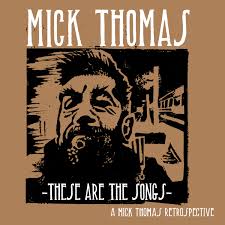
Rick Nelson performing ‘Garden Party’ – https://www.youtube.com/watch?v=uAHR7_VZdRw

Mick Thomas performing ‘Garden Party’ – https://www.youtube.com/watch?v=6GhsEFluOUo

On F-Bombs

You see, Mr Salt, I blame Hugh – Hugh Grant. It was his performance in the inspired opening scenes to ‘Four Weddings and a Funeral’ that bought the F-Bomb in from the cold, I reckon. From out of the mouths of Salt’s ne’er-do-wells and into the oral orifices of the mainstream it came and came again until now it is a torrent. You see Grant’s repeated utterances of the expletive, as he belatedly readied himself for an engagement, went a great deal of the way into making that vehicle for his limited, but exceedingly engaging, acting talents into a romantic, much adored classic.

Then along came Ian McShane who turned the F-Bomb into an art form. His late career signature role in ‘Deadwood’, as the aptly named Al Swearengen, made it a hit. His foul blasphemies, centred on the four-lettered once reviled word, as he orchestrated his latest dastardly deed, I have little doubt will ever be equalled, despite Peter Capaldi’s best efforts in ‘The Thick Of It’.

Now that f**k is off the leash, romping unrestrained in society, it is bringing, from the outer, like terms in in its wake. It is in everyday conversation, even though in living memory it was only once uttered by those beyond the pale. But, nowadays. even the c-word is getting in on the act. The question is: what will fill the void as the outliers of the English language? The candidates, as put forward by Salt, do not seem to roll off the tongue as well as those which were once ignored by truly proper people.

But, despite its popularity in the digital age’s vernacular, I, like BS, still in some circumstances, consider it offensive. I have ceased to be shocked by a f-word up on the big screen or down on the little, but still find it hard to take when popular music is repeatedly peppered with them. Something like ‘Little Lion King’ is fine, or the glorious refrain to ‘Am I Ever Gonna See Your Face Again’ (No Way Get Fruited). But the abomination of some rap supposed tunes is a bridge too far, with it and other low-life terms, shouted out ad nauseam and with gay abandon, being an anathema to me. Nor do I prefer to use it in my everyday speech. I may, on occasion, utter it with a fair amount of liquid on board. I may quietly exclaim it to myself when untangling a knotty problem (usually associated with modern technology). But for some it seems it is as common now in everyday lingo as much as the ubiquitous ‘like’ between every phrase with the younger brigade is. For me, its continual usage by somebody marks that person as one that ideally I wouldn’t like to have any dealings with. Is that my age, or perhaps the teacher in me? Once upon a time I fought a losing battle against it in the school playground, but never tolerated it in my classroom. Perhaps it is because deep, deep down I may be just a tad prudish. I was certainly never brought up to use it and I too find it’s use by pretty young lasses quite confronting. I am sure the younger me would never have been attracted to such potty mouthed girls, despite the number of other attractive assets they may have had at their disposal.

So, yes, I am in Mr Salt’s camp here, being somewhat perplexed by its commonplaceness and being not prone to use it in my scribblings. And if anyone doesn’t like that they can, well, get fruitcaked!

Bernard Salt’s Column – http://www.theaustralian.com.au/life/weekend-australian-magazine/on-the-offensive-the-fword/news-story/8f59619eacb94eec39ff0b2958401eb8