Category Archives: Movie Reviews

First Berlin, then Paris

It must be every parents’ nightmare. Parents would seem to have so much to worry about in this fraught age we live in without that. Seeing ‘Berlin Syndrome’ put me in mind of the Graeme Connors song, ‘Louisa’, a later highlight of his career –

Lying in bed drifting in and out of a late night talk back show
I hear this live cross news reporter coming over the radio
seems a bomb’s gone off in a train somewhere on the London Underground
with unconfirmed reports there are several Australians among those who can’t be found
and of course I thought of you my dear
that’s why I’m here on this phone
Louisa come on now I want you here with me
it’s a crazy world these days I need to know you’re somewhere safe
Louisa darlin’ please why don’t you take the next plane home
it’s not the time to see the world I’m worried ’bout my little girl Louisa

A father, worrying himself sick over a daughter travelling in Europe, imagining all those ‘crazy bastards out there‘, willing to take innocent life in the name of crackpottery. And in the film offering, the travelling girl sure meets one crazy bastard in Andi (Max Riemelt). He, despite outward appearances, is completely off the show. Thankfully my own daughter’s travels in Europe were in the company of her good man. If your own footloose treasured one cannot be convinced against soloing it through Europe these days, you’d be wise to not go and see this – or, perhaps even better, get her to view it.

Andi has seriously nasty intent towards Clare (Teresa Palmer). Normally an offering about a guy lording it over a girl he’s trapped in a room, preparing to do dastardly acts to her, is not one I’d rush out to see, particularly as the esteemed DS – we all know who that is – dissed it in no uncertain terms. As well, there were plenty of other films beckoning at my art house around the time. But it captured the attention of my lovely lady’s equally lovely daughter, after she’d watched a promo of it on the tele, so she sweetly nagged me to add it to my list. For all her admirable talents I find Ilsa someone it’s hard to say no to, so off I toddled.

Now I cannot pretend I thoroughly enjoyed it, but with director Cate Shortland at the helm – after all she did give us the very worthy ‘Somersault’ – it was somewhat more subtle than what I would take to be the norm for this sort of thing ie, a fantasy project for male auteurs. Does Clare get a dose of the Stockholms, or is it just a matter of taking the course of less resistance as she tries to find a chink in her captor’s armour and seemingly inescapable digs? This is as far away from ‘Fifty Shades…’ as it is possible to get. It’s Berlin in wintry and dun-tones; our heroine’s confines being in the grottiest of neighbourhoods; with this being essentially a two-hander between the leads. We have a largely pointless sub-plot involving Andi’s father – set up, I presume, just to allow for a tender moment between captor and victim. Andi is also making eyes at one of his students – he’s an English teacher, you see – but this goes on to have much, if confused, relevance for the climax of the piece. The movie is stretched out to a long couple of hours and I wasn’t too sure about its eventual ending, but it’s certainly a brave performance from Palmer. Clare displays plenty of Aussie grit and determination in her attempts to get through her ordeal and ultimately it does possess much to recommend it.

I must be missing something. She’s good, no doubt about that. But ‘World’s Greatest Actress’, as she’s spruiked for this film – well, there’d be a few English dames who’d have something to say about that, not to mention Streep, Blanchett and I could go on. And in no way was ‘Things to Come’ ‘One of the Best Films of the Year’ nor was it ‘A Stunning Achievement’ and it sure wasn’t ‘Perfect’. ‘A Quiet Jewel’? Well, maybe, as long as it was a lesser stone. It’s certainly not a diamond.

It isn’t that Isabelle Huppert doesn’t have acting chops – she does, in abundance. She’s brave and does French sang froid very well. In this she showed more nuanced emotion than is usual for her. But it’s boring. The film is simply boring. I struggled to see it through and in the end was thinking about my bladder far more than what was going on up on the screen.

‘Things to Come’ is from the producer of ‘Rosalie Blum’ and the director of ‘Father of My Children’ – both excellent. But here, together, they have come up with something far less than the magic of those two. And, sorry if I let the cat out of the bag here, but the ‘romance’ that watching the trailer led us to believe was going to happen between younger man/older woman just didn’t occur – apart from a couple of meaningful looks.

Parisian teacher of philosophy (Huppert) gets high from intellectual discussion and is quite stunned when she discovers hubby (Andre Marcon) isn’t going to love her forever for it. She wants to know, in typical French fashion, why he simply couldn’t keep his dose of the Peter Pan’s, resulting in an affair with a younger woman, a secret from her. But he was forced to spill the beans by their not so understanding daughter. He soon departs, around the same time as she is dropped by her publisher – her texts are no longer flavour of the month with the student cohort.. Her mother, compounding her woes, is starting to lose the plot, leaving her with a moggy she definitely does not want and needs to quickly find a home for. Trips away from Paris to the Brittany Coast and into the mountains abound Grenoble – the latter with that spunky young hunk, who has his girl friend in tow, help to clear her mind.

Gradually she accepts her situation and moves on, but I really wanted more bang for my buck with this. I was sucked in by the hype and the full page ads for it in a certain Melbourne newspaper. But, sorry Isabelle World’s Greatest Actress, your film comes up way short here for this punter.

Trailer ‘Berlin Syndrome’ = https://www.youtube.com/watch?v=tbq44I_nSRg

Trailer ‘Things to Come’ = https://www.youtube.com/watch?v=UhErAqJ8HGE

The War We Can't Let Go Of

At an early stage, in the film ‘Denial’, a young legal eagle asks, ‘What is there about this war that we can’t let go of?’ – or words to that effect. He was greeted in the chambers by stony silence and stern looks, surrounded, as he was, by souls who realised there was a Jewess in their number.

There were three films, set in the second great war of the previous century, on at the State in the week I ventured out to see this offering – indicative that we can’t let go. They were ‘The Innocents’, ‘Their Finest’ and this one. The ‘Zookeepers Wife’ was slated to arrive soon after. I also viewed the second listed. I am not a fan of any supposed entertainment involving the heroics of American GIs slaughtering enemy forces and saving the world. That was a part of my upbringing – ‘Combat’ on the tele, John Wayne et al on the big screen. Today, thankfully, even Hollywood has become somewhat more subtle and sensitive and the two offerings here had something special as an added enticement to attract me.

I love a good courtroom drama and that is essentially what ‘Denial’ is. It’s roots are, though, in the shock to humanity that was the Holocaust. There are none of the harrowing imagery of mass-extermination here, but, at one stage, the main protagonists visit Auschwitz where they stand on the roof of what was once a gas chamber. That was chilling enough as they contemplated what once occurred beneath their feet during those years..

The movie details a court case involving a Holocaust denier. How can such people exist? It features the odious David Irving who is still spruiking his noxious views to the sort of people who maybe voted for Trump and Le Pen. American Scholar Deborah Lipstadt – the aforementioned Jewess in the room – sets out, along with the publishers of one of her books on the topic, to prove, not that these events occurred (that would further stress the survivors of the death camps), but that the man, Irving (Timothy Spall), is a liar. He is suing Lipstadt (a feisty Rachel Weisz) for his defamation in one of her publications. This takes us to an intriguing quirk of British law that sets the scene and brings into the picture Richard Rumpton QC. In the role Tom Wilkinson steals the show as the unshakable stickler for principle which, at first, doesn’t go down well with the Yankee brigade, aghast at the archaic vagaries of UK law.

Spall also thrives as the denying villain. One critic describes his presence in this as all ‘… courtly manners masking a snarling junkyard dog beneath…’. I also particularly liked ‘Sherlock’s’ Andrew Scott as solicitor Anthony Julius. Written by David Hare, the movie has much to commend it, even if we know how it all ends. That this case savaged Irving’s reputation, yet he still manages to go on putting out his falsehoods as gospel – the ultimate fake news – is quite obscene. At times the world is a weird place.

Age reviewer Sandra Hall claims there was a time when she ‘…couldn’t see the point of Bill Nighy.’ That was during his television years, usually playing a womanising rogue. Well, it was one of those series where he was cast as a philandering university academic, of the most disreputable kind, that first attracted me to one of my favourite actors. And then along came ‘Still Crazy’ in 1998. Hall reassessed him, I became even more enamoured and thus have remained ever since. For most he’ll be always remembered for that unlikely hit, ‘Love Actually’ – but, for my money, his best performance came with 2005’s ‘Girl in the Cafe’.

‘Their Finest’ is a take on the old chestnut of making a film within a film – this one’s mainly set in the London Blitz. The inner movie is a ‘based on true events’ incident, during the Dunkirk evacuations, whereby two Norfolk sisters rescued soldiers in their father’s fishing boat. Nighy plays a once well recognised actor, now down on his uppers, cast as a drunken uncle for the propaganda effort, aiming to lift local spirits. Scripting it (or providing the slops, as a woman’s perspective was evidently termed back then) is Catrin Cole (the versatile and beauteous Gemma Arterton). Sam Caflin – the death wish quadriplegic from ‘Me Before You’ – is Cate’s fellow writer who becomes the love interest. Richard E Grant and Eddie Marsan get a look-in as well.

Really, apart from the two leads, this film has not a great deal going for it – even if it was granted an extended run at the State. The look of the offering is meant to be redolent of the period as it tries to capture the stiff upper lipness of the times – and it was interesting to see how they devised special effects in the era before digital technology. It’s all a tad twee, but even in second rate material Nighy and Arterton are class acts worth watching.

It’s seven decades on from the end of World War Two, but I am sure there are many, many stories have yet to be milked from those tumultuous six years of conflict – but we never learn from them, do we? There’s a mad man again loose, this time in North Korea; a Syrian leader prepared to slaughter children in their schools and a guy in the White House fully a few threads short of a jumper.

Trailer – ‘Denial’ = https://www.youtube.com/watch?v=yH7ktvUWaYo

Trailer ‘Their Finest = https://www.youtube.com/watch?v=mMh1EvAQOQ8

Ove, Ozon and the Country Doctor

The lead was beautiful – quite exquisite in fact when you looked closely. There was a porcelain fragility to a face that was markedly luminescent up there on the big screen. I felt I could look at that face forever – and his co-star was reasonably fetching to the eye as well. But, really, it was no competition. He, Pierre Niney, was Ozon’s trump card in ‘Frantz’ – and he delivered. For this scribe to be attracted to the male star, rather than the female lead, says something.

And to think I debated about going after reading Jake Wilson’s review for the offering in the Age. 113 minutes is a long time for an old fella to sit through if he’s bored brainless. Jake obviously didn’t enjoy the experience one bit and I didn’t want to repeat that. But, thankfully, the other more positive evaluations in print; the trailer and the director’s track record tempted me to the cinema for it. Apart from being quite mesmerised by Nimey’s portrayal of the tortured Adrien, it was a tale that took off in all the directions that I didn’t expect – adding to the treat. It has a secret at the core that explains Adrien’s wretched mental state for much of the film – and it’s a secret that is revealed early enough to get full mileage from it.

It is a chaste feature compared to some others from François Ozon. ‘Swimming Pool’ is one of my favourite French movies and he’s also been responsible for ‘8 Femmes’, ‘In the House’, ‘Young and Beautiful’ and the amazing ‘Under the Sand’ – one of the great visual takes on loss and grieving. The only aspect of ‘Frantz’ that irritated me a little was the fading into and out of the dominant black and white to colour at significant moments. One or the other please – preferably the former as it seemed more in keeping with a Germany and France immediately following the Great War.

Anna (Paula Beer) finds she’s not the only grief-stricken visitor to her fiancé’s empty grave. A mysterious stranger, it turns out, also loved Frantz, presumably buried somewhere on the Western Front. But Anna and Adrien are drawn to each other in their sorrow and the latter’s presence is some salve for Frantz’s father – guilt ridden at having convinced his boy to go to war. When Adrien disappears, Anna, conflicted in her feelings towards a combatant from the former enemy side, as Adrien has revealed himself to be, sets out to track him down. More surprises ensue, but, like me, she’s obviously smitten.

Ove too is grieving – firstly for his departed wife and secondly, for his job. After four decades of loyal service to the Swedish Railways, he is unceremoniously sacked by a couple of suits from head office. As a result of these two wallops to his well being, he becomes the stereotypical curmudgeon and at the point of entry to the film he is taking his grief one step further. He is actively trying to kill himself. At this, he finds, he is a spectacular failure. Gradually, though, as the film moves on from these futile attempts, he is embraced by members of his community. They combine to show him that the modern world – a world that has caused all his pain – might just not be such a terrible place to continue living in. And in lovingly drawn episodes from director Hannes Holm, we get his back story, demonstrating that his wife was a gem worth every iota of his grief. Rolf Lassgård is superb as ‘A Man Called Ove’ – and this endearing rendering was a nominee at this year’s Oscars. Like Ove’s wife, it too is a jewel.

François Cluzet’s Gallic features have graced many recent features of European cinema. These include 2015’s ‘One Wild Moment’ and one I particularly appreciated, ‘Little White Lies’. But he is best known for his wheelchair-bound performance in ‘The Intouchables’ (2011). He’s a dependable operator and matched with the gorgeous – no chance of the male lead stealing the limelight here – Marianne Denicourt, we are in for another diamond. That duly comes to pass in ‘The Country Doctor’.

Cluzet plays a physician out in the what is obviously considered the boondocks – but, by our standards, pretty close to civilisation all the same. Still, there are plenty of rustic denizens to add quirky humour to the piece and the good doctor is one of the very few gels that hold his small rural community together. On call day and night, he is fast wearing out, with this being intensified by a prognosis from a colleague that is about to rock his world. The local authority, as a result, deems he is in need of an assistant and along comes Nathalie, fresh out of training. But being a woman of a certain age – and stunningly so – she’s no pushover as Jean-Pierre (Cluzet) is about to find out. Initially ambivalent to her best attempts, the rural doctor soon finds he is forced to be very reliant on her obvious attributes in the job.

In the hands of a Hollywood director this would all soon morph into a cheesy romance, but there’s only the merest hint of deeper feelings here. One of those occasions is when J-P stares wistfully at her naked and vulnerable neck, giving a clue as to what may be bubbling away under the surface. It’s a tender moment in an offering rightly described as ‘… a beautiful movie with a big heart’ and ‘…a film of humanity and optimism.’

The director, Thomas Lilti, is himself a former doctor and it shows. An operator like Jean-Pierre would seemingly be an increasingly rare product these days. I’m lucky I have one of his breed to attend to what, on occasion, ails me.

Each of these three productions are worth seeking out, even if you are somewhat sub-titled adverse. The latter two, in particular, will have you feeling uplifted from the experience in a way no comic book derived franchise mush could even go close to.

Trailer for “Frantz’ – https://www.youtube.com/watch?v=UBt7nqrp1rE

Trailer for ‘A Man Called Ove’ – https://www.youtube.com/watch?v=rNe371HykY8

Trailer for ‘The Country Doctor’ -https://www.youtube.com/watch?v=6pDbTS4UHlA

Loving 'Loving'

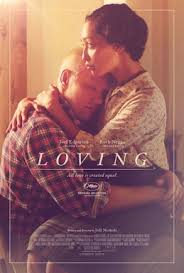
He was the unlikeliest of civil rights heroes. For a start he was white – a taciturn bullfrog of a man, with little education and few words. Long gone now at the hands of a drunk driver, Richard Loving was what many would consider to be white southern trash, hailing as he did from the Commonwealth of Virginia. Loving adored cars, rot-gut whiskey and his Mildred. Only problem was, Mildred was black. In fact, back in the fifties/sixties, Loving was more at home in the company of her fellow coloureds than he was with his own people. Colour just wasn’t an issue for Richard. His own family had a ramshackle property down the end of a tobacco road and when Mildred announced to him, in trepidation, that she was pregnant, he knew what he had to do. He wasn’t dissuaded that it was illegal in his home state – he resolved to marry her and build her a new home on some land he’d been saving up for. He’d wed her in Washington where it was within the law and bring her back to their new love nest. Simple – or so he thought.

And they chose an Aussie to play him. I’ve heard that the reason for the current popularity of our actors in Hollywood is that they come to town ready to roll due to their solid grounding in the home grown industry; that they’re not prima donnas; that they’re never fazed by what’s required of them and they do accents well. Joel Edgerton had worked with director Jeff Nichols previously, in ‘Midnight Special’, so the guy at the helm was well versed in his capabilities. Joel did not let him down, earning a Golden Globe nomination for his portrayal. His co-star did ditto, but went one better in winning. Many felt the Aussie’s performance was up there with Casey Affleck’s in ‘Manchester by the Sea’. I’d beg to differ, but nonetheless it was darn good. His gorgeous Mildred was played by Ruth Negga, an Ethiopian born Irish actress.

Soon after the start of ‘Loving’ we know that Richard has miscalculated – being legally married elsewhere does not change the law locally. The couple are quickly arrested and sent to the clink. They discover that, to avoid a lengthy sentence, they must move back to DC, something that rankles Mildred in particular. She writes to the Attorney General, Robert Kennedy, to plead the wrongness of their situation, setting in motion a process that leads all the way to the Supreme Court. And the rest is history.

It’s Mildred who is eventually the proactive one of the pair; Richard remaining a reluctant partner in the proceedings and refusing to participate in any of them. He also forbids his wife, against her wishes. All of it is left up to the lawyers. It’s during the course of this journey that their humble home, which they have returned to on the quiet, is visited by a photographer from ‘Life’ magazine. Played by ‘Boardwalk Empire’s Michael Shannon, he bonds with the couple and the resulting spread in the magazine goes a long way to pricking the nation’s conscience on the issue. The actors re-enact the informal session – and as the end credits appear, we receive the original up on screen. Its impact is palpable.

Nichols doesn’t over-egg his story; he lets it unfold slowly with Mildred growing in stature along with her confidence. But nothing changes Richard. The scene when he’s overwhelmed by the enormity with what’s occurring with him at the centre is one of this nuanced movie’s highlights. The only drawback for this viewer is that, at times, the distinctive southern drawl is so pronounced sub-titles are almost required. With some of the characters I missed whole slabs of conversation.

It seems that, as they weren’t in the public view as the various court cases in their name took place, history, until this film, has largely forgotten about the Lovings. It’s sad that neither survived to see it reach the big screen, as at least one member from the women who made up the concurrent ‘Hidden Figures’ managed. ‘Loving’ is a tale of a simple love story having profound implications – of ordinary people, through their stubbornness and resilience, changing our world for the better.

Official Trailer = https://www.youtube.com/watch?v=zRXuCY7tRgk

Oscar Ruminations

Done and dusted for another year, with, of course, what they’ll be remembered for this time around being the cock up at the end. They got it wondrously wrong. But they, being the Oscars, did get it wondrously right in another regard. As Karl Quinn wrote in the Age, before the event, ‘In a year with many worthy contenders, hands down the most intriguing category…is best actor. It’s the easiest to call and potentially the most difficult.’

Like myself, Quinn was rooting or for Casey Affleck. His incredible turn in ‘Manchester by the Sea’ should have been a no-brainer. The two other front runners, Ryan Gosling (‘La La Land’) and Denzel Washington (‘Fences’), were both worthy, but really not in the same league. I can’t comment on the perceived also-rans, Andrew Garfield (“Hacksaw Ridge’) and Vigo Mortensen (‘Captain Fantastic’), having not viewed either production.

The issue was the actor’s own troubled back story. The younger Affleck was accused of sexual harassment by two women who worked on his controversial movie ‘I’m Still Here’. He vehemently denied the accusations, but chose, for whatever reason, to settle out of court. The point is, of course, that he was never found guilty. Many, though, despite the precedents of Woody Allen and Roman Polanski, felt this should have still disbarred him from consideration. It was noted that Brie Larson, a sexual assault survivor and advocate, pointedly did not clap in presenting him with the award (couldn’t the Academy have been a little more sensitive in their choice to pass over the gong or, conversely, did they need to be?)

Now Afflect may well be the most unsavory actor, in real life, in the history of filmdom, but of course he has never been convicted of what Quinn refers to as ‘moral turpitude’. And his performance in the Kenneth Lonergan offering will last far longer in my mind than either Gosling’s soft shoe shuffling in ‘La La Land’ or Washington’s motor mouth effort for ‘Fences’. Rightly, the majority of the around 6200 voters in the Academy agreed and he took delivery of the gong.

I can’t say I was enamoured of ‘La La Land’. The bright opening traffic jam sequence was a show-stopper and it did gather some pace towards the end as it built to a musical climax – but the bulk of the film, apart from the short time John Legend was on screen, was quite plodding. To me Emma Stone, although serviceable, hardly lit up the screen.

We now know ‘Moonlight’ was crowned Best Film, but again, not having watched it, I am in not position to scribe on its ascendancy over all comers, or not – the same being the case with ‘Lion’ and ‘Hacksaw Ridge’ too. ‘Arrival’ bored me to tears, so much so I was contemplating walking out long before it reached its dull conclusion. I do know many others had it, though, at the apex of their best movies for 2016. ‘Hell or High Water’, with Jeff Bridges in fine form, on the other hand, was a hoot from go to whoa. I adored it as a rollicking cinematic adventure of the best sort. ‘Fences’ was a very competent film but took some time to get going. But once DW’s character, as Pittsburgh garbageman TroyMaxson, had his tawdry secret out in the open, ‘Fences’ really picked up a head of steam.Viola Davis was sensational as his wife, as was Michelle William’s supporting role in ‘Manchester by the Sea’, both thoroughly deserving of an award. I suspect the former gained it as she had more screen time. ‘Fences’ also possibly suffered for its staginess – it was an adapted Broadway hit. ‘Hidden Figures’ was perhaps the most Hollywood ‘writ by numbers’ of the nominations I saw, but none the less enjoyable for that. Now that he is in his mature years, Kevin Costner is a far more interesting actor than when he was required to play the Great American Hero. And you can argue until you’re blue in the face about it, but I reckon its deviance so much from historical fact cost it. Still, it was a great yarn of when, despite its flaws. America was truly great.

Has there ever been a sadder movie than ‘Manchester by the Sea’? Has there ever been a sadder man than Casey Affleck’s Lee Chandler? He carries a pain no man should be burdened with. During the course of the movie he tries to shake it, but just can’t get on top of it. For Lee it is always one step forward and two back. Once we are informed of the source of the problem we understand his retreat into himself; his hair-trigger rage and lashing out at the world; his desire to have others inflict physical pain on him. He fled his home to drown himself in the anonymity of the big city, but is recalled when family tragedy strikes. There he finds himself responsible for his nephew, a man-boy who seems to have his small world at his feet. He is not happy to be lumbered with this broken uncle. It’s a fine performance from Lucas Hedges as Patrick – also nominated for an Oscar. Together they eventually make some progress and if we watch carefully, we may fleetingly see a smile from Lee – just fleetingly, mind. Lee’s misery is infectious – it affects those around him on screen and we, the audience, off. How can it not? No man would cope with the weight he has to carry through life. ‘Manchester be the Sea’ is film-making at its finest – the flintiest heart would melt before it.

Mobile Secrets

Such ‘Perfect Strangers’ they all turned out to be, thanks to their mobile phones. This award winning movie was huge in its native territory of Italy – it’s just simply so good as an ensemble piece, even if it rarely strays from one urban apartment. It is from a humanity-savvy director in Paolo Genovese. His putting together of this piece makes him the star of the show.

The premise is a simple and interesting one. I dare you to try it at your next dinner party – on second thoughts, on seeing the results in this, perhaps not. Rocco and Eva have invited Lele and Carlotta, Pepe and Lucilla, as well as Cosimo and Bianca, to an intimate gathering – and what a night it turns out to be. They have a collective brain fade when they (eventually) agree to what the hostess proposes. After all, they are mates, aren’t they? They have no secrets from each other, do they? Therefore what could be the harm in a little game? Everything that is communicated to them in any form on their hand held digital apparatuses must be passed on to the group, preferably by speaker phone. Usually their phones are banned during their gatherings. But nothing to hide? You must be joking.

One guest arrives mysteriously without partner, one has taken her panties off before leaving home and during the course of the evening, a phone swap occurs with disastrous results for both parties. A closet gay reveals him/herself – I’m not giving too much away – and one is uncovered as a serial philanderer. Nobody comes out of the whole tawdry business unscathed as relationships are split asunder. Seemingly, all shred of friendship they had for each other goes out the window. But the director has one more surprise in store to gobsmack the audience. Genovese loves surprises, he is full of them. What starts as a light comedy, played for a laugh or two, by the end has turned very dark.

At the start the quick repartee between the participants, when sub-titles are added to the mix, makes what is initially happening difficult to keep up with – but once underway, the audience is left in little doubt that this isn’t going to end well. Our sophisticates are not wholly whom they appear to be to each other, as well as to the viewer. Be warned – do not take them on face value.

Then there’s the precocious (aren’t they always) teenage daughter of the hosts, out and about on the town while the adults play. For this punter it was one of the highlights of this offering when she places a phone call to her dad seeking his worldly wisdom – as well as giving mum a few unintentional serves, not realising six others are in on the conversation. She has contacted her father to inform him that her evening may end in her having the opportunity to dispense with her virginity – what does he think? Forced to give the advice in public, Rocco (Marco Giallini) duly provides what should be a template for all fathers when daughters of age put that to them. Beautiful stuff.

Taking his cue from Gabriel Garcia Marquez, Genovese is of the belief that everyone has three lives: a public one; a private one and a secret one. The director understands that these days our mobiles hold the clues to the last of our mentioned lives. He states, ‘Smart phones have become a fundamental object, perhaps the only one we carry with us – our ‘black box.’ Well the black boxes of these guys certainly had tales to tell. I wonder what might be in those we all possess?

Movie trailer = https://www.youtube.com/watch?v=kqX0-xn8j1g

Ebony and Ivory

Inter–racial, or mixed, marriages are commonplace these days and we hardly bat an eyelid, but even during my lifetime it was once frowned on. A black woman with a white man, or vice versa, stuck out in society like a sore thumb. The potential of such a liaison once caused family angst and community consternation. Now imagine if it was a coloured man who was an heir to an African throne immediately after WW2, with his chosen one being a sweet English rose of lowly origins – family angst and community consternation are then magnified to the nth degree. The proposed nuptials of Serentse and Ruth caused great conniptions in the halls of power of the United Kingdom, South Africa and the former Bechuanaland, in a story bought to life on the big screen.

Now I thought I had a fair handle on the great stories of Africa’s freeing itself from colonialism, but this one, based on actual events – even if with a few made up characters – in the British Protectorate now know as Botswana, has passed me by. And it is a quiet engrossing movie that tells the tale. It’s put together by Amma Asante. Her last feature was the very competent ‘Belle’, another based-on-fact story, that time involving a black woman breaking a glass ceiling in 18th Century Britain. The issue of race relations is at each offering’s core.

Whereas the notion of apartheid was abhorrent to most Brits in the post-war period, the government was still keen to suck up to Malan and his racist cronies in Pretoria as Britain was reliant on the gold and diamonds coming out of RSA to keep the UK economy on an even keel. You don’t upset the hand that feeds you. So when the crown prince falls in love with Ruth on UK soil and they decide to marry, despite all the angst and consternation it may cause, the RSA authorities were soon pressuring their British counterparts to make sure such an affront to their pure-white values did not come to fruition. Serentse’s uncle, the caretaker of his nation’s throne and the young prince’s guardian, is similarly nonplussed and none too happy with a turn of events that flies in the face of tribal custom.

What Asante has directed in ‘United Kingdom’ is a writ by numbers affair, as she did with ‘Belle’, both, though, being entertainingly watchable. The contrast between the two locales in ‘A United Kingdom’ is one of the movie’s attractions – Old Blighty being typically rain sodden; the vast plains of Bechuanaland bathed in the golden hues of heat. But the latter land is just emerging from tribalism and Ruth, when the Prince returns to his homeland with her now his wife, finds the conditions stark, to say the least. But she’s a stoic soul, with it being clear she won’t be too long in wooing the local womenfolk into liking her for her caring ways. The wives of British officialdom are another matter. But machinations are afoot in London to bow to South African demands and plots follow to separate the couple and make their lives impossible.

There are some good turns in this from the supporting cast. I enjoyed Jack Davenport’s take as the toffy-nosed and thoroughly obnoxious British High Commissioner for Africa. And it was lovely to see Downton’s Laura Carmichael in the role of Ruth’s ever-supportive sister.

Maybe it was the PG rating, but there did not seem to me to be a great deal of chemistry between the two leads. It’s the type of role, playing Ruth, an actor of Rosamund Pike’s class could do blindfolded, with the best being said of David Oyelowo, as the heir to an African throne, is that he was reasonably okay. The movie, as a Boxing Day release, has underwhelmed in the multiplexes, but is doing quite well across the art houses; being more suited to a demographic less attracted to the whizzbangery of the blockbuster. It’s hardly an earth-shattering release, but in the midst of the usual festive season dross in it we have something quieter, something without flashiness – just a well told story presented with minimum fuss.

The movie’s trailer = https://www.youtube.com/watch?v=pX5vI4osR50

Thelma and Louise, a CGI Dwarf and Rosalie

There was just something about Rosalie – you wouldn’t call her beautiful with her mop of unruly hair, sallow complexion; her chain-smoking and tendency to over-imbibe at her watering hole of choice. Yep, on first impressions, the galloping years have not been overly kind to her, but she intrigued Vincent with a sense of where have I seen you before – and she intrigued me. ‘Rosalie Blum’ was my first film of this mint new year and it certainly was, as one reviewer put it, ‘An absolute pleasure to watch. Warm funny and up-lifting. A perfect pick-me-up movie’ (Adam Fleet ‘The Reel World’). It was by far the best of the trio featured in the piece; the other two being viewed before I headed north for the festive season as the old year dimmed – so we’ll get to Rosalie later.

I was looking forward to ‘Like Crazy’ because of Valeria. I’d seen Ms Bruni Tedeschi, an actress of a certain number of years, in Ozon’s ‘5×2’ and ‘Time to Leave’. She’s fearless and alluring in those, and this offering was being billed as Italy’s take on Hollywood’s classic ‘Thelma and Louise’, so I thought I was in for fine fare from director Paolo Virzì. I was disappointed. By the end I couldn’t give a hoot about whether or not Beatrice and Donatella did indeed drive their jalopy off a cliff; not one hoot.

The initial action takes place in a psychiatric facility where loquacious Beatrice ( Bruni Tedeschi) is a blowsy busy-body with allusions of grandeur. She takes quite an unhealthy interest in new arrival Donatella (Micaela Ramazzotti), pretending at first to examine her as Villa Biondi’s welcoming doctor. The tattooed, scrawny newbie at first rejects her attentions, but when they both escape the institution, during a supervised outing to a nursery, by bus, obviously their relationship deepens. Then ensues mayhem across the Tuscan countryside as staff members from the facility try to track them down, but ‘Thelma and Louise’ this ain’t. It’s a dud, fell very flat for this scribe and Ms Bruni Tedeschi just simply ended up giving me the irits with her over the top performance. Many critics enthused, so maybe you shouldn’t just take my word for it.

For my tastes your time would be better spent with ‘Up for Love’, a movie that received a fair amount of criticism for the decision to use CGI instead of employing a height-challenged actor in the role of Alexandre, a fellow who does not allow his short-comings (oh dear, this film does leave itself open to a plethora of puns) to prevent him from getting the most out of life – or trying to attract the ladies. He cleverly sets up a meeting with beautiful, successful lawyer Diane (Virginnie Efira) whose mobile he finds after his quarry has a blue with her current beau. Alexandre makes contact, manipulates a meeting and Diane, despite her initial reluctance, finds herself being attracted to his joie de vivre and his not miniscule charm. Of course, out in public view, they make an awkward couple – and just how will her family and friends react? She tries to keep it all a secret, but Alexandre has other ideas. As we continue to observe his wooing of her we gradually stop watching for the faults that reportedly do exist with the transformation of actor Jean Dajardin (remember him from the world-wide hit ‘The Artist’?) into a very small person. We just enjoy it for what it is, a funny and sweet rom-com. Director Laurent Tirard gets plenty of laughs out of it and the audience, who shared my viewing room at the State, enjoyed it immensely – as I did. CGI or no CGI, this lovely outing really works.

And now back to ‘Rosalie Blum’. Vincent (Kyan Khojandi) can’t get his sense of déjà vu regarding Rosalie out of his head and resorts to stalking. Rosalie is a wake up to him and convinces her niece Aude (Alice Isaaz) to lead her zany bunch of mates – and assorted animals – to discover more about him. She uncovers the bald hairdresser is dominated by an overbearing mother (Anémone), who may or may not be still alive; leading a very small, confined life. Eventually he’s open to a bit of adventure as the three main protagonists come together and romance does develop, but do we discover the source of Vincent’s initial attraction to her? No, I will leave that potential spoiler alone in an effort to encourage you to drop your prejudices about sub-titled foreign offerings to see it. A huge hit in France for director Julien Rappeneau, Noémie Lvovsky is perfect as the imperfect Rosalie – there is just something about her and you will thoroughly enjoy getting to know Rosalie better in this terrific, oh-so-French delight.

‘Like Crazy’ trailer = https://www.youtube.com/watch?v=nrG6Zk7UV-U

‘Up for Love’ trailer = https://www.youtube.com/watch?v=JBrpgHZWB0U

‘Rosalie Blum’ trailer = https://www.youtube.com/watch?v=J_3CL12eNaE

The Blue Room's Pick of the Movies of 2016

I often remark that, since retirement, the years seem to pass in a blink. But when I sat down to produce the year’s best from the big screen, it turns out that the top three were from way back at the beginning of 2016 – and seeing them seems so very long ago now here we are on the cusp of Christmas. The State Cinema has recently announced another expansion with more viewing rooms added. For me, it’s one of the city’s gems and it seems it is about to become even more so. Typing this up during my Devonport stay for the festive season, I am so looking forward to getting back to Hobs to see such Boxing Day fare such as ‘La La Land’ and ‘Rosalie Blum’. Will they make the cut for next year? Time will tell, but here’s my pick for the last 12 months :-

1. The Big Short– for the performances of Ryan Gosling, Christian Bale and especially Steve Carell – and, yes, Margot Robbie in the bath tub too – it was worthy of a top gong alone. But the story it told of the greed that almost bought the world to its knees financially – and the fact that those responsible remain unpunished and still feeding off the system with their snouts in the trough is salutary – even more so as we are about to enter the brave new world of the Trumpster.

2. Youth – this two-hander from director Paulo Sorrentino, starring Michael Caine and Harvey Keitel, is a visual treatise to the foibles of ageing. When the naked girl enters the swimming pool, the looks on the two old codgers faces just about says it all.

3. The Bélier Family – Louane Emera – I defy anyone not to fall in love with her on screen. She’s the daughter of profoundly deaf parents who are unable to hear her do what she does so well – sing. ‘Le Parisien’ stated it was ‘Outstanding. A film that makes you laugh, think and cry.’ It truly does.

4. I, Daniel Blake – the saddest feature I saw all year – and with the increasing divide between the ruling class/rich and average Joe, it’s probably happening here. Ken Loach has always been an agent for change and going into bat for life’s battlers, but he’s excelled himself with this heart-breaker.

5. The Nice Guys – here Russell Crowe plays straight man to a maniacal Ryan Gosling, with it being the movie of the year that got the most belly laughs from me. Angourie Rice as Ryan’s character’s sensible daughter steals a few scenes from her on-screen father.

6. Hell or High Water – this movie tells why Trump won middle America. A fast paced contemporary western or cops and robbers – take your pick, Jeff Bridges and Chris Pine are great as they lock horns across magnificent Texan vistas.

7. Goldstone – transfer the above to Outback Oz and you have the same vibe here, except it’s a greedy corporation that’s the villain of the piece. Alcohol sodden Aaron Pedersen is sensational. Best local product.

8. ‘Hunt for the Wilder People‘ – ranking with ‘What We Do in the Shadows’ as the funniest movie ever out of NZ, this ran for forever at the State. It has its faults, but it will charm your socks off.

9. ‘Sing Street’ – loved this Irish production about the power of music, with some terrific performances from a cast of young actors.

10. The Beatles Eight Days a Week – took me back to when I was going to be forever young. Another time – but the foursome really were marvels.

HMs – Trumbo, The Daughter, The Danish Girl, Florence Foster Jenkins, The Founder, God Willing, The Light Between Oceans, Testament of Youth, Brooklyn, Bridget Jones’ Baby, Sully, Me Before You.

Stinkers-The Arrival, Like Crazy

Reviewers give their Top Tens =
Leigh Paatsch – the Mercury : La La Land, Hell or High Water, Hunt for the Wilder People, Spotlight, Mustang, Brooklyn, Queen of Katwe, I Daniel Blake, Zootopia, Doctor Strange
Sandra Hall – the Age : I Daniel Blake, Hail Caesar, Mustang, Snowden, The Founder, Margueritte, Weiner, Room, Hunt for the Wilder People
Craig Mathieson – the Age : La La Land, Arrival, Carol, Hell or High Water, Son of Saul, The Handmaiden, Elle, A Bigger Splash, The Fits, Under the Shadow

A Dose of Reality

When she asked, on my return, what I’d thought of the latest movie I’d viewed at the State, I replied that it was, ‘Very good, but it broke my heart in places.’ You see I could connect with an aspect of it. My lovely lady had spent a year recovering from a non-workplace injury that precluded her from from doing the job she loved as a nurse. Then there followed another ten months, once her medical people deemed she was fit enough to return, to jump through all the hoops before the system actually allowed that to happen in just the last few weeks. She is now back in her rightful place, with her colleagues, in the most caring of callings and I am so proud of her determination not to let the system beat her. She wasn’t ready to be put out to pasture – and nor was Daniel Blake.

Ken Loach movies come from a decidedly left wing bias. He often shoves it up the silver-tails and the powers to be with what he presents and ‘I, Daniel Blake’ caused a minor political storm when it was released in the UK. The film was pilloried over its portrayal of the systems in place that supposedly should act as a safety net; a net that professes to support people like Daniel. He is a no-nonsense Geordie with a gallows sense of humour and straight as a dye. He’s no shirker, but a heart attack has laid him low and his personal health carers are of the opinion a return to work is not in his best interest. Widower Daniel is also a bit at sea after his wife’s death, but he still manages to be chipper and positive – until he enters the domain of the British equivalent of Centrelink. He’s hoping he can attain some benefits to keep him afloat till he can return to his trade of forty years. But a desk drone deems his medical condition is not serious enough to keep him away from a workplace despite his doctors’ orders. So it is decided, in the unfailing wisdom of the petty bureaucracy, that he must apply for jobs he is in no position to accept if successful. When he arcs up at the ridiculousness of this, the bureaucracy turns nasty and he is further hampered in his own efforts to hold his financial ground. In his dealings with the system he encounters a newly arrived on the Tyne single mum who is also being given an unreasonably hard time by the unbending nature of said system’s toadies. Daniel comes to her aid, befriends Katie and does his best to help her and her two kiddies keep their head above water when he is struggling himself. Eventually it grinds them down till they both have to make choices that go against their convictions.

Comedian Dave Johns and Hayley Squires are exceptional as the leads. Daniel becomes very close to Katie, in a platonic fashion, as do her two offspring to him. Brianna Shann, as Katie’s daughter, would melt the hardest of hearts.

So who wins out? Do our two battling heroes or is it the strictures of the beige brigade whose sole role in life, it seems to be, is to sit behind a desk and heap misery upon misery on the undeserving? To be fair, there was one who did not behave entirely like a robotic android and actually had a bit of human kindness – and was hauled over the coals for deviating from strict procedure. It’s a realm in which it seems the hoops to be bounded through are like a labyrinth specifically designed to make people give the game away, drop off the radar and thus not become a negative statistic. I’ve heard enough horror tales here about interminable waits on the phone that drive people spare. And heaven help you if, like Daniel, you are not au fait with computers, especially the notion of completing forms on-line, only having to go through it all again on the phone or in person. This movie is not easy viewing at times for it so accurately reflects what seems to be happening all over the western world as the rich get richer and the governing classes further disconnect from those they are elected to serve.

Described as ‘A fierce and often funny polemic designed to leave a lump in your throat and fire in your belly.’ (SBS), for my money this is one of the year’s best, a rightful winner of the Palme d’Or at Cannes earlier this year.

Admittedly at times the Geordie brogue was somewhat hard to decipher, almost warranting sub-titles, but Loach, together with writer Paul Laverty, have given a sharp shafting to the grey-hearts who inflict their pedantry on those they obviously consider their inferiors. Although the movie was declared as ‘unfair’ by the British Conservative government – it nonetheless seemed a pretty fair call to me.

Trailer for the Movie = https://www.youtube.com/watch?v=ahWgxw9E_h4