Category Archives: Book Reviews

Heading South

James Kelman – ‘Dirt Road’ Paul Theroux – ‘Deep South’

In 1917 HL Mencken, writer, regarded the lands south of the Mason-Dixon Line ‘…as the bunghole(s) of America, a cesspool of Baptists, a miasma of Methodism, snake charmers, real estate operators and syphilitic evangelists. And an artless place to boot.’ He commented that, specifically, ‘Georgia is at once the home of the cotton-mill sweater, of the Methodist pastor turned Savonarola and the lynching bee.’ (Paul Theroux, ‘Deep South’ p222). So I checked in with Mr Theroux and James Kelman to see if much had changed. Theroux’s book and Kelman’s ‘Dirt Road’ are both worthy tomes but, gee, they took some getting through.

I was attracted to Kelman’s novel firstly because he is a Booker Prize winner. Secondly, I purchased as it dealt with, according to a laudatory review I read, the healing force of music for troubled souls. Entering into the book, I was immediately struck by the quality of the author’s prose, as well as his disdain for the apostrophe. But there has to be more to bound printed pages than the excellence of the wordsmithery, even if his casting of conversation in the Scottish lilt and southern drawl was commendable. There needs to be a story – but this one moved along at a more glacial pace than the Mississippi meanders through its delta. Admittedly it was the language that kept me going; that and the desire to find out if the lad finally wins the girl.

‘Dirt Road’ is half a coming-of-age saga, half a tale of the Southern byways – the latter being the case with the great American travel writer’s non-fiction take as well. Interestingly we tend to forget that Paul Theroux once excelled at fiction, being responsible for such product as ‘Saint Jack’, ‘The Mosquito Coast’, ‘Half Moon Street’ and ‘O-Zone’ – but more on him later.

Kelman’s tale centres on a grief stricken teenager, Murdo, who, together with his dad, the silent and traumatised Tom, have lost their mother/wife and sister/daughter in quick succession. Tom decides an American holiday is just the ticket to escape the blues, so they leave their island, off the western coast of Scotland, to escape to the US, planning to stay with rellies in Dixie. Getting there by a circuitous route, young Murdo, an accordion toting folkie-to-be of some local repute, discovers zydeco, as performed by the remarkable Queen Monzee-ay and her washboard playing granddaughter. Murdo is immediately attracted to both, for different reasons. He performs with them on a whim; the black musicians being so mightily impressed they invite him to take the stage with them in a few weeks time when they perform at a festival in a place called Lafayette. Dad and the lad continue on their journey to their welcoming relatives – unfortunately a fair distance from the happening-to-be in a field near Lafayette, Louisiana. Adding to his confusion is a town by the same name much closer to where he is staying. It’s at this stage that the novel becomes more boggy than Culloden. Murdo proceeds to spend an inordinate amount of time camped in his host family’s basement, trying to figure out how to reunite with his newly made musician friends – especially that girl. Towards the end, this offering from Kelman picks up the pace as Murdo does a runner with his father hot on his tail, but by this time I was thankful I’d reached the final pages. I was over it. It was an easy novel, despite its positives, to let go of.

And sadly, I felt the same way about ‘Deep South’. Was that because Theroux went over the same territory, just with seasonal variation, as he made the trip from his New England home towards the Gulf in Autumn (sorry Fall), Winter Spring and Summer? Was it because he self-drove those byways instead of using the conveyance we most associate with him – the railroad? With ‘The Great Railway Bazaar’, ‘Riding the Iron Rooster’, ‘The Old Patagonian Express’ and other such titles he made his name as a travel writer par excellence. As an aside, whilst I was reading this, I encountered a well-journeyed shop keeper in Richmond village who was inspired to go places she would never have countenanced before she came across this author’s writings, even taking the same trains. And perhaps there is one final question – is age catching up with the famed describer of exotic locales?

But the book did thoroughly explain to me, in no uncertain terms, as to why the Trumpster was able to capture the disaffection of the American heartland thus taking him to the Presidency. Over and over again Theroux railed about the destruction of American industry due to globalisation. It’s pulverised the economy of much of the South and ergo the lives of huge swathes of its populace; what with the transition of their jobs to south of the border down Mexico way, as well as to China and India. Most of the towns he visited were just shells of their former glory, their inhabitants existing well below the poverty line – black and white. There are still immense racial divisions and antagonisms, as well as a fissure between urban and rural of both races. He also points to the deep distrust held by many to anything associated with the Clinton family.

Theroux meets many of the poor and down-trodden. The stories they told were uniformly heart-breaking, but by the end there were just so many of them it seemed to defeat the purpose. He also heard the tales of those doing their best to assist these defeated souls – including some from outside the region who were often viewed with suspicion as do-gooding interlopers. In his travels he bumps into the former wife of the great BB King – and does she have an interesting word or two to say about her ex. He encounters numerous men by the name of Patel, all from the state of Gujarat in India. A Patel ran every single motel he stayed in – could these be the same industrious people who seem to be behind the counter of seemingly all United servos here?

But, overall, the wordsmith’s impression of the people of the South, with some notable exceptions, was that they abounded in ‘…kindness, generosity; a welcome I had found often in my travelling life in the wider world, but I found so much more of it here that I kept going…’ The fact that he did so, on and on and on, is perhaps not such a plus for the reader.

‘Deep South’ is illuminated by the images of the great Steve McCurry, but more illumination would have been gained by an inclusion of a map of his travels for those of us not so familiar with the geography of these former Confederate states. As Theroux points out, with the US pumping so much foreign aid into the third world, some would find it at odds with such poverty on the home front down south. Maybe Trump will pay more attention to those who, through no fault of their own, are doing it tough from the Georgia shore to the Ozarks.

Not since Kennedy has there been a President as charismatic as Obama, but the hope that came with him had well and truly dissipated in the south by the time these two books were written. Middle America has now gifted the planet the ultimate wild-card. Can he conjure much needed change for those who demonstrated how weary of the political elite the voters in these regions were? Time will tell.

Paul Theroux Website = https://www.paultheroux.com/


The Timathon

‘The Boy behind the Curtain’ ‘Island Home’ ‘Scission’ – Tim Winton

He’s a living national treasure. In his fiction Tim Winton takes the pulse of what has and does make us tick as Australians, particularly those of us who grew up on our nation’s great littoral and away from the mega-cities. He connects us to the sea – and to where the bush or desert meets the sea. His books, like the television series such as the iconic ‘SeaChange’ and these days ‘800 Words’, despite the latter being set in NZ, help nurture the urge to make our own lives more elemental, less digitalised; less rapacious. Perhaps just plain simpler – maybe somewhat the way it used to be.

tim-winton-pic

Of course ‘Cloudstreet’ has been the golden egg for him – and for many Australians it is the best book written in this country. It’s a classic, but if this scribe had just one of his to choose from to snuggle up to on a desert island with it would be ‘The Riders’ – perhaps with ‘Dirt Music’ in reserve. But no less important has been his fare for younger folk. His ‘Lockie Leonard’ trilogy hit a nerve for a generation, linked in with its own televsion series. The lad going scumbusting was a favourite staple of mine in the classroom for years. ‘Blueback’ is another treasure.

As Malcolm Knox, no slouch in the wordsmithery department himself, has commented on Winton that he ‘...has been shy about revealing himself through the clearer glass of non-fiction writing.’ This has changed, though, in recent times. Long content to pass on certain messages through the words of his fictional characters, he first started to expose himself with the fight to save Nigaloo Reef. Then, last year, TW peeped further above the parapet with ‘Island Home’. And in 2016 went bravely over the top with ‘The Boy Behind the Curtain’ – so in his later years the shyness has dissipated.

‘Island Home’ was much about the landscape and its effect on the mind. With the latest publication, it is more about the mind itself – revealing what, indeed, makes him tick. But, of course, I, as a long time reader, thought I had a fair handle on that anyway. I was wrong. We all know of Winton’s love of the briny, particularly surfing, that, for some, can take the form of a religion. Then there’s his impressive ‘get’ of our indigenous people’s connection with country. In both of these non-fiction tomes there’s passion expressed on the big issues, developed through his personal history. He may be slow to rouse, but in the end, he’s pulling no punches. He knows the way it has to go – all of us do if we have a brain to bless ourselves with. But with the likes of Abbott – as well as Abbott-lite in Turnbull – we’ll never get there. In the bigger picture, throwing Trump into the mix, it would seem the task is pretty hopeless. Knowing doesn’t develop the collective will, but Tim W’s writing in both of these outings sure gives encouragement to make headway.

winton01

The major aspect of the author’s make-up I didn’t know was his connection to evangelical religion. When Winton was a kid his father, a motor cycle cop, had a near death experience when he came off his bike. A pall came down on young Tim’s household as his dad battled to recover from his ordeal. One of his carers was deeply into religion and his father was converted. Back in the day this resulted in the whole family becoming church-goers. Most of us are formed by home upbringing and school as the power of organised religion wanes. For Tim it seems it was family and the Bible. ‘Even if the Australian society of my childhood was militarily irreligious, the church was my first and most formative culture. It was, in effect, the village I was raised in, and in many senses this meant I grew up in a counter culture, although it was the sort in which beads, feathered hats and granny glasses were worn without the sense of performance that arrived with the hippies.’

His family became happy-clappers, joining the Church of Christ, an Americam import. All this ran kilter to my impressions of Winton, but undoubtedly it had a profound impact. In the tale ‘Twice on Sundays’, from ‘A Boy Behind the Curtain’, even though some of what occurred to him as a member of this church’s congregation seems a tad spooky, it was here, rather than at school, that he was exposed to story. And we, as his readers, excusing the pun, thank heavens that he did.

Much in both books has seen the light of day in stand-alone airings for newspapers and journals, but there is mint new writing as well. In ‘TBBTC’s’ ‘Stones for Bread’ we have an example of his passion as expressed back in March of 2015 for the Fairfax Press. Here we have Winton using his pen to scribe his disappointment at our politician’s appalling treatment – anti-Christian treatment – of those refugees asking our country to keep them safe. With this article his whole being is exposed for pot-shots to be aimed from the far right and our odious shock jocks – but, of course, there’s safety in numbers, to an extent. His is by no means a lone voice decrying our leaders’ hypocrisy, on many fronts, in placing the innocents into such dire situations on off shore islands.

As one would expect, there’s some lovely stuff in ‘Island Home: A Landscape Memoir’. The image on the cover and endpapers, with their immense beach and tiny human figures, gives our first indication of how this writer views the vastness of a country, a vastness that isn’t entirely confined to the Outback alone. There are a humongous number of kilometres of almost untouched coastline. Early on here he remarks on how he found the difference from his homeland to what he found on his European adventurings. Visiting that continent he struggled with scale, in that ‘...the dimensions of physical space seemed compressed. The looming physical pressure of mountains cut me off from the horizon. I’d not lived with that kind of spatial curtain before…For a West Australian like me, whose default setting is in diametric opposition, and for whom space is the impinging force, the effect is claustrophobic. I think I was constantly and instinctively searching for distances that were unavailable, measuring space and coming up short.’

I loved the essay ‘Barefoot and Unhurried’. Here Tim writes of the pleasures of grandfatherhood – of how he’s watching his offsprings’ children ‘…taking the world in through their skin…Being short and powerless kids see the world low down and close up…In childhood you own little more than your secret places, the thoughts in your head…’ and so on. Magic stuff – stuff that I see in my own precious granddaughter and will see in the one on the way. He went on to recount his own childhood of freedoms where there was, ‘...strange comfort in the hiss of the stick I trailed in the dirt all afternoon, and in the whispery footfalls on the empty beach.’ That bit got to me. What got to Delia Falconer, in her review of ‘Island Home’, was when Winton went exploring the cliffs facing Ningaloo and he happened on a cave. He entered and discovered it seemed to be the place the local kangaroos came to die, their carcasses then mummified by the dry desert air. These were, he writes, ‘…still themselves, still beautiful…like an ancient priestly caste keeping vigil even in death.’

For a while our four times Miles Franklin winner-to-be lived in Albany in the era when Australia’s last whaling station was in operation. As a callow kid he loved going down to where the flensing yards were located to watch the tourists, on their viewing platforms, turn green and retch at the smell and sights before them as the behemoths from the deep were disemboweled. ‘This was what the town was built on – a century and a half of seizing, killing, breaking and boiling.’ That kid went on to write ‘Blueback’. He tells of the men, in ‘Corner of the Eye’, that helped shape the values he holds today in regards the environment. They came to him, via television, into his family lounge room. There were Harry Potter, Vincent Serventy and dare I say it, Rolf Harris, in ‘Rolf’s Walkabout’.

Another strong impression was made on his mind by a recluse. This story is told in ‘Waychinicup’, relating to an area now a national park. Frank was ‘… a squatter in search of peace and quiet.‘ and the future Booker Prize double nominee became ‘… a puppy like nuisance intruding on the space of a bloke who treasured his privacy.’ Frank, with his wheelbarrow, used for carting goods to his remote location, became the inspiration for the old hermit a lost couple encounters in his tale ‘Wilderness’, featured in his first short story collection, ‘Scission’, from 1985. Several yarns, the now 56 year old, relates from his childhood in the two books under review here, such as when he and his father came across an accident victim during his youth, were inspiration for tales in this collection.

winton02

With ‘Scission’ one can see that, at this early stage, his writing is not the powerful beast it becomes. And not all his stories work – for this reader anyhow. To me he was fine in the core, but endings were problematical. Perhaps he learnt that he’d be more at home in the longer form – he certainly would be once he prised the remarkable ‘Cloudstreet’ out of himself. Still, there was much joy to be had in ‘Scission’ with tales such as ‘A Blow, a Kiss’, ‘Thomas Awkner Floats’ and ‘Neighbours’. In these we can sense the future.

When I was a kid I liked to stand at the window with a rifle and aim it at people.‘ This was the unsettling opening sentence to ‘The Boy Behind the Curtain’. We’re sucked in from the get-go. For Winton, as for me, guns were a part of life as a child in our shared era. We were easy around them. My father taught me the fundamentals and the dangers – and in no uncertain terms were we to not deviate from the guidelines he laid down for their use. We knew where the ammo was kept – and there it would stay, unless we were in his company to discharge it. For our country Port Arthur changed everything, but I had long before distanced myself from any form of gun culture. But as a kid it was fun to imagine – even if Winton took it a little further.

winton

And in another story I found out what a boodie is. Reading about this animal here I felt a bit like Martin Clunes who came to Tassie as part of his documentary series, ‘The Islands of Australia’, discovering, as well as actually holding, an animal he’d never heard of – our quoll. I doubt I’ll ever handle a boodie. Winton had never heard of the creature either until he was outback and a station leaseholder, John Underwood, introduced him to the animals’ deserted burrows. John explained to Tim that the little creatures were extinct on the mainland since the 1960s, but still could be found on a couple of isolated islands in Shark Bay. Tim was explained to that the boodie was a relative of the woylie??? It became clearer for Tim when he heard they were types of bettongs. Tim doubted he would ever get to see one. Slowly, carefully the boodie is now being introduced back into highly protected areas on the mainland. It was a delight to read of the author, along with Tim Flannery and Luc Longley, of basketball fame, helping to introduce boodies to their new surrounds. So Tim got to handle a boodie.

In ‘The Boy behind the Curtain’ there’s so much to give pleasure. His paean to Elizabeth Jolley, an early mentor, is very engaging. He also takes us into the arguments concerning sharks’ rights, when it comes to the shallows, and he examines his own role, when he first put his head above the parapet, in ‘The Battle for Nigaloo Reef’.

We rise to a challenge and set a course. We take a decision. You put your mind to something. Just deciding to do so it gets you half way there. Daring to try.’ This quote is from Winton’s 2013 novel ‘Eyrie’. The legend has been a published wordwrangler since 1981 and as with the quote, he has dared himself in so many ways, when he’s been at the crossroads during his career. He dared to write at so young an age, dared himself to get involved in causes that were right and he dared to open himself up to scrutiny in ‘Island Home’ and ‘The Boy Behind the Curtain’. You can keep the reader at arm’s length with fiction, but now we know much more about the man, thanks to these two publications. What will he dare to do next I wonder? We wait in anticipation.

Link to Winton’s 2015 Fairfax article ‘Stones for Bread’ = http://www.smh.com.au/comment/tim-wintons-palm-sunday-plea-start-the-soulsearching-australia-20150328-1ma5so.html


Horacek

Along with the street talk, musings and whisperings of Oslo Davis’ cartoon oeuvre, Judy Horacek is a favourite constant in my newspaper of choice, the Age. She also shares a small space, as well, with the likes of Dyson and Weldon in this metropolitan daily most days. When so much that has been savoured about our newspapers is being lost as they attempt to stay afloat in the digital age, there are still treats to be had, such as those small treasures provided by Judy H et al. Newspapers, it is presumed, will eventually disappear – I just trust this does not occur in my lifetime. Reading a newspaper on-line is nothing I would relish. Perusing them off-line is the way to go for me – but then so much about the world I was once comfortable in has changed.

judy-horacek

Judy Horacek, in my view, is one of our very best conveyers of a message, through a simple illustration, in the form of a cartoon. Simple though the drawings may be, in them often the message can be the cause of much contemplation. At other times, what she produces is pure whimsy. She’s had thousands of her marvellous images published in all forms of print media and as well, her distinctive figures, with their regulatory pointy noses, grace greeting cards, tea towels and t-shirts. She is also an illustrator, sometimes to the words of Mem Fox. Together they produced the beloved ‘Where is the Green Sheep?’ The two have recently toured together, including to our island, promoting their delightful new collaboration, ‘This and That’.

this-and-that-mem-fox-judy-horacek-600x600

Under her own steam Judy H has published children’s picture and board books to further enchant Australia’s future. She’s had seven books of her own cartoons published, which brings me to the point of this scribbling. I like Avant postcards – those free cards that spruik new product or emerging artists’ work, found on stands around our major cities. I’m a frequent visitor to them here in Hobs. On one last weekend I spotted Horacek’s unique style – complete with a green sheep, many pointy noses, a red heart and kissing fish – so I grabbed a handful.

judy-h

Perhaps it shouldn’t have saddened me, as I probably had the bull by the horns, but reading the little descriptor on the reverse of the image, I found this Avant offering was a plea for some crowd-funding to get Horacek’s next book of cartoons off the ground. I immediately thought this was a negative reflection on the state of Australian publishing – the fact that such a well-known contributor to our culture cannot get her product out there with the support of our publishing houses. As difficult as this is now, it will soon be made much harder by yet another crazy, short-sighted proposal from our Federal leadership. As it turned out, on discussing this with my beautiful writerly daughter, there may be other factors at play. Judy H’s decision to go down the crowd-funding route may be a reaction to the time it takes to get something ready for the market place through normal channels; or it could be a means of cutting out the middle man.

judy-h02

I would have liked to have made a contribution to her cause, but my reluctance to use the ether to hand over money prevented me. In compensation, I will buy the end product if I spot it in my travels, as I did when I recently picked up Oslo’s new offering. People like Davis and Horacek are national treasures and warrant taxpayer’s support, along with opera companies and symphony orchestras. They reflect our times and ping our consciences.

judy-h01

Judy H’s website = https://horacek.com.au/

Another Night in Mullet Town – Steven Herrick

In the north western homelands of my youth I became a mullet fisherman. That was post-mobility though. Prior to my father giving me my first banger, a Fiat with suicide doors, I was confined. I couldn’t get to mullet. My fishing was down at what is now termed Burnie Port which is, in this litigious age, well and truly off limits to the general public. But back in my youth it was a mecca for kids having their first fishing experiences. On the seaward side of Ocean Pier was a ledge, and we wanna-be fishermen flocked there after such piscatorial delights as ‘couta, mackerel and cod. A barracouta was the prize and we all possessed a supply of ‘couta lines. They were so delicious, fried and doused in vinegar – it seems a rarity these days. We’d walked through the gates of the wharf area, dodge the trucks and trains disgorging their wares and say good day to dozens of stevedores working at unloading the cargo vessels in those halcyon pre-containerisation days. My town’s seawater was decidedly polluted from the heavy industry around Burnie’s shores, all spewing effluent into the waters of Bass Strait, giving our briny a red tinge most of the time. But we would have our mum’s cook up our catch – it hasn’t seemed to have done us any lasting harm.

mullet1

Obtaining my wheels freed me up to take my rod and reel to more distant locations in search of heavier bags of fish. One such destination was the mullet hole on the Inglis River, just west of Wynyard. The main feature of this angling nirvana was that the hole just happened to be under a pipe that would gush bloody waste from a chicken processing factory on the opposite bank. If our luck was in and the pipe had recently deposited we simply had to cast our multi-hooked line in and there were dozens of mullet for the taking, and sometimes some tasty by-product, such as bream, as well. Mullet is considered poor eating by some aficionados, only good for cray-bait, but I thought they were just fine – even if, from that particular source, they had a slight poultry flavour. It didn’t matter much what you baited those hooks with there. In the feeding frenzy those silvery fish engaged in there any grub or sand-worm looked much the same as chook gizzards. Bag limits didn’t exist in our world, so you pulled them in until you were tired of it. The fish could be filleted and frozen, given away to the neighbours or provide cat tucker for months.

All good things come to an end and heading south to uni virtually ended my days as a fisherperson. But I am delighted that my son now possesses the urge to take to sea in search of scaly denizens of the deep, so I cast my line in these days vicariously. But it’s not mullet that excites him, I’m afraid.

So maybe I was destined to love Steven Herrick’s evocative verse novel ‘Another Night in Mullet Town’. I have followed Herrick’s career since he took up wordwrangling thirty or so years ago – once he realised he wasn’t going to be the next Beckham to take the soccer world by storm. He has been producing sublime reading fodder for youngsters and the young at heart for decades now, many in the verse format. Earlier titles such as ‘Love, Ghosts and Nose Hair’, ‘Water Bombs’ and Love Poems and Leg-spinners’ I once used in the classroom to bring joy to my students, as well as to prove to them that poetry was alive and well and a living art.

herrick

‘ANinMT’ focuses on two mates, mullet catchers Jonah and Manx, living in almost coastal Turon, a place that has seen better days – but with property developers circling to make a bucket with the sea-changers. For now, though. the place is a struggle-town and marriages, including those of the parents of the two boys, struggle too. So when a big-city moneybags comes sniffing around, complete with an obnoxious offspring, who joins their Year 10 class, the life for the lads becomes suddenly more complicated. The obsequious money-bags, Mr Lloyd-Davis, is intent on buying up all he can in Turon town to turn the hamlet into another blandsville full of McMansions. He figures he can make a killing. The lads mount a guerrilla campaign to thwart him. Here we have shades of ‘Lockie Leonard Scumbuster’ and from the tele, ‘Sea Change’, with more recently, ‘800 Words.’ But Herrick does it so well he is not at all derivative. The book is a mere 200 pages, easily consumable in one or two sittings and it’s more than a David and Goliath tale. It’s about sticking by your mates, familial love and coming of age. Jonah has his eye on Ella, Manx on Rachel – two feisty young townsmaidens. It takes a bit of courage to step across the line and make the first move on them. It’s as hard to commit. Herrick writes engagingly on just how getting to grips with girls is not easy – the body is ready but the mind just cannot find the right words. Ella is a beautiful creation. She tenderly guides Jonah into losing his virginity in such a beguiling way. Herrick handles this with utmost sensitivity, indicated by his depiction of the reaction of Jonah’s dad when he realises just what has occurred for his son.

herrick01

Herrick’s 2011 offering, ‘Black Painted Fingernails’, was a recent favourite of mine. ‘Another Night in Mullet Town’ is up there with that. So I say well done Mr Herrick – may you continue to give us these gems of books for young and old for many years to come. And you’ve given me cause to return, in my mind, back to those faraway days when I pulled the humble mullet out of a river by a chook factory.

Steven Herrick’s website = http://www.stevenherrick.com.au/

Twin Mountains

Sing Fox to MeSarah Kanake  Wood GreenSean Rabin

My wont each morning, around seven, immediately after I arise from my slumbers, is to stand in our little back room, here by the river, to look out at my twin mountains. The window that faces upriver affords me a view of twin-humped Dromedary, the down river aspect leads my eyes to the organ-piped ramparts of Mount Wellington. These days many Tasmanians, myself included, prefer the name our first peoples bestowed on it – kunanyi. Its original name, early on in colonial times, was Table Mountain, before being rebadged after Waterloo. Some mornings neither mountain can be espied due to them being cloaked in mist, cloud, or the jerry coming down from the upper valley. Often one, or both, are iced by snow. If this is the case with Dromedary, we know during winter that yet another layer of clothing needs to be added. Both river and twin mountains, despite their ever changing moods, soothe me from the get-go; they set me up for the day ahead.

So it is perhaps circumstance that I was destined to read twin books, on booksellers’ shelves around the same time, where a local mountain shaped the fictionally occurring events.

One of the authors, Sean Rabin, at an early stage in his release, ‘Wood Green’, listed those on our island achieving success following the vocation he would seem to have a future in, given the quality of his first attempt. The reader was informed, via the voice of a taxi driver, that in our country’s literature, Tassie’s contribution is ‘bigger than you think.’ He was not only a verbose but, as well, an extremely well read cab driver, at least as far as his state’s product in print was concerned. ‘Well of course there are your notables like Richard Flanagan and Christopher Koch and Amanda Lohrey, but I bet you’ve never heard of Joan Wise or Nan Chauncy, have you?’ He then went on to list names commencing with Marcus Clarke and ending with Heather Rose, Gina Mercer, Katherine Lomer and Adrienne Eberhard. The fellow finished off by stating that he too was working on a novel – about the island’s early whaling industry.

rabin01

I wondered, on reading those passages, if Sean himself, or perhaps Sarah Kanake, the writer of the other tome, ‘Sing Fox to Me’, would one day be spoken of in the same terms as the aforementioned? I do suspect Ms Kanake is the more likely, but time will tell.

And that is not to say that Rabin’s ‘Wood Green’ is a failure by any measure. It is a fine effort really; eminently consumable, but aspects did annoy me. It is lovely to read of my island’s multitudinous virtues, but at times the novel invoked a travel brochure designed to attract people to spend their next hols with us. And the constant reference to cutting edge music made me wonder as to Rabin’s motivation – in doing so does he think his readers will rush to YouTube to have a gander at what he was on about? For a while I thought that these too may be fictionalised as I hadn’t heard of any of them. Then I came across one I knew – Judee Sill. Usually each was accompanied by a precis as to why the musician(s) resonated (so hate that word) with one of the writers in residence in the village of Wood Green. There were similar literary references as well, again obscure – to my knowledge. Just get on with the story Sean. It is a cracker you have come up with. And otherwise, it did have me engrossed.

rabin

As with ‘Sing Fox to Me’, the fulcrum of this tale is a cranky old man – in ‘Wood Green’s’ case, the renowned, but reclusive, novelist Lucien Clarke. He lived on kunanyi’s shoulder, in a hamlet perhaps modeled on Ferntree or Longley. The old guy has employed Michael, a man in search of a new start and for whom the author was the subject matter for his uni thesis, to get his affairs in order. Of course, Michael Pollard also aspires to write something or other himself. The location for most of the action has a mix of characters who would do a tele soap proud. There’s a gay pub owner and a gay South African, with something to hide, about to take over the local store. Now I wonder what could happen there? The former owners, an estranged couple, have had enough. One just happens to be Lucien’s ex-lover, still hankering for his ministrations. There is also a b and b owner described by the cover blurb as ‘snivelling’. But the mix, like a compulsive soap, does get one in. The chapters are short and sharp, all 104 of them – and with the last score or so the novel does an about face and it may not be to everybody’s taste. But this scribe thinks it works just fine. As for the ending, well even a soap wouldn’t countenance going down that path.

There does need, I feel, to be more discipline with Mr Rabin’s self-indulgences, but he has come up with a great yarn about my city and its mountain. I’ll be lining up for his next release.

But, to my mind, of higher literary excellence was Sarah Kanake’s ‘Sing Fox to Me’. The Sunshine Coast lecturer and country music singer possesses some serious writerly chops.

The fellow in his winter years in this story’s case was Clancy Fox. He lived alone, but for his ghosts, on a mountain with a bleak and pluvial climate. The mountain’s elder is still, many years later, grieving for his lost daughter, River. ‘People say there’s no pain like the pain of losing a child and Clancy knew the truth of that more than most. He knew the missing, the aching. He knew the unending, circling misery of letting a child slip through his fingers, but he also knew the sorrow of forgetting and being forgotten.’ Now it is Clancy’s habit to go feral, to strip naked, wearing only a tiger skin, when he heads bush in search of his child. She may still be out there – out there somewhere with the tigers. River claimed to have seen them everywhere whilst she was alive – the old man sees hints of them in the shadows.

kanake

But then his other offspring turns up – the estranged David. He is in dire need of ‘finding himself’ after a marriage breakup, but first needs to dispose of his own two sons. He dumps the twins, Samson and Jonah, with Clancy and promptly shoots through. The old fella, with the aid of other local rustics, does the bast he can, but he’s no match, particularly for the disturbed Jonah. Samson, conversely, is a lovely creation from Kanake. He has Down syndrome, but this does not prevent him from becoming the most engaging of the denizens of ‘Sing Fox to Me’. This is particularly the case after meeting another damaged young soul in the surrounding bush and this soon forms their playground. But all is not right with Jonah. He does a runner, the community groups around old Clancy in his time of need, but soon there is yet another mystery to solve.

kanake-1pg

Ms Kanake, through very fine wordsmithery, evokes and enhances many of our island writers’ penchant for the gothic nature of our past – something that endures and afflicts to the present day. There’s some magic realism afoot too in this book, as there is in Rabin’s. Neither author bangs us on the head with it, but it’s there, lurking in the background.

So what we have are twin offerings, both thoroughly worthy of a reader’s time. It will be interesting to see if Kanake and Rabin kick on after these debuts. Meanwhile, this old bloke, not on a mountain’s saddle, but constantly peering each day to the high country surrounding the river he loves. He measures the mood of kunanyi and Dromedary – these being the twin mountains of his his own contented existence.

When Michael Met Mina – Randa Abdel-Fattah

Michael – ‘And then, because I can’t hold out any longer, I take a chance, lean in and kiss her. So softly it makes my insides ache.’
Mina – ‘Every time I think of our lips locking, the feel of our tongues meeting, the tenderness with which he held me close to him, my stomach plunges the same way it does on roller-coaster rides.’

I like first kisses, especially when it comes to YA writing. But Michael and Mina’s was a long time coming.

My daughter is rarely wrong. She reads YA widely and recommends – and she was totally right with this one. I did doubt her for a short time. I thought Randa Abdel-Fattah’s story of these star crossed lovers was somewhat clunky in getting up and running, but once it got a head of steam up, this was a ravishing read. Hopefully it will become a favourite of readers of her targeted age group all across Oz – and maybe not just with the female gender.

m-met-m

Michael is a knockabout lad; typically Aussie – bright, but doesn’t ponder too deeply about stuff. On the other hand, his parents do. They run a ‘patriotic’ organisation called Aussie Values – and Michael goes along with them for the ride. The author portrayed his parents as good, caring people; very moderate, by Pauline Hanson standards. But their operation attracts the far right wing hangers on – those that peddle a message of hate. Michael’s mum and dad tolerate them – and it leads to trouble.

When Michael meets Mina he discovers she’s quite unlike any girl he’s ever had dealings with previously. And as they gradually grow closer, well then, two worlds collide. She’s an Afghani refugee, closeted by a deeply traumatised, but loving, family, who are starting to make headway with their new lives in Oz – until the numbskull element from Aussie Values get involved. All of a sudden Michael needs to make decisions as to where his loyalties lie; in effect, what really are his own values. Are they with family or a beautiful, compelling and intelligent young lady? One who has turned his life upside down.

I thoroughly enjoyed this tome. It throws light on the openings for hate that Abbott, Abetz, Morrison et al created with their recent regime, still sadly lingering under Turnbull. Our present policies are inhumane as well as illegal under international law, but – well don’t get me started. We were once far more tolerant, with this publication from Randa Abdel-Fattah highlighting those Aussies who have lost that side of their national character, as well as those who still retain it. At one stage Michael’s mother states that what’s happening in Australia, on the race issue, is like the soup she is preparing – ‘The dominant flavour is asparagus. I’ve got other spices and flavours in here too because that makes the soup so rich and flavoursome. But they complement the asparagus, they don’t take over.’ When Michael relates this to Mina, she explodes, ‘So let me get this right Michael. Australia is a big bowl of soup and Aussie Values is about protecting the asparagus from an over zealous pepper or cardamon pod.’

As the two main protagonists develop feelings for each other there are the subsidiary narrative lines involving their various mates to be resolved as well. Paula has a crush on a teacher whilst Jane is besotted by one of Michael’s dip-stick mates, unable to recognise that she is being used. Naturally all the strands, including the issues involved in the affection between the Aussie lad and the Afghani lass, are sorted by novel’s end. But even so, the way ahead may still not be overly easy for our main couple. For me, the sign of a terrific read is whether, by the time I turn the last page, I am disappointed that my time with the author’s creations is about to be terminated. I felt that way with this title and I can only hope there is a sequel in the offing. There’s scope Randa.

randa

And, surprisingly, I found that I had something in common with Mina and Michael, despite the alarming number of decades in age difference. When they first met they bonded over an indie band, the XX. I have their first album and love it. Oh dear, who’d have thought?

The author’s website = http://www.randaabdelfattah.com/

The Summer of '82 – Dave O'Neil

Dave was pumped. He was afizz with excitement. He was dressed in his very finest New Wave gear. He and his mates had left the ‘burbs and had trained into the centre of Yarra City and were now standing outside the Hilton, yelling out their hero’s name and clutching his latest album. And to their incredulity, their rock god did indeed come out onto his balcony to wave at them. ‘An autograph. An autograph,’ the lads bellowed in unison, holding said album up high and shaking it at the figure spotted above. ‘He disappeared and then a few minutes later walked through the glass doors of the Hilton. Well, walked is not really correct; he perfectly glided across the concourse. He was the coolest guy we’d ever seen. He was wearing a white suit with his tight white shirt’s top button undone and a plain black tie.‘ Figured out who it was? A pop superstar dressed so suavely for those times? Sadly his coolness did not complete the exercise. Once he had glided closer and realised Dave and co weren’t girls, pandering for his attention and perhaps a little something else, Bryan Ferry promptly about-faced and retreated back to his penthouse suite.

summer-of-82

It was the summer of ’82, a very hot summer Dave recalled on an ABC radio interview, promoting this memoir, that I caught recently in the wee small hours overnight. Coincidentally I was nearing the end of my own perusing of his book. In his responses, Dave regaled the listener with some of the yarns I had just finished reading. The opening chapters had our Dave finishing his exams, the results of which were a long way off in those pre-digital years. But Dave was not worried. The outcome was irrelevant for, you see, he was about to become a rock god himself. He was already in a band on bass/keyboards, such was his outrageous talent. The fabulous Captain Cocoa was destined to be the next hot group to emerge from the beer barns of Melbourne to flaunt their chops on ‘Countdown’, or so he insisted to himself. The rest would be history. Ah yes, heady days indeed.

But until fame came to collect him to lift him up and out of Mitcham, he had endless days to fill in – days when he would move from his trusty BMX to an orange Torana; days when he’d hitchhike from one end of Victoria to another to see a girl who’d whispered in his shell-like, ‘Come up and see me sometime’; days of part time jobs and days of falling in love with a fellow New Romantic. It’s glorious fare, redolent of William McInnes at his best, recalling his own life adventures. I just loved Dave’s book.

Being a stand-up comedian, Dave O’N is expert at spinning stories and his laconic tales stand-up (oh dear) well in print. I sorely miss his fortnightly musings for Friday’s issue of the Age, but cruising my way through this tome was a worthy alternative. There were a few stories I’d encountered before from him, but most of it was fresh to my eyes. In prose worthy of McInnes’ hilarious ‘A Man’s Got To Have A Hobby’, O’Neil lovingly lays out for us all the idiosyncratic peculiarities of his own old man, Kev; as well as the antics he and his brothers inflicted on family and neighbourhood – one even requiring a visitation from the bomb squad.

And we get, through our author, to meet some of the big names of the period – Dave was out and about in the summer of ’82, having close encounters with James Freud, Dave Mason of the Reels (one of my favs too then) and Lindy Morrison, girl drummer for the Go-Betweens. The Models, Uncanny X-Men and the Ted Mulry Gang also feature. Yep – real superstars of the era.

dave_oneil

But there were also a few surprises in store for our hero during this summer. These included a close encounter with mortality, courtesy of his first car. He caught on early that young fellows like him weren’t bullet-proof. His matriculation results, when they finally came in the post, a story in itself, were a shock . As for Dave and his band mates, the road really was a long way to the top if you aspire to rock and roll. But they did achieve one aim – an appearance on national television. Nevertheless, through his band he did receive an inkling of just what life did have in store for him.

It is an easy read and I consumed it in a couple of sittings. His breezy style sucked me in – it’s quite beguiling. And I am hoping there’s a ‘Summer of ’83’. Summer of ’84, ‘Summer of ’85’….

The author’s website = http://daveoneil.com.au/

There's Nothing Like AFL Footy

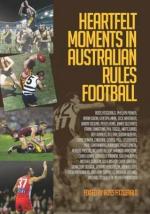
Heartfelt Moments in Australian Rules Football – edited by Ross Fitzgerald
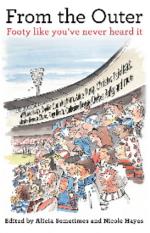
From the Outer – Edited by Alicia Sometimes and Nicole Hayes

My Dad liked Wally Clark. Ostensibly my father supported Cooee in my region’s local footy comp – a club, that, like so many others, did not survive into the new millennium. But, of course, he admired any good footballer playing for our coastal teams. This was particularly the case when they donned the maroon and gold of the North West Football Union to take on the NTFL, from up Launceston way or, more specifically, those high and mighty Cascade swilling southerners from the TFL. If our men managed to beat them – a rarity, but it did happen, celebrations were long, my father was ecstatic and much Boags was quaffed.

outer02Wally Clark and Kevin Murray 1963

Wally Clark was a rover. It’s a term no longer in use, submerged by the generic one – midfielder. Gone are the days of the rover, along with ruck-rover, wingman, flanker, centreman or pivot, drop kick, stab pass, flick pass and so many others. With the saturation coverage of the AFL, today regional football in the south, north and north-west is a mere shadow of its former self. I remember, as a callow teenager, watching Wally Clark when his team, Latrobe (later to boast the magnificent Darrel Baldock as its captain-coach), travelled to Burnie’s West Park to take on my mob, the Tigers. I recall him as a short, close to the ground, beer-barrel shaped player; the captain coach of the coastal Demons from ’64 till ’67. He won the local equivalent of the Brownlow, the Wander medal, in ’65 and no doubt would have donned the maroon and gold – maybe even being selected for ‘the map’; selected in the state side to take on interstate rivals. Occasionally our little island could even match it with the Big V.

In those days our teams would welcome back locals who had made a name for themselves over in Melbourne, such as the Doc. With robust finances, as healthy numbers supported the local clubs, big names could also be attracted to play out their twilight competitive years here. Wally Clark was one such.

Reading ‘Heartfelt Moments in Australian Rules Football’ and ‘From the Outer’, I found Wally Clark mentioned in both. Here’s Barry Dickins writing on his beloved Royboys in the former – ‘My hero, Butch Gale, rots (sic) (Yes, ‘Heartfelt Moments…’ could have done with more thorough editing) on with a big barrel chest out and lots of people reaching over the concrete race to pat him on the back, he is glossy with Deep Heat Muscle Ointment which I forever associate with courage and determination and agonizing ligaments; his rover trots on next who is wearing the very first example of the famous Flat Top Hair Cut and he is Wally Clark; and Fitzroy fans all yell out excitedly on viewing him, ‘Good on yer Wal!’

Tony Birch, recounting in ‘From the Outer’, had a similar addiction to Dickins for the Roys. Here he is on Wally, ‘As a kid my maroon and navy football jumper warmed me with the number 7 in honour of Wally Clark,…Wally was built like a butcher’s apprentice and played 105 games for the club.’ Later Birch was to forsake Clark for the great Kevin Murray in his affections. I knew Wally Clark had come to Tassie’s northern shores from the VFL back then, but until I read these two tomes recently had no idea that he was the ‘real deal’ amongst the big guns in his day. I checked him out on a VFL/AFL website in the ether and discovered he was a star, playing eight seasons with Fitzroy, giving ‘gutsy and commendable service.’ He debuted in 1955 and saved his best for his team’s unsuccessful finals campaigns in ’58 and ’60. He was their top goal scorer in ’62 with the slim total of 21. But the following year he was back in the reserves, therefore his decision to seek greener pastures elsewhere across the Strait as his powers waned. Yep, my Dad was correct in regarding Wal so highly. He stayed on the coast after retirement and could often be found in footy club-rooms, entertaining with his fine voice. Like the Cooee Football Club, sadly he didn’t see in the new millennium either.

outer

There is some dross in these two publications, particularly in ‘Heartfelt Moments…’, but there’s also some great wordsmithery as many a notable writes on the effect the native game has had on their lives. ‘From the Outer’ is the better, more attractive publication, with a cover illustrated by the wonderful Oslo Davis. The fairer gender dominate the contributions here, but I loved Jason Tuazon-McCheyne’s item on the formation of the Purple Bombers, a very personal account of the growth in support for the LGBTI community by football bodies across the nation. Sam Pang tells of the day he sat by the Flying Doormat (Bruce Doull) at Carlton’s last game on the Princess Park grass. There was one fine effort that wasn’t all that complimentary of our game. Catherine Deveny would have to rank up there with Keith Dunstan as a footy-hater par-excellence, far preferring her kids to be on computer games than having anything to do with the AFL – to the shock of her Melburnian mates. You see, for someone with no family tradition in the game, growing up in the city was basically a trial. Sophie Cunningham writes glowingly about the Geelong Cats and their frustrating climb, over the decades, to the powerhouse they are today. There’s Alan Duffy’s account of how he coped with, on meeting his new girlfriend’s parents, hearing the words ‘This is a Hawks family, Alan.’ The implied threat involved was obvious – they didn’t seem to care as much about his intentions for their daughter. Also included are reminiscences from role model-umpire Chelsea Roffey, Stan Grant, Christos Tsiolkas, Angela Pippos and Bev O’Connor.

outer01

Alongside Barry Dickins in ‘Heartfelt Moments in Australian Rules Football’ is that great D’ Brian Dixon, as well as Jeff Kennett, Susan Alberti, Chris Bowen and even George Pell. Ken Spillman’s account of the day Lethal Leigh felled Barry Cable is a ripper and we have Richard Allsop recount his favourite Hawthorn moments. He plays tribute to the sublime skills of the indigenous genius of our native sport who is universally simply known as Cyril. Another great, also with a shortened moniker, Roo (Mark Riccuito), is adoringly portrayed by Chris Kenny. Humanising Liberal politicians everywhere is Josh Frydenberg’s paean to his beloved, once mighty Blues. ‘Now a father myself, I have responsibility to pass on that love of the Navy Blues to my little daughter.’

As for my own daughter, I am so proud that Katie is as fervent a fan of the brown and gold as I am. Together we have followed their fortunes in yet another finals campaign, unfortunately an unsuccessful one this time. But what of my granddaughter, Tess? Well now, there is another force at work here. You see her paternal grandmother is a passionate follower of the Hawk’s nemeses from down Corio Bay way and the Tiges, when asked who she barracks for, smiles sweetly and replies, ‘The Cats, Poppy’. And, to my surprise, I don’t care a jot. If she develops the same love of the game as Laurel, her great grandfather and her mother, it is enough for me.

The Third Script – Stories from Iran, Tasmania and the UK

edited by Shirindokht Nourmanesh, Rachel Edwards and Sean Preston

‘And can you guess which country I come from?’

I was on the 109, heading down to go on a-wandering around Port Melbourne. I was excited – the romance of a new tram-line experience. What would I discover? Little did I know that, as I embarked that tram, I was soon to sit next to the best experience of the day. I didn’t notice her initially when a seat became free as our crammed conveyance clanked its way up Collins towards Southern Cross. It wasn’t until she whispered quietly to me, ‘Can you you let me know where to get off for the Melbourne Convention Centre?’

I turned to face her – and what a beautifully stunning woman it was returning my look. Olive skinned, richly rouged red lips, shining brown eyes and gleaming hair – quite breathtaking. Clearly, judging from her exotic appearance and accent, she was from a faraway origin.

I explained to her that I was not a local – that I was from Tasmania in fact, but I knew for certain she was on the right tram, even if I was unsure of exactly which stop she required. Then an ever helpful local interrupted and gave her that information. It was then I asked her for her provenance and she asked for my take on it.

third script

I had bought the ‘Third Script’ along with me that day. I had only a few stories left to read and I expected to do so in a coffee stop at my destination. – and as it turned out I found a most delightful one, the Urban Garden Espresso on Bay Street. The Transportation Press publication had been rewarding reading. There were only a couple of contributions I hadn’t completed as they were, in my view, too try-hard at being edgy that they lost this particular reader. For me the pick was ‘The Punchline’ by Londoner Lisa Fontaine. It was a take on an old chestnut, but a strikingly original one. You know the one, where lovers part but agree to meet some time in the future to see how they were travelling; how their lives had turned out. Fontaine’s tale was decidedly real world, devoid of Hollywood gloss; grittier and much the better for that. Robbie Arnott’s ‘The Tiger Quoll’ (be warned, the end is gruesome) threw light on a blight on our society in the way we lose so many of our young people – men in particular. You know where this is going almost from the get-go, but it doesn’t make it any less powerful. Zane Pinner’s ‘Sing kunanyi’ did, in contrast, have a big surprise in store. I suppose it could be considered a comment on the current cable car dispute – a no-brainer in my mind. I am pro, to the disgust of many of my associates. Pinner’s alternative suggestion is far-fetched, but with David Walsh in our midst, who knows? I enjoyed the result very much. Nottingham’s Matt G Turpin gave us ‘Tom’s Eyes’, taking a salutary look at the underbelly of all those Med resorts the Brits flock to due to their appalling weather. It’s the saga of a friendship turning to dust over that other blight, drugs – but in doing so delivered a rattlin’ good yarn. And lastly, picking the eyes out of the tome, was ‘In the Afternoon, the Goat has All the Answers’ (Ramin Zahid) from the Iranian selection. It told of an ex-pat superstar from that country, residing in the US. Today’s Iran is a far cry from when she was in her zenith during the days of the Shah and that is bought home to her when she gets up close and personal with a human right’s issue emanating from her homeland.

And that, dear reader, should give you the answer to the question posed to me on the 109 that Friday morning in Yarra City. I really had no idea of this gorgeous person’s origin. For me the beauty chatting away to me could have hailed from anywhere around the Mediterranean shore across to the sub-continent. But then she proffered up the answer herself, ‘I know. You’ll never guess. I am from Iran.’

Yep, a coincidence. I explained to her I was reading a publication containing stories from her country of origin and withdrew it from my bag to show her. She was plainly excited at this and examined it intently, exclaiming her recognition of some of the authors. She snapped away at the book with her mobile, saying she’d definitely try and get hold of it for herself.

I had little time left with her as we had turned the corner into Spencer with her departure point being just up ahead. She related to me that she’d been in Australia for just six years and was proud to say she was now a citizen. She loved the freedom afforded to her by her residence here, particularly by the city I was visiting. I expressed my abhorrence at the behaviour of many of our politicians and how appallingly such as her were treated by the cold-hearts who drone away behind desks in government departments, given the often grotesque conditions in the countries from which they flee.

All too soon the tram was lurching to a stop and she gifted me a radiant smile as she said her thank yous and farewells. Then those shining eyes were lost to mine. I watched out the window as she became lost in the Southbank masses, but for a moment in time we had bonded over ‘The Third Script’ and I am thankful for that. It made a fleeting connection with a ravishingly beautiful and intelligent woman who will no doubt grace our land of democracy, making a worthwhile contribution; as do the vast majority of her ilk, despite the small mindedness and prejudices in some pockets of our community. I didn’t even get her name, but she’d left an indelible impression – I only wished we had more time for the stories she could tell.

Transportation Press website = https://transportationbook.com/

Sweet Caress – William Boyd

Biarritz worked its charms on me, as it did on Amory and her lover, Charbonneau, even further back. My visitation was in the winter of 1981, hers in the immediate post-war. I have no recollection of the hotel where I stayed, but I remember theirs, the du Palais ‘…perched on its rocky promontory at the end of the gentle crescent sweep of the grande plaige.’ And I remember, as her lover stated, that Biarritz had ‘…surf, real ocean – not lapping Mediterranean wavelets (but)… spectacular foaming breakers in endless succession.’ It was here Charbonneau took Amory, away from a Paris, still in aftershock from its wartime privations, to tell her he was about to marry another – but, of course being French, that was certainly no reason to end their liaisons. Amory, though, had a secret all her own too. And what of Biarritz for your scribbler? I loved its winter coat; its wild weather, the Atlantic stretching away towards infinity. I made a metal note to go back some day to see it in its summer guise. Three decades and some on that hasn’t happened. I suspect, now, it never will.

sweet caress

William Boyd’s sixteenth novel is a ripper and he’s on song, delving into the life of one of the great photojournalists of last century. Amory Clay is up there with Dorothea Lang, Lee Miller and Martha Gellhorn in recording the momentous events of their times. Amory covered the exotic erotic cabarets of the Weimer Republic with her camera – and got herself into very hot water – as well as the rise of Mosley’s fascist thugs. This resulted in great personal injury, with serious repercussions for her future well-being. She was embedded in the US army as they pushed towards the Rhine after D-Day and was with the GIs as they fought off the Tet Offensive in Vietnam. Here she fell in love with an Aussie war correspondent. She had her final fling with this larrikin.

In ‘Sweet Caress’ we have a goodly number of her photos reproduced, including ‘The Confrontation’ which garnered her the prestigious Matthew B Brady award for war photography.

clay-1

The Controntation

Boyd’s imagining of her life is revelatory. We have her early years, dominated by a war-damaged father who tried to end it all by driving his jalopy into a lake, taking her along for the ride. He writes of her relationship with her other family members – the brother who did not survived WW2; her famous sister, Dido, a concert pianist. As well there were her own progeny – twins, who unexpectedly came along later in life. Boyd illuminates on the reasoning behind her self-imposed exile to a Hebridean island. He uncovers the men in her life and the wherefores of how she ended, by her own hand. her existence on this planet.

Mystery over 'face' of new William Boyd novel as writer reveals star of book is based on photograph of unknown woman found at bus stop.
The Young Amory

Although Clay had never really been on my radar as one of the greats, possibly because, unlike her more famous contemporaries, she never sought the limelight. So we have Boyd to thank for bringing her back into the light. And in doing so he is quite masterful in spinning a darn good yarn along the way so that perhaps one day her name will be as recognised on the same plane as those other female luminaries of the art of photography. But, at the end of the reading of ‘Sweet Caress’, there is still that one lingering question to set one googling.

The author’s website – http://www.williamboyd.co.uk/