Category Archives: Book Reviews

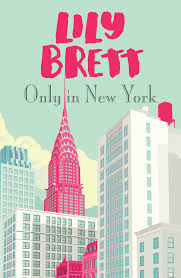
Only in New York – Lily Brett

Did you know this about the Big Apple = It can cost over $289,000 for a one-year hot dog stand permit in Central Park. The city of New York will pay for a one-way plane ticket for any homeless person if they have a guaranteed place to stay. On Nov. 28, 2012, not a single murder, shooting, stabbing, or other incident of violent crime in NYC was reported for an entire day. The first time in basically ever. It takes 75,000 trees to print a Sunday edition of the New York Times. There is a birth in New York City every 4.4 minutes. There is a death in New York City every 9.1 minutes. There’s a man who mines sidewalk cracks for gold. He can make over $600 a week. Women may go topless in public, providing it is not being used as a business. Albert Einstein’s eyeballs are stored in a safe deposit box in the city.
lily01

In ‘Only in New York’, Australian ex-pat Lily Brett provides some more interesting facts about the city these days she calls home. For instance she reports there is another Aussie, the for us ubiquitous flat white, that is now all the rage in Brett’s metropolis, There are Down Under themed coffee hangouts, such as ‘Flinders Lane’ and ‘Little Collins’, introducing New Yorkers to Melbourne coffee culture. Did you know that ‘…everyone who shops in New York is called a guest.’ causing our Lily to question ‘When did we stop being customers? And when did we metamorphose into guests?’ And incredibly, in the Big Apple, there are people actually hiring themselves out to cash in on another ‘…new phenomena sweeping through New York.’ These souls have transformed themselves into space cleaners who ‘…clear and scrub homes and offices psychically. Not physically, psychically…Space cleaners cleanse your home of undermining and enervating energy, bad vibrations and negative spirits.’ This can be even done remotely by said space cleaner – he/she doesn’t have to visit. This is much cheaper than the thousand green ones required up front for their presence in your actual abode or work space to put matters right.

All of the above says something about that particular city, as well as its shakers and movers. If the latter two trends catch on here then I feel we’d all better sit down and take a long hard look at ourselves. So the book is not a hagiography, but even so it does make living in this megalopolis seem pretty cool – especially now the murder rate seems to be markedly diminishing. Did it make this reader want to hop on the next Q-Bird and head for JFK International? Well no. To really get into a city requires being able to do something like our author who, because she lives there, can immerse herself in it. With the tourist weeks available to most of us one could only scratch the surface. Despite the amount of time I’ve spent in out closest big smoke, Yarra City, I still don’t feel as I really know even that enchanting destination.

But no matter, we have Lily Brett. She regales us with tales of her neighbourhood in a series of vignettes – most of them fascinating, all very readable. She has a selection of in places to tempt us to visit through her erudite descriptions, so she is obviously in the know – and they’d be as far off the tourist radar as you could get, I’d imagine.

lily03

Back in the sixties LB was the epitome of the chic rock chick about town – writing for ‘Go-Set’ magazine. For those of us of the age who can remember, to be ‘with it’ one had to read that publication from cover to cover. Then she headed overseas to continue to ply her trade interviewing all the greats when rock was in its pomp. She is also the daughter of Holocaust survivors, her attitude to her Jewishness being a constant theme in her tomes. Her nonagenarian dad is still around and still quite the ladies man, living near to the wordsmith’s SoHo home. He’s partial to pastrami from Katz’s Deli on East Houston, she and hubby love the family atmosphere of Hiroko’s Place, a restaurant on Thompson and a throwback to another era. Its about these sort of New York establishments that our guide writes so enticingly. They’d be the types of places I’d love to visit, if the opportunity ever arose.

However the most startling of Lily’s revelations had nothing to do with her city of choice, but my own island. Turns out she is allergic to us. It’s the world’s cleanest air and our eucalypts you see. She took one breath of our ‘… fresh, crisp, unpolluted air and started coughing and wheezing.’ She couldn’t step out on any Tasmanian Street without her nose and eyes running – although neither the carbon monoxide fumes of NYC nor the noxious smog of Beijing have ever presented her with a respiratory issue. And as she simply abhors trees, I doubt if we’ll ever see her again for a book launch in this neck of the woods – good pun there, what!

lily02
‘Only in New York’ was a true page-turner for me – and even if I cannot see myself ever getting there, I enjoyed visiting vicariously.

And now, here’s some more interesting snippets about the city on the Hudson = About 1 in every 38 people living in the United States resides in New York City. It is a misdemeanour to fart in NYC churches. The first pizzeria in the United States was opened in 1895. In 1857, toilet paper was invented by Joseph C. Gayetty in NYC. Up until World War II, everyone in the entire city who was moving apartments had to move on May 1. There are tiny shrimp called copepods in NYC’s drinking water. There’s a wind tunnel near the Flat Iron Building that can raise women’s skirts. Men used to gather outside of it to watch.

Lily Brett’s website = http://www.lilybrett.com/

Funny Girl – Nick Hornby

10. Mr Bean
09. Outnumbered
08. Lead Balloon
07. The Office
06. Yes Minister
05. Men Behaving Badly
04. One Foot in the Grave
03. Father Ted
02. Fawlty Towers
01. Royle Family

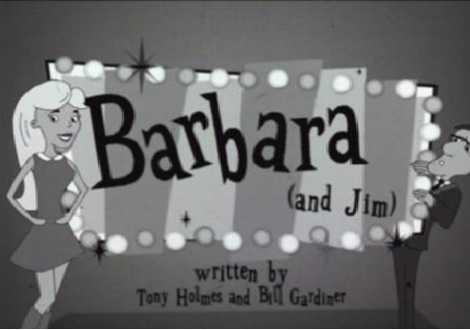
Yep, for me the Brits do it best. Sure the Americans had some classics in the early days of television coming to Oz – such marvels as ‘The Honeymooners’, ‘Father Knows Best’ and ‘I Love Lucy’. But really, since the Dick van Dyke/Mary Tyler Moore franchises were put to bed, I cannot remember any Yank comedic series I religiously watched. I know these days my darling lady adores ‘The Big Bang Theory’ and my writerly daughter remembers ‘Friends’ with much affection – but these and many other US sit-coms bypassed me entirely. And yes, Australia has produced some efforts that have tickled my funny bone in the years since ‘My Name’s McGooley, What’s Your’s?’ – titles such as ‘Mother and Son’ and ‘Kath and Kim’ come to mind. I am also quite partial to local stuff like ‘The Games’ and ‘Utopia’. But for me it’s UK half-hour comedy for the small screen that really does it – and as you can see above, I had a stab at producing a Top 10. It wasn’t an easy exercise. I couldn’t find a spot for such diamonds as ‘Absolutely Fabulous’, ‘Keeping Up Appearances’, ‘The Young Ones’, ‘Episodes’, ‘Gavin and Stacey’ or my current fav, ‘Derek’ – although there would be those that argue that the latter is anything but funny. And true aficionados would shake their heads in horror as to how I could possibly leave out what many consider to be the greatest of all – ‘Barbara (and Jim)’!

And this is the iconic show that Nick Hornby has written about in his latest tome, ‘Funny Girl’. It is the series that proved to be such a step up from the glum fare, such as ‘Hancock’s Half Hour’, that the English were glued to before it arrived, all bright and sparkly, on the scene. It put the light back into light entertainment and first brought an England in transition into our lounge rooms. As well, this is the gem that introduced the world to the delights of Sophie Straw, the UK’s buxom challenger to the stranglehold Lucille Ball had on the title as world’s greatest comedienne. This voluptuously gorgeous woman, as we know, then went on to such hits as ‘His and Hearse’ and ‘Salt and Vinegar’, before closing down her career as the much loved matriarch of the long running soap, ‘Chatterton Avenue’.

funny_girl_

In Hornby’s ‘Funny Girl’, the author takes us behind the scenes to the making of the four rib-tickling series of ‘Barbara (and Jim)’, now repackaged for our viewing pleasure, all these years on, in a box set, currently available at JBs for $49.95. This is extraordinary value considering most of the master tapes were thought lost until re-discovered by mysterious uber-fan Max. This release also celebrates last year’s golden anniversary of the comedy’s first emergence from the BBC and into the homes of Britain. It was also shown here in Oz, but was not the great hit it was back in Old Blighty. So if you were maybe a fan back in the sixties you will be delighted how well its humour still stands up – sort of timeless in the manner of Fawlty or Mr Bean. If you are too young to remember it in its heyday, you could do worse than the show’s box set as a suitable gift for the woman/man in your life. But it would be an advantage for them to read this book first, to place it all in context.

barbara

Our author is best known for his fiction, having produced such best-sellers as ‘High Fidelity’, ‘About a Boy’ and ‘Long Way Down’. He has also delved into non-fiction before with his classic memoir ‘Fever Pitch’, as well as scripting a movie – ‘An Education’. It has been recently announced that Mr Hornby is about to write a television series of his own, ‘Love, Nina’.

Nick H commences his tale with the genesis of the show. Two tele writers, struggling for an idea, are inspired when they first come into contact with the alluring Ms Straw – the freshly minted winner of a Miss Blackpool pageant. She has come south to London to try her luck, just as the Swinging Sixties are getting underway. What follows is an in depth look at the four seasons of ‘Barbara (and Jim)’, with some emphasis placed on the personal lives of those involved. This includes the supposed romance and subsequent engagement of Sophie to her leading man, played by Clive Richardson. He, Hornby claims, was none too happy with getting second billing to an unknown – with his name in brackets as a sort of afterthought. It seems he must have quickly mellowed towards his co-star, although I do remember at the time wondering whether the affection between the two was a media beat-up to improve ratings. Its number one status, around then, was being challenged by ‘Steptoe and Son’ and ‘Till Death Us Do Part’. It wasn’t long before it turned out she was wedded to her producer, the somewhat lesser-profiled Dennis Maxwell-Bishop. Their union was, considering the business they were in, long and happy till his passing a few years back.

Finally, Mr Hornby takes to the underwhelming attempts to capitalise on the nostalgia for the show with the original cast and writers being enticed to get back together for several ill-conceived projects. Of course they are now a mere shadow of when they were in their pomp – Clive R appearing as if he’s already in la-la land. You can’t turn back time and to my mind Nick H should have left this sorry spectacle well alone. I’d prefer to remember them when they helped take the minds of the British away from post-war gloom to the brighter future that lay ahead once the Beatles and Stones made London such a happening place. Later that decade one of the writers, Bill Gardiner, bravely announced that he was homosexual with the publication of his ground-breaking ‘Diary of a Soho Boy’ – still in print.

Illustrated with period images, Nick Hornby, on the other hand, breaks little new ground with this work, but it is an amiable and in places, quite an enchanting read.. For those of us with enough years under our belts to remember those times it is a valuable account of the optimism that came with so much societal change and I know, as a young man, the delectable Sophie Straw sure had an impact on me. Happy memories – so thank you then Nick Hornby.

hornby

Nick Hornby’s website = http://www.nickhornbyofficial.com/

‘Love, Nina’ article = http://www.theguardian.com/media/2015/feb/16/nick-hornby-writes-first-tv-drama-love-nina

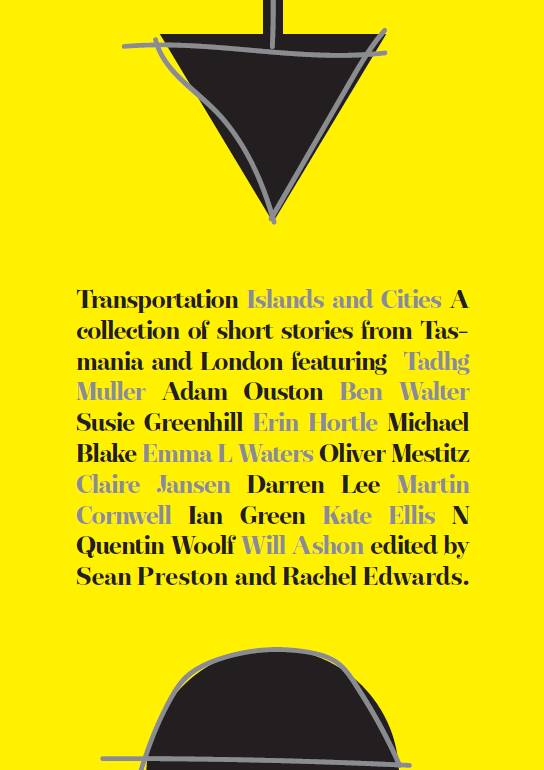
Transportation : Islands and Cities – edited by Sean Preston and Rachel Edwards

Following, as I did, the gestation of this fine collection on Facebook, it did have an entry into the world that garnered a few bumps along the way. A crowd funded project, it is a tribute to its editors and backers that a successful function at Fullers Bookshop saw its emergence with a degree of fanfare. At its southern end co-editor Rachel Edwards did a magnificent job to carry it all through to fruition. It was an ambitious task to group

Rachel Edwardsracheledwards21

together an eclectic range of Taswegian and Old Blighty contributors to examine the notion of island and city. As one would expect, what has been produced will see some efforts not to everyone’s taste in the mix. I must admit there were a couple of short stories I struggled with. Taken as a whole, though, it is a most worthy compilation – with local wordsmiths more than holding their own in comparison with the Londoners in quality of product.

Ben Walter continues to impress with his alluringly dense, articulate prose – with so much of the outstanding artistic endeavour on our island always being ‘…something to do with the light.’ We have had a recent example of this these last few days as dusk has settled over Hobartian hills after a spate of unusually, for this summer, warm days. Oliver Mestitz’s original take ‘How to Pick Up an Echidna’ also delighted. For my enjoyment the pick of the bunch was Claire Jansen and her atmospheric rendering ‘Manhattan is an Island’. This up-and-comer recently graced the pages of the Mercury’s Saturday Tasliving feature and, if her story is any indication, she would seem to have a bright future in writerly pursuits.

Claire Jansen jansen

Her story, as with many of her character’s generation, is a tale of participation in the Tasmania diaspora to the four corners of the world – a theme reflected, as well, in other offerings here. For these people, as well as often those that choose to remain, the magnetic pull of our island in the southern seas becomes stronger as years pass. We know we inhabit a unique place – despite its economic and social woes we eventually come to conclude there is none better to be found at those four corners. I know that, as my years gather up around me, I find it harder and harder to contemplate leaving it, even for relatively short amounts of time. The pull of London, Paris or NYC cannot match what we have here. As Ben says – it truly is ‘…something about the light.’

Congratulations Rachel. Like our island, you too are a gem.

transmportationTransportation Islands and Cities Facebook page = https://www.facebook.com/transportationbook

The Lake Shore Limited, The Senator's Wife – Sue Miller

Women give with their breasts in so many ways – some of these ways are involved with their exposure for the deliberate appreciation of males. As the latter gender move towards their terminal years, so that giving is even more appreciated and certainly not just accepted. In Tom’s case it was cherished. Neighbour Meri gave him her gift – and in doing so he gave her much in return. ‘If someone had asked her (Meri) about the nature of what happened between them, of course she would have had to acknowledge its eroticism, its sexuality. But it was more than that. It was a charge between them. Or a recharge she thought.’

Very much in decline, Tom received from Meri what most in his position could only dream about. I would have no idea how easy it would be to give such a gift – Meri didn’t seem to have too many problems with it. But Tom was able to give back – and now that is something worth staying on the planet for.

I like the tale Sue Miller tells of her days as a struggling single mother, before literary fame and (one assumes) some fortune came to her. It needs to be told against her upbringing with a father an ordained minister and both grandfathers also of the church – as were great-grandpas too. And there she was, working in a seedy bar – ‘…think high heels, mesh tights and the concentrated smell of nicotine.’ – being ogled at by leering men.

It is reported that many of her works are indeed semi-autobiographical. Miller’s formative years, as well as being of an ecclesiastical nature, were also severely academic. She went on to Harvard. But later still she also went through the marriage wringer, produced a child that she had to raise fettered by not having a partner. In doing so, she was simultaneously attempting to establish herself as a wordsmith. Thus she struggled, working base-rate jobs such as the afore-mentioned to support her son. Her eventually successful efforts to improve herself have shaped her and given her an ample dollop of life experience. As a reward, along came grants and at age 43 she struck gold when ‘The Good Mother’ was accepted for publication. It shot into the best seller ranks, Hollywood came calling and she was on her way. Since then her novels have been gonged many times and she is regarded as one of her country’s leading practitioners of domestic fiction – what the Brits would term the aga-saga. It is the richness of her prose I succumb to – the descriptions in detail of the minutiae of any dramatic setting. I have had two of her recent novels sitting on my shelves for a while and decided to tackle them one after the other. It didn’t take me long before the first and the most recent, ‘The Lake Shore Limited’ had me in its thrall as it took me to WASPish middle class America.

lake shore

At this tome’s core is the eponymous play. Around it Ms Miller builds a saga of falling in and out of love in several of its variations. It is cleverly constructed from the perspective of several souls connected with the stage production – an actor, the playwright, her boyfriend’s mother, this mother’s would be lover and so on. It’s post Twin Towers, but nonetheless very much in the shadow of that event. It is a deeply satisfying work, one that is sad to depart from on completion – a tribute to Sue M’s skill in unravelling the various entanglements of her characters as they come to terms with an unexpected, high profile loss.

Now back to Tom. Was he the most fortunate of men? Well, in one sense he managed to luck in throughout most of his adult life – as he continued to do so with the neighbour right at near life’s end – but at what cost? He had the ability, deep into a marriage, to still enrapture younger women, such as his daughter’s bestie – who ultimately caused his political downfall – he was the Senator in ‘The Senator’s Wife’ – but not him to change his philandering ways. But we have more questions. Who was this Alison Miller who was with him when his health finally crumbled? Why did his wife remain devoted, contriving an unconventional arrangement with him on top of her own affair with Paris? She continued to have satisfying intercourse, at regular intervals, with him throughout their long estrangement. Then, most poignantly, at the end – there was the question of what was ailing Meri when she gave him the gift of her breasts? The story of the Senator is related to us through the mouthpieces of both Meri and his long, not-so-suffering wife Delia. The time frame is from the seventies till near present day, but concentrating on the last decade of the previous century.

lake shore2

Of Miller’s two offerings and despite the attractions of the first reviewed, it is this second tale that had the most impact – an absorbing, unputdownable page-turner. Neither of the novels strayed too far from the author’s own Bostonian home – although she has had flirtations herself with northern California. Miller writes of her New England region with much affection – and similarly of the type of people who reside there. She has them down to a tee. Progressing through her seventies now, her own talent displays nary a sign of being in decline.

Miller

Ladd-lit – Kylie Ladd – 'Last Summer', 'Mothers and Daughters'

I love peering at road atlases. In doing so I am mentally planning road trips – road trips that I realise I’ll never do. Why? I hate driving – but still, I dream of the open road, of grey nomading and the places in Oz I’d nomad to. If only I didn’t abhor getting behind the wheel of a car. Still, I ruminate – and peer at road maps. I imagine being one of these wizened, ageing vagabonds who’ve been everywhere in this wide brown land, spinning yarns to others of a similar ilk around an outback campfire – like my good friends Noel Next Door and Kevin from Cairns (with their partners Jane and Kim). It’ll never happen – but I do dream and continue to peruse road atlases. I’ve bucket-listed the Kimberleys, Kakadu and the Daintree – and one day I’ll get to those, but more than likely in a manner far less romantic than those who Winnebago around Highway One. That is a forlorn aspiration.

One of the roads that I’ve often regarded with interest is the one that proceeds in a roughly northern direction from Broome up a peninsula to Kooljaman Resort and Bardi, passing by Beagle Bay and Lombardina – or, at least, that is what is indicated in my said atlases. According to Kylie Ladd, though, along its route is also the community, largely indigenous in make up, of Kalangella. It is here that the author places a bevy of female characters central to her fourth novel, ‘Mothers and Daughters’. Amira has been posted to this Kimberley outpost for twelve months on a teaching contract, with teenage daughter Tess in tow. By the time their mates arrive for a week’s visit, both have fallen in attachment to the place and shed their big city personas. The mother’s friends – Scottish Morag of fair skin, acerbic Fiona who’d need more than a week to fall in love with any place – and groomed to the max Caro, initially clearly have little notion of what they are letting themselves in for. Each is accompanied by a single daughter. Bronte, Macey and Janey are as different from each other as three teenagers could be. Stork-like Bronte is an ugly duckling on the cusp of becoming a graceful swan, Macey is pierced and professes to be a goth and Janey – well, Janey is a real piece of work. She is a self-absorbed bitch of the first order. All the visitors find the place initially too primitive for their tastes – what, no mobile reception! But gradually the location works its charm on a few and during the stay some find that they really do need to take a good hard look at themselves. Tess’ sophisticated mates also find that she is a very different kettle of fish to the school friend they thought they had pegged back in Yarra City. She’s gone all native on them.

kylie ladd02

It did take a little while to settle into this novel and at times there is a little clunkiness with the prose – but Ms Ladd can sure spin a captivating yarn. Her protagonists, warts and all, did draw this reader in and I thoroughly enjoyed my time spent with these creations of Kylie L’s writerly mind. With Janey, Ladd has produced a real horror and I was eager to read on to see if she receives her comeuppance. Tess is a sensible delight, but of the younger brigade Bronte for me was the most compelling with all her self doubts and general fragility. Will the experience toughen her up as Fiona so hopes? And with Caro, will she get to bed the charismatic black-hunk Mason – a serial child producer, wise to the ways of ‘country’. And finally, will Fiona get what a gem she has in Bronte. These are all fascinating questions that the author leads the reader on a wonderful journey to their solutions. So much can happen in a week. Throw in a bit of Aboriginal culture, with resulting culture clash and we have, in ‘Mothers and Daughters’, a fine flavoursome treat.

kylie ladd03

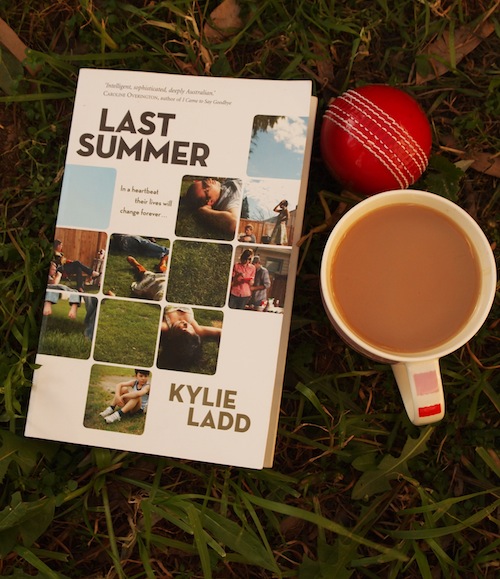
As we do with ‘Last Summer’. Published three years prior to ’14’s above title, this novel had me in from the get go. The fact it followed a cohort of couples strongly attached to the sport of cricket aided it’s cause for me. It focuses on the social life and interrelationships between the men of a suburban cricket club – with each other, their WAGs and offspring. All are affected by the untimely death of another charismatic male, club legend Rory Buchanan. It throws the cosiness of the club dynamics all out of kilter, with all manner of sexual machinations ensuing. Ladd is a dab hand, as well, at describing the mechanics of the actual act and some males, in reading this, may be pleasantly surprised at her praise for the advantages of the smaller member in intercourse. She also introduces her fans to the delights of the mating game ‘flirt tiggy’ – try it out if you’re in the market. Perhaps the author’s only failing in this terrific tale is that sometimes her reproduction of the blokiness associated with team sport does not quiet gel – but overall this is only a minor quibble which certainly does not in the slightest detract.

kylie ladd

                                                                          Kylie Ladd

I ripped through both these tomes in a couple of days each, a sure sign of their pulling power and I am eager to track down Ms Ladd’s two other offerings – ‘After the Fall’ and ‘Into My Arms’. Perhaps this writer will never come into calculation for something like the Miles Franklin, but these two novels are engrossing page-turners. I loved them.

Ms Ladd’s web-site = http://kylieladd.com.au/

CafeLit – 'A Trifle Dead' – Livia Day, 'The Little Coffee Shop of Kabul' – Deborah Rodriguez

At this point in time Nicolatte is my favourite – but it is a moveable feast. There the coffee is up to it, the staff ultra-friendly and the light snack fare tasty and of lunch-like portions – neither over nor underwhelming for that time of day. Wood fired pizzas are also available, but its paramount asset is that it is super tiny-tot friendly. This Wellington Court establishment possesses shelves of playthings for the little people, allowing some respite for their adult minders to conduct mature conversations. Even those customers without infant attachments seem to acknowledge that here kids are free to play and are therefore tolerant of the baggage that comes with that.

When solo in the city, without the treasured accompaniment of my wondrous granddaughter, I tend to gravitate to the cafe at the rear of Fullers Bookshop. Here I can take to the Age in congenial, bookified surrounds and if I manage to snare a window position, I can watch the passing parade, as well as contemplate the moods of Kunanyi above. Newly discovered is Moto Vecchia on the Eastern Shore, near Eastlands. 2015 sees me committed to visit it more frequently despite the haul to get there. I loved it’s retro vibe. When my beautiful lady and I are out and about in Moonah we usually make time for a visit to the Magnolia 73 Cafe – mainly for their pies.

And either of these books, about to be reviewed by this scribe, would make for very tolerable reading indeed at any of the aforementioned watering holes. They are both light in tone page-turners – in fact ideal summer reading all round.

Livia Day’s ‘A Trifle Dead’ also has the advantage of being as local as the above establishments. Her Cafe La Femme is neither down at popular Salamanca nor up on the North Hobart strip, but slap bang in the guts of the CBD heartland, as are Nicolatte and Fullers. I love any tome with a Hobartian flavour – and this one has it in spades. Her fictional eatery also possesses views up to the mountain. It is especially popular with the local constabulary, possibly because of its feisty co-proprietor and her eclectic staff. But as events, concerning forms of entrapment and murder, unfold too close to home to be ignored by the luscious Tabitha, she takes time out from pulling lattes to do a little sleuthing into exactly what is going on. Imagine Phryne Fisher in contemporary times and you get the vibe. Tabitha Darling takes to sneaking around the burbs doing her best to solve a couple of conundrums at the same time as the crime spree – are they all inter-connected? To add a little spice we have two love interests – a stoic copper and a mysterious Scotsman – the latter also being a dab hand at mural painting, using one of the cafe’s walls as his canvas. When the criminal is eventually unveiled I hadn’t picked it – but then it all made sense.

trifle dead

Ms Day is perhaps better known as a successful writer for the younger brigade, but she is more than capable appealing to their parents as well. It’s certainly not a memorable work of literature, but as a competent, eminently readable whodunit she has won me over. She spins a terrific yarn.

As does Deborah Rodriguez in ‘The Little Coffee House in Kabul’. In this the writing is a tad more heated than the Tasmanian’s, but I would suspect it also sugar coats, to an extent, just how difficult life would be in one of the most dangerous cities in the world for a foreign small business woman. Still, some of what she related to us is grim enough – the fear of the Taliban, the misogyny and the never ending possibility that the person beside you – or serving you – could be a suicide bomber. But Sunny, a Yank, is trying to make a go of her cafe in the Afghan capital and is largely succeeding. The author has lived in the city herself for a considerable amount of time until it was in her best interests to get out, so she has a notion of what she is writing about. Her book also doubles as a layman’s guide into the labyrinth of corruption that greases the politics in that country. Sunny, unlike most of her countrypeople, does not ‘…infantalise everyone not like us.’ – perhaps giving an inkling as to why her business survives. The cafe, though, is under constant threat. She is struggling to attain UN certification, which would give it its best chance of ongoing survival. This challenge is one of the narrative threads, but it is also a love story on several levels. As with Tabitha at Cafe La Femme, Sunny has two potential beaux on the go – which of the duo will win her undying affection here? Also, as with the local book, the painting of a mural on a cafe wall is symbolic. Despite some terrible events occurring to our heroine and her mates, the awfulness of the situation is not milked for shock value, nor dwelt on. Thus it remains perfectly suited to the beach and languid, sunshine-y days.

coffee_shop_ARTWORK:Layout 1

In the case of both authors, I would look forward to reading the subsequent publications now available – Day’s ‘Drowned Vanilla’ and the American’s ‘ The House on Carnaval Street’. Now, after all that, methinks it’s time for a shot of caffeine.

Nicolatte = http://mummaneedscoffee.blogspot.com.au/2012/08/nicolatte.html

Moto Vecchia = http://motovecchia.com.au/

Magnolia 73 = http://www.urbanspoon.com/r/345/1636225/restaurant/Tasmania/Magnolia-73-Cafe-Moonah


The Blue Room's Year in Books 2014

This year has been all about Richard Flanagan who bought my island to the world’s stage, along with a Chinese President’s visit, accolades in various travel publications and the continued pulling power of MONA. Not only can we provide the freshest quality produce imaginable, give any visitor unforgettable experiences, but Flanagan showcased the literary talent that resides on this isle in the southern seas. His remarkable page turner, ‘The Narrow Road to the Deep North’, inexplicably missed out on the land’s premier award, the Miles Franklin, to a competent but far lesser tome. His incredible offering then went on to leave all competition in its wake, winning just about every other gong going, culminating with the planet’s most esteemed prize, the Man Booker.

It is significant that three of the tomes listed below also have strong connections to Tasmania, with the authors, either now or in the past, residents here. Some of the publications awarded below had their coming out into the world in previous years, but have only been caught up with by this reader in the last twelve months. All should still be readily available. As always this scribbler welcomes similar considerations from any other peruser as at this time of year many in the media, as well as on-line, are producing similar.

10 – The Dirty Chef (Matthew Evans) – the SBS personality gets down and dirty at his farm, on the outskirts of Cygnet, after having a gut-full of notoriety in the big city.

09 – Rescue (Anita Shreve) – this somewhat uneven popular writer comes back to form with a tight, intriguing effort.

08 – You’ll Be Sorry When I’m Dead (Marieke Hardy) – a regular on ‘The First Tuesday Book Club’ for Auntie, this feisty lady pulls no punches in this revealing memoir.

07 – Balancing Act (Joanna Trollope) – the grand dame of the aga saga writes to a formula, but it’s one that keeps her legion of followers loyal and she is on form here.

06 – Zac and Mia (AJ Betts) – Australia’s YA answer to the phenomena that is John Green and gives him a run for his money.

05 – The Black War (Nicholas Clements) – this youthful Tasmanian academic has the final say in this sobering account of the terrifying frontier conflicts of early Van Diemen’s Land.

04 – When the Night Comes (Favel Parrett) – the ever difficult sophomore novel proves a cinch for this promising practitioner with a tale of a Danish/Tasmanian connection that involves a ship rather than a princess.

03 – One Summer in America (Bill Bryson) – a remarkable American author spins remarkable yarns of a brief period in his nation’s story.

02 – Analogue Men (Nick Earls) – for those of us battling with with the vast changes the digital age has wrought, Earls’ comedic tome tells us we are not alone as it invokes chortles of recognition from those of us of a certain age.

01 – Writing Clementine (Kate Gordon) – this charming YA novel tells it as it is growing up in the author’s (and this scribe’s) North Western homelands, with a bit of steam-punk thrown in for good measure.

writing clementine

Also enjoyed and worthy of mention were ‘Sarah Thornhill’ by Kate Grenville and Charlotte Woods’

Kate Gordon’s Top Ten Books = http://www.kategordon.com.au/blog/2014/12/29/top-ten-books

Australian authors select their favourite books of the year = http://www.smh.com.au/entertainment/books/australian-writers-pick-the-best-books-of-2014-20141126-11u9m7.html

'Royal Affairs' – Leslie Carroll; Mistress – Matthew Benn and Terry Smyth; 'Loving Richard Feynman' – Penny Tangey

For the last week or so I’ve been up to my armpits in mistresses and been taken on most enjoyable rides. They were spread over three books, I hasten to add. Please excuse the excruciating puns – I should be ashamed of myself!

In two of the tomes the authors have dumbed down history to give rollicking accounts of various notorious tumblerers in the hay and the havoc they caused. These ranged from some very savvy gold-diggers to others as ditzy and thick as the proverbial. Some even found love with the objects of their attention. Some were secret – only exposed in later decades, others became infamous within their own lifespans. With some, it ran in the family. Some even changed the course of history. With the third listed title, the impact of a mistress on an everyday family is fictionally examined.

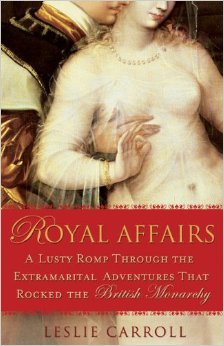
The lurid enticements, promised on the cover blurb for ‘Royal Affairs (Leslie Carroll), are not exactly forthcoming between the covers. Perhaps readers influenced into purchase by them would be disappointed at the lack of interior titillation. But what may be discerned instead are fine accounts of history-shaking trysts written in modern colloquialese that sets a fast pace, interspersed with brief first hand accounts in the language of the perpetrators’ times. The reader is never bored. Initially I thought I’d skip those connections that have been done to death by various forms of modern media – the dalliances of Henry VIII, Mrs Simpson and Edward VIII, Charlie and Di – but so well does Ms Carroll explore their machinations they also were not to be missed. From Henry II’s bedding of Rosamund de Clifford to our future (presumably) king’s Camilla, I discovered so much history I was completely unaware of. In this offering are the mistresses synonymous with temptation – Anne Boleyn, Nell Gwyn, Lillie Langtry and Mrs Keppel – but there are also a host more creating waves, from ripples to tidal, in their own times – many largely forgotten. We are informed of the randiness of Charles II – who had one mistress installed in the chamber immediately above his bedding room – and one immediately below. Then there was the weird sex life of George 1 with his much lampooned (during his reign) twin grotesques, a decidedly gay king (or two) and an obese lesbian monarch who only craved up close and personal affection. And, well, was she really the Virgin Queen? There are any number of (bodice) ripping yarns that would make for terrific television series along the lines of ‘The Tudors’ and ‘The White Queen.’ Full credit to Carroll for presenting them in such a lively, entertaining manner.

royal affairs

With ‘Mistress’ we come to home soil. In a series of vignettes authors Benn and Smyth take the reader through the history of Oz and the impact mistresses have had, not so much on the nation’s ‘affairs’ – although there are those, but more those that have intrigued the general populace of our big land. Sometimes these lay ‘uncovered’ for decades, only being exposed to light once the protagonists had passed on. Others screamed at us from the tabloids virtually the day after the next affront occurred. Again, with this tome, there are the usual suspects – Juni and Blanche, for example, from our own times. As well, though, there many others whose amorous deeds were largely unknown to me. I discovered that the execrably wretched and now definitely unmissed Liberal pollie Sophie Mirabella, was/is just as repulsively grasping in her personal life as she was in her public. Surely, though, the most fantastical sheila of all in these revelatory stories of sexual abandonment was one Mrs DL Gadfrey who cut a swathe of wantonness through expat Sumatra during the staid 1950s. She was on a quest to find an unfortunate lover, who had jilted her, by getting uproariously drunk and dispensing with her clothes at the drop of a hat. In the end her quarry was forced to take to the jungle to escape. He’d rather brave tigers than this furiously bonkers force of nature. It’s in this book that you’ll hit pay-dirt by discovering how a flirtatious Filipino maid initially tempted, then snagged, our richest man and discern exactly who was that legendary ‘girl in the mink bikini’.

royal affairs - benn

For a couple of their yarns the duo of authors drew a long bow, such as with Lola Montez and the adventures of Mick Jagger in his Ned Kelly heyday. But this is a fluffy summer read and who cares if we’re a little lax with the definition of what it takes to be a mistress in Ozland. This title doesn’t enthrall to the same degree as the previous, but it still is of interest and certainly brings back some scandalous memories.

And the two publications do overlap. Firstly there’s good time Aussie antipodean Kanga Tyrone who almost entrapped our Charles. And then there was the remarkable lass who knocked the future George VI for six – Sheila Chisholm. She was introduced to Bertie (as young Georgie was originally known) by one Freda Dudley Ward, an early paramour of elder brother David, destined to be, briefly, Edward VIII. When ‘The Firm’ discovered what was going on – well it either had to be the luscious colonial woman or his duty to his country? Poor Bertie was in a bind. He chose the latter, the ‘Queen Mum’ was hastily found for him to wed and the type of scandal that later enveloped serial-offender David was averted. Our thwarted Oz game-changer then moved on to Rudolph Valentino, putting him in a tailspin as well.

The story that I’ve always found the most interesting, in matters involving out of wedlock shenanigans, is that of the two sisters and PM Chifley. It must have been a very cosy arrangement in that little Canberra motel he preferred to the Lodge – and which one was by his bedside when he left this mortal coil? ‘Mistresses’ throws no new light on that, though. Billy Snedden’s death in the saddle, so to speak, is referenced, as is that of the highly sexed INXS front-man who led our Kylie astray, as well as assorted others. There are ‘Underbelly’ gangster molls and bushranger ladies as well within its riches when the book branches into the nation’s plentiful pantheon of crime figures.

As opposed to the above, we discover little about the mistress at the core of the delightful ‘Loving Richard Feynman’, a YA novel from a few years back by Penny Tangey. It’s known that the culprit is a work colleague of Catherine’s father’s and a professor of German. Her dad conducted his flings with her when he was out of town at conferences – the town being Victoria’s Kyneton. Catherine keeps a journal of her inner most thoughts that only we and the eponymous dead physicist are privy to. You see, the young lady in question is a science nerd who has taken one of the participants in the Alamo Project as her hero, despite his flaws- discovered whilst reading about his deeds and views. Tangey’s tome is brim full, as we might expect, of teenage angst, but the writer handles it in such a light, gossipy way that it never becomes dire in the slightest. I ripped through it on a day of reflection about atrocious deeds done in a Sydney cafe and a Pakistani school. On completing it, I felt much better about the world – it lifted my spirits no end.

royal affairs - loving rf

Following one’s romantic heart or, conversely, lustful inclinations, can often get one knee deep in the proverbial – whether one is famous, rich or just plain ‘normal’ as with Catherine’s dad. It’s often espoused that humankind isn’t designed for monogamy, but I wouldn’t necessarily adhere to that premise. However, whether one engages in the extramarital or keeps squeaky clean – certainly reading about the pickles others entangle themselves in following those two aforementioned impulses certainly adds to the spice of life.

Leslie Carroll’s Web-site = http://lesliecarroll.com/

Penny Tangey’s Web-site = http://pennytangey.com.au/

'Game Day' – Miriam Svede versus 'The Family Man' – Catherine Harris

‘Best not to bring wives and girlfriends to this party,’ advises Laurie (their coach) with a grin as he hands out the details….Or they won’t be your wives and girlfriends no more.’

It is difficult to imagine a coach of an AFL football team giving such advice to young men in the modern era, but, according to Catherine Harris in ‘The Family Man’, this was still happening as late as the 2006 season after her hero – Harry Furey – and his team won the premiership. But whilst the idiocy of and potential for public relations relations disaster that is Mad Monday still lingers (but for how much longer?), nothing, I guess, would be impossible. The event the players were given the aforementioned advice about was a ‘sportsmen’s night’ – an alcohol fuelled ‘entertainment’, complete with a second rate stand-up cracking gags of dubious taste and inebriated dicks encouraging young, in one case very young, dancers to, ‘Show us yer tits.’ Not much, to my mind, sporting about that! At the particular evening in question an unspeakable, but unquestionably newsworthy, act occurs that is at the core of Harris’ debut novel.

Now it seems that the Weekend Australian’s book critic, Ed Wright, had the same notion as I for the December 6 edition of his newspaper – to read (and in his case review) two local writers attempting their first novels. Both chose the unique Australian brand of footy for this and – perhaps surprisingly – both are female. Brave? Well it shouldn’t be, should it? There is no earthly reason in this day and age why writing about a man’s sport should be the prerogative of just the lads. We’ve long moved on from that notion, even if the club Harris references is still seemingly in the neolithic period when it comes to attitudes towards women. Age columnist Caroline Wilson has been writing on our great game to stunning effect for years, albeit not in fictional form.

Mr Wright is a tad more positive about Harris’ project, as well as Miriam Sved’s ‘Game Day’, than I. It must be said, though, that there is not exactly a deluge of novels about our sport to compare them with. Wright cites ‘Salute to the Great McCarthy’ and ‘Deadly Unna’, but for my money the pick to date is Paul Carter’s ‘Eleven Seasons’ from 2012. The reviewer is correct in his assertion that ‘Game Day’ is the better of the duo, and I did like the way Sved structured her tale of a year in the life of a footy club. She took a number of major and minor players and examined their impact on the team’s campaign for a flag – coach, potential star, injured recruit, team doctor, team groupie and so on. There’s Luke Campenous (do we read Wayne Carey), a centre-half with a golden boot, but boorish to the max off-field. It’s all mildly intriguing stuff. The author’s prose is also somewhat better than Harris produces but, nonetheless, I found myself not being won over by it to the same degree as Wright.

svede

Game Day CVR SI.indd

Reading the above, though, was not the same league of struggle I had with ‘The Family Man’. Perhaps it was the title that put me off. My team, Hawthorn, prides itself on being the ‘family club’, but the events of the ‘sportsmen’s night’ were anything but family orientated. But then, as with the recent unconscionable indiscretion by a young Hawks wannabe, unseemly acts can gain adverse publicity for even the most squeaky clean of operations. I suspect, as does Wright, that Harris is attempting a fictional take on Anna Krien’s ‘Night Games’. Is the supposedly toxic culture of St Kilda in recent times her model? Gary Ablett Senior would be a dead set for Harry Furey’s dad, disgraced former champion Alan. Harry carries with him, through the off-season, the terrible truth of what really happened on that night and his role in it. His participation, we discover, is not quite what we may have expected. But really, I had lost interest long before that. Her over-wrought, at times over-ripe, writing style, didn’t really set the appropriate tone. I persevered as I wanted to achieve my aim, but was relieved when I finished that last page.

FamilyCatherine

There is no doubt both these authors have potential in the industry and our local publishers are to be given credit for continuing to put into print those who aspire to a career as a wordsmith. Hopefully these two can be supported enough so a more successful sophomore novel may be produced in due course.

In the same column that these two tomes were given the treatment by his critical, but fair eye, Ed Wright also passed judgement on Kylie Ladd’s ‘Mothers and Daughters’. It was a very positive review and this author stuck to traditional fare for writers of her gender. I won’t say it – I simply will not. Deep down I admire Harris’ and Sved’s guts for having a go in, if you like, foreign territory.

Ed Wright’s reviews = http://www.theaustralian.com.au/arts/review/from-footy-to-feelings-in-the-latest-australian-fiction/story-fn9n8gph-1227145074323

One Summer America 1927 – Bill Bryson

Al Jolson, the American entertainer who put paid to the silent era on the silver screen, received his jollies by urinating on people. Didn’t know that, did you?

Jolson_

It was in the summer of 1927 that Jolson’s ‘The Jazz Singer’ electrified audiences in cinemas all over the US, thus changing the movies forever – and costing thousands their jobs as collateral damage. All this, as well as many more yarns; plus facts both weird, fantastical and world-shaping, are to be found in Bill Bryson’s latest which, month by month, takes us through an American summer like no other.

The recent, excellent television series, ‘The Sixties’, shown on SBS, looked at the decade that shaped the baby-boomer generation – to which this scribbler belongs. Of course, the stand-out year of that was 1968 – for us BBers a twelve month period never to be forgotten. With the Vietnam War at its bloodiest Nixon enters the White House after an assassination denied another Kennedy. Martin Luther King was gunned down, US cities became war zones and the Summer of Love was pronounced dead. Only the first Kennedy’s loss and the destruction of the Twin Towers can rival the events of that year in the consciousness of most Americans of a certain age – and therefore, by default, the rest of the world.

Now imagine all those happenings of ’68 compacted into just the few months of one summer – that of 1927 – and you get the impact that brief time had on a previous generation of world citizenry. In that time lay the foundation of the Great Depression and the following global conflict, the shaping of the way we now transport ourselves, the nub of modern infatuation with celebrity and our ardour for sport.

Bill-Bryson-One-Summer

In ‘One Summer America 1927’, most of the seminal figures that did all this shaping are well known, but arguably the ones who had the greatest impact were not to me. Benjamin Strong, Sir Montague Norman, Hjalmar Schauht and Charles Rist got together on Long Island, meeting in secret in a tycoon’s hideaway. And what they decided changed our world forever. Those names do not resonate with us like Kennedy, Nixon or King, nor indeed the other icons of Bryson’s summer, but you see these guys were the heads of the largest world banks of the era. What this quartet set in stone at that get together caused the economic catastrophe that was to occur two years later. Of course it was all based on greed – and with the GFC, it shows we do not learn the lessons of history – never have, perhaps never will. This encounter, together with its its repercussions, are all dissected in layman’s terms by Mr Bryson, along with all else that was going on during those fateful months – May through to September. Had it all been fiction it would be impossible to believe. It wasn’t. It all took place.

This, as with most of BB’s oeuvre (with the possible exception of ‘A Walk in the Woods’), is a vastly entertaining opus. Recurring throughout are stories associated with the names that have, unlike the aforementioned four, survived, with an aura, down to our times. Here Billy B takes us into the worlds of Charles Lindberg, Babe Ruth, Presidents Coolidge and Hoover, Henry Ford, Clara Bow and Al Capone – all, in various ways, taking the globe with them on new paths that gobsmacked those who lived in those times. Back then the US of A was the world’s greatest economy, the farce that was Prohibition was in operation and the Dust Bowl was just around the turn of the decade. But that summer of ’27 must have been just the most remarkable time to have been alive to witness it all!

lindberg

Lindberg’s barnstorming around the country, after his trans-Atlantic heroics, opened up the possibilities of commercial aviation to land/sea-hugging travellers. Ruth, the Bradman of baseball, along with a boxer called Dempsey, took sport into a new stratosphere. The libidinous Clara Bow became the first Hollywood sex symbol and the execution of two terrorists, Bartholomeo Vinzet and Nicola Sacco, highlighted the fact that home grown terrorism is nothing new. Bombs that summer were going off all across the country, but now those atrocities are largely forgotten. The electrocution of these two migrant Italians caused street demonstrations as far away as in Sydney, Australia. To find out why, do read this wonderful book.

The biggest grossing star of the summer was Rin Tin Tin, a sporting groupie called Claire Merritt Hodgson was ticking off the number of baseball superstars she had bedded and train travel had reached a degree of luxuriousness it is difficult to contemplate now. Sadly, for many of us who enjoy the slower pace of rail, it was a coterie of young men in flimsy flying machines that changed all that. It is, though, edifying to read the facilities and tucker that the great trains, such as the Union Pacific and the Twentieth Century Limited, offered in BB’s tome. This always accessible writer is even able to make baseball, a somewhat alien sport to us here in Oz, remotely interesting through the deeds of the Babe and Lou Gehrig.

These, as well as so many other larger than life characters, populate the six hundred or so pages of this seamless read. As a bonus, the author at the end takes the history makers through to their demise with a short biographical piece on each. It is instructive to see how Lindberg, in the end, became quite a reviled figure. There were also his late in life affairs that have only just come to light – all with German women. The book is fascinating, simply fascinating.

Now my own father, I do seem to remember, was not much of a reader, but he loved Zane Grey. You may think Hemingway or Fitzgerald as being the literary icons of the age – but their sales were minuscule compared to Grey. The former dentist from Ohio, who gave us ‘The Riders of the Purple Sage’, had a deep secret. He was an ardent outdoorsman, with his passion extending to taking what Bryson describes as ‘…attractive, high-spirited young women…’ out into the wilderness, photographing them naked or engaging in sexual activity with him – after which he would write his erotic adventures up in journals using his own secret code. From his writings in 1927 ZG made around $325000 as opposed to FSF exactly $37,599 – and who do we remember?

Bbryson

Bill Bryson’s website – http://www.billbryson.co.uk/