All posts by stevestevelovellidau

Unreal = Unreally Awful

Yes, I felt like the guy going into the chemist to buy condoms and selecting half a dozen other items he didn’t really need in the hope that it would cover up the fact that he was buying prophylactics when he fronted the sales assistant – invariably a pretty young thing. Except I wasn’t in a pharmacy; I was in JBs, my preferred provider of popular entertainment.

I’d read the review of it in the Age. As it turns out I wished I hadn’t. The reviewer must have been off in la-la-land when he viewed it. What I watched was something truly awful, appallingly boring and quite tasteless in places. But his (I figured such was the subject matter it wouldn’t have been a woman) positive and articulate review had led me to buy this travesty. The only salve was when I fronted the sales counter with it I did in fact have other product, far less lurid – product that I did, in fact, intend.

When I initially located the DVD of the tele-series on the shelves I took a step back. I almost left it in its place, I was so put off by the cover. But, I thought, as the Age gave it a thumbs up, it would be silly for me to miss out on a worthwhile few hours of entertainment because of a little embarrassment about outward appearances. Sure enough, I had to hand it over to one of JBs delightful young ladies who welcomed me to be served with a radiant smile. And she didn’t bat an eyelid at what I proffered – I even received another winning smile when I thanked her at the completion of the transaction. Phew!

unreal

As to that cover. To the fore were three attractive people completely starkers – two young women and a guy. Their top bits were hidden by some strategically placed writing exclaiming, ‘Everyone will be exposed.’ More on that later. Across their groins they held what appeared to be mini-television devices.

And it was on my last sojourn to Bridport that I extracted the first disc and placed it into my son’s system. It was one of a selection of viewing entertainment I took up to the north-east to fill in the long hours away from Leigh, doing a gig I otherwise thoroughly enjoy. What could be better than being in that delightful village by the sea with some animals I adore? Not watching ‘Unreal’, that’s for sure.

I should have realised from the get-go and stopped after the first episode. But I kept on, doing due diligence as the review was so praising of the offering. It must get better, mustn’t it? If anything it got worse and even more ludicrous the longer I persevered. Eventually I gave up. Prior to its viewing I had been working my way through another season of West Wing (only one to go now). The contrast between it and ‘Unreal’ couldn’t have been broader. I should have known any product requiring front cover titillation to sell its wares would be below par – and this was dodgy, big time.

So imagine my surprise when, picking up my preferred Yarra City organ of the press one morning recently, I found it to be encased in a wrap-around spruiking the virtues of season two of the odious show. ‘What! They’ve renewed it!’ I was stunned. The accolades on this once august newspaper’s front page told me how much it had been loved by the critics first time around – so presumably the Age hadn’t got it entirely wrong (just me) and that it had won the Peabody Award – whatever that was. Excitingly, ‘Unreal’ was about to be fast-tracked to Stan for only $10 per month. But more surprises were in store for me. The following week’s Green Guide, in that very same paper, had a feature article on the new season – it really was getting some traction. And to my surprise it was written by a woman. She, Kylie Northover, commenced by describing it as ‘…a layered, brutal, comedy-drama exploiting the relationships of its female leads -…- (as well as) the art of manipulation, the quest for love, and even mental illness.’ Did Ms Northover actually watch the garbage dished up in the first execrable instalment? To give her credit – at no stage did she give her personal opinion of its quality. Best left unsaid.

unreal01

Now the premise of ‘Unreal’ is that it is an exposé of the background machinations that go into making a reality dating show. There seems to be a plethora of these on the box lately– the one this follows most closely is ‘The Bachelor’ franchise. But we have many to choose from. There’s ‘The Farmer Wants a Wife’, ‘Seven Year Itch’, ‘Kiss Bang Love’ and that’s just the tip of the iceberg. Haven’t watched any of them, but I did love the fictional contribution on the ABC – ‘It’s a Date’. Even SBS has gotten in on the act, broadcasting Asian examples, as well as one conducted completely in the nuddy with no coverings of the naughty bits. Maybe, just maybe, if you were a fan of this genre then ‘Unreal’ may have some appeal. But I bet most, like me, would not be able to see it through to the end. Take my word for it – every aspect of this morass of a show is cringeworthy.

In the show we are voyeurs, a word I’ve chosen carefully, to the happenings making a television product called ‘Everlasting’. A range of beautiful (of course) women are gathered together at a mansion to vie, in every way possible, for the attention of a rich English twat of a bachelor. We soon discover his background is more than a bit dubious. Naturally, the production staff invent all sorts of ploys for their victims to act on to get between the sheets with their quarry, seemingly with scant regard as to how their brainwaves could play out to the detriment of the contestant. It’s all rather grubby. The selling point, it seems, for the new series is that the stud at the centre of the action is – wait for it – black.

Now, back to that cover. These days nudity, along with violence and sex scenes, are an accepted part and parcel of many of the series we all enjoy. In ‘Unreal’ there wasn’t a hint of the former, at least in the episodes I waded through. Maybe they were leaving it for the climax, I don’t know. There were sex scenes, but the actors involved were very careful to cover up and they were, in any case, well, unreal in terms of their believability – laughably so. So, was the packaging for the whole sorry affair false advertising? Of course it was just a play on words – the exposing had nothing to do with the body in this. Ms Northover claims that it is ‘…at its heart a feminist program.’ To me this show is doubly offensive for the way it manipulates its own actors and is in no way a positive take on what I understand to be feminism. Give me strength. The acts the cast are required to carry out are decidedly non-feminist.

‘Unreal’ is trash. Give it a miss.

She's Having a Laugh

It must take guts – real guts. Guts to get up on a stage to try and make an audience laugh with your only prop being what comes out of your mouth. I have the greatest of admiration for them. Imagine starting off in the game – some bar adding another string to its bow in a crowded inner-suburban field by presenting stand-up; the audience already half-tanked and perhaps on the yobbish side. Yes, it takes real guts. And what if you bombed? Would you be able to pick yourself up for another go, or simply and meekly return to your day job stacking shelves at Woolies? It’s probably a moot point to raise as to whether or not it would be oh so much harder if you were of the female gender. I suspect, either way, you’d need the hide of a rhino.

laugh

‘She’s Having a Laugh’ is a compendium of anecdotes from what Affirm Press describes as ’25 of Australia’s funniest women.’ Of course you do not have to be a stand-up comic to be funny – some of the contributors did not come to notice along that path. But many or our best did – Julia Morris, Kitty Flanagan, Celia Pacquola, Fiona O’Loughlin, Denise Scott, Hannah Gadsby – and that’s just listing my favs. Alas, none of these were represented in this tome. Many have progressed from beer halls to civic centres – and then a further few make the dizzy heights of the television screen in panel shows, as well as into print for newspapers and magazines. A fabled handful now have regular gigs in some of our best comedy and light drama series, loved by millions. Others have written their memoirs and made the nation shed tears, along with the laughter.

Annabel Crabb

And there is a goodly range presented here – some names I was very familiar with, others only vaguely and yet more were unknown to me. And who better to open up proceedings than the delightful Annabel Crabb. She cut her teeth as what somebody once described as ‘…the kindest political journalist going around’. Annabel is well known for humanising pollies with ‘Kitchen Cabinet’ and her weekly column for the Age – both bringing her humour to the fore. She has also recently published with ‘The Wife Drought’. Ms Crabb, in my view, is also one of the most watchable women in the land. In ‘She’s Having a Laugh’ she relates how she managed to bake her laptop in the oven and how her career was almost cut off at the knees before it really got going. The latter was caused by her ineptitude back in her Adelaide early days with a new-fangled innovation called ’email’.

It would be fair to say that some of the accounts of ‘…love, life and comedy.’ given here were somewhat underwhelming, but I was well-educated by another favoured scribbler for newspapers’ abject horror at the state of a certain part of her anatomy after childbirth. Monica Dux reported that, ‘I didn’t recognise what I saw between my legs as human or even mammalian. If you’d shown me a picture of it and told me it was the remains of a sea creature, dredged from a deep oceanic trench, I wouldn’t have flinched.’ She took a bit of convincing that what she espied wasn’t completely abnormal. Terri Psiakis’ piece on comparing the Bloke (her hubby) to her Dad (not all accountants are dullards) is infused with her love for both her fellas, even if neither are perfect in every way. It was a standout. Tracey Spicer’s tale of her early years in television demonstrates how that medium has changed. These days there’s very little seat of your pants stuff that’s worth watching and demonstrates that once upon a time the execs had a heart. One of those glorious ‘Agony Aunts’, Yumi Stynes, tells the yarn of how attacking the soft workings of the inner ear with a cotton bud dipped in aeons old perfume is not the wisest medical probing to engage in. That story also managed to involve Khaleesi’s boobs of GofT fame. For my money, that’s about the best of them. Other notables represented in ‘She’s Having a Laugh’ are Corinne Grant, Gretel Killeen and Tegan Higginbotham.

For me, though, I reckon better value for money would be shelling out the equivalent for one of these ladies’ memoirs. Several have been best sellers and would contain more literary merit. I’ve picked the eyes out of the offerings in this title – the rest were fair to middling.

Tickling One's Laugh-o'meter

We all know what it takes, visually or aurally, to get our engines running when it comes to humour. But it requires something pretty special to crank up our personal laugh-o’meters to maximum revs. To have us guffawing and snorting, rolling around n the floor, apoplectic with mirth, holding on to our guts for dear life – well, that is the ultimate. For me, visually, it takes a Mr Bean emerging from his kitchen with a turkey festooned over his head; a Basil Fawlty physically and verbally berating his jalopy for all the indignities he’s suffered at its behest or a Victor Meldrew mistaking his cat for the telephone to do the trick. In very recent times there’s been the irascible Cleaver Greene gatecrashing an intimate dinner party via hot air balloon. Aurally, for this punter, there’s nothing better than the rapid fire repartee between David Mitchell and Lee Mack on ‘Would I Lie to You?’ Sometimes I fall off the sofa when those two get going.

But, all of the above, is humour played out for maximum effect on its audience. It’s a far cry from the gentle chuckles that are produced from watching ‘The Meddler’. In this no one is in any way in danger of rupturing something as Marnie Minervini (Susan Sarandon) attempts to find relevance in her life after the passing of a partner – a partner who was the fulcrum of her existence. Her coping mechanism is, well, meddling – meddling in the world of her daughter, Lori (Rose Byrne). When Lori enforces some boundaries she moves on to her daughter’s circle of mates. Ms Sarandon has come a long way since her wide-eyed turn in ‘Rocky Horror’. Although perhaps not quite in the came league as Streep, she is now a veteran who can still pull an audience. In this she is thoroughly believable as as the well endowed (financially) widow who’s struggling to remain positive in a situation where the world can quickly turn inwards and be shut out as one follows an inclination to go to ground. The film, for those of us of a certain age ourselves, could lead us to take stock of our own situations and engage in an inner debate about what ifs. I know I couldn’t imagine going it alone without my wonderful Leigh.

laugh02

Last century I was very partial to the manly ways, gruff voice and bristling moustache of actor Sam Elliott. In ‘The Meddler’ we have a new version of Sam for our now not so new millennium in JK Simmons. At first Marnie pushes away any notion of love re-entering her orb as a suitor is set up for her. But an accidental encounter with Zipper (Simmons) is a different kettle of fish altogether and she finds herself drawn to him, together with his rustic lifestyle. His quiet, hands off approach works away at her defences.

This is not an offering that will make many top tens for the year. It’s just something that lightly tickles the funny bone for, as Marnie re-invents herself with the help and hindrance of those around her, she’s in a better position to take on how many years remain to her. We can leave our screening room with a smile to continue on into the fraught world of our own ageing.

From Kiwi-land comes a movie to ratchet up the laugh-o’meter. It’s ‘Hunt for the Wilder People’. Yes, it’s somewhat rough around the edges and some of the acting, even from the redoubtable Sam Neill, is a tad on the dodgy side. And, yep, some of what goes on doesn’t make a great deal of sense in director Taika Waititi’s production. But it does rate five stars for heart and that more than makes up for its other faults. In it we encounter many a comic weirdo as the story-line plays out. Neill plays a crusty bushman, not adverse to living off the land. He, too, is suddenly bereft of his life partner, leaving him floundering and suddenly responsible for the care of a ward of the state. When he arrives at the isolated property of Uncle Hec (Neill), the tub of lard, citified teenager, Ricky (Julian Dennison), is singularly unimpressed with his new surrounds, but gradually he thaws and develops a type of affection for the place and his carers. The sudden death of his partner has Hec under suspicion for kidnapping, so he and the kid go bush big time, leading the NZ constabulary on a merry chase up mountain and down dale.

laugh03

Those of us who have had time in the teaching game are well aware of misfits like Ricky, struggling with the lack of love they receive and flaying around, too, for relevance. Young Dennison well evokes this, but he also possesses some serious chops when it comes to comedy and his playing off the veteran is a joy. Adding to the pleasures is some petty awesome scenery. Forget the film’s deficiencies. At the packed house screening Leigh and I attended we joined everybody else in enjoying this Kiwi gem immensely. It looks as though it will conquer Oz, as it did its homeland back across the Tasman.

laugh01

Ramping it up several more notches is ‘The Nice Guys’ – who are anything but. It is, though, a hilarious romp. If you found copious humour in the ‘Lethal Weapon’ franchise, or ‘Kiss Kiss Bang Bang’, then this offering is for you as some of the same people are involved in its making. I had no sooner recovered my breath from one comic set piece than we were amidst another. Frenetic action abounded as Holland March (Ryan Gosling) and Jackson Healy (Russell Crowe) duck and dive through LA’s tawdry 1970s underbelly. Crowe plays straight man to Gosling’s hapless goofiness which sees the duo beset by all sorts of mayhem. The NZ icon’s reactions to Gosling’s prat falls and dimness are priceless, leading to a full-throttle attack on our laugh-o’meters. Aussie ingenue Angourie Rice, as March’s practical tweenie daughter, doesn’t quite steal the show, as the young fellow does in the previous movie, but she’s pretty damn good considering what she is asked to do in this effort from director Shane Black. It was a far different world this movie was set in – pre-digital, pre-political correctness; a world before the fun police took complete control and this is milked for all it is worth. I am hoping that, like ‘Lethal Weapon’s’ Gibson and Glover, there’s at least another sequel for this in the pipeline. Gosling and Crowe are guffaw inducing comedy gold.

As the great philosopher/songster Jimmy Buffett once remarked ‘If we couldn’t laugh we would all go insane’ and I thank these three movies for helping me keep insanity at bay for a while longer.

Trailer for ‘The Meddler’ – https://www.youtube.com/watch?v=XbN58_kYZrU

Trailer for ‘Hunt for the Wilder People’ – https://www.youtube.com/watch?v=dPaU4Gymt3E

Trailer for ‘The Nice Guys’ = https://www.youtube.com/watch?v=GQR5zsLHbYw

The Mother of all Squawkers

Clutching the microphone hotly in their hands, they totter up onto the stage on skyscraper high heels, threads of sparkly dress clinging to their nubile forms. They wait nervously for the backing to crank up, then they open their mouths and are away, hoping to sway the judges. In truth, many of them sound okay in the lower registers – their voices quite acceptable, if generic. But, as the chorus builds, oral orifices are extended to their widest and they commence to emit such atonal screeching that they are a danger to eardrum and glassware everywhere. On cue the adoring over-excited teenage audience erupt in rapturous applause and they holler ecstatic approval as the judges fist pump and start dancing on their chairs. Invariably all seats are turned or, ‘It’s a yes from me!’ is uttered in unison. I call them the squawkers. I can’t stand them. Just ask my lovely lady. She’ll tell you.

Now, really, I don’t watch much of this sort of programming, but my little secret is that I am quite addicted to the chair turning section of ‘The Voice’. For me the ‘battles’ of that show are a real turn-off, but only last night I was sucked into the ‘lives’. In these each of the quartet of judges get to select one out of four of the remaining finalists from their team, based on performance. Sure enough, the first two judges both selected squawkers, despite the quite awesome talent ranged against them in competition. At least Delta and Ronan had a bit more taste. I doubt I’ll be sucked in again. It really does, in no way, resemble a test of talent if almost every female contestant who is shapely and can squawk gets a gong. I know full well any with a great country voice will be given their marching orders now that Keith Urban is no longer involved. I’ve also seen some terrific Jimmy Barnes-style belters not last any distance, despite them being arguably the male equivalent to the squawkers.

So where did this confusion first occur that squawking could be considered a hallmark of a singer with the chops to make it in the music business and conquer the world? Could it be sheeted home to the truly appalling (musically speaking) Florence Foster Jenkins?

Until now this trail-blazer was a woman known to only a few cultists who were familiar with her, the unwitting cause of one of the great hoaxes of history. But, as a result of two biopics on her being released almost simultaneously, she has crossed into the mainstream. And here’s something those of you who know me well would have thought I would never concede on a matter of cinematic quality – the English language take on her is somewhat better that the sub-titled one.

Florence-Foster-Jenkins

Both films, though, do make good viewing. It was just that one had Meryl Streep, one didn’t. Catherine Frot, who some consider to be held by the French in the same regard as Streep is by Hollywood, was terrific in her portrayal of Jenkins – the American just takes it to another level. Both, in being padded up for their roles, put me in mind of Susan Boyle, although in no way is that lady a squawker. She has the voice of a nightingale – these two actresses were just plain crows. I don’t know so much about Frot, but from what we know about MS in the excellent, but underrated, ‘Ricki and the Flash’, the Streepster can really belt it out most tunefully. I can only imagine how difficult it would have been for her to produce the off-key barnyard hollerings and screeches required for the film.

ffj01

The eponymous Anglo-American effort also had the advantage of being helmed by director Stephen Frears who possesses an excellent track record, including ‘The Queen’ and ‘Philomena’. It is also the one that sticks closest to the facts and has the added charms of Hugh Grant as Jenkin’s hubby in a marriage never consummated. He is in fine form doing his usual schtick, as well as some engaging soft shoe shuffle. But almost stealing the show is ‘Big Bang’ alumni, Simon Helberg, playing the diva’s pianist. His disbelief, on first acquaintance, at what comes out of her mouth is priceless.

In both productions the filthy rich FFJ is surrounded by sycophants praising, to the hilt, her anything but melodious singing for their own ends – usually a decent slice of her pie. Some feel sorry for her; some indeed love her, but are going along for the ride. The French version also has a sub-plot of a destitute vocal accompanist whose star rises as that of Madame Jenkin’s falls. This provides a modicum of youthful glamour that the other doesn’t require.

The real events happened during the years the Yanks were involved in World War Two; Jenkins giving her vocal dexterity a public airing at Carnegie Hall to raise funds for the GIs. Frot’s ‘Jenkins’ is set in France immediately after the prior global conflict and this time the charity were the veterans from that country. In it her name has been Frenchified to Marguerite Dumont. Andre Macon takes on the husband’s role, tying himself in knots, as does Grant, trying to come up with ways to keep the terrible truth in-house. In both the climax is a grand concert that brings the house of cards all tumbling down – albeit in two completely different ways.

Although both Frot’s and Streep’s Jenkins are silly women to the max, such is the skill of both actresses, the audience, by the end, are completely in their corners. It’s the way her vanity is seized upon and pandered to by those around Florence/Marguerite that, in part, causes this. Her husband(s) does it for another reason, other than to feather his own nest. It is interesting to check out the real FFJ on-line and YouTube her performances – although the end credits of the Streep film provide part illumination.

ffj02

Yes, the french have been gazumped here in my view – just this once, mind you. But some reviewers have disagreed. Sandra Hall, for the Age, states that ‘Florence Foster Jenkins’ ‘…is fun, but ‘Marguerite’ is the one that keeps you thinking about Florence’s yearnings long after her squawks have finally stopped ringing in your head’.

Now, if only those squawkers from ‘The Voice’ et al could be told the hard truth, as Jenkins should have been all those years ago.

Trailer – ‘Florence Foster Jenkins’ = https://www.youtube.com/watch?v=9rRVCNffvKk

Trailer – ‘Marguerite’ = https://www.youtube.com/watch?v=Jnr78V0se3s

The real lady on YouTube = https://www.youtube.com/watch?v=DMu9PKWthLE

Sleep With Me – Joanna Briscoe

I remember her well – but not her name. And, like Sylvie, she may have been French – or of French extraction. As with Sylvie, she too was not beautiful in the classical sense – she also had the prominent nose of the novel’s protagonist. She differed in that her complexion was olive rather than pale. But like Joanna Briscoe’s calculating vixen, she caught one’s attention – perhaps for her imperfections as much as anything. Not all men are drawn to perfection in their fantasies.

The young woman I am writing of did captivate. It wasn’t only me – she drew men in. Some of my male colleagues were on the way to being bewitched too. She liked their attention, seemingly craved it. Unlike Sylvie, she didn’t seek to completely control their lives – just be involved with them in the workplace – and out. According to one female friend, who was not impressed with the way she distracted the males she worked with, this exotic addition to staff preferred to save her flirtations for the married fellow. My friend claimed the object of her scorn felt safer as, for them, the line – and it was definitely drawn – would be harder to cross. To use more basic parlance, it was less likely they would place the hard word on her. I had no intention of crossing any line but, for a while, I craved attention from her, some sort of intimacy – and she gave it, in small tantalising doses. I was, I hope, no self-centred plonker like Briscoe’s Richard. It was a serious case with him. But, I guess, for a while I was mildly obsessed. I remembered one guy, who was similarly smitten with her, started boasting to me he had only to click his fingers and she would be his for the taking – that he could bed her in a flash. I was terribly offended by that, for, in my view, simply saying those words made him unworthy of her. I resolved to do all I could to prevent that from happening – although how I had no idea. In the end she ditched any connection with the both of us and turned her attention to another bloke and that was that. I have no idea what became of her and it all happened so many decades ago. Whether she posed the question ‘Sleep With Me’, the book’s title, to any of the other male members at the work place I have no idea, but I doubt it. Sylvie was not so reluctant in that department. Reading the tome drew my thoughts back to my own not so forward enchantress.

sleep with me

But it wasn’t only with Richard Sylvie played mind games, but he became so over-wrought with lust for her that, in the end, he found he had little resolve about staying true to the woman carrying his baby. He was head over heels with the desire to ravish her for all he was worth. His partner became a focus of this temptress’ attentions as well, as happened with other aspects of Richard’s wider world. If one, on reading the publication, feels that there is much more than meets the eye here, then that person would be correct – but I’m not giving that away. Richard, Leila and Sylvie form a triangle of hedonistic connivance that can only lead to the ruination of one or more of the participants.

‘Sleep With Me’ is much deeper than the page turning light and fluffy summer read alluded to on the front cover of my edition. It certainly doesn’t get right under my skin as another of its praise-singers writes (Maureen Freely of England’s The Guardian); it being set in the UK. It was not up to the standard of ‘You’, the only other of the author’s oeuvre I’ve read. With ‘You’, it is obvious that Briscoe, partner of another very fine author in Charlotte Mendelson, does indeed have the ability to get under the skin – just not with this one.

Joanna-Briscoe-007

Author’s website =  http://www.joannabriscoe.com/

Much to Answer For

My lovely lady was in need of connection to social media and we were far from home, visiting the warehouse franchises at Devonport’s Stony Rise. It seemed the only available wi-fi was at the adjoining McDonald’s and therefore it was necessary to put aside my natural disinclination and enter. It would be the first time in more than a decade I had done so and despite the ‘classy’ ads that now attempt to sell it as a more upmarket option, it seems little had changed from my previous forays back in the mists. There was an unattended pool of unidentifiable liquid to be stepped over at its entrance and at that time of day the place seemed full of acned, lank-haired youth all working away at hand held devices – either that, or young mums with snotty nosed toddlers from the bogan side of town. Obviously, to use their facility, we needed to order some tucker. I scanned the unappetising menu board and asked for one of the cheaper burgers. It arrived in a grease-smattered brown paper bag and the contents reflected that. Inside two thin slivers of a bread substance was a grey slab of presumably meat product accompanied by a tired bit of lettuce smothered in bright yellow mayonnaise. It tasted of nothing and thankfully was gone in a few mouthfuls. I was thankful to be out of the place once Leigh had completed her time in cyberspace. It’s a similar story with that other ubiquitous provider of fast tucker, KFC. I must admit I do find their offerings much tastier, but it’s the sourness in the tum and the foul-breathed belching after consumption that turns me off their product.

Of course it’s not only in take-away food that the franchise model, in the retail world, has taken over. It abounds everywhere – a by-product of globalisation, nudging out all forms of local individuality in the selling of consumer items. That’s why I love strip-shopping streets in the inner suburbs of Melbourne, but even these are under threat as the big guys circle.

I think it is incredibly ironic that the word franchise, derived from the French, means to ‘free from servitude’. I wonder if the employees of 7-Eleven have felt much of that freeing feeling in recent times?

So who is to blame for all this? Who came up with the notion of franchise? I almost used the word abomination, but that is far too strong. If I think about it, much of my retail therapy is, nonetheless, carried out, reasonably enjoyably, in such outlets.

If we delve back to when it first came into being we can blame a country (the US, who else?), a religion (Christian Science) and one incredibly impressive and entrepreneurial woman (the remarkable Martha Matilda Harper). Had she not come along, I daresay someone else would have hit on the notion, but she was the first to build something almost from nothing. Hers is a story worth the telling. So thank you Katie for bringing her to my attention.

Martha mh

She had longevity, did Martha Harper. Born in Canada in 1857, she passed from the planet in 1950. The Ontarian was one of ten offspring and she was bound out – ie, placed in that aforementioned servitude, to assist her father, a struggling tailor, support his large family. It was during this time, labouring for a holistic physician who took a shine to her, that she was introduced to her lifelong passion. He was an atypical character for the time who believed that good scalp care was fundamental to well rounded health. Robust brushing of the hair was, he taught Martha, essential to virile blood flow – that and the application of his hair tonic, made to, what else, a secret formula.

It was his death in 1881 that set her on her life’s path as he passed on the recipe for his tonic to Martha in his will. Later that year she crossed the border to settle in Rochester, New York State, still as a servant – this time to one Luella Roberts. She soon gained a reputation within the circle of her employer for her hair dressing abilities. In those times this was all done within the household, either by servants, or independent hair specialists making house calls.

As the new century approached the US was abuzz with entrepreneurial fervour and change. Even in Rochester there was talk of votes for women. It all filled Martha’s mind with possibility – even the idea that a lowly servant could become part of the American dream. She had squirreled away some savings from her servitude over the years and toyed with the whys and wherefores of transforming her hair skills into a business proposition. But, before she could advance that idea, she fell ill. Her treating doctor just happened to be a practicing Christian Scientist. His success in bringing her back to fine health caused her to become a follower of his religious persuasion with the words of Mary Baker Eddy being firmly implanted in her mind.

Martha_Matilda_Harper01

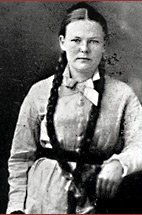
Martha soon felt well enough to start to pursue her dream. She figured that her long years in service made her fully aware of how to pamper her social betters and a notion formed that it could be done more economically from a shop front than trailing around to the abodes of prospective customers. Chancing her arm, she used her meagre savings to open up in downtown Rochester, quite near, in fact, to one George Eastman who was setting up Kodak with similar hopes for success. Both businesses thrived. Hers was aided by the fact that she purposely invented a reclining shampoo chair to add to her customers’ comfort. The prominent citizenry of the burb flocked to her premises to partake of her salves to their busy lives. And she was the best possible advertisement for her own brand of hair care. Just look at her locks in the accompanying images. Did Eastman photograph her? I wonder.

She soon came to have some very highly esteemed spruikers too for her talents. There was Mabel Bell, missus of the supposed inventor of the telephone; suffragette leader Susan B Anthony and even a first lady, Grace Coolidge. Due to her success, it was suggested to her that she establish another outlet for her wares and procedures in the Windy City to open in time for its World Fair of 1893. As she couldn’t be in two places at once, she decided it would be an agent of the mother shop, run by another, but to her strict guidelines. Thus it became a franchise – even though this term for what she initiated did not come about for some time. This model was based on how the Christian Science church thrust out its tentacles across the nation. And after the success of the Chicago venture, Martha used the same formula for further expansion.

All products sold by her agents were manufactured in factories she set up, all staff had to be trained in her special schools and she instigated national advertising campaigns just as that industry was starting to take a form we would recognise today. She maintained the strictest quality control with all products being organic – untouched by the chemicals that her competitors, when they got going along similar lines, were enamoured of. Martha made it her calling to employ only servant girls or poor working class women. The Harper Method, as her franchising became known, had a humane heart at its core, although it catered mainly for those from the top end of society. She was an early exponent of tycoon philanthropy. How refreshing compared to the oft corporate greed of these times, although, of course, there are many who still follow her example.

Martha_Matilda_Harper

Her heyday were the twenties and Harper’s Harperites (agents) strove to bring out the beauty of the inner woman, later turning their attention to their men folk as well. Over time her prominent customers included Danny Kaye, European royalty, the Kennedy family, Lady Bird Johnson and even the German Kaiser.

When she attained the age of 63 it was time for Martha Harper to start to wind down her own involvement in her company’s affairs. She married her 39 year old assistant. He took over the business and ran it till 1972 – twenty odd years after Martha’s death.

In wedlock she was never Martha McBain, again bucking the norm by retaining her maiden name throughout her long life. She had the same attitude way back in 1900, attending classes at the University of Rochester, despite the explicit by-laws banning women from doing so.

Her story makes me wonder if the American dream is still possible in the US for women from her type of background. The recent film ‘Joy’, based on a true story, suggests it was still an attainable goal at the end of last century, but today? I wonder if even Martha Harper dared dream of a woman President, let alone a black one?

marthastamp2

Her Commemorative Stamp

The Three Lives of Ingoushka

Will you indulge in a little game of ‘Who Am I’ with me? Some of you may remember her. She had an impact on this old fella once upon a time. Perhaps she may have had an impact on you too, way back in the mists.

Here we go. I was born Ingoushka Petrov in Warsaw in 1937 – not a good time to come into the world, particularly with a Jewish mother. My Polish accent in later life would, to some ears, make me sound incredibly sexy and exotic. In the early sixties I became an actress in Berlin, later having roles alongside such luminaries as Clint Eastwood and Richard Burton, after making my English-speaking debut in ‘Doctor Zhivago’. I played Queen Galleia to John Pertwee’s Dr Who in several appearances in that icon of the small screen. I was married three times, with the first being to my hero. But as for what may have bought me into your orbit once upon a time? Well, I was famous for two reasons. One – yes one – was because of my breasts, which I rather exposed quite a lot of on screen. The second were my fangs. They really didn’t appear all that often in my movies, only in titles such as ‘The Vampire Lovers’, ‘Countess Dracula’ and ‘The House That Dripped Blood’. But maybe you remember them too. The press at the time were quite enamoured of me for both reasons. They dubbed me ‘The Queen of Scream’. Well then, who am I? Do you know? If you do or don’t, I think you’ll find my whole story more that just a tad interesting.

ingrid-pitt

By the early seventies your scribbler was studying at UTAS in Hobs, living at at hall of residence, sadly for males only. My love of movies had been triggered by the greater selection of offerings available in the big smoke compared to my former provincial town. And I was very much aware of Ingoushka. She seemed to only appear at the old Elwick Drive-in, so often I would take my jalopy out there, usually in the company of like-minded mates who also were not adverse to the good lady being presented unadorned, along with her blood-sucking mandibles. Those were the early years after the strictures of censorship were loosened. For some time we had been governed by god-fearing old men in darkened rooms having the say over what we could and couldn’t view. Ingoushka, unlike many who simply teased back then in that brave new age, delivered on what she promised. Of course she was a member of the Hammer film studios stable of voluptuous beauties. In fact, when she first auditioned, she fronted the head honcho of Hammer, James Carreras, sporting the most revealing of her assets type dress she could squeeze herself into. She reported in her autobiography, ‘I turned up at Jimmy’s office in a maxi-coat, a mane of hair, lots of make-up and high leather boots. I walked up to him and opened my coat like a flasher. I was wearing the tiniest and lowest cut dress you can imagine. He took me darling, but not in the way film moguls are said to!’ He offered her a choice, horror or porn – the latter most likely akin to offerings popular at the time like ‘What the Milkman Saw’ or ‘Confessions of a Window Cleaner’. They were more innocent days. But she chose the former. Ingoushka, by this stage Pitt, as a name, though, wouldn’t cut it up there in the credits – so she became Ingrid, Ingrid Pitt.

Her trajectory upwards was immediate, although her stay at the top was brief. The early seventies just about saw her out. She made guest appearances sporadically in the following decades till her death in 2010, but she was never one to let the grass grow under her. She simply re-invented herself when the popularity of vampire movies waned. She turned to writing to earn a living. She made up for quality with volume – she just wrote and wrote and wrote some more. She’d have a go at anything. She started off describing the conditions the first Americans were forced to endure after a stint living with a tribe of them in Colorado. Then she turned her hand to fiction, usually, to capitalise on her name, in the horror genre. She wrote columns for magazines and later on-line. She even penned scripts, submitting some to ‘Dr Who’ – never successfully, but she came close with a few.

When the popularity of a Hammer revival, at the turn of the millennium, bought with it screenings of her retro-fangwork all over the UK, she cashed in writing titles such as ‘The Ingrid Pitt Bedside Companion for Vampire Lovers’ and ‘The Ingrid Pitt Book of Murder, Torture and Depravity’. As well there were her memoirs she, fangs in cheek, called ‘Life’s a Scream’.

ingrid

But as fabulous as her lives on screen and as quite the wordsmith were, her third life – the one she led prior to her notoriety in the movie industry – was perhaps even more hair raising than anything she acted out for the camera or wrote about.

Of course, to be of Jewish heritage in Poland during the war years was a dire situation to be in and in 1942 her family was picked up by the Nazis. She and her mother were separated from her father and elder sister and the pair were transported to the Stutthoff concentration camp. She witnessed her mother’s best friend summarily hung and one of her own little companions raped and beaten to death by guards. Come the Russians the pair were released and commenced to trudge between the various holding camps for survivors to try and find father and sister. The family were remarkably reunited, but such were the privations her dad had undergone at the hands of his captors he died a short time later.

After that life obviously improved and the young Ingoushka started to dream of a future and the shape it may take. Acting caught her imagination. We know from later events that she was a force of nature and it was not long till she moved to East Berlin to pursue her dream as the Iron Curtain was coming down. She became associated with Helene Wiegel, second wife of Bertolt Brecht, acting in his works in Helene’s theatre company. Unfortunately the redoubtable Wiegel was a strident critic of the communist regime and soon the Stasi came calling. Miss Petrov was about to take the stage for an opening night performance of Brecht’s ‘Mother Courage and her Children’ when some uniformed goons turned up to shut it all down and take in those responsible. Ingoushka did a runner. Hot on her heels were the thugs and as a last resort, she took a flying leap into the River Spee. The current took her, fully costumed, across the city to the American zone where she was spotted by GI Laud Roland Pitt Jr who, without hesitation, jumped in and bought her to shore in his his arms. Her hero. Sometimes life truly does resemble the movies. They fell in love and married.

It didn’t last for nothing could get in the way of her dream. The unstoppable Ingoushka Pitt continued on her drive to stardom. Of course, in the end, she made it to the delight of young men far away at a drive-in in Hobart.

Despite horror giving her that pathway to success, in an interview for a New Zealand newspaper four years before her death, she admitted she rarely watched or read anything to do with the genre, stating ‘I think it’s very amazing that I do horror films when I had this awful childhood. But maybe that’s why I was so good at it.’

And she was. Of course, in the digital age Ingoushka is only a mouse-click away on YouTube in all her fanged glory, bosoms heaving. Make that click and you’ll see what I mean. We were all so innocent and unworldly back then and she was ripe for our desires. Sometimes I think we were far better off in that era then when what she did was about was about the extent of it.

Life's Never Easy

I didn’t realise the convolutions. It wasn’t till after the viewing of it that I read Paul Byrnes critique of ‘Mia Madre’ in the Age to see what he thought. I’m afraid his opinion of it was more praiseworthy than mine. To me, the convolutions he revealed were almost as interesting as the film itself – which is another way of saying I’ve seen far better this year. That being stated, there were several scenes of magic within it and I was wiping away tears at the end – which, I am afraid, is nothing unusual for me.

mia-madr

The convolutions? Well, darling of the Italian film industry, Nanni Moretti, lost his mother during the making of his previous cinematic offering and this film concerns a brittle, harried film director (Margherita Buy) – and Moretti has her retain her own name for this role. She’s obviously playing him, according to Byrnes – just a female version, perhaps channelling his inner feminine self. This is a take on the old, much tackled chestnut of a film within a film – this one about union unrest. Buy, as the director, had the added pressure of a marriage going on the rocks, failing to have any idea of what’s going on with her daughter and her mind is playing tricks on her. Part of the problem with this movie is that it segues between reality and fantasy without the usual stock filmatic warnings, leaving the audience to work it out for themselves. We become quite adroit at this as it progresses – a tribute to the director I guess. To cap it all off, for Margherita, her mother is dying – a fact that she finds difficult to accept, as no doubt Moretti did, in the making of ‘We Have a Pope’. To complicate matters, Moretti himself plays the director’s brother in ‘Mia Madre’. The brother is more accepting of the situation and practical about his mother’s condition than his sister. He has stated how much he enjoyed playing the type of man he wishes he was. Yep, sure was convoluted

Then mega-star Barry Huggins turns up to play a lead in Buy’s movie. He propositions her (unsuccessfully) on their first meeting, has an over-inflated view of his own talent, but unfortunately can never seem to remember his lines. John Turturro, as Huggins, steals the show. His celebratory dancing is joy to behold, as is his flaying around for excuses for his inability to recall dialogue. He ‘fesses up, in the end, to the cause.

Mia Madre01

Byrnes sums it all up when he opines ‘It could be a little faster, a tad more upbeat, a pinch funnier,…’ but the French critics in particular, conversely, lapped this one up. One film journal labeled it the best film of 2015 from anywhere. It must have lost something in translation as far as I am concerned.

Trailer = https://www.youtube.com/watch?v=aOa_A48vPLs

Melbourne Vignettes '16 – 02 – It Was Don, Wasn't It?

Yes, the more I think about it, I am sure it was definitely him. That it was Don.

She was hovering. Every time I looked she had crept a little closer. I began to speculate as to why she was there – but I’ll never know the answer to that. Flying out of the state that Saturday morning I realised I was in the company of minor celebrity. In the boarding lounge, such as it is at Hobart (supposedly) International Airport, the special people had been called to the plane first. Parading past my seat were Luke Darcy, Cameron Ling and Richo. They’d been in town for the big Friday night game at Blundstone Arena, the first AFL encounter under lights at the local venue. I watched out for Sam Lane, but sadly she was no where to be seen. The previous evening I had tuned in, somewhat bemused, as the Rooboys gave the Tigers a right royal shellacking at Blundstone. On Saturday eve, in my hotel room, I watched similar happen to Essendon at the hands of Freo over in the West, so the Channel Seven commentary team was in for a big day in the air. Following them out onto the tarmac came Damien Hardwick, members of his coaching team and a handful of young men I took to be players, although none of their recognised stars. Once boarded, a couple of rows down from me, I could see midfield stoppage coach, Brendon Lade, in his seat, his knees up around his chin. The confined space in cattle class is not obviously designed for giant former ruckmen.

Damien_Hardwick

It was at the luggage collection bay I first spotted her. She was dressed head to toe in Blues regalia and her eyes were firmly fixed on Dimma. It only took a glance to tell that she was in some way intellectually impaired. I was also, to some extent, hovering as I legitimately waited to pick up my case. I am ashamed to say I was engaging in a little ear-wigging too. Their emphatic loss from the night before was naturally the prime subject matter of the Tiges’ management members surrounding me, one on his mobile telling how the previous evening in Hobs all that could go wrong went wrong. Watching on tele it certainly appeared that only one team had come to play – the other, the ones with the yellow stripe, found that, in the freezing air, it was all a little too hard. Sorry Richmond supporters.

But now my mind was on the girl and not on the Richmond Football Club’s woes as she edged even closer to the group around that team’s coach. They all looked pretty gloomy that morning at Tullamarine. Eventually she must have decided she had been waiting long enough for the important question she had to ask Hardwick. She was now close enough to reach in and tap him on the shoulder – which she did. Her query, which she was fit to burst to ask, consisted of just two words.

I watched on with interest as I felt his response to her could tell me a great deal about Dimma the man. He was certainly a positive and affable fellow in his television persona – but I suspected this was not the best of days to be interrupting a debriefing. Those two words? Simply, ‘Where’s Jack?’

Of course, those of us enamoured with the game, would immediately know she was referring to Jack Riewoldt. He’s one of the stars of the team, a quixotic and charismatic figure. Hardwick turned and faced the girl, did not smile, but politely, without embellishment, told her that he wasn’t on their flight. He waited to see if she had anything else to inquire. She did – ‘Is he coming soon?’

Dimma responded that he thought that was the case, but couldn’t guarantee it. He then turned from her to resume his conversation with his acolytes. There was no reference to the girl as she moved off, satisfied, if perhaps disappointed, with his answer. He certainly did not make any derogatory comments about her to those in attendance. To my mind he handled the situation perfectly. He was respectful of her and gave her his time – as fleeting as it may have been. He certainly lost no brownie points from me as a result of the exchange. As to why such a fervent Carlton supporter was hanging around at that time of morning is intriguing. Perhaps that is what she does – checks out the teams returning from interstate games to catch a glimpse of her heroes. It wouldn’t be the Blues that day as they had a home match. Good on her I reckoned – she wanted Jack and she was brave enough to find out from the top man as to whether she’d be in luck.

And she sang to me. Just briefly, but she did sing to me. I was meandering around the ‘Henry Talbot:1960s Fashion Photographer’ exhibition at the NGV Australia when I arrived at a certain photograph at the same time as a tall statuesque blonde, pushing an infant in a pram, together with another woman who was around my age. The image we were all focusing on was entitled ‘Billy and Jackie’. I immediately recognised the male model involved but heard the younger woman ask the elder one ‘Who are they Mum? You knew everyone in Melbourne back in those times.’
The answer, ‘Don’t be silly darling. I didn’t. And I have no idea who they are.’ – and they proceeded to move off. That was too much for me so I piped up and informed them the bloke was Billy Thorpe. The mother turned around and came back. She peered again at the image and extolled, ‘Of course it is. How could I have missed that face. Look at him. He was so young back then.’
I replied something to the effect that we all were so much younger then. She smiled at me and started singing, just quietly, so that her daughter didn’t hear, a few bars of ‘Forever Young’, grinned once more and headed in the direction of her familial companions. It was a lovely moment that will stay with me. Back in the sixties we were all going to be forever young. It didn’t happen.

talbot billy

There were other encounters and sightings. Travelling in on the Skybus from the airport that same Saturday morning I found myself opposite a woman from Salt Lake City, very excited to be in Oz, with her two teenage children. We started chatting – turns out that after four days in Melbourne she was flying south to visit her cousin in, of all places, Dodges Ferry. She hadn’t been to Tassie before and had many questions to ask. I sat next to a couple at the footy. The poor woman. She was a Collingwood supporter but spent her time listening to her hubby raucously cheer on the Doggies when she wasn’t fetching him beers to keep him well lubricated. When he disappeared at half time we started chatting. She was a librarian from Canberra and we talked books until the game and hubby were ready to resume. On my final night, seeking out a proper sit down meal rather than take-away, I happened on Toscani’s in Acland Street, near my hotel. Italian, I partook of a delicious lasagne served by its sole waitress, a delightful young Korean who, at 27, thought she was quite old. I wish. It was a very quiet Monday eve and we got to talking. She was keen to know about my island and she told me of her future hopes – to become a permanent citizen of our country and to set up a restaurant specialising in the tucker of her home country. We chatted so much my pasta treat had decidedly cooled by the time I got to it. Best of all, she gifted me with dozens of radiant smiles. There were dreams of limitless possibility in her eyes. Let’s hope that our country will continue to be a place where that is always possible.

I continued my love affair with the trams of Yarra City. I had an adventure in taking the 109 to Kew to visit a friend recovering from a health issue. Brother Jim was on the mend and maintaining his sense of humour despite what life has thrown at him recently. This mode of transport is a great way of encountering people and getting a feel for the multicultural nature of our second city. There was the German tourist sitting opposite on one journey who was obviously not on the best of terms with his travelling companion. He was furrowing his brow over a map so I inquired if I could be of assistance. Turns out the reason for his frustration was that his wife was not satisfied with the standard of our big two Aussie supermarkets and had demanded that he take her to an Aldi which, being European, was obviously far superior. He was peeved that so much time had to be taken out of their time in Melbourne to hunt one down out in the suburbs. His parting words to me were, with a nod to his missus – ‘Once a German, always a German.’ Then, on another ride, there were two beautiful young ladies standing a short way from me, lost in each other’s presence, gently caressing and cuddling. We have come of age in such matters as there was no staring; no one batted an eyelid. If only I could say the same of some of our Neanderthal politicians.

I attended two very close and pulsating games of AFL, viewed several fine exhibitions (200 Years of Australian Fashion at the NGV definitely worth catching) and went shopping. My pointing of the camera was mostly in abeyance due to the weather, but one morning I took an early morning perambulation along the St Kilda foreshore and delighted in that milky light off the water that sometimes can be caught around the bay. I hope my resulting images did it justice.

DON WALKER - IMG 1

And, the more I think of it, I am positive it was him. My lovely lady and I love to celebrity spot and one of her best was sharing an elevator with Mark Seymour of Hunters and Collectors fame. Well, I was about to enter the lift at my Carlisle Street hostelry when I had to step back for a figure departing. As he emerged he looked up at me. I realised instantly that I recognised him. It was the quiff of hair that gave it away. So distinctive – it had to be him. Don Walker, of Cold Chisel fame – the man who has written so many of their iconic anthems. As good as Mark Seymour? Could be – if only I was completely sure.

Under the Visible Life – Kim Echlin

It reminded me of the excellent documentary made a few years back, much gonged, about those back-up singers who provided the fire power on the choruses for many of the hit songs that have become embedded in the fabric of our lives. They were unsung, if you’ll excuse the pun. Only now are they receiving some belated recognition. Often they covered for the vocal limitations of the guy or gal front of stage – the ones that couldn’t make it up high. Of course, these anonymous performers all mostly had aspirations to be big-time too. When our own Renee Geyer tried her luck overseas, she became one of the best in the business when her own career didn’t take off in the US – and the stories she now tells of those times behind the limelight! Yes, Kim Echlin’s ‘Under the Visible Life’ reminded me of ’20 Feet From Stardom’. It is well worth seeing on DVD if you possess a love of music. As for the book – well….

echlin

The novel tells the story of two gifted musicians who – and it’s no spoiler to write it – never made it either. They were both jazz pianists. One, Afghani-American Misha, due to the openness of her parents mixed marriage, had to flee the country of her birth. Initially this took her to Pakistan where her mother and father were murdered for their brazenness, then on to the US. Katherine, also the result of a mixed marriage, is bought up by her struggling mother in Canada. From an early age both come under the thrall of jazz and the musicians, usually black, that drove that genre. They become gifted on the keyboards and when they eventually encounter each other, a fair way into the tome, they find they have an almost spiritual rapport on their chosen instrument.

At that time, though, jazz was soon to play second fiddle (sorry, just have a compulsion to pun) to new beats emanating from another form of popular music, rock. That, plus the other obstacles that fell before them, meant their careers, together or apart, were very much second tier. They were also women. It was still not easy for their gender to make it in a man’s world. Their trials and tribulations from the immediate post-war years through to the eighties are recounted.

I was attracted to the book by its retro cover, all orange and black. Once taken down from the shelf, the glowing reviews for it inside the front cover ensued a purchase. That it had music at its core was, for me, also a selling point.

But, perhaps because of the type of music they were so enamoured by, or the slow burning manner with which the story unfolded – usually not an issue – I failed to be fully drawn in. Without doubt it’s an interesting read, but my appreciation of it was not up there with those rave recommendations. One critic felt it delivered ‘…a clinic on how to conjure emotions readers didn’t even know they had. This book is nothing short of a masterpiece.’ (Quill and Quire) I could not concur.

This, Kim Echlin’s fourth novel, comes from a writer obviously highly regarded in the land of the maple leaf. She has been praised for her daring in choice of subject matter; her elegiac, beautifully honed prose and her ability to produce story-lines that are uniquely arresting. Is that she failed to move me down to my gender? I wonder.

Echlin_Kim