
All posts by stevestevelovellidau
Cat as Star
I suppose there are a number of possible excuses for what he did! With a milky diffused moon-glow beaming in through the bedroom window, Leopold could have mistaken it for that other thing – couldn’t he? Watching the first sequence of the movie ‘Inside Llewyn Davis’, it bought it all back to me in vibrant flashback.
Leopold is a fine, feisty feline who came to stay, along with endearing canine Oscar, when my son Richard moved in to share my Burnie abode in the long years I was parted from my DLP (Darling Loving Partner). Both pets came very quickly to find a place in this old fella’s heart and to this day I miss their constant presence in my life. I am expecting to be reunited with them when I go north to pet/house sit for Rich and partner Shan when they venture to the Northern Hemisphere for six weeks during our winter. The animals’ home now is a grand house in the picturesque coastal village of Bridport, up in the north-east of the island. The pair of pets lead a salubrious life there with new addition Memphis, an Alaskan malamute. Like them, I have now moved away, but for me it’s to the south to be with my beloved DLP.
As cats are prone to, Leopold soon worked out the most comfortable spots in his new Burnie residence to own as an area for lolling. Beds figured prominently. The rest of the time he was out and about the neighbourhood, tomming – even if he no longer possessed the necessary essentials. He’d often return home in disarray, with parts of his anatomy rearranged requiring expensive visits for veterinarian remedies. Sometimes, as part of his recovery, it was often necessary for Leopold to remain housebound – not to his liking. On such occasions it was important that the unhappy animal had a clear and unfettered pathway to his kitty-litter tray in the back laundry. It was during such a period of enforced confinement that the incident occurred.
One of the beds Leopold took a shine too was the queen-sized one that served as my home for the night. In these early days, pre-incident, Leopold would saunter in, lord of all he surveyed, to home in on a suitable cosy spot on the doona towards the bottom of my mattress. I had no objection to this – in fact I found it quite comforting to have the tabby animal quietly purring away somewhere around my feet. It became habit to have the retractable door to my room slightly ajar to allow for his nocturnal comings and goings. I was lulled into a false sense of acceptance of him as my night-time companion – what could possibly go wrong????
Nothing – would be the answer till that particular night with, as a result of incident, he never setting paw into my chamber again. In the week leading up to it Leopold was yet again in a period of convalescence, getting over one of his many confrontations with a similarly territorial local moggy. He was on medication, perhaps another reason for said incident.
On the night in question I awoke in the wee small hours to find my face, hair and surrounding pillow covered in moisture. Still half groggy, I looked heavenwards to see if a hole in the roof had mysteriously appeared as explanation. Even if it had, there was no rain about, so it soon became evident to me that that was not the answer – that and the piquant and tangy aroma that simultaneously was starting to afflict my nasal cavity. I had been peed on – I reeked of cat piss. I leapt into action to make my feelings clear to the offender. Leopold, an intelligent animal, no doubt only temporarily addled by medication and moonshine, soon realised that my head was not his usual ablutions tray and thought it would be in his best interests to find a quick hiding spot before his sleeping buddy awoke to find and act on his misfortune.
That morning, around four in the a.m., I had my earliest bath ever before a school day, fired up the washing machine and exchanged the linen on the transgressed bed. The cat still had not appeared, in fact I did not lay eyes on it until I returned home that evening from my teaching duties – by that stage I had calmed and no doubt ‘the incident’ had been erased from our puss’ mind.
On that night our mutually satisfying cohabitation ended, but as ‘Inside Llewyn Davis’ began the slumbering folk singer front and centre of this offering was similarly cohabiting with a cat, this time a big orange mog. The animal stirred itself and began a slow progression up the bed towards the folkie’s cranium. My first reaction was, ‘Oh no! It’s not, is it???’
Thankfully no, our warbler had sensed something was afoot, shot awake and shot out of his bunk, carrying the maybe about to be offending animal away out of camera shot with him.
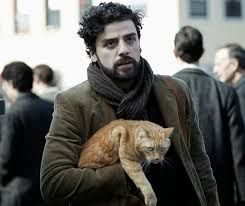
The movie is the latest from the Coen Brothers. I have never been a massive fan of their oeuvre with the exception of the wonderful ‘Fargo’ and to a lesser extent, ‘The Big Lebowski’. In truth I cannot say I’ve seen much else, but the subject matter of ‘Inside Llewyn Davis’ attracted me. Although highly praised, I thought their previous attempt at a musical offering, ‘Oh Brother? Where Art Thou?’ was woeful. Most of their material is fairly dark. This one would have been fairly bleak too without the contribution of the big marmalade feline. The laughs that resonated around Cinema 3 at the State where I viewed this production were all as a result of the travails of the cat at the hands of the woebegone Davis. It seemed to be the litmus for the lousy luck that befell the guitar strumming singer of obscure ditties from the Appalachians and Ozarks.
Now the word ‘bleak’ doesn’t necessarily infer that the movie was a stinker. It was quite the reverse actually, with, once my flashback had passed, this viewer being able to sit back and happily enjoy the journey it took me on. It bought back my memories of a time, just as I was ‘switching on’ to music, when, for a brief moment, before it was blasted away by the advent of the Beatles and the Merseyside brigade, folk ruled the airwaves.
This was the early sixties we’re talking about. I found myself becoming lost in the periodness of that time in NYC that the movie produces – think a seedier version of what one gets in the first few series of ‘Mad Men’ or, if you prefer, the album covers of early Dylan. Filmed in browned-out tones in fuggy, smoke filled coffee houses or in streets with dirty snow lying about, it’s a blast from the past.
Our hero is hopeless, even if he has the voice of an angel. He’s a couch-surfing, perennially botting (fags and money) sad-sack lurching from one disaster to another – the death of his singing partner, getting his best mate’s missus pregnant, zilch record sales and only spasmodic bookings – you get the drift. It is difficult to feel any affinity for him. The narrative is bookended by the Greenwich Village set pieces and these are high points. A long period of travel to and from Chicago was less engaging with the movie losing its way – pun intended – somewhat. This is despite a gonzo John Goodman giving his all in more ways than one. In the Windy City he is offered a gig as part of a trio – presumably for either Peter or Paul supporting Mary Travers – and of course he rejects it as beneath his folkloric purity.

Justin Timberlake and Carey Mulligan make appearances as slightly more successful performers than Davis – and both can hold a tune. Of course we know that about Timberlake, but Mulligan was a revelation to me. Oscar Isaac was chosen for the main role because of his musical chops and he, despite his relative obscurity, in no way lets his directors down. His only other claim to fame is playing Jose Ramos-Horta in the Aussie flick ‘Balibo'(2009). As the hapless central figure, the actor inhabits the role loosely based on early Dylan contemporary, the largely unheralded Dave van Ronk. In the last scene at the coffee house there is a skinny, scrawny curly headed troubadour serenading an audience in a raspily distinctive voice – I wonder who that could have been??
Greenwich Village, Liverpool, Haight-Ashbury, Carnaby Street, Manchester, Seattle – these are place names that all invoke a special time in the progression of popular music in the latter half of the last century. The Coen film enhances our appreciation of the first listed and is worthy of its accolades – even if the cat has the best lines. The world is awash with ‘dog as star’ movies, with the Coens reportedly remarking on how numerous were both the cats and takes needed to get any desired result on the screen involving the feline. Perhaps, with their ‘we owe them a living’ ethos, it is little wonder that dogs, who take the opposite view, are far more prolific movie scene-stealers. But despite the obscenity Leopold perpetrated on my naked head that night, he will always be a star in my world.
‘Inside Llewyn Davis’ website = http://www.insidellewyndavis.com/home
Pretty Yellow Blooms

Gifts
One year for Chrissy my DLP (Darling Loving Partner) decided she wanted an adventure – something away from the humdrum, something out of the ordinary as well as, dare I write it – something out of her comfort zone. Unfortunately she left it totally up to me as to what that would be. She won’t be doing that again and has kept a tight rein on me ever since. What I came up with left her pleading to be left on some wind-blasted rocks with the seals and shags, but that is a story for another day. Last year we decided for our mutual gift we would treat each other to a trip to the deep south – an excursion that resulted in skirmishes with nudists and kamikaze Japanese tourists – see http://blueroomriversidedrive.blogspot.com.au/2013/03/going-south-part-1.html and http://blueroomriversidedrive.blogspot.com.au/2013/03/going-south-part-2.html. This year was a tad more subdued. In keeping with out recent renovations, we updated our kitchen appliances with cranberry red microwave, kettle and toaster. A much safer option. Of course DLP’s greatest gift to me is a daily occurrence – her continued love; her having me in her life. Not a day goes by when I do not tell her how much she means to me.
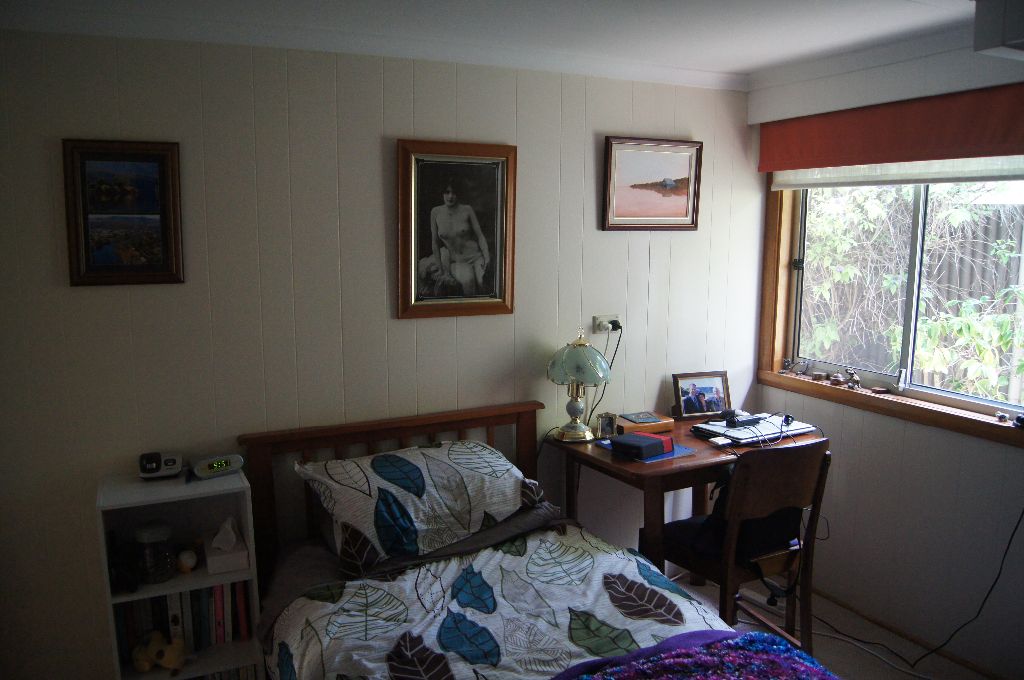
Towards the end of the past year, again as part and parcel of those aforementioned renovations, my DLP gave me another excellent gift. I have a brand new man-cave. I simply adore it. Ever since I’ve moved down south, two years ago now, I have had my own space – the front chamber across the way from the Blue Room and the sunny nook out back. Now the former master bedroom has been moved to the old cave, and visa versa. The original, due to our lack of room before mate Stefan produced for us our built-ins, means the new area is now my sanctuary with my stuff, much of it retrieved from storage out in the garage, around me. I have a bed to loll on and to take nanny-naps. I have a table to compose my scribblings on. I have shelves on which to place books and images of the one’s I love the most. I am not a man who is interested in sheds, so what could be better than this generous gift? Adorning its walls are some of my favourite possessions. Keeping her eye on proceedings is Fleur, my half-naked 1920’s beauty who has been with me for decades. There’s a wonderful painting by prestigious local artist John Lownds that DLP presented to me for a birthday a while ago now. His work doesn’t come cheap so I know that, on a restricted budget, buying it for me wouldn’t have been a straight forward decision – so I so treasure it. My friends have contributed – Carolyn with her own rendering of Tasmania’s iconic Dove Lake boat house and Claire’s presentation of the mighty Hawks team of ’11, autographed by every member. Although not the victorious side of ’13, they were on their way back then. Then there are two items from DLP’s own talented hands – a large crayon nude and a red-hued seascape. In my mint new room I have a limited licence, under supervision, to clutter – even to cover the pristine white built-ins with my photographic efforts and my granddaughter’s precious first drawings for her Poppy.

Another artist in my life has given me the gift of two of her paintings that adorn other walls in our little abode by the river. Pride of place in my sunny nook is Julia’s cityscape of my cherished little metropolis from the perspective of atop Mt Wellington. This was painted to thank me for teaching her three wonderful children. In truth I think this trio gave me back more than I could have possibly given them. The other, greeting visitors to our home, is my very, very special farewell gift from fronting classes over the course of twenty years at Yolla School. Of the Midlands in Julia’s unique style, it evokes all those trips I made between Hobs and Burnie during the years DLP and I were a bi-coastal couple. Thankfully those trips are taken less frequently today, it being usually with the gift of DLP’s presence as well.
Writing of art, another humbling gift came right at the end of ’13. Whereas I’ve taken to my scribblings in my retirement, brother Kim spends some of his time crafting ukuleles. What he produces are items of stunning beauty – expertly, fastidiously, time-consumingly and flawlessly fashioned from our island’s precious endemic timbers. These are works of utmost artistry as well as functioning musical instruments. I may never play it proficiently, but who knows? What I do know is that I can look at it till the end of my time and be reminded of his expertise; his symbolic heart-felt gesture to the familial ties that bind.

As with Kim, my own son has inherited the same of the hands on capabilities of my father. I know our dad would have been in awe of my ukulele and thoroughly approving of the gift of DVD shelving my son produced for me a few years back. Watching him construct these I saw father Fred’s ability to problem solve on the run. I know this has been a valued asset to Rich in his various workplaces. And wouldn’t my father be gobsmacked to see where he is working now, maintaining the huge barges that service the Furneaux Islands out of Bridport – as gobsmacked as I was on the tour he gave me a month or so back.
Over recent months there is perhaps the most treasured gift of all given to me by my BTD – Beautiful Talented Daughter. That is the gift of being able to accompany braveheart Tessa Tiger Gordon, my granddaughter, on some of her adventurings. It is just pure, pure magic. Being Poppy to her – well it just doesn’t get any better. All these gifts gives my life so much meaning. I am truly, truly a fortunate man.
A New Season

A Blue Room Book Review – Sarah Thornhill – Kate Grenville

Whereas Henry Reynolds and James Boyce are in the process of putting the meat on the bones of the factual storyline for the Frontier Wars of this country, it is novelist Kate Grenville who attends to the fictional counterpart. The conflict’s earliest incarnation, the Hawkesbury/Nepean Wars, formed the background to her first book in her trilogy, ‘The Secret River’. ‘Sarah Thornhill’ is the third instalment. Presumably the ‘goings on’ referred to in this, the tome under review, was the Bathurst War. Grenville’s latest publication pales somewhat in comparison with the remarkable ‘The Secret River’, as well as being less satisfactory than ‘The Lieutenant’ – the second volume. How could it be otherwise? ‘The Secret River was quite ground-breaking as Grenville thrust the issue to the fore of something that we in Oz, for a hundred years, preferred to sweep under the carpet. There have been some failed attempts to turn her opus into a film, but more successful has been an adaptation for a stage production. Funding for a television mini-series was announced last year, to be made for the ABC. I’ll eagerly await that. ‘The Lieutenant’ was a thought-provoking embellishment of a verifiable relationship between a young British officer and a First Australian girl.
‘Sarah Thornhill’ adds another layer to the black versus white trajectory of the early days of European settlement; that being how those first born of mixed parentage fit into the narrative. To some degree these inter-racial offspring were the result of the initial tolerance, from both parties, that existed for a brief period after the arrival of the invaders. Overwhelmingly, though, it was caused by the forced sexual activity white men, deemed as right, expected from the ‘native’ women. This was our nation’s American Deep South travesty as reflected through ‘Roots’, ‘Mandingo’, ‘Twelve Years a Slave’ et al.
William, the ‘hero’ of ‘The Secret River’ has, by the time Sarah emerges from childhood, remarried to the loving but domineering Ma, finely tuned to the social mores of her day. Those tainted with the stain, including the senior Thornhill, as befits their past, could be somewhat more inclusive – to a point. William is haunted by his actions in the first of the printed threesome, set on the Hawkesbury, during the first genesis of the conflicts after white occupation. He is reasonably considerate of Jack Langland, a pioneer in the early cross-Tasman trade and the forging of links with the New Zealand tribes, despite his parentage – that is, until Sarah, blossoming into womanhood, decides he’s the one for her. Ma comes down like a ton of bricks, with Pa thinking it is best not to rock the boat where his wife is concerned. During this period the family suffers double tragedies. With Sarah forcibly convinced to realise that Jack is a non-starter, she turns her attention to what is ‘correct’, settling for second best. All through Grenville’s pages are mutterings of dark happenings beyond the ranges where the governmental ‘line in the sand’ is drawn. Beyond this whites are forbidden to penetrate. Naturally hat that notion was unable to be policed, as Boyce in ‘1835’ so ably draws our attention to. Settlers were hungry for land, the First Australians desperate to repel their inexorable advance, so our own version of the Indian Wars of the Old West soon ensue. As Tim Flannery recently inquired, why are not the Aboriginal resistance leaders held in as high esteem as their First American counterparts?
That ‘Sarah Thornhill’ does not measure up to its two predecessors in no way tarnishes Grenville as her usual skill is present in putting together a sustainable, easily devoured page-turner. It brings to life a once neglected period when a few isolated coastal communities began to spread their wings and contemplate excursion into the interior. The only major quibble I have is a truncated denouement, a seemingly cursory winding up which could, in turn, signal there is more to be told of the Thornhills. As a title ‘Sadie Daunt’ has a good ring to it Kate!!!!!!. I, with no doubt many others, would hope that the journey into our now distant, in white bread Aussie terms, past continues on.
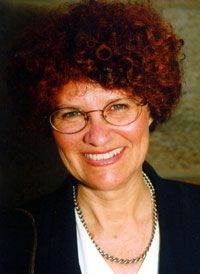
Kate Grenville’s website = http://kategrenville.com/
Tim Flannery speaks out = http://www.smh.com.au/national/tim-flannery-in-call-to-honour-aborigines-killed-in-land-wars-20140117-310dg.html
Quiet Bloom

Isn't she lovely
Stevie Wonder was warbling away as I emerged from my slumber this morning. His tune, ‘Isn’t She Lovely’, caused me to reflect, as much does these days, on the ageless beauty of women – those in my life, as well as those portrayed on screens small and large. My mind drifted to two in particular as ‘Early AM’ rattled on about the extreme heat of and fire danger presented by the current weather conditions over south-eastern Australia. They pair concerned were from the big screen.
The first duo of movies I have viewed this mint new year both featured stars whose initial beauty of youth have long deserted them. One is a Dame in real life, the other was once married to a Sir. Both have shed the flawless skins of their twenties and now sport the lines of maturity – lines that still point to the beauty beneath the mere external; lines that, in this day and age, are no deterrent to their star power. They ever increasingly possess the skill to express any desired emotion in their respective roles with an ease younger starlets will need years to perfect.
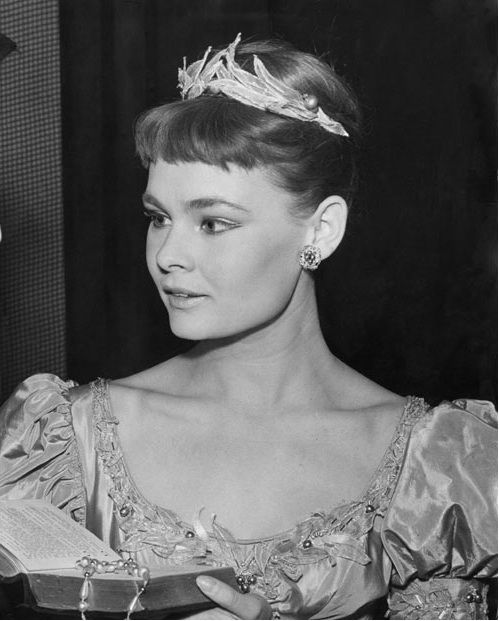

As that same ‘Early AM’ carried news of yet another inquiry into the foulness perpetrated by the Catholic church, this time in the UK, ‘Philomena’ was bought to mind. Dame Judi Dench, in her part as the eponymous hub of this movie, had for all her life suffered from the heart-wrenching hollowness of a child ‘forcefully’ taken from her by this unfeeling, to put it mildly, ‘Christian’ organisation. The removal did not occur immediately after childbirth, but several years further down the track – well and truly after a bond had developed between mother and son. As we later discover the child is sold – that’s right, sold – to American adopters (they being the only ones back then able to afford the church’s stiff prices). ‘Philomena’ is not a story of the expected ‘happy everafters’ either.
The vibrancy of youth that led our central figure to commit the ‘mortal sin’ has disappeared by the time Steve Coogan meets her in the guise of Martin Sixsmith, a one time spin doctor for the high and mighty who has fallen from grace with a thud. He is trying to resurrect his journalistic career and Philomena’s story is the vehicle. In the Stephen Frears’ directed screen rendering, Coogan plays his role with sensitivity, stepping back and allowing the Dame to ply her craft, which she does impeccably. We watch in awe as she transforms from a meek, beaten-down woman to someone unwilling to be trodden on any more, even if ever-ready to forgive. From dowdy frump Philomena’s beauty and feistiness comes increasingly to the fore, under Sixsmith’s prodding, as the journey proceeds. The scene where she convinces the journalist to remain in America is priceless, but within minutes Dench has us reaching for our tissues as she takes yet another hit to her hopes.
There is steel in Judi Dench as she battles to keep a career going despite suffering from severe macular degeneration. She will not let it take over her life, just as Philomena, in this true tale, in the end refused to allow what the Catholic church did to her define her existence. As the award season is on us, understandably this performance has been lauded and listed. In a competitive field this year Dench will give strong opposition and even if she remains ungonged, her ‘Philomena’ is already on my list as candidate for film of the year. Hopefully there are many roles remaining for this elegant, beautiful woman.
Although both Dame Judi and the female actor at the fulcrum of ‘Saving Mr Banks’ missed a Golden Globe due to the searing performance of Cate Blanchet in ‘Blue Jasmine’, we nonetheless, with the second of my two viewings, saw a consummate headliner manipulate us into our tissues as well. She plays PL Travers, the author of ‘Mary Poppins’, as she does battle with Walt Disney to protect the integrity of her characters in his film version of her children’s classic. As with Coogan, Tom Hanks, as the Fantasyland king, gives us a muted performance to take second billing to Brit veteran Emma Thompson, bringing to life the Australian writer. These days Ms Thompson is no longer the darling of stage and screen as she was when in marital partnership with Sir Kenneth Branagh, but she still possesses actorly chops enough to carry a movie like this. It is probably a cakewalk for her, but such is her adeptness in the role the nominations keep coming. As with ‘Philomena’ this is a movie of transformation, as to be expected, but in this case a Disneyfied one as in real life the central harridan stayed true to her unappealing self. Paul Giamatti does a pleasant turn as the driver who was instrumental in the crusty one’s eventual softening, with this ‘West Wing’ fan pleased to see BradleyWhitford emerge from that show to delightfully play one of the co-writers of the 1964 film. Rachel Griffiths gets a look in as well. The Australian flashbacks, featuring Colin Farrell as Travers’ antipodean father, to me, lacked authenticity, but overall the two hours spent watching the journey of a reluctant author to the glitz of Hollywood was time not wasted. And here is a tip – do remain seated through the end credits.


As Tinsel City slowly wakes up to the paying power of the greying generation – we who want more from the muliplexes than the crash, bang wallop of noisy CSG generic fodder, then so more movies of rich reward as the aforementioned pair will be produced. In turn, this will enable us to see venerable thespians at the height of their powers. They still retain beauty more than enough to turn the heads of us too savvy to be mesmerised by the latest nubile darlings Hollywood throws up then throws out once they are ‘past their peak’. We want substance alongside screen beauty. Dench and Thompson, along with Mirren, Streep, Weaver, Hazlehurst and increasing numbers of others are providing it for us. ‘Isn’t She Lovely’ could just as well apply to these grand dames as to Wonder’s infant daughter Aisha.
‘Philomena’ website = http://philomenamovie.com/
‘Saving Mr Banks’ website = http://www.disney.com.au/movies/saving-mr-banks
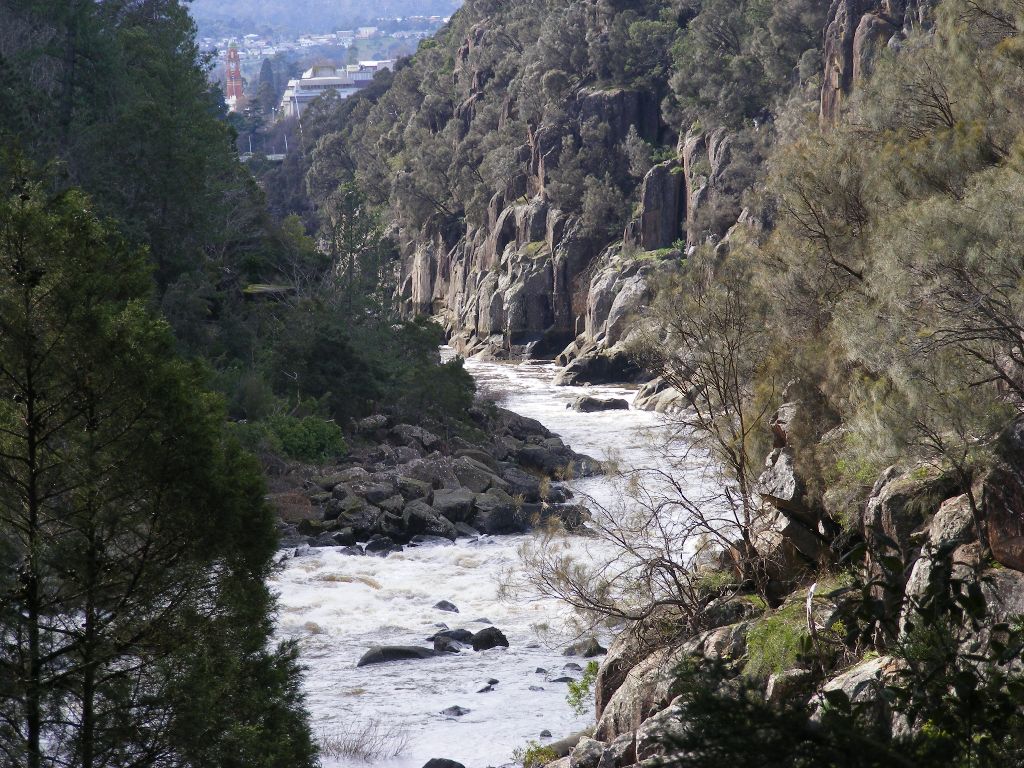
The Gorge Launceston
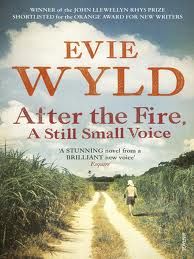
A Blue Room Book Review – After the Fire A still Small Voice – Evie Wyld
Women. Will they ever be understood by the male of the species? They’re mysterious, beguiling creatures – so easy to love, with most of my gender in complete inadequacy when coming to grips with their feminine psyche – with this only adding to their allure. I am permanently in thrall of the women in my world. I find them easier to talk to than most men as they have endless topics of conversation, not just footy, cricket and when at a loss, the weather. I love being in their company. My own special one is a gem, but even after all these years of being hopelessly besotted with her she can still surprise. Could I write a fictional account centred on one? I have my doubts. From memory, in all my scribblings, there’s only one that has a woman at the centre – (http://blueroomriversidedrive.blogspot.com.au/2013/04/the-white-bikini.html) – and I doubt if I came anywhere getting it right with her!
I write stories. I love the process of it. There really isn’t much of a point for doing so apart from the fact that a few people I love read them and seem to enjoy my efforts. I doubt if any will see the light of day in terms of being published, but that doesn’t overly concern me. It’s become an essential (to me) retirement pre-occupation. It was only reading Evie Wyld’s most praiseworthy first novel that I realised how sexist I have been. I write about men – I suppose how they work, or at least this one, is what I know best, even if relating to them I often find hard yakka. Women, on the other hand, are far more open about their lives and I love to pry. It’s given me the basis for some of my scribblings, even if they’re not told from their perspective.
Conversely, Ms Wyld’s debut effort was almost entirely male-centric and she really has us pegged. She was able to delve beneath the skin of her ‘strong, silent types’ and get to the nub of their tortured souls, particularly with in the ones who are her main protagonists. She captured the essence of those who have fought for their country and came home angry, not understanding why. One was violent to his partner-in-life without understanding why. Some had to escape their demons into the desert, or the sub-tropical north, to try and give it all meaning. There was one war-blitzed character who found, as I have, perfect contentment in later life – at least he in part understood why. As with us both, in the famous words of Jimmy Buffett ‘There was a woman to blame!’ It was a bravura accomplishment, even if there were bits that annoyingly jolted. I have no problem with her having one of her ‘men’ as a born again Christian, but to locate him in an Aussie town entirely populated bysuch-likes seemed to me somewhat surreal. Would motels in the seventies turn away Vietnam vets – I doubt it, despite the high feelings at the time. I think also there were a few factual inconsistencies that gave me the irrits, but these are minor matters when the big picture of what this Australian born, UK resident has produced. Her two main men, Frank and Leon, operating forty years apart and in very diverse locations, eventually have their lives entwined. Frank takes off from the nation’s capital to steamy Mullaburry, on the north coast, to flee. Leon also has connections to this hamlet. The latter’s demons are Vietnam induced and need to be exorcised elsewhere. Will these seekers of redemption entirely ever become at peace with themselves?
The book has won awards and the author has been recognised as one of the most promising talents of her generation – so who am I to quibble. But quibble I will with her denouement as I felt there was still some teasing out to do to make this a wholly five star experience. There is no getting away from the fact, though, that this book took me on a journey I found immensely rewarding.
Evie Wyld has a newer release – ‘All the Birds Singing’, a tome revolving around a country type born in Oz, but, like her, now resident in Old Blighty. Its hero, Jake, is woman. Can she write as well on one of her own gender? Its premise is intriguing. ‘After the Fire A Still Small Voice’, about flawed men, aims at flawlessness and almost succeeds. Has she conquered the curse of the sophomore novel? I intend to find out.

Evie Wyld’s web-site = http://www.eviewyld.com/

