All posts by stevestevelovellidau

Male – Guilty by Definition

Sunday night’s showing of the Rebecca Gibney vehicle ‘The Killing Field’ did not help. It had a leading actress, seemingly striving to be the Aussie version of the Scandi-noirs’ Saga Norén or Sarah Lund, failing dismally in this punter’s opinion – Gibney is simply not in the same league. Included were some happenings that, embarrassingly, even surpassed the illogic of some of the more daffy American police procedurals. It was a bit of a stinker. Before you could snap your fingers our ‘brilliant’ blonde heroine had a hit-list of sleazeball males as long as your arm, all possessing the necessary ingredients to classify them as suspects for the serial murders of under-age girls. The town was choko with them. Their graves had recently been discovered within the small rural community’s boundaries. Were there any decent males to be found in Mingara? The school’s oily principal was definitely in the frame, as was the slavering fire chief. What a coincidence it was that both were visiting another town on the same day that one of the victims was snatched in it – how convenient. These two and others were just waiting to get their hands down the panties of nubile teens in a tele-movie that stretched believability to the limit. This tepid effort followed on from the excellent ABC/BBC series Janet King and Broadchurch – very classy offerings, but the principal was the same. Some of the most trusted defenders of the law, in the former, were in Janet’s sights as members of a ring of slimy paedophiles. The British effort even took me away from Friday night footy it was so addictive as David Tennant tracked down which of his small town’s shady characters were responsible for the defiling and death of a young lad. Then there’s Rolf, the Catholic church, Salvos, scout masters – this list is also as long as one’s arm. No longer are crimes of sexual perversity committed against defenceless children swept under the carpet – not a week goes by without some individual or organisation being the brunt of sensational headlines in the tabloids in much the same way as those ‘odious gays and their foetid practices’ were last century.

Please don’t misjudge where I am coming from with this. As a doting grandfather of an exquisitely beautiful two year old I would attempt to rip to shreds any predatory male that lay a finger on her, heaven forbid. And pure evil like Jimmy Saville should have been subjected to sharia law had he been still with us. What a cockroach – I never did get the Poms’ adoration of this odd creature before he was ‘outed’.

No, its not that. With so much bad news on the topic about, on our screens and in print, it’s only natural that mothers like Tracey Spicer go to the nth degree to helicopter their progeny against what is even the slightest possibility of something ghastly being perpetrated. Nevertheless, even if I agreed with almost every point made in her article ‘I Don’t Want My Kids Next to a Man on a Plane’, it still made me crabby and frustrated as a member of the male gender.

Of course Tracey covers herself by meekly scribing ‘…sure, not all men are paedophiles.’ Couldn’t she at least have stated that, despite the impression created by ‘The Killing Fields’ et al, that the overwhelming majority of us certainly aren’t and abhor the thought? Poor Johnny McGirr, forced to change seats on a Virgin flight when a computer placed his bottom next to an unattended under-ager Automatically above his head was raised a sign – ‘Potential Child Molester’. He was presumed guilty because of that y chromosome. I imagine, had it been me, I would have been mortified. How soul destroying to be labelled such a risk to the young and vulnerable. Yet I understand why Virgin and other airlines have such a policy – there’s always the ‘what if’ question and equally predatory lawyers out there waiting to feast on any bid for resulting compensation. It is also revelatory that Ms Spicer is protective of her own side of the ledger, promptly informing us of the minuscule percentage of women who are like offenders – only eight in a hundred, don’t you know? Despite her children recently making a transcontinental flight without her and retaining smiles on their faces at the end of the journey, she was still not satisfied. Although praising Virgin for their placement and treatment she ‘…was disappointed I had no choice about where they’d be seated.’

traceyspicer.             Tracey Spicer

These days I get nervous around children’s playgrounds or beaches with a camera in hand when my sole intention is capturing the adventurings of that little braveheart who is my granddaughter. I hate feeling like that. I wonder where it will end. Will there come a time I will need a police check to carry a camera out in the open, or indeed to fly? Will male teachers one day be unable to ply their trade in schools until their pupils come of age? Will adult males be forbidden in the scouting movement. Perhaps that is a tad too extreme, but what about the case of a male wrongly accused on the word of a child? Check out that superb Danish movie ‘The Hunt’ to see the results of that.

I praise the media for making the world a safer place for our children, even if Ms Spicer contrarily laments that the world no longer engenders ‘…a sense of adventure…’ for her offspring. Yes, males are to blame for that too. I do know what she is banging on about is far too important to be merely a case of male bashing. By gee, though, reading this, I do feel for my gender.

Ms Spicer’s Opinion Piece =

Sunday night’s showing of the Rebecca Gibney vehicle ‘The Killing Field’ did not help. It had a leading actress, seemingly striving to be the Aussie version of the Scandi-noirs’ Saga Norén or Sarah Lund, failing dismally in this punter’s opinion – Gibney is simply not in the same league. Included were some happenings that, embarrassingly, even surpassed the illogic of some of the more daffy American police procedurals. It was a bit of a stinker. Before you could snap your fingers our ‘brilliant’ blonde heroine had a hit-list of sleazeball males as long as your arm, all possessing the necessary ingredients to classify them as suspects for the serial murders of under-age girls. The town was choko with them. Their graves had recently been discovered within the small rural community’s boundaries. Were there any decent males to be found in Mingara? The school’s oily principal was definitely in the frame, as was the slavering fire chief. What a coincidence it was that both were visiting another town on the same day that one of the victims was snatched in it – how convenient. These two and others were just waiting to get their hands down the panties of nubile teens in a tele-movie that stretched believability to the limit. This tepid effort followed on from the excellent ABC/BBC series Janet King and Broadchurch – very classy offerings, but the principal was the same. Some of the most trusted defenders of the law, in the former, were in Janet’s sights as members of a ring of slimy paedophiles. The British effort even took me away from Friday night footy it was so addictive as David Tennant tracked down which of his small town’s shady characters were responsible for the defiling and death of a young lad. Then there’s Rolf, the Catholic church, Salvos, scout masters – this list is also as long as one’s arm. No longer are crimes of sexual perversity committed against defenceless children swept under the carpet – not a week goes by without some individual or organisation being the brunt of sensational headlines in the tabloids in much the same way as those ‘odious gays and their foetid practices’ were last century.

Please don’t misjudge where I am coming from with this. As a doting grandfather of an exquisitely beautiful two year old I would attempt to rip to shreds any predatory male that lay a finger on her, heaven forbid. And pure evil like Jimmy Saville should have been subjected to sharia law had he been still with us. What a cockroach – I never did get the Poms’ adoration of this odd creature before he was ‘outed’.

No, its not that. With so much bad news on the topic about, on our screens and in print, it’s only natural that mothers like Tracey Spicer go to the nth degree to helicopter their progeny against what is even the slightest possibility of something ghastly being perpetrated. Nevertheless, even if I agreed with almost every point made in her article ‘I Don’t Want My Kids Next to a Man on a Plane’, it still made me crabby and frustrated as a member of the male gender.

Of course Tracey covers herself by meekly scribing ‘…sure, not all men are paedophiles.’ Couldn’t she at least have stated that, despite the impression created by ‘The Killing Fields’ et al, that the overwhelming majority of us certainly aren’t and abhor the thought? Poor Johnny McGirr, forced to change seats on a Virgin flight when a computer placed his bottom next to an unattended under-ager Automatically above his head was raised a sign – ‘Potential Child Molester’. He was presumed guilty because of that y chromosome. I imagine, had it been me, I would have been mortified. How soul destroying to be labelled such a risk to the young and vulnerable. Yet I understand why Virgin and other airlines have such a policy – there’s always the ‘what if’ question and equally predatory lawyers out there waiting to feast on any bid for resulting compensation. It is also revelatory that Ms Spicer is protective of her own side of the ledger, promptly informing us of the minuscule percentage of women who are like offenders – only eight in a hundred, don’t you know? Despite her children recently making a transcontinental flight without her and retaining smiles on their faces at the end of the journey, she was still not satisfied. Although praising Virgin for their placement and treatment she ‘…was disappointed I had no choice about where they’d be seated.’

These days I get nervous around children’s playgrounds or beaches with a camera in hand when my sole intention is capturing the adventurings of that little braveheart who is my granddaughter. I hate feeling like that. I wonder where it will end. Will there come a time I will need a police check to carry a camera out in the open, or indeed to fly? Will male teachers one day be unable to ply their trade in schools until their pupils come of age? Will adult males be forbidden in the scouting movement. Perhaps that is a tad too extreme, but what about the case of a male wrongly accused on the word of a child? Check out that superb Danish movie ‘The Hunt’ to see the results of that.

I praise the media for making the world a safer place for our children, even if Ms Spicer contrarily laments that the world no longer engenders ‘…a sense of adventure…’ for her offspring. Yes, males are to blame for that too. I do know what she is banging on about is far too important to be merely a case of male bashing. By gee, though, reading this, I do feel for my gender.

Ms Spicer’s Opinion Piece = .http://www.smh.com.au/travel/i-dont-want-my-kids-sitting-next-to-a-man-on-a-plane-20140424-375z6.html
The Tear-drop

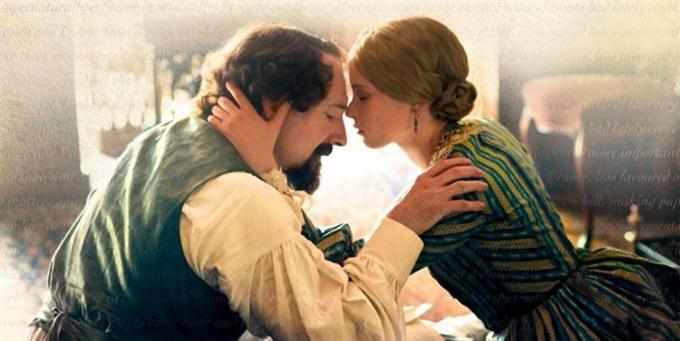
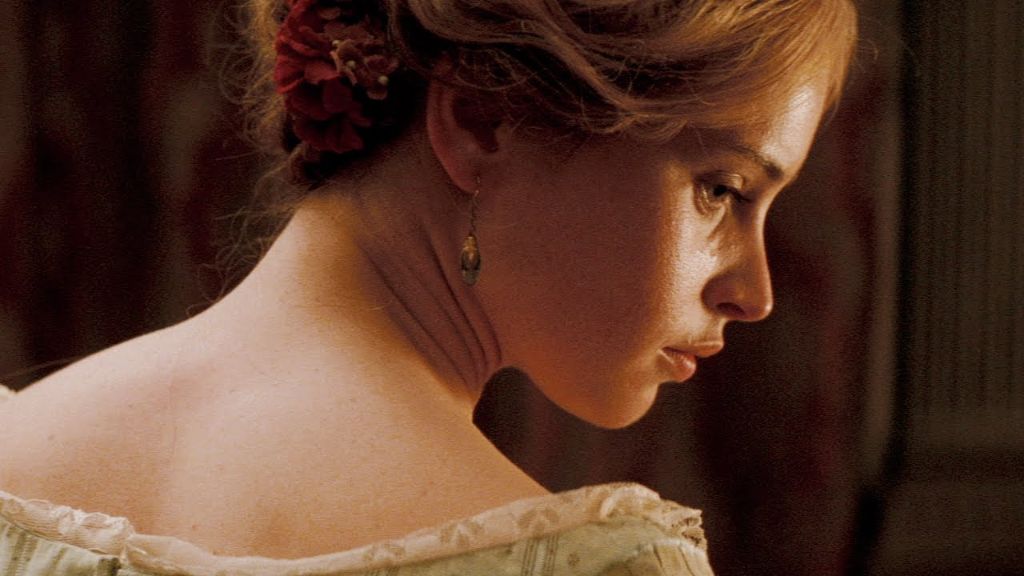
It was perched, a shining diamond in the round, on that narrowest of all flesh ’twixt iris and lash – note the Dickensian term! For a time I thought it was a blemish on the screen, or a flaw in an other wise flawless visage. Slowly, inexorably, the sparkling bauble became fuller and it was only when the laws of gravity caused it to teeter over the brim and lay a trail down porcelain skin I realised I had been transfixed by sunlight reflecting off a tear-drop. This formed from an overflow of fluid produced by the pain of memory. It was exquisite – and how actress Felicity Jones, garbed in jet black Victorian layers and bustle, could produce such emotion alone, apart from film crew, on a chesilesque strand, is beyond me. Presumably, with others gathered within her view observing, it would only add to the degree of difficulty to produce such inner anguish. It was only one of a number of scenes from the movie that will remain deep in my synapses. ‘The Invisible Woman’ possessed a number of sublime tableaux – set pieces if you will – that must truly have been a labour of love. Those responsible produced many lasting images of a bygone time and place – none better than that of the horse-racing at Doncaster. Initially it resembled one of Tracey Moffat’s posed human panoramas. This movie version focused on a collection of languidly chatting attendees, rigged out in immaculate period garb, before being charged into joyous choreographed action as the thundering hooves approach and pass. Wonderful. It is a credit to the director, none other than Ralph Fiennes.

invisible woman1

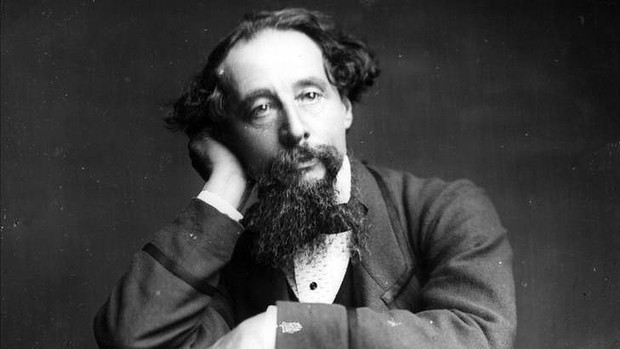
His second outing in such a role is a revelation. How he constructed this evocation of the look and mores of another age made his product a feast both aural and visual. That he also had the duty of effectively playing the lead role as the great British novelist only adds to what a bravura effort it was on his part. There was a certain irony in this, not lost on him. As Fiennes states, in a recent interview, ‘So there I was directing and acting, and sort of the two things bled into each other.’ Those reading, knowing of Dickens’ predilections, will understand where he is coming from. If not, on seeing the movie comprehension will come as to just how difficult melding the two tasks must have been. He succeeds seamlessly. In all, to date, it has been one of the year’s viewing highlights.

Charles-20Dickens.

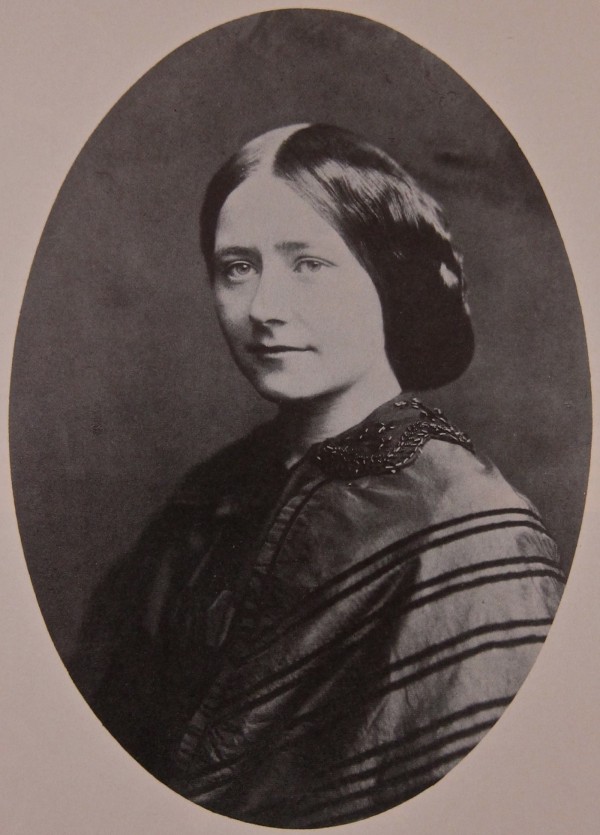
Dickens has been described as eccentric by some reviewing this offering, but in truth I didn’t come away from this film having acquired that impression. He was perhaps somewhat exuberant on occasions, eagerly seeking diversions from a stultifying marriage in a time of societal stultification. He hung out with the racy Wilkie Collins, played with relish by ‘The Rev’s’ Tom Hollander. His mate led the way in pushing the envelope against the morality of the times, something the great man couldn’t quite bring himself to do to the same extent. But that wasn’t going to stop him following his heart – embracing, rather than suppressing, his infatuations – the latter being what was meant to occur. Dickens goes to great trouble to conceal this particular affair as he was a married man in the spotlight. He was the celebrity of the mid-Victorian period, performing in print and voice to a rapturous world. He felt he couldn’t afford to offend the punters in the manner of Collins, who openly lived in sin and bugger the consequences. When he was bowled over, skittled, by Ellen Ternan, a struggling actress, from a family of thespians, barely past the age of consent, he was well out of love with his lumpen wife, stolidly played by Joanna Scanlan, She was dour, exhausted from producing ten progeny and her husband’s oft unfeeling demands. There is, in reality, roughly the same age gap between Fiennes and Jones, enhancing its reality. Look at the image of Ternan – she was something, even by today’s standards and Jones captures her perfectly. The interesting role was that of Ellen’s mother, played by veteran Kristin Scott Thomas. She knew well her youngest daughter’s lack of acumen for the stage. She was savvy and forward thinking enough to see that a liaison with Dickens might allow Ellen to make her way in the world. There was no ulterior motive – just a concern for her daughter’s well-being.

ellen ternan

In a recent Weekend Australian Review Deidre Marken writes an interesting column comparing this movie with the contemporary rom-com, ‘The Other Woman’ (gracing a multiplex near you). She writes, ‘And here’s the gist – infidelity is no longer a cause of shame and secrecy; it’s now an excuse for girl sessions and drinking cosmopolitans and braiding each other’s hair.’ Well Ms Ternan, if the film’s to be believed, engaged in girly sessions and hair braiding a-plenty with her sisters as her trysts were getting off the ground – but the point is taken. It’s not quiet the same thing. Once she was established as ‘mistress’, any notion of freedom she once possessed was taken away. For her the liberty of today’s woman was not possible in her situation, unless you were a battle hardened veteran, more able to cope with public censure, like Collins’ kept woman. It says something for Dickens (and his family’s destruction of his personal papers on his demise) that his relationship with Ellen Ternan, the inspiration for Pip’s Estella in ‘Great Expectations’, has largely been invisible to history’s view until recent times. This gorgeous, gorgeous film will bring it out in the open for people to see for what it was. Do try and view it yourself on a screen, large or small, sometime soon.

invisible woman

You'll Be Sorry When I'm Dead – Marieke Hardy

‘She was topless on a bed reading the paper, Her breasts were truly magnificent. Oh dear I thought. This could be interesting.’

That’s Dan writing. Ms Hardy has given him the right of reply – as she does all her subjects in this collection of extended vignettes from her somewhat, in various phases, hedonistic life story to date. And that is very fair of her as she calls it as she sees it – no beg pardons with Marieke, no protecting the not so innocent with aliases – even though her dad (who scribed the forward) informs that he fully expected this forthrightness would land her in deep do-do. She would cop the flack in the name of authenticity – a brave lass our author

sorry when dead

Dan, having know her in a platonic mode for a while and having enough of couch surfing, was looking for somewhere to lay his head a little more permanently. Marieke was coming out of a shattered, shattering relationship and needed a diversion. Both had their reservations, especially when his proposed host’s breasts were publicly exposed without inhibition, as is this lady’s wont. Marieke writes honestly of her doubts about him as house mate too. Do they decide to take the plunge and if the answers in the affirmative, how will it turn out?

And, as for those breasts, I can only agree with Dan. Yes, they are tastefully still available to googling – I’ve done my research you see. The whole affair of her bosoms is a piss-take Marieke felt compelled to issue on Rennie Ellis’ iconic shot of the human headline, Derryn Hinch, in bed, perusing the local dailies, with a similarly unencumbered playmate. Naturally there is a bearded, simpering Hinch doppelganger sharing Marieke’s bed in the rejoinder.

In ‘You’ll Be Sorry When I’m Dead’ Marieke Hardy shares this, together with numerous other adventures, with us and she is certainly no shrinking violet. Her use of language and her libertarian values, as expressed and carried out in these pages, assure the reader of that. For her the execrable shock-jock Alan Jones is a ‘…sordid little cock stain.’ with no right to ‘…pass judgement on the behaviour of young women in burqas whilst simultaneously being arrested for indecency in public toilet blocks.’ Good call that.

I like Marieke Hardy. I like her very much and if I was mildly shocked by some of her antics, as revealed here, I am not put off. Watching her on ‘The First Tuesday Book Club’ – well it’s a bit like Nigella sucking on her chocolate dipped digits. It’s mildly titillating. Marieke is unafraid to push the envelope, unlike the majority of us. She gets high on the edginess of life, whether it be running with a pack of similarly charged damsels, engaging in a threesome with a prostitute, attending a party for swingers or sussing out a range of suitable bedfellows. I have seen her in the flesh and she is just as exquisite as she appears on the small screen.

marieke.

I initially came across her in her former guise as columnist for the Melbourne Age; then secondly, as I drove to work each morning, trading jibes with the Doctor on the JJJs breakfast show. Sadly she has long given up both these gigs to concentrate on her other claims to fame – writing for ‘Frankie’ magazine, blogging, editing, running the charitable ‘Women of Letters’ – a ‘performance’ of which your scribe attended in 2013 – and some television. She is a throwback when it comes to letter writing, crusading around the country single-handedly drumming up business for OzPost by attempting to rejuvenate that format of communication. Recently, Marieke and her partner in crime, Michaela McGuire, have taken their ‘WofL’ roadshow international. Seemingly people cannot get enough of letter writers of note reading their handiwork, always on a certain set topic, out to a like-minded audience. The print version is into its third volume. Our author adores scribing and receiving hand written missives. For her a letter is akin to ‘… a long and leisurely afternoon lying naked on a picnic rug eating a Flake.’ Her own writing, as represented in this tome, is engaging. Being the granddaughter of Frank and having Mary as an aunt, it is in her genes. A real gem is MH’s description of the mayhem resulting when her dog, Bob Ellis, meets its namesake, the rotund scribbler, one of Marieke’s obsessions. It is priceless humour.

Marieke’s exuberant book is sassy, spunky and feisty – just like the woman herself. Live a long life the divine Ms H.

A recent article on Women of Letters in the Age = http://m.theage.com.au/entertainment/books/michaela-mcguire-marieke-hardy-take-women-of-letters-to-the-world-20140425-379iq.html

Marieke’s website = http://mariekehardy.com/

Why Linda? Why Anyone?

It was an album of music of its time. The scribbler of the article that caused me to attempt this piece, Peter Vincent, described it as being one of ‘…classic, cheesy 1980’s power pop ballads…’ even if he felt the duetists ‘…share a tremendous empathetic quality in their voices that is irresistible…’ Seems to me he’s having it a bit both ways. Still, at the place I was at then, it just seemed perfectly to reflect my state in 1989 – as well as the years till the watershed event in my life. Back then the world had lost its normal routines for me and for this punter, a life in transition was more than just a little bit scary. I was floundering and I knew it. Eventually, as clichéd as it sounds, but nonetheless remarkably, redemption came in the form of the most special woman in the world. The result of this occurrence being that the album has rarely emerged out of its case since. Would I purchase it now? Not likely – Nick Cave is warbling away on my music machine as I compose this. Circumstances change; tastes change.

cry rainstorm

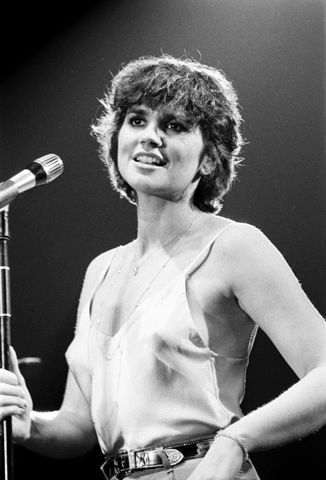
Previous to her collaboration with Aaron Neville on ‘Cry Like a Rainstorm, Howl Like the Wind’ (even its title is so passé ), Linda was already a favourite. A purveyor of Laurel Canyon country rock, her clear, faultless voice on 33⅓ revolutions per minute was often emanating from my speakers – ‘You’re No Good’, ‘When Will I Be Loved’, ‘Poor, Poor, Pitiful Me’, ‘Distant Drum’. These, and others, were amongst the litany of hits from the doe eyed lover of then (and now) Governor of California, Jerry Brown, ruling the MOR airwaves of the world back in the day. I purchased later albums too on the new CD format – collections of songs where she teamed up with such diverse luminaries as sweet Emmylou, Dolly and Nelson Riddle. She also recorded in Spanish, due to her part-Hispanic background. In her pomp she won ten Grammys, but now Mother Time has caught up with her more than most. She has Parkinsons has Linda Ronstadt. It has taken her voice – her incredible voice.

linda then

Linda Then

Vincent, in his interview with her for ‘The Silent Songbird’ article, seemed to harp on about her affliction, wanting her to answer in depth about it. He describes her as responding testily at times. If I was the proto-diva I would be thoroughly pissed off too, particularly as she was on the promotions treadmill trying to talk up the recent release of a collection of past collaborations with other noteworthy trillers. Wouldn’t you be peeved too if you knew exactly that what afflicts can only get worse and ultimately cause one’s demise? In a way it already has. But she does pass on this lovely quote – that Australia is ‘…the dream that was promised by Southern California, but never delivered….it’s like delivering pizza. They delivered it to the wrong place.’ I like that.

linda today

Linda Today

When our interviewer quizzes her on how, in light of that quote, she would regard our present leader and his treatment of asylum seekers, her response was a pithy one stating that ‘immigrants’ ‘…are the best people because they’ve come the furtherest and they’ve come through the most adversity. That’s what adds to society. They’re going to be the hardest working, best people.’ That’s her family background in the US – so she has some affinity with those suffering under the Abbott/Morrison regime of callous cruelty.

The new collection features the Aaron Neville duets plus numerous others. Same question – will I buy it? I picked it up in JBs, then put it back. It just didn’t seem to be the time any more – even if tracks like ‘Don’t Know Much’ would remind me of how far I’ve come – how lucky I’ve been.

Thank you Linda.

Peter Vincent’s article = http://www.smh.com.au/entertainment/music/linda-ronstadt-the-silent-songbird-20140410-36e7g.html

Linda and Aaron – ‘Don’t Know Much’ = https://www.youtube.com/watch?v=VD6TfEWtIYI

Hotel

January, 1977 and the northern winter was harsh, compared to the experience of that season back on my home island where snow usually only caressed the mountain tops. For days I’d experienced cold like I’d never known. That night, my train pulling into a darkened station, I wondered what on earth I was doing on the other side of the globe at that time of year! Sleet was in the air as I decamped my carriage, making me think about and miss my loved ones back in sunny southern climes. In those days instant communication to anywhere in the world was only a small flicker in the eyes of the future-seers. It was my first time out of Oz and to date the European sojourn had been an eye-opener and for the most part, enjoyable – the great art galleries of London and Paris, the amazing tucker, the wine – all good. It was all up to expectation, but short days and unremitting dun skies were getting to me. It was the dead of night, after a day of travelling to get to my destination, the last part on a SNCF branch line seemingly to nowhere – in fact, to an obscure town slap in the centre of the Central Massif. I was well and truly off the beaten track. A friend had recommended this place, stating it was not to be missed. He insisted it was added to my itinerary. On that freezing, deserted platform in the middle of France, I thought very possibly he may be crazy. I could see only one lighted building across the street from the station and I made my way towards it. As it turned out, I do not recall too many other hostelries from that, or my later ’81/’82 Continental/Old Blighty excursion, but for a reason that will soon become clear, I recall Le Hotel de la Gare, Le Puy – its cafe the source of the illumination.

I was too tired to look for anywhere else, despite the hotel’s not too promising looks. The bar was full of yokel types, with the barman taciturn when I asked, in stilted French, if a room was available. He took my particulars and handed me a key. I lugged my backpack up a narrow staircase and along a worn carpet to my allotted vestibule. On opening the door I was confronted by a barely furnished gimcrack room as chilly as a Siberian steppe. Fully clothed, I took refuge under the covers of a lumpen bed, complete with greasy bolster, rather than the wished for downy pillows, to rest my weary head. Thankfully sleep took me quickly.

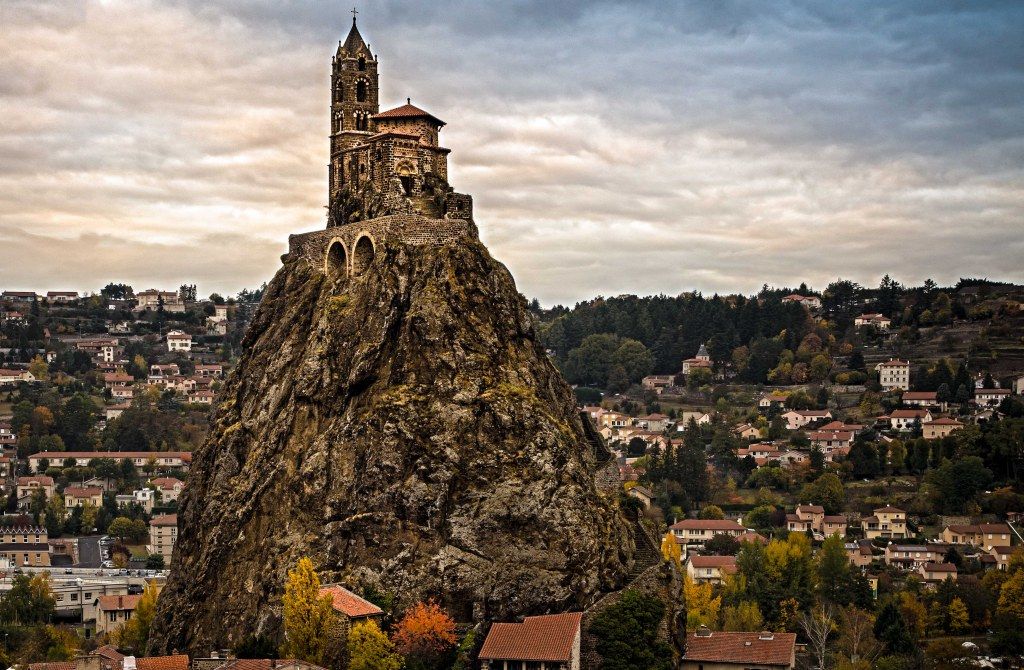
I awoke much later than at my usual time and initially I thought I must still be in the land of nod dreaming – the room was transformed. Shafts of sunlight were streaming in through the only half closed shutters and the spare room appeared almost cosy. Raising the blinds to the full force of the soleil I espied perfectly blue skies over the red terracotta roofs of the surrounding buildings. Maybe the place wouldn’t be so bad after all. The ablutions were down the corridor, so already fully dressed, I headed for them with a change of clothing and the threadbare provided towel. I didn’t make it to my destination for a while. At the end of the corridor was a glass-panelled door leading out to a second floor terrace. The door was unlocked so I took the opportunity to have a sunny squiz at the town from a different angle. What I saw stopped me in my tracks, leaving me open mouthed in wonder – gobsmacked. From this veranda there were more pottery-roofed buildings descending gently down towards a ravine. But what caused my reaction was what protruded above this fairly nondescript sight. Astoundingly, there were two mighty, natural pinnacles arising from the earth, reaching for the heavens, dwarfing their surrounds. These were the puys, hence the town’s appellation. I later deduced, they were volcanic plugs. Atop of one was perched an ancient looking church. On the other, even more strikingly, was a maroon hued statue of the Virgin, arms holding the infant Jesus. I forgot all about my bursting bladder and my cloying skin. I couldn’t drag my eyes away from the scene that befell me.

.Le_Puy_en_Velay.

Turns out, although not well known outside France, Le Puy, the place was a significant spot on a pilgrimage trail and as I came to know it better, was quite delightful. One the best meals in my memory was scoffed down in a seen-better-days restaurant on the main avenue leading down to the chasm. I was also proud of myself for successfully making the hard climb up to more closely examine the church – or was it the statue? It was so long ago now – my brain fails me yet again. After a few days there I headed south to the Riviera and the winter sun remained glorious for my time by the plages there as well. It all didn’t seem so bad after Le Hotel de la Gare, Le Puy.

le puy

Back around century’s change I was lucky enough to win a luxury trip to Bali. That remains my only experience of five-star accommodation in all its extravagance. The room I shared with my darling, loving partner was as plush as plush can be, but in truth I never felt truly comfortable in staying there at the Sanur Hyatt – far too patrician for a pleb like me. I like hotels with character perhaps somewhat more salubrious than that one in Le Puy – perhaps just with a little more in the way of amenities than it. My hotels of choice have probably seen better days, perhaps just like me, but there’s something about them. There were some Victorian/Edwardian piles I stayed at in places like York and Edinburgh in the UK. I remember a breakfast of kippers in a B&B in the Lake District and a room I shared chastely with a woman I barely knew in a hostel run by nuns overlooking Lake Lausanne. There was an establishment of nursery rhyme décor that I slumbered in for an overnighter in London. Back in Oz there was a room with a view in Brisbane that stands out, but the purest example of what I like is the Crossley, China Town in Yarra City – faded, faded charm.

And that is as good a segue as any to the most recent movie I’ve viewed back home in the little city on the Derwent – Wes Anderson’s ‘The Grand Budapest Hotel’.

Featuring a veritable who’s who of tinsel town luminaries – blink and you’d miss some of them – this watchable tip-of-the-hat to to those imposing iconic hotels of between the wars travel has a marvellous verve and features vibrant palette of colour, in all senses of that word. It was a movie where the look of the thing was the attraction, rather than what I felt was the rather hackneyed heist-centred narrative. It was a visual feast of sublime cinematography, featuring some animation to enhance the feel. The transformation of some of Hollywood’s elite to fit into the skin of their roles was another plus – none more so than that of Tilda Swinton to play the dowager Madame D, whose demise is pivotal to the plot, such as it was. Ralph Fienes, in the lead, rightly steals the show as the concierge, never disinclined to become the lover of the wealthy old dears who flock to his carnal ministrations when the Budapest was in its pomp. When we initially meet the hotel, in more recent times, it is a mere shadow of past glories, but soon we are back in a golden age. Newcomer Tony Revolori, as Lobby Boy, is also impressive, with the characters inhabited by Harvey Keitel and Willem Dafoe having the most eye-catching of the minor roles. The candy pink hotel, with its twin funiculars, was probably the real star of the piece. Overshadowing proceedings, revolving around a famous picture bestowed to the concierge by the dowager, is the shadow of the forthcoming war and all the dire consequences for Mitteleuropa it portends. The post-war impost of mass tourism meant the grand hotels had to reinvent themselves or be consigned to history’s dustbins, as we see has happened to the fictional Budapest.

.TheGrandBudapestHotelStill

This was my first real viewing of an Anderson offering and although my praise is somewhat more muted than that of many critics, it was nonetheless a treat for the senses, if not the intellect. It didn’t raise a laugh from me, although other members of the audience I shared it with obviously found more enjoyment in its humour. Despite my reservations, though, there would be worse ways to spend one hundred minutes of your leisure time.

The Grand Budapest Hotel

The movie’s website = http://www.grandbudapesthotel.com/