All posts by Steve Lovell

Anzac Morn

On this Anzac Day morning I think and I remember. I remember my father, long passed, who fought for his country far away from home in the war against Hitler and Japan. I think of my brother-in-law who went to an ultimately unpopular conflict and had to wait so long for the recognition he and his comrades deserved. I spend a little time considering the fact that my sister’s and his son who, in the era of Iraq, Afghanistan and terrorism, was also bravely prepared to make the ultimate sacrifice if called upon. Three courageous men I am proud to call family. And, this morning, I think back further of the two shots in anger that bought a war very close to home.

On Sunday mornings it has been my habit, of late, to venture to Northgate to collect the papers and then to mosey up to Banjos to peruse them over a flat white and date scones. The Sunday just past, in doing so, I sidetracked to a photographic display the shopping centre had set up to commemorate all those Aussies who were prepared to sail to war zones worldwide. The selection of images concentrated on, not our troops at war, but the home front. There were servicemen preparing to depart, parades and their return. It focused on the Boer War and the two great conflicts of last century and it focused on Tassie. There were men and women – soldiers, sailors and aviators.

My eyes were drawn to the World War 1 images, particularly those showing aspects of the preparatory training the men underwent at Claremont Camp, established where Cadburys is now sited. It was set up when it became clear that the regular facility at Brighton couldn’t cope with the numbers required. That is just up the road from our abode by the river and Claremont Village is where we regularly travel to for mail, groceries and newspapers. I looked at the faces of the men at this training ground and wondered if any of them had been responsible for those shots on another morning on the little island, off the coast, that Leigh and I had so recently visited.

It was a special three days Leigh treated me to on Bruny Island. There is much to attract the visitor there – it’s scenery, tucker and wildlife for example. But there also is its history. It was the latter that my mind goes to as I sit by the river this Anzac morn, looking out over the Derwent. For, on a small patch of Bruny, a war came to Southern Tasmania.

During those days, just across the D’Entrecasteaux Channel from here, we visited the remaining buildings of the old quarantine station. Built in an isolated spot, for obvious reasons, near Barnes Bay back in the 1880s. It was at its peak during the horrendous flu pandemic that swept the world immediately after the Great War. All Tasmanian troops, returning from various fronts, had to spend a week at the station to ensure that they were virus free before they could sail on up the Derwent and home. But the most interesting tale, for me, from its years of existence, occurred during he 1914 to 1918 war when perhaps the only shots fired in anger on local soil at the ‘enemy’ happened.

Now, as we know from the recent excellent ABC series on General Monash (whose forebears had been Monasch), anyone with a German sounding name or background could be interned, such was the outrage at the actions of the Hun during the early days of the call to arms. Some bright spark down here in a governmental authority decided that the station on Bruny Island would be the ideal place to house these poor souls, suspected to be aliens, given it was isolated, yet within easy sea reach from Hobart. Somewhere between 50 to 75 such men were sent to the island during this period, including 41 German seamen who had the misfortune of being docked at Port Cygnet when the news came through that Britain, therefore Australia, was at war with Germany. It’s a lovely tale that, on the journey from there to Hobart on the now commandeered SS Oberhausen, the ship’s grog supplies were liberated from a locked storeroom and by the time the city was reached, both crew and captors were right royally inebriated.

By February 1915 the Quarantine Station was housing a range of presumed unsuitables, including the now compulsorily sober sailors. They were put to such tasks as tilling the soil, building wooden huts and erecting a shop to spend their meagre allowances at. Of course ‘no ales or spirituous liquor’ were for sale. The semi-prisoners could, though, take a boat out from shore to fish to supplement rations. But overall the men were bored out of their brains in such a nothing location, as beautiful as it may look to the eye. By July they’d had enough. And when their miniscule wages failed to arrive and they had nothing to spend at the shop retailing their small luxuries, they decided to down tools and go on strike.
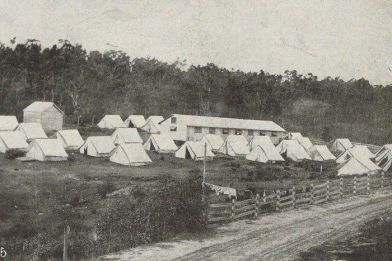
The head guy at the camp put in a call to his superiors in Hobart. He had witnessed the sentry on duty being pelted with rocks and the mob refusing to return to barracks. A platoon training at Claremont were transported to the docks, shoved on a ship and waved farewell to go to Bruny to face the break out.

The only record of proceedings I could find on-line reflected the material on view at the little museum where these events took place over a hundred years ago now. It was in the form of a letter from a soldier in the party, a Ray Searle, written to his mother. This account is taken from his missive.

As the troops approached landfall they were ordered to fix bayonets. In reality it was all over in minutes. As the men in uniform were landing a warning shot was ordered to demonstrate they meant business. The armed troops then located all the detainees and frog-marched them down to the beach. Six of the malcontents were arrested and the rest escorted to their cabins.

However the thought of his freedom being again restricted was too much for one of the Germans. He (Searle describes him as a big man) decided to do a runner and he took to the bush. One of the party took aim at him and fired. There is no record of whether the shot hit its target or what happened to the largish wannabe escapee. And that was the end of it.

By the end of 1915 the Federal Government at last got their act together and took over from the states the responsibility of housing all internees. Those at the small facility on North Bruny were sent off across Bass Strait to a much larger one to sit out the war. Apart from the sailors, most had lived quietly and happily in Tassie for up to thirty-five years, yet were still considered a threat – even if many similar, such as Monash, were serving and fighting their former countrymen. Their war, thought there is no doubt, was much better than for most poor sods on the Western Front – but still their fate was so ridiculous and lacking in logic, let alone humanity.

On this Anzac Day morning I awoke to birdsong on my bedside radio. I had opened my eyes and ears to the live broadcast of the dawn service from the nation’s capital; in fact, to the minute’s silence between the Last Post and Reveille (which is French for, appropriately, to wake up). Except, during that minute, it was anything but silent. It seemed all the birds of Canberra had gathered to send off their own gorgeous tribute to the fallen. I wonder if the glorious bird life of Bruny gave any comfort to the men cooped up there during those months. With its honeyeaters, robins, firetails and pardalotes; as well as its water fowl, parrots, raptors and avians of the sea, it is an ornithologist’s paradise. It certainly wasn’t that for the men there, but maybe there could have been some positive memories despite the stupidity of war.
Lest We Forget.
Party

According to my dictionary, the word ‘party’ has two succinct definitions – a) ‘a social gathering of invited guests involving eating, drinking and entertainment’; with b) a formally constituted political group that contests elections and attempts to form or take part in government.’ Each definition, in varying ways, is relevant to a pair of movies I have viewed in recent weeks.

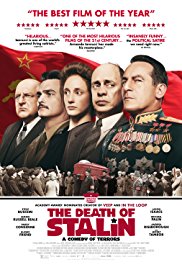
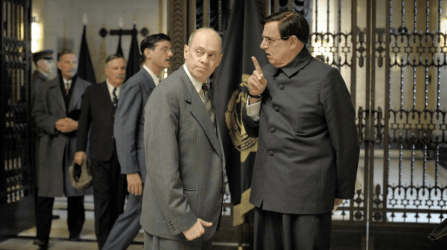
The initial offering, at first look, slotted cosily in with the second definition, but there was a fair amount of partying going on as well. The Communist Party of Russia was thrown into turmoil with the demise of a dictator on the 5th of March, 1953. Who was to step into his giant footsteps was the question that had to be resolved in the first of the duo of features, ‘The Death of Stalin’? Could it be the bumbling, stumbling Malenkov (Jeffrey Tambor), the scheming master manipulator Khrushchev (a glorious Steve Buscemi) or the sinister, positively evil Beria (Simon Russell)? There would be no smooth transition here – it’d be even worse than the back stabbing that’s gone on at federal level here. In Russia it’s deadly. For the purposes of this movie it becomes high farce in guise; the actors seemingly having a ball with the gallows humour involved. It’s been reported as being Pythonesque, but it could never reach those absurd heights. For these guys human life is a mere plaything, taken away at a whim as their goon squads venture out each evening with their lists of candidates to expunge from society. If you were a fan of ‘The Thick of It’ you’d probably love this as it came from the same makers. I wasn’t. I didn’t.

Yep, the team under the direction of Armando Iannucci milk the situation for all it was worth and there were performances to relish, nonetheless than that from Jason Isaacs as the strutting alpha-male Marshall Zhukov, capable of making all the aforementioned quake in their boots. Rupert Friend is wonderfully over the top as Stalin’s mad as a hatter son; with Andrea Riseborough as his very, very worried daughter.

The movie had its fans amongst the critics, but there were few laughs in the audience I shared the viewing with. As the end approached the levity disappeared completely and I felt mild revulsion at the path it took. Perhaps it was the film coming to the conclusion that it was no laughing matter after all. I thought the whole thing went a step too far pushing the envelope of taste. It really, overall, didn’t hit the spot.

And it was some party in ‘The Party’, with the newly promoted spokesperson for health for her party, Janet (Kristen Scott Thomas), deciding to gather a few of her mates together to celebrate. As she bustles about the kitchen – no uber-deliveries for this dame – her hubby Bill (Timothy Spall), the epitome of sad-sackdom, is fiddling around with his music apparatus and looking decidedly out of sorts. It’s all up close and personal the way the movie is shot – warts and all in glorious black and white. Stratton and Sandra Hall both awarded this offering four stars and I heartily concur. Its humour is black as too, but I thoroughly enjoyed it.

Acerbic American guest April (Patricia Clarkson) is the outing’s scene stealer with her cliché driven partner, Gottfriedd (Bruno Ganz), not far behind her in the hilarity stakes. There’s a lesbian couple with an announcement. Martha (Cherry Jones) is not so sure about it, but the much younger Jinny (Emily Mortimer) can’t wait to let the cat out of the bag. Cillian Murphy has a boisterous time as a coke-snorting financial manager, ready to create mayhem with his concealed gun. And just where is his wife?

Finally Bill emerges from his funk to make an announcement of his own – the mother of all announcements and as the repercussions flow we have the party from hell and the answer as to why Tom is packing a pistol. Yep, it’s great fun.

Although the guests at Janet’s party might not have turned out to be the best of company for her, they certainly were for us the viewing audience. We just hope we never attend a soirée remotely like it. I suspect her tenure at the top end of party politics will be short lived.

Trailer for ‘The Death of Stalin’ = https://www.youtube.com/watch?v=ukJ5dMYx2no

Trailer for ‘The Party’ = https://www.youtube.com/watch?v=Wb4FF6lCqFw

Stuff Up for a Gem

I knew nothing of the book, except it’d been a huge seller. The only review I’d glanced at for movie version had been luke warm, so it really wasn’t on my radar to see. I arrived at the State in time for what I did want to view in plenty of time, or so I thought. A closer examination of their guide soon informed me I had my days mixed up for the flick I desired to watch, so I had to substitute another or the trip into NoHo would have been wasted. I perused the other offerings and the only one remotely viable was ‘The Guernsey Literary and Potato Peel Pie Society’. ‘Ah, well.’ I thought, ‘How bad can it be?’

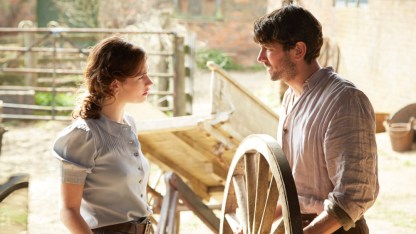
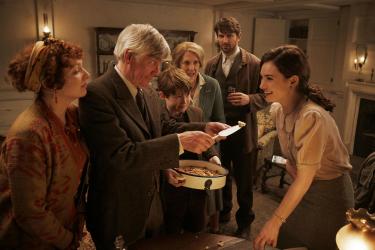
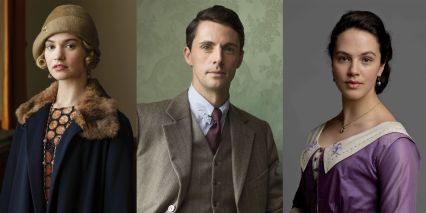
Not too shabby at all, as it turned out. In its first stanza this Mike Newell period piece takes us to wartime Britain and the German occupation of the Channel Isles. Already I was was gritting my teeth at the tweeness of it as we were introduced to a stereotypical mix of rustic types. All too often, for my taste, this had been the case with a recent range of movies from the era. But, as it moved on to immediate post-conflict London and we meet Juliet (Lily James – making quite a name for herself since her Downton Days), a successful writer with an American beau (Glen Powell), the movie gets into its stride and I find I am quite taken with it. Through correspondence with a certain Dawsey Adams (Michiel Huisman), from the eponymous island, Juliet feels compelled to visit there. What follows is her slow but engrossing, for her and the viewer, unravelling of events that occurred during the occupation. Many of the islanders are struggling to recover from their tribulations at the hands of the enemy. And although she’s spoken for, recently engaged to the Yank, she becomes more and more drawn to the correspondent, a Guernsey pig farmer. And, in case you were wondering, the ending is all Hollywood, making all the old darlings watching it with me sigh in delight. They lapped the whole shebang up, as I did. I guess, given the same people who worked on the ‘Marigold Hotel’ franchise watched over this offering too, it was to be expected. Newell, after all, has gifted us ‘Four Weddings and a Funeral’.

The tweeness remained throughout, but I can live with a certain amount of twee if it is a good yarn, This, I am happy to report, delivers that in spades. There were enticing support performances from actors of the calibre of Matthew Goode, Katherine Parkinson, Penelope Wilton (Downton again) and Tom Courtney. It’s just so lovely, lovely, gladdening the heart. See it if you can.

Trailer for the movie = https://www.youtube.com/watch?v=HTDNGv61-Dk

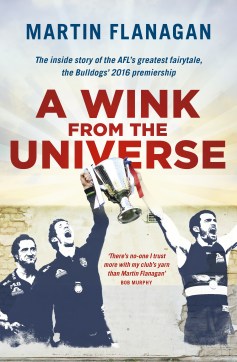
A Wink from the Universe – Martin Flanagan

He’d travelled from Canberra to watch his beloved team that day at Etihad. He was passionate and I enjoyed watching him as much as I relished watching the game itself. I was seated next to him and it was a terrific seat, almost at ground level, where the match proved to be a totally different beast to observing it from higher up or on tele. It was a sensational conflict from two very different teams – enthralling. By the end my new found pal was quite hoarse from all his vociferous barracking – at each break he had needed lubrication from the bar to keep him going. His wife was only mildly interested in the jousting out on the field and we had good chats while he was away. She was a teacher in the capital so we had common ground and she gave me their back story, little of which I recall as it was a few years ago now. Her hubby had grown up a western suburbs lad so his connection with the ultimately victorious team was strong. During his lifetime his lads had never made the big dance at season’s end, but they’d been in the semis a few times, not progressing once, to his disappointment. He told me he had a feeling in his bones about 2016 and on that day they certainly looked the goods. But it was only Round 11 – much could still happen. And it did. Their journey was a rough one. Boy, was my footy mate in for a ride.

In my view this decade, so far, has been a special one for our indigenous sport. Firstly my blokes, the mighty Hawks, stamped themselves as the greatest team of the new century with a three-peat. That, coupled with 2008, put them just above the Brisbane Lions (2001-2003). Then there’s been the introduction of AFLW and I love to watch it. What a revelation that has been – the girls’ massive determination and their hardness at the ball making it such a spectacle. Then last year, 2017, the long suffering, volatile Tiger Army finally had their reward with their team’s precise demolition of the Crows. It occurred due to a forward line innovation of one tall – Jumpin’ Jack – and a mosquito fleet around his feet. But, as footy stories go, 2016 outshone even that. A team that hadn’t won a grand final since 1954 rose from seventh position at the end of the home and away to score at the big one – unheard of till that date. During the end of year games they played a pulsating brand and had us all gasping at their audacity. They defied the footy gods, receiving their very own ‘wink from the universe’.

More joy, for this punter, has been added by the cajoling of an initially reluctant Martin Flanagan to tell this story in print for posterity. He’s been sorely missed since his retirement from The Age. Flanagan’s been the best writer on AFL for decades. It is therefore perhaps fitting that another legend has revived his association with that newspaper, one who was also closely involved in the tale of the Western Bulldogs’ 2016 surge to victory – the Doggies’ captain, Bob Murphy. Dramatically the man who was the heartbeat of the team, never took a mark or had a kick in that rollicking finals series. In the end, for Flanagan, it was too good a story to pass up, so he set about chronicling it – and all lovers of the game should be pleased he did.

Martin F’s book is akin to a footy season itself. The pre-season always gives a foretaste to what lies ahead. In this publication’s introduction the wordsmith sets the scene with an interesting history of the area of Yarra City that the Bulldogs eventually emerged from. Then there follows a pen picture of both the coach and captain that made for great reading, followed by one for each the other players of the premiership year. Then the season proper gets underway. Of course it takes a while for things to take shape and for the contenders to emerge. The author takes us on the journey that was the home and away rounds. We have summaries of each Doggie’s game and the coach’s input into proceedings. Also mixed in are tales of the club’s staff and its fan base. It’s the least successful part of the book with, for the reader, like no doubt for a player, it at times feeling a bit of a slog. Ultimately, though, MF is a spinner of yarns. There are many in this section related of the team and its followers through the tough winter months into spring. Sometimes events occurred that made it difficult to keep the faith, such as the tragedy that occurred very early on in Round 3 against my team. As Flanagan states, ‘Only Hawthorn wanted Hawthorn to win…’ It was a classic encounter, but an incident happened that took the shine off the quality of the play and even the most diehard of Hawk’s follower would have been devastated at the cost of the game to the opposition. Just as the Dogs were mounting a challenge there came an excruciating to watch injury which forced Captain Bob out for the rest of the year. You would expect that to knock the stuffing out of the cohort; for it to be season defining in the negative – but, if anything, it only made them stronger and more determined. Flanagan weaves into this the effect of the injury on a prominent fan, comedian Wil Anderson. He had to go on stage that night and make funny as his heart was crying for his team and its captain – a player respected by all.

The long season and an equally long injury list, by the last round, had taken its toll and the magic had dissolved from the play of the team once known as Footscray. Their finals campaign looked done and dusted. They clung onto a top 8 position by their fingernails. The last roster appearance was in the West and they were thumped, with gutsy backman Dale Morris, essential in holding the defence together, badly hurt. The first elimination final would see them fly back to the West to take on the Eagles, who would be red hot favourites. Then came the eponymous ‘wink from the universe’ – and the rest is history. For the first time the AFL inserted a bye the weekend before the finals. The ‘Scray boys had breathing space – time to regroup, sore bodies to mend and injuries overcome. And it negated the late season impetus of some of the other fancies for the flag. But Morris and others would be fit to play on.

With the playoffs Flanagan’s tome really comes alive. His writing is as pulsating as the four matches the Dogs had to win to take the urn. It’s great sports writing. I loved him on that amazing campaign from the ‘Sons of the West’.

The first one across the Nullabor was against the same team I had seen play earlier in the season at Etihad. In that match, yet again, even given the travel, one sensed the home outfit would be, well, underdogs. Acting captain Easton Wood was a late withdrawal and young gun Marcus Bontempelli would step up. The Eagles had a couple of power forwards, a tall backline and a more than worthy midfield to add to their perceived domination. I couldn’t see any way the Doggies could beat this mob. Coach Beveridge knew the answer though – his side would have a chance if the match was played below the knees, so he issued orders accordingly. I’d never witnessed a game like this one as the ball zapped up and down the ground at lightning speed once it was in the hands of the players in red, white and blue. There was no long bombing of it as the Eagles were doing, giving time for the backs to swarm all over the taller visitors’ forwards. But it was the kicking of the home side that really caught my attention – how close to the ground they were directed. Kicks skimmed through the air, seemingly inches from the surface, so the advantage in size and height of the opposition was eliminated. And to the excitable cheers of my new found friend, they narrowly won the day He and I parted with a hand shake and I assured him that, if they made the GF against anyone other than the Hawks, I would be on their side – so much so that come the end I couldn’t watch it live so keenly did I want them to be victors. But, no doubt, come the final siren there would have been a watcher in Canberra – or maybe he’d scored tickets to the ‘G that day – beside himself. He’d celebrate for the ages, as many did.

The book also features many images from the season, including the iconic moment when the coach presented his Grand Final Medal to his captain.

Since then the tale of the Dogs hasn’t been so magical. The mother of all hangovers seemed to afflict them all through ’17 and this year it is only at time of writing that the Western Bulldogs are starting to display a modicum of promise. Captain Bob is now retired, but he’s back filing a weekly column for the Age. He has as deft a touch with the language as he had with the Sherrin. One day he may be the chronicler of another Doggies’ premiership.

The SMH review = https://www.smh.com.au/entertainment/books/a-wink-from-the-universe-review-martin-flanagan-on-a-dogs-season-to-remember-20180301-h0wua6.html


Formulaic, and then there’s Formulaic

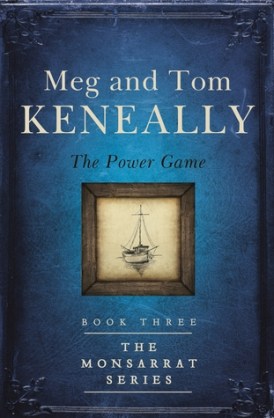
The Power Game – Meg and Tom Keneally     An Unsuitable Match – Joanna Trollope

Initially I felt the father daughter combo Meg and Tom Keneally had hit on a winning formula – and obviously, so did they. They have planned for twelve books, in total, for the ‘Monsarrat’ series and so far have released three. After reading the first two I was hooked – I thought they were really onto something. ‘With the ‘Soldier’s Curse’ we were introduced to soon to be ticket-of-leave man Hugh Llewelyn Monsarrat whom, with his incisive housekeeper, added to his own smarts, was part of quite the investigative team for colonial times in early Australia. By the third novel they had already put away a couple of souls who wouldn’t have faced their comeuppance otherwise without their input. First this occurred in early outstation Port Macquarie, then later, in Sydney, at the Parramatta Female Factory in ‘The Unmourned’. In these we are given a colourful taste of life in the first half of the Nineteenth Century, in a new land (for Europeans), for both convicts and those overseeing them. The sparky relationship between the two redoubtable sleuths was a delight. As a bonus, in the second title, there is more than a hint of developing romance between feisty Grace O’Leary and our main man.

So, with all that, I was looking forward to another knotty problem for the duo to unravel. An added interest would be the promise of a VDL setting with hopefully the romance factor blossoming in Hobart Town. This, on all accounts, was not to be. In ‘The Power Game’ all too soon we were transported from my local turf south(?) to Maria Island where we remained. It therefore became largely reminiscent of the two authors’ first outing, complete with another presumed poisoning of a beautiful commandant’s missus. And Grace was hardly mentioned, being stuck back in Sydney, although our hero did plenty of pining. The two duly solve the case, as is to be expected. For much of the tale the main suspect was Thomas Power, an Irish rebel roughly modeled on William Smith O’Brien (whose real story is well worth investigating.) To me this outing seemed to plod along without any of the freshness of the first two. The only really entertaining elements being the repartee between our two investigators and the antics of the local geese. In the end, job done, we discover that the editor of the Sydney Chronicle has been done away with so our duo set sail for bustling Sydney where (spoiler alert) our dapper hero discovers that Grace has been dispatched to the back country. I’ll take advice, though, but I think this is where I’ll leave the pair to go on solving their crimes without me. I don’t think I’ll be lining up for No.4.

So let’s turn our attention to another author who could be said to write in a formulaic, predictable manner – but, although she’s been doing it for decades, I’ll never leave her. As her work continues to sell well to devoted followers, she has no real need to deviate far away from her template. I’ve been hooked on her for decades and starting on her latest was akin to snuggling down, under the doona, on a chilly winter’s afternoon.

It is decidedly more of the same with Joanna Trollope’s ‘An Unsuitable Match’ as she introduces the reader to sixty-something Rose Woodrowe, whose hubby has just taken up with a much younger model and scarpered off to Oz. Soon into the book she encounters the charming Tyler, who is not backward in admitting he is smitten by her and she, seemingly, with him. But is Tyler the real deal? Rose’s offspring have their doubts – and then there’s Tyler’s two to consider as well. The new beau very quickly seems to have his and Rose’s future together all mapped out – but will Rose go with the flow despite the objections of the family. Some of these are quite needy in the love department too. Ms Trollope ensures we fully get to know them and their foibles as well. This is all magnified as the pair prepare to marry and questions arise over money – or the lack thereof for one. Just what is Tyler bringing to the party? Rose considers him a keeper, but at what cost.

And I lapped it all up, as I always do. That it deals with romance in later life is a bonus. ‘An Unsuitable Match’ is Ms T’s twenty-first novel – all of them aimed at her legion of women fans – and just quietly (Shhhh), me.

Newspaper article Meg and tom Keneally = https://www.smh.com.au/lifestyle/two-of-us-tom-and-meg-keneally-20160309-gnebdz.html

Joanna Trollope’s website = https://www.joannatrollope.com/

The Cloak of Invisibility

Even when in my pomp I was hardly a head-turner. As a young teacher, walking into a female dominated staffroom never ‘…made me feel like a rather small gazelle alone on the savannah.’ Being male is a whole different ball game to the world of a younger Maggie Alderson, Sadie Frost, Sally Brampton et al. But there’s much more to it. I can relate to much in what the first listed wrote about in the accompanying ‘The Many Upsides of Being an Invisible Woman’. She writes of her ‘cloak of invisibility’ now that she’s a woman in her late fifties, comparing today with then. I would say, judging from the images of her in the ether, that, although she may no longer be in her pomp, she is certainly in her prime. It’s a tad different in my case.

Teaching in a relatively small community one of the things I used to yearn for was that cloak of invisibility. Streets of my town would be filled with students, present and former; parents thereof and of course, my colleagues. I remember vividly the weekend of my first date with the beautiful woman who was soon to be the love of my life. I was greeted back at school the following Monday with copious questions of ‘Who is she?’ In small burbs nothing is secret.

Moving to Hobart on retirement removed all that and when I do return to the homelands, being pulled up on Wilson or Goldie Streets for a chat is a welcome pleasure rather than a usual event. I was never wolf-whistled from across the road, but I can still recall when former students, of dubious quality, let fly with invective against me, usually to big-note themselves in front of their yobbo mates. That was a rare occurrence, but it stung nevertheless.

But in the Elizabeth Street Mall I have no worries of that ilk. I am completely invisible – an old man of 66 who doesn’t rate a glance from those I share the space with, going about my business wholly anonymously. As with Ms Alderson, I like being able to ‘…breathe physically and emotionally.’ and even retreat into ‘…elastic waist bands and gnarly toenails…’

Yes, I like it, but I also relish being connected to the human race too – to have the cloak lifted for a short time when I am out and about on my tod in my city; in any city. I love the face to face encounters at the check-out (I abhor the automatic variety) or from behind a retail sales counter. The conversations maybe fleeting but can be surprising and in some cases, affirming. If a lovely younger female (and let’s face it, these days, taking into account my age and the nature of the labour market, then that’s the usual) offers me, at no extra charge, a gracious smile I usually compliment her on it. I am further buoyed if that results in a radiant reprise. And then, suitably uplifted, I can relapse into my cloak and am happy to revert to ‘…the older you…the real you who you’ve been hiding away for years.’ The perfect balance.

Maggie Alderson’s article = https://www.smh.com.au/lifestyle/life-and-relationships/the-many-upsides-of-being-an-invisible-woman-20180327-p4z6h6.html

The Museum of Modern Love – Heather Rose

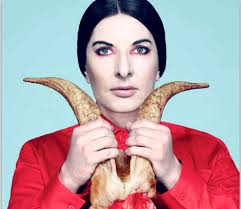
Marina Abramović was born in Belgrade the year after the end of World War 2. Both her parents had been partisan heroes during that conflict. Her upbringing, in part by her grandparents, was a deeply restrictive and religious one. But from an early age she developed an interest in art and later, taking this interest further, she graduated from both the Belgrade and Zagreb academies of fine arts, specialising in performance art. All throughout her now long career she has attempted to extend the boundaries as to the definition of art. ‘Using her own body as a vehicle, she has pushed herself to the ultimate limits, often exposing herself to lethal hazards to create performance art that is shocking, challenging and deeply moving.’ Now a resident of of Amsterdam, her fame takes her world-wide to the great galleries. In 2010 she landed in NYC to present a marathon seventy-five day performance piece at MoMA, ‘The Artist is Present’. It consisted of Ms Abramović seated at a table opposite a chair to be filled by patrons willing to sit with her for a while. It attracted large audiences, polarised and for some opposite the main attraction it was a profound experience.

It is around this event that Heather Rose’s 2017 Stella Prize winning novel ‘The Museum of Modern Love’ is framed. I was delighted to see a local take it out, especially as I had so enjoyed ‘The Butterfly Man’ (2005), as well as, to a lesser extent, ‘The River Wife’ (2009). Rose (as Angelina Banks) also writes, with Danielle Wood, the children’s series ‘Tuesday McGillycuddy’.

In Rose’s tome, Arky Levin becomes addicted, as an observer, to Abramović during her New York stay. He’s a composer of musical scores for films with a seriously ill wife. As he works through the issues involved in his life at that time the performance by the artist becomes his salve. He feels he has to see her artistic marathon through to the end. In this process we get to know others similarly drawn, some of whom connect to Arky in various ways. Rose also weaves in the artist’s back story and the strain on herself of the daily ritual she undertakes to present her piece.

Undoubtedly this is a very clever and astute novel on all manner of subjects, ranging from the question of what is art to the nature of friendship and love. Unfortunately it occupied a rarefied atmosphere that this reader had some difficulty with. I can attest to it being something special but I could not connect to it. Perhaps the nature of the performance artist’s oeuvre affected the tone of author’s writing, in a deliberate way, placing it out of my comfort zone. My brain told me I should be enjoying it, but my heart wasn’t in it. I am disappointed in myself for not being able to embrace it – but there you are. Like much of the work of her subject, it just wasn’t my thing.

Of course Marina A is just David Walsh’s thing. It’s wonderful that, when the artistic megastar visited Mona in 2015, as a performance piece Ms Rose read an excerpt from her novel to the great woman. Now that is special

The author’s website = https://heatherrose.com.au/

Gorgeous Awkwardness

Irish-American (born in the Bronx, but residing in County Wicklow) actress Saoirse Ronan is not your typical Hollywood beauty. She is too angular and plain of face for that, but god she is so stunnng. Already having lit up screens in fare such as ‘Atonement’ (2007) and ‘Brooklyn’ (2015), she comes of age with the titular role in Greta Gerwig’s ‘Lady Bird’. She won a Globe for it but missed out on the golden man due to the stiff opposition. The movie, too, as a whole, is a lovely piece of work. If we cast our minds back to Gerwig’s own seminal ‘Frances Ha’, we get the tone of her directorial debut, set in Ms G’s home town, Sacramento. This burb is portrayed in the movie as a nothing place, only good for escaping from.

As with ‘Frances Ha’, the film is a creeper. This indie doesn’t hook from the get-go, but takes hold by sleuth, gradually immersing one in an ordinary world – ordinary but luminous.

Christine McPherson has rechristened herself Lady Bird. She’s a high school senior ripe for the escaping, or so she thinks. She has little hesitation in ditching her best mate (Beanie Feldstein) to be included in her school’s cool clique and she’s not above telling a few porkies to grease her way. Several boyfriends (Lucas Hedges, Timothee Chalamet) come and go as well. Almost as good as the lead is Laurie Metcalf (nominated for best supporting actor) as mum Marion, a woman at times driven to despair by her daughter. Calm dad (Tracey Letts) is a treat. I don’t think I dozed off at any stage, but there were a couple of aspects in the story that confused me – the provenance of Christine’s brother, for instance, as well as what actually became of the teacher/priest? But, overall, I loved this movie as Lady Bird battles to free herself from a second rate life, in her eyes, to attack the bright lights of the big city of her choice full on. Does she make a go of it? You’ll love finding out.

Trailer for the Movie – https://www.youtube.com/watch?v=cNi_HC839Wo

Jimmy

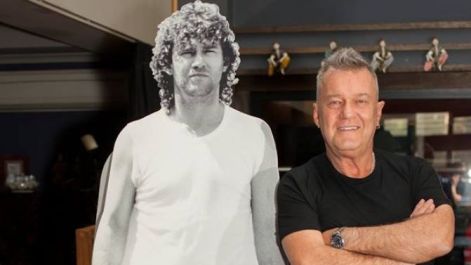
I’m witness to the fact that Jimmy’s voice is still in great nick. As for his body and mind – well that is another story. But, he assures us, both are on the up and up – he’s a hell of a lot better than he used to be. But, he also confides, he still has a way to go. By rights, with what he’s done to himself, he should be gigging with Bon, Michael H, James F and Billy T up there beyond the silver lining. They were all mates of his along the journey. He tells the tale of how they were wheeling him out of Sydney’s St Vincent’s Hospital, after he had recovered from his heart op, just as they were wheeling Billy in to die. That’s salutary for you, but not salutary enough for JB. Michael Hutchence and James Freud both went the same way. Jimmy tried it too with a dressing gown cord, but he was too grog/drug addled to succeed. He recalled nothing of the attempt the morning after except the cord hanging from a hook, noose in place. It was searing stuff from the rock legend; he was laying it on the line for us, imploring the men in the audience to do what he eventually did if any of us found ourselves in a similar dire straight – seek therapy. He reckons it saved him, that and his loved ones gathering around him – at least three of whom he didn’t know for decades he fathered.

There was one picture he bought up on the screen, taken at his lowest point, around the turn of the millennium, that really shocked me. That wasn’t Jimmy! He looked like a cross between a scrawny Johnny Rotten and an even more wasted Keith Richards – dead-eyed and sunken cheeked. Just terrible.

I was gifted a ticket to this stop on Jimmy Barnes’ tour, which forms a parallel promotion to his best selling book of the same name, ‘Working Class Man’. It’s a follow up to his mega-selling ‘Working Class Boy’. To my shame I must admit that I haven’t read his tomes, but daughter Katie has and she reckons they’re exceptionally good and as with his show, he doesn’t hold back on his demons. It isn’t all bleak and black – there is much levity to be had with many of his yarns as well, but, at times, you could hear a pin drop when he was relating the pitifulness of his condition at its nadir. What this man subjected himself to! But he makes us laugh too – there was the time, for instance, when he and John Farnham got together to record a duet. He reckons his singing pal is no angel, particularly when he gets on his favourite tipple of cheap brandy, but he is only a two pot screamer, not a seasoned guzzler like his Scottish self. Farnham became so inebriated that Jimmy, doing what all good mates do, had to bundle him in a cab to get him home. Half an hour later Jimmy receives a call from the cab company stating that the Voice was so far gone he had no idea where he lived. He reckons the Angels were soft as they so loved playing frisbee when on tour. One of the best tales was the unlikely genesis of ‘Working Class Man’, the song, itself.

Don’t go to this performance expecting the legendary front man to churn out Chisel hits, or those from his solo career. We get a taste, but mostly he belts out other tunes that have been significant along the way. On this night he took us through his history, from the formation of the Chisel to the present day, culminating with the time he finally listened to his family, mates and his body and accepted help. It seems this was just in time. He describes it as the first time he stopped running away and made a courageous decision.

The Hobart stop is an early one on a tour that doesn’t conclude till he reaches his home city of Adelaide on June 10th. It’ll take some amount of stamina and fortitude for the ol’ fella to get through it, but he does pace himself far more than what would be possible out front of the band. You wonder why he feels the need to do it? Is it part of his therapy? To get all that bad shit out of his system by telling as many as he can not to fall into the same traps as he did – and certainly, to do something about it if we have. The message he gives is crystal clear. He pulls no punches. He seemingly needs to drill it into every male he confronts from up there on the stage.

The Glaswegian Belter is a marvel and I am grateful to my son and his beautiful wife for their generosity in allowing me to be in the presence of one of my musical heroes for an evening. Cheers Rich and Shan

Jimmy’s tour info = https://www.frontiertouring.com/jimmybarnes

And here’s to you, Mrs. Robinson

I, like Simone H in ‘Echo of the Boomers01’, wonder what did come first for me, the movie or the song? It was so long ago – but then again, it could have been yesterday, laying eyes for the first time on Mrs Robinson, up there on the screen, her stockinged leg inducing the young man she was about to seduce. I suspect she came to me first via Simon & Garfunkel too. Hollywood movies, back then, took a while to get released here in Oz in any case, but I recall it was the movie that changed my perception of film, it pointed me in the direction of my future viewing habits. ‘The Graduate’ as well as, later on,. Woody’s ‘Annie Hall’ were, to me, far more real than the pap I’d been used to up until then. They’re both movies I’ve returned to over the years and yet they still seem so fresh. By ‘The Graduate’s’ appearance in 1967 Tinsel City had moved away from the restrictiveness of the Hays Code, giving with this release the world an early taste of the fantasy that is the older woman, the cougar if you like. So, my my, ‘The Graduate’ has turned 50. Anne Bancroft is now gone, Dustin Hoffman has had his star tarnished and the gorgeous Katharine Ross is now 76.

By the time this film came around Ms Bancroft’s best days were behind her. It seemed to me her remaining beauty was a hard one – but it was beauty nonetheless. Benjamin Braddock was no match for the alcohol sodden temptress. She was also quite something for my younger self up there on that giant screen. To me daughter Elaine (Ross) was no match as the object of one’s lust. I doubt, though, if I ever get to San Francisco one day, that I’d go on The Graduate Walking Tour of Berkeley. I’m enamoured of the movie, yes, but not that enamoured.

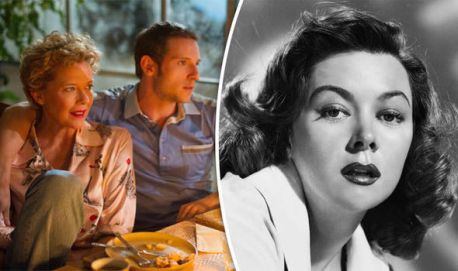
So, when ‘Film Stars Don’t Die in Liverpool’ came along and Annette Bening as Gloria Grahame worked her wiles on an only too willing Peter Turner (Jamie Bell – who does a little reprising of Billy Elliot), it took me back to Mrs Robinson and ‘The Graduate’. Grahame, an Oscar winning 1950’s actress, come the seventies had fallen on harder times. She was touring Britain with a two-bit company giving what glamour she still possessed to the great English unwashed. And although she was semi-washed out herself, there was still beauty to be had, of a softer ilk in this film than Mrs Robinson’s. She had a beauty that was still capable of lighting up the footlights in a timeless way, as has Ms Bening. Peter Turner, a real Liverpool born actor, writer and director, has recounted his memory of his affair with the star of silver screen in a memoir. Director Peter McGuigan has done the rest.

It was an affair that was never going to last, but not because of the age difference. Peter gets a taste of some of her faded Hollywood glamour when he visits her in the US to meet her family, but soon Gloria has more to worry about than keeping a younger lover on the leash.

The star of this tale is of course the present day actress who is anything but faded. It’s a stellar performance, one I would have thought worthy of an Oscar nod. It’s brave, too, as she does not shy away from the lines of age nor indeed sagging breasts. The story had me absorbed from go to whoa.

Reviews have been mixed but I loved it. It will never outshine ‘The Graduate’, but then what could? I’m no longer that callow youth transfixed by Mrs Robinson. Now I am in my dotage but still transfixed by women of a certain age; transfixed by Annette Bening’s Gloria Grahame.

Simmone Howell’s article – https://www.smh.com.au/entertainment/on-the-streets-of-berkeley-in-search-of-the-graduates-life-and-times-20180111-h0gly1.html

Trailer for ‘Film Stars Don’t Die in Liverpool’ – https://www.youtube.com/watch?v=aCwt4kYWOHA