All posts by Steve Lovell

Just Maybe Life’s Still a Beach

Life can’t always be a beach. But for the last week, at time of writing, it has been. Shortly I am about to take a beloved canine, sadly not my own, out onto a beautiful strand – and whatever the load is that I carry, in these times of retirement, will lift off my shoulders. Between two capes, Table and Rocky, in North West Tasmania, at this time of year, on a week day, it is likely to be almost deserted. I may meet a fellow dog walker, maybe a perambulator or two, but now, before summer arrives, I’ll have it mostly to myself.

sisters

Contrast this serenity to another beach I visited a few weeks back – Australia’s most iconic. People had, that bright day, flocked to it for the annual arts project that is Sculpture by the Sea; because a prince and his missus were visiting and because a taste of summer was definitely in the air. For me it was an exhilarating experience. Acres of supine exposed flesh was on display – young and not so young ladies in barely anything at all. And there was a glorious track to walk along to Tamarama in search of photo opportunities. Perhaps, too, that was all tinged with a little sadness that my own basking days were over.

bondi_beach-465x330

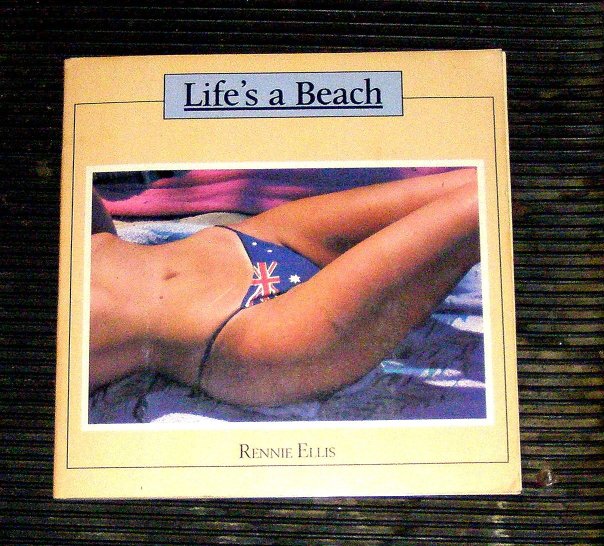
It’s beaches like the latter two that one of my heroes, Rennie Ellis, would parade up and down, capturing our country’s hot climate hedonism for posterity – and a fair few lovelies, unencumbered by bikini tops, as well. These days a man with a camera on a beach automatically causes suspicion, though mobile phone snapping barely raises an eyebrow. When I expose the former on the sand I’m very, very judicious.
bondi

Once upon a time the warmer weather in Tassie and trips to Mangoland had to include plenty of beach time. Looking back, it seems much of my childhood was spent on my home town’s sandy stretches or at friends’ shacks. That continued on into my teenage years – my first romantic kiss was on a sweaty day at Burnie’s West Beach. I ached to get to Surfers Paradise every couple of years – or Noosa; or Byron. And now I am discovering Sydney’s beaches.

But with age comes a change of focus. These days I wouldn’t swap all that heady relaxation and observation beside the briny in crowds of like-minded sun worshippers with my quiet walks with Sandy the Spoodle by Bass Strait in all its moods. There’s always a pause as we cross the little bridges over the creek; then usually more than one just to suck in the glory of the place and to relish that I am still around to savour it. Life’s not the beach it used to be, but I still can cherish blue skies and a sparkling sea. Now, though, for me beaches are for all seasons; ambling along them just bliss.

The article from Benjamin Law that inspired this piece = https://www.smh.com.au/lifestyle/spotlight-golden-beaches-20181024-h170y5.html
Down Memoir Lane

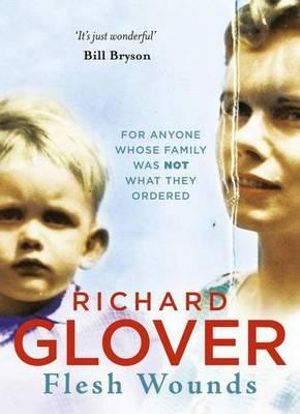
A Simple Time – Peter FitzSimons Flesh Wounds – Richard Glover

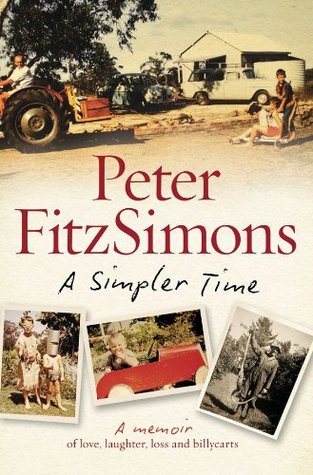
My dear mother took a shine to one of Peter FitzSimon’s books, his take on the wreck of the Batavia. She offered to lend it, but I demurred due to the pile of ‘must reads’ I already had waiting for me on my shelves. One of those was, in fact, his memoir ‘A Simple Time’. I’d pick it up cheap a few years ago, somewhere or other. Since that day it had slipped further and further down the order as other I considered more worthy tomes superseded it. ‘Flesh Wounds’ is a more recent purchase, but it too had suffered a similar fate, although I knew it’s arrival back in 2015 was to great acclaim. It was about time I found out what all the fuss was about. So I decided to read both in succession.

ps01

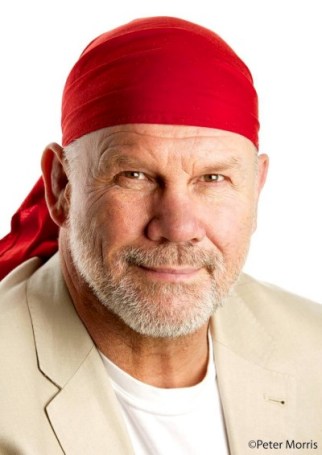
My Mum was even more impressed with my news that FitzSimons’ wife was television stalwart Lisa Wilkinson. I also figured his latest, a retelling of the mutiny on the not so good ship Bounty might be an ideal Chrissy pressie for this amazing lady. Who knows, I might even get around to reading it myself. He’d never really been on my radar, Peter FS. Being from Rugbyland didn’t help. I knew he wrote columns for the Sydney Morning Herald and often commentated on the tele. To his credit, he is also a leader keeping the flame burning for us becoming a republic. And that, till ‘A Simpler Time’, was about all.

In truth this memoir doesn’t set the world on fire. It’s a pleasant enough way to pass the time, but his childhood is largely unremarkable – and probably all the better for that. It speaks of a time when kids and freedom was a synonym, not the opposite, for better or worse. He and his siblings roamed around, largely unfettered, from daylight to dusk, over his parent’s struggling acres.

ps02

PFS was one of six young ones in a time before television and certainly well before this era of tiny screen fascination. His mother had married down to a man she obviously loved to bits – her yearly stipend from her rich folks helping to keep the struggling orange orchard on Peats Ridge solvent. It also assisted in giving their children a jolly good education. In the book there are tales of bullying, first love, yearning for sporting success (which eventuates), country values as well as the city versus the bush. Later comes a journey to check out the family’s origins and a realisation that his dad, like so many at the time, had an unspoken of battle with depression. And Peter comes to appreciate, as in my case, how wonderful it was/is to have a remarkable mother to aide him through all his own troubles and tribulations. One tale that really hit the spot was how, in her later years, he came to have his photograph taken with her by a Walkley Award winning camerasnapper amongst the orange trees. The image is on view in this biography along with many others from the family album.

What a joy it is to read that, on her deathbed, when Helen was asked by one of Peter’s sisters what the best thing about her life had been, she replies, ‘Having sex with your father. Any more questions?’ Delightful.

Now, whereas the above was delightful in patches, ‘Flesh Wounds’ is a treat from cover to cover. Fitzy’s upbringing was quite normal for the time, but poor Glover’s was all over the shop.

ps03

Wil Anderson has likened this contribution to the list of classic memoirs to the work of America’s great raconteur Seinfeld. I loved it so much I rushed out and purchased Glover’s latest publication ‘The Land Before Avocado’ and if time permits, I will delve into his back catalogue too. As with FitzSimons, this author hadn’t meant much to me as he is also Sydney-centric, but his name does now. The columnist/broadcaster can boast, without possible contradiction that, in any parlour game of ‘Who Has the Weirdest Parents’, he would win hands down. He’d clean up if any bets were laid. Nobody else at any table could claim they were the result of a virgin birth. Then there is the story of how his mother had such a close connection to English aristocracy – until, that is, it all came tumbling down. There’s his father’s alcoholism and his step-father’s nudism – a step-father who was once his English teacher! What horror there was when his mum did a flit with him. If these stories do not have you in fits of laughter they’ll, without doubt, have you cringing. Eventually Richard sets out to discover the reason for his parents dysfunctionalism. They were a bizarre lot.

richard glover

I am so thankful my upbringing far more resembled that portrayed in the first offering, but as a read Glover’s exceptional effort is sublime. I’ve always figured nothing could surpass Clive James’ ‘Unreliable Memoirs’ as a tale of an Australian childhood. Glover comes close. Just brilliant. And don’t get me started on the teddy-bears.

Peter FitzSimons’ website = http://www.peterfitzsimons.com.au/

Richard Glover’s website = http://www.richardglover.com.au/

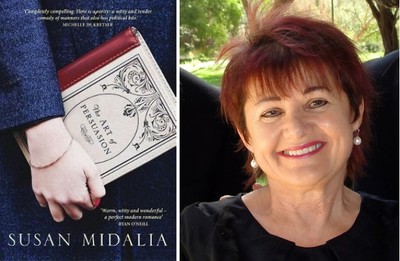
The Art of Persuasion by Susan Midalia

Potential. This author reeks of potential. Susan Midalia has a fine way with words as she reverses the old trope of men of a certain age and their Peter Pan Syndrome. The author’s heroine is preying on an older guy, but he’s playing hard to get. He’s refusing to succumb to her youth and winsome charm, although her approaches, admittedly tentative, should make it all too obvious to discern what she is after. She wants him, boy does she want him – and for most of the duration the reader is unsure whether she will succeed or be thwarted.

A book by Jane Austin brings the couple together on a Perth train – thus the title. She’s made a commitment to herself to read the author’s lesser known works. Of course, in a crowd, Adam is easy for her to pick out as he too is perusing a tome rather than a hand-held device. They query each other on their chosen reading matter and away we go – except this is a slow-burner. He has baggage and Adam, contrary to popular expectation, feels the age difference should be respected. How long can he hold out? He is a staunch supporter of the Greens, so this gives the girl another portal into his world.

large_susan_midalia_in_conversation_2018

I did relish ‘The Art of Persuasion’. Hazel, being a failed teacher, was someone I could relate to as my chosen profession was never all beer and skittles either. Her tale emphasises the difficulties facing young teachers embarking on this testing vocation. But, as she eventually discovers, there are joys to be had within it as well – even if some of what occurs in her classroom stretches credulity. This is the author’s first novel and for my taste there is a bit too much riffing on various issues close to the hearts of true Greens. This concern, though, only marginally detracts from the essential loveliness of the product of Midalia’s efforts. This reader really wanted to put a bomb under Adam, telling him that he’ll regret, long term, rejecting what Hazel was trying to hand to him on a platter. We want to give his five year old son a cuddle as he is a lovely creation from the writer and we should feel a cheer coming on as our young lady finally, courageously makes some progress with the art of teaching. She begins to meet her students head on and finds that works.

Hazel, as well as the reluctant Adam, worm their way into our hearts and any author able to do that with their characters is one to watch for the future.

Another review of the novel = https://queenslandreviewerscollective.wordpress.com/2018/03/19/the-art-of-persuasion-by-susan-midalia/

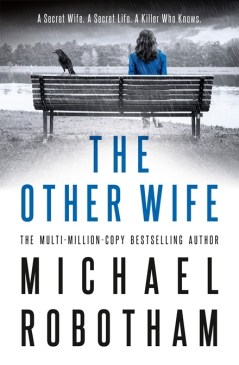
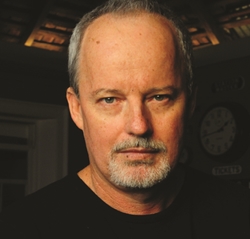
The Other Wife by Michael Robotham

It’s a what-if that lingers.

Imagine if, after a long flight due to a family recall to be by my father’s bedside as he was passing on, I entered his hospital room to find that the woman holding his hand was not my dear mother. Imagine it was, surprisingly, a person I had never met. Now imagine if that was only the tip of the iceberg. Continue imagining that, in the weeks that follow after this shock, I discovered that my dad had a secret life about which I had not the slightest notion. If that then leads to a conclusion being arrived at that the reason he is lying in bed facing death may not have been accidental – well then, oh dear!

Of course, apart from the hurried trip back to Oz, this never occurred, but that is the premise of Sydney-sider Michael Robotham’s fascinating new publication, ‘The Other Wife’.

ow

I am a late convert to this author, bought over by his previous tome, ‘The Secrets She Keeps’. Crime thrillers have never been my cup of tea until meeting Mr Robotham. His latest is his ninth featuring English psychologist Joe O’Loughlin. The significant feature of our hero is that, for the duration, Joe is battling ‘Mr Parkinson’ – a fact that has generated, for the writer, much kudos as a champion of research into a cure to this cruel disease.

Robotham isn’t an outstanding wordsmith, but his prose is competent enough to deliver us a narrative that keeps the pages turning over in a manner akin to watching a jolly good British police-procedural on the small screen. Now, if I were a younger man with more time on my side and less of a pile of must-reads on my shelves, I would avidly seek out the back-oeuvre of this fellow – he is most engaging.

the other

This London-set work presents a sleuth who is typically conflicted. Joe is forced to reappraise his long held view of his often distant, preoccupied father. It seems the old fellow had a host of reasons for his mind being on weightier matters other than his son. It’s a son who is still grieving for a wife and coping with single parenthood. There is, though, a glimmer of a new romance beckoning. Could this be the last in the Joe O’Loughlin series? The writer has hinted as much. I hope not, even if I haven’t been around Joe’s creator for the whole journey. His situation was left hanging in the final chapter and I’d like to be a visitor to his world again in the future.

The author’s website = http://www.michaelrobotham.com/

Fatherhood: Stories about being a dad by William McInnes

The author’s a RCNR and wants to form a support group. I reckon I’m a bit of a one too. I’m fairly okay with my own, but over the years I’ve had great issues with my beautiful lady’s. It’s the colours you see. She likes grey tones – and so it seems do most of the rest of the population. On occasions I’ve been sent to deposit or collect and that’s when the RCNR thing hits me. It has done so to the degree that I have at times found myself attempting to break-in and enter. So for a serial RCNRer like William McInnes and those as far along the spectrum as he is, it’s a terrific move that the wordsmith-come-actor is considering. I may join as an associate member.

As one may readily discern from his current work in ‘Rake’, the star of stage and screen is no longer the epitome of manliness that gave Laura Gibson the will to live again after the departure of Diver Dan in the iconic ‘SeaChange’. He’s still picking up roles, but is no longer leading man material. He’s the first to admit this, as he does several times in ‘Fatherhood: Stories About Being a Dad’. Maybe writing should become his main gig in light of that, although, in terms of memoirs, it is hard to imagine that there are many more guffaw inducing tales from his life remaining to tell. His first collection, ‘A Man’s Got to Have a Hobby’ (2005) was a cracker. ‘Holidays’ (2014), together with 2016’s ‘Full Bore’, were not far behind. In this one he tells many more, often self-deprecating, yarns, but there seems now much ‘boofheaded’ philosophising as filler.

f01

McInnes never takes himself too seriously and regales us with delightful memories of teaching his kids to drive, their errors producing ‘the underhand of involuntary self-protection’. Then there’s the explaining as to how, at his stage of life, one goes about engaging in a sex scene with a comely actress for television. Perhaps it’s the one on display in the latest season of Cleaver Greene’s misadventures – not a pretty sight. He riffs on sunsets, the delicious taste of the much maligned mullet and the confusion that can come when he is repeatedly mistaken for fellow thesps Ben Mendelsohn and Noah Taylor by the punters. Once he was even mistaken for himself, a hilarious recollection. It reflects the downside of being both writer and actor. In the tome are also included the touching missives he wrote to both his offspring on the completion of their secondary education. He also recalls some more of the crazy characters he met during his formative years growing up in Queensland. Not the least of these was his own father, so prominently featured in previous publications. He writes on death and dying before informing us that going orienteering is perhaps not the best cover for having an affair.

f02

No book of the non-fiction variety from this Aussie larrikin can be passed up by me, even if the laughs were not as forthcoming as previous efforts. Perhaps they are even more precious for that.But now, getting back to being a Recidivist Carpark Non-Rememberer, it is worth noting that Leigh and I are about to head, at time of writing, to the Gold Coast, scene of our worst case of echoing the proposed founding member’s exhortation of frustration, ‘Who designs these bloody carparks!’ Our story of a lost car in the vast expanse of the Pacific Fair parking facility will serve as my opening gambit to apply for membership. If that’s not enough, there’s the time I opened a door to a sedan and proceeded to sit in the passenger seat, only to discover there was a young lady aside me who, indeed, was not my Leigh. There are, added on, the countless times I’ve attempted to open the boots of vehicles that, on closer examination, were patently not hers. I think joining my fellow RCNR is a given.

Then and Now, Coming Out in the US of A

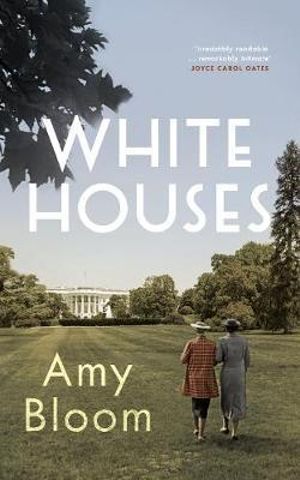
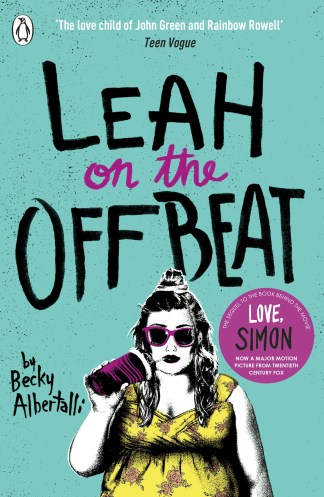
White Houses – Amy Bloom Leah on the Offbeat – Becky Abertalli

Under our breasts and in our creases, we smelled like fresh baked bread in the mornings. We slept naked as babies, breasts and bellies rolling towards each other, our legs entwined like climbing roses. We used to say, we’re no beauties, because it was impossible to tell the truth. In bed we were beauties. We were goddesses. We were the little girls we’d never were: loved, saucy, delighted and delightful.’White Houses’- Amy Bloom

I just look at her. I just can’t believe I’m allowed to do this. I can just stare at her face without it being creepy. I want to memorise every inch of Abby – the shine of her cheekbones and the brightness of her eyes. There are tears in her lashes and her cheeks are sort of puffy. I don’t know how this girl can go from laughing to crying to kissing and back, and still come out of it looking like an actual moonbeam.’ ‘Leah on the Offbeat’ – Becky Abertalli

Such tenderness.

It goes without saying that it can’t be easy to come out and for centuries it had to be hidden. That’s still a necessity in many, many countries – but thankfully, here and America, despite Abbott and Trump, it has become a non-issue as far as the law is concerned. Not that it makes announcing it to friends and family any easier as a result.

white-houses

Of course, in mid-C20th America, the setting for ‘White Houses’, the option wasn’t there for either gender, but I suspect the authorities were tougher on the males. Naturally, getting away with it was much easier if you were the wife of the President. As stated, the FLOTUS was not the beauty, in the classic sense, she was in her youth by the time of her liaison with the lover in this semi-factual tome. But then, nor was that lover – although the latter blamed that on the unflattering photography of the era. Not that attractiveness is in any way important, except in that perhaps plainness doesn’t conform to male fantasy. In any case hubby, POTUS, was in a semi-open relationship with his secretary and those in the know, including the media, turned a blind eye. Wouldn’t happen in this age of shock-jocks and gutter media. In that period the White House kept its secrets closely guarded, including FDR’s paralysis. Eleanor was a much admired figure, even loved, by the general public; noted for her good works and lack of airs. Compare that to today. The two led separate lives – maybe that’s still relevant – and Mrs Roosevelt’s close companion, during the years Bloom is writing about, was former journalist Lorena Hickok. Despite the crowded first lady’s schedule, the couple do find time to be intimate.

The pair are from entirely different backgrounds – possibly accounting for the mutual attraction. Hick’s early years were hardscrabble with an abusive father. She ran away to join the circus in her teens, losing her virginity to one of the ‘freaks’ on display at a time she was fast discovering she had a way with the written word. That leads to her career – a career that had to be curtailed when she became too close to a powerful woman.

The novel is told in a hard-boiled style from the lover’s perspective. Most characters are historical, but there are a few invented ones such as Parker Fiske. He loses his cabinet position due to his sexual proclivities, perhaps pointing to a few double standards.

Amy-Bloom-Slider-crop

This reasonably short novel is a compelling enough read, leading one to delve to deduce fact from fiction by sussing out other interpretations of the same tale.

Fast forward to the present and the YA book by Becky Albertalli (who found fame with ‘Simon vs the Homo Sapiens Agenda’), ‘Leah and the Offbeat’. This story is as contemporary as can be. I suspect its target audience will rush to it as they obviously did to the first novel, heightened by the fact that Simon is also a character in this.

wh

Leah is in her final year of high school, is a drummer in a band, is definitely not one of the in crowd and is potentially a talented artist, although the latter is kept well hidden. She is also coming to the conclusion that it is not only boys she is attracted to. In the heady weeks leading up to the prom Leah’s support group is fracturing over a racial comment by one of her cohort. It’s offended her to the core, although it was directed at another. Leah is outwardly feisty and opinionated, but inwardly torn between the lad who’s taken a fancy to her and Abby, the hot girl who is everything, it seems to her, she is not. As the group decide on their college options Abby and Leah are drawn together, especially once the former dumps her jerk boyfriend.

wh01

As a read for a sixty-something fella, this wasn’t usual fare, but it carried me along to the end well enough. But girls of a certain age, as well as a discerning lad or two, will love it, as evidenced by the gushing but wholeheartedly felt positive reviews on-line. And if it helps even one young person struggling with their sexuality – well then, despite being a cliché, it’s worth it’s weight in gold.

Amy Bloom’s official site = http://www.amybloom.com/

Becky Abertalli’s official site = https://beckyalbertalli.com/

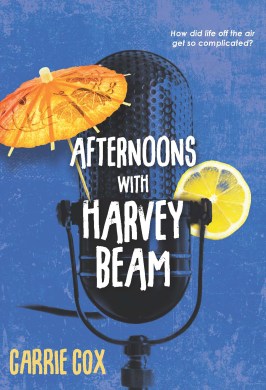
Afternoons with Harvey Beam – Carrie Cox

On a trip away to Mangoland I spent a few most pleasant late afternoons with Harvey Beam, resting up from forays to the scenic temptations of the Tweed and Byron Shires. He was terrific company, even if he had come down in the world.

I discovered that, since gaining a foothold in big city radio, he had progressed to being the king-pin of the breakfast slot. Even then it was much to his father’s disgust. He was earmarked for far, far better than that tawdry profession. All this Harvey confided to me those sunny afternoons.

hb

Nothing lasts forever for any of us – not prime time nor life. Eventually Harvey’s ratings decline and he’s shunted to the sleepy afternoon slot, a new sycophantic, fawning and golden-tonsilled brekkie host is unearthed with old Harv starting to feel he’s on a downward slippery slope. And then, to cap it all off, he’d recalled to Shorten, the country town of his upbringing. Here his disapproving old man is gravely ill. On arriving his dad doesn’t want to know him and his brother’s being an arse. His two sisters, to add more to his woes, are cat fighting like there’s no tomorrow. Back home his daughter decides this is the time to have a major crisis and Harvey confides it’s all getting a bit too much.

It sounds dire, but there’s an up-side. He can take a breather and re-calibrate, he tells me. En route he had also met Grace and that may amount to something too. And then, guess what? The local radio boss offers him a time-slot. Could this be a blessing in disguise?

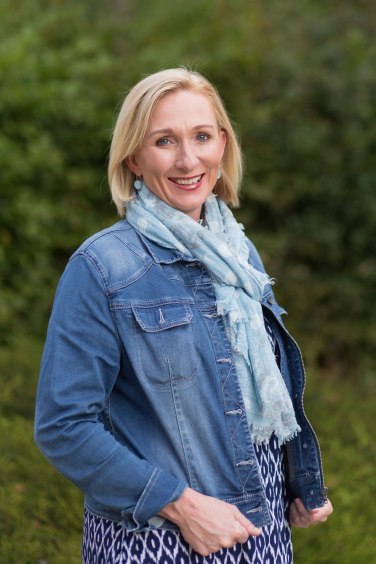
Is Carrie Cox the new Nick Earls? Her style of writing reminded me of the Sunshine State’s scribe at his best. Needless to say, then, I revelled in ‘Afternoons with Harvey Beam’. Earls has been around for quite a while now, but Cox is only starting out. The Perth wordsmith has several other publications under her belt, but this is her first novel. Stick at it young lady. You’ve all the attributes.

carrie_cox_author_image

One afternoon I was about to doze off when Beam confided to me that his nick-name within the family was Pencil. It took a while for the penny to drop. Harvey Beam. HB. Get it? Clever one that.

An interview with the author = https://www.betterreading.com.au/news/qa-with-journalist-turned-author-carrie-cox-talks-about-her-novel-afternoons-with-harvey-beam/ =

Sunday Morning and the First Nude

Yes, as far as we know, she was the first nude and she was beautiful. Her name was Mary Ann.

Once a month or so, of a Sunday morning, I take the drive into Salamnca. There I contentedly potter around the shops and galleries. Occasionally I’ll visit the TMAG as well. One such morn of note, back in October, was just so glorious it made me feel buoyant. Often spring in Hobs is little more than a continuation of winter but, as I strode around my regular haunts, wafting in my nostrils, as well as a tinge of blossom, there was the hint of the summer to come. This was so the case that, before I headed off to the museum in my search, some of my outer layers were dispensed with. People were out and about, no doubt thinking winter had been banished for another year. The first cruise liner of the season was in port and I was on my way looking for Mary Ann.

Before all that, though, I visited the RACT Insurance Tasmanian Portraiture Prize, an annual showing at the Long Gallery. Established and emerging artists/photographers displayed their prowess here and yet again I marvelled at the talent our island state possesses, as I did when I later diverted to the Brooke Street Pier.

The Foundry is a new artistic space on the upper level of the floating attraction. The Tasmanian Photography Exhibition 2018 was being held there for the first time and I could only stand and wonder at some of the images presented. Again I wished I had similar technical mastery with my humble attempts at the skill. And again it bought home just how lucky we are to live on this scenic jewel of an island.

Then I was off to meet Mary Ann. She was waiting for me at the gates of the Tasmanian Museum and Art Gallery, naked, fluttering in the breeze in all her glory. She was welcoming me inside to view her in various unclad poses.

There followed a fascinating couple of hours that Sunday morning during which most of it was spent with colonial convict dauber Thomas Bock. He is best known for his 1842 rendering of Marthinna, posing in her red dress. The tragic story of the Aboriginal lass has been bought to life in Richard Flanagan’s ‘Wanting’. There were also his portraits of other First Tasmanians; portraits that have been so beneficial to our knowledge of this island’s original owners. Mostly I’d seen them all before, but I had never laid eyes on Mary Anne.

Thomas_Bock_by_Alfred_Bock

It’s an easy on-line search to find the details of the life of Thomas Bock (1790-1865). He made an extensive contribution to early Tasmanian society, first as a felon gifted with a certain amount of freedom due to his talents, but later as a free man. It was his private life, though, that fascinated me. Before his transportation to Van Diemen’s Land, in 1823, this trained engraver was married to Charity, with whom he sired five offspring. He also had an affair going on that would land him in deep water. Ann Yates was only 17 years old and he managed to get her in the family way. Hoping to keep himself out of trouble with the missus he conspired to procure for his young mistress a termination using the assistance of one Mary Day Underhill. The pair, Bock and Underhill, were both shopped to the authorities and suffered the same fate of shipment to New South Wales.

The artist’s skills were soon in demand on reaching VDL. Lady Jane Franklin was a source of income and he was used at the mortuary to sketch the faces of the recently deceased. I was incredibly touched by one such of a little baby. Another, of the cannibalistic Alexander Pearce, is well known. Bock also became one of the first skilled practitioners of photography in the colony.

tbtb01tb02

Mary Anne had a wall to herself in the exhibition – and so she should have. She must have been a remarkable woman. Bock was, during his time on the island, in a long term relationship with her and she gifted him another seven children. And she also lovingly, we hope, exposed her body for him to sketch, thus giving us our first nudes of a European woman in the colony, as far as we can discern. She was also of convict stock, but her partner’s tender, exquisite drawings of her are so intimate. I doubt very much if they were intended for wider consumption, but who knows? It did seem that, in his maturity, the artist mended his ways for, on hearing of his wife’s death back in England, he made an honest woman of Mary Ann. These beautiful contributions to the artistic heritage of Tasmania were drawn around 1840. They are small, delicate and quite mesmerising. I was moved by Mary Ann.

I read that Bock died not exactly the wealthiest of men, but the community of the city rallied around his widow, putting together the first exhibition of his works to provide her with funds for herself and his large brood. Several of those went on, in their father’s footsteps, to enter into artistic endeavours as well.

Mary Ann, you must have been something really special.

Mrs Katz – My Kind of Woman

I’ve never met Danny Katz’s better half, but I’m sure she’s my kind of woman. We’d be naturally drawn (clever) to each other and would have plenty in common. How could we not? To forsake one’s beloved, Danny, for a stationery shop, well – despite my adoration for my own beautiful partner, I’d be tempted too. I could see that situation occurring, even if I may not be quite as brazen as Mrs Katz. You see I am one with her. They mesmerise me too. I’m infatuated with ‘…: paper, pens, pencils, paints, pins, punches, paperclips…’ I become hopeless with desire, my fingers twitching as they clutch my wallet. Coloured envelopes, designer writing pads – I can’t get enough. And if said retail outlet has a range of non-Hallmark variety greeting cards, I am beside myself with joy. If I find the work of a local artist or something of eye-catching originality, then those digits cannot contain themselves and my wallet opens up. Occasionally, I have even been known to swoon.

katz

But here’s the rub. One of the banes of my life. I can’t write. I don’t mean that I am illiterate and I certainly do not mean that I lack the time to sit down and produce epistles to be sent through the mail to the cherished ones in my world. I do that – quite copiously in fact. Perhaps it even could be said too copiously. But my cherished ones are a tolerant set – they indulge me and I adore them for that. No, it’s my scrawl I mean. I cannot produce a hand even remotely worthy of the paper it’s written on! My a’s look like u’s, my ‘b’s resemble ‘h’s and so on, whether in free flow cursive or in print mode. Way, way back my university professors insisted I use a typewriter for it was beyond them to decipher what I was attempting to inform them of regarding any topic. As a teacher my backboard skills were a laughing stock. Just as well that most of my students were a kind, tolerant cohort as well. But even so, their furrowed brows were often perplexed when asked to copy down whatever I had scratched down on black, white or smart boards. Usually I had to translate several times until they made sense of it all. I didn’t mind. I was never offended. I knew how bad it was.

letter

I wished at times I could have been around when copperplate was taught instead of cursive. Would that have fixed matters? I can delude myself.

No doubt the loved wife of one of my favourite columnists does not suffer my affliction – at least I trust not. At times it makes me feel like an impostor in the stationery shop. But I dream I can one day be fully legible – but time is drifting away.

Danny Katz’s column = https://www.smh.com.au/lifestyle/life-and-relationships/the-bitter-truth-about-love-20180802-p4zv4k.html

Olympic Woes

In 1960 the Olympic Games were held in Rome and as a nine year old, I was engrossed in the small black and white screen of our Healing television as I watched our athletes competing. Some even stood on the winners’ dais to be presented with medals. We were proud of them and of our great sporting nation. Every four years it was the same – Tokyo, Mexico City, Munich and on. Back then I had no real notion of where we were on the medals table, but I became very excited when Norman May screamed ‘Gold! Gold! Gold!’ It was a given that the USA and USSR would win the most gongs, but it seemed very special that, during those Cold War years, they were sharing the same sporting fields, despite their major differences. Then it changed. At one of the games one of the big two failed to put in an an appearance in protest at the other and we, following on the US’s coattails, as we always did, gave our athletes the choice. Then, another time, we hardly featured on the medals tally board. National disaster! There was so much angst that we weren’t great anymore the athletes were made to feel ashamed. Money had to be poured in to lift standards. Money meant medals right? That, to me, didn’t seem to be in the spirit of the Games. Then came the drugs. I had gradually lost interest in the event but the final nail in the coffin for me came when the AOC started setting targets for the number of medals that had to be attained before the team could be considered successful – inevitably heaping extra pressure on our young and often vulnerable representatives. That’s a heavy weight to carry – letting the country down.


of01

As a teacher, therefore, every four years I largely avoided the seemingly almost compulsory module on the Olympics. If I was asked by my colleagues why not, I gave my reasons.

But now, common sense and dare I say it, a little of that spirit may be returning. I doubt that ever the sports(wo)manship will ever reach the levels of the recent Invictus Games in Sydney, but a newly made decision is a start. Read all about it in the accompanying Greg Baum article. Maybe some time in the future

I’ll return to the fold.

greg_baum

Greg Baum’s Article = https://www.smh.com.au/sport/numbing-numbers-for-numpties-20181026-p50c7a.html