
A Blue Room Book Review – Five Bells – Gail Jones

The start of my timidity came that day on the beach; it marked the time from which my reduction had its beginnings. At least it does in my mind. Perhaps it was also age creeping up on me, but the surety I had prided myself on slowly started to dissipate from that event on, gathering momentum markedly in my last few years. But it could have been so much worse – it could have turned out as with James in Gail Jones’ remarkable ‘Five Bells’.
By that time I was in my fifties – and the final decade of my teaching career. The camp to that point had gone smoothly – only a few minor hiccups to be expected when a large group of students are in each other’s company for three days and two nights. I had an experienced crew with me and after having led so many during my previous thirty years, my organisation was down pat. In the back of my mind, though, was always the law of averages. I’d done so many without major incident, would my luck continue to hold. As it turned out – it didn’t.
It was the last morning. We’d packed up the students at Detention River and took the buses to Boat Harbour Beach for a swim, lunch and culminating in a return to school by three – a laid back day to wind down after the frenetic activity of the previous two.
Camps have a pattern – or at least mine did. We were dealing with students on the cusp of teenagehood – youngsters with the juices of adolescence already flowing, for the most part – always extremely pent up about being away from families and with their mates for such a period of time. Some were new to the school, being understandably nervous about the new cohort they found themselves in. The aim of the first day was to push the students reasonably hard in their activities in daylight, as well as keeping them up as late as reasonably possible before bed to cut down on the amount of post lights out misdemeanours. Sometimes it worked, invariably it didn’t – but generally tiredness prevented much that was untoward from occurring. We would have them up very early the next morning as well, ready for another full day. By the end of that second day, usually finished off with a social, the campers were well and truly out on their feet and the second night was a doddle. But still, all of this took its toll on the supervisory staff as well, but at least a better night’s sleep was had. I was starting to feel the pinch after all these camps – I wasn’t getting any younger. The weekend following usually was a write off and I struggled to be fresh come Monday, the start of another teaching week. I was already thinking of pulling the plug. The events of that last day gave me the excuse – at least to myself.
Boat Harbour Beach is one of the most beautiful on the island. A narrow road wends its way down a steep decline to its dazzling white sand and when Bass Strait is blue, its little cove is a glorious vista – as it was that Friday morn. It is also notably safe – a constant venue for school events. I had the usual arrangements in place – a senior member of the local surf club to oversee, the other staff changed and ready, just in case. Being a non-swimmer, I excused myself from that role and attended to other duties.
Soon after we arrived Bruce, the life saver, bought his surf-ski out from where it was stored. A little later he moved it down onto the beach. Just before I started to get lunch ready for the horde, I noticed he had moved it to the water’s edge. I found out later he was reacting to changing conditions, imperceptible to the untrained. He was deeply attuned to wind and tide, with his prescience being one of the reasons I never became a ‘James’. The second was the lunch siren which I rang shortly after. It bought the bulk of the students out of the water where they were having a ball – but when tucker is in the offing all else for most becomes secondary.
It was then the rip hit. Unbeknown to myself, whilst I was serving up, Bruce and the other staff had gone into the sea, urging out the stragglers to shore quick smart. Still a few became caught and Bruce used the ski to get them in. One lad was a fair way out and starting to panic. Bruce was onto it in a flash and retrieved him before he was in any real danger. Still he was in shock and we rang the school to get his parents, as well as those of a few others who seemed somewhat affected by the scare, to come and retrieve them. It was whilst I was comforting that lad, in the warmth of the club rooms, that it finally hit me how lucky I’d been, how fortunate for us all we had Bruce and the lunch siren. There was no going back for me after that. I didn’t want to push the odds any further.
Claiming age and the intrusion into staff’s family life, the following year I changed tack to a series of day excursions for the students under my care – and that seemed to work just as well, without the risks. Boat Harbour still cast its shadow over me as annually the school picnic was held at the beach. As part of the management team I often found myself on these days again responsible for large numbers of swimming students as other senior people would find reasons to keep themselves at school on picnic days. It gave me the heebie jeebies. I began to dread that day. I came increasingly insistent that when large numbers left the school for excursions etc, more than one management person went along. As time went on and I more and more reflected on that day at the beach, the more the wind was put up me when it came to student safety – particularly when a nearby school actually lost a student to drowning on an excursion. Reading of James in ‘Five Bells’ bought it all back to me in the ‘safety’ of retirement.
At just over two hundred pages, Jones compresses much into a day in the life of Sydney’s fulcrum – Circular Quay. I recently stayed in a Rocks hostelry, just across the road from the Museum for Contemporary Art, which features in the book but was sadly closed whilst I was there. I can attest to the vibrancy of this sweep of urban, harbour fringed land around from the Coat-hanger to the Opera House. Jones zeros in on four visitors to the hub, relays to the reader their back stories, then uses a fifth, a missing child, as the lever to bring the disparate quartet together at the one point in time. It is so beautifully done, with glowing prose. This is, as one would expect, a story of love and loss, as well as of reconnecting. Also featuring are the Cultural Revolution, Victoria Guerin and Kurt Cobain, The lovemaking between the youthful James and Ellie is lyrically wrought – ‘He could feel her own breathing like it was lodged in his own chest; the union had not broken but there was the warm pounding of their hearts, almost pressed into each other, like a new organ shared.’
Of course there are parallels to Slessor’s iconic 1939 elegy on the 1927death of his mate Joe Lynch. His fate is similar to one of the novel’s foursome, without giving too much away. I am sure a discerning reader will nut others out as well. This somewhat (hopefully) discerning scribe couldn’t find a false note in this engrossing read and was sorry he had waited so long to get to it on his bedside pile. He just thanks She up in heaven that a man wise to the sea and a screeching siren prevented the James thing afflicting his later years too. ‘Five Bells’ is terrific.
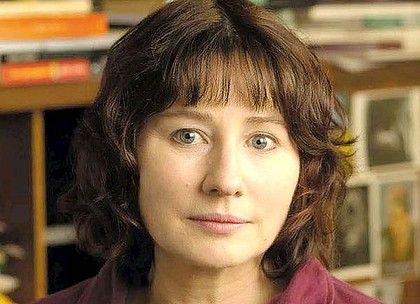
The Sydney Morning Herald on the author = http://www.smh.com.au/entertainment/novelist-gail-jones-explores-tacky-tourist-traps-20110204-1agdg.html
Gold Coast Beach

James I Hardly Knew You
Not ever crossing paths with the seminal US television series ‘The Sopranos’, the death of its venerated star earlier this year hardly registered with me. Travelling through Italy on a sweltering June 19th, James Gandolfini suffered a fatal heart attack. With a reputation for violence, his applauded performance as Tony Soprano was no where near my radar as a must view, for back in the day I eschewed the American product for what I considered the far superior British. With the exceptions of ‘Chicago Hope’, ‘Hill Street Blues’ and ‘Ally McBeal’, it was ‘all the way with the UK ‘ for this punter. Beautiful Talented Daughter still laments the passing of ‘Friends’, and my Darling Loving Partner has never been a blinkered Anglophile in her wide ranging tastes. With their assistance I have come around. I am now of a different mind having discovered gems like ‘Mad Men’, ‘Californication’, ‘Boardwalk Empire’, ‘True Blood’, ‘Weeds’ and ‘House of Cards’ – yes, I know the latter is based on the superb Brit series of the same name, but for my money Kevin Spacey out nasties Ian Richardson. My world has opened up. I am making up for lost time by working my way through ‘The West Wing’, so maybe one day I’ll look into ‘The Sopranos’ as well.
In the words of Brad Pitt, Gandolfini was ‘…a ferocious actor, gentle soul and a genuinely funny man.’ The last two attributes were well to the fore in the movie I tootled off to see earlier this week. ‘Enough Said’ was a wonderful experience and I became instantly enamoured of the big bear of a man who starred. Sadly, as this was his penultimate movie, there will be no chance for a ‘bromance’ to develop.,
As stated, he is a large man, but as with Depardieu, that does not seem to be a limiting factor on screen. His weight may have been a factor in his demise, but seeing as he was of the same age as me minus a decade, he went far too early. He had been featured on the cinema screen before he ‘made it’ on the small one, but generally speaking the Hollywood system has been slow in transferring successful television celebrities into the multiplexes. We know there have been exceptions – Eastwood, Tim Allen, some of the ‘Friends’, Robin Williams – but generally the rule applies. Seeing Gandolfini do his stuff with Julia Louis-Dreyfus (‘Seinfield’ – which also passed me by), we sure have been missing something. His co-star was quite lovely in this, with her weird facial expressions at once perplexing and endearing. Now of course there is the reverse occurring with big Hollywood names, such as Spacey, Steve Buscemi and Claire Danes et al, being attracted into our living rooms courtesy of fine scripting.
There is an easy and engaging on screen chemistry between Gandolfini and Dreyfus, even if they did have issues in coordinating their ‘lovemaking’. The big man’s charm, humour and comfort in his own skin wins over the audience from the get go – the one I shared my excursion with, all of a certain age, were wrapped up in him from his initial scene, an appearance at a party. Here Albert (Gandolfini) first meets Eva (Dreyfus) and she, his ex-wife Marianne (Catherine Keener). Eva becomes his lover, but also fast friends with the latter. Marianne constantly disses out to her on Albert, unbeknown of her relationship with him. Albert also knows zip about their friendship – thus the scene is set up for the ups and downs of what follows. The humour was gentle but my crowd ate it up. I suspect many related it to goings on in their own back stories. Gandolfini’s expressive face lit up the screen – he could convey so much with just a crinkle of the eyes or a shrug of the shoulders. It is so sad the world will not be treated to more of the actor in roles like this.

Director Nicole Holofcener first came to my attention with ‘Friends With Money’, so she is obviously a dab hand with these ensemble pieces. Keener was a touch grating in her role as the ex-wife, but then that was probably deliberate. Our own Toni Collette shines as Eva’s bestie, even getting to keep her Aussie accent.
There are many scenes that stick, including Albert’s reaction when he finally discovers Eva’s duplicity. There are his defences of his obnoxious daughter’s ((Eve Hewson) unfeeling pronouncements, but the one that really got to me was a scene that strangely didn’t involve the lead male. This was the sending off of Eva’s daughter (Tracey Fairaway), a more sensitive example of the species, to college. The attempts by Eva and her ex-hubby to keep their emotions under control are beautiful to behold. There are also Albert’s problems with guacamole to savour, as well as Eva’s mentoring of Chloe (Tavi Gevinson), her daughter’s needy friend. Rich, rich stuff. One reviewer has stated that the film sits better had the viewer no knowledge of the two main characters’ television fame – thus they wouldn’t be constantly referring back to Tony/Elaine – so perhaps that was in my favour enjoyment-wise.
The hopes and pitfalls of ‘second time around’ vividly come to life in this movie with a subtlety that puts it way above most of the dross that comes out of tinsel town on a similar theme. In these mid-life relationships we are perhaps more wary, but just as needy and even more thankful when it does ‘work’. The ending to ‘Enough Said’ is a given, but the whole affair is none the worse for that. There is nothing more wonderful than finding the right person to share the latter part of one’s life with.
Gandolfini had a daughter only last year with his second wife Deborah Lin. The combined sadness of all his fans would no where equate to her loss. At least, though, there is this magic movie performance for her to remember him by.

The movie’s website = http://www.enoughsaidmovie.com/#section-trailer
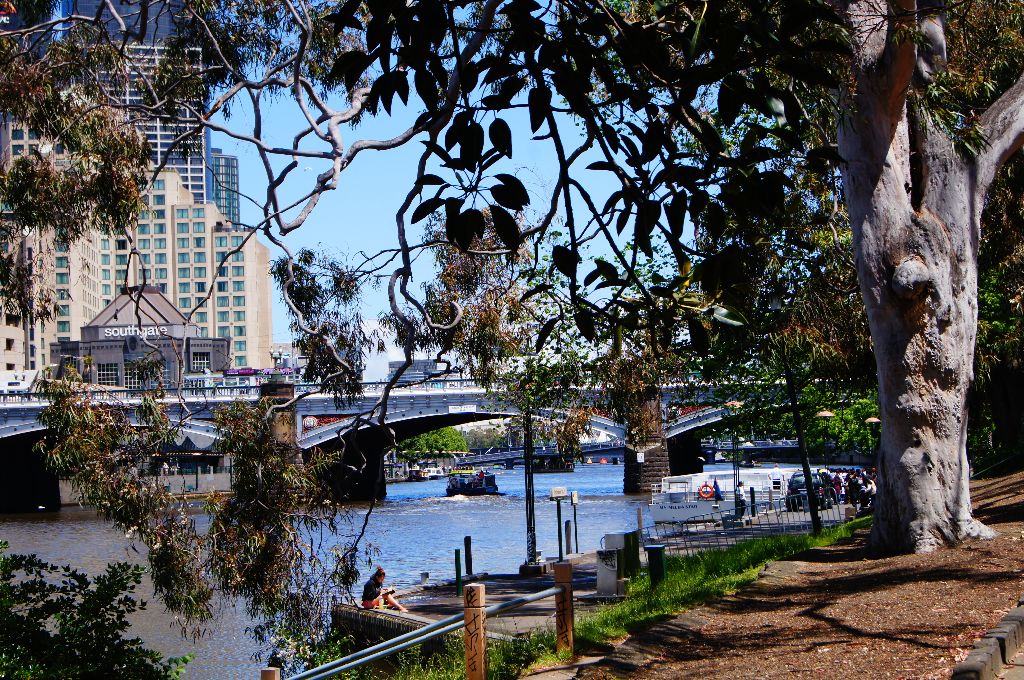
A Southbank Stroll

A Blue Room Book Review – Under a Mackerel Sky – Rick Stein
I am so blessed. One of my DLP’s (Darling Loving Partner) many talents is the fact the she is a kitchen goddess. She produces delectable meals, always thoughtfully presented. She has a knack for turning fridge leftovers into flash tucker with, unlike your scribe, not being a slave to a recipe. I am no match for DLP in the culinary stakes, although I enjoy putting together a meal and I do have to force myself to not buy endless cooking books/magazines.
Another aspect of my darling lady is that she likes the same type of foodie programmes on the tele as I do. Neither of us are into the hoopla of Master Chef or MKR – no, we delight in great cooks telling us mere peons how it is done. Keith Floyd was the first I personally took a shine to; it being a tad saddening reading of the pretensions of his later years in ‘Under a Mackerel Sky’. Nick Nairn, The Hairy Bikers and Two Fat Ladies have also been favs in the past. I cannot abide swearing for swearings sake so Gordon Ramsey has largely past me by, but in those shows where he moderates that predilection he can be quite entertaining. Nor am I a huge fan of Heston Blumenthal’s excesses, although I admire his ‘out of left field thinking’. My current preferences largely reside in the SBS stable – Maeve O’Meara and her Good Food Guide, Peter Kuruvita, Luke Nguyen, Shane Delia and the Gourmet Farmer, Matthew Evans. I am also partial to the enthusiasm of the ‘Two Greedy Italians’ – Gennaro Contaldo and Antonio Carluccio. Then there’s Poh – very delicious herself (can’t wait for a new show) – and the ‘River Cottage’ guy Hugh Fearnley-Whittingstal. The only difference DLP and I have in all this is that we do not see eye to eye on the attributes of Nigella.
Both of us are attracted to the work of Rick Stein, perhaps I marginally more so than DLP. I enjoy his style on the small screen, the relationship he has with the camera and therefore, by definition, his viewers. He seems very human, with human foibles like all of us – foibles he is not afraid to leave unedited. Whereas Floyd liked to quaff a fruity red whilst he taught the world to cook, Stein is just as likely to recite poetry or quote the classics. He is as attached to Cornwall as I am to my beautiful island in the southern seas, particularly to ‘Padstein’ (Padstow). His commentary on any part of the world he finds himself in for a series is always worthwhile – naturally there is always something to enthuse about with the local tucker – something he can adapt for his own purposes back in his own kitchens. He is now getting on a bit, but he’s one of these people you hope that, in a Cohenesque manner, can keep going on forever – as with the likes of David Attenborough, Clive James, Willie Nelson – those that make our globe so much the richer for their presence. How I’d love to visit his Cornwall. Once upon a time I nearly got there. I guess it will not happen now – but a man can dream.
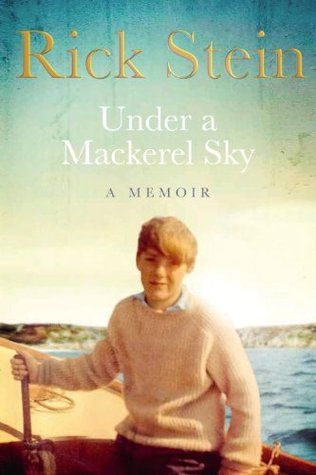
‘Under a Mackerel Sky’ is Stein’s evocative memoir – the word ‘evocative’ apt for those early chapters on his upbringing in post-war UK and his formative years in Oz. Now he is almost one of us, marrying an Aussie lass later in life and living for as much time as he can squeeze in on the southern New South Wales coast where he owns an eatery with his partner.

I found the book to be largely delightful. He is not a great wordsmith, but is as earnest in his scribing as he is expounding the glories of regional cuisine in France, Spain or anywhere that has a coast and a fishing boat. It is a given that a familiarity with his television work is a prerequisite. This gives his grand tales a context. Like most who look back on their earthly endeavours in written form, this is largely a vanity project and Stein is no exception. He is not backward in coming forward and quoting those who sing his praises. In his own words, though, he seems a genuine, genial enough fellow who possesses mundane doubts and insecurities despite his success in building his culinary brand. It is refreshing to know he does have a temper – seemingly that goes with the territory – and for Stein to be an exception would be a stretch.
His writing is at its best when describing his Cornish coast and its people – a populace he clearly adores, reserving a special place for the original and fast disappearing Cornishman (and woman). Then there is Chalky – his beloved canine who became an integral part of so many of his adventures. No Stein series was complete without the feisty terrier stealing a scene or two, being a natural in front of the camera. We all felt for Stein when he announced Chalky’s demise to the world. A mini-review of the book in the Age describes it as being somewhat melancholic in tone. Certainly his father’s supposed suicide casts a constant pall. His self doubt is emphasised – although it is hard at time to match this with the larger than life man on our screens. He writes of his early sexual exploits with an innocent frankness, but once he met the right woman, in the form of Jill, his career spiralled ever upwards.
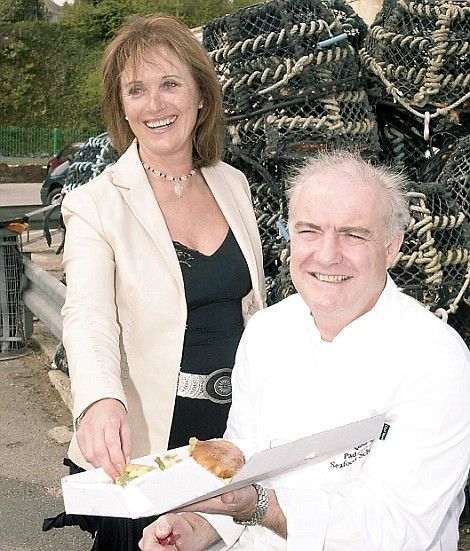
She does seem to be the loser in all this – but then we can never be privy to the inner workings of a marriage and the author understandably is not overly forthcoming in what went wrong. He never disses her, but one suspects that in his effusiveness for how gloriously happy he is with his Aussie Sass would not be music to Jill’s ears – but who knows? Reading on-line, it seems Jill was initially very incensed about the new woman in her man’s life. Hopefully she has now moved on to a similar state of ecstasy to his as well.
The added photographs are charming as well as revelatory. I especially enjoyed his forthcomings on the goings on behind the scenes on his shows, particularly when applied to his good mate/producer David Pritchard. With so many years behind him, he has so many stories – they all being eminently readable. Let’s just hope the story itself doesn’t end for some time yet.
My beautiful DLP is doing one of her signature dishes for our evening meal. She weaves magic with a piece of Atlantic salmon. I am salivating at the thought. I doubt if even the great Rick Stein could match what DLP will soon be doing with that piece of fish!
Jill’s take on the breakup of the marriage = http://www.dailymail.co.uk/femail/article-1082231/Why-I-hit-woman-stole-husband–gave-slap-Rick-Steins-wife-reveals-truth-split.html
By the Yarra 4
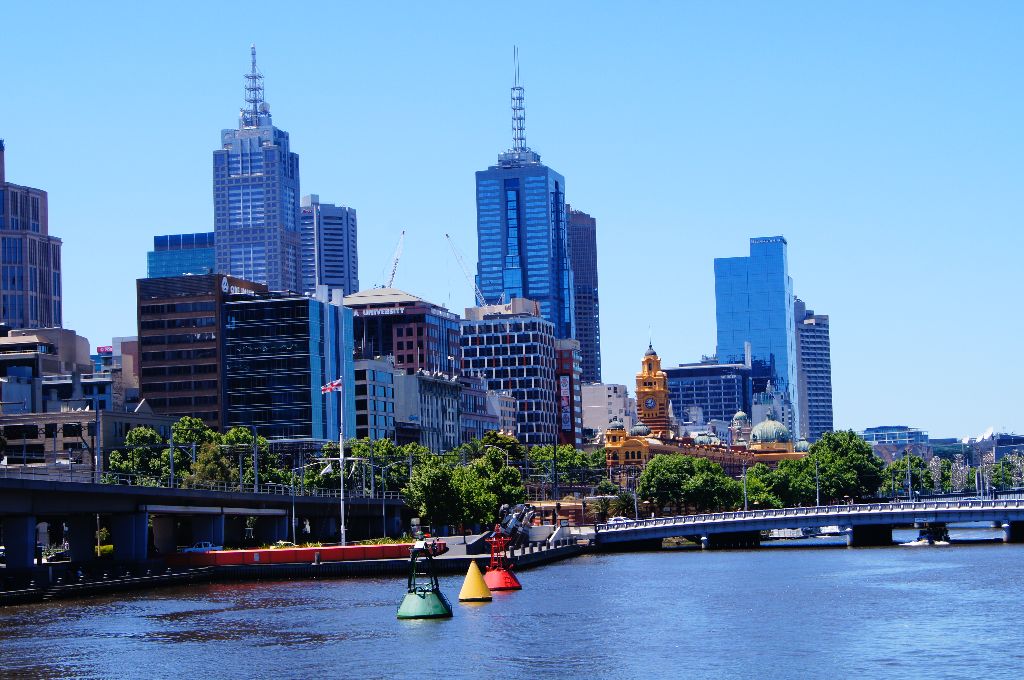
Mondeo on the Move
A Blue Room Book Review – The Secret Alchemy – Emma Darwin

I remember the book. I cannot remember the title, nor the author – but I remember the book. I recall the dominant colour on the cover was red, and it featured a medieval king – maybe it was a Henry. It could have been a William, an Edward or even a Richard. I doubt if it would have been my namesake, Stephen – a short, embarrassing reign. If I said that what I found in between the front and back covers fascinating, firing my love for the post-1066/pre-Tudor period of British history, I would have been telling a porky. I remember nothing of what was in the publication, I just remember it was turgid, dense and I had nary a clue of what was going so convoluted were the machinations of the major players. Their constantly shifting allegiances completely lost me – it was all a confused muddle in my mind. No doubt I would have been reading the torturous tome for a university course. I suspect any examination question on the era would have been dodged to go to Henry VIII or the Stuarts where I possessed a firmer grasp. But I was nothing if not a conscientious student. I did read the thing, but to no avail. To this day the Wars of the Roses have been a mystery, that is, until this book. Thank you Emma for helping me out. A fictional account has made the period clearer in my mind, but still far from crystal.
I was mightily impressed with Ms Darwin’s other semi-historical saga, ‘The Mathematics of Love’, a novel part set in the immediate post-Napoleonic Wars period – my Goodreads review of it is below:-
https://www.goodreads.com/book/show/702512.The_Mathematics_of_Love
‘A Secret Alchemy’ is also very worthy, although not as much to my taste as its predecessor. It did, though, markedly enhance my knowledge of the conflict via the voices of Elizabeth Woodville and her brother Anthony, major participants in the confusing events. Richard III is still the bad guy, but with some redeeming features in line with modern non-Shakespearian notions on the notorious hunchback. It is instructive that gays still had a rough time of it back then too. Just in case we didn’t get it from the storyline, Ms Darwin helpfully includes family trees and a precis of the factual events. The latter was placed at the end which is when I discovered it. It would have been of greater assistance to this reader had it been placed at the beginning.
Parallel to the Middle Ages goings on is a contemporary story involving bibliographer/historian Una. She has just returned to the UK from Oz to settle her affairs after the death of her hubby. Here she encounters the subject of pre-nuptial unrequited love. Eventually the twosome embark on a journey retracing the sites that featured in the book’s other narrative. As it turns out all rather neatly, she is researching the written output of Elysabeth (sic) and Antony (sic). Of course there are linkages between the two story threads – otherwise what would be the point – in what the book’s blurb describes as a ‘daring’ fashion. For me it was all a tad forced. The ‘finding’ of the significant letter, around which so much hinges, was particularly contrived. The paralleling is far more successful in ‘Mathematics of Love’.
Ms Darwin also invokes a sort of pigin Olde English-speake for the tales of Elizabeth and Anthony and for me this was one of the rewards of the book. At times a glossary would have been useful as occasionally meaning wasn’t always conveyed by context.
Based on her oeuvre, albeit a brief one at the moment, Ms Darwin is a novelist capable of the most exacting research with an over-riding facility for turning fact into readable fic/faction Her website is reporting that she is working on a third effort, but given this publication came out in 2008, it is a long time coming. Despite a few reservations with this title, I suspect the wait will be worth it, given that the grounds around her choice of subject will have been thoroughly mined.
I am glad my days of onerous reading tasks, both academic and pedagogic, are behind me. Never again will I have to plough through mind-numbing tracts, but rather I can enjoy ‘translators’ of Emma Darwin’s ilk – writers who possess the chops to turn dry, tedious history into palatable, plausible prose.

Emma Darwin’s website = http://www.emmadarwin.com/
By the Yarra 3
 The Blue Room, Riverside Drive