
Being In Love With My DLP (Darling Loving Partner) Makes Me Feel Like The Foam On The Crest Of A Wave
Isn’t that a beautiful simile for love? That’s exactly how I feel when I look at my beloved and count the many ways that I am so lucky to have her in my life. That she chooses to love me in return, even after all these twenty odd years, still gives me immense blissfulness
Who came up with that lovely allusion? It was twenty-three year old Julius Robertson, son of Kathy Lette and Geoffrey R.
I was right royally peeved last Saturday to discover my Age was missing its two best bits – ‘Spectrum’ and ‘Good Weekend’ – for my perusal the following week. It usually takes me that long to get through the weekend’s Australian and Age. Eventually, as well as inexplicably, they both turned up in Monday’s edition. I was delighted they did as they contained even more exceptional writing than usual – such delicious reading. It was ‘Spectrum’ that featured young Mr Robertson, as part of its ongoing ‘Two Of Us’ segment. Here we have a take on the ‘he says/she says’ format, with two connected persons telling of their relationship from their individual perspectives. Over the years this single and singular page has featured couples from all walks of life, as well as from all degrees of fame. Without fail, whether the duos involved are celebrities or ordinary Joes, perusing their musings is always time well spent. Often what is read here leads me to the ether for more research on the persons involved. The linkage between the two participants needn’t be one of love, but I mostly find it more interesting if it is.
As for the twosome in last Saturday’s offering, there certainly exists a great deal of affection between Julius and his mother Kathy, although the former has a unique way of expressing it. You see the young man is on the high end of the autism spectrum. In fact he has Aspergers.
Over my teaching years I have taught many a student diagnosed somewhere on the continuum. Hand on my heart there were a number I found it extremely difficult to contain, but with those I could connect with it was a hell of a ride – in a positive way. They were so intriguing and gave so much I felt privileged to be in their orbit.
Some, as with Julius, have a prodigious memory and are quite obsessive. As his mum puts it, he has fixated on everything from Serena Williams’ posterior to Hamlet, which he can recite rote. It’s the way their brain works. I found it fascinating with some of my students. Some of these guys ask very curly questions in class and were often responsible for very perceptive replies to mine. The article gave examples of Julius’ amazing queries:-
‘What is the speed of dark (if light has speed)?’
‘Is a harp just a nude piano?’
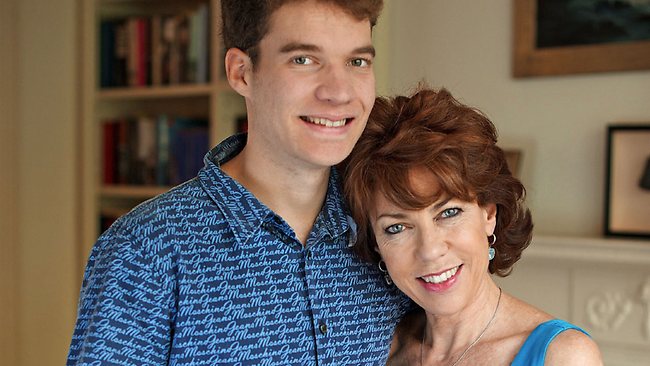
The wonderful Stephen Fry is the young man’s favourite from the cohort of his mother’s friends – describing him as ‘…like a honeybear.’ Kathy was once flirting with Hugh Jackman, only to have Julius draw the thespian’s attention to the dark hairs on his mother’s top lip, just in case Hugh hadn’t noticed them for himself. On meeting Kevin Spacey he was transfixed by ‘…his moonhead’, bald for a play. He regards his mum, Ms Lette, as ‘…the modern Shakespeare’, but wishes he could display the same emotions as she does. He is bemused by her gait, describing it as like ‘… a dolphin’s.’ Pleasingly, he reckons people are generally happier in Oz than the UK (I suppose you wouldn’t have to be all that bright to figure that one out!) and he thinks the animal his dad most resembles is a polar bear. He knows his authorly mum wouldn’t mind if he was gay, but he confesses he is’…very attracted to women’s bodies’ – and so he goes on. Despite his occasional social faux pas, there is no doubt of the adoration one of our best known ex-pats has for her boy.
Their relationship has been shared with the nation in print form elsewhere as well, including in the Womens Weekly. Her novel, ‘The Boy Who Fell To Earth’, tells the story of a single mother raising such a boy with Aspergers. This will soon feature in a Hollywood movie.
‘My love for you my DLP is like the foam on the crest of a wave.’ Try that line with your very own partner sometime soon. I am sure you’ll be happy with the results.
The ‘Two of Us’ column = http://www.smh.com.au/lifestyle/two-of-us-kathy-lette-and-julius-20140728-3coal.html
The ‘Women’s Weekly’ article = http://www.aww.com.au/news-features/in-the-mag/2012/2/kathy-lette-my-son-has-aspergers/
Table Cape Tulips04

Analogue Man – Nick Earls
I do miss Neville H. He’s my mate. Between us we could happily, contentedly feel like ‘…analogue men in a digital age.’ He’s still my mate, my best male mate. I just don’t get to see see him as often as I would like. We met aeons ago – shared a school uniform and a local footy team. His only downside is that he’s Collingwood through and through – and I cherish the ‘poo and piss’, as he repeatedly calls them – Hawthorn. We did uni together – shared digs at a residential hall – married our sweethearts and commenced our teaching careers. Then we moved to different locales, gained new mates, parted from our spouses and lost touch. Eventually he returned to my town, we reconnected, reviewed our pasts and made ready for the autumn years. Mine involved a beautiful woman from Hobart, his one from Thailand. I moved south to be with my Leigh – and now, sadly, I miss my mate.
I miss our Friday nights – together, us two ‘analogue men’, throwbacks to when it was all less complicated, less busy. The digital age has made our lives so full of crap. I tried to comprehend it and largely failed. He gave less ground than I. We’d sit around the table at 15 Lane Street, telling tales large and fantastical. I’d cook him tea, we’d sink a few reds. Then we’d get onto politics – always dangerous. He was rabidly Green, my beliefs of a lighter hue – but I couldn’t bring myself to vote for anyone else. Then we’d settle down to watch the footy – except if the Hawks were playing. Then we’d make it another night. But if the Maggies were on and they lost, it would always be the fault the ‘white maggots’. But this was a put on, an aberration for Neville H has more humanity in his little finger than Tony Abbot in his whole being. He looks out for the downtrodden and repressed – he’d give them the shirt off his back. I am extremely content with my new life by the river in Hobart Town and I trust he’s found similar in our old stomping ground up north. We will continue to get together on occasions, but there’s no regularity now. I wouldn’t swap what I have here by the river, but I do miss those Friday nights with Neville H.
That’s why I enjoyed Nick Earls’ take on it all in ‘Analogue Men’ so much. Reading it was akin to those Friday nights with Neville H, getting gently to the ‘Mr Wobbly’ (in joke) stage and talking, talking, talking. Earls’ central protagonist, Andrew Van Fleet, is about to enter the autumnal years – the years yours truly and Neville H inhabit (with some joy I might add). We know our pomp is substantially behind us, but like Andrew, reckon we’re not completely kaput. We have all downsized – although Neville H reverted to up-sizing a while ago – he’s had a second wind. Van Fleet has been a high flyer, but like many who have realised the digital age has taken away their lives, he has opted for a quieter existence on reaching the cusp. He wants more time with family – his missus Robyn; his offspring, Abi and Jack. And then there’s his dad out there in the granny flat – ailing in his late dotage, but once a legend in in his own lunch-box on the local radio airwaves.

And that’s what Andrew VF takes on – a managerial role in a radio station – as if that’s going to lead to a quiet life! It’s here he comes face to face with another legend in a terminal decline – albeit one of a different ilk – Brian Brightman. Once the king of the wireless in Brisbane, his star has long fallen- but he still battles on at the bottom of the ratings chart, trying to compete with the shock jocks and the new shiny hip kids on the block. He has a patter that has seen better days, often getting him in deep shit he is so out of touch with political correctness – or is he? Andrew soon finds he is drowning – he’s beyond his depth and now he just can’t swan away to NYC or HK on a business caper. There’s also family conundrums a plenty to deal with. Then comes the ill-conceived plan to combine both and solve all issues in one knockout blow. It involved minding BB at a comedy festival down on the GC, paralleling that onerous responsibility with a family holiday. It spells disaster – it was.
Earls has created some characters for the ages with this. From the two kids with digital apparatii hanging off every appendage to a constipated bulldog – he is back to the rare form of his earlier novels that bought so much Mangoland sunshine to a chillsome Tassie winter.
Of course Neville H and I never reached any great heights in our professional careers – which does not mean we weren’t successful at what we did. There is, though, in AVF a soul I can relate to. Luckily I do not have to compete with all that plurry technology as much with these days of retirement bliss. I loved this book. At times I laughed till the tears were streaming. All the trouble Andrew had with his buttocks is priceless. Sure the climax involving a shark and an errant tongue is a tad over the top – so weird it just may be a possibility (except in fiction) – but even with this I was happy to be taken along for the ride. So thank you Nick Earls. For a short time perusing your offering I was around that table again with Neville H, fixing up the world, with not a digital device in sight. Your book, Mr Earls, did that for me – even if it made me miss Neville H even more.

Nicks Earls’ website = http://nickearls.wordpress.com/
Table Cape Tulips03

Elizabeth
I am in need of music that would flow
Over my fretful, feeling fingertips,
Over my bitter-tainted, trembling lips,
With melody, deep, clear, and liquid-slow.
Oh, for the healing swaying, old and low,
Of some song sung to rest the tired dead,
A song to fall like water on my head,
And over quivering limbs, dream flushed to glow!
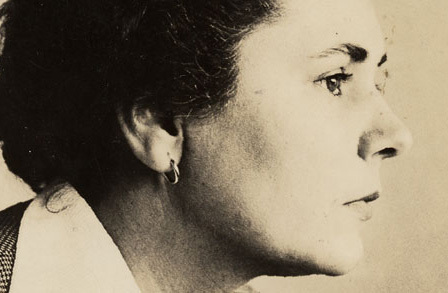
I wonder why, in my sixty plus years, I had never encountered her. I thought I was across all the great poets, particularly those of the last century. But her name had never entered my orbit. Despite her literary prominence she had remained invisible to me all this time – that is, until the movie. Then I had to move from screen to page – and with the wonders of the digital age, her stunning verse has opened up to me. Of course the movie gave what I discovered in the ether some added lustre, but it only concentrated on one of her two great love affairs. Here’s what I found out of this gem of a composer of words.
Poet Elizabeth Bishop was gay – lesbian at a time when it was shrouded off to the sidelines. Perhaps not regarded as being as prurient as its male counterpart, participants were still either shunned or treated with overheated curiosity. Born in 1911, Elizabeth had a fraught childhood that left her somewhat scarred and wary of the world. Her father had a premature demise when she was small, also causing her mother’s already fragile mental state to collapse and become as dead to the child, as a parent, as her spouse. Elizabeth had physical ailments to contend with, as well, all her life – asthma, a nut allergy and eczema. Despite her semi-orphan status she was a gifted student at school, discovering at an early age to use written words to their advantage. With them she could see her way forward in the world.
I am in need of music that would flow
Over my fretful, feeling fingertips,
Over my bitter-tainted, trembling lips,
With melody, deep, clear, and liquid-slow.
Oh, for the healing swaying, old and low,
Of some song sung to rest the tired dead,
A song to fall like water on my head,
And over quivering limbs, dream flushed to glow!
Early on she formed relationships with Mary McCarthy and fellow poet Marianne Moore. Her collection of verse, ‘North and South’, was picked up for publication, eventually coming to the attention of Robert Lowell. They met; he liked what he saw and read, so paved the way for her into the upper echelons of the American authorly establishment.
In 1951, at the age of forty, her life veered off in another direction. She fell in love twice over. She had an urge to see the Amazon and travelled to South America to do so. Here she became enamoured of Brazil – its culture and people. Simultaneously she became deeply enthralled by one of its leading citizens. Her heart was stolen by the prominent architect Lota de Macedo Soares. With this duo of addiction providing her first true happiness in life, her poetry soared, so much so that her signature collection, ‘North and South – A Cold Spring’, featuring poems old and new, won the 1956 Pulitzer.

The art of losing isn’t hard to master;
so many things seem filled with the intent
to be lost that their loss is no disaster,
Lose something every day. Accept the fluster
of lost door keys, the hour badly spent.
The art of losing isn’t hard to master.
Then practice losing farther, losing faster:
places, and names, and where it was you meant
to travel. None of these will bring disaster.
It is this period of the wordsmith’s life that the Bruno Barreto directed movie, ‘Reaching for the Moon’, focuses on. Delicate rose Elizabeth meets the swarthily feisty Lota and her world is turned on its axis. They fall intensely in love and into bed – although the film’s handling of the latter is almost chastely realised. As Elizabeth’s health and mental state improve, if not her alcoholism – so Lota’s does the opposite. She has been caught up in Rio’s toxic politics, whilst trying to complete her dream, the Parque do Flamengo – a beach-side swathe of parkland – now one of the world heritage listed city’s prime attractions. The relationship between the two women disintegrates into a fug of booze, depression, adultery and ultimately, for Lota, suicide – after fifteen years with her poetess.

I lost my mother’s watch. And look! my last, or
next-to-last, of three loved houses went.
The art of losing isn’t hard to master.
I lost two cities, lovely ones. And, vaster,
some realms I owned, two rivers, a continent.
I miss them, but it wasn’t a disaster.
Even losing you (the joking voice, a gesture
I love) I shan’t have lied. It’s evident
the art of losing’s not too hard to master
though it may look like (Write it!) like disaster.
The movie is based on a Brazilian best-seller, ‘Rare and Commonplace Flowers’. With this film their story will now reach a wider audience, for reportedly the book, with its convoluted machinations of the ruling class of the city of Ipanema and Copacabana, is impenetrable to anyone other than that nation’s readers. Aussie actress Miranda Otto and local fellow thespian Gloria Pires shine in this cinematic offering, but the narrative itself is largely paint by numbers. The fecund surroundings of the lovers does cast a spell. Of course, Rio cannot be otherwise than a star turn in the piece. In this place the two women’s love is perhaps more readily accepted than in northern climes, although they still have to be on their guard.
Times change – and despite the worst efforts of our unfortunate Prime Minster, the world is now more comfortable with non-hetero activities. ‘Reaching the Moon’ is of another time and place. Not a great movie by any stretch, but well worth time spent on it for its tale of two remarkable women.
After Soares’ passing Bishop gave up on Brazil and returned permanently to the US in 1970. She took up painting. By now she had met Alice Methfessel and loved her for the remainder of her life – the following poem is dedicated to Alice. The poet also took up painting and left us the worse for her passing in 1979.
Breakfast Song
My love, my saving grace,
your eyes are awfully blue.
I kiss your funny face,
your coffee-flavoured mouth.
Last night I slept with you.
Today I love you so
how can I bear to go
(as soon I must, I know)
to bed with ugly death
in that cold, filthy place,
to sleep there without you,
without the easy breath
and nightlong, limblong warmth
I’ve grown accustomed to?
—Nobody wants to die;
tell me it is a lie!
But no, I know it’s true.
It’s just the common case;
there’s nothing one can do.
My love, my saving grace,
your eyes are awfully blue
early and instant blue.
‘Reaching for the Moon’ trailer = https://www.youtube.com/watch?v=654X8V2bwA0

Bishop’s art work
Table CapeTulips 02

The Black War – Nicholas Clements
In my latter years I shied away from it – I really did. The history needed to be taught – in fact, it should be a compulsory requirement in our island’s schools. But working with the Aboriginal community to improve the outcomes of indigenous students (one of the most enlightening and enjoyable aspects of a forty year career), I discovered there were divisions within their number over the story that needed to be told and so, from the classroom perspective, I became wary. I stuck to the big picture, the narrative over the whole of the country, conveniently ignoring that of the local peoples. I am now out of the loop, so to speak, so I am not sure if attitudes have changed – softened in recent times. I firmly believe no Tasmanian child should depart the process without a firm understanding of the clash between two cultures on this state’s historical frontiers.
‘The Black Wars’ is a fascinating, often troubling book. Clements has been courageous. He doesn’t shy away. Some of the factual accounts of what actually happened during the period covered does not make for pretty reading. With this whole, decidedly sorry saga, there are two words that have always troubled me – the notion that what happened out on the backblocks during this time was a ‘war’ – the notion that the result was a conscious policy of ‘genocide’. As for the former, the raw figures are minuscule compared to the great clashes of the last hundred years and it always seemed to me that the skirmishes that went on would be better described as a ‘conflict’. But when Clements boils it all down to percentages, then a different hue is cast on the events. It transforms the data. The military involvement he illuminates was also much larger that I had previously envisaged. As a result, ‘war’ now sits more comfortably.

Certainly there were calls for ‘extermination’ as the ‘war’ rolled over from the 1820s into the next decade – and on the North West Frontier on into the 1840s (it intrigued me that the final recorded skirmish of it occurred in the Table Cape area, the very region I spent the final years of my time teaching). During these years, as Clements so vividly describes, the fear and loathing on both sides of the ledger for the other were palpable. For a time the colony was nigh on paralysed by the atrocities committed by ‘white’ and ‘black’ and the terror that ensued. In some sectors of the settler community hotheads did call for the Aboriginals to pay the ultimate price – and there is no doubt of what, by the end, the latter were attempting to do. Of course their goal was futile and they knew it as their attacks went from targeted to indiscriminate. Never was it otherwise that the odds were stacked in favour of the invaders. The problem with all this is that, out in the remote rural areas, officialdom had little control – and the brutal background of many of the ‘white’ transgressors in these locations meant there occurred scenes of unmitigated inhumanity. This could not be tolerated by the native warrior chiefs – they were forced to retaliate in kind. It is worth remembering that, in the period just before the conflict heated up, Van Diemans Land had only just recovered from the debilitation caused by unrestrained bushranger gangs.
Clements, after placing what he intended to do with ‘The Black War’ in context, looked at it largely on the ground rather than in the halls of government. Using the reasonably considerable contemporary accounts to be had – at least on the invaders’ side – he successfully places the reader squarely in the middle of it all so he/she feels the desperation increase for both parties as no solutions to it, other than those of a violent nature, could be found. No soft gloves were used here by the author, as even the nobility of the ‘black’ cause gave way to heinous slaughter of the innocents – as well as the deserving.
Circling around all this was the work of George Augustus Robinson – once the hero of the times (as well as in the era of my own education), but these days more of a divisive figure. It’s his copious journal keeping that has largely provided Clements with the Aboriginal take on the events. The saddest, most heart wrenching data of all involves the incredibly small numbers that he retrieved from the bush as the last of the warrior groups surrendered. The settlers were incredulous that so few caused so much mayhem towards the end. For me much of the territory Clements wrote on was known in an overall sense – albeit not the gory detail. What really came as a surprise was how much of a shambles the notorious Black Line was. I knew how badly it failed, putting that down to the ingenuity of those they were attempting to ensnare. Largely, though, it was the complete mismanagement of the grand strategy by the authorities, as well as the lack of real enthusiasm by the settler/military participants once they had to do battle with the vagaries of a Tasmanian spring in a wild terrain.
Logically sex would have had to have been a factor in all this – the bulk of ‘white’ maledom wasn’t getting any, at least of the ‘legal’ variety, as a result of a substantial gender imbalance. Here the ‘blacks’ could provide a source for alleviating that need. In the main this was foul, unforgiving sex. The ‘gins’ became little more than slaves if captured, often ending their use with a bullet to the head – and the crass class that inhabited the fringes of ‘civilization’ liked their prey to be as tender in years as possible. Ugly, ugly stuff – at its most barbaric out on the Strait’s islands. It is this frontier that Clements suggests is worthy of a deeper examination in a future tome – only, at this stage, he isn’t prepared to write it. This is largely, I would think, for the same reasons that I wasn’t prepared to take what I knew into the classroom. He claims ample documentation for what went on is available and not all of it puts the blame squarely on the side of the colonials. Clements noted that Aboriginal women were used by their men folk as bargaining tools – in some cases readily prostituting their females to gain favour, tucker or other wares.
With ‘The Black War’ Clements complements others working in the same area such as Boyce and his mentor, Henry Reynolds. I would strongly suggest that this book be an insisted read for any educator intending to take our island’s dark history to his/her students. With his research you would also think that the so-called ‘history wars’ have well and truly been put to bed.
To complete this appraisal, here are two interesting facts that the author brings to our attention. The first was that the initial Tasmanians never attacked during the night when the spirits abounded, whereas their enemy usually preferred the cover of darkness to slaughter our first inhabitants in their camps. Secondly, contrary to expectation, although the killing of livestock by the ‘blacks’ was common, what they speared and waddied out of existence was never consumed.

Clements’ tome is a fine achievement, with the author greatly impressing at the recent launch of ‘The Black War’ in Hobart. I had the pleasure of sitting next to his mother at the event and she was justly proud of her son. His work is revelatory to say the least.
From The Australian = http://www.theaustralian.com.au/arts/review/beyond-black-and-white/story-fn9n8gph-1226895004177?nk=8fe21f338350b1ee60e8806adeac7887
Table Cape Tulips01

Writing Clementine – Kate Gordon
I am Burnie born and bred. Most of my life has been spent living in the town – my working life in teaching its youngsters and those of its satellite communities. Most of my time there I hankered to be somewhere else – but I was patient, knowing the town might have its limitations – but its people were wonderful. My retirement does indeed see me in another place – but in my mind I am still Burnie. I write Burnie Tales – it’s what I write about the most. About the lives of the people, like me, in someway still connected to the town. These are stories that are ‘…sometimes truth, but mainly fiction’. Few will ever read them. I plonk them on my blog and send them off to mates and family who have expressed some liking for them – but they are mainly written for me. Composing them is therapeutic – it makes me happy, content with life, my Burnie Tales.
And here’s a Burnie tale of three girls, three best of friends, growing up and going to high school in my home town. They weren’t the most popular trio of their cohort – but they weren’t the most unpopular either. As they journeyed through their senior years and on into college, to the cusp of adulthood, they shared so much. This included their passions for boy bands and Spice Girls, the Adelaide Crows and Hawthorn Hawks, as well as ultimately, the more perplexing matter of the opposite gender. They were there for each other when times were tough, as they sometimes could be. There were family issues and heartbreaks in love. But they celebrated with zest each others’ successes – of which there were more than a few. Most of all, the best bit, was that with these three girls goodness emanated from every pore of their being. It was my good fortune to share teaching duties with two of them at Yolla District School where I watched with delight as they grew into consummate, caring professionals in their chosen vocation. Children of all ages pick up on goodness – and these two had that quality in spades. This characteristic has also assisted them in becoming gorgeous mothers to beloved offspring. What happened to the third you may ask – what did she become? Well, she became a writer – and a bloody good one.
Burnie is, has always been, a town set on improving itself. Today it is a far cry from the place the citizens of far ‘sophisticated’ locales took delight in pillorying for its industrial ugliness. But those factories gave employment. Now they are gone and even if the town is far more ‘liveable’, something of its soul has been lost in the process. Especially now, as we have a federal government doing its level best to make life in communities such as Burnie even more untenable, people are being forced to desert it in order to make a living. And Burnie people are such good people. Sure it has its fair share of drop kicks and the much derided bogans like every community, but generally the resilient bunch that keep the town’s spirit going have done an amazing job. Burnie keeps bouncing back from adversity. It is sad, though, that it remains tougher to call Burnie home these days. So those remaining stick together; they support each other through the hits they take, but can party like mad when there’s a celebration to be had at a milestone of life passed. The Burnie people I know do their level best to be good citizens. It’s this inherent goodness that Kate Gordon, the author in the previous threesome, writes of in her marvellous saga of what its like to be young and in such a place. Kate knows the town facing Bass Strait so well. She is one of its daughters as well.
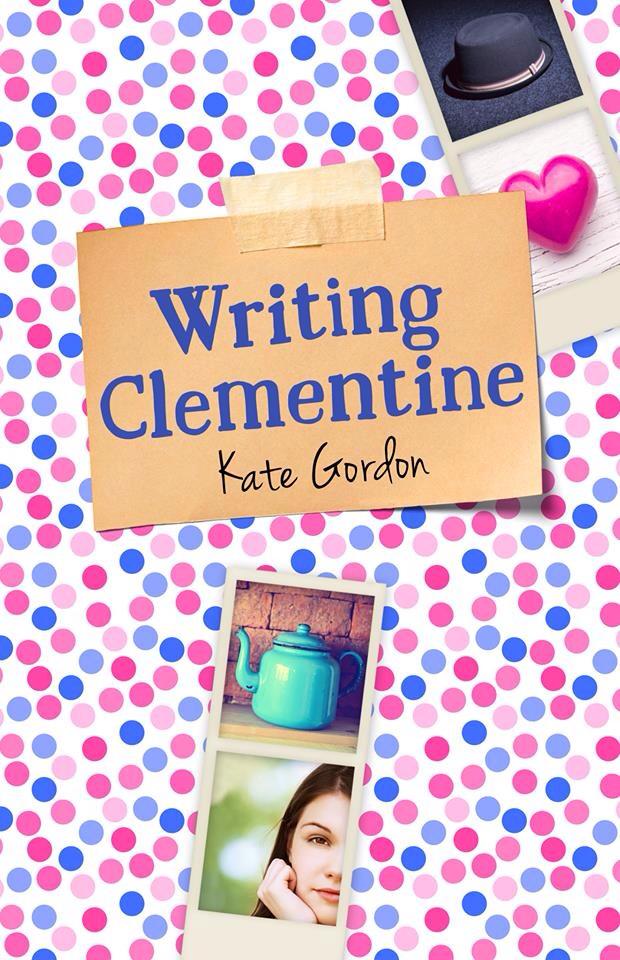
In ‘Writing Clementine’ there are also three friends with goodness at their core – Clem herself, Chelsea-Grace and Cleo. They are not facsimiles of the aforementioned threesome – in fact mostly different apart from the fact they they were also neither the most popular nor the most shunned. They’ve been tight for so long – ever since their junior years. But now that they’ve reached Grade 9 fissures are starting to show. Boys, and all the attendant angst they cause, have entered the scene. Clem starts to feel on the outer, has issues with her body image and starts to gravitate to a new kid on the block, the quirkily attired Fred. He is another outsider as she is starting to perceive herself to be. Fred – the Fred Paul – of that weird cape, opens up to her one of the area’s best kept secrets, the Burnie Steampunk Society.
In a town like Clemmie’s there’s precious little for a teenager to do if one isn’t into sport or riding in noisy cars interminably around the main drag. Kids have to invent their own fun and Kate Gordon, the BSS is a glorious invention, befitting the town’s heyday of steam emitting factory chimneys. Through making their own entertainment, Clem starts to find her place out in the world. Fred Paul is as supportive a boyfriend as an emerging lass could have and Gordon has constructed him perfectly. He’s the antithesis of the school jock Clem had so much trouble with on the banks of the Cam. He is, in contrast, an odious creation – but not an unrealistic one as misogyny is alive and well still in our schools, despite our educators best efforts.
Then there is our heroine’s family. There is a delightful dad, still gyrating to Jimmy Buffett with his daughter after all these years. He works from home, in contrast to his equally caring wife who labours long hours, but is still very much an involved figure. Both her big sister Soph and elder bother Fergus have issues – which Clemmie does her level best to solve for them. Neither prove easy challenges and here the author delves further into the negatives of teenage-dom – body image and depression.
Nothing becomes too dire though. Overall the novel possesses a lightness in tone. The target audience will find it a page turner. It is a book full of joy and hope – a welcome relief to some of the depressing fare that is dished up to our young people in some of the doom and dystopian gloom on the market. In fact, ‘Writing Clementine’ is a tad like a Jimmy Buffett song – sure there are bad bits, but the world overall is a pretty magic place so get out there and enjoy. Both JB’s parrothead whimsy and Kate Gordon’s novel will make you feel joyful. The offering is clever in its structure as it is written in the form of journal entries from Clem to one of her teachers – and here lies my only minor quibble. Coming from my background I would have enjoyed more of Ms Hiller’s feedback to her. But that is just being plain picky – I know. It’s the teacher coming out.
Over the years there have been so many beautiful young ladies I’ve taught like Clem – not popular, not unpopular – just unsure of their place in the world. Perhaps they may even harbour Kate Gordon’s and Clem’s deepest, darkest secret – a decidedly uncool love of country music. How I’d love to be in the position now to hand this book over to them all with the words, ‘Here, this will help. The hero is just like you. Heed its message of ‘never be afraid to swim against the tide’ and you’ll be okay in the world. The world will go easy on you.’ This is the adage I’ve always attempted to convey in my teaching, but Ms Gordon can do it so much better in the power of a book. In its considered way ‘Writing Clementine’ will have this sort of impact on all who read it – and they will grin broadly afterwards. The author knows her young readers so well.
I was fortunate to attend the launch of this lovely book at the wonderful Fullers in Hobart one vile Tasmanian winter’s morning. But with the support of those assembled, despite the lashing rain outside, Katie G, soon had her rapt audience following her every word, sharing the emotion of bringing her book of ‘…sometimes truth, but mainly fiction’ out into the world. Those who know her well understand that recent years haven’t been entirely easy – but surrounded by the love of those who patently adore her, as well as being cheered on by her amazing Tessa Tiger, she has come out the other side with a work that will bring Buffettesque summer sunshine-y smiles to all those who purchase and read. Later in the year she’ll take ‘Writing Clementine’ home to the region of the state that first nurtured her and it. The equally wonderful ‘Not Just Books’ in Burnie will host its northern launch, with a mini-tour of local schools involved as well. People attending, in that part of the world and reading ‘Writing Clementine’, will recognise much about what makes their community so special in the book – those people, like myself and the author, who are Burnie born and bred. Good on you Katie girl.

Kate Gordon
Kate Gordon’s website = http://www.kategordon.com.au/
 The Blue Room, Riverside Drive