The New Nigella

She’s gone off the boil, has Nigella. The Kitchen Goddess hasn’t been seen on our screens since her bout of bad publicity – she wasn’t the last to find out not all is sweetness and light marrying a sugar daddy.

I also love Poh, but she’s not exactly the goddess variety for all her talents and charm – so who to replace the voluptuous, sumptuously sensual Nigella? I needn’t have worried – someone has come along. She’s a real gem, is Ms Rachel Khoo. Now her first series, admittedly, didn’t really have much of an effect on me – NL was still being beamed in. I watched a few episodes of Rachel and it was a novel idea, but little else so I decamped. The idea? A Brit cooking up a storm in a tiny Parisian garret for pernickety French foodies seated in her pop-up restaurant for two. And to add a bit of drama, she only has only a couple of gas rings to work with. It became all the rage in the City of Love. To attain a place at the minuscule eatery was of great social cachet. Seizing her chance, she spruiked it as a book, with its stunning popularity leading to the tele show, ‘The Little Paris Kitchen’. This was followed up with another publication, ‘My Little French Kitchen’.

khoo_v_

But she didn’t grab me then. Missing Nigella, when “Rachel Khoo’s Kitchen Notebook – Cosmopolitan Cook’ appeared on SBS’s listings back in April, I tuned in to give her another go. She certainly grabbed me this time. Goodbye Nigella.

Ms Khoo is no overnight sensation. Her success is based on general talent and an ability to self promote, as well as a soupçon of luck, as much as her culinary qualifications. Her looks have not hampered her either. Her initial training was in artistic design – thus her attractive illustrations in her ‘Notebooks’. As well as the series I watched, there’s ones on London and Malaysia in the pipeline. Hopefully SBS will do the right thing. Why Malaysia? Well her exotic appearance is down to a Malay-Chinese father and an Austrian mother – she was bought up in a London suburb. There’s also a whisper that she may be on her way to Oz for a season, given her popularity here.

At some stage our ‘new Nigella’ decided to combine her design talents with her love of tucker and devote her life to that. With six hundred quid in her pocket she set herself up in Paris, underwent training at the prestigious Le Cordon Bleu, worked as an au pair, behind a perfume counter and ran bakery workshops. Then she took a chance. One day she walked into the offices of Penguin in Paris and hawked her idea for a book based around home made muesli bars. And now, seeing her in her latest small screen offering, who wouldn’t be charmed by her? The honchos at the publishing house certainly were and she was on her way.

‘The Little Paris Kitchen’ hit a nerve in the UK, drawing in over a million and a half viewers per episode, but it was the ‘Cosmopolitan Cook’ that made me a fan.

Rachel Khoo

Garbed in her trademark retro vibe, with thirty-something Ms Khoo there’s none of the overt lasciviousness of the original Goddess in her shtick. She is reported to have mused that she was unsure whether the great Nigella was all that wonderful an advertisement for women in the kitchen. I’ll hedge my bets on that one. For me, as with Nigella – it’s partly in the lips coated in bright hues, the fullness of the curves, but mostly in the eyes – always the eyes – that has me glued. There are the recipes too.

This latest show was also just so sunshine-y. Our charming host took me to such culinary meccas as Provence, Istanbul, the Amalfi Coast and Barcelona. To vary this southerness a tad there were also excursions to Nordic regions. What Rachel K ascertained in these locales she tweaked back in her small London flat in order to present lip-smackingly creative meals for an assortment of mates.

Thanks to Ms Khoo I no longer yearn for more doses of the other one – but if they happen to appear they won’t be ignored by me. But now for this ageing appreciator of all that’s good that comes out of a kitchen, Rachel Khoo is one to savour.

Ms Khoo’s website = http://www.rachelkhoo.com/

Dept. of Speculation – Jenny Offill

Up front is passion. Never over-rated but can be debilitating in some circumstances. Time mutes and love transforms. Attachment is under-rated, comfort being a negative – and there is much to recommend it. Of course there are multitudinous variations on the core, but one factor is known – if it’s out of synch then it can invite disaster.

dept

Jenny Offill is the first to admit that this slight, in volume, book of hers should be a hard sell. ‘If someone described this novel to me, I would never had read it.’ the author tells one interviewer. It is a potpourri, an amalgam of fragments in the form of musings, random facts and quotes from the great wordsmiths the author obviously admires. Interspersing all this are micro-vignettes on the course of a marriage. Each small chapter is akin to a string of pearls – each oyster-spit shone to a sheen and in the whole, strangely relevant.

It takes a while to pick up the rhythm, but once that is cottoned on to this slim, not autobiographical, not a memoir, entrances. So much features – from the black dog to battles with parasitic bugs to the exploration of outer space.

A best seller in the US, it’s raised hardly a ripple in Oz against the ‘Gone Girls’ and ‘Girls on a Train’ overload – but Offill can hardly credit her success Stateside. Her last novel for adults was before the turn of the millennium. ‘Dept. of Speculation’ had a very long gestation, with the author filling in the gap with her teaching and well received picture books.

The novel is a mini-treatise on motherhood, wrangling a wayward husband and how, for women, it is impossible to become an ‘art monster’ ie devote oneself entirely to one’s writing to the rejection of all else. Men, it is claimed, have the luxury of doing this with no roadblocks whatsoever.

The two parties involved in this rendering are, for a time, out of synch. In recording their journey there are lessons to be discerned for all floundering relationships. This small tome swims against the tide in more ways than one and is well worth the effort to track down. On my daughter’s recommendation I am so glad I went to that effort. Thank you Katie.

dept01

Jenny Offill’s web-site = http://jennyoffill.com/

A Model Story

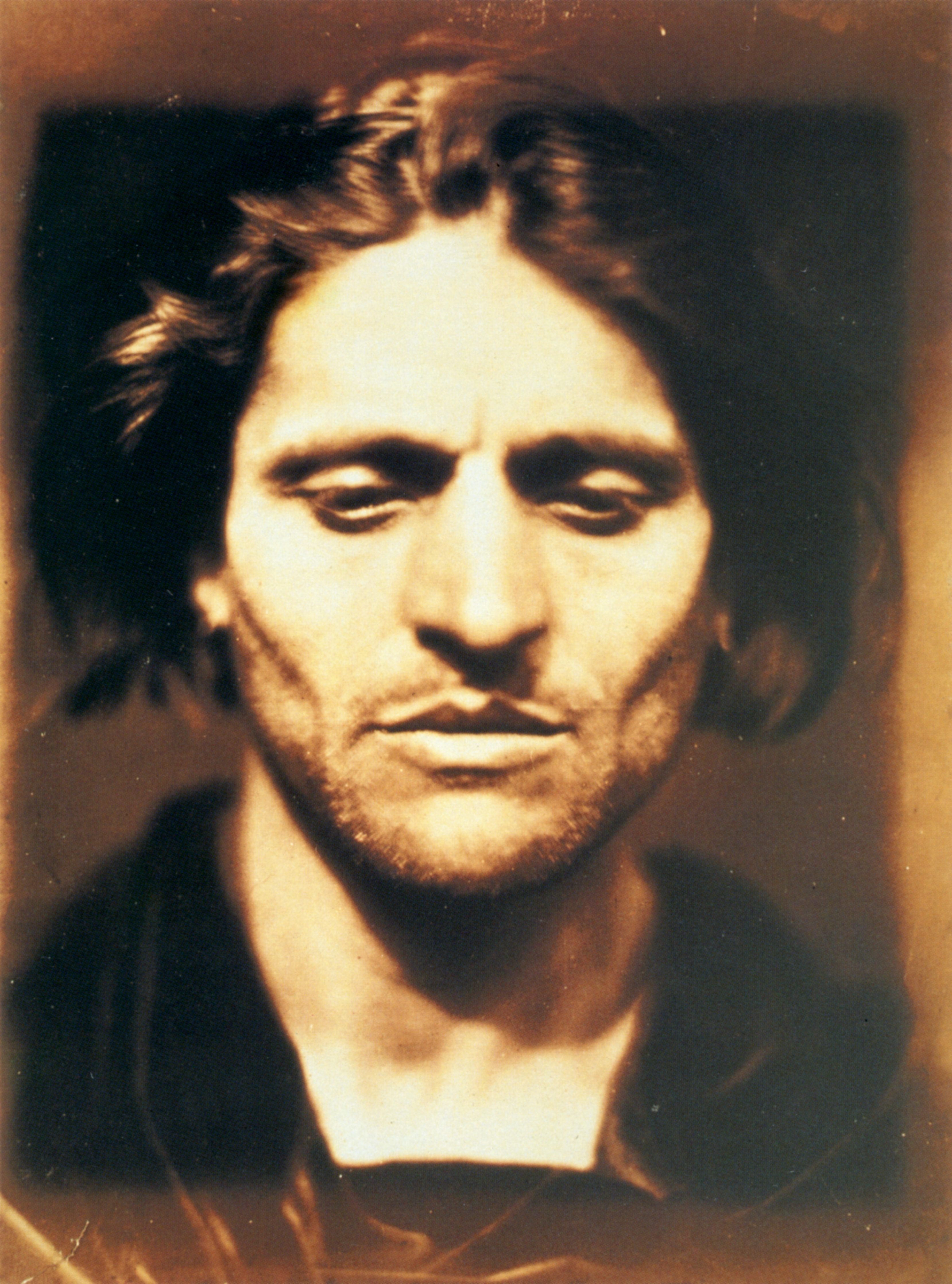
Let me take you back to an eve before the turn of the century. No, not the last one – not the one most of us witnessed. It’s to the one before that – the night the nineteenth century became the hundred years the same number of us were born into. It’s to London we’re going, to Hammersmith to be exact – although some of the tale is set around Picadilly Circus, about eleven clicks from the small terraced house in Musboro Road West. It’s a cosy two up and two down with latrine/laundry out back in the tiny yard. That night, on the other side of the globe, gas lights cast an eerie pall. Light snow is flurrying around together with the smuts of factory detritus. If we peer into the front room of the tiny abode we are able to discern a figure haloed by firelight, seated in an ancient, faded lounge chair, covered in blankets. He has a woolly cap pulled down low and a bristling; grey-stained moustache can be discerned. This overhangs a mouth clenching a briar-pipe, exuding a thin spiral of tobacco smoke upwards. The face is deeply lined; his hands, clutching at the blankets, indicate they have rarely been idle with their callouses and grimy nails. Beside him there is a bottle containing a dark liquid – more than likely porter. This old fellow is obviously a man of working class tastes, although the room is far from gimcrack. There are items that look as though they may even be of some value today, especially a few works on the wall that could be from artists of fair repute. Beside the porter bottle is a small framed photograph in sepia. It’s of a much younger man, handsome and virile in appearance. The old fellow in the glow looks warm enough and seems to be dozing. He doesn’t know it yet, but this man will live on till the second year of the Great War, will soon see the death of his old queen and see out her son, the new king, as well. Finally he’ll witness the cream of his nation’s manhood march off to the killing fields of Flanders.

angelo colarossi_by_julia_margaret_cameron

Look and see – his eyes are indeed closed, but he will stir and take another puff, or a sip of the ale from time to time. He will also routinely check his fob, pulling it out by its chain from under his coverings and squinting at it in the dim light of table-side lamp. He wants to see in the new century – he vowed he would; he’s determined to. He nods at the watch – still a while to go so he returns to his reverie in the gloom. First he turns to the small sepia image and yes, we can note a sigh and slight smile for it is a reflection of his own manhood from a long time ago – a time when he was considered the go-to person for all the artists in the area if they wanted a sturdy soul to pose for their works. Some went on to be recognised as amongst the Victorian era’s greats.

colarossi01

If we could now penetrate into the workings of Angelo Colarossi’s mind, we could read the nature of his thoughts as they worked their way back through the recent and not so recent past. They would inform us of the day he’s just experienced – one he regards as singularly memorable. On a daily basis he does keep himself busy. He is still called on to stretch canvas and help out odd jobbing in artists’ studios, with occasionally there being the need for an older man to pose – but these days he has largely lost his knack for stillness. Around the Hammersmith markets he can be seen still lending a hand to various stall-holders and it all adds up to keeping him going. His surviving offspring chip in too – but today was a period of freedom from his labours with it being the last hurrah of the old century. His son, also Angelo, came calling, with a young lass in tow to introduce. Four years on Angelo Junior would marry his belle and provide Mary Anne and he with more little ones to add to the ever increasing brood. When he thinks of how many there’d have been if all his own had survived a frown clouds his face. Still, six did and he’s mighty glad of it. His Mary Anne was sturdy of hip, but this sweet slip of a girl has the waist of a wasp so he can’t believe, when the time comes, how she will ever manage. His own Angelo is also so slight he marvels how he and his beloved wife ever came to produce him. But his father did give him one of his own great talents – his own knack of stillness.

That very day the foursome had travelled by omnibus and on foot to view the result of this talent – to look at it once more – at his son, Angelo Junior, high in the sky over Picadilly Circus. He’s atop the memorial to Lord Shaftesbury. His slim, undersized son is up there, perched on tip-toe, one leg extended back, with bow in hand. None that day would know that later generations would name his likeness Eros. Few models could have posed so agonisingly for the length of time required as young Angelo, not even, the elder one suspects, his father back in the day. But he managed to do so as the sculptor, Mr Gilbert, hacked away at the stone that would provide the moulding for the aluminium-cast final work. The artist intended it to signify mythical Anteros, the god of requited love, but the populace were soon to be convinced it was of his more lustful brother.

Piccadillycircus1896

The man by the coal fire reflects on the stories of various sittings he had told that day, once they had retired to a tea house near the Circus for refreshments. At first the four had talked of the marvels of the age – the noisy horseless carriages that were starting to appear on the byways and the planned extensions to the Underground railway. It had reached Hammersmith some years back, but the son had yet to convince his father that it was safe to travel on. The younger man lovingly chided him for his stubbornness on the matter. The boy related how he had read somewhere that now everything had been invented that possibly could be and the old man nodded in agreement. Little was he to know that, in the second decade of the century about to dawn, his son would be helping to construct heavier that air machines to fight a terrible war.

The father and son regaled the young lady with the tale of how they had posed together for a painting by Mr Leighton of the sea giving up its dead. The son spoke of his times modelling for Mr Waterhouse and the senior family member his own times with Mr Sargent and Mr Millais. He told of the occasion he had to pretend to be wrestling a python for Leighton, how the sculptor had rolled up a mat for him to hold to represent the reptile. He always received a goodly laugh at its telling.

f-leighton-and-the-sea-gave-up-the-dead-which-were-in-it

The wee lass had then queried how her beau’s father had became an artist’s model in the first place. Angelo Senior by the fire, checking his timepiece one more time, had responded by returning right back to the start, to his Italian childhood. He came into the world in the town of Picinisco cradled in the picturesque Val di Comino, through which the road from Rome to Naples passed. His family were suffering financial setbacks and one brother had already struck out for London. He established himself as an artist’s model, amongst other things and was soon successfully encouraging Angelo to join him. Between that and working in the markets the pair were soon making ends meet. To further increase his skills, Angelo learnt how to stretch canvasses and he became a fair carpenter as well. He was part way through this tale when he noticed that his wife was beginning to fade and was nodding off – she had heard all this so many times before. Her husband did have the gift of the gab. Checking his fob he realised the afternoon was getting on, so he decided that it was time to say his farewells and get Mary Anne back to Hammersmith.

The son of Italy, in that faded chair we observe in the lamplight, twitches back to reality, pulls out his timepiece and observes there is still an hour and then some to go with his vigil. He upends his bottle of porter and takes a healthy glug, pulls at his pipe several more times and then casts his eyes again towards the little photograph. There was one story he hadn’t told that afternoon – the strangest, most wondrous of all.

jmc

For a while he had assumed she was mad this short, squat woman he had been taken to pose for on the Isle of Wight. Tennyson, the old man marvels – it had been the great Lord Tennyson who was responsible for him being there. By that only just flicking flame on the last night of a century the old man shakes his head at the grand times he once was privy to, but none surpassed those few days at a residence called Dimbola Lodge off the southern coast. Tennyson was neighbour to this woman – a very strange woman obsessed with a new art. He reflects on how these days it is so commonplace for folks to go to a studio to have their portraits taken by a professional operator. There are post-card sellers on every corner in his city, plying their pictures of great sights and the latest music hall stars. He knows for a few extra coins, a nudge and a wink most of those vendors could produce, from a secret place, some purely for a gentleman’s pleasure as well. But back then all that was in its infancy.

It was Mr Millais going down to the Isle to stay with his friend, the poet, that was instrumental in it all. One day Tennyson took him across the lawns to meet the woman and she insisted that he sit for a photographic portrait. He remarked to Angelo later what a complicated process it was. He had become bored and unthinkingly adjusted his position for greater comfort, only to have her admonish him most sternly. Eventually a successful image was obtained – but like all the rest he’d observed taken by her, it had a certain fuzziness. He still liked it, mind, but it was not like the precise images he’d seen up in London. Back then Angelo had no knowledge what was involved in making these likenesses – but he was soon to find out. When Millais commented on its lack of clarity to the woman she immediately took umbrage and started blaming him for being so twitchy.’Nobody around here can sit still for more than a minute,’ she bemoaned to the artist. It was here that Mr Millais informed her that he knew a man who certainly could – that she needed a professional sitter. That, of course, set the train in motion. The woman sent her man up to London to make the necessary offer – and before he knew it he was taking the steam packet to the island. He reflected on his first meeting with her – there were no ‘how do you dos’ or offers of tea – she just told him that it would all have to come off. He chortles at the memory. He had posed nude on several occasions and had assumed she was instructing him to dispense with his clothing – but soon it became clear that it was his moustache that would have to be foregone. Apart from it he was clean shaven, but she then pronounced her Iago would have to have stubble – therefore she would require him to stay until an amount she considered sufficient grew. She alerted him to the fact she would pay him handsomely if he followed her instructions to the letter. In the end it wasn’t as handsomely as he would have hoped, given all she expected, but it was sufficient to make his trouble worthwhile.

julia_margaret_cameron_lord_tennyson

Tennyson by JMC

A few days later she declared he looked ‘Arab enough’, as she phrased it, for her purposes. In the meantime, he had come to know how odd her existence was on the island. She seemed to survive on air, so besotted with her image making was she. Her ageing husband simply spent his time wandering around in a greasy dressing gown muttering to himself. Angelo Colarossi took repast of basic victuals alone in his room, but was invited to tea and cake when the poet came calling to meet his friend’s recommended sitter and to inquire how it was all going. The woman seemed as abrupt with him as everyone else and soon wandered off to attend to other matters. He, though, found the Lord a most agreeable conversationalist – they found themselves very easy in each other’s company.

Came the day of the sitting she explained that, for the image of Iago, she required him to don a rough cloak and have his eyes downcast – certainly not staring at the camera. It took some time for her apparatus to be organised to her satisfaction and some time more for her to capture him with a blinding flash – that was the term she used, ‘capture’. She then stalked off to her chemicals to do her ‘developing’. When she graced him again with her presence she actually smiled. ‘That will show my colleagues in the London Photographic Society.’ When he asked what she meant by that comment, she informed him that, when she went up to the capital to attend meetings to critique each other’s product, they looked down their very long noses at her work, advising that, being a woman, she couldn’t hope to be as skilled in the difficult processes required as they were. And worse, they refused to include her in their exhibitions. Then brandishing a small copy of his image she exhorted,’This will show those feeble fools! You have given me something of character and clarity. I dare them to mock your magnificent likeness! Thank you Mr Colarossi.’

Before his departure the next morning Angelo Colarossi received two gifts. Tennyson sent over a slim volume of his poetry inscribed with the wording, ‘To the man who makes an art of stillness.’ And Julia Margaret Cameron herself presented him with an ‘Iago’, complete in gold-leafed frame. Both items he treasures to this day. For he was young back then. And with the small memento he can not only remember, but see the man he once was.

He often wonders what became of her – of Mrs Cameron. He once heard from an artist friend that she had decamped the Isle and headed for the Orient to pass her final days, but he knows no more. And as we take our leave of Angelo Colarossi, in his small abode, we see that indeed the midnight hour has has finally arrived. He stands and stretches, takes the little image in his hand and stares at it for a few seconds. He then replaces it on its chair-side table, bends to dampen down the fire before heading to the stairs and his Mary Anne.

In truth our Angelo still has much to look forward to in the new decade that has now arrived – and beyond, till a war takes its terrible toll. There will be weddings and more grandchildren to celebrate, visits to view the windows of great new stores such as Mr Selfridges’, moving pictures to marvel over and he will see men taking to the skies. Why, in the years to come, there will even be women agitating over the right to vote.

ellen terry_by_Julia_Margaret_Cameron

Ellen Terry by JMC

As we move back through the decades to our own time we can only wonder what Angelo would make of the value of that tiny image today, let alone the others she took in the ten short years of her obsession. Nowadays we observe the portraits of the famous Julia Margaret Cameron ‘captured’ – with their lack of focus that we contrarily regard as part of their allure. Think of the names – the poet laureate himself and Robert Browning; artists Sir John Everett Millais, Dante Gabriel Rossetti and Sir Edward Burne-Jones – and even the remarkable actress Ellen Terry. As well there are her interpretations of historical scenes and romantic imagings from the works of Shakespeare. There are also a rare few from her time in Ceylon where she and her husband journeyed to on self-imposed exile. There she passed away in 1879. All this legacy was taken by her in a few short years from the 1860s on. In our digital age they are so ethereal – so dated by our standards, yet ‘Iago’, methinks, could have been snapped yesterday. Thousands gaze at her work in great galleries – books are devoted to her and the world has access to her portraits at any time of day on-line. Julia Margaret Cameron is now rightly regarded as a pioneer of an art form and for a woman’s place in the world.

Be Near Me – Andrew O'Hagan

This 2006 novel is this reader’s first by Andrew O’Hagan. Hopefully it will not be the last. Essentially it is a three-parter; the first two sections building to a shattering finale in the last. By the time that presents itself I had succumbed to being so hooked it was unputdownable until the whole sorry story had played out to the last page.

benearme

Glaswegian AO’H was born in 1968 and is a graduate of the University of Strathclyde. By ’91 he was on the staff of the ‘London Review of Books’ and four years later published his first fiction product, ‘The Missing’. It and subsequent tomes have been nominated for all sorts of gongs including the Booker and Whitbread. This work won the Los Angeles Times Prize for Fiction in 2008. ‘Be Near Me’ has also been adapted as a play. O’Hagan has written and presented a television series on Bobbie Burns for the Beeb and has dabbled in writing for the stage. This guy has serious literary chops.

In the first part of ‘Be Near Me’ the scene is set. We meet 56 year old Catholic priest David Anderton, newly transferred to a tough Ayrshire parish, but we find he is half-hearted and somewhat removed from his duties. He seems disappointed in his calling but unable to release his mind from the need to be succoured by the church. Anderton has the necessary feeling for his flock, but struggles to make a connection with them. He is, above all, hungering for something more – the type of relationship he once had way back when – one that is no longer is possible given the constraints he labours under. He is lonely. In this fragile state of mind he is ready for an ‘adventure’ before it is all too late. That enters in the form of street savvy teenagers, feisty Lisa and charismatic skateboarder Mark. Very soon he finds himself part and parcel of their escapades, occasionally the ringleader. For a while we are unsure which one will bring him down as we are in no doubt this flirtation, with the dark side of the real world, cannot end well.

Now we’ve ascertained the situation he is in and which of the duo brings him to grief, we backtrack onto a different path. The author takes us to the tale of the love of the priest’s life and the event that caused him to fully turn to his god and the celibate way.

Once that has been conveyed we return to Father David’s fall from grace. Although it is debatable whether he committed the crime in the true sense of the accusation, the priest knows, had it all played out as he intended, he would have done so. Ergo he places self-imposed barriers to escaping what is about to befall him. We wonder if there’s an ultimate price to pay.

As he travels down his path to self destruction we see the strength and loyalty of the women in his life – Lisa to some extent, his novelist mother and his ill-married house-keeper, a vital cog in the case against him. They are all wonderful creations as characters, as is the latter’s deeply flawed spouse who is somewhat the hero of the piece.

I do not know where in the Bible Jesus preaches that to fully serve the god he believes in one has to enter a life devoid of sexual intimacy with another. If he did, then that is at variance with the Jesus I know. Of course, for many, like our main protagonist, being human they fail to measure up and as a result the Catholic church is now in deep do-dos. Once litigation takes over in the aftermath of the various enquiries, commissions and investigations in place world-wide, the institution may well be bought to its knees financially. To me it is an inhumane and self-defeating imposition and O’Hagan glaringly, as well as artfully, presents the troubled face of all this. Even though we look at Anderton as foolhardy for taking one last stab revisiting what he experienced so long ago, we can all relate to his fundamental need.

o hagan

Three Stages of the Dame

She came out of the water dripping and sent certain feelings whizzing through my teenage self. The venue was the Somerset Drive-in so therefore there would have been seagulls flying across the screen to add to the authenticity – but this lad’s mind was not on those particular birds. I have no idea whose car I was in and whether my girl friend of the time was beside me. I remember nothing else of that movie – but that scene is still etched on my mind to this day.

No, it wasn’t Ursula Andress in her white bikini – that was way back in ’62. This was half a decade later and by 1969 what could be shown up on that big amount of white space had changed markedly, but a scene featuring bare breasts was still novel and the beautiful girl emerging from the sea wasn’t wearing a stitch of clothing. I’d never heard of the actress concerned, but the male lead, playing an artist, was well-known, being British actor James Mason. His muse and model, Cora Ryan, was played by Helen Mirren in her first screen role. The memorable scene in question took place on a beach on Queensland’s Dunk Island – it was my first encounter with the Dame.

age-of-consent_

In the nineties, close to thirty years on, she became a regular feature of my Friday nights. Mirren was no longer that nubile lass from ‘Age of Consent’, but as DCI Jane Tennison, in the police procedural ‘Prime Suspect’, she was in the prime of womanhood and still had that something about her that stirred the blood – only this time on the small screen. She was riveting. This night on Auntie was devoted to crime and one hundred percent British. From 1991 till 2006 ‘Prime Suspect’ was one of the best of its kind as we followed our feisty DCI, catching the villains and coping with being a female in a man’s world with a private life that was, of course, flawed.

Prime-Suspect-

Move a couple of decades on again and Mirren, along with Judi Dench and Maggie Smith, are the grand dames of UK female thespians and still going strong. She remains luminous, still taking on starring roles in such box-office friendly fare as ‘Calendar Girls’, ‘The Queen’ and ‘A Hundred Foot Journey’. There are more creases these days, but she is still as stunning up there as she was breathtaking back at the end of the sixties.

And her latest, ‘Woman in Gold’, is doing very nicely too, thank you. Based on a true story, it’s another clichéd tale of the underdog overcoming great adversity to battle the power-brokers of our world and coming up roses. Our Dame, complete with a semi-authentic sounding German accent, appears as Maria Altman, trying to retrieve a family portrait from the clutches of the Belvedere, the great art gallery of Vienna. You see, it was stolen back in the war years from her kin by those dastardly Nazis. To assist in carrying out the task she hires a lawyer (a mostly muted Ryan Reynolds), still very wet behinds the ears, on the grounds he is the son of a family friend and grandson of somebody famous. The problem is the family portrait was painted by the one and only Gustav Klimt. His rendering of Adele Bloch-Bauer only bows down to ‘The Kiss’ as his signature work and hence is regarded as an Austrian national treasure. We all know how this will pan out and it duly does so. But the film maintains interest along its narrative journey and is not without its delights – why there’s even a Gerald Ford moment for us Aussies. That chameleon from small screen series ‘Orphan Black’, Tatiana Maslany, is gorgeous as the young Maria and would seem odds on for more action on the big playing field. She’s on the upward trajectory whilst Katie Holmes, in a nothing role as the lawyer’s wife, would seem headed in the opposite direction. Charles Dance also adds his gravitas, but it is the Dame front and centre and she carries it off well, as one would expect.

mirren

From Pacific mermaid to unassailably still at the top of her game in our current decade, hopefully there’s no end in sight for this ageless marvel. Long may she continue to delight film goers – and me.

Official Trailer ‘Woman of Gold’ = https://www.youtube.com/watch?v=geJeX6iIlO0

From the Alps to the Pampas

Jake Wilson – you got this one seriously wrong.

Largely I go by reviews. If a film rates relatively highly across the range of reviewers from the Age and the Oz, throwing in the Mercury’s Leigh Paatsch and Tim Martain, I take note. Of course there’s the genre to consider and the players involved as well. An added tick is won if its French or, these days, Scandinavian. So I do my homework to ensure that nothing goes wrong and that I will have a cinema experience that I will enjoy, or at least get something positive from. So, in my scribblings there will rarely be a film I see little merit in – but, gee Age film critic Jake, I was struggling with ‘Clouds of Sils Maria’. And silly man, you gave it four stars.

 Clouds-of-Sils-Maria-2014

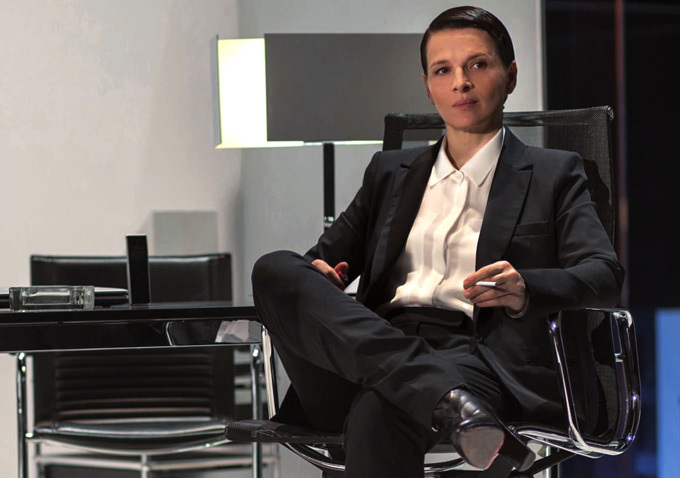
You’d think featuring the remarkable Juliette Binoche and being by a director with an acclaimed track record, Oscar Assayas, who also wrote the piece, it would come up trumps, I grant you.. The first surprise was when the actors broke out in English – I was expecting a fully sub-titled affair – and perhaps that was an omen. Part one – yes, it had parts including an excruciatingly long epilogue which added little to the experience – seemed relatively promising. Binoche, sporting luxurious locks, was her luminous self and sparkled. Come the second chapter our lead returned with short, spiky hair and now her personality seemed to match. It was all downhill after that and by the final stanza I was well over this offering. I only stayed put to find out what happened to her wingman (spoiler alert if you do venture to view this) – and that was never revealed. Binoche was playing one of her country’s stellar thespians, about to perform, somewhat reluctantly, in a sequel to the play that introduced her to the world. Her wanderings around the Alps with her personal assistant Val – Kirsten Stewart – practising her lines and getting all angsty, were as boring as all get out. Jake describes the movie as ‘….a destructive romance between two women, one young and manipulative, the other middle-aged and vulnerable.’ Some of those adjectives may be accurate, but if there was romance between the two – well, I missed it. There was a certain love/hate thing going on when Val wasn’t chasing some photographer wastrel – but the impression I had was that the actress still had the hots for the leading man (Hanns Zischler) in her break-out play! Nor, Jake could I discern any of your ‘…vivacity and freedom.’ in Ms Stewart’s performance. She showed far more animation in her role in ‘Still Alice’ and that’s saying something. Remind me never to be sucked into watching the Twilight sagas. Val abruptly disappears from the narrative and that provided some relief for this viewer. I wondered if she was meant to be really there at all – but as the second hour of this turgid offering crept on I was beyond caring.

clouds-of-sils-maria

Still, as you would expect, the Alps were stunning. The play our actor and offsider were prepping for was entitled ‘The Maloja Snake’. It receives this appellation due to a weather feature of the Alpine region where the film was set. Think a high mountain version of the Bridgewater jerry and you have a notion of what it’s like – and it was the most interesting feature of the yawnfest I sat through.

Now for ‘Wild Tales’. Thankfully it was anything but a yawnfest. This effort from Argentina had my cinema room in stitches. If I wasn’t chortling with this, I was cringing, hiding my face from the screen. If you have ever thought you’ve had a bad day I bet if you see this, yours will never match the dies horribilis, with emphasis on the first Latin word, the guys and gals had in this omnibus of truly revolting experiences. All the episodes are totally unrelated except for the fact that they portray human behaviours in the worst possible light. A couple relaxing in their backyard are about to have an extremely bad day. A business man travelling a lonely byway is about to have an extremely poor few hours too, with shades of Spielberg’s ‘Duel’. A waitress in a cafe is about to have the worst evening of her life as the night’s first customer arrives.. A bomb disposal expert, stopping off to buy a cake for his daughter’s birthday, is about to become a national hero after losing the plot completely due to his very bad day. And a bride, at her reception, discovers she has been cuckolded by her hubby so chucks a reggie like no other. Director Damián Szifrón takes us on this rollicking lark with flair and verve. It features a prescient take on a recent airliner disaster, sex with a wedding cake, defecation in an unusual spot and a road rage that puts anything experienced in the real world into perspective. The vignette featuring that was the most successful of the movie for my money, worth the ticket price alone.

wild tales

Rightly this was huge in its homeland, was nominated for an Oscar and won the gong at last year’s Goyas for best Spanish-language film. Unlike Jake with the French title, Age critic Paul Byrnes so gets it right when he concludes ‘Wild Tales’ ‘….is a blast of fresh air.’ It has to be amongst the year’s best simply for its audacity.

Trailer for ‘Clouds of Sils Maria’ = https://www.youtube.com/watch?v=Zup27u6tMzY

Trailer for ‘Wild Tails’ = https://www.youtube.com/watch?v=QUnXv6R2HI8

The Songster and the Poet

You play your guitar on the MTV
That ain’t working, that’s the way you do it
Money for nothing and your chicks for free

That’s an example of the ‘poetry’ of the second half of the last century – or as close as the masses will get to the real thing, many would argue. Millions know these lines from ‘Money for Nothing’, know their composer (Mark Knopfler), his band (Dire Straits), and the gazillion selling album the song is taken from (‘Brothers in Arms’). But I remember another tune.

I remember hearing it on the radio. It stopped me in my tracks long ago in 1978. I actually went back to the little transistor on my bed-head and turned up the volume. It was so different – the singer’s voice so tunefully laconic, the jangly guitar sound so refreshing in comparison with the strident norm back then. I was instantly hooked on ‘Sultans of Swing’. Mark Knopfler had entered my world and I have been with him ever since. It was the Netherlands that caught on first, then, slowly gathering power like a tsunami, ‘SofS’ broke out all across Europe before arriving back in its native land, the UK, like a tidal wave. The song wasn’t universally adored but it got Dire Straits noticed. And when ‘Brothers in Arms’ (1985) arrived, they became, for a while, the biggest band in the world.

knopfweb_

It didn’t take long after that for its singer/songwriter/lead guitarist MK to start stretching his wings. He embarked on solo projects, wrote film scores and became all countrified with the Notting Hillbillies. Solo, or touring with the likes of Dylan, Clapton and Sting – or with his band until 1995 – he continued/s to sell out arenas. And I still buy all his albums as a matter of course and he’s never let me down. His latest, ‘Tracker’, is no exception. It, too, is all class and quality. But one song from it has come to stand out for me after I read its provenance – ‘Basil’

knopfTracker

Long before he became a rock god and international jet-setter, Mark Knopfler was working in a newspaper office as a copy boy – a sort of gofer. This was for his home city’s daily, ‘The Newcastle Evening News’. Labouring alongside him was a tired, distracted, grumpy old man. He was a sub-editor crabbily bossing young, callow Mark K around. He was Basil Bunting. And he had led a life, had Basil.

To be quiet honest, until I’d come across the ‘Tracker’ track I’d never heard of Bunting, regarded as one of Britain’s greatest poets of recent times. Parallel to him ordering the would-be musician around he was engrossed in writing his greatest gift to his nation – ‘Briggflatts’. It’s autobiographical, epic in scope. And there was plenty in his life to draw from.

Old BB was born in the first year of a new century, near Newcastle, into a Quaker household. His religious views caused him to be a conscientious objector during the Great War. This in turn led him to be sent to Wormwood Scrubs at his majesty’s pleasure. He was traumatised by his prison experiences and turned to poetry as a means of blurring out the realities of incarcerated life and its aftermath. On release, he became a fan of Ezra Pound, London bohemian life and social activism. His ‘Sultans of Swing’ moment was the ‘sonata’ ‘Villon’, published in 1925. With its success, like Dire Straits, he was on his way. The thirties saw him travelling around Europe, playing chess with Franco, meeting Pound and marrying American Marion Calver. He had little success, though, in adhering to his vows or the two daughters, Bourtari and Roudaba, his spouse duly produced. His wife commented that, ‘The idea of working for a living was so hateful to him that he screamed with rage if it was ever mentioned.’ Marion soon realised that his only interest in her was the regular stipend she received from her father. She left him in 1936, pregnant with a son he never got around to meeting. Whilst still with her she alleges he fell in love with a twelve year old lass in Tenerife and that was the last straw.

In the following war it seems Bunting put aside his scruples and joined the British Intelligence Service. He was posted to Persia. In that kingdom BB seemed to have found his place in the world, possibly assisted by the locals’ more liberal attitude to relationships between older men and very young girls. After peace came he stayed on, working at the embassy, while all the time publishing his verse back home.

knopfbasil-bunting

In 1948 he married Sima. He was pushing fifty, she was fourteen. The marriage lasted, providing two more offspring. It did, however, cost him his job and eventually, in ’52, he was also expelled from Tehran.

Back in England, to make a crust, he took to journalism. Despite becoming increasingly popular with and inspiration to a new wave of poets in the sixties, there wasn’t much money to be had in the poetry game. He had a family to support. He reluctantly turned to a day job in print media. In 1965 ‘Briggflatts’ emerged and some critics started comparing him to the great Eliot. His marriage ended in ’79, and he breathed his last in the year of ‘Brothers in Arms’ – but not before he gave all versifiers the following advice:-
‘Compose aloud. Poetry is a sound.’
Perhaps Knopfler’s song will bring Basil Bunting to the attention of many more lovers of good wordsmithery as it did me. I hope so. Track down ‘Tracker’ on YouTube and have a listen to ‘Basil’ and see if your interest is piqued too about a poet to whom the lyricist had a connection once upon a time. Bunting reading his work is also available there. Below is a sample of it. Maybe his words will move you as did ‘Sultans of Swing’ me, once upon a time.
Coda
A strong song tows
us, long earsick.
Blind, we follow
rain slant, spray flick
to fields we do not know.

Night, float us.
Offshore wind, shout,
ask the sea
what’s lost, what’s left,
what horn sunk,
what crown adrift.

Where we are who knows
of kings who sup
while day fails? Who,
swinging his axe
to fell kings, guesses
where we go?
Fishermen
Mesh cast for mackerel
by guess and the sheen’s tremor —
imperceptible if you haven’t the knack —
a difficult job;
hazardous and seasonal:many shoals all of a sudden,
it would tax the Apostles to take the lot;
then drowse for months,
 nets on the shingle,
a pint in the tap.
Likewise the pilchards come unexpectedly,
startle the man on the cliff.
 “Remember us to the teashop girls.
Say we have seen no better legs than theirs,
we have the sea to stare at —
its treason, copiousness, and tedium.”

Basil Bunting reading from Briggflatts = https://www.youtube.com/watch?v=eZ7greLmS3I


Alicia

I wonder if it happened under the Nut? Yes, that Nut. Stanley’s Nut. Was its genesis overseen by that striking North West Tasmanian landmark? It would be lovely to think they fell in love on the rich soils of that corner of our island. Perhaps, somewhat naively, the Scandi-actress is trying to keep her private life well and truly separate from her public, according to reports. It would be a fair bet that it occurred here though – that she and her co-star commenced their relationship in Tassie. Some filming had already been completed over in West Australia for ‘The Light Between Oceans’, the film adaptation of ML Stedman’s best selling book. Ergo, she would have had plenty of time to get to know Michael Fassbender beforehand, presumably having already dumped previous squeeze Alexander Skarsgard. The actress has been hailed as the new Cate Blanchett, such has been her impact, even this early in her time in the spotlight of international film-making. She’s only been in the game since she gave up her dance career, due to injury, soon before making her first movie in 2010. Already she has taken on an eclectic choice of roles across several continents, requiring many variations of accent for the native Swede.’TLBO’ is her second outing to our shores after the brave attempt, but fast disappearing, ‘Son of a Gun’ with Ewan McGregor.

testament03

Alicia Vikander first entered my radar, I have since realised, with a turn in the Danish costume drama ‘The Royal Affair’ – a nomination for the best foreign product at the Oscars. She followed that up with ‘Anna Karenina ‘ alongside Keira Knightley, a film not liked in some circles because of its staginess, but one that this scribe really took to. It was through this production she first encountered Irish actor Domhnall Gleeson.

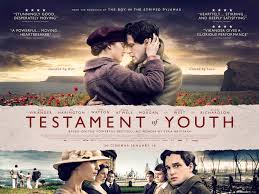
I suspect, though, it will be via her performance in ‘Testament of Youth’ that, sometime in the future, it will be agreed that Ms Vikander really hit the big time. Of course, this is a film version of the memoir by Vera Brittain that came to represent the experience of a generation. It reminded a nation of the appalling effects war has by outlining what happens when utter folly sends young men to charnel houses such as Flanders. Here the author lost her fiancé, brother and several of her friends. Then she, as we discern in the movie, left academia to nurse their wounded and dying colleagues at the front.

testament

Presumably the question needs to be asked. Why not choose a British thesp to play such an important figure in their literary landscape, a quintessentially English character? It’s not as though there aren’t enough commendable natives to take on the task, particularly as in the movie’s two hour running time there is barely a moment when the lead is not required to be the focus of attention. That question outstanding, the Scandinavian gives a flawless turn as the wordsmith who later became a leading pacifist. In her outing we see the new woman of her times, breaking away from the subservience required by the social system of Edwardian days – one dominated by the male gender. It was a transformation for many that followed on from the groundwork completed pre-war by the suffragette movement. Girls like Vera certainly did not know their place. Although there were set backs to the cause, as the current television series of ‘Mr Selfridge’ is demonstrating, the tide was starting to turn.

It is worth noting that, in preparing for her role, Alicia was bought into the orbit of Shirley Williams, a doyen of British Labour – who also happens to be the daughter of Vera Brittain. She was therefore well primed for the film. Although one could point out that, although it was certainly demanding, playing the gritty, determined lead was well within the range of this new, luminous screen presence. The film itself truly brings home the senselessness of that conflict, of all conflicts. It is superb. It is very moving.

testament02

It’s probably too late to give such advice in a year already awash with commemorative film and television paeans to the Great War, but if there is one worth your viewing time, it is this production. Told completely from our heroine’s perspective, it doesn’t focus on battles or gallantry in the face of impossible odds, as so many do, but the aftermath – the human toll on mind and body of the killing fields. It’s films like these that should be watched by the pollies before they decide, yet again, to put our young men and women in danger’s way.

And now for something completely different featuring Alicia V. In ‘Ex-Machina’ this beautiful actress becomes an android. It’s a clinically cool imagining from first time writer/director Scott Garland. The only aspect of the film that may have been a stretch for gifted Vikander could have been the costume and make-up she was expected to don – and maybe the nudity towards the end. Think a mix of ‘Metropolis’, ‘Her’, ‘Eyes Wide Shut’ and even ‘2001 A Space Odyssey’ and you have a taste of the flavour of this offering. Initially the movie is an epistle to man’s desired control over women, even if (spoiler) they all turn out to be mechanical ones. Wide-eyed Caleb (here Ms V is reunited with her ‘Anna K’ buddy Gleeson) is bought to an isolated laboratory, set deep in the forests of some undisclosed country, to run artificial intelligence tests on the human-like outcomes of semi-alcoholic digital genius Nathan’s vision of the future. This character is played, with relish, by Oscar Isaac. This creator of gorgeous women may be possessed of a great mind, but he is one total sleazeball and not to be trusted. Nathan has Caleb wrong – he’s not a totally mindless nerd in thrall of his misogynist boss. Caleb is sensitive enough to discover he has feelings of sort for Ava (Vikander) and starts plotting her escape from Nathan’s devious clutches.

ExMachina_

I must say for the first half this movie is a bit of a plod and alone, in an icy cinema room at the State, I was struggling to hold interest in it. But as the conditions slowly thawed and Caleb starts his machinations for freeing Ava, events on screen hot up, It becomes quite watchable for all sorts of reasons, none the least being the antics of Nathan’s sexy, mute offsider Kyoto (Sonoya Mizuno). It all climaxes in fascinating, pot-boilerish ways. Just who will win out?

And now take a gander what we have to look forward from this exquisite actress from films already in the can or listed for production. She’s in Guy Ritchie’s new take on ‘The Man From UNCLE’, is with Eddie Redmayne in ‘The Danish Girl’, Christoph Waltz in ‘Tulip Fever’ and, of course, beau Fassbender in ‘The Light Between Oceans’. Can’t wait to see the Nut up there on the big screen with fascinating cinematic happenings occurring under its ramparts, placing Alicia V front and centre.

fassbender vikander bondi

Alicia and Fassbender at Bondi

Trailer – ‘Testament of Youth’ = https://www.youtube.com/watch?v=0tP7k4wqVJo

Trailer – ‘Ex-Machina’ = https://www.youtube.com/watch?v=XYGzRB4Pnq8

Poh

She’s beautiful, has the most infectious guffaw on television and loves being ordinary. But, to her fans, she’s anything but – am I’m included in that bunch.

poh

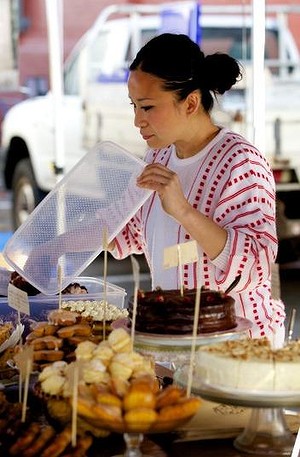
‘Poh and Co’ introduced me to much I didn’t know about not the winner of of 2009’s series of MasterChef – the most watched single episode of any small screen series during the noughties. This, I guess, says something about the prominence of tucker in the national consciousness and the ‘taste’ of the Australian viewing public. Competitive cooking has become a staple of the networks’ infatuation with the reality genre in this country. I have refrained from watching any of them – partly, I suspect, from fear of getting sucked in along with the masses. No, I am far more comfortable with the less frenetic fare put our way by SBS and it’s rota of not-so-celebrity cooks – Peter Kuruvita, Adam Liaw, Luke Nguyen and so on. When the big guns come on, like the King of Cornwall, Rick Stein, or Antonio Carlucco, I am up for that too. Many of these also take us to exotic locales, cooking on beaches, in primitive villages, in rainforests and on mountain passes. But Poh is over all that – been there, done that. Her latest offering takes her not too far away from her Adelaidean suburban abode. ‘Poh and Co’ charts the course of some garden renovations under- taken by hubby Jono, together with a bevy of family and friends, not to mention two cute pooches. They’re an eclectic lot as one would expect from our multicultural, hipster society of today. All are either competent with a pitchfork and shovel or on the culinary front. The latter group’s job is to keep the troops fed with easy to be assembled tucker from easily accessible ingredients – or to distract Poh from the task at hand.

poh-ling-yeow

It’s a simple premise, free of the manufactured in-fighting and crises over a poorly poached egg so central to the big cooking behemoths of commercial television. Jono is a natural – and it was on the set of that MasterChef series that their eyes first locked on to each other. He’s a knockabout lad, flexible enough to put up with wifely whims and the peculiar hours she keeps. The others that feature are an immensely likeable bunch – so its easy to see the reason for Poh’s reluctance these days to stray too far from the embrace of kith and kin.

‘Poh and Co’ also highlights the host’s artistic leanings – prior to MasterChef these were her major claim to fame. They, until recently, faded into the background after Auntie snavelled up her potential and formed ‘Poh’s Kitchen’ around her skills with edibles and her winning personality. Being so thoroughly in her thrall, I can’t help but like what she produces with this other expertise once she has a paintbrush in her hand. Some may feel her figurative style is far too cutesy to be taken seriously, but she is garnering some amount of success and is a regular exhibitor on the South Australian art scene. And what she did with those annoying dints in her metallic grey fridge was a revelation. Something was peeing her off, so she thought outside the box and came up with a solution – albeit a labour intensive one.

poh02

‘Poh and Co’ has finished its run now but no doubt, if you missed it, it would be out on DVD. I am hoping, in conjunction with SBS, Poh Ling Yeow Bennett will soon come back to grace our living rooms with a similar low-key project. Long may she remain on our screens.

po and jonno

Website for Poh’s art  =  http://pohlingyeow.com/

The Pause – John Larkin

This is an important book.

Every book, it goes without saying, is important to its author. I suspect for John Larkin this is the most important book he’s written – perhaps the most important he’ll ever write. We get a hint why with the knowledge that it took him three years to get the manuscript to a stage he was happy to submit for publication. We receive another indication when we read its dedication – firstly to his children ‘.., the brightest stars in the darkest night.’ and then to his wife ‘.., for helping me to find my way back into the light.’

In January 2012 Larkin had a complete breakdown and was admitted to a psychiatric hospital. He describes it as ‘…an awful time in my life.’ He left with an ambitious goal for what was to become this novel. He wanted his words to give hope. He wanted it to save lives. This scribe has no doubt that, in the hands of those who need it most, ‘The Pause’ will indeed save lives. For some those words will be the most important they read in their short, to date, existence.

The book deserves a wider audience, as well, for it shows that even when the darkest thoughts envelope one – so dark that the ultimate price is contemplated, a pause to think, if only for an instant, can drive that destructive urge away. It demonstrates that always, always there are silver linings up ahead.

pause

Coming at it with adult eyes this is far from the perfect product. Clichés abound as do annoying repetitions (every laugh to be had was snorted). The structuring may not work comfortably for some – particularly those who have managed to keep the black dog at bay. I doubt Larkin’s effort will make a gong’s short-list on literary merit alone. But it is not written for those who are able to look back, but for those unable to see a way forward. This book contains something far more important than literary perfection. It speaks to vulnerable young people, many of whom may be despairing, in a way that connects. Despite its dark themes, it engages in a manner that is downy light, infused with a humour that makes it immensely readable. It is a page turner. ‘The Pause’ does not shy away from the barriers to happiness that life puts up, but demonstrates that most people have their hearts filled with goodness and they are here to help. In a country, such as Australia, there are plenty of safety nets when the path ahead seems only to be filled with potholes leading to an abyss. ‘The Pause’ asks that these good souls are looked to for support, for this is a novel full of the possibilities of life.

Its two central characters have a deep and abiding love for each other, despite their terrible situations, past and present. Its no spoiler to say that, against incredible odds, love wins out. It’s beside the point whether Declan paused or not before he took that plunge. What is important is the journey he went on after the event.

From my own experience, after forty years in the public education system, I know how important library workers are in schools. Libraries are the refuge of the vulnerable. Therefore those adults in there are the front line in many cases, often taking on the role as counsellor as well as providers and organisers of resources. As I’ve noted before, these are the people who will know which of their flock would benefit from having this important, uplifting YA book directed their way. Through them John Larkin will succeed.

Larkin, John

YouTube trailer = https://www.youtube.com/watch?v=LkDGRqbOXBI