Category Archives: Uncategorized

Billy

Not everybody loves Billy. I accept that. Maybe it’s those f-bombs he so liberally peppers his comedy with. Yes, they grate on me too – but I forgive him. I forgive him because of the joy that he expresses for life every time he takes the stage. To my mind Billy is a one off, a planetary treasure. How can a man (or woman) go up to a microphone, with no idea what they’re going to roll with and then entertain – no – have them rolling in the aisles – for several hours? Unfortunately though, for all his genius on this platform, ‘What We Did on Our Holiday’ proves what I’ve thought all along – Billy can’t act.

This is a movie with faults on many fronts. There’s the miscasting of David Tennant – brilliant in such vehicles as ‘Broadchurch’ – but in this comedic role he is all at sea. Unlike Billy he is not a natural comic. Many scenes seemed overly staged in the very worst way – so much so they resembled a series of skits from the ‘Paul Hogan Show’. It was that bad. David S had it in a nutshell when, in his recent review of in the Weekend Oz, he opined on the movie’s ending ‘…the film-makers opt for the feel good rather than embracing the astringent mood of the rest of the movie. Everything is wrapped up just too neatly, and that’s a pity.’ On top of this there’s the problem with the kids. The offering comes to us from the same people responsible for television’s glorious ‘Outnumbered’. Over its five series its three youngsters were unscripted, with the adult actors having to carry on regardless with the general direction of each episode despite the red herrings their mini-tyros threw up at them. By the time the show had its legs all had their place in proceedings down pat. Compared to the joys of that modus operandi on the small screen, the new configuration of Emilia Jones, Bobby Smalldridge and Harriet Turnbull just simply were not in the same class. What was so natural in ‘Outnumbered’ here was clunky and forced. At times Ben Miller also seemed very stilted in his role as Doug’s (Tennant) miserly, insensitive brother. And on top of it all, then there’s the issue that Billy can’t act.

What_we_did_on_our_holiday

Yet, despite all of the above when it’s examined forensically, like David, I was still pretty rapt in this BBC production. The audience that shared the viewing room with me laughed in all the right places – and I, at times, struggled to keep my mirth in check. Billy, despite his thespian shortcomings off the stand-up stage, still enhances any film he’s involved in simply by just being Billy. And as staged as they might be, some of the scenes with the children are still delightful – particularly if Billy is there too. Rosamund Pike, completing this before her game-changing star turn in ‘Gone Girl’, lights up proceedings whenever she’s in shot. The movie is an affirmation that life is for living for its pleasures and we’re not to be distracted by its silly, mundane minutiae.

What’s it about? Well a dysfunctional – I hate that word but listen closely in the film – couple decided to try and hold it all together one last time for the sake of the dying Gordy (Billy Connolly), Doug’s father. Gordy resides in far off Scotland and is having his very last birthday on Earth. The road trip there is a train wreck, but that’s nothing compared to what happens on a Scottish beach after arrival. Here, I must say, you have to put the practicalities of how the kids actually achieved what they did to one side and simply go with it. Also featured are an ostrich, a lesbian and a Viking ship – so from all that you can gather you are in for a fair amount of mayhem and that is duly delivered. And even if she’s a bit like Billy in the acting department, if you are anything like me, you’ll be simply enamoured of the notebook addicted eldest child. I hope I see plenty more of little Ms Jones.

As most of us are aware, in real life Billy is not a well man. He is battling the ravages of time on several fronts and, touch wood, to date winning – he’s still touring the world presenting his captivating shtick of crazy patter and making movies – in which he defies acting. I fervently hope She up there, beyond the silver lining, gives him a little more time with us.

The Official Trailer = https://www.youtube.com/watch?v=JUY23_cfI4o
Eddie and Julianne, Felicity and Alec

It is the season for gongs. As at the time of this scribbling the culmination of it all, those Oscars, are yet to be announced. But it’s a fair call that, with their nominations, Eddie and Julianne would be, for many ardent cinema goers, the hot tips in their respective best actor categories. One is a near novice, the other an old hand – and after viewing the two vehicles transporting them towards golden statuettes, I can see where many keen observers would be coming from.

For my money, as terrific as his performance was in ‘The Theory of Everything’, Eddie Redmayne would still be behind Benedict Cumberbatch and Michael Keaton. To start with, their films (‘The Imitation Game’, ‘Birdman’), were much stronger products. As for the ladies, Felicity gets a look in for the main gong as well, but Julianne’s was the more demanding outing – although I would suggest one still short of Academy standard.

‘The Theory of Everything’ and Ms Moore’s ‘Still Alice’ remain extremely worthy movies. They are well crafted affairs and a pleasure to sit through – and that’s saying something, considering their potentially harrowing subject matter.

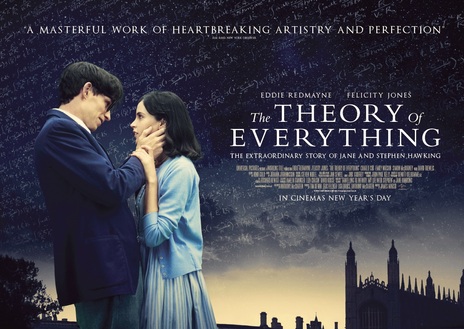
It seems Eddie, with his particular body and looks, was a dead cert to play the great Stephen Hawking – although Benedict has had a go too in a production for the small screen. Hawking’s mega-intelligence is beyond my comprehension, as is how he has lived on all these years, considering his disabilities. His initial distressing prognosis was one of only a warranty for a couple more calendars. He’s had two marriages and produced offspring – so there! Eddie’s physical performance is mesmerising – the contortions he had to force his body and face into! The outcome was a thoroughly convincing semblance of the wheel-chair bound, mute scientist – but the strain on the actor must have been immense. There is little one could quibble with over his garnering of a Golden Globe. That Keaton became the parallel bestie makes for an interesting tussle at the major award. The film, at times, attempts to explain, in layman’s terms, Hawking’s ground breaking theories, but this punter was none the wiser. This aspect of his life is downplayed, though, to concentrate on his personal affairs. It strongly features his first wife – after all, the film is based on her memoirs. One cannot fault another contender in Felicity Jones here – but I thought the more interesting performance came from Maxine Peake as his nurse/second missus. It took me a while to figure out this was radiant star of ‘Silk’ and less radiant one of ‘The Village’, two classy television offerings. She is a scene stealer in this. It was sure tough for Stevie H and his first Mrs Hawking, as his disease took hold, in the days before fame alleviated their financial woes somewhat. There was little that could be done to aide his shrivelling body, or ease the pressure on Jane to cope, in these early times. I imagine, in reality, it would have been ten times tougher than the film portrayed, as would have been Alice’s struggles in the movie that carries her name. Prior to my outing to see the former gem, I only vaguely knew about the famous physicist’s private life. ‘The Theory of Everything’ opens this up and – sorry if this is a spoiler – it is gratifying that both Stephen Hawking and Jane achieve happiness in their later lives.

thetheoryofeverything

Of course, for the affliction carried by Julianne Moore’s character in ‘Still Alice’, there is no possibility of a happy ending – not even Hollywood could conjure that. Alzheimer’s doesn’t grant second chances – and it is particularly churlish towards its host when it is early onset. I was disappointed in some ways by this movie – but conversely glad I was. I must admit I was expecting something more akin to the gut-wrenching ‘Amour’ – with the Oscar contender’s performance needing to be more extreme – for want of a better word. We all know what this highly regarded actor is capable of and she has truly been one of my favourites for many a long year – ever since she stunned me, the world and the Dude in the classic ‘The Big Lebowski’. But with ‘Still Alice’, despite the ravages the disease inflicts on her mind, her role was not as confronting as I expected. The package as a whole seemed a mild take on what must be so incredibly difficult for any family unit in such circumstances. Maybe because this one is relatively affluent, with the funds to make it as comfortable as possible for an afflicted mother and wife, this was not so much  the case. Hopefully, though, the movie’s success may bring dementia sufferers in from the cold. At one stage Alice states that she’d rather have had contracted any form of cancer than the mental hell she knew was on the cards for her – then she would have felt less of a social outcast. Moore carries it all off with aplomb, and there are scenes that one thinks ‘shoot me if this ever happens to me.’ Praise must also be given to those actors playing off both her – and equally with Redmayne’s offsiders.

I have a soft spot for Felicity Jones after watching her in her entrancing previous turn, as Dickens’ lover, in ‘The Invisible Woman’. And she was up to speed as Hawking’s wife in ‘TTOE’ – but I think the fact that she too is nominated for best actress says something about the quality of roles for women available over the last twelve months. As Jane she is believable as a woman torn between being a dutiful spouse to a man a mere whisper of the one she fell in love with and with wanting to lead a normal life. This predicament becomes especially galling when a very comely music teacher becomes a de facto member of their family. Another old hand, in Alec Baldwin, gives a quiet but nuanced performance as once more a partner going above and beyond the call. In some reviews he has been criticised that his emotions should have been more overt throughout – but he’s male, he holds stuff in – and of course he adores his Alice dearly, in any form. He stands back – it is Moore’s show.

Still_Alice_-

So, we’ll soon find out if my Oscar ruminations will come to pass – but my tips are compromised due to those wild horses that wouldn’t drag me to the cinema to see films like ‘American Sniper’ or ‘Whiplash’ – and I found ‘The Grand Budapest Hotel’ clever but trite. Still, the two films above continue the run of cinematic excellence the brand new year has produced. Go Benedict and Michael.

Trailer ‘The Theory of Everything’ = https://www.youtube.com/watch?v=x8QYUgO-tZo

Trailer ‘Still Alice’ = https://www.youtube.com/watch?v=ZrXrZ5iiR0o

The Blue Room's Best Movies 2014

A somewhat muted sadness gripped a certain section of the nation’s populace towards the end of the year 2014. We knew it had to come – they couldn’t go on forever. And of course they were irreplaceable. Effervescent Margaret and the more reserved David were calling it quits after a lifetime on the small screen, telling us about the movies. For many their recommendations were, for decades, part of the fabric of life in our country – first at SBS, later Auntie. They had one of those magic chemistries as they bantered, agreed or disagreed. The ABC, apart from the fact they so appealed to the older demographic the organisation these days is at pains to eschew, would not make the same mistake as they made with the similarly much loved ‘Spicks and Specks’. They would also retire the format. We already had a notion of how it would be without them when replacements were used whilst the pair were in Cannes or Venice. ‘At the Movies’ felt as flat as a failed soufflé. If reports are to be believed, Margaret was a reluctant retiree, but without her partner it could not go on. Putting a substitute opposite would be unthinkable. As for David, he was simply fed up with having to attend Hollywood crap day in day out. He wanted to choose what he would view. He is still scribing for the Oz – presumably they allow this doyen the luxury of being selective, which is exactly what this fellow retiree is able to do.

margaret-and-david-

Once upon a time, during my working years, back in regional Burnie for this film tragic, it was all quite dire. Although the local cinema, the Metro, did its best to cater for a variety of taste, it was with the blockbuster that the real money lay. The art house/foreign gems I loved rarely put in an appearance. For many of the offerings I enjoyed I had to wait for their arrival on the shelves of a local video outlet, the excellent Leisure Sales and Rental. Here I was fortunate the owner, like myself, had a penchant for the exotic, the non-mainstream. Those days are behind me. With North Hobart’s magnificent State Cinema complex, I have ample choice. Rarely do I have to sit through the mundane or deplorable. With judicious preparation, often assisted by David and his reviews, I have a fair idea I’ll like an offering before I purchase a ticket. And it seems to me that 2014 has been a golden year for cinematic excellence, thus the considerable number of Honourable Mentions (HMs) that follow what is, below, my choices as the top movies of the last twelve months.

10. – Healing – again Australian audiences chose to stay away from outstanding local productions. In this the eagle only just manages to outshine a memorable performance from Don Hany, ably assisted by ever reliable Hugo Weaving.
09 – Fading Gigolo – Woody Allen plays a pimp – and he’s so well suited to the role – in this atmospheric delight.
08 – Chinese Puzzle – our favourite group of students from ‘The Spanish Apartment’ return once again to show us how they are coping in the grown-up world of work and family responsibilities. They continue their machinations in the US of A.
07 – Dallas Buyers Club – As he has done on our small screen this year in ‘True Detective’ and also in our top film, Matthew McConaughey lights up the screen in his portrayal of an unlikely AIDS epidemic hero.
06 – The Past – in a seedy migrant suburb of Paris a stellar ensemble cast shine, dissembling family relations and presenting a different side to the City of Light.
05 – Philomena – Steve Coogan and Dame Judi Dench take us to tears and back in this heart-wrenching story.
04. – Calvary – Irish village shenanigans, with a shattering conclusion, present some Emerald Isle luminaries in a different light. Brendan Gleeson gives what surely will be his signature performance.
03 – The Great Beauty – an Italian response to our our ultimate selection – a true feast for the senses presenting Rome as its major star. It enchants and surprises from the get go.
02 – Still Life – Eddie Marsan of ‘Ray Donovan’ fame is comprehensively sublime as a small man leading an even smaller life – and then he rebels. The closing scenes are stunning.
01 – The Wolf of Wall Street – sex, nudity and drug induced addlement are to the fore in this Scorsese triumph. A brazen new Aussie starlet cannot outshine DiCaprio in this glorious paen to greed.

wolf

It is a testament to the year that there are so many HMs – The Invisible Woman, The Judge, Jersey Boys, The Trip to Italy, The Broken Circle Club, Pride, Keeper of Lost Causes, Folies Bergere, The Lunch Box and The Living is Easy with Eyes Wide Shut.

The Age’s takes on the best movies of the year = http://www.smh.com.au/entertainment/movies/the-10-best-movies-of-2014-20141224-12dimw.html

   http://www.theage.com.au/entertainment/movies/top-10-movies-of-the-year-20141219-12b2dy.html

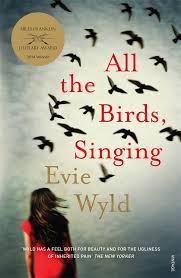
All the Birds, Singing – Evie Wyld

It was a shock. I was genuinely shocked that it won. All the knowledgeable money was on Richard Flanagan. Had I been a betting man my hard earned would have been too. Leaving aside the predominately awe-struck reviews for what fellow nominee Winton described as a ‘masterpiece’, there were the sales. Never far, for months and months, from the top of the best-seller lists, ‘The Narrow Road to the Deep North’ is truly a remarkable book. I defy anyone to get through it without weeping at some stage – I certainly did so more than once. Not so it seems the flinty hearted on the judging panel. At the time of its gong Wyld’s winning title had sold a paltry 1200 – now of course the author will feel as if she’s won the lottery. Of course sales should never be the sole criteria – but public response must count for something. Maybe the ‘wise’ trio adjudicating were intent on giving a newbie a legs up, or were they still wearing the scars of sexism directed at another judging panel for the Miles Franklin a few years back. Perhaps they feel the last world war has been done to death (sorry about the pun) – although the story was surely about so much more. Admittedly Flanagan doesn’t need the exposure, nor reassuring that what he has produced is the real deal – but I suspect he must be wondering, as many are, how could they turn from his opus to this relatively unknown and palpably inferior effort. I cannot claim to have read all other tomes on the short-list, but as soon as I recovered from feeling miffed on Flanagan’s behalf, I got stuck into Wyld’s book, just in case it I had it all wrong. I hadn’t.

Now that I have completed it, I will admit ‘All the Birds, Singing’ is a fine novel. I have no qualms now about the praise the judging panel heaped on it :-

Commenting on behalf of the judging panel, State Library of New South Wales Mitchell Librarian, Richard Neville, described Ms Wyld’s writing as “spare, yet pitch perfect”, with her novel being both “visceral and powerfully measured in tone. ‘All the Birds, Singing’ draws the reader into its rhythm and mystery, through wonderfully and beautifully crafted prose, whose deceptive sparseness combines powerfully with an ingenious structure to create a compelling narrative of alienation, decline and finally, perhaps, some form of redemption,” Mr Neville said. “Flight from violence and abuse run through the core of the novel, yet never defeat its central character. ‘All the Birds, Singing’, an unusual but compelling novel, explores its themes with an unnervingly consistent clarity and confidence.”

After reading the tome, it is hard to disagree with those sentiments, but in my view it possesses none of the power of the favourite for the gong. I know Flanagan’s effort will become an Australian classic. Wyld’s sophomore book will have a brief honeymoon and then be largely forgotten.

all the birds singing

‘All the Birds, Singing’ had been sitting on my ‘to read’ shelf well before it was put forward for the major award. It was there due to the enjoyment I received from Ms Wyld’s first published offering, ‘After the Fire, A Still Small Voice’. In truth, although much the same theme was evident in both, her second was no disappointment, in itself, either. It was also based around fleeing one’s past/demons. In the first it was into the Australian bush/outback. In the follow-up it was to the fringes of our country’s central void – and then on to as far away as is possible – an island off the UK’s northern coast. Neither broke new ground on this well travelled path, but both were well wrought and worthy of their critical acclaim. The hero of the second, Jake, is a fractured soul plying her trade as a hooker at a truck stop in a Pilbara mining town. She escapes this to former customer Otto’s ‘care’ on his fly-blown property out on the desert rim. Here she picks up some handy hints on how to shear sheep. This puts her in good stead when she joins a motley crew working the sheds during the season – and finds a new partner to share her lodgings. But her past is never far away, so she decides to take her savings and chances to the other side of the world. The sun-blasted landscapes of this country are exchanged for an Arctic-wind chaffed isle in another hemisphere. By now she had graduated well and truly from using her orifices to raise a buck to becoming a fully fledged sheep farmer – but of course there are more roadblocks to come for our feisty Aussie lass. Something is taking her animals – something that is sinisterly bigger than the known local wildlife and she has had hints of it in the periphery of her vision. Are these flashbacks, or is she going cabin-crazy? She then develops a relationship of sorts with another fleer from reality as she attempts to move towards a form of atonement.

evie wyld

Yes, there is much to admire about Wyld’s work. She certainly knows her canines as dogs feature as major characters. Her narrative dips and weaves through the years forming a seamless narrative. For a second timer, she undoubtedly has a strong future in the industry as a result of the Miles Franklin misjudgement. But she is simply no Richard Flanagan.


Evie Wyld’s website = http://www.eviewyld.com/

Eagle

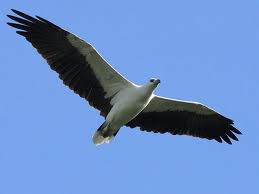
As much as I believe in a god I believe in totem – and in my case it has always been that of the eagle; specifically sea eagle and wedge-tailed. I regard them with much reverence. Espying one of these alpha-raptors evokes as much spirituality in me as occurred on seeing Uluru or Chartres for the first time, or indeed on the day I took that walk on a narrow strand of white sand by the sea at Oyster Cove.

In 2006 I had the good fortune to teach my school’s shiniest senior students for creative writing. As part of their first lesson for the year I felt that I should prove that I was able to ‘walk the talk’. I had little of the time I now possesses to indulge myself with scribbling, nor the time to polish – but this is the piece I presented.

SUMMER 0F THE SEA EAGLE

Each summer, in recent years, I have travelled south to my partner’s house of tranquility by the Derwent, on the semi-rural outskirts of Hobart. Here I find peace, respite and love. At the end of my lady’s street is a path that serpentines its way along the eastern bank of my island’s premier river, for five or six kilometres, towards New Norfolk. It has been my habit to walk the length of this track most days, partly to satisfy the adage that ‘half an hour’s exercise keeps old age away’, and partly because of the delights that may unfold on this ramble.

The path is named for a young lady kidnapped and murdered many years ago now – her body disposed of amongst the reeds that fringe the river’s edge. But no gloomy thoughts enter my mind as I traverse the length of the walkway, particularly on the glorious summer days we had through this January just past. Firstly there are the various moods of the river itself – from grey white-capped anger to glassy reflectiveness of the surrounding hills. On my outward walk along the Derwent the grey bulk of Mount Dromedary dominates. On the return journey the pinnacled head of Mount Wellington gradually emerges from behind the hills, flanking the western bank, as I close in on my destination.

Then nature can open up to me as well. At various times I can appraise numerous groups of black swans. During the warm weather months their flocks are often sprinkled by downy grey cygnets as well. One such quartet of mother and offsprings once blocked my path on the return journey – the protector of the group angrily hissing and flapping at me as I tried unsuccessfully to pass. I envisaged headlines in the Advocate –‘Yolla Teacher Severely Injured After Attack by Feral Swan’. I escaped by scurrying up the railway embankment that aligns itself with the river path. It is always a treat watching the blue wrens as they flash and twitter in the shrubbery, the brilliant male’s plumage glinting in the sun. Often scampering around are poo-cackers (such an inspired collective noun!) of native hens. In the shallows I often catch fleeting glances of a fisherman’s quarry. One day I watched a dozen or so pelicans take flight nearby, on another an echidna made a tortuous crossing of the railway tracks. But nothing beforehand matched my encounter with the resident raptor king of the Derwent on one particularly golden summer’s day.

Shortly after the turn of the New Year I stood transfixed on the decks of a catamaran on its journey down the Hobart’s estuary to Peppermint Bay as a screeching flurry of kelp gulls hooned in on a sea eagle. It had obvious designs on their eggs – this being my only previous contact with the magnificence of this feathered denizen of our coastlines. A few days later, on my walk, I spotted in the distance, high up, what I first took to be a circling hawk – only this bird seemed to be too big, too majestic – and there was that same distinctive undercarriage of pristine white. On later walks I repeatedly saw it, but always too tantalizingly far off to positively identify. One day, though, a fellow perambulator confirmed that this solitary bird was indeed a sea eagle.

The day of which I write will stay forever embedded with me. I was loping along the track, again on the return journey, when a certain feeling induced me to turn and look back towards Dromedary. Against the dun green hues of its flanks I was able to pick out the redoubtable avian of earlier sightings, gliding low to the river, obviously on the lookout for piscatorial delights. He (she?) was heading my way, so I remained to watch its progress. Closer and closer it flew. As it neared me the bird seemed to align its flight path with my stationary figure. He was so low his piercing eyes seemed to be at the same level as my own startled ones. For a brief time I indeed felt I was the sole focus of his interest. Then, when it was almost on me, up he soared to the heavens to hunt thermals. I felt a rush of air as he passed overhead. He knew who was the dominant species in this scenario, and it wasn’t the onlooker. The eagle then glided down again, up ahead of me, to continue his appraisal of the Derwent. I reluctantly returned to my trek towards the small car park that signifies the Bridgewater end of my promenade. A small gaggle of tourists were there, observing the sky and engaged in animated discussion about what they were gesturing towards – my eagle.

white belly

One asked if I could enlighten on its provenance so I regaled her with what I knew of a sea-eagle’s habits. For I time I stood with them in their observances as the raptor gradually disappeared downstream over the causeway. They’ll probably remember the thrill of it, but that momentary connection I made with my ‘kindred spirit’ is with me forever.

*****

And that is as good a way as any to segue into a discussion about ‘Healing’, a recent movie that had me weeping unashamedly into my hankie by its conclusion. I doubt if I’ll see a better Aussie movie this year. I know I’ll not view a more affecting one from anywhere in 2014 – that’s for sure.

Being picky – it wasn’t perfect. There were occasions of overt Aussie-ness that were cringe-worthy. The normally reliable Justine Clarke here was quite jarring. But anchored by Hugo Weaving and Don Hany, this fluid vehicle from director Craig Monahan would go a long way to charming any affected by the ‘black dog’ out of their despair. Of course Weaving is an old hand at this sort of stuff – it was Don Hany, making his big screen debut, who was the revelation. Playing Viktor Khaden, a long-termer in the prison system, his character’s chances of rejoining normal life were running out. He finds himself transferred to the low surveillance prison farm, Won Wron. He’s Iranian, in for committing a ‘saving face’ crime. He also seems a hopeless case for redemption, but Matt Perry (Weaving) is going to have a go. As a senior rehabilitation officer it’s his job to attempt this; it’s not his job to also believe in Viktor. Tony Barry, as Matt’s offsider, is cynical about it all. This movie is a throwback to Barry’s younger days of pomp when he was in the same position as Hany is now, a darling of the small screen. Also demonstrating actorly chops that are prescient of bright futures in the industry are Xavier Samuel and Mark Leonard Winter. But the real star of this Oz offering is Yasmine, the eagle – Viktor’s ticket to the future. She is awesome, – just so stunningly awesome. To see this movie is to believe my words – particularly as she imposes herself over the opening credits. What an introduction, till it all comes to a horrible end! That it is all based on a true story only increases the allure of Monahan’s engrossing fare.

I know this inspiring effort will not attract the mindless masses away from their brainwashing at the altar of Hollywood dross, but this is so worth tracking down when it is eventually makes it on to DVD. I know there are two very special young ladies who will receive it in their Christmas stockings from me.

.Don-Hany-.g

‘Healing’ website = http://www.healingthemovie.com/

Handyman

Monday night is better – so much better. No more clashes with the Saturday eve footy that invariably took me away from it – and her, the alluring Ms Z. Coupled with Ragnar Lothbrok and his murderously pillaging ‘Vikings’, a double dose of mayhem is provided by SBS, albeit with each being of a very different nature. Yes, I am more than happy to be a ‘RocKwiz’ devotee again.

If nothing else, this loose shambolic affair, being beamed into our welcoming homes from St Kilda’s grand old rock pub The Espy – Esplanade Hotel – has outlasted its more polished and structured – but nonetheless, still at, times hilarious – ABC cousin, the original ‘Spicks and Specks’. It will possibly survive that show’s second coming too. The latter is a brave attempt – but nothing can replace the golden trio of Hills, Warhurst and Brough (so pleasing to have the divine Myf back with us on DoubleJ). Auntie used to build its Wednesday night’s around the old vehicle. The punters loved it – its just not the same.

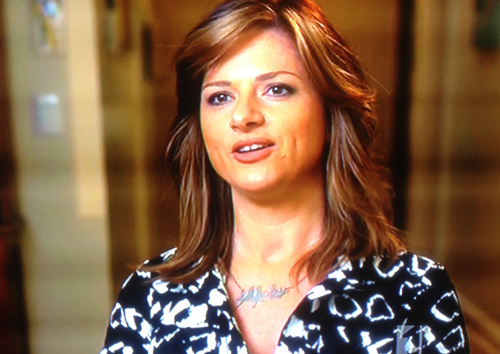
‘RocKwiz’ isstill going strong and hopefully that will forever remain so. It is essentially Julia’s show. She conducts those collected in front of the live audience with aplomb, somehow conjuring a beast of substance from ingredients pulling in divergent directions. There is a smooth lack of decorum and she keeps her panelists in thrall with her sassy, irreverent and oft flirtatious overtures. The gathered cohort of Melbourne tribes out front are chickenfeed – they are in the palm of her hand from the get go. Occasionally she lets slip some insights into the ‘real Julia’, but for more of that one needs to tune into the glorious ‘Agony’ franchise to see her in a more revelatory mood. Her two wingmen, the loquacious Nankervis and the hairy-armpitted roadie Dougal are cult figures. Over the twelve seasons a fantastic range of of local and overseas luminaries have displayed their vocal wares on the ‘RocKwiz’ stage. Then there is the always the eagerly anticipated culminating duet where the two ‘Who Can It Be’ guest panelists wrap their trills around a hoary standard. We could all sing the virtues of our own favourite combination with this – but for your scribe the pairing of Clare Bowditch /Tex Perkins on the Pogues’ Christmas staple ‘Fairytale of New York’ takes some beating.

JuliaZemiro.

So last Monday eve my DLP (Darling Loving Partner) and I had just finished being blissed out on our weekly fix of northern barbarians when we then hunkered down for Ms Zemiro to get the show up and running. This night one of the guest panelists, who sang her way on, I have taken a shine to of late – the former Taswegian Courtney Barnett, who now seems to be creating some overseas momentum as a singer-songwriter in the Dylan mode. Her duet with her male counterpart on the Velvet Underground’s ‘Sunday Morning’ was, I felt, quite sublime.

billy b and courtney

Now I have never been a huge fan of Billy – Billy Bragg – even if I greatly admire him. The sole album I have of his in my collection is his collaboration with Wilco on some previously unrecorded Woody Guthrie lyrics. ‘Mermaid Avenue’ is a favourite, but I haven’t taken to any other offering from his oeuvre. But on he marched, up to the mic on the platform and launched, accompanied by the ‘RocKwiz’ Orchestra (of three), into his ‘Handyman Blues’

I’m never gonna be the handyman around the house my father was
So don’t be asking me to hang a curtain rail for you, because
Screwdriver business just gets me confused
It takes me half an hour to change a fuse
And when I flicked the switch the lights all blew
I’m not your handyman

It was a good rendition. I looked over to the sofa, where my beloved DLP was in repose, to get her take on it, when on her delightful visage I espied a quizzical smile.
‘What?’ I chortled, ‘What?’
‘He’s singing your song darling,’ she retorted with a laugh – and indeed he was.

Don’t be expecting me to put up shelves or build a garden shed
But I can write a song that tells the world how much I love you instead
I’m not any good at pottery so let’s lose the ‘t’ and just shift back the ‘e’
And I’ll find a way to make my poetry build a roof over our heads

Putting pen to paper to build something around words is truly my idea of handyman-ing. My father’s DIY genes skipped a generation to my son. I love to write and I share that in common with my BTD (Beautiful Talented Daughter), who has done much more with her ability than I ever will with my far more humble word-smithery. I am just a scribbler, but now that retirement has finally provided me with some of that precious commodity, time, I can revel in my new addiction. And yep, on occasions Billy, I’ll have a go at poetry too!

I know it looks like I’m just reading the paper
But these ideas I’ll turn to gold dust later
Cause I’m a writer not a decorator…
I’m not your handyman

At times I do get down on myself for my lack of manly attributes, but fortunately my DLP accepts my limitations in the area and loves me anyway. Thankfully, she can more than capably wend a screwdriver or hammer, tinker under a car’s bonnet and knows what’s what in the garden weed department. As with Billy, it may be the daily rag that sets me off; or a movie at the State; a song that meant something to me once upon a time or, just simply, a tree standing on a hill. It doesn’t take much and I’m away. At this window where I’m sitting now I can view the Derwent flowing by and I am at peace – really in a good place, Billy – just me and some words.

Billy Bragg sings ‘Handy Man Blues  = https://www.youtube.com/watch?v=FZ8fPJ7zZSg

Billy and Courtney Barnett sing ‘Sunday Morning’  = https://www.youtube.com/watch?v=7Yg6xDAekPI

Clare Bowditch/Tex Perkins ‘Fairytale of New York’ = Clare Bowditch/Tex Perkins ‘Fairytale of New York’


There Could Never Be Too Much Kelly

She floored many a male, including this one, in ‘Mrs Henderson Presents’; is a constant in the ‘Sherlock Holmes’ series and has been described by the esteemed Times of London as ‘…theatrical Viagra…’ for some of her stage show performances. She is fearless, is Ms Reilly – this late thirties stunner who eschews the usual red carpet nonsense of stardom; rather devoting herself to improving her craft than to the trappings of fame – she’s no celebrity in the classic mode.

kelly

So I was anticipating delight when I marched off to the State to see this red headed, sublimely freckled English rose strut her chops in her third collaboration with French Director Cedric Kaplisch for ‘Chinese Puzzle’. This is the latest part of a trilogy that follows the lives of a coterie of Parisians in various world cities. There was no baring of Kelly’s beauteous body as occurred in MHP – this time all pleasures in that regard fell to the also distinctly alluring Cécile de France and her bed mate – but she charmed this fan to the max nonetheless. Kaplisch’s ‘Paris’ is another of his oeuvre that is worth seeking out and also stars Romain Duris, the male focus of ‘Chinese Puzzle’, who, along with the awesome Audrey Tatou, features in each of the director’s threesome that began with ‘The Spanish Apartment’. He then built on the first with ‘Russian Dolls’ (set in St Petersburg as well as the city of love on the Seine) and now we see our lead man battling the forties in this culmination to date. It is a treat revisiting these characters and being privy to the continuation of their personal journeys, beginning in Barcelona in 2002. This trio of engaging movies are akin to Richard Linklater’s ‘Before Sunrise’ franchise – only lasting for an extended period, as opposed to a single twenty-four hours, the hallmark of the latter. Daris’ Xavier is a writer, now achieving success with a best seller. Due to family circumstance he has relocated to the gritty China Town area of the Big Apple, but his love-life continues to be a confused ‘puzzle’ of interweaving pieces. This remains the case for some of the other members of the ensemble cast as well. All the protagonists have their foibles – for X it is his self absorption; for Kelly’s Wendy it’s her deference to her new hubby at old one X’s expense. Cécile de France’s Isabel has difficulty is in remaining faithful to her lesbian lover. As for Audrey’s Martine, she’s as scatty as ever. One example of the many delights of this offering is the way the back-story is put together at it’s commencement, the audience receiving a visual representation of the characters’ ageing. To my mind, though, the women involved are simply ageless in their beauty.

 puzzle_.

The director has dropped hints that there may indeed be a fourth instalment. That would again see me dashing hopefully to the North Hobart cinema house for yet another feasting on Ms Reilly.

puzzle-640

Hotel

January, 1977 and the northern winter was harsh, compared to the experience of that season back on my home island where snow usually only caressed the mountain tops. For days I’d experienced cold like I’d never known. That night, my train pulling into a darkened station, I wondered what on earth I was doing on the other side of the globe at that time of year! Sleet was in the air as I decamped my carriage, making me think about and miss my loved ones back in sunny southern climes. In those days instant communication to anywhere in the world was only a small flicker in the eyes of the future-seers. It was my first time out of Oz and to date the European sojourn had been an eye-opener and for the most part, enjoyable – the great art galleries of London and Paris, the amazing tucker, the wine – all good. It was all up to expectation, but short days and unremitting dun skies were getting to me. It was the dead of night, after a day of travelling to get to my destination, the last part on a SNCF branch line seemingly to nowhere – in fact, to an obscure town slap in the centre of the Central Massif. I was well and truly off the beaten track. A friend had recommended this place, stating it was not to be missed. He insisted it was added to my itinerary. On that freezing, deserted platform in the middle of France, I thought very possibly he may be crazy. I could see only one lighted building across the street from the station and I made my way towards it. As it turned out, I do not recall too many other hostelries from that, or my later ’81/’82 Continental/Old Blighty excursion, but for a reason that will soon become clear, I recall Le Hotel de la Gare, Le Puy – its cafe the source of the illumination.

I was too tired to look for anywhere else, despite the hotel’s not too promising looks. The bar was full of yokel types, with the barman taciturn when I asked, in stilted French, if a room was available. He took my particulars and handed me a key. I lugged my backpack up a narrow staircase and along a worn carpet to my allotted vestibule. On opening the door I was confronted by a barely furnished gimcrack room as chilly as a Siberian steppe. Fully clothed, I took refuge under the covers of a lumpen bed, complete with greasy bolster, rather than the wished for downy pillows, to rest my weary head. Thankfully sleep took me quickly.

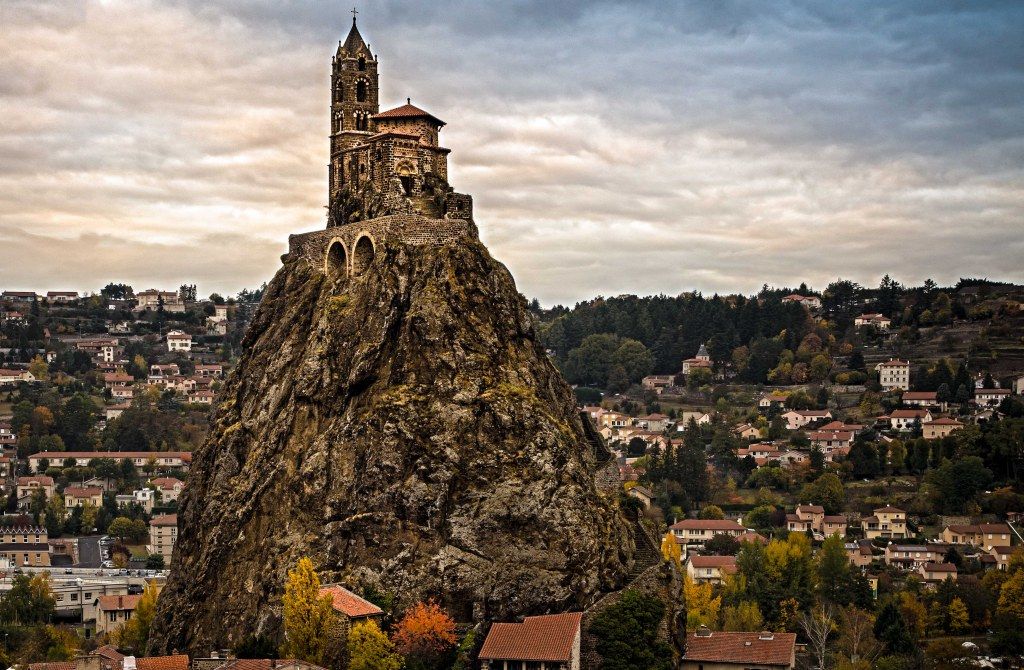
I awoke much later than at my usual time and initially I thought I must still be in the land of nod dreaming – the room was transformed. Shafts of sunlight were streaming in through the only half closed shutters and the spare room appeared almost cosy. Raising the blinds to the full force of the soleil I espied perfectly blue skies over the red terracotta roofs of the surrounding buildings. Maybe the place wouldn’t be so bad after all. The ablutions were down the corridor, so already fully dressed, I headed for them with a change of clothing and the threadbare provided towel. I didn’t make it to my destination for a while. At the end of the corridor was a glass-panelled door leading out to a second floor terrace. The door was unlocked so I took the opportunity to have a sunny squiz at the town from a different angle. What I saw stopped me in my tracks, leaving me open mouthed in wonder – gobsmacked. From this veranda there were more pottery-roofed buildings descending gently down towards a ravine. But what caused my reaction was what protruded above this fairly nondescript sight. Astoundingly, there were two mighty, natural pinnacles arising from the earth, reaching for the heavens, dwarfing their surrounds. These were the puys, hence the town’s appellation. I later deduced, they were volcanic plugs. Atop of one was perched an ancient looking church. On the other, even more strikingly, was a maroon hued statue of the Virgin, arms holding the infant Jesus. I forgot all about my bursting bladder and my cloying skin. I couldn’t drag my eyes away from the scene that befell me.

.Le_Puy_en_Velay.

Turns out, although not well known outside France, Le Puy, the place was a significant spot on a pilgrimage trail and as I came to know it better, was quite delightful. One the best meals in my memory was scoffed down in a seen-better-days restaurant on the main avenue leading down to the chasm. I was also proud of myself for successfully making the hard climb up to more closely examine the church – or was it the statue? It was so long ago now – my brain fails me yet again. After a few days there I headed south to the Riviera and the winter sun remained glorious for my time by the plages there as well. It all didn’t seem so bad after Le Hotel de la Gare, Le Puy.

le puy

Back around century’s change I was lucky enough to win a luxury trip to Bali. That remains my only experience of five-star accommodation in all its extravagance. The room I shared with my darling, loving partner was as plush as plush can be, but in truth I never felt truly comfortable in staying there at the Sanur Hyatt – far too patrician for a pleb like me. I like hotels with character perhaps somewhat more salubrious than that one in Le Puy – perhaps just with a little more in the way of amenities than it. My hotels of choice have probably seen better days, perhaps just like me, but there’s something about them. There were some Victorian/Edwardian piles I stayed at in places like York and Edinburgh in the UK. I remember a breakfast of kippers in a B&B in the Lake District and a room I shared chastely with a woman I barely knew in a hostel run by nuns overlooking Lake Lausanne. There was an establishment of nursery rhyme décor that I slumbered in for an overnighter in London. Back in Oz there was a room with a view in Brisbane that stands out, but the purest example of what I like is the Crossley, China Town in Yarra City – faded, faded charm.

And that is as good a segue as any to the most recent movie I’ve viewed back home in the little city on the Derwent – Wes Anderson’s ‘The Grand Budapest Hotel’.

Featuring a veritable who’s who of tinsel town luminaries – blink and you’d miss some of them – this watchable tip-of-the-hat to to those imposing iconic hotels of between the wars travel has a marvellous verve and features vibrant palette of colour, in all senses of that word. It was a movie where the look of the thing was the attraction, rather than what I felt was the rather hackneyed heist-centred narrative. It was a visual feast of sublime cinematography, featuring some animation to enhance the feel. The transformation of some of Hollywood’s elite to fit into the skin of their roles was another plus – none more so than that of Tilda Swinton to play the dowager Madame D, whose demise is pivotal to the plot, such as it was. Ralph Fienes, in the lead, rightly steals the show as the concierge, never disinclined to become the lover of the wealthy old dears who flock to his carnal ministrations when the Budapest was in its pomp. When we initially meet the hotel, in more recent times, it is a mere shadow of past glories, but soon we are back in a golden age. Newcomer Tony Revolori, as Lobby Boy, is also impressive, with the characters inhabited by Harvey Keitel and Willem Dafoe having the most eye-catching of the minor roles. The candy pink hotel, with its twin funiculars, was probably the real star of the piece. Overshadowing proceedings, revolving around a famous picture bestowed to the concierge by the dowager, is the shadow of the forthcoming war and all the dire consequences for Mitteleuropa it portends. The post-war impost of mass tourism meant the grand hotels had to reinvent themselves or be consigned to history’s dustbins, as we see has happened to the fictional Budapest.

.TheGrandBudapestHotelStill

This was my first real viewing of an Anderson offering and although my praise is somewhat more muted than that of many critics, it was nonetheless a treat for the senses, if not the intellect. It didn’t raise a laugh from me, although other members of the audience I shared it with obviously found more enjoyment in its humour. Despite my reservations, though, there would be worse ways to spend one hundred minutes of your leisure time.

The Grand Budapest Hotel

The movie’s website = http://www.grandbudapesthotel.com/

The Blue Room's Top Books Read in 2013

‘Move over ladies, the big boys are back in town’ could almost be the catch-cry for this year’s Miles Franklin Award. In 2013 it was the fairer gender who took centre stage, but in the last twelve months the male masters of the game all pushed out new product – J M Coetzee, Thomas Keneally, Richard Flanagan, Tim Winton, Christos Tsiolkas, Steven Carroll and Alex Miller. These behemoths don’t need awards to give their sales spikes – their names and oeuvre do that for them. To call the winner will be tough, but I know who my money will be on

Unlike the Miles Franklin, my best reads for the year, by necessity, are not restricted to that published in the previous twelve months. In my final years in the workplace I went on a book buying frenzy, expecting my retirement years would be financially quite straightened. This has not come to pass, but I now have a fair old backlog sitting in the man-cave to get through. Of course 2013 still saw me frequenting Fullers most weeks, but I had to be tough with myself and not be too tempted by their beguiling shelves. So following comes the best stuff I have read over the past calendar year:-

10. ‘The Forgotten War’ – Henry Reynolds – places the question as to why the great Aboriginal warrior leaders of the Frontier Wars are not held in same regard as Monash, Morshead and Blamey.

09. ‘Whatever You Love’ – Louise Doughty – the sex was truly awful, but as a mother’s worst nightmare this was sure a page-turner.

08. ‘Sydney’ – Delia Falconer – on my ‘bucket list’ is the aim to read all titles in this series’ fascinating takes on our major urban areas.

07. ‘Richo’ – Martin Flanagan – a larger than life local footy hero bought to life by our best writer on the native sport.

06. ‘The Rosie Project’ – Graeme Simsion – rightly the commercial smash hit of the year and I loved it.

05. ‘A World of Other People’ – Steven Carroll – one of my favourites doesn’t disappoint with this tale of love amidst the ruin of war.

04. ‘The Memory Trap’ – Andrea Goldsmith – this author more than matches it with the big boys in this intricate, maze-like journey through relationships across continents and race.

03. ‘Five Bells’ – Gail Jones – a single iconic location on a single day but what a magic web Jones weaves.

02. ‘Coal Creek’ – Alex Miller – with the main protagonist, Bobby Blue, Miller creates the voice of the Outback.

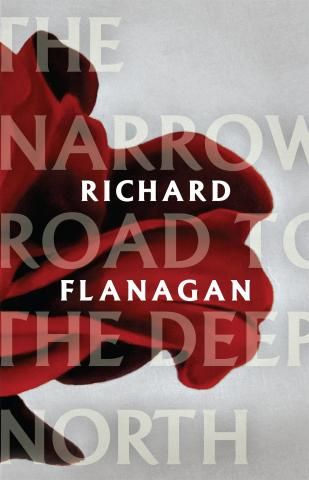
01. ‘The Narrow Road to the True North’ – Richard Flanagan – heartbreakingly the best novel I have read this century. If it doesn’t take the honours in the aforementioned award I’ll cry into my beer. Flanagan’s Dorrigo Evans is a flawless masterpiece of a creation – the type of heroically flawed man our nation treasures.

Flanagan Narrow Rd

HMs to ‘Eyrie’ (Tim Winton), ‘Pictures of You’ (Caroline Leavitt), ‘You – a Novel’ (Joanna Briscoe)

Richard Flanagan is a proud, feisty Tasmanian and I think it would be fair to day my little island punches above its weight in the literary boxing ring of the nation. Sadly one of our local literary heavyweight champions retired into the sky this year. Thank you CK for all the reading joy your work has given me down through the decades.

A Blue Room Book Review – The Narrow Road to the Deep North – Richard Flanagan

Flanagan Narrow Rd

From the slurry that are my earliest memories there is a night of pluvial rain out into which my father went. On the road below our house a taxi had come to some form of grief. I remember looking out a window and seeing static car lights. My father came back and reported it was his friend, an old army mate, now cabbie – Ray. In response to my mother’s query, he reported that his pal would be okay – given a little time. I knew Ray had been ‘on the Railway’ during the war, without knowing exactly what that meant – only that he and Dad discussed it over beers. It seems to me that in today’s parlance he would have had some form of ‘melt down’ and parked by our house; he was coming to someone who ‘understood’ – my father.

It wasn’t till later in life that I came to know what being ‘on the Railway’ meant. To me the railway, in those earlier years, was the one running by the foreshore of our Tasmanian town and back then, in the days of steam, one actually bearing trains carrying passengers hither and thither. Later I knew ‘the Railway’ was another line far away in the jungles of Asia, the horrors of the building of which were linked to the game-changing conflict that figured so hugely in the life of both my old man and Ray. Nothing of’ ‘the Railway’ ever featured in my father’s stories, told to me perched on his knee – that wasn’t part of his war- as were the battles in Palestine and the Western Desert. His yarns were highly sanitised for juvenile consumption. There is, however, nothing sanitised in ‘The Narrow Road to the True North’.

As I progressed through my pre to mid-teens I became fixated on those ‘great adventures’ – World Wars 1 and 11. There was ‘Combat’ on the tele, with our dominant allies, the GIs, always coming out ahead of those foul, deviant ‘Krauts’. Through another source, the public library, I discovered how foul those Germans were – though not particularly those on the front line. I saw pictures in books of concentrations camps, pictures that gave me the horrors. These did not feature in any of my Dad’s stories either. It was then I started to discover the true nature of war. It had little of the American good guys coming to the world’s rescue with some micro-assistance from Aussie diggers. It was a hell – one only had to read of Stalingrad or Iwo Jima to know that.

In recent days I have attended the launch by Tim Winton of his new tome ‘Eyrie’. The great man will no doubt be a contender for the Miles Franklin with it, but during his talk he genuflected to Richard Flanagan, who, with ‘The Narrow Road…’, will no doubt be his major competitor. He used the M word to describe it – Masterpiece. That word came to the lips of Jennifer Byrne on the ‘First Tuesday Book Club’ as well. Her panelist, the divine Marieke Hardy, informed us that, at another launch, when she went to congratulate Flanagan on the book, all she could do was cry in his presence so deeply was she moved by what she had read. The first act she did on completing the novel was to ring her own father.

Could White in his pomp; Kenneally, Alex Miller or even Winton himself produce the burnished word-smithery this author uses in this book? The Tasmanian has honed the words on his pages to a sheen so as to have his desired effect on the reader. They are mesmerising; they are simply unputdownable. His mastery of the vernacular entraps from the get-go and never lets up until the last page is done with. One takes a deep breath as Flanagan beautifully, if not quite happily, ties up the loose ends, then one simply wants to start from the beginning again. There is a symmetry to the whole opus as Flanagan pulls us away from the fecund, oozing passages of horror on ‘the Railway’, then immerses the reader in it yet again.

I knew from his previous offerings, such as ‘The Sound of One Hand Clapping’ and the exquisite ‘Wanting’, that this writer has the promise of literary greatness about him, but ‘The Road to the Deep North’ raises him to another level. It seems all before for him has been moving to this – this being reportedly twelve years in the making. It will become a seminal Australian epic.

Two aspects of the book did surprise. I knew from the pre-publicity that Flanagan was not going to shirk from the utter vileness of the under-resourced, impossible task that befell the slave labourers on the Burma Railway. Its descriptions of the squalid conditions and Japanese cruelty were a test for me – a good friend couldn’t cope and had to skip those pages. I made it through – but it wasn’t pretty. Even in these, though, there is a beauty in the ‘mateship’ between the men – a notion that has been somewhat disrespected in recent times. Surely not now after this book. Of course, I was moved to tears by his portrayal of the privations in the middle sections of the book – it was no surprise to me that I would be. I was forewarned that Flanagan presents the other side as well – in some cases, if not entirely sympathetically, at least there is an understanding there. There is a Japanese – and a touch of Korean – perspective. In doing so – does he makes it easier to forgive?

What I didn’t expect was the sheer readability of the thing. It draws the reader in deep – normal pre-occupations are put aside whilst one devours it. The mind never wanders, causing a reread of paragraphs, one is so immersed. Even though it is not a linear narrative, Flanagan has somehow made it all so seamless. There is real power in the story, not just of the abominations of the jungle camps, but in the parallel magnetism of the affair that is also at the heart of this great Australian novel. As the main protagonist struggles to abide, let alone like, himself, women are drawn to him in the same way as his men were on ‘the Railway’ A novel of this magnitude would usually take me a couple of weeks to complete what with all the other enjoyable attractions of retirement – this, though, took precedence and I flew through it in a couple of sittings.

I went to see a film very early in the year called ‘Armour’ – a story of a hard singular death. That movie has retained a hold on me, not an entirely pleasant one either. I thought there could be no more pitiful going than that old woman’s on that movie screen that night. Of course, there are multiple deaths in ‘The Narrow Road…’ The double one, though, of Darky Gardiner would seemingly be so heart/gut wrenchingly that it would be beyond adjectives – yet Flanagan seems to find them to do justice to the brutality of it. Jack Rainbow’s demise under the surgeon’s knife is almost as potent, if that’s the right word? Then there’s the Japanese fixation on beheading – how the author describes the tantric of it in the mind of one of his Asian characters in particular makes the skin crawl. It is something seemingly beyond human understanding – yet Flanagan somehow makes it comprehensible.

The character whose war provides the fulcrum for the tale survives and presumably is an amalgam of Arch, the author’s own remarkable father, a former ‘slave’; as well as the legendary Weary Dunlop. That he had to make it through another test, albeit a briefer one, was also a surprise to me. It was yet another black periods of time in my island’s dark history – the ’67 bushfires. These are indelibly etched into the minds of all Tasmanians of my vintage when the hills around where I am sitting now scribing this piece were in the grip of dry-heated, gale driven hellfires. Over sixty lives were lost. It was another Hades altogether that the by now the living legend had to summon the strength to come to terms with.

It’s the names – the names of his characters that truly, truly grabbed as well – the range of wonderful appellations were Dickensian in their aptness – Sheephead Morton; Jimmy Bigelow; Rooster MacNiece; Bonox Baker; the priceless Gallipoli von Kessler. Does a woman’s name role off the tongue more sweetly than Amy Mulvaney. No wonder she dominated the great man’s mind with a nomenclature like that! She was his uncle’s wife; his unquenchable passion, despite a more than suitable, if long suffering, wife in Ella.

And finally, is Dorrigo Evans the greatest Australian literary creation this century?

_richardFlanagan_Size4

Morag Fraser on Flanagan’s opus = http://www.smh.com.au/entertainment/books/barometer-of-torment-20131010-2v97i.html