Category Archives: Book Reviews

An American in Oz – Sara James

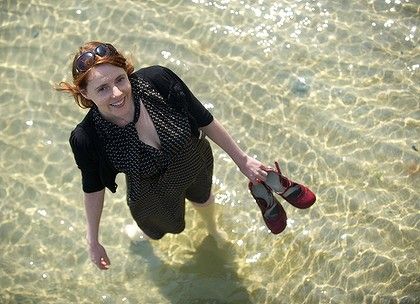
Would you credit this? ‘Mystifyingly a Red-bellied Black slithered its way up to our front door like a demented Avon lady and repeatedly beat its head against one of the glass panes…a deadly snake knocked on our front door.’

I’d believe it. Growing up I listened to tales my father told, as well as many from his mates, of Joe Blakes – so I’d believe it. My father and those of his ilk, back in their pomp, were bush-comfortable and saw plenty – and they wouldn’t tell porkies, or exaggerate, would they? Besides I once saw a copperhead do something pretty amazing – put the wind up me completely as far as those reptiles were concerned.

But Sara James, the Yank of ‘An American in Oz’, is a different kettle of fish. She’s a big city lass. Even if she, as correspondent for the US’s NBC Network, had been to some of the world’s most deadly war zones, nothing equipped her for the deadlies that exist on our island continent, nor the terror in the bush that Victoria’s Black Saturday fires engendered.

Country Living: Author Sara James

I first became aware of Sara James when she was profiled by ‘Australian Story’ in August last year. She fascinated me. Coming to terms with life in a new land would have been less arduous for her had she chosen one of our large littoral cities to swap the Big Apple for, but she and hubby opted for a tree-change up in the hills behind Yarra City. Soon she realised she was out of her depth. Her Aussie bush savvy partner was often away – and even he was flummoxed by the potential for disaster that that Saturday of gale driven inferno produced. Soon, though, she gathered around her a coterie of local friends and neighbours, together with the nearby parents of Andrew Butcher, the man from Down Under she fell in love with, so our Australian Yank learned to cope with the vicissitudes of the bush. It is fascinating reading Sara’s take on matters Oz, comparing it to life in her homeland – and she’s also seen a bit in her time. She witnessed conflicts in the Sudan and Somalia, was witness to terror declaring war on America, became mates with the Irwins before she arrived and of course, fell head over heels for her own suited Crocodile Dundee from Muckleford – a ‘blink and you’d miss it’ Victorian bush hamlet.

Added to all this, her second daughter was born with what the diagnosing doctor callously termed ‘a bad brain’. The cruelty of that moment was saved, as always, by a nurse – ‘I’ve looked at your little girl and she has bright eyes. Don’t give up.’ Nurses know, you know – and she didn’t – give up, our feisty heroine.

So part of the book informs on a different sort of journey – to put a name to what caused little Jacqueline’s mystery ailment. Finally, after many ups and downs, success comes. It turns out it is something called KCNQ2 – and they invent a delightful mnemonic to remember it by.

Sara gives us her opinion on the current inhumane refugee policy which she believes is ‘…way out of proportion to number of people begging for entry.’ Of course, it’s a given that she cannot fathom cricket, despite her hubby’s best efforts in educating her, nor can she make sense of Melbourne’s notorious hook turns. For a respected Emmy Award winning reporter her prose is nothing to write home about, but this reader was soon engrossed enough in her yarns for this to be of little consequence. The pages turned seamlessly and I was always pleased to get back to it after a break. Occasionally there’s a little ‘how wonderful am Iitis’, but that is a very minor irritation in a worthy tome. As an outsider’s view it is an ‘everyman’ effort, being none the less compelling for that. And if you’re raising a toddler who’s creating mayhem with the ‘terrible twos’ or ‘troublesome threes’, reading this would put it all into perspective.

Good on you Sara for your resilience in our country. Good on you for not being afraid to criticise your new land, as well as your old. And just good on you for your candour all round.

Sara James’ website = http://www.sarajames.com.au/

Newspaper article on James’ life in Oz = http://www.dailylife.com.au/life-and-love/real-life/i-live-in-a-place-that-doesnt-exist-20120629-216ao.html
The Clothes on Their Backs – Linda Grant

clothes

Tasmanian winters are, by Australian standards, long, chillsome and in some areas, very, very pluvial. We are, on this island in the southern seas, on the cusp of a brand new one. They take a great deal of getting through for this scribbler with summer in his synapses – and I’ve been through a few. But I am away from that part of the isle where the mid-year months meant the westerlies bearing down on my coastal environs, downloading a heavy cargo of the world’s purest precipitation. This old fella is more sanguine about the cold season now that I am in southern climes. Hobart winters, under a Kunanyi oft frosted with white icing, can have freezing starts, but now I do not seem to possess the lack the forbearance I once had for winters past. I am just chuffed to be still here no matter what the seasons throw at me. Burnie/Yolla winters seem a now distant memory.

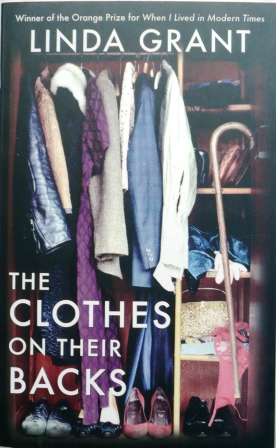
But it was forbearance I required to get through this book. Although the climate played no great part in it – to me it seemed continually grey and drab. It was like those Tassie winters of my teaching days – a hard slog, hoping there was a moment of sunshine up ahead. In the tome there wasn’t – spring never came, although I stuck at it in the hope. It was not aided by the mittel-Europeanness of its context, nor by its time setting – the Winter of Discontent in Thatcherite London. Under Abbott methinks we may be in for something similar here – certainly he seems intent on a diaspora from this island, as there was from Hungary post-war – something that shaped two generations of characters in Grant’s offering, ‘The Clothes on Their Backs’.

It’s not that Ms Grant isn’t a fine writer. I was entranced, bowled over by her later ‘We Had it So Good’ – thus the purchase of this title – and she has won an Orange for ‘When I Lived in Modern Times’. I won’t be shelling out for the latter any time soon.

linda grant

Although this is a book I’d perhaps prefer to forget, essentially it is the story of a girl racked by self-doubt, trying to break away from the stifling family life lived by her parents, former Magyar refugees. Their lives were joyless, just simply existing in a depressing block of flats amidst other assorted odd-bods. How our heroine achieves her freedom is by aligning herself with the black sheep of the family – her Uncle Sandor. He, in past lives, had been a pimp and tenement owner ripping off the displaced. When she eventually finds love, tragedy strikes and she resorts to ‘friends with benefits’, slumming it till Sandor provide his means of escape.

I hate it when I don’t like a book. There is always a decision to be made – do I persevere in the hope some sunlight will come, or chuck it in before I’m trapped by endless winter. I made the wrong decision here.


Linda Grant’s website = http://www.lindagrant.co.uk/

You'll Be Sorry When I'm Dead – Marieke Hardy

‘She was topless on a bed reading the paper, Her breasts were truly magnificent. Oh dear I thought. This could be interesting.’

That’s Dan writing. Ms Hardy has given him the right of reply – as she does all her subjects in this collection of extended vignettes from her somewhat, in various phases, hedonistic life story to date. And that is very fair of her as she calls it as she sees it – no beg pardons with Marieke, no protecting the not so innocent with aliases – even though her dad (who scribed the forward) informs that he fully expected this forthrightness would land her in deep do-do. She would cop the flack in the name of authenticity – a brave lass our author

sorry when dead

Dan, having know her in a platonic mode for a while and having enough of couch surfing, was looking for somewhere to lay his head a little more permanently. Marieke was coming out of a shattered, shattering relationship and needed a diversion. Both had their reservations, especially when his proposed host’s breasts were publicly exposed without inhibition, as is this lady’s wont. Marieke writes honestly of her doubts about him as house mate too. Do they decide to take the plunge and if the answers in the affirmative, how will it turn out?

And, as for those breasts, I can only agree with Dan. Yes, they are tastefully still available to googling – I’ve done my research you see. The whole affair of her bosoms is a piss-take Marieke felt compelled to issue on Rennie Ellis’ iconic shot of the human headline, Derryn Hinch, in bed, perusing the local dailies, with a similarly unencumbered playmate. Naturally there is a bearded, simpering Hinch doppelganger sharing Marieke’s bed in the rejoinder.

In ‘You’ll Be Sorry When I’m Dead’ Marieke Hardy shares this, together with numerous other adventures, with us and she is certainly no shrinking violet. Her use of language and her libertarian values, as expressed and carried out in these pages, assure the reader of that. For her the execrable shock-jock Alan Jones is a ‘…sordid little cock stain.’ with no right to ‘…pass judgement on the behaviour of young women in burqas whilst simultaneously being arrested for indecency in public toilet blocks.’ Good call that.

I like Marieke Hardy. I like her very much and if I was mildly shocked by some of her antics, as revealed here, I am not put off. Watching her on ‘The First Tuesday Book Club’ – well it’s a bit like Nigella sucking on her chocolate dipped digits. It’s mildly titillating. Marieke is unafraid to push the envelope, unlike the majority of us. She gets high on the edginess of life, whether it be running with a pack of similarly charged damsels, engaging in a threesome with a prostitute, attending a party for swingers or sussing out a range of suitable bedfellows. I have seen her in the flesh and she is just as exquisite as she appears on the small screen.

marieke.

I initially came across her in her former guise as columnist for the Melbourne Age; then secondly, as I drove to work each morning, trading jibes with the Doctor on the JJJs breakfast show. Sadly she has long given up both these gigs to concentrate on her other claims to fame – writing for ‘Frankie’ magazine, blogging, editing, running the charitable ‘Women of Letters’ – a ‘performance’ of which your scribe attended in 2013 – and some television. She is a throwback when it comes to letter writing, crusading around the country single-handedly drumming up business for OzPost by attempting to rejuvenate that format of communication. Recently, Marieke and her partner in crime, Michaela McGuire, have taken their ‘WofL’ roadshow international. Seemingly people cannot get enough of letter writers of note reading their handiwork, always on a certain set topic, out to a like-minded audience. The print version is into its third volume. Our author adores scribing and receiving hand written missives. For her a letter is akin to ‘… a long and leisurely afternoon lying naked on a picnic rug eating a Flake.’ Her own writing, as represented in this tome, is engaging. Being the granddaughter of Frank and having Mary as an aunt, it is in her genes. A real gem is MH’s description of the mayhem resulting when her dog, Bob Ellis, meets its namesake, the rotund scribbler, one of Marieke’s obsessions. It is priceless humour.

Marieke’s exuberant book is sassy, spunky and feisty – just like the woman herself. Live a long life the divine Ms H.

A recent article on Women of Letters in the Age = http://m.theage.com.au/entertainment/books/michaela-mcguire-marieke-hardy-take-women-of-letters-to-the-world-20140425-379iq.html

Marieke’s website = http://mariekehardy.com/

Leaving Suzie Pye – John Dale

Suzie Pye is like many who leave it till later in life to produce progeny. Presumably spending the prime childbearing years shoring up a career in the professional world, she, at just past the fifty mark, finds herself time poor to the max. On top of the demands of coping with the vagaries of teenagerdom, she still aspires to promotion in the workplace. To top it off, she is the carer for her ex-hubby. He’s has lost the plot and retreated to his man-cave. If all this wasn’t enough, her lover is a doofus.

leaving-suzie-pye

She picks up those to share her bed and body where she can – in the halls of academia or, as in the case of her latest, wielding the tongs at a Bunnings car park sausage sizzle. At first it all goes swimmingly. He is just what the doctor ordered in the sack and they’ve agreed it’s no strings. But it doesn’t go to plan – Sausage Man falls in love as well as lust with her. That’s not on Suzie’s agenda, especially as he is seemingly at a frantic pace to get his end in on every conceivable occasion. It’s all too much and SM is given his marching orders. This only results in an increase on his part of plaintive appeals for more sex, so our university professor, Ms Pye, goes off and finds herself another option. Even this fails to put SM off completely, although he gradually withdraws from her immediate orb.

It is at this point, about a third of the way through Dale’s novel, that we largely take our leave of Suzie Pye as the narrative is not really about this interesting female protagonist. It’s about Joe, aka Sausage Man. It is a pity. I liked her.

In his mind our hero does have a great deal of trouble moving on from Suzie. You see she provided a steady supply of sex for Joe – where was he to get that from now? Like his unwilling goddess, he is also not in the first bloom of youth, approaching his half century. And sadly, he lives for sex. He cannot do without it – it’s the deliciousness of expectation and the exquisiteness of consummation that so overridingly appeals to him. You may say, particularly if you are of the female persuasion, that this is what drives most men. For the average bloke, though, you’d be wrong. There’s grog, tucker, the footy, cars and maybe even the job to consider as well. Most of us, here in the realm of the weaker gender, are capable of taking our minds off sex for at least some of the time, but not Joe. Sex is the be all and end all – especially as his future is taken care of as soon as his old man carks it. Then he’ll receive a share of the old guy’s tidy fortune. Ah, if only life was that simple!

As it dawns on him that it’s all over between Suzie and his penis, despite the fact he loves her, Joe starts to look elsewhere. Unfortunately there doesn’t seem any other available candidates to service his needs. With the inheritance there would be a termination to his dead end job. With it still a necessity he wallows through his days handing out digital equipment to undergraduates in a university tower. He alleviates the monotony by casting his eye over the nubile young things that approach his counter – in his favour he’s not sleazy enough to do anything more than appraise – and composing erotic missives to Ms Pye on his work computer. Once he’s ‘in the money’, of course, he’ll be free to chase skirt to his heart’s content. Then he discovers it is also not as clear cut with his cancer stricken father as he initially thought. And those emails to his former lover come back to haunt him big time, landing him in deep do-do.

This publication has some of the same verve as the recently read ‘Animal Children’ by Charlotte Wood – although even Joe isn’t quite as hopeless in life as the hapless Steve in that story. ‘Leaving Suzie Pye’ also has a wider scope in both time and place. Joe’s journey to bed a woman and appease his father takes him from a Sydney Muslim virgin to the mysterious Athena, whom he meets en route to Gallipoli. Chasing her he ends up in some very tricky confrontations with the underbelly low-life of Istanbul where Dale’s main calling, as a crime writer of some note, kicks in to a degree.

This, though, is essentially a love story and is quite adroitly handled by Dale. Despite Joe’s constant yearnings to satisfy his carnal inclinations, the actual act itself doesn’t figure prominently and we do see some growth in him as his journey proceeds. He still teaches English to the Muslim refugee, even when it becomes obvious he’s not about to have his way with her. And at last he reconnects with his father, even if it’s after the latter’s death. This is an eminently readable take on the fluctuations of relationships and of not knowing what may lay just around the corner, that is, if your mind is open enough to take a chance. The writing flows even if the story line stretches the boundaries of credibility on occasions. But then, as the adage goes – ‘shit happens’. One factor that just doesn’t change is the allure of Suzie Pye ‘…, the touch of her hand, the warmth of her thighs, the eagerness of her lips.’ Suzie Pye takes a bit of getting over.

john-dale

John Dale’s website = http://www.john-dale.net/

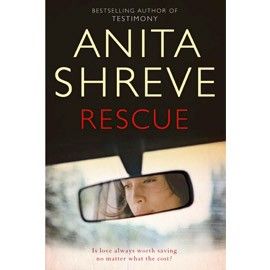
Rescue – Anita Shreve

Good friends of ours have done it – remaining together till this day and raising three fine lads to adulthood to boot. A beautiful work colleague has done it as well, tying the knot to Rod Stewart’s rendition of ‘Have I told You Lately’. And Anita Shreve has done it too – married a childhood sweetheart, but after a convoluted journey.

She met John Osborn at a summer camp when she was a mere 13 years old. During this period of time in their relationship they merely held hands – didn’t even kiss. When they went their separate ways at the end of summer the tyranny of distance intervened and they lost touch. In 1991 Shreve published her second novel, ‘Strange Fits of Passion’. John espied it in a bookshop, recognised the name and on a whim, wrote to Shreve’s publisher. The author by this stage had two marriages behind her and was in another relationship when her editor handed her the letter. ‘Did she remember him?’ the letter-writer had queried. She did. She had thought of him many times down through the decades, wondering. She initiated a correspondence between them that lasted for several months before they eventually met. It wasn’t long before they knew – the chemistry they first discerned as children hadn’t abated. They had to disentangle themselves from their partners, but eventually they too wed childhood sweethearts.

anita2

Anita’s own romantic story would make good fodder for one of her own novels. Her life experience is perhaps one of the reasons she has been so successful for such a long time. She knows the heights and pitfalls of love so well. Sometimes it just simply has to be that convoluted journey before the right one is found or, as with her, comes back into one’s life. Sometimes it is just simply there forever.

It is essentially romantic fiction she writes – both historical and contemporary. She has the knack of producing page-turners with just the right amount of literary merit so as not to make them merely disposable as, say, Nicholas Sparks. She is perhaps the US equivalent to somebody like Joanna Trollope. She can build a sense of place exceedingly well, particularly if it is in her own north-east corner of the States – and even more so if the magic ingredient of the sea is included. ‘The Weight of Water’ and ‘Fortune’s Rocks’ are two fine examples of the latter. Her work is often pigeon-holed as women’s fiction as she writes of her own gender with such vivacity and knowingness.

Rescue-cover

With ‘Rescue’ she breaks the mould somewhat as it is a paramedic, in John Webster, who takes centre stage. There is not much of the sea, either, involved here, although it does have a Vermont setting. Webster falls for one of his rescuees in the wild-child Sheila – choc-full of spunk and demons. For a while our hero tames her and together they produce a female child, Rowan. But it all becomes too much, this small town life. Sheila drowns her post-natal blues in grog, to the extent that hubby is forced to give her her marching orders for the sake of the baby girl. He takes on the onerous task of single dad-dom, making a fair fist of it, But oh, those dreaded teenage years! Darling daughter begins to display, during these, the same symptoms that wrecked her mother’s life. Who should her father call on for assistance when eventually he reaches his wits’ end? You can probably guess that.

Throughout the story there are vignettes about the pointy end of a paramedic’s life. There is as much interest in these as there is in how the main narrative will pan out – all to Shreve’s credit. A highlight is the black humour found in a failed suicide attempt.

Shreve is in fine form here with ‘Rescue’ being up there with her accessible best – with ‘Testimony’, ‘A Wedding in December’, ‘All He Ever Wanted’ and ‘Resistance’. Occasionally, she does get a little too heavy handed with literary pretensions which provide roadblocks to the enjoyment of some of her oeuvre, but not so here. This is just darn good, straight forward storytelling, ideal for a beach holiday, that long flight or as a salve between weightier tomes. In it John Webster’s love unravels – but will he be able to make it whole again? It is worth reading to find out.

Anita Shreve’s website = http://www.anitashreve.com/

Animal People – Charlotte Wood

Stephen is a fine name – in fact, an extremely fine name. It is derived from the Greek ‘Stephanos’, meaning ‘wreath’ or ‘crown’. Some have interpreted this to mean ‘kingly’, but a more appropriate ‘translation‘ would possibly be ‘encompassing’, just as a wreath encompasses the head. In Ancient Greece a wreath was traditionally presented as a reward for victors in contests such as the original Olympics – these being certainly more pure back then than the travesty they are today! As a name Stephen first appeared in Homer’s ‘Iliad’, with St Stephen a martyr of significance in Christian history. Back in the Middle Ages the name was actually pronounced Step-hen. Its shortened form ‘Steve’ first came accepted in the mid 1800s. Stephen reached its zenith of popularity in the United States in 1951. 1951 was a sensational year for Stephens. After that it began a long decline that continues to this day. In the UK in 1954 it was the nation’s third most popular name – today, there, it doesn’t even rank in the top 100. There has only been one King Stephen of the English (1135 – 1154) – he did such a mediocre job there’s never been another. He embroiled the nation in a long civil war fighting sis Matilda for the right to reign. Much of his time was spent plotting for his son Eustace to succeed him, no doubt hoping for a long line of Stephens and Eustaces – obviously it never happened. There have been a few more King Stephens in European countries. The name also did better at the Vatican with nine Stephens as Pope. Stephen VI was a particularly ghastly character who oversaw one of the grisliest events in papal history. This Stephen had his predeccessor Formosus’ rotting nine-month-old corpse dug up, redressed in his papal vestments and seated on the throne so he could be tried. Somehow the corpse hadn’t built much of a defence, and Formosus was found guilty of what were likely bogus charges. As punishment, three of Formosus’ fingers were cut off (the three fingers on the right hand used to give blessings). The corpse was then stripped of his sacred vestments, dressed as a layman, dragged through the streets and dumped in the Tiber River — where he was finally able to rest in peace. It’s a wonder any Stephens followed him. There have been many more Stephens famed in recent times for worthier reasons, but drop the appellation into Google and it takes a while to find any other than ‘King’ and ‘Jobs’.

Animal-People.

Charlotte Wood’s Stephen, as he appears in ‘Animal People,’ was no luminary like King or Jobs. He was more akin to the kingly Stephen – that is, significantly mediocre. He didn’t deserve the love of his Fiona and knew it, feeling he was a square peg in a round hole – not so much with her and her girls, but certainly with her extended family, her ex and her friends. For this sequel of sorts to ‘The Children’, Ms Wood takes the ‘day in the life’ approach, accomplishing that hard ask reasonably successfully. It certainly is an eventful twenty four hours for our anti-hero. The time span is made up of encounters with all sorts of the weird and wonderful. There are deranged neighbours and their pets. There’s the spaced out junkie he manages to run over on his way to work. There’s Russell, his best mate and possibly Wood’s best creation, who betrays him in the end. Then there are the accursed professional development gurus – oh so familiar to me after forty years of excruciating team building PDs. The one our Steve is forced to partake of certainly takes the cake though. Thank She above that I have never had to participate in a ‘Coyote Canyon’ in cowboy gear. It is also the day of Fiona’s precocious daughter’s birthday. Stephen is quite fond of both her offspring and very fond of Fiona. – and go figure, Fiona is also very fond of him! Oh, this is also the day he decides to split with Fiona.

At times I felt I was in Moodyland – as in the tele series; at other times it smacked of ‘The Slap’ – ripper pun, eh! As for its time frame, it is not as successful a novel as Gail Jones’ excellent ‘Five Bells’ – too much occurred for it to be remotely believable. Nobody, with the slightest iota of common sense, could have had such an ogre of a day as the one Steve tried to bat away with grog – with unfortunate consequences.

The book speeds along at a fair crack and I was engaged until the very last page, if not enraptured. I am coming to dislike overly truncated endings. As with several I have read of late, I needed a slower denouement, or at least an epilogue, so I could stay with Mr Mediocrity just a little while longer. As with Tsiolkas ‘ masterpiece there were some truly odious characters, with Wood milking them for all she was worth – Belinda and Richard come to mind. And I do trust that Balzac survives.

It’s a thumbs up from me.

.Charlotte Wood

Charlotte Wood’s website = https://www.charlottewood.com.au/

The Memory Trap – Andrea Goldsmith

‘Later he will still wonder how it is possible to see someone, actually select from the surroundings, how you can possible know that this woman is important, that you are, in fact, facing your future.’

memory trap

I love this sentence from ‘The Memory Trap’ almost as much as I hate the word resonate. But I am about to use it, I am and I hate myself for it. But his sentence really resonates for me, as it did for Elliott. He used it to describe his meeting with Zoe, all those years ago in Central Park, New York. He could, though, equally have used it on meeting Beth, whilst walking his dog beside Merri Creek, Melbourne, decades on. He is on sabbatical from Zoe, his brittle, fragile now wife – a woman who, for all of their marriage, has been patently in love with another man. Beth is a koori woman and is at the opposite end of the spectrum to his distant, disengaged spouse. It never takes much to change the projection of a life, a meeting with a stranger by a creek or, as in the case of your scribe, a photo arriving in an envelope. In a novel, jam- packed with intriguing relationships, the one Elliott forms with Beth, later in the book, is the one I relished the most. That creekside encounter is possibly the coming together of two fractured souls, but in its nature it is something not often written of. The man is an American in his fifties and their conversation between strangers leads to one night of sex. Beth is in her sixties, recently bereaved and still grieving. Elliott also grieves for his marriage dominated by another man, the seemingly Helfgottian savant, Ramsey. Beth is soft, luscious and exotic with her dark skin – so earthbound compared with his flighty, distracted Zoe. Although their sex finishes almost as soon as it started, Elliott and Beth spend all future nights entwined in each others arms and sharing a love that needs no words, no demonstration – and it is beautiful.

It is very hard to let go of the couples in this book – they are all flawed, but I wanted so much to continue on with them after I finally turned the last page on their journeys – journeys which, I felt, were so incomplete. I suspect Goldsmith is not the type of author prone to sequels, but this needy reader would sure celebrate one to this gem.

It is like a giant maze – the relationships that gather on Goldsmith’s pages. There’s Zoe – Elliott – Beth; then Zoe – Ramsey – George (the pianist’s stepfather); Ramsey – Sean (his gay brother); then, well you get the drift. Firstly, though, ‘The Memory Trap’ has the marriage of Nina (Zoe’s sister) and hubby Daniel as its main focus, but as it progresses the novel deftly broadens out to minutely examine the aforementioned and more. Early in the piece Daniel gets a fit of the ‘Peter Pans’, leaves Nina for a younger substitute, causing his wife to flee London, accepting a job in her former home town – Yarra City. Her occupation is the facilitation of memorial projects, giving the author ample leeway to riff on the nature of recognising the past. She loves riffing, this author, but it’s never a distraction – her topics all fit seamlessly into the context. And the provenances of her characters sure gives ample opportunity on all manner of subjects.

Speaking of characters, my favourite leaves it till towards the end to emerge from the thumbnail sketch Goldsmith initially gives her. Hayley, daughter to Zoe and Elliott, is a feisty sixteen year old, turning out to be more adult than the adults as she commences a journey of her own. So truncated was her emergence that, as a thread on which to piggyback a future – hint, hint – addition to Goldsmith’s oeuvre, she would be ideal.

goldsmith

Surely Goldsmith is one of our nation’s premier accessible wordsmiths, up there with Winton, Miller and Carroll. I loved her last, ‘Reunion’, and I loved this. Sadly the author lost her long term partner in life, poet Dorothy Porter, back in 2008. I trust the author has found a happy place to be in her life and continues to produce her literary diamonds for eons to come – maybe one being a sequel to this. In conclusion, I can only repeat, ‘If you have ever loved and lost – read it’

Ms Goldsmith’s website = http://andreagoldsmith.com.au/

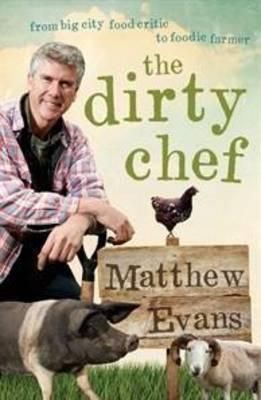
The Dirty Chef – Matthew Evans

As I have espoused many times prior to this scribbling, I am a lucky man! When my Darling Loving Partner says those magic words, ‘How do you feel about salmon tonight?’ I salivate in expectation each time. Mind, it could be the mention of her cooking a steak, or the promise of one of her amazing butterflied roasts on the barbecue and I am equally in culinary rapture. DLP is not a foodie in the Matthew Evans’ sense, but she is a damn fine cook. When she is ‘rostered on,’ I know I am in for meat or fish cooked to perfection and presented to the table in a manner that would do any restaurant of reasonable quality proud. I also like to think that I know my way around a kitchen and can rustle up an acceptable repast, but DLP has the touch.

I am also a lucky man in where I have chosen to live with my wondrous DLP. My island in the southern seas is gaining a reputation for standard of product that sees it ‘punching above its weight’ in national terms. The exceptional freshness and attention to quality ensures our seafood; beef and lamb; cheeses; cool climate fruit and wines; as well as craft beer and ciders are a gourmand’s delight. Our vegetables are grown in the world’s cleanest air on some of the richest soils in the land. Then there is the ability of our producers to take risks into fare such as olive oil, saffron, quinoa, and truffles that are audacious, but ultimately commercial success stories. Of a weekend, all around Tassie, farmers’ markets bring this harvest of excellence to its towns and cities – fresh, fresh foodstuffs that were in the soil or sea only a few hours prior to selling.

Sometimes I hanker for the days of my upbringing when the connection between source and consumption was even closer – days when tucker was shot or collected by a range of family members, friends or close connections – backyard poultry and eggs, bandicooted potatoes, game meats (rabbit, roo wallaby), mutton birds, oysters from trips to Black or Detention Rivers, abalone collected from the sea rocks below our house, fish we caught off Burnie’s wharf, sugar bags of cray tails down from Circular Head or freshly shucked scallops. In my ideal world supermarkets would be factored out of the equation – but for most of us, even here on a paradisical island, the world has changed.

But Matthew Evans is not most of us. Working as a highly respected (although reviled in certain quarters) restaurant critic in Sydney, he was living the big city lifestyle, but, increasingly becoming disenchanted with it. He developed a dream and had the blinkered will to pursue it. He wanted control over the whole journey of what entered his stomach. He had a yearning to farm and that’s what bought him to Tasmania’s Huon Valley – to Puggle Farm at first, then taking on Fat Pig as well. Both were sited in the hills around the valley town of Cygnet.

The Huon, south over the Wellington Range from where I live by the Derwent on the northern outskirts of Hobart, is where both my parents hail from, growing up when it produced apples for the British market. Once the Poms went all European on us, that industry faltered and for a time the Huon went backwards economically. It has now largely bounced back with diversification. Its decidedly four seasons of climate now also attracts an overlay of tree and sea-changers from all over Oz. And it is stunningly beautiful to boot with the wilderness just beyond the tree line.

Evans’ transition from urbanite to rustic landholder has been well recorded in the three seasons of ‘Gourmet Farmer’ on SBS. As one can imagine, this huge change in his life had its ups and downs – with it still being a work in progress. Such has been his persistence, he now has a ‘brand’ within his adopted state.

I was as enamoured of this book as I have been of the show. It was a pleasure for me to have him sign my copy of ‘The Dirty Chef’ at his book launch late last year. I also own a couple of his recipe compilations, but this tome is a different kettle of fish, although recipes close most chapters. It takes over from his television programmes and gives a more detailed account of the territory covered in ‘Gourmet Farmer’ – especially the challenges that beset Matthew as he strove to attain his goal. In Series 2 of the show and in his tome he is latterly joined by new wife Sadie, with Hedley arriving in due course. Along the way he also gathered good mates Nick and Ross as his companions for ‘adventuring’ on the farm and throughout the island as they set out to conquer their version of the world. This made for terrific reading – close to home reading. From now on, going up and over Vinces Saddle, then down into the Huon, will be, for me, as closely associated with Evans’ series and book as it is to family.

the-dirty-chef-.

I do, just a tad, take issue a little with his definition of the Huon. His seems more or less based on municipal boundaries, but for me the area after Geeveston, moving away from the river, is the Far South. The country changes, the communities are more hardscrabble and there is less of a mainland invasion. The eclectic disappears. But I am being pernickety.

There are wonderful moments in the book – his description of tasting his first farm egg from his own chooks; his assertions as to why Tassie should now be nicknamed ‘Spud Island’ rather than the outdated apple appellation; his descriptions of the foibles of the long standing residents, as well as their sense of community. There are the relative hardships winter presents down in these parts, although Evans has come to terms with the season of the frost and ends up rather liking it. Many of the farm animals, including the dog, have their own personalities. He describes the coming to terms with the necessary deaths of such beasts that need to occur to fulfil his vision. He argues persuasively for many of the practices vegans and vegetarians abhor. He describes the battle it is in this economic climate to make both farms economically viable. Then he describes the joys of the goose.

For a time my mother was married to a farmer – a lovely salt of the earth fellow called Bill. I remember well several Christmases at Bill’s farm, up behind Somerset, on the island’s North West Coast. On his property the soil was so rich it was almost edible. Bill had made an arrangement with one of his rural pals to prepare a goose from his flock for our yuletide table. Of course, it was my mother’s task to roast it. Now my mother claims never to have taken to the art of cookery. But I aver, based on the fact she raised three healthy sons and a daughter. And to me, those several birds we devoured those Christmases at the farm would be amongst the finest meals I have partaken of. The flesh of the king of poultry is even superior to that of duck, which I similarly adore. Oh to have another goose at some stage down the track! Evans does write, with evidence, that raising them is a little on the tricky side.

An earlier tome by Matthew Evans (‘Never Order Chicken on a Monday’) had left me somewhat underwhelmed in terms of its shallow content and pedestrian prose. With this publication his standing as an engaging writer has come ahead in leaps and bounds. In what he now scribes he is a lively and engrossing author. Perhaps it does help to know its setting so well, but all kudos to him for making the time to share his journey with those of us who are not prepared to shake up their lives to the same degree. He has presented the island I love in positive tones to the outside world and I congratulate him on that.

Matthew-evans

Matthew Evans’ website = http://www.matthewevans.net.au/

The Past/Past the Shallows

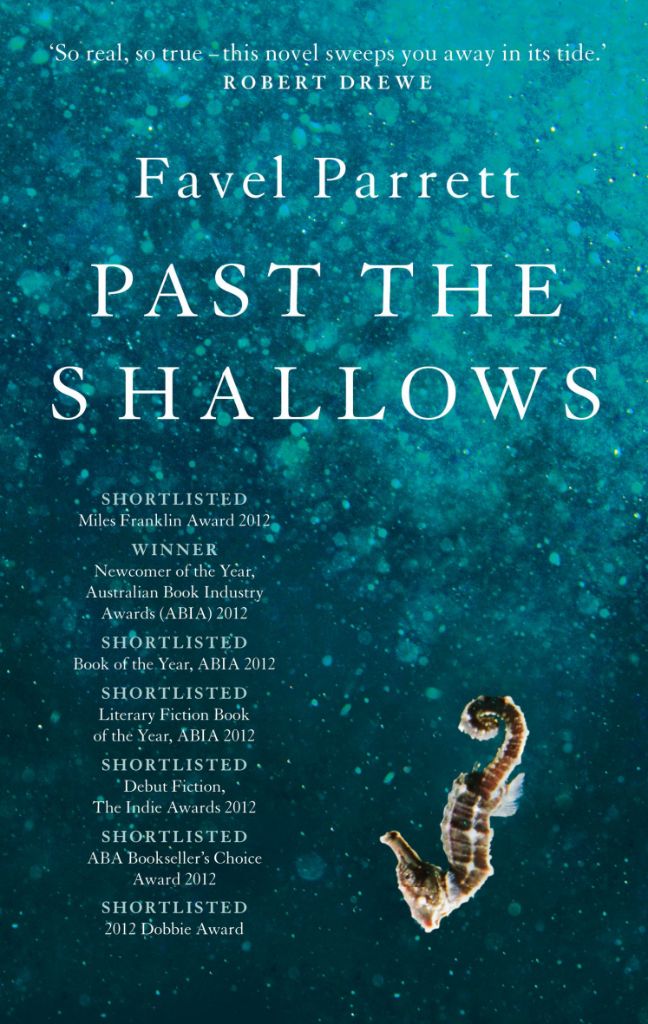
As I watched the movie that sultry Hobartian afternoon its subject matter kept leading me back to the novel I had almost finished – Favel Parrett’s ‘Past the Shallows’. I was thoroughly appreciating the film in a way that the novel hadn’t totally succeeded in doing. What the subject matter of both could lead to, though, was fully rammed home by the nightly news a few hours later. It is a long way from my island’s deep south to the hardscabble, run-down migrant dominated working class suburbs of Paris, but the young boy in ‘The Past’ so put me in the mind of the three lads that form the focus of Ms Parrett’s tome it was a tad unnerving. In both narratives young people were suffering a form of post-traumatic stress due to the ‘deaths’ of their respective mothers.

berenice-bejo-.

Directed by Asghar Farhadi, Iran’s Oscar entry featured the actress Bérénice Bejo as its fulcrum. If the name isn’t familiar to you, the face would be as the radiant love interest in the marvel of a movie that was ‘The Artist’. Although she still lights up the screen in this, Ms Bejo, as Marie, is not the glamorous star portrayed in the previous outing’s take on the silent era of film-making. She is a hard pressed mother attempting to get the balance of her frenetic life into some sort of alignment. Hers is an existence in the raw, not exactly impoverished, but nonetheless a struggle – so there’s precious little glamour to be had. She is estranged from two previous partners, has custody of two girls from the first entanglement and is struggling to come to terms with the aforementioned troubled child, Faoud (Elyes Aguis), traumatised by what occurred to his mother. He is prone to behavioural fluctuations and spends most of his time in Marie’s household. For a while, I did wonder just where this film was headed before it gradually dawned on me it was a double-barrelled mystery of sorts. What exactly does Marie feel for Ahmad (Ali Mosaffa) whom she has summoned back from Tehran to sign the divorce papers, leaving her supposedly free to marry Samir (Tahar Rahim)? Both male actors are excellent in their roles – I was especially taken by the former. Marie’s eldest daughter, Lucie (Pauline Burlet), as a teen with a big secret, is also wonderful. Perhaps it was only the boy who is a little wooden. Then there occurred the other mystery that took over the narrative – who exactly was responsible for Celine, Samir’s wife, taking her own life? The crafting of that part of the journey, attempting to unravel the threads of the dilemma, was quite subtle and cleverly structured – cinematic magic. The powerfully enigmatic ending had the audience at my screening seated through the credits – spellbound, awaiting for the slightest twitch. ‘The Past’, this year, has been decorated both at Cannes and the Césars, as well as nominated for a Golden Globe. If it appears at a screen near you, do yourselves a favour and make the effort. Be patient – it may take time to grip, but when that occurs, it does not let go.

past the shallows

Joe, Miles and Harry are also shattered by a mother’s death, but thankfully none of the movie’s men are as brutally insensitive as the father Parrett presents to us in ‘Past the Shallows’. With his own feelings numbed by alcohol and the rigours of diving for abalone off my island’s unforgiving southern coasts, he is creating a living hell for his boys. Joe is old enough to act on his dreams of escape, Miles finds solace in the surf (a Wintonesque touch) and the youngest, Harry, stumbles on first a dog and then a grizzled grandfather figure to take away some of his confusion and pain. If you have ever fronted a classroom for a period of time, you’d have encountered lads like these from the fringes of society – unkempt, often smelly from the lack of hygiene at home and perennially hungry. Some eventually rise above it, most don’t – only ending up perpetuating the cycle with their own offspring. In their cases any semblance of a school uniform they may wear only seems to accentuate their difference. They are absent more often than present, are frequently aggressive towards teachers as well as their peers and very difficult to counsel. The three lads here, though, seem to have a bit more going for them than that, with the book ending on a hopeful note, even though it comes too late for one. Ms Parrett admirably evokes the battling communities that are too far south of Hobart to attract the influence of the tree/sea changers that Cygnet, Huonville, Bruny, and the Channel do. Places closer to the end of the road such as Southport and Dover, as well, to some extent, Geeveston, in my recent visit, appear to have seen better days. Here listless teenagers hang around the few shops struggling to survive in harsh economic times. Big money can be made from abs, but the dad, often operating illegally, seems to be too guilt ridden and out of it to profit much. The boys are called on to work the boat in an ad hoc manner and they hate it. They live in constant fear of the father’s all too quick refuge in violence. The mundanity and paucity of these kids’ lives are well conveyed by the author, but she seems to lose the plot somewhat in the climatic moments – the shark landing on the boat, the seizing up of the air pumps during a dive and the rescue attempt of the final chapters. These seem, to this reader, somewhat lacking in authenticity – something that is her plus as events build towards these moments. Heavy hitters have praised this debut and this writer of relatively tender years would seem to have big wraps attached to her future on the basis of this first publication. Generally it is quite easy to see why this should be the case. I would suggest it is as good as any textbook for local trainee teachers to alert them to the type of home backgrounds that may afflict some of their clientele in the coming years. Such is Tassie’s bleak economic horizon, at the moment, this is also likely to be the ongoing case.

Favel-.Favel Parrett

After the movie, with having finished the final few pages of ‘Past the Shallows’, I settled down to watch the nightly news on the ABC. Like the rest of the country, Leigh and I were horrified by the leading item. The little Mornington Peninsula community of Tyabb had suffered a tragedy beyond words of a father openly killing his own son on a cricket field. From the black arm bands of our cricketers in South Africa to the palpably distraught head of the Victorian police searching for answers, this event brings to all the reality of troubled lives, affected by mental illness, into harsh reality. As Luke Batty’s mother so bravely and poignantly reflected on our screens that night, ‘…family violence happens to everybody no matter how nice your house is, no matter how intelligent you are.’ The film and book were sobering, Luke’s fate – unspeakably sad.

Favel Parrett’s website = http://www.favelparrett.com.au/

'Consequences' – Penelope Lively

consequences

I blame Françoise, I really do – although I think I have already blamed her in part, along with  Brigitte and Claudine, once before on this blog (see = http://blueroomriversidedrive.blogspot.com.au/2013/01/a-blue-room-book-review-delphine-de.html) . Then it was for my attraction for all matters French – why I have even taken an intrigued interest in recent times as to which of Francois Hollande’s lovers is actually to be the first lady of the nation. It now seems the younger one has won out. This time around I am blaming Françoise for my devotion to a certain genre of writing that I struggle to give a name to. Let me explain. I have an attachment to books, written by female authors, in the main UK female authors, who concentrate on falling in and out of love, on affairs – that type of activity in their novels. Is there a genre appellation to cover what I read? Would ‘romance’ suffice? It would seem rather unmanly of me to read ‘romance,’ wouldn’t it? That word conjures up ‘Mills and Boon’ type stuff and I would hope what I read has a tad more literary merit, even if not quite in the ‘Tess of the D’Urbervilles’ realm – but approaching that.

I cannot remember reading a complete oeuvre of a lady writer until I encountered Françoise during my uni days, over forty years ago now. I have no idea now what started me on those slim volumes you could pick up for less than a dollar back in those days of yore, but they were light, easily digestible – a salve to those weighty historical and political tomes of my enforced reading. I suppose there is a link to my yesteryear attraction to Ms Sagan and my love of French rom-coms today.

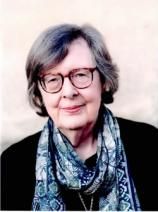
Once I was a bona fide contributor to the education of young people, with somewhat more cash in my pocket, I could branch out. I had been by now introduced to a new range of writers of the female persuasion who specialised in the travails of maintaining relationships in contemporary times. The coterie were headed by Andrea Newman, Margaret Drabble and Elizabeth Jane Howard – the recent passing of the latter saddening me. They produced works on the British middle to upper classes that I invariably found engrossing. Their mantle was passed on to the likes of Joanna Trollope, Caro Fraser, Amanda Brookfield, Angela Lambert, Sue Gee and Penelope Lively, amongst others. The term ‘aga saga’ was invented in the early 90s to describe the works of the first listed, but now loosely encompasses many more. It is defined as ‘being named for the AGA cooker, a type of stored-heat oven that came to be popular in medium to large country houses in the UK after its introduction in 1929. It refers primarily to fictional family sagas dealing with British middle-class country or village life.’ (Wikipedia) The latter author, Lively, it seems to me, has been around for ages and I have devoured most of her books. She is now eighty and still active.

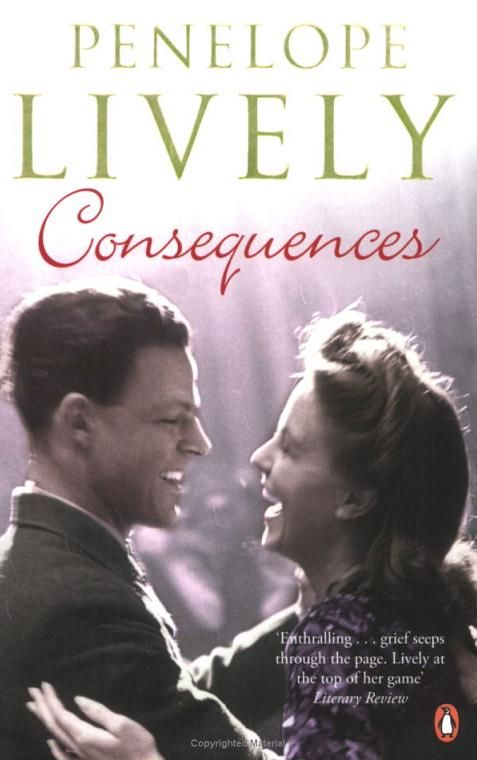
Lively fits a great deal into ‘Consequences’. It appears a slimish volume but is three hundred pages or so in length – still, not much really to house the biographies of the three generations of women she crams in. Herein lies its only fault – this reader became so immersed in each protagonist’s journey that he didn’t enjoy leaving them to move on to the next. Still Lively adeptly segues from mother to daughter, commencing pre-war and finishing after the millennium had turned. There’s Laura, Molly and Ruth – all with great tales to tell over the novel’s eight parts. And, in the end, she brings it all deftly back to square one.

In my view Lively has always been a consummate wordsmith with her broad vocabulary embellishing her images with a sheen – be it life in a derelict rural cottage as the Blitz approaches, the vagaries of existence in a super-sized garret in the London of the 50s or in the adventures to be had touring a sun-blasted Crete in the search of the last resting place of a soldierly relative. Its all well-woven lovely, lovely stuff – about stuff that works out, about stuff that doesn’t – as is often the situation in real life. Like her other more recent offerings – ‘Passing On’, ‘Heatwave’, ‘Spider Web’ and ‘The Photograph’, I immensely enjoyed this saga published back in 2007. I intend catching up with her later offerings as well.

plively2

As a corollary to all this I once read everything a certain Mr Sparks wrote, even though my talented daughter kept telling me what he produced was total tosh. My beloved Kate will be amused to know that I now agree – that continuing to peruse him would be too unmanly – even for me!

Ms Lively’s website = http://www.penelopelively.net/