Category Archives: Book Reviews

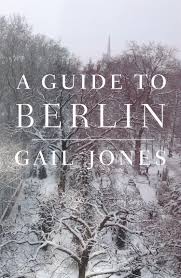
A Guide to Berlin – Gail Jones

Mitsuko was from Hagi, Japan. Her father was a potter, the last of thirteen generations excelling in producing the pots his town was nationally noted for. His daughter, instead, became a Lolita Girl. By sixteen she had moved to Tokyo, rebelled against an overly strict guardian aunt and joined street sub-culture. Young ladies, in her chosen group, dressed in the presumed style of Nabokov’s main claim to fame, although Ms M had no idea that her chosen icon had any origin other than Japanese. Even within this genre their were sub-sects. Mitsuko chose to be a goth Lolita.

jones

Mitsuko also became a rental-sister. It is a real job – a much needed one. Just Google it if you are in disbelief. Their calling is to work with hikikomori – young people, usually male, who lock themselves for years sometimes in their rooms, obviously causing great concern for their families. Girls such as Mitsuko are hired to coax them out. They offer nothing of a sexual nature, but trust that the procedures they employ will arose so much curiosity the lads will emerge blinking into daylight. It is largely a nocturnal profession as this is when the young recluses are active in their digital worlds. Such a hikikomori was Yukio. Mitsko charmed him out – but then the relationship became much more and the two fell in love. By this time, to her surprise, she had discovered the true origin of the notion of Lolita and soon she and her partner became devotees of the Russian master. Before he became a resident of the US, the author lived in Berlin for a short period and the Japanese pair travelled to the snow-blitzed German capital to check out the landmarks of the writer’s time there. Whilst visiting one of these they were cajoled into joining a small group who met regularly to share their impressions of the various works by the great man. These gatherings form the basis for Gail Jones’ evocative novel, ‘A Guide to Berlin’, taking its title from a Nabokovian short story.

Cass, an Australian, Victor (American), as well as an Italian pair, Marco and Gino, make up the remainder of the group. Initially they spend time pontificating on the author’s oeuvre, but eventually they branch into their own tales, courtesy of their ‘memory speak’, a play of words on the name of the author’s autobiography. These are a particularly compelling mechanism to set us up for a love affair within the group, some jealousy over that – and ultimately a tragedy that tears the group asunder.

Jones’ wrote the novel during her own visit to a Berlin quaking under the weight of one of the cruellest winters in memory. Her own little flat, over looking a cemetery – see cover photo – is also Cass’ base for her stay. The abode where Nabokov lived during his Weimar years was close by.

My first encounter with the sixty year old novelist was ‘Five Bells’. It could almost be a companion piece to ‘AGTB’. As the title of that book may indicate, it was set in Sydney, but followed the same template – that of relating the stories of a quintet who link up in a random manner. In this case, instead of all being followers of a particular literary giant, they all happened to be in the environs of Circular Quay on a particular day. In this Jones’ newbie, it’s a sextet. This relates to the symbolism scattered throughout – the six pointed Star of David, the shape of snowflakes – as well as being the author’s sixth offering.

Gail J, as with Nabokov, is a sublime wordsmith. I’ll be honest – I tried to read ‘Lolita’ once apon a time and had to give it away. But through Jones’ book his love of wonderful, largely redundant, words shone through. Here’s a few examples to try on for size: leminscate – the shape of infinity; conchometrist – one who measures the curves of seashells; drisk – a particularly European type of drizzle; ophryon – the third eye, site of headaches, migraines and epilepsy; – ensellure (the one I particularly like) – the concave depression formed in the lower back.

Interestingly, in reading some of the background to the book in the media, it was pointed out that there are far more courses in Australian literature available in Germany than here in Oz – one university even specialising on Gail Jones herself.

Jones, Gail

The telling of the this tale by the Australian is coolish, almost reserved in tone as befits the numbing chill of the darkest season in Mittel Europe. She almost holds her characters at arm’s length, making the reader feel little warmth for them. As this is a deliberate device, methinks, the novel loses nothing for that approach. Her prose is skilfully composed and that is the attraction. Her clever eloquence ensures that reading ‘A Guide to Berlin’ is never less than fascinating. And I suspect, as with ‘Five Bells’, it will linger in one’s mind eye longer than many a warmer tome.

Margaret Watkins, Anne Quirk

‘It was wrapped in brown paper and tied up with string. I had no idea what was inside, but I had to promise not to open it till she died.’

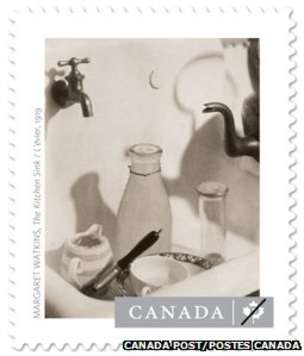
And he kept his promise, did journalist and later gallery owner, Joseph Mulholland. Until he opened that gift to him he had no idea who she had been. She never spoke of it during their friendship. At the time she passed over the present to him Joe’s daughter was battling leukaemia so he had much on his mind as he stashed the parcel away in the back of a linen cupboard. It was later, in 1969, when his neighbour did finally succumb to mother time, that Joe, who in the meantime had been invited to be executor of her will, remembered his vow from years before. What he found when he retrieved that package eventually bought Margaret Watkins back from obscurity – so much so that in 2013 Canada Post commemorated her on a stamp issue.

He thought he knew her back story pretty well. Margaret and Joe had become firm friends and on many occasions, over the years, had talked long into the night about their lives – but she never let on. To him she was the sweet elderly lady who shared the street with him. Nothing in her tales prepared him for what was revealed the day of the opening of her gift to him; her gift to two nations. Inside were thousands of photographs and negatives – a treasure trove of memories, a treasure trove of art. Joe Mulholland is now in his seventies and is Margaret Watkins’ champion; the keeper of her flame. Thanks to his efforts to bring her in from the chill of obscurity Watkins is now recognised as being ‘…a highly distinguished and important figure…’ in the story of photography. It is significant that two countries, Canada and Scotland, claim her as their own as galleries line up to display her oeuvre – an oeuvre partially contained in that package.

Watkins was born in Hamilton, Ontario in 1884. In 1913 she moved to Boston, gaining employment at a photographic studio. From that point on the art became her life – until circumstances took a more notable future in it away from her. But even after she ceased snapping, later events showed it was never far from her mind. She took photography seriously from the start, enrolling in Clarence H White’s Maine Summer School. White was a notable practitioner and not adverse to having relations with his students as well. That may or may not have been the case with Margaret, but he quickly caught on that she had the chops to make a name for herself and became her mentor. This led to one of her career setbacks. He willed her his artistic legacy, but was challenged in court by his widow. Bizarrely it was found that Margaret was entitled to his photographic images but she was ordered to sell them to the spouse for a fraction of their worth.

margaret watkins01

By 1920 Watkins was the editor of a leading journal as photography became increasingly well regarded as an art. She was also freelancing for advertising agencies. She taught her skills as well, passing on her knowledge to others who, like her, could see photography as their calling.

But then family called and she felt obliged to leave all she had achieved behind her and start anew across the Atlantic. Four aged aunts were in dire need of a carer and Margaret felt obligated. For a time she could continue on, establishing herself in Glasgow and taking on commissions that saw her travel around Britain and across the Channel. As the aunts became even more frail, though, she was forced to restrict herself to snapping industrial Glaswegian landscapes and the city’s denizens.

margaret-watkins-1931-paris

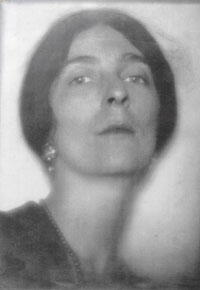
After Joe opened his package he wondered if more lay in her large residence opposite. It did – an incredible cache was found, much of it now housed in Mulholland’s own shop-front for her talent – Glasgow’s Hidden Lane Gallery. He found advertising images, her work in social commentary and luminously lit nudes. He also unearthed an image of her as a young lady and found it difficult to reconcile this ‘…imperious…’ self portrait with ‘…her dark hair tied in a chignon, looking down her nose, regally, at the camera.’ with the old dear of his friendship.

margaret watkins_stamp

The images he uncovered proved that Margaret W was a most versatile practitioner. Her early still lifes, such as the one featured on the Canadian stamp in her honour, ‘The Kitchen Sink’ (1919), caused some controversy amongst critics. Most, though, were of the opinion that, what she produced with these, were ‘…composed like a painter and tended to see ordinary things as very beautiful.’ There were also her portraits of the celebrities of the day taken in her Greenwich Village studio, including that of great composer Rachmaninoff. After being removed from the New York scene she was more limited in what she could produce. Now it tended to be more the everyday recording of what she discerned around her. Eventually her nursing duties made even this difficult and she more or less gave the game away, disappearing from view until her recent rediscovery. But her moment had really passed the day she left the US.

margaret watkins

Outwardly, according to Joe, she remained chipper till the end. He did find evidence in her abode that all was not as it seemed. There was a scribbled note that gave an insight to the real condition of her mind, to the effect that she ‘…was living in a state of curdled despair…I’m doing the utmost to cope with a well-nigh hopeless situation.’ He also found she had packed her bags to return to the scene of her days of photographic pomp – to return to New York.

Anne Quirk is Margaret Watkins. The sublime novel, ‘The Illuminations’, has bought Watkins’ story back and to a wider audience in the guise of a fictional protagonist. Anne has dementia. Her memories of the past are fragmentary. She is struggling to remain semi-independent – not in a fine house next door to Joe M, but in supported accommodation. Here there is also a neighbour who takes her in hand, helping her through the day so she can cope. Maureen has had her troubles too, but she has commenced to piece together Anne’s back-story. Anne’s aggrieved daughter Alice fills in some gaps too, but it is with conflict-damaged soldier Luke, her grandson, that she shares her greatest bond. Through Luke, author Andrew O’Hagan presents all the ugliness of our current Middle East involvements. Luke has returned from Afghanistan battered and bruised mentally. He takes to the Mulholland task, once he discovers a similar trove of photographic images, to bring Anne back in from the cold. So it is potentially win-win. Anne’s legacy gives him something to focus on, he gives her one final escape from the fog that is enveloping her mind.

illum

And then there’s Harry, her mysterious lover from the post war years who encouraged her with her artistic pursuit. When it really counted, though, he left her in the lurch. A terrible tragedy followed that caused Anne to lose much of her will for a while. In her memory Blackpool, where her liaisons with the married beau occurred, was the place where she was happiest. So, at the end, that’s where Luke takes her. In doing so the remainder of her story is unravelled. Even the Beatles get a cameo. The pair arrive in time for the famous illuminations that light up the resort each year. By now the reader realises that the future of both these characters is on the up and up, even if poor Anne no longer has the wherewithal to fully realise that. This is helped immensely by a letter from a Canadian gallery, one that had cottoned on to her historical worth as well.

Through Anne Quirk, Andrew O’Hagan, together with good neighbour Joseph Mulholland, have seen to it that a champion of early women photographers has re-emerged and taken her rightful place. As for the novel itself, it is a fine and worthy book. By the end it is, as well, a compelling read. It was long listed for the Man Booker, but sadly didn’t make the final cut. Pity that. O’Hagan’s ultimately very moving and positive tome is thoroughly recommended by this reader.

Andrew-OHagan--001

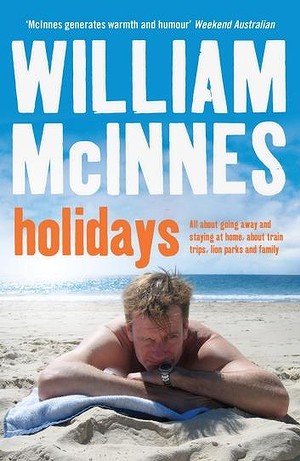
Holidays – William McInnes

Who you gunna turn to if you need a good belly-laugh from a book??? Well, Mr McInnes is as capable as anyone writing in Oz today to entice great guffaws from me and his latest did not let me down.

It is an art-form, is writing comedic prose. It’s been a while since I’ve emitted even chuckles from my book-reading. Probably the last to induce such-like was Nick Earls’ glorious publication from last year, ‘Analogue Man’. Earls writes fiction. So does McInnes – and he does okay at that too, but it’s his volumes of memoirs that really do the trick for me. ‘A Man’s Got to Have a Hobby’ was such a complete joy. I laughed so much it bought tears to the eyes. Tears featured as well with ‘Worst Things Happen at Sea’ – but for a very different reason. It was co-written with his now deceased wife, Sarah Watt – and for the delight in question the author delves into his past again. Tears came for both happy and sad reasons in ‘Holidays’.

wmci01

In this recalling of the past he again displays what a memory he has – I wonder if he kept a diary. For the life of me I can only remember childhood incidents in broad stokes. He brings them to us in fine detail. Most of the gut-clenching humour came in the first half – it tendered to peter out as he started to become a tad more deep and meaningful – but this is not to say the final chapters were lesser for that. They just spoke more of the human condition. And the ending – the final stanza, was, well, just heart-wrenchingly beautiful.

The man can write and it helps that you can picture him in the scenarios he weaved as the central figure. He’s graced our screens for a few decades now, first coming to my attention in the never-to- be-forgotten marvel that was ‘SeaChange’.

The book opens on Brisbane’s Redcliffe Peninsula, setting of William’s childhood and his scallywag adventures. His yarn about the Kosy Korner Karavan Park was priceless, a rib-tickler of the first order. For our young hero the Peter Stuyvesant fag ads on tele in those days were the height of sophistication. The only place he could imagine in his world as a possible location for such-like to be made in Brissy would be said Kosy Korner. It would surely be where the international jet-setters would go to smoke and drink martinis, served to them by the pool by stunningly sexy women in bikinis. Or so he thought till he actually braved the grounds of the place.

Another adventure of his youth – this time of an amorous nature, when he was obviously much older, involved being naked and draped in beauty contest sashes. His love interest led him to meet a certain Mr Tait, the travel agent who never travelled. Why would he? He had visited the opening of Wrest Point Casino down in Hobart and saw Jerry Lewis perform. No holiday could surely top that so why waste money. His life ambition now was to sell some punter a Scandinavian vacation. I wonder, as does McInnes, whether he actually succeeded.

It seems the television star has a soft spot for Hobs. ‘Hobart is a beautiful city, perhaps the prettiest of Australian capitals, with marvellous restaurants and glorious landscapes.’ Of course these days the jewel in the crown of the city’s gems is MONA. One day, at a loose end in our burb, he sought advice at reception. ‘The bloke behind the desk brushed one side of his porn-star moustache with his forefinger and then said, ‘Go to the museum mate. The museum’s a good place.’ And so it turned out, although he was bemused at the number of kiddies that were on the loose in a place supposedly just for grown-ups. He reported the place was, in his estimation, most impressive. ‘The eclectic scale and verve of the collection is stupefying, moving and glorious.’

wmci

Being such a public figure, our author on vacation is recognised by many – but sometimes the punters get it confused. At various times they thought they had been greeting him as bonkers former Labor leader Mark Latham, sex-god Colin Firth, ‘Wait There’s More’ Demtel Man (Tim Shaw) and even, not Jeff Kennett, but his brother!!! The one that was much to his horror was being mistaken for execrable Sam Newman of ‘Footy Show’ infamy.

So many glorious stories William McI tells in this tome. There’s the bush pilot, on being informed that stormy weather lay ahead in the flight, offered to play Patsy Cline, Buddy Holly and the Big Bopper for the already nervous author. Then there is the perennial problem of what to give up for Lent. One year he decided it should be his propensity for swearing. To get around the difficulties that involved he decided to insert a more suitable word instead. For some reason he hit on yallop – the surname of a former test cricket captain – but of course he spun this yarn out too to make it hilarious.

It’s a bonza book this. McInnes gets my recommendation for a guernsey in our National Living Treasures list and I’ll be yalloped if you’ll find a funnier read this year. It’s full of all that’s wonderful about our great, taking the yallop, national sense of humour.

Stay With Me – Maureen McCarthy

‘A seven year old and his grandmother allegedly murdered by an uncle in Western Sydney – my home town. A mother allegedly belted to death by her enraged husband on the Gold Coast. A woman shot dead at a McDonalds nearby. This is not the Australian way. There is a huge problem lurking behind the front doors of Australia and its name is domestic violence. To me there is simply no excuse, no reason to ever hurt a woman. For someone to hurt a woman is a thought process I can’t comprehend.’ Michael Clarke, September, 2015.

So the recently retired test captain wrote for the press after returning from a post-Ashes holiday with his wife Kyly. He’s only one of a number of prominent Aussie blokes ‘manning-up’ to make their revulsion clear. Our Australian of the Year, the remarkable Rosie Batty, has become the face of this one of the scourges of the nation, along with obesity and the so-called ice epidemic. The latter two are newish and seemingly intractable issues needing to be confronted. Domestic violence has always existed and maybe always at this present day level – but that doesn’t mean it is in any way acceptable. That it’s being dragged out into the light and into our collective consciousness can only be beneficial – a start.

And domestic violence features prominently in Maureen McCarthy’s new offering ‘Stay With Me’. It is quite a read; quite a journey the author takes her many, many fans on with this.

stay with me

Tess, emanating from a not entirely functional family situation herself, leaves Melbourne for a schoolies-type break up in Byron. There she encounters a much older man in Jay – he’s not a toolie as such, but is a local with similar intent. And he focuses on young Tess. He is quite unsavoury. We can pick it but she is too naive to know – despite her new found friends on the far north coast trying to warn her off him. With his car, a ready supply of dollars and attentive charm she is quite smitten and decides her future is with this fellow. Big mistake. In the blink of an eye she is trapped and realises too late his true controlling colours. A child, Nellie, comes along. Far from improving matters, Jay’s behaviour becomes more drug addled and violent – not only towards her, but the little one as well. Jay’s whole family is dodgy, but for a while his mother provides the only none-to-sympathetic refuge. However, a chance meeting provides the most unlikely of ways out, thus commencing a road trip back to family and a possible escape from the horrors of life with a truly horrible man. But can she really hide from her vicious partner with distance? Or will this new male, who takes her under her wing, cause more problems than he solves?. Can she trust any male?

Harry, who has the makings of her saviour, is somewhat battered too in ways – but eventually delivers her to the succour of the remains of her family. Now, finally, is she safe, particularly as Jay’s past has caught up with him? Even though she knows he’s under lock and key, his threat still casts an unnerving shadow over the remainder of the tale. The reader is fully aware that how it all pans out may not be pretty. We expect the odious fellow to reappear at any tick of the clock. In this case, fiction is little different to reality.

maureen

‘Stay With Me’ is compulsive reading. Previously McCarthy has gifted the nation the irrepressible young women of ‘Queen Kat, Carmel and St Jude Get a Life’, but as a character Tess wins our hearts as much. If the prose is a little over-cooked initially, once the novel is in its stride this scribe was reluctant to put it down. McCarthy has been a tad uneven in her offerings of late – but here she is at her out and out best. I defy any reader not to be riveted, willing Tess on as she, Harry and Nellie wend their way down inland highways to the perceived safety of the family homestead outside Leongatha. We all delight as her formerly estranged rellies gather around to shield her from her constant fear of her worst imagined outcome. Unfortunately many women, as scarred and scared as the courageous Tess, have no out. In the real world, as in the fictional, total safety may only be fleeting. I know this book will surely ‘stay with me’. In our current climate it is almost essential reading.

Honey Brown and Hobart

‘It was the green dress that did it,’ I responded. ‘The green dress, plus you were just too lovely and vivacious that night to pass up. As well, I think I was ready. Ready, I guess, for more life in my life. I can’t in all honesty say there was much wrong with the life I was living – just that spending that evening in your company I figured, for the first time, I could have more, sweetheart. You turned my world upside down back then – and repeated doing so again more recently. I’ll thank you forever for that – and thank you forever for taking me up to your room that night.’

That first morning away I had woken up to another hotel room – but as usual waking up next to Judy meant turning to see her already with her nose in a book. That was okay – we were in no hurry to get out and about on our first morning in Hobart. At our ages helter-skeltering wasn’t our scene any more. Once we’d come in from the airport last evening and settled in to our accommodation on the IXL side of the city’s waterfront, we’d chatted what we might do today. In the end we decided we’d take the grey-camouflaged river-cat up-stream to MONA. I’d been before, when it first opened and knew it was a must-see. It had turned tourism on its head to the island of both our births and I was keen to show her it. Judy hadn’t been to the state’s southern capital in decades. Both being North West Coasters in our youth, it was far easier hopping on a plane across to Melbourne than making the torturous road trip to Hobs. At least that wasn’t so bad these days, but back in the day it seemed to take forever – and someone always became car-sick. The Casino had livened the small city on the Derwent up for a while, but mostly back then Hobart seemed as sleepy as Burnie.

Judy was a bookaholic. Every chance she’d get she was turning pages. The daily paper and a good whodunit, now and again, did me. I’d also read sporting biographies of AFL stars and cricketers – but no more than a couple a year. Jude would devour a dozen or so books a month. She reckoned they kept her going when her kids were younger, stuck down the Mornington Peninsula for most of her married life. Reading, so she said, was now ingrained in her.

AFL had a fair amount to do with us being together in the first place. I met her by chance on a footy trip across the Strait with the lads. Then I used it, or the cricket, as an excuse for scuttling off to Melbourne several times a year to catch up with her. For my sake she was always discreet and knew where to meet away from the usual tourist traps. In this way I concealed the affair for so long. But, coming back to her books – one aspect of her obsession is that she loved talking about them to me. And I enjoyed listening. It had only been a year or so now since I made the decision to up and leave my Burnie existence and Raissa to strike out on a new life with my Melbourne love, now that she was free. In those months she always kept me appraised of her latest novel – for it was fiction she usually read. I could see that one in Hobart that morning was something entitled ‘Honey Brown’, or so I thought.

When I enquired as to what ‘Honey Brown’ was about she laughed. ‘No Jim, that’s the author’s name. The book itself is called ‘Six Degrees’. As to what it’s about…Well, how should I put this? It’s about sex, my love – first time sex with someone. It’s short stories. Let me give you their titles – that’ll give you the idea. Here, I’ll flip back through – I’m almost finished. There’s ‘Threesome’, ‘Two Women’, ‘Older’, ‘Younger’, ‘Two Men’ – you’d love that one Jim. Not. And the one still to go is ‘First Time’. And they’re pretty erotic tales too, let me tell you, my love. Almost too much for this good Christian girl. They get me all hot and bothered.’

six degrees

She gave a slightly embarrassed laugh, but I asked her to tell me about those she’d already read. She put the book to one side and asked if I was sure I wanted to know. When I nodded she snuggled down beside me into the crook of my arm and placed a hand strategically on my upper thigh. ‘Sure you’re up for this old fella? It might get you a bit worked up too. Anyway, it might be all about the act, but it’s still well written, I reckon. She does sex well, does Honey Brown. All the stories have a kind of link to tie them together and they all end with the two involved making love. Actually, with the first episode there’s three in the mix. It’s Valentines Day and a café owner receives a bouquet of flowers from the love of her life who’s a famous cook. But they have never really taken action on their mutual affection – each reckoning the other is not interested in turning friendship into something more. Anyway, the chef turns up at the woman’s flat above the café, only to catch her just after being in said act with one of her wait staff. One thing leads to another and in the end a threesome changes her life and brings the two together, the renowned chef and the object of his yearnings. It all seems unlikely, I know, but in Honey’s capable hands it makes sense – sort of. The lesbian story starts off in a Kalgoorlie skimpy bar – you know what that is Jim?’

‘Thought so. I didn’t before this book. I’ve led a sheltered life you see. Anyway she’s not really one of the skimpies – but still dances for the men and manages to get their appreciation without actually taking any of her clothes off. But in a mining town there’s not really much action for someone of her persuasion, until there’s a night she eventually realises that one the punters she’s serving is actually a woman. From the time she passes across her frothy their eyes meet continuously across the crowded room and you can probably guess the rest sweetheart. The story I liked best, well so far anyway, was of the older man and a young twenty something, set in the high country somewhere. He was fifty, Jim, hardly past it. How old are you again? Sorry, don’t look at me like that. Anyway, she’s a fishing guide, being the one who was initially attracted and made all the running. The older bloke’s a real gentleman and she can tell he has issues that he’s perhaps taking a break from. What they are become clearer as we progress. She just finds him so different to the younger guys, who seem to her just to have one thing on their minds. This mature male seems cut from a different cloth to those of around her age she’d been associating with in recent times. He does his best to resist her flirting during the hours they spend together by brook and stream – but of course in the end he succumbs. But it’s all very lovely and I really think you can tell it’s a woman writing this. She doesn’t pull back when it comes to descriptions of the lovemaking part, but I imagine it’s softer than if a man wrote it. That being said – it’s all a hell of a lot better than that ‘Fifty Shades of Grey’ stuff. I’m still trying to work out why I just had to read all three. Might be a bit more to me than you figured, Jim. Watch out, I say. You getting sick of this? You want to me to carry on?’

I replied in the affirmative and she laughed. She asked if it was making me feel any awakening down below. I told her that maybe that could be the case. ‘Well, I’d better continue then. The next tale is the reverse of the previous. Seems this young fellow has always had a crush on the older woman next door. While hubby is no longer a factor he seizes the opportunity and finds his desired MILF is just as eager as he is. The story is told from her point of view and sort of gives the woman the kick start to get on with the rest of her life. She has a fair idea the youngster needs to be just a one off for she’s no cougar – and she has a fair idea too who a more suitable candidate could be. The next not-so-sexy one is about this woman’s estranged hubby. Seems he’s moved over to the gay side, meets a certain someone at a writers’ retreat. Being two guys it was the one I related to the least. You’d hate it Jim. I know you are all for their rights, but you’re still very much the old fashioned heterosexual, aren’t you, my darling?’

six degrees

By this time Jude’s hand had moved to another position and we ended up making love – the first time in quite a while. ‘Must be being back in Hobs,’ Judy quipped. ‘I can’t imagine what else may have bought that on. You could almost be fifty again.’

Despite it being a return visit, MONA was still an eye-opener. Stuff I remembered from my first time was no longer on exhibition and there was plenty that I hadn’t seen to keep me fascinated. Last time was after my enforced stay down here following my turn in the main street of Burnie, so I didn’t get to see it all in any case. I conked out about half-way and had to have a spell. It was during that period of time that I confessed to Raissa what had been going on all those years with Jude. For a while she seemed to take it well and I resolved to try and make it up to her. But once we were back in Burnie it was obvious the dynamics of our marriage had changed and I was finding myself still hankering for Judy, even though, by this time, it wasn’t the passionate affair it had once been. Going to Melbourne meant I’d have great company with somebody I was very quickly coming to adore. The great sex, if it happened, was a bonus..

Judy kept emailing me and that didn’t help me trying to wean myself off her. For a while I refrained from answering, but she was persistent and eventually my promise to myself crumbled. For a while we just communicated about our daily doings – but even so it soon became apparent she wasn’t the same old Judy. Something was going on in her world too. I certainly wasn’t the same Franksy my mates would recognise either. They’d reckoned I had changed – and I didn’t need my pals telling me to buck up, so for a while I distanced myself from them. I knew exactly what was needed to get me out of my funk. Judy had long given up her other ‘regulars’ when she travelled to the city. I knew that, but I was nonetheless surprised when she let me know that now, perhaps following my lead, she and hubby Tom had had a heart to heart as well. It turns out he’d found someone else too – and he had also been seeing her for some time unbeknown to Jude. Seems when she also confessed he already had a fair idea what was going on with her. He was happy to move to Portsea where his lady lived, leaving her with their abode. Looking back over it all, it’s hard to imagine that these days I contentedly reside here with Judy. It all seemed to happen so quickly. It so did the trick, though. These days I’m more than happy with my lot in life.

Of course I knew nothing of her confession until Judy emailed me with the details of her conversation with her spouse. The final line of her account read, ‘No pressure, Jim. I am here if you want me.’ Simple as that – and I couldn’t wait to get to her. I still have the guilts about up and leaving as suddenly as I did after that. But then I knew Raissa was not in a good place. I had betrayed her and she resented me for it. Perfectly understandable. I thought it was in our best interests to part. I told her face to face, my Raissa. She said she’d been expecting it. All in all I just figured life’s too short to be miserable. For as much as my wife once meant to me there was now someone else who meant more – and she was available. I would have to take it easy, I knew that. Any physical exertion, even love making, still takes it out of me, so I take life very slowly these days. Judy is all go, go, go and she has plenty to be on the go with in her community – and she has her overnighters in Melbourne. I know these days her only interest is in the shopping. Occasionally, on my better days, I go up with her on the train – but frankly, I’m just as happy pottering around the house. Hobart is a sort of tester as we’d both like to do a bit more travel – maybe a cruise or an island resort up north. I should be up for that, shouldn’t I?

It helps too that I’ve recently been made aware that Raissa has someone in her life too now – a younger man she calls ‘Lad’. I suppose it’s a tad like the MILF story Jude was describing to me. I’ve no idea who this guy is, but Kylie tells me she’s happy as all get out. Good on her I reckon – I wouldn’t want her otherwise.

Showing my lovely lady around MONA just re-enforced my view about what a special place it is. It is justifiably deserving of all the glowing reports written about it, but still I was a little wary. Despite her facility for giving and receiving a good time in the bedroom, my Jude can be a bit prudish about overt displays of sex and nudity – but I needn’t of worried. She loved it. She reckoned it left the NGV for dead. Nothing on offer at MONA fazed her – and there’s still plenty of weird in-your-face-stuff there.

That afternoon we pottered around, caught the tail end of Salamanca Market and then headed up to the restaurant strip in North Hobart. We had a fine repast at a place called Capital and decided to walk back to the hotel, being such a mild night. By a couple of blocks, however, I was done in and we took a cab the remainder of the way.

It was around seven the following Sunday that I emerged from the land of nod to find my wonderful partner-for-the-rest-of-my-life immersed in a book. I tapped her shoulder and said I thought it was a different one to yesterday. ‘No good mornings then?’ she chided.
‘Sorry, sorry – all that with bells on. Only I’m keen to find out what happened with ‘First Time’. That’s what you were reading when we went to bed, wasn’t it?’
‘It was my treasure. Good memory love. You’re not losing it after all. And all that snoring you did overnight. We had a big day yesterday, didn’t we? I enjoyed it. Bet I snored a bit too. Let me just finish this little bit and I’ll cosy up and tell you about it.’

I needed the loo, but when I tried to hop out of bed the old bod wasn’t so keen to follow instructions. I realised then that on that second day I’d have to take it quietly in what I planned. I also knew I was having trouble with my short term memory and that was concerning me. Judy had obviously picked up on it too. I tried to tell her yesterday the new/old name for Mt Wellington – what the first Tasmanians called it back before colonisation. But think I could recall it? I had only read about it in one of the guides shortly before we left the hotel and made a mental note, or so I’d thought. It wasn’t as if it was a difficult word either. Still I could recall the previous day’s activity under the sheets all right – so that was something. With that and all the walking – no wonder a bloke was stuffed.

On my return Jude was waiting for me and snuggled in, placing her hand in its welcome position on my upper leg. She proceeded to give me an account of the final instalment. ‘Jim, it’s about young girl losing her cherry at a rural eighteenth birthday shindig. The guy involved was also a virgin, a former neighbour. She had witnessed a horrific accident he was involved in outside his front gate, causing him to lose his father. He disappeared after that, so it was a chance reconnection at the party, in more ways than one. I was a bit ho-hum in truth, my love, compared to some of the others. Bit it did link up nicely to the other tales and rounded the whole book off .’

When she finished she took her hand away, placing it on my chest instead. She knew I’d be overdoing it if we had a repeat performance. In doing so, though, she asked that initial question, ‘How much do you remember of our first time, my love?’

six degrees

I told her then the impact the green dress had on me – it was something she was not unaware of. I’d repeated my love of her in it so often over the years. Jude and I had known each other in our early days in Burnie. Our paths had crossed in the months before Raissa entered my world. Had she not – well, let’s just say for a while there I liked what I saw in Judy, although she was a bit on the young side for me at that stage. Once my wife-to-be came along I lost all interest though. We’d see each other out and about – Burnie was too small a place not to. We’d say hello or wave and that was just about that. Then she too disappeared. I learnt later that she’d met a fellow in Victoria. Then, back in the early nineties, I was on one of my footy trips and wandering around Brunswick Street when she passed me. I knew it was her as soon as I saw her so I called out. She turned and was nonplussed till I shouted my name. She came running back and gave me a glorious hug. I took in her perfume, her eyes – still with the twinkle I remembered from our tender years – and, I must admit, her breasts pressed up against me, if only ever so briefly. We had coffee and bought ourselves up to date with each other’s journey in the mean time. Then she explained her reason for being in the city – retail therapy – and asked if I would enjoy dining with her that evening.

That night I escaped my mates and headed for the diner date she had arranged near the Crown Casino. I knew as soon as I spotted her waiting for me in that dress what else would be on offer that evening if I should choose to take her up on it. I had few qualms in doing so.

I told Judy all of what I remembered of that first evening by the Yarra on our last morning in Hobart as she moved her hand back and forwards across my chest. I told her how magnificent I thought her breasts were, obviously unencumbered by any bra, the material so silken, almost sheer. ‘Too bad the boobs are so far gone to be such a hussy these days.’ was her response.

I placed a hand on one of her still appetising globes and reassured her that they’re the only breasts in the world for me – that I still found something quite remarkable in their beauty. She laughed and moved in a little closer, calling me an old devil and that it was just as well as I was too pooped to do anything about it.’But maybe we could play around a bit in other ways. What do you reckon?’

It did occur to me, that night, to wonder why she would need such a beguiling outfit on a shopping trip to the CBD. When I enquired, a little further down the track, she wasn’t reticent in coming forward with the news that there were other men-friends she met up with, on occasion, in the city. She quickly ruled out the fleeting notion I had that she might do a bit of high-end escort work on the side. ‘No,’ she explained. ‘They are just random men I’ve met in my Melbourne stays that I like and want to see more of. Sometimes sex is involved – but more often than not they also just want some discreet company when they are in town. And I often like somebody to spend a few hours with after being on my tod all day in the shops.’

I remembered when I asked about her hubby she guffawed, ‘Tom! He’d have conniptions if he knew the half of what I got up to when not in his presence, the good Christian fella he is. His mind’s just on making the money I spend. We do all right down the Peninsula, but life’s a tad on the dull side with all his church mates. I refuse to get involved these days. I’ve seen the light. Ha! I’m sure he’d kill me if he knew. Not really. He’d find an explanation for it in God’s will and want me to pray with him for my eternal soul.’ Turns out she was wrong about that, but I can’t complain when I am so much the beneficiary.

Judy drifted off back to sleep that Hobart morning so I continued to lie there, thinking back to that first night. After being a one woman man all my adult life, being with another was a revelation. Raissa had, no doubt about it, been a great wife and mother. And she was still a marvellously attractive woman. But the passion had long since gone – not a bad thing in itself, but I guess I was then vulnerable if somebody else came along and displayed a little interest. Jude certainly did that. Footy trips became a break from routine, but I always demurred when some of the others trooped off to the King Street fleshpots. I wasn’t interested in that sort of thing – so when that stunning vision in Fitzroy caught my eye and I realised who she was, a whole new world opened up to me.

That first date Jude and I did imbibe a fair bit with our meal – me for Dutch courage as I knew what was coming. Then she took me, hand in hand, to her room up in the Casino’s tower. Once inside she shimmied out of her green dress, pressed up against me with those glorious breasts and gave me a lingering kiss. That decided it. In a flash we both were completely disrobed and under the sheets. What followed was a night I’ll never forget. As we prepared to go our separate ways the next morning she whispered in my my ear, ‘Come to Melbourne often, Jim?’ I knew an invitation when I heard it, especially when she slipped a card with her phone number into my hand.

So that began our decade long relationship. I kept the footy trips going, most times slipping away and meeting up with Jude. Then they became just a cover for spending as much time as we could together. I am sure Raissa never twigged and I figured it kept me happy so what was the problem? Judy and I both knew its boundaries and were careful to be discreet, turning to the inner suburbs for our meetings rather than in the centre of town where there was more chance we could be spotted. As time went on it became more Judy’s company I craved, as much as her body – and then the latter became almost secondary. She, at some stage, dispensed with her other gentleman, reckoning she was getting too old for all that nonsense, as she called it. She confided I was the special one, that we rubbed along pretty well and she was never obliged to do anything she didn’t feel like with me. That was a real ego boost – silly man that I am. Then came my heart turn and its associated attack of the guilts, leading me to this point in time, spending my autumn years with the lovely Jude.

I was smiling, Judy’s beautiful head was on my chest and I realised she must be worn out too from the previous day’s Hobartian exertions. When she did stir she asked what I had arranged for the last day. She knew I had something planned, but I wanted it to be a surprise. We rose, toileted and dressed, after which she found I had organised for a hire car to be delivered to the hotel. I drove her out along the Cambridge Road to Richmond, stopping at the wineries and other attractions en route. We dined al fresco at the Richmond Wine Centre, under the branches of a tree, for lunch – thoroughly recommended, before heading west up the Coal Valley. By the time we finished Judy had arranged for a couple of dozen crates of lovely cool climate drops to be sent to our home – as well as a bag of cheeses and other assorted produce to take back with us on the plane that evening. The eponymous new Coal River Farm was a highlight, and we noted Zoodoo for our next trip when we’d make sure we had a bit more time. Judy had done well out of her newly minted divorce and continued her love affair with treating herself, as well as yours truly, to all that was good in life. It was a magnificent day. The spring weather was sublime, the sky a flawless blue and Judy was radiantly happy as we toured about. That afternoon life didn’t get much better. I was with a woman I cherished and now they knew her, my Kylie and Shane thoroughly approved. That Raissa was in a good place too helped.

six degrees

Late that evening, on our Virgin flight back to Tullamarine, I leant over to my love and inquired, ‘You’ve packed that book, haven’t you?’
‘What? You mean the Honey Brown?’
‘Sure do. Seems to me she helped make our Hobart jaunt truly memorable. The least I can do to repay her is read her book.’
‘Jim, you never cease to amaze me. Are you sure the old ticker of yours will stand it?’
And just to prove I wasn’t completely past it, I had another word for her too. ‘That’s it. I’ve remembered – kunyani.’
‘What on earth are you on about?’
‘The mountain. Mount Wellington. I’ve been trying to recall it’s Aboriginal name. It’s only just come to me – kunyani, with a little k.’
Judy shook her head, gave my hand a squeeze and turned to look out over the lights of Melbourne as we came into land.

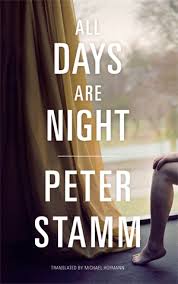
All Days Are Night – Peter Stamm

How do they do it? It would take some gall. Of course there are a few with salacious intent – but the rest seem genuinely to work from a higher motive. Sometimes money will change hands in the negotiations. If that’s the case, why not simply hire from the plethora of models seemingly willing to offer that same service for a fee? But for many that would defeat the purpose. Some consider those who make a living from it not ‘real’ women. One cannot get to the ‘essence’ with a hireling – they are all false. It would show up in the image or on canvas. For some it is the purity that they are after and for that they need to also convince that they are pure in intent. They rely on citing their artistic resume. Some would allow husbands/partners/boyfriends, perhaps even mothers no doubt, to be present – but again, does this sully the intention? We, of course, can come at it from the other angle – why would a woman – or man for that matter – agree to do what is being asked of them? But it does happen – some organise it simply by handing out flyers with a proposal, but others, like Hubert Amrheim, simply approach a subject, suitable for his purposes, outside railway stations or cafes and puts it to them face to face. In his novel, Swiss author Peter Stamm looks at the motivation from both those sides – from the artist’s perspective asking the individual to pose nude for him back in his studio, as well as from one of his subjects prepared to disrobe for him. But, imagine it, walking up to a woman and asking her to take her clothes of for you.

all days

Hubert A is able, successfully, to do just that. Mostly he has negative responses – even rude ones – and that is to be expected. But there are enough positive ones to make his project viable. Once back in his studio he photographs these compliant women naked doing mundane household duties – ironing, brewing coffee, making the bed. Examining the dozens of photographs he takes of each volunteer, he only selects for transferring to canvas those containing the pure essence he is seeking. It works. The results are in demand and he garners enough fame/notoriety so that Gillian decides to interview him for her television show. She finds him distant, austere even – not quite what she expected. But she’s intrigued. There’s not much life in her marriage to Mattias, so she contacts Hubert anonymously just to see where it leads. Where it leads is first to a coffee – but eventually, very reluctantly, the artist agrees to her desire to pose for him. But you see, being a famous face, she isn’t ‘real’ in his view. He has similar misgivings about photographing her sans clothing. The photographs don’t reach down into her ‘essence’. She is disappointed by this and it’s followed by an attempt at seduction – not by him, but the reverse. He immediately gives her her marching orders, but she succeeds in obtaining her images off him. Mistake. Hubby discovers them, is disgusted and goes ballistic. This ends up with Matthias dead and her face so smashed up she is now unrecognisable as a celebrity. Her television days are over. Much later, with a new face, Gillian – now Jill, has moved on to an existence as an entertainment coordinator at a cheesy alpine resort. Here she has a chance encounter with Hubert. He’s in town, having moved on from his nudes, to stage an exhibition at a local gallery. Trouble is – he has a dose of artists’ block – which eventually leads to him unravelling. Guess who becomes his carer? A relationship of sorts flares between the pair with never short of interesting results.

And that is as good a description as I can provide of this slight, in terms of page numbers, tome from Mr Stamm without giving too much away. He was the first wordsmith from his native land to be short-listed for the Man Booker so, despite the obvious possibilities, this offering from him is quite literary. It is a gem, in my view. Despite its brevity, it is beautifully structured and written. ‘All Days are Night’ still ticks all the boxes as a page turner. Opening with Gillian/Jill gradually emerging from a coma as a result of Mattias’ meltdown, Stamm first puts the back-story in place, then fast-forwards, in the second half, to the re-connection between the two main protagonists. Excellent stuff.

Peter-Stamm-009

Peter Stamm

Earlier this year I attended a showing of a local artist’s collection of nudes. I talked to the dauber for a while, but never bought myself to ask him how he found such a stunning array of subjects, prepared to disrobe for him, in a smallish place like Hobart. Did he need to go out into the Elizabeth Street Mall to find ‘real’ women in order to reach their ‘essence’ through his gifts with a paint brush. This book set me wondering about that question I refrained from asking again.

New Boy – Nick Earls

I remember ‘After January’ so fondly. Back then I thought the author was a new voice in the world of YA literature. It was a voice full of sunshine and zest from up in Mangoland to warm us all down here on an island much closer to the southern pole. Of all the hundreds of books I purchased in that year of 1996 for my school library, I chose to read that. Impossible to read them all, so there must have been something, perhaps on the back blurb, that attracted me to this new writer on the block – but I’ve been in Nick Earls’ thrall ever since. I’ve devoured every example of his word-smithery ever since.

Now Earls has successfully graduated to writing for adults as well. Graduated? That may imply that with the older the age-group as intended audience, the greater the skill set required. I prefer to think it operates in reverse. Not easy these days to engage with the younger brigade – but he does – and does it so well.

With ‘New Boy’, Earls is aiming at the late primary/early high school years – and he has produced a complete charmer. All the fun in it gave me much happy lol-ling.

earls1

It’s partly based on Earls’ own experiences as, recently arrived from Northern Ireland as a kid, he’s thrust into the hurl-burly world of an Australian school. There is the shock of the new for him, as well as for his classmates whom, he hopes, he’ll eventually get a handle on.

And it’s much the same with Herschelle in his book – with a name like that, even though it’s shared by a champion Protea cricketer (he’s from South Africa), he’s behind the eight ball from the get-go.

He was one of the cool kids back in Cape Town, but at this new place he’s grouped with the nerds – because he can only find a library habitue to befriend. Teachers and librarians all know these guys – invariably lovely students, but ones who also find the rough and tumble of the playground an alien experience. And Max is no exception – Earls has a most attractive character in this creation. He takes Herschelle under his wing – but soon his loyalty is sorely tested. You guessed it – there’s a bully involved.

Before he enrolled our pre-teen hero was quite gung-ho about going to school in Oz. He’d been on-line to a site detailing the subtleties of the lingo, as it’s spoken Down Under, to ensure he’d be hip. What could possibly go wrong then? Well the answer is plenty – ensuring a truckload of confusion and mirth. A kaffir lime causes all manner of outrage from the new arrivals to our shores. He resolves to rid himself of all Afrikaans-speak to become more at one with the locals – with mixed results.

Earls pushes the ‘difference’ angle for all he’s worth. The resolution of a few of scenarios the author conjures are hardly realistic in the world of teaching. This would all be over the head of the target audience so it matters little, doing little to detract from the sheer joy of the offering.

In my last years as a pedagogue I taught the age group the author has no doubt already entranced with ‘New Boy’. I know for a fact that I’d be ordering it in as a class set. It contains so many issues that one would initiate a teaching programme around – but the book never gets far away from just telling a terrific yarn to place a smile on the dials of young and old. Who knew that being asked to bring a plate along to a barbie would cause so much consternation for Herschelle’s mum – and the author’s?

earls_top_cropped_230x250

Author’s website = https://nickearls.wordpress.com/

The Paris Wife – Paula McLain

Once upon a time I read them – the monumental names of the preceding one hundred years. Hardy, Fitzgerald, Steinbeck, Greene – why, I even tried to get through ‘Ulysses’. And, of course, I read him – Papa Hemingway (the book in review tells how he received that appellation). But once I started devouring the fiction of my own times, eventually realising that was far more to my taste, the classics withered. It’s been decades since I picked one up – but I keep promising myself I will read ‘Gatsby’ just one more time.

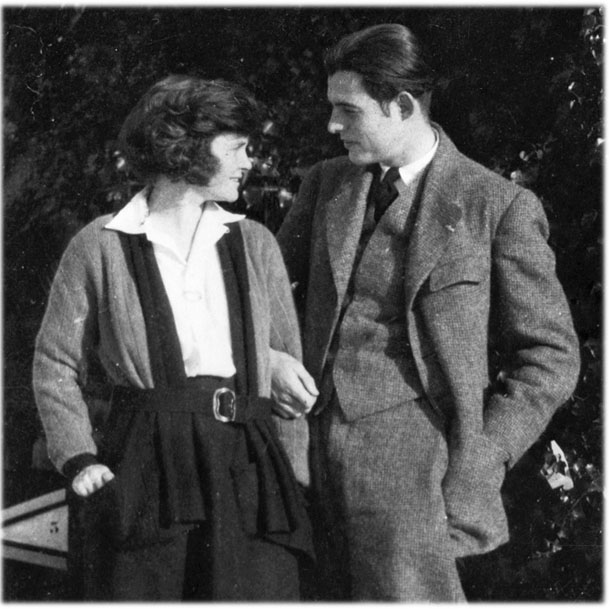
Turning the pages of ‘The Paris Wife’ put me in mind of one of Woody Allen’s better movies of his later period, ‘Midnight in Paris’. Here the Owen Wilson character travels back in time to meet all the great men and women reshapers of modern culture; those who hung out there in that burb in the twenties. They populated the boulevards and Left Bank garrets, mixing in the intellectual ferment that would hopefully extend the boundaries of their artistic talent – when they weren’t carousing on the effects of various fermented beverages. This tome has them all too – Pound, Fitzgeraldx2, Stein and Joyce – amongst others. ‘Paris Wife’ is the story of Hemingway’s rise to prominence during his first marriage to Hadley Richardson.

the-paris-wife

This product from American writer Paula McLain was a popular success in her home country, topping the NY Times best-seller list. The critics weren’t so crazy about it though – one calling it ‘…cliche-ridden…And it moves ploddingly.’

We view the great wordsmith through Hadley’s eyes, so we do not really get the answer as to why a young man about town would choose to marry an older woman, variously described as unfashionable, set in her ways, conservative, thick – in both senses of the word – and tediously dull. Perhaps it was the stipend that came with her hand? They were together for six years – the Paris years. But when the bright and flapperesquely vivacious Pauline Pfeiffer crossed Hem’s path, her days were numbered. Evidently Hemingway himself portrayed Richardson in his writings in a much more positive light than she was in reality. It would be interesting to compare the two takes. It’s so long ago that I read his memoir ‘A Moveable Feast’. Maybe I will revisit it one day. The reason for his kinder approach could be that it would be too much for his quite immense ego to have been associated by marriage with such a dullard.

hadley and hem

Anyway, as we have already ascertained, Paris was the place to be for any aspiring writer, so off the wannabe novelist and Hadley scampered to the City of Light as soon as the necessary readies became available. There are no great revelations in in McLain’s semi-imagined account and it has probably been done better elsewhere. After all, Hemingway’s personal life has been chewed over for decades. But, for this scribe, the novel was always readable – it was far from the supposed ‘plod’ ascribed to it.

The author herself has had a few collections of poetry published, as well as her own memoir (Like Family; Growing Up in Other People’s Homes’). Her freshman novel was ‘Ticket to Ride’; her latest tells the story of aviator Beryl Markham. The author had a tough upbringing, being fostered out at an early age after the early departure (thus the memoir) of her mother and the criminal activities of her dad. At age twenty-four she enrolled in a class of creative writing, was hooked, found she had talent and away she went. ‘The Paris Wife’ obviously required a fair dollop of research and the book doesn’t shy away from Hadley’s shortcomings. But it’s hard not to kinda like Hemingway’s put upon spouse and we know the outcome of it all before we start. Her second marriage, to foreign correspondent Paul Mowrer, was far more successful.

Patently she was not up to the pace of life the great writer engaged in once he started to garner some fame. She was outshone by all his new found friends as they dashed back and forth across Western Europe – sometimes with her and their child Bumby in tow, sometimes not. There was, as McLain portrayed her, a certain steadfastness to Hadley that saw her stick to her husband for as long as possible as he, incrementally, became more selfish, flighty, fragile and besotted with the feminine allure of the literary groupies that started to hang off his every utterance.

‘The Paris Wife’ is definitely worthy of consideration for any wishing to delve back into those times, but also for something that is easily digestible. Throw in ‘A Moveable Feast’ and ‘Midnight in Paris’ – that would be all you’d need to get a handle on an era that will probably never be repeated.

paula mclain

Paula McLain website = http://paulamclain.com/

House of Sticks – Peggy Frew

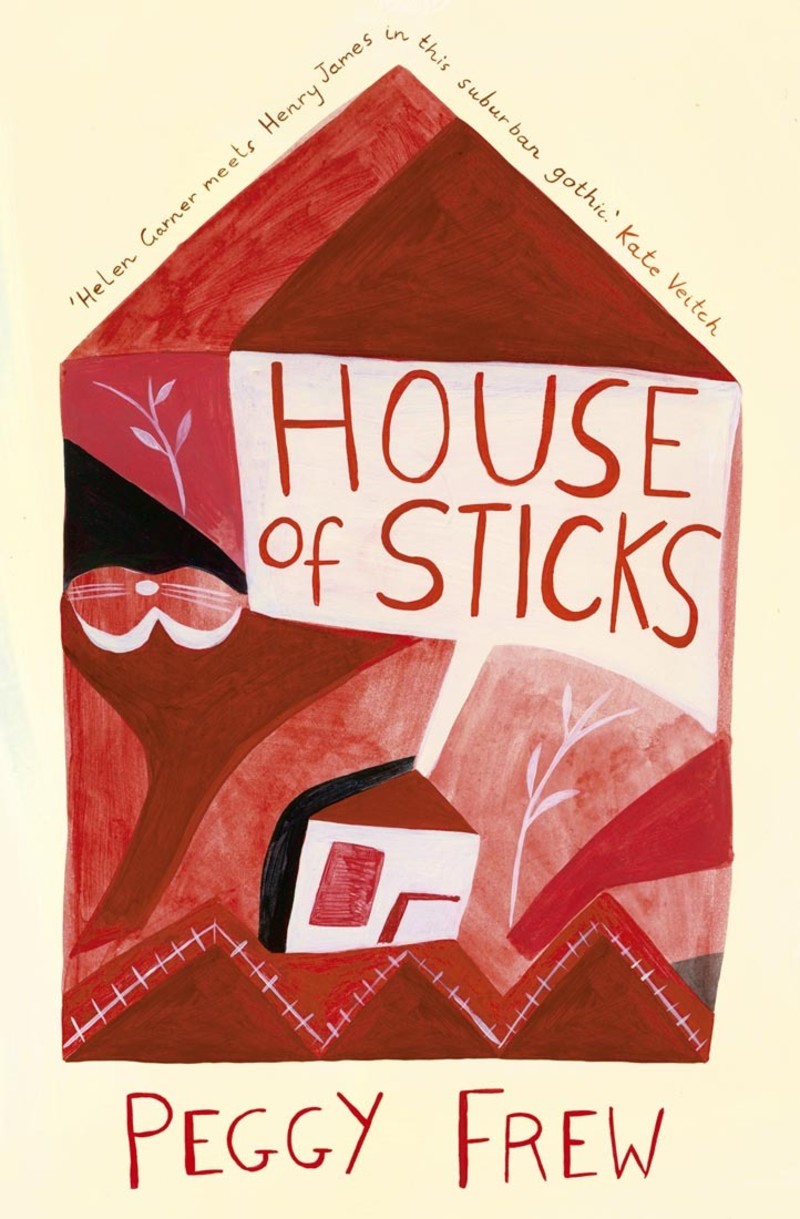
The recent Brendan Cowell film production, ‘Ruben Guthrie’, places the sunshine-y hedonism of the Harbour City front and central to it’s plot, almost leading to the destruction of the titular character in a sea of alcohol and drugs – and so that city does for Bonnie. She could have been a contender in the music industry, but in Frew’s ‘House of Sticks’ she has fallen in love with a tradie husband and is burdened down by three sprogs. She loves them all dearly, life rubs along okay – but she’s unfulfilled. Then a window of opportunity beckons in Emerald City, she grabs at it with both hands but Sydney’s party lifestyle and a sleazeball predator brings her undone big-time. Her trouble is, she’s honest to a fault and it all goes belly-up. Cue for the entry of an unlikely hero, staggering to her rescue.

house

Author Peggy Frew says of the book, ‘…it’s taking a subject that a lot of people wouldn’t think is worth writing about…Family is a key matter for a lot of writers, so how can it be not a valid subject worth writing about? But it’s the mother and baby thing that mean people put it in a pigeon hole. Now I’m a bit worried that it’s not going to be taken seriously enough because it’s ‘only’ about motherhood.’

But it was taken seriously – ‘House of Sticks’ winning a prestigious first manuscript gong, her prize being this tome hitting the shelves in 2011. But had it been just a mother, baby, struggle-town story it could have been a trite affair. Frew, though, has created Douggie, threw him into the mix and for me this is the difference. As if this business of holding it all together wasn’t tough enough for Bonnie already? Doug’s down on his luck and he and hubby Pete go way back. Doug’s a bit of a chancer – not quite to be trusted. But he has some sort of hold over Pete and works it for all he’s worth. He gives Bonnie the heebie jeebies to the max – she can’t bear to be around him. But before she knows it he’s a semi-permanent fixture in the home. Worse, the kids adore him. Then Dougie gets a nod on a sure thing at the races – and their lives are changed forever.

As well, in this Frew is quite potent with her wordsmithery. And she’s writing from a certain amount of experience. Back in the day she was once bass guitarist for prominent band Art of Fighting. Her husband is also a muso – and of course these days she has the balancing act with a family to cope with. Finding time to write in such circumstances is always at a premium. She admits she feels frustrated, like her main protagonist and yeans for the freedom her character Mickey possesses – a free-spirited vagabond in the Adalita mould. In their dreams Peggy/Bonnie wish they could spend time being Mickey.

This novel reflects the domestic challenges most of us on average wages are or have had to contend with in modern Australia. At first Bonnie and Pete have it all down pat pretty well. There’s just enough dosh to get by on as long as they are careful; they have a roof over their heads and food on the table. But Douggie makes Bonnie twitchy and the first cracks start to appear. Throw in Sydney, the nags and it all becomes an abyss.

I enjoyed this first time novel. The author doesn’t hide the fact she admires Tsolskis’ ‘The Slap’ and there’s a whiff of that about the writing – perhaps she’ll emerge as the feminine counter to his view of contemporary Oz. She does promise her sophomore effort, ‘Hope Farm’, due out this September, will be something entirely different. I’ll await its arrival with much expectation.

FREW-Peggy

The Guy, the Girl, the Artist and his Ex' – Gabrielle Williams

Poor Race. Race Matthews that is. They called him the ‘Minister for Plod’, ‘…a tiresome old bag of swamp gas’ and a ‘…pompous fathead’ – they being a group calling themselves the Australian Cultural Terrorists (ACT). Race, being a pollie, had a thick skin and had possibly been called much worse – and we are, all these years on, still no closer to knowing who those rude guys were. But they managed to perpetrate one of the most audacious of art heists in our history – and on Race’s watch. This event Gabrielle Williams has woven very deftly into her latest novel for the savvy YA crowd, ‘The Guy, the Girl, the Artist and his Ex’

guy

Mr Matthews was Minister for the Arts in the Sate Government, back in 1986, when a Picasso, ‘The Weeping Woman’, mysteriously disappeared from the National Gallery of Victoria. The thieves left a calling card on the wall in its lieu, imposed with the acronym – ACT. For some time the staff at the gallery assumed the prize painting had been taken to the Australian Capital Territory for some form of restoration – then the reality dawned on them. Whilst it was missing, all sorts of rumour mongering and innuendo went on as to what had happened the valuable stolen item. Eventually it, equally mysteriously, turned up in a railway concourse locker. The canvas had been expertly wrapped and was in good health. Therefore it was surmised it was no amateur job – maybe even an inside job, given the specialist tools required to remove the painting from its location and then to release it undamaged from its frame.

weeping

Ms Williams, on given the task of describing herself as a writer, in a few words, for an on-line forum operated by teen readers, offered up that she is ‘…original, quirky, interesting, different, unique, funny, pacey, literary and relatable.’ After reading ‘Guy/Girl/Artist/Ex’, I would concur. It was certainly an original approach to append a range of diverse, innocent characters around those fictionally doing the stealing of the great man’s work. A quirky guy, Guy, is the hero of the piece – someone who initially spends most of his time figuring out ways to prevent his olds from discovering how entirely slack he was being at school, but later becoming far less shallow. The novel is truly interesting in its recreation of the eighties and it is certainly different, having a bunch of characters of Latin American origin as major participants in the goings-on. I could continue, but you get the gist that I like this novel. It also possesses a structure that must have been no mean feat to figure out in the author’s head. As well, the tale hit all the right notes for her audience with the coming together of the Guy and Girl. Their intimate scene is handled with just the right amount of tact. For its readers, it gives out positive messages in the escape of Ex from Artist – he being an out-and-out drop-kick, the type of boyfriend to be avoided at all costs. The author has alluded to the fact that Ex is her most autobiographical creation. The parallels include the fact she is also single mum who has been involved, in her time, with several plonkers decidedly lacking in sensitivity. Ex also shares Ms William’s tastes in music and fashion.

The book, in part, is based around the premise that the Spanish for ‘weeping woman’ is ‘llorona’ – that and a couple of admittedly unlikely coincidences. In the hands of a less skilled wordsmith I would find the latter detracting from my pleasure in the product, but not so much here. I have no doubt the age-group this novel would appeal most would accept these occurrences in their stride – and that is not intended to be disparaging in any way. I particularly enjoyed Raffi as a protagonist – a new arrival in Oz from Columbia, thus part of the Spanish connection. Gabrielle W reports she is working on a sequel to this terrific yarn. Hopefully in it Rafi and Guy will continue their adventures as a team – and perhaps more.

williams-gabrielle-small

This promising writer first came to the attention of lovers of YA with her well-gonged ‘Beatle meets Destiny’. She has been praised by critic Graeme Wood of the Age as ‘…one of the funniest young adult fiction authors around.’ For me, I trust she goes around many more times in the future, giving us more unique takes on young people on the verge of adulthood.