Category Archives: Book Reviews

Reckoning – Magda Szubanski

‘Is there anyone left who isn’t totally in love with Magda Szubanski?’ Well, yes in fact. Me. It is not that I dislike her. How could anyone do that after reading ‘Reckoning’? It’s just that, apart from her role as Sharon in the beloved ‘Kath and Kim’, she hasn’t been on my radar much. I have never seen ‘Babe’, nor her various shows (‘The D Generation’, ‘Fast Forward’, ‘Big Girl’s Blouse’) on the small screen. And yes, before you ask, I have nothing against females who make their living by making us laugh in one way or another. I very much love Kitty Flanagan, Fiona O’Loughlin, Denise Scott, Hannah Gadsby, Celia Pacquola – the list goes on. But later, in a review I found on-line, is the following statement, ‘Anyone who doesn’t adore Magda Szubanski the clown will be awed by Szubanski the A-grade non-fiction writer.’ Well, again I wouldn’t perhaps use the word ‘awed’ in this context, but there’s no doubt her memoir is totally deserving of all the accolades it has garnered to date. This lady has decided literary chops. But I am in ‘awe’ of her for another reason. It’s for her bravery, a few years back, when she came out on ‘The Project’. To do so was all class – and the supportive reaction of the bulk of the Australian public shows that we, as a nation, are ready for the next step. Come on Mr Turnbull.

magda

I also suspect, given time, the striking initial line to her memoir will be recognised as one of the best opening hooks in Aussie lit. ‘If you had met my father you would never, not for an instant, have thought he was an assassin.’ Her father, indeed, casts a giant shadow over this tome, as he does the author’s life. And he was a good man – a good man carrying the burden of memory. As a Polish freedom fighter he did back to the Nazis what they did in spades to everyone else.

Yep, some of the stuff in ‘Reckoning’ is pretty grim, but overall the book’s tone is uplifting – even inspiring in places. Magda’s spirit shines through, even when it seems the odds are stacked against her. And she has had some real battles to wage too – failed projects, her weight issues, her sexuality. Maybe the latter two shouldn’t be such, but sadly, in today’s media climate, they are – particularly for those in the spotlight. All are elaborated on frankly, but there are tales of levity as well. There is much of interest for this particular reader in her recallings – the contrast in her twin visits to Warsaw between pre the end of the Cold War and post. I enjoyed her taking us behind the scenes of ‘Who Do You Think You Are?’ – I have often wondered about the mechanics of putting together that wonderful show. But it’s the concluding chapters that are the most intensely moving of the whole exercise – especially the description of her final unpacking of what made her father tick.

magda and kate

For a first-timer ‘Reckoning’ is an achievement. It holds interest throughout and is a book this scribe looked forward to returning to after daily impediments intruded. And I concur with the final sentence of that aforementioned on-line review, ‘Let’s hope the books keep coming.’

magda s

Atmosphere of Hope – Tim Flannery

It looks as though I was born just at the right time – lived my life when the living was, relatively speaking, easy – at least for those of us lucky enough not to be a citizen of a third world country. My generation missed the most traumatic events of the last century, saw the Cold War off without nuclear catastrophe, then ushered in the digital age – for better or worse. That being said, we also did just enough to bugger up our planet for the generations that follow. But then, we will be gone before the real crunch hits. Our ineptitude and our belief in deforestation, dirty coal and petrol guzzling machines is now certainly starting to make our atmosphere an unhappy place. And it’s already paying us back for that. Those who come after us will need to clean up our mess if humanity is to survive in a manner we’ve grown accustomed to on our planet. Or find a way to cope with a very altered environment. They’ll be able to do that, won’t they?

Will those gifted scientists, following the not so gifted ones who were like a wrecking ball for the Earth over the last five decades or so, be able to find a way to suck all that deleterious CO2 out of the sky? Will they find somewhere safe then to put it all – or perhaps even make something useful to humankind out of it?

flannery

Tim Flannery thinks that those brainiacs who are working on it now and down the track; the politicians in charge presently and into the future; as well as a more environmentally savvy general populace will have the combined nous to do this. Fingers crossed. There is much to be optimistic about, as reflected in ‘Atmosphere of Hope’. In general, though, it does make for some pretty depressing reading. Everything will have to go exactly right. At least, since the tome was written, there has been the hoped for positive outcomes from Paris. The two world leaders who were road-blocking progress for all they were worth – our own head-in-the-sand man Abbott and his mate, Canada’s Harper, have both been consigned to the dustbin of history. In Trudeau and Turnbull we at least have guys who think that the science has got it right.

Yes, Flannery reports, this science is on the march, starting to grapple and make some headway with the solutions required. And the greed of the vested interests in the ways of the past? Well, it is now being shown as what it truly has been all along – profit at all costs to benefit a small minority to the detriment of the masses. Despite this, it will still be touch and go.

I must admit, reading this, some of that aforementioned science had me glassy eyed with the plethora of figures Flannery used to make his various cases. He did his best to put it all in layman’s terms, but my difficulties with it didn’t detract from the impact his writings had on this reader. Some sections I truly found engrossing reading, such as the chapter entitled ‘The Great Disconnect’, discussing the gap between where the politicians are at as compared to those endeavouring to save us all. It is narrowing, but there’s still work to be done. And what’s to be done includes this – and it’s sobering. ‘The latest research…(has) found that more than 80 percent of known coal reserves, 33 percent of oil and 50 percent of gas must stay in the ground if we are to remain within budget.’ to get the emissions down to the Paris limits. Can you see the multi-nationals out there, plundering the Earth’s resources, laying down and taking that? Well, it’ll have to happen.

Geo-engineering seems to be the great hope – but it comes at a ginormous cost in monetary terms – and maybe also in the experimentation to get it right. It seems there are plenty of theories around to cool the planet by this means – from space sunshades to all buildings having white roofs. These range from sensible, no-brainer actions to those worthy of Dr Strangelove. Flannery examines the more plausible of these, declares some to be viable – but the cost, the cost. ‘Drawing carbon dioxide out of the atmosphere is, at the moment, an extraordinarily complex process involving mind-blowing quantum mechanics.’ But the Aussie climatologist is hoping that where there’s a will, there is also a way. He takes us through some models for this.

Yep, it seems, there is hope. It’s all not lost – but sadly he has given up on the Great Barrier Reef. He reckons it is gone for all money. As for many of the species we share this planet with, mega-numbers are on a quick path to extinction in the wild. They’ll find it impossible to adapt to the changes besetting them in the time they have left. We are already seeing it – think polar bears, orangutans, frogs. The list is long and salutary.

Yes, I am glad I read this book. I feel more informed and even a little more optimistic than beforehand. I have a fair grasp on the challenges ahead thanks to Tim F. I know the planet will survive the onslaught we have made on its checks and balances – and hopefully humankind will too, in one form or another.

Flannery01

Archipelago of Souls – Gregory Day

‘…, that day the storyteller and the listener were in an unlikely type of tuning, on either side of the roadside fire, as clouds went by seeking the east, and airy florets of moisture anointed them as they passed, the solid ground they were on as brief a reprieve as life itself from the sea of deeper time.’

Wesley Cress was camped by a King Island roadside, escaping the past by going to the unknown. She came cycling by, an ex-wild child, now wild-woman, giving Wes a future. But before all that could occur, he had a story to tell, but to only her. Yes, only her. And the island itself, this foreign bit of Tasmania? ‘…: the mist rises from the strait to meet the lenticular hovering like a halo above the swatch of land. The result is a sticky density of a dream. You can see the motion of the mist like a sculptured thing, the light too, streaming past as you cut the wood, or pouring down the gullies with the mobility of solid water itself…’

I recall, once upon a time, a Charles – at least that was his name as I remember it. He left uni to go a-teaching and his first appointment was Currie – or it could have been Grassy. He was only intending to stay awhile. But stayed a lifetime – the place hooked him. Such outliers sometimes do. He was drawn to its wildness and otherness. A certain place has hooked me too, being drawn to it by a beloved son. Not as isolated maybe, but isolated enough. I know the feeling. It happens. And this and more happened to Wesley.

And Gregory Day is some storyteller too. He’s been likened to Winton and called our best writer of nature. But I think he is more akin to Miller myself. Day is best known for his gong garnering ‘The Patron Saint of Eels’ from back in ’06. ‘Archipelago of Souls’ is my first Day – and hopefully not my last.

souls

The writer had a story he wanted to tell. It had been hovering around in his mind for a while but he needed a fulcrum to pin it down. He wanted to construct a tale involving our nation’s conflict experience – not by any stretch a novel notion. It was not to be about Gallipoli or Kokoda, but more ‘… the Australian male psyche in relation to trauma and war…’ In his travels, as a younger man, Day had visited and fallen in love with Crete, its people and the fact that so many cafés had, on their white-washed walls, old tattered images of Aussie serviceman arm in arm with local resistance fighters. He, as an Australian, was embraced by the natives. His German travelling companion – not so much. And that actual World War 2 campaign, in itself, was unusual. It was an unseemly, chaotic affair with the Nazis drifting down from above.

Still he needed that nub. It came with a tale he was told of the British evacuation from Crete. One of the ships, the Imperial, lost its steering. All the troops were taken off and the ship was sunk by friendly fire to stop it falling into enemy hands. Only trouble was there were a few Australian soldiers, below decks, comatose from the drink. They drowned. Now Day had the trigger for Wes to behave the way he did. His hero missed the evacuation because he was busy with a local lass behind a wall. He was thus stranded on the Mediterranean island.

The author’s narrative alternates between Crete and events on King. Essentially it deals with what the lone soldier had to do to survive – that is murder, man and beast. He assists, at various stages, in attacks against the invaders by the Cretan guerillas. This results in the Germans trying to counter through the auspices of repeated atrocity. It’s not pretty reading. It’s been likened to Flanagan’s ‘The Narrow Road to the Deep North’, but decidedly, for this reader, doesn’t have nearly the same impact. That being stated, some of what half-addled Wes does to ensure he stays living is truly terrible – and in some cases, terribly futile. But on the Bass Strait island time is on his side to try and come to terms with it all.

Leonie Fermoy, a generationally entrenched islander, has some forgetting to do too. She is wayward and perhaps she is a tad mad as well. Before Wes can convince her to love him he must unburden himself – open out to her the darker side that shrouds his mind. He’s hoping the King Island weather will leach it all out of him and that she’ll take care of the rest. Tentatively, in fits and starts, the pair come together – and the telling of it is terrific wordsmithery.

Gregory Day lives on a spot just sixty-four kilometres north of the Bass Strait island he writes about in this tome. He’s a frequent visitor and he loves the place – is transfixed by it. And I have been too, these days, by the aforementioned location of my son’s residence – by a place also attuned to the briny. We are so lucky that our island, in the southern seas, affords such bolt holes where nature is in balance with the incursions of mankind. Wes found it led to his salvation.

gregory day

Five Days – Douglas Kennedy

Two marriages. One just chuggin’ along in Maine mundanity; the other brim full of New England chill. And then there was Boston.

In some quarters ‘Five Days’ has been seen as a defence of marital infidelity. In doing the rounds, spruiking this 2013 novel, Kennedy himself offered up the following – that if ‘…you are no longer responsible for the day-to-day welfare of your children and you accept that your marriage has flat-lined – what then? I fully believe that the only person responsible for your happiness (or lack thereof) is yourself.’ The author cites the French and their less strictured views on adultery, compared to those of his country of birth. He should know, he’s lived in that European nation off and on for fifteen years. The French, he muses, live with the idea that ‘…you can manifold different rooms within for your own intimate life.’ But that notion is not the path taken by Kennedy’s protagonists in this readable tome. For them, it’s all or nothing

five d

Radiologist Laura (RL) is in town to attend a professional conference. Mr Insurance Man (MIM) is there on business. The two first encounter each other and exchange a few pleasantries in lining up to be processed into the nondescript rooms of a nondescript Boston hotel. Initially, to RL, MIM is the epitome of nondescript as well, so initially she thinks little of this chance meeting. It is only after, when she finds herself randomly sharing a revivalist cinema room with him and they again chat, that she feels there may be some substance to this fellow. To the pair’s delight, over a drink, they discover they have oh so much in common. Both share a love of, obviously, old movies, but there’s much, much more. Both have been thwarted in life when it comes to achieving their great ambitions; both have a love for pushing the envelope when it comes to peppering their conversation with literary devices and both have rebounded from a great wasn’t-to-be love affair into direly unrewarding wedlock. And, would you believe, both can quote to each other from the great works of American literature. The two, just to add an extra cause for comparing notes, both have male offspring with distressing mental health issues. Of course, with so much commonality, RL decides that MIM is quite a lively and attractive guy, despite his beige tones. MIM comes quickly to the opinion that he may well be in the presence of the second great love of his life. What the reader discovers, as they open up to each other about their back stories, is that, whereas RL has a modicum of spine, MIM has zilch.

What is undeniable is that there’s mutual attraction – but will they act on it? They don’t dally around these two. They are soon planning a life together once they also discover how super-charged their lovemaking is. So what if RL has a hubby back up in Maine struggling through his own mid-life crisis and a daughter engaging with all the vicissitudes of emerging into womanhood. MIM has his family business to run, albeit not much else going in his life to rave about. His wife is an icicle. Are they going to totally throw their present flawed lives away so readily.? You betcha they are. Their love, after a couple of days knowing each other, is just so right it has to be. The sparks in the bedroom, as well as their complete and utter in-synch-ness in all of life’s important stuff, soon have them looking at Boston apartments to co-habit. And then there are romantic trips to Paris to plan. In the process RL is transforming MIM into a funky and hot-to-trot bohemian, in terms of his attire. If you think it’s all too good to be true and that there is a fall coming once reality and common sense intervene, well then, you don’t know these two. But they’ll need spine to achieve it.

Now really I should have disliked this novel intensely. Both RL and MIM are, to put it bluntly, gits. And their conversations, as a twosome, are simply way too clever and nuanced for besotted lovers so caught up in infatuation and lust. The whole scenario is not in any way believable to this reader. Are there two people, anywhere, so pompously stupid? So it must be a rare talent that can turn what Kennedy has chosen to work with into a narrative that is almost unputdownable. I just had to find out if these two self-absorbed and woe-is-me beings would defy the odds and find true one hundred percent happiness in each other’s arms. Or would RL see through MIM’s complete sappiness? Such an unlikely pairing, it sure couldn’t come up all smelling of roses, could it?

I like Douglas Kennedy’s work. Not all his product, it must be said, has caught me in the same way as this one. ‘Five Days’ really appealed against the odds, but I can see, for some, it may be just too preposterous for words; the love-struck beings so totally annoying. Admittedly there have been a couple of lemons in the fair number of this wordsmith’s back product that I have read. But he is definitely an author I’d recommend. even if perhaps not with this tome as a starting point. Kennedy isn’t someone I rush out to buy as soon as a book bearing his moniker is published, but I dare-say his new offering, ‘The Blue Hour’, will eventually end up on my shelves.

douglas kennedy

Kennedy’s website = http://www.douglaskennedynovelist.com/

The Blue Room's Year in Books 2015

So much fine reading on the selves of booksellers all around this city. As always the issue are the tomes sitting on my own shelves patiently, patiently. If one could only do without scribbling, fine film and television, the dailies, as well as the adventures to be had in Hobs. Therefore, some of the listings below have been published prior to the past twelve months, being from my backlog – a backlog seemingly ever increasing.

1. The Illuminations – Andrew O’Hagan. I’m not alone. Stephen Romei, the literary editor of the Oz, placed it at number one of his top international fiction reads for 2015, commenting that it was ‘…a contemporary story of family and war by the brilliant Scottish writer…’ I cannot do otherwise but agree with that b word. And to top it all off, it was based on the story of a ground breaking English/Canadian photographer who set a precedent for more of her gender to follow.

illuminations

2. The Senator’s Wife – Sue Miller. I decided to read two of Ms Miller’s back catalogue that had been patient on my shelves for some time. Then I would purchase her latest. The former happened but as yet not the latter. But this work chronicling an episode in the marital wars and a most unusual love affair was a stand-out – particularly due to the generosity towards ageing of said wife.

3. The Short Long Book – Martin Flanagan. This was a garnering of yarns about a difficult to pin down character who is no doubt, given time, headed for national treasurehood. It’s by our country’s top sports writer – sorry Gideon Haigh.

4. Caleb’s Crossing – Geraldine Brooks. Set in pre-revolutionary US of A, this different take, based on real events, on the culture clash between the colonists and First Americans was riveting. Brooks makes history come alive and this is close to being a masterpiece of faction.

5. Holidays – William McInnes. Many books made me misty eyed during ’15, but only a smattering gave me a laugh. A great writer of larrikin humour is this fellow – and it also made me cry.

6. Stay With Me – Maureen McCarthy. At a time when domestic violence is never far away from the headlines and the remarkable Rosie Batty is Australian of the Year, this was a sobering, gritty and at times terrifying read. It brings it home, in fictional terms, as to just how dire it can all be.

7. When the Killing’s Done – TC Boyle. He’s the supreme exponent of wordsmithery and never fails to deliver. His new one awaits.

8. Hello Beautiful – Hannie Rayson. There were many more memoirs I wanted to read but this was the best of the few I did. Magda is being patient.

9. Mothers and Daughters – Kylie Ladd. Read two of hers this year and this was the better by a smidge.

10. New Boy – Nick Earls. If I was still teaching I’d request a class set of this. So much to ruminate on under the surface of this engaging read for tweens.

HMs – The Lake Shore – Sue Miller, Last Summer – Kylie Ladd, Funny Girl – Nick Hornby, Mr Mac and Me – Esther Freud, Be Near Me – Andrew O’Hagan, A Guide to Berlin – Gail Jones, Only in New York – Lily Brett.

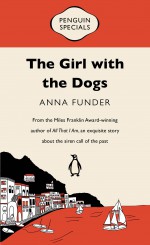
Is Less More? The Landing by Susan Johnson, The Girl with the Dogs by Anna Funder

It’s an adage as old as time, isn’t it – that sometimes less is more? Had I read the two books under review in reverse order I may not have completed the first and more substantial tome – and as it turned out that would have been somewhat of a pity.

I purchased and consumed Susan Johnson’s ‘The Landing’ on the basis of my enjoyment of her previous issue, ‘My Hundred Lovers’. Both her new novel and Funder’s short story/novella deal with mid-life crises, with the latter’s possessing a more sparse prose in the telling of her tale. Johnson’s is at variance with this and has been described in a review as Austenesque. In ‘The Landing’ she presents a range of characters who are either permanent residents of the eponymous location or frequent visitors to their weekenders there in the hinterland of the Sunshine Coast. All, it seems, are coming out the other side of their crises – some with new partners, some bereft, yearning for their old ones and some seeking new starts. In their introduction, by the writer, they are bookended by Jonathan Lott – a lawyer whose wife has deserted him for one of her own gender. She leaves him in a place alternating between bemusement and trauma. He retires to this place far from the busyness of Brissy to take stock and cast around for a woman from the hamlet who may offer some sort of succour. There are some more than willing. There’s disappointed-in-life, wannabe artist Penny and serial wife, the exotic blow-in Anna. Eventually one wins out, but he suspects there must be an alternate motive to just having him – and there is.

landing01

Penny’s story is the meat in the sandwich. Is all that remains for her an existence shared with her mother? Marie is a woman who fights valiantly to prevent the ravishes caused through the encroachments of time, but who is finally seeming to be defeated by them. Or is she?

Throughout this was not a book I looked forward to returning to and it wasn’t really until the final pages were approaching that I had, nonetheless, become quite intrigued by how it would all pan out for these people. I wanted their lives all tidied up before I left them – but that is not necessarily life and ‘The Landing’ reflects that. One couple emerges to begin a life together. Were they really the twosome the reader least expected to do so? The others are left hanging with no guarantee of happy-ever-afters. It won’t happen I suspect, but one almost wishes for another instalment – or at least the type of epilogue that afflicts some Hollywood offerings with a snapshot of character’s lives further down the track as the final credits roll.

landing02

Susan Johnson

Funder’s slight tome presents the same sort of conundrum for a woman of certain years not yet quite ready to let go of her past. This woman has made certain compromises to keep her marriage steady as she goes, but there’s an itch from her more youthful self that needs scratching. Purportedly based on a Chekhov short story, the tale sees Tess travelling from Oz to Paris to find if there’s still a spark between her and a figure from more carefree days. And if so, well, what then? Can she really, in her situation, finally recapture what may have been?

landing03

I guess, in answer to the opening query I posed in this piece, that, although Johnson’s wordsmithery approaches perfection in painting a picture of sun-kissed lives in idyllic sub-tropical environs failing to counter more hollow interiors, her novel didn’t fully engage this reader. That is, until it was almost over. With Funder’s, I could have taken a whole lot more.

landing04

Anna Funder

Susan Johnson’s website = http://www.susanjohnson.net/

Anna Funder’s website = http://annafunder.com/

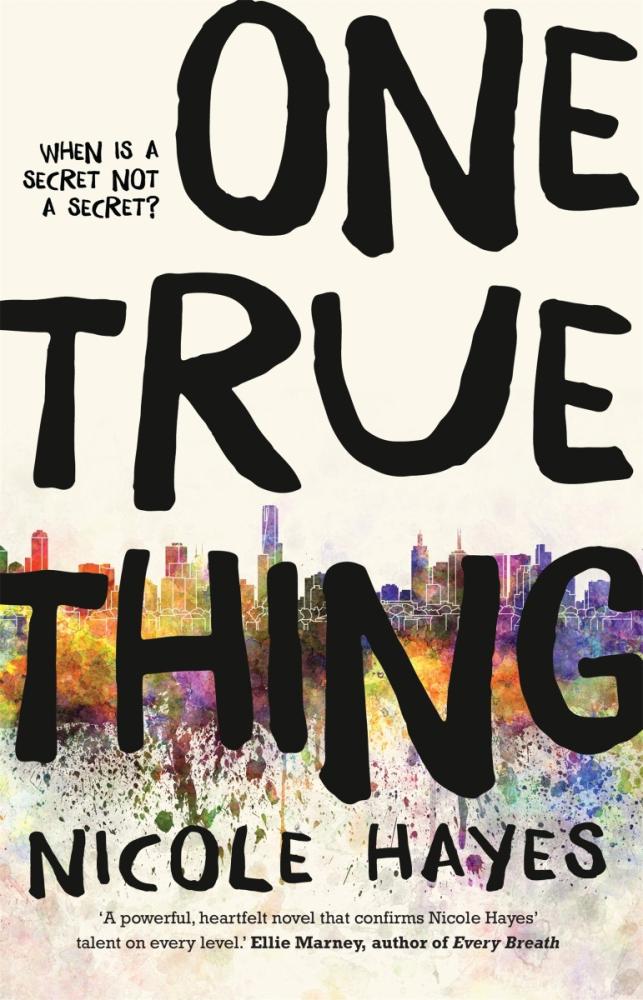
'One True Thing' – Nicole Hayes

Unlike in my teaching days, there is no earthly reason for me to continue to read YA, particularly as there’s so much quality adult fiction beckoning me. Point is, I enjoy it and I am lucky enough to have a daughter who cherry picks the best for me – and Nicole Hayes’ ‘One True Thing’ is certainly up there with that best. I admit it that this tome occasionally gave me the irrits, especially when it came to the kids involved and their music – but I also openly admit that, in places, especially towards the end when a family witnessed an event no family should, it also had me somewhat misty eyed. And it never ceased to have me eagerly turning the pages.

one-true-thing

Frankie’s music got to me. I suppose if I was again back teaching sixteen year olds I would enquire, after reading this, as to how many of them knew of the bands from another generation that the novel’s heroine was so in thrall to. I suspect the average teen of that age would more likely be wholly into the latest here-one-minute-gone-the-next ‘X-Factor’ sensation and ‘Ten Minutes of Spring’ or whatever the name of that band is with members still barely out of short pants. But then, what would I know? Besides, Frankie is no ordinary young lady and here’s where the book was so interesting to me. You see, she’s the daughter of the Premier of Victoria no-less. Also, that person isn’t her dad. So here Ms Hayes’ focus is on what happens to their family if their publicly prominent mother becomes involved in a seemingly tawdry sex scandal – and with a much younger fellow. In this we have involved an odious shock-joke making salacious accusations based on some photos of a secret rendezvous taken of the couple by budding journalist Jake – who just happens to be Frankie’s love interest. All this places the family in deep crisis, just as Premier Mum faces the biggest challenge of her career – a chance to become the first elected female leader of her state.

With all this going on around her, our heroine still has time to participate in her rock-group’s rehearsals for a battle of the bands style competition and attempt to stymie her bestie’s relationship with a fellow band member – the first keeper her gay mate has had.

It’s a given that it is up to Frankie to come to terms not only with, but as well sort out, the mess that is confronting her life and that of those she loves. How she goes about this makes for a terrific read – but for me it’s the political aspects that are the real attraction of the book. Will Jake redeem himself? Just who is the subject of her mother’s extra-marital affections? Will Frankie achieve a life ambition and see her musical heroes in concert? Will the oily broadcaster get his just desserts? Will our girl resolve the fracturing of her band in time to win the competition? And, most of all, will the Premier emerge triumphant? She’s somewhat self absorbed, is our Frankie, but one cannot but admire her spunk.

And congrats to Nicole H for melding all the strands together to make a juicy read for girls of Frankie’s ilk as they emerge from their teenage years to make their own imprint on our world.

nicole hayes

Author’s website = http://nicolehayesauthor.com/

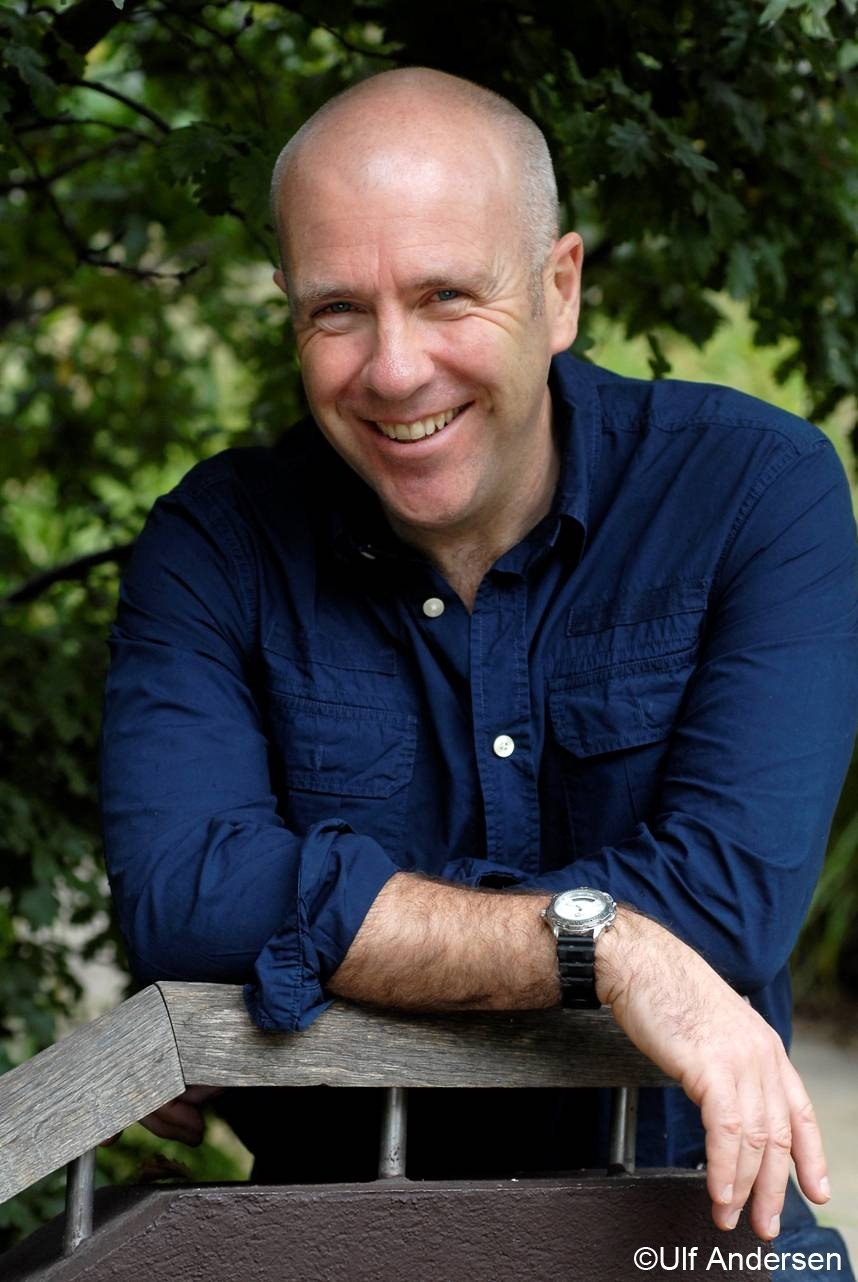
'And What Do You Do Mr Gable?' 'The Australian Disease' – Richard Flanagan

Although neither of us these days reside there, I suspect that he, like I, still regards the North West Coast as the homelands. So I liked this bit:- ‘She would sometimes halt our car…on the side of a new highway cutting that had sliced open the red earth of Tasmania’s north west coast, a flick-knife (great metaphor RF) of progress slashing the land. After looking furtively up and down the road, she would get out of the boot old fertiliser bags and order us children to fill them with that rich and sweating red earth. We would take that dirt all the way south to our Hobart home, where she would empty it over that part of our backyard she decreed would be a vegetable garden…With her foot she would scuff back the surface of some of the sour grey clay of southern Tasmania, and say:
‘Smell that son.’
And we would smell the richness together as she let it fall through her fingers, a shower of red earth saying:
‘Now that’s what I call soil.’

That red earth is the stuff of miracles; the same red earth that grows the world’s best spuds. I’ve a good life here in the sour-soiled south, but that dirt from the opposite end of the state, good enough to be placed on a plate and be served as a meal – well, I miss it, I really do. That, as well as the homeland’s accompanying fecundity, lushness, greenness. It’s a part of my soul, as it is for Richard Flanagan.

the-australian-disease

‘The Australian Disease’ is a short – and cheap at less than ten bucks – mash-up of several of the essays featured in the Man-Booker winning author’s ‘And What Do You Do Mr Gable? Much of the latter, particularly his railing against the obscenity that was the hold Gunns had on both sides of government here on our island for many years, I’d read before. And I do admit I found some of the other offerings too cerebral for my aged and addled brain. Others, though, I enjoyed immensely – some even moving me to the core, such as the reminiscence that contained the extract I used in the intro, simply entitled ‘Bread’. In this the great man writes of his fondness for ‘roo and wallaby chorizo (I wonder where he sources that from?) and gives us his own recipe for a loaf – so simple; its perfection being in the love imparted from maker to dough. And then there’s the view that the rot first set in on humankind when we transformed ourselves from hunter-gatherers to reapers of grains. Hmmm!

and-what-do-you-do-mr-gable-

He also gifts us his reflection on how Peter Dombrovskis’ images of wilderness changed the way we looked at wild places, Tasmanian or otherwise. In turn that camerasmith took his cues from the ground-breaking Olegas Truchanas – and uncannily both died in much the same way, out doing what they loved. ‘They created another Tasmania; an invitation to a dream open to all.‘Another image poignantly features in his ‘Family is Everything’, his take on the 2001 election campaign when a Kim Beazley decision to align his party to Howard’s hard-line attitude to legal refugee seekers, trying to find a better life for themselves and their children in our previously welcoming country, grew into the great shame that was the culmination of that policy under the thankfully now departed Abbott. Shorten has attached himself to that too – it is to be hoped that Turnbull can usher in a softer stance.

In ‘Sheep Management’ Flanagan makes a case for fiction as opposed to the prevailing plethora of factual tomes. Yet another campaign is covered when he joins the media pack following a Mark Latham trying to convince that being a nut case shouldn’t exclude one from being PM (‘The Rohypnol Decade’).

Flanagan, Richard

‘The Australian Disease’ gives a synopsis of the bigger collection, being the transcript to his Alan Missen Oration’, again from 2011. Back then there was a possibility, that he touches on, of a ticket of Putin/Palin ruling the world. What could be worse? Dare I suggest – Putin/Trump?

Richard Flanagan’s website = http://richardflanagan.com/

Caleb's Crossing – Geraldine Brooks

Christmas is coming and any author worth their salt knows this is the time to have a new offering in the display windows of bookshops all around the country – and this year is no exception. Conversely to what you may think, it is a time I dread. Perhaps it makes it easier for buying pressies, but I despair when favoured wordsmiths have new wares to sell, sitting there, tantalisingly under my nose, sort of demanding to be purchased for myself. And they’re there – newbies from some of my favourites: Winton, Theroux, Bryson, Douglas Kennedy and Seb Faulks. As to why I hate it? Well invariably their previous best seller is waiting in a pile in the man cave for me to get around to reading and low and behold, before I’m on to their last – well you get the idea.

But I avoided it with Geraldine Brooks. I put that to rights. Yes I did. Her latest, a biblical opus about King David, ‘The Secret Chord’ (not so sure I’m wholly tempted by the subject matter), is in the stores and I’ve just put down ‘Caleb’s Crossing’. But please don’t tell anyone – her ‘March’ is still in one those piles. But at least I’ve read her last. It seems like only yesterday I was at her book signing in Hobs for that offering, but when I checked its publication date I saw 2011. Golly gosh, I couldn’t believe it.

calebs crossing

But, gee, she’s very good with ‘Caleb’s Crossing’, is the Pulitzer Prize winner. Her prose fair zings off the page; a prose that may just represent the form of the language as spoken circa 1660 in the English colonies of the New World, with glorious words from the local Indian dialect thrown in as well.

As she states in her author’s note, the story as told is inspired by her discovery of, as well as being intrigued by, one Caleb Cheeshahteaumack of the Wôpanâak tribe, the traditional owners of Noepe – better known these days as Martha’s Vineyard. Brooks’ novel is largely set there, as well as on the mainland, at Cambridge. It’s the home of that august learning institution, Harvard.

Little is known of Caleb, but our author places fictional meat on what is there. She imparts the saga from the viewpoint of Bethia Mayfield from one of the of the settler families on the island. At the commencement she is a mere slip of a girl, meeting the salvage (savage) out in the wilderness that’s on her doorstep. As they nurture each other in their respective ways a bond builds between the two – she’s later his champion and semi-carer. He gradually makes the transition into white man’s society – and a man’s world it decidedly was then. As Ms Brooks tells it – what he left, though, had much to recommend it.

We sort of get a double whammy with this title. The initially civil relationships between the Indians and the interlopers has, by the end of Bethia’s life, morphed into open warfare (no guesses who wins that one). So it is a take on the constant that whenever Christian Europeans (be they empire-builders, escapees from another form of religious intolerance or fired with missionary zeal) and native populations collide, it it devastating for the latter. As well, in writing it from the position of a female inhabitant, we see the subjugated role of women during those times. Seems the natives were somewhat less so in that regard. Bethia comes from a reasonably enlightened family situation, but she is still stifled and all the important decisions about her are made by the men-folk. Her life in the most is protestantly bleak and confined, where the one god of her beliefs is all demanding. In contrast, the island’s original peoples are polytheist, but the big guns and better medicines of the newcomers convince them that they would be better off converting. But by the end Bethia is not so certain this is entirely as it should be.

In the final pages of the book Geraldine B relates, in more detail, how much of the tale had a factual basis. Little remains of Caleb’s existence though – a single example of his hand in Latin, which form the book’s endpapers, as well as some writings from contemporary observers. But it is an amazing construct the former Aussie has built around that. Rich in the detail of the period, it is sourced from perhaps what is a neglected era of America’s history, pre-Revolutionary War. In these years the nation’s future was also in the balance in terms of how it would all pan out with the clash of cultures. In the end the pagans were forcibly bent to the will of superior force. Nothing much changes.

Geraldine-Brooks_1

Author’s website = http://geraldinebrooks.com/

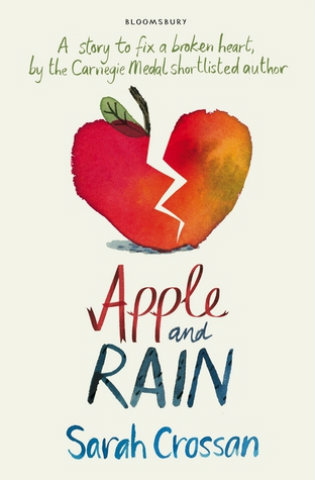
Apple and Rain – Sarah Crossan

She boobled down to the dirreny sonce
Alone, unarmed, her tickery jonced.
“What me? What my? What cooliers lie here?”
She whinnied furverly in the ghoulian ear.

And up he rose like a miney bront,
Waving his tammons in a sleery flont,
“Don’t wake me, don’t shake me,” the ghoulian gristled,
And piped his phantoms across the spistles.

A ploon bellowed out over the sheel
And she ran as fast as her miggens could reel,
“No more dirrenies,” she whispered aloud
And sluped back down to sleep on her mound.

The above is Sarah Crossan’s take on Lewis Carroll’s nonsense-but-makes-total-sense versifying in ‘The Jabberwocky’, as composed by her mouthpiece in her novel, ‘Apple and Rain’. Her eponymous heroine (Apple) constructs this verse to entertain step-sister Rain, but excels at non-jibberish poetry as well, a fact she keeps very much to herself.

Apple-and-Rain

It’s a very fine novel, short-listed for this year’s Carnegie Medal. Some critics have likened its writer to UK YA legend, Jacqueline Wilson – and it is easy to see the similarity. In itself this is high praise. Ultimately Ms Crossan missed out to Tanya Landman’s ‘Buffalo Soldiers’ for the gong. Another title by Sarah C, ‘The Weight of Water’, had similarly been previously listed.

‘Apple and Rain’ deals with a splintered family trying to bring itself together, only to create new fractures. Apple is a sensitive soul – delighted, on one hand, to have her mum back after a long period of estrangement, but devastated to lose her one true school friend to the ‘in-crowd’, led by a particularly bitchy piece of work. Rain is the strange little sister our Apple never knew she had until her mother returned skint and deflated from chasing the rainbow on the other side of the Atlantic. We can forgive Apple, in her excitement at her parent’s reappearance, for treading all over the feelings of her nan who has largely, as well as strictly, raised her. The freedom under her mother’s control is at first heady, but she soon realises it comes at a cost.

Apple’s hoped for romantic entanglement with a much older boy doesn’t, to her embarrassment, eventuate, but she finds a much more worthy and age-appropriate soul mate soon after. This latter lad is a delightful creation by Crossan, one of the best features of the work. In the end both young gentlemen come through with flying colours, helping to put Apple’s world to rights.

When asked, in a recent interview, what prompted this particular narrative the author explained, ‘I wanted to write a book about just how important grandparents are but wanted to look at what would prompt a parent to leave a child. I have a child myself and I can’t imagine abandoning her ever, but people do this all the time. Why and how? These are the questions I wanted to explore.’

Although the answer to those queries are complex, the novel is anything but. It’s not a taxing read and nor does it wallow in sentimentality. Apple eventually finds she is no powder puff and with some help, finds the feistiness to snub her nose at her detractors. Unfortunately the device she uses to conspire this to happen is somewhat hackneyed – I was hoping for a less ‘Home and Away’ and more originality.

That being said, this is still a marvellously engrossing tale being told. I particularly enjoyed the character of Apple’s English teacher – a kind soul addicted to poetry, trying to inspire his students with the Brit greats. He’s on Apple’s wavelength and appreciates her own fine attempts at poetsmithing, once he unearths them. He is attuned and caring enough to step in when his talented pupil is about to sink.

Time flew as I powered through the pages of ‘Apple and Rain’, so it is with interest I await the arrival of SC’s new offering. She has set herself an impressive challenge with the subject matter – conjoined twins. I’m sure she’ll be up to it.

sarah c

Sarah Crossan’s website = http://www.sarahcrossan.com/