
All posts by stevestevelovellidau
Mondeo on the Move
A Blue Room Book Review – The Secret Alchemy – Emma Darwin

I remember the book. I cannot remember the title, nor the author – but I remember the book. I recall the dominant colour on the cover was red, and it featured a medieval king – maybe it was a Henry. It could have been a William, an Edward or even a Richard. I doubt if it would have been my namesake, Stephen – a short, embarrassing reign. If I said that what I found in between the front and back covers fascinating, firing my love for the post-1066/pre-Tudor period of British history, I would have been telling a porky. I remember nothing of what was in the publication, I just remember it was turgid, dense and I had nary a clue of what was going so convoluted were the machinations of the major players. Their constantly shifting allegiances completely lost me – it was all a confused muddle in my mind. No doubt I would have been reading the torturous tome for a university course. I suspect any examination question on the era would have been dodged to go to Henry VIII or the Stuarts where I possessed a firmer grasp. But I was nothing if not a conscientious student. I did read the thing, but to no avail. To this day the Wars of the Roses have been a mystery, that is, until this book. Thank you Emma for helping me out. A fictional account has made the period clearer in my mind, but still far from crystal.
I was mightily impressed with Ms Darwin’s other semi-historical saga, ‘The Mathematics of Love’, a novel part set in the immediate post-Napoleonic Wars period – my Goodreads review of it is below:-
https://www.goodreads.com/book/show/702512.The_Mathematics_of_Love
‘A Secret Alchemy’ is also very worthy, although not as much to my taste as its predecessor. It did, though, markedly enhance my knowledge of the conflict via the voices of Elizabeth Woodville and her brother Anthony, major participants in the confusing events. Richard III is still the bad guy, but with some redeeming features in line with modern non-Shakespearian notions on the notorious hunchback. It is instructive that gays still had a rough time of it back then too. Just in case we didn’t get it from the storyline, Ms Darwin helpfully includes family trees and a precis of the factual events. The latter was placed at the end which is when I discovered it. It would have been of greater assistance to this reader had it been placed at the beginning.
Parallel to the Middle Ages goings on is a contemporary story involving bibliographer/historian Una. She has just returned to the UK from Oz to settle her affairs after the death of her hubby. Here she encounters the subject of pre-nuptial unrequited love. Eventually the twosome embark on a journey retracing the sites that featured in the book’s other narrative. As it turns out all rather neatly, she is researching the written output of Elysabeth (sic) and Antony (sic). Of course there are linkages between the two story threads – otherwise what would be the point – in what the book’s blurb describes as a ‘daring’ fashion. For me it was all a tad forced. The ‘finding’ of the significant letter, around which so much hinges, was particularly contrived. The paralleling is far more successful in ‘Mathematics of Love’.
Ms Darwin also invokes a sort of pigin Olde English-speake for the tales of Elizabeth and Anthony and for me this was one of the rewards of the book. At times a glossary would have been useful as occasionally meaning wasn’t always conveyed by context.
Based on her oeuvre, albeit a brief one at the moment, Ms Darwin is a novelist capable of the most exacting research with an over-riding facility for turning fact into readable fic/faction Her website is reporting that she is working on a third effort, but given this publication came out in 2008, it is a long time coming. Despite a few reservations with this title, I suspect the wait will be worth it, given that the grounds around her choice of subject will have been thoroughly mined.
I am glad my days of onerous reading tasks, both academic and pedagogic, are behind me. Never again will I have to plough through mind-numbing tracts, but rather I can enjoy ‘translators’ of Emma Darwin’s ilk – writers who possess the chops to turn dry, tedious history into palatable, plausible prose.

Emma Darwin’s website = http://www.emmadarwin.com/
By the Yarra 3

A Blue Room Book Review – The Narrow Road to the Deep North – Richard Flanagan
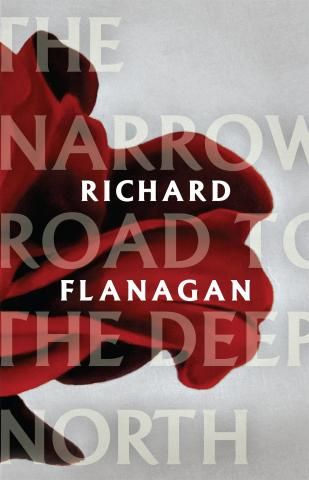
From the slurry that are my earliest memories there is a night of pluvial rain out into which my father went. On the road below our house a taxi had come to some form of grief. I remember looking out a window and seeing static car lights. My father came back and reported it was his friend, an old army mate, now cabbie – Ray. In response to my mother’s query, he reported that his pal would be okay – given a little time. I knew Ray had been ‘on the Railway’ during the war, without knowing exactly what that meant – only that he and Dad discussed it over beers. It seems to me that in today’s parlance he would have had some form of ‘melt down’ and parked by our house; he was coming to someone who ‘understood’ – my father.
It wasn’t till later in life that I came to know what being ‘on the Railway’ meant. To me the railway, in those earlier years, was the one running by the foreshore of our Tasmanian town and back then, in the days of steam, one actually bearing trains carrying passengers hither and thither. Later I knew ‘the Railway’ was another line far away in the jungles of Asia, the horrors of the building of which were linked to the game-changing conflict that figured so hugely in the life of both my old man and Ray. Nothing of’ ‘the Railway’ ever featured in my father’s stories, told to me perched on his knee – that wasn’t part of his war- as were the battles in Palestine and the Western Desert. His yarns were highly sanitised for juvenile consumption. There is, however, nothing sanitised in ‘The Narrow Road to the True North’.
As I progressed through my pre to mid-teens I became fixated on those ‘great adventures’ – World Wars 1 and 11. There was ‘Combat’ on the tele, with our dominant allies, the GIs, always coming out ahead of those foul, deviant ‘Krauts’. Through another source, the public library, I discovered how foul those Germans were – though not particularly those on the front line. I saw pictures in books of concentrations camps, pictures that gave me the horrors. These did not feature in any of my Dad’s stories either. It was then I started to discover the true nature of war. It had little of the American good guys coming to the world’s rescue with some micro-assistance from Aussie diggers. It was a hell – one only had to read of Stalingrad or Iwo Jima to know that.
In recent days I have attended the launch by Tim Winton of his new tome ‘Eyrie’. The great man will no doubt be a contender for the Miles Franklin with it, but during his talk he genuflected to Richard Flanagan, who, with ‘The Narrow Road…’, will no doubt be his major competitor. He used the M word to describe it – Masterpiece. That word came to the lips of Jennifer Byrne on the ‘First Tuesday Book Club’ as well. Her panelist, the divine Marieke Hardy, informed us that, at another launch, when she went to congratulate Flanagan on the book, all she could do was cry in his presence so deeply was she moved by what she had read. The first act she did on completing the novel was to ring her own father.
Could White in his pomp; Kenneally, Alex Miller or even Winton himself produce the burnished word-smithery this author uses in this book? The Tasmanian has honed the words on his pages to a sheen so as to have his desired effect on the reader. They are mesmerising; they are simply unputdownable. His mastery of the vernacular entraps from the get-go and never lets up until the last page is done with. One takes a deep breath as Flanagan beautifully, if not quite happily, ties up the loose ends, then one simply wants to start from the beginning again. There is a symmetry to the whole opus as Flanagan pulls us away from the fecund, oozing passages of horror on ‘the Railway’, then immerses the reader in it yet again.
I knew from his previous offerings, such as ‘The Sound of One Hand Clapping’ and the exquisite ‘Wanting’, that this writer has the promise of literary greatness about him, but ‘The Road to the Deep North’ raises him to another level. It seems all before for him has been moving to this – this being reportedly twelve years in the making. It will become a seminal Australian epic.
Two aspects of the book did surprise. I knew from the pre-publicity that Flanagan was not going to shirk from the utter vileness of the under-resourced, impossible task that befell the slave labourers on the Burma Railway. Its descriptions of the squalid conditions and Japanese cruelty were a test for me – a good friend couldn’t cope and had to skip those pages. I made it through – but it wasn’t pretty. Even in these, though, there is a beauty in the ‘mateship’ between the men – a notion that has been somewhat disrespected in recent times. Surely not now after this book. Of course, I was moved to tears by his portrayal of the privations in the middle sections of the book – it was no surprise to me that I would be. I was forewarned that Flanagan presents the other side as well – in some cases, if not entirely sympathetically, at least there is an understanding there. There is a Japanese – and a touch of Korean – perspective. In doing so – does he makes it easier to forgive?
What I didn’t expect was the sheer readability of the thing. It draws the reader in deep – normal pre-occupations are put aside whilst one devours it. The mind never wanders, causing a reread of paragraphs, one is so immersed. Even though it is not a linear narrative, Flanagan has somehow made it all so seamless. There is real power in the story, not just of the abominations of the jungle camps, but in the parallel magnetism of the affair that is also at the heart of this great Australian novel. As the main protagonist struggles to abide, let alone like, himself, women are drawn to him in the same way as his men were on ‘the Railway’ A novel of this magnitude would usually take me a couple of weeks to complete what with all the other enjoyable attractions of retirement – this, though, took precedence and I flew through it in a couple of sittings.
I went to see a film very early in the year called ‘Armour’ – a story of a hard singular death. That movie has retained a hold on me, not an entirely pleasant one either. I thought there could be no more pitiful going than that old woman’s on that movie screen that night. Of course, there are multiple deaths in ‘The Narrow Road…’ The double one, though, of Darky Gardiner would seemingly be so heart/gut wrenchingly that it would be beyond adjectives – yet Flanagan seems to find them to do justice to the brutality of it. Jack Rainbow’s demise under the surgeon’s knife is almost as potent, if that’s the right word? Then there’s the Japanese fixation on beheading – how the author describes the tantric of it in the mind of one of his Asian characters in particular makes the skin crawl. It is something seemingly beyond human understanding – yet Flanagan somehow makes it comprehensible.
The character whose war provides the fulcrum for the tale survives and presumably is an amalgam of Arch, the author’s own remarkable father, a former ‘slave’; as well as the legendary Weary Dunlop. That he had to make it through another test, albeit a briefer one, was also a surprise to me. It was yet another black periods of time in my island’s dark history – the ’67 bushfires. These are indelibly etched into the minds of all Tasmanians of my vintage when the hills around where I am sitting now scribing this piece were in the grip of dry-heated, gale driven hellfires. Over sixty lives were lost. It was another Hades altogether that the by now the living legend had to summon the strength to come to terms with.
It’s the names – the names of his characters that truly, truly grabbed as well – the range of wonderful appellations were Dickensian in their aptness – Sheephead Morton; Jimmy Bigelow; Rooster MacNiece; Bonox Baker; the priceless Gallipoli von Kessler. Does a woman’s name role off the tongue more sweetly than Amy Mulvaney. No wonder she dominated the great man’s mind with a nomenclature like that! She was his uncle’s wife; his unquenchable passion, despite a more than suitable, if long suffering, wife in Ella.
And finally, is Dorrigo Evans the greatest Australian literary creation this century?

Morag Fraser on Flanagan’s opus = http://www.smh.com.au/entertainment/books/barometer-of-torment-20131010-2v97i.html
By The Yarra 2

A Song or Two……or Maybe Three
‘Songs will never work unless they do not lift us all together, however briefly, before we, once again, spill out into the night.’ – Mark Seymour
And he should know! With his band, Hunters and Collectors, Seymour has been responsible for some of the classic tunes of the Great Australian Songbook. There’s the anthem forever linked with Aussie Rules, ‘Holy Grail’, as well as ‘True Tears of Joy’, ‘Till the Rivers Run Dry’ and ‘Still Hanging Around’ – just to place my favourites on record. The ‘Hunnas’ were more than a band, they were a collective of gifted musicians who cut their teeth on performing in the beer barns of suburban Melbourne during the glory days of the pub rock scene. It is hard to imagine how a song as exquisite as ‘Throw Your Arms Around Me’ could emerge from these venues, with their beer sodden carpets and fleshy, sweat-soaked mosh-pits – the half cut punters with their fists a-pumping. But emerge it did – a slow burner of a song that took years to be appreciated, but now is indelibly imprinted on the nation’s consciousness. It even reached Pearl Jam’s Eddie Vedder’s ears via the Neil Finn take. See Eddie sing it with Mark here = http://www.youtube.com/watch?v=vkRNz0tR7tc
I will come for you at night time
I will raise you from your sleep
I will kiss you in four places
As I go running along your street
I will squeeze the life out of you
You will make me laugh and make me cry
And we will never forget it
You will make me call your name
And I’ll shout it to the blue summer sky
And we may never meet again
So shed your skin and let’s get started

Seeing that H&C are going around again, reforming to support the tribute/greatest hits package, ‘Crucible’, I have been pondering on the power of this song, immediately bringing to mind others that have had the same impact on me. The Seymour quote says it succinctly. The fact is that certain songs always send a shiver up my spine, no matter how many times I play them. And if I have partaken of the juice of the bog, on some occasions, listening even may cause a tear to well. ‘Throw Your Arms Around Me’ will do that to me every time!
The Vedder/Finn version of the now classic on ‘Crucible’ stands up well against the original – in fact you can compare them on the one package. Finn, being Finn, has played around with the lyrics, claiming his partner has one hundred and sixty-five erogenous zones so that should be reflected in the number of places one should touch.
Seymour once claimed he could make a generous living performing just this one song at up-market weddings all around the country for the rest of his life. Thankfully he hasn’t taken that path, for his post-‘Hunters’ output has been of a high quality. ‘Do yourself a favour’ and have a listen to ‘Westgate’, ‘Undertow’ and ‘Seventh Heaven Club’ and you’ll be in the latter (seventh heaven) – they are real crackers. As befits their veneration and the maturing age of their fans, the band will play mainly ‘on the green’ this time across our wide brown land – wineries, botanical gardens and the like – a far cry form those sweat and spit pits of their pomp!
I suspect that even a fine songwriter such as the ‘Hunnas’ man and his comrades-in-verse would dip their lids to the greats of the past. You know who they are – no need to list them. But soaring above even these would be the two who most would find difficult to split as the most sublime tunesmiths of the modern era, the twin peaks – Dylan and Cohen.
Let’s take the grouchy one first, the penner of ‘Like a Rolling Stone’, Blowin’ in the Wind’ and ‘The Times They Are a-Changin’. For me, these days, the first peak of his mastery is ‘Forever Young’, but that is not the song that sends that tingle up my spine and irritates the tear ducts. Knowing his ‘Bobness’, he probably whipped my choice up in twenty minutes or so without much thought, but I adore this inhabitant of ‘Time Out of Mind’ – it always gets to me, it really does. When I hear the lines below, this second peak, for me, will not be surpassed:-
I’d go hungry; I’d go black and blue,
I’d go crawling down the avenue.
No, there’s nothing that I wouldn’t do
To make you feel my love.
‘Make You Feel My Love’ never fails to bring to mind my DLP (Darling Loving Partner) and how I feel about her. For her, I would go crawling down the avenue too. Adele these days has made the song her own, with added fame garnered when it was used to farewell ‘Glee’ star Cory Monteith – ‘Glee’ being, I can honestly say, a show I’ve never watched – just in case you were wondering!
The song obviously gets to Bryan Ferry as well and he produces a more lilting take on his tribute to the great man, ‘Dylanesque’. He is recorded as musing that the song reminds him of Dylan sharing a drink and swapping love stories with….’the ghostly songwiter in a far away bar where no one knows your name, even if you don’t have one’. For Ferry’s version = http://www.youtube.com/watch?v=_bQGRRolrg0
I recall hearing Leonard Cohen for the first time in the music room of my university college, back in the early seventies. The lads would gather after ‘Bellbird’ and the evening meal to listen respectfully to each other’s latest vinyl purchases. Usually it was a menu of Cream, Led Zep, Tull or Zappa – which I could pretty much take or leave. Occasionally something would make me sit up and take notice and it was also here I first heard Kristofferson and Creedence. A few sensitive souls were into Rod McKuen and Gordon Lightfoot , largely forgotten now. Then someone played ‘Suzanne’ by the great Canadian. I was immediately mightily taken by the voice; then, when I listened more intently, the lyrics.
This song, along with his other early oeuvre, including ‘So Long Marianne’, ‘Sisters of mercy’ and ‘Hey, That’s No Way To Say Goodbye’ were the harbingers of a lifelong fascination, culminating in seeing the awesome one live a few years back. He was so spry and dapper; he could hold an audience of any size in utter thrall. He is not just a Canadian national treasure – he is a global one!
On that night I wondered if he would think of how incredible it was to have a full house in a music barn, seating thousands, at the southern extremity of the known planet. For me the only disappointment of the whole evening was that he started the concert with, for me, the gem of his collection, the song that again brings to mind just how I am blessed to have someone as wonderful as DLP in my orbit – ‘Dance Me to the End of Love’.
Dance me to the children who are asking to be born
Dance me through the curtains that our kisses have outworn
Raise a tent of shelter now, though every thread is torn
Dance me to the end of love
Even after all these years of loving her, she is the one I want to be with till the end of time – in spades.
Country music is, of course, the home of ‘love done me wrong’ songs. There are special ones for me in this genre too – in fact too many to mention, but mention a few I will. That discovery of a love for Kristofferson, all those years ago as a uni student, has been ongoing, with ‘Loving her was Easier’ and ‘Please Don’t Tell Me How the Story Ends’ being special. The latter is beautifully reprised on Willie’s latest, in duet with Rosanne Cash. Talking duets, there’s the Cosmic Cowboy himself, Gram Parsons, pacing his protégée , Sweet Emmylou, through ‘Love Hurts’. Willie himself has a few – ‘Angel Flying Too Close to the Ground’, ‘Blue Eyes Crying in the Rain’ for starters. I defy anyone not to feel that shiver watching a near death Johnny Cash rumble through Nine Inch Nails’ ‘Hurt’. The one country song, however, I can never remain dry eyed through – the one that brings me undone every time – every time is ‘If I Needed You’ – any version, but particularly the original from its grog-addled, gun-toting composer, Townes van Zandt. Its the voice – that heart/gut wrenching voice. You know he lived that song; you know what it did to him killed him.

I could write about country music on and on, but let’s go back in time to a song that I rediscovered only recently, remembering its impact on me, on many people on first hearing it. It was so different, so fresh, so operatic compared to anything else going around back then – it was perhaps the first power ballad. The song is ‘Without You’. It becomes even more powerful when one reads of its provenance, as I did recently in ‘Uncut’, my music magazine of choice – followed up with a little googling.
For a while, way back in the seventies I thought that the voice powering that song along was the best I’d ever heard and I became enamoured of Nilsson. And that was before I knew anything of the man with the golden tonsils; before I knew of his insecurities, always out to impress the more famous in the set he ran with – icons such as R.Starr, J Lennon, Alice C and K Moon – the so-called Hollywood Vampires; before I knew of his alcoholism, drug abandon and chain smoking – ignoring advice to quit any of his vices to preserve that magic voice. He had two major hits – the other being ‘Everybody’s Talkin’ – coming on the back of the success of ‘Midnight Cowboy’, for which it was the evocative theme. His albums didn’t amount to much. Then he accidentally, or purposefully, tried to commit musical suicide with an album of tunes from the Great American Songbook. That was so uncool. It was called ‘A Little Touch of Schmilsson in the Night’. This was half a decade before Willie did it – and he’s country. Now, of course, everybody from Rockin’ Rod and ‘The Plonker’ Williams take standards from that era to great acclaim and mega-sales, particularly to the blue rinse set – and those of us who can remember Rod Stewart from his ‘Gasoline Alley’ days are all that now! Of course, your scribe, ever the uncool, adored poor Nilsson’s folly. For everyone else he was dead in the water. He was never taken seriously after that and he punished himself mercilessly with his addictions in response. Ringo stuck by him to the end, often inviting him to perform with his All Star Band. His last gig with this outfit was in 1992 when he sang ‘Without You’ for the final time live. He passed over in ’94. He was 53.

In his pomp, when the song topped the world’s charts, he bought himself a central London pad and took to allowing out of town mates to crash there. One such was Mama Cass who choked on that last sandwich in this abode – if you believe the urban myth. His ultimate guest was Keith Moon who overdosed on Heminevrin, trying to self-treat his alcoholism, there. Nilsson never lived in these digs again.
But that’s not where the story it ends – it gets worse. There’s more bad karma associated with ‘Without You’. The rub is Nilsson didn’t write it – that honour goes to two members of Beatles spin-off band Badfinger. Pete Ham and Tom Evans were the pair who should still be cashing in on the royalties. It makes interesting listening to compare their more run of the mill original version compared to Nilsson’s glorious take here = .
http://www.youtube.com/watch?v=PyBS_1vGwpU
Nilsson reinvented the song, turned it into that high voltage ballad that became a template for so many to follow. I wore the grooves out of my copy of it on old 45 vinyl – and was known to practise in front of a mirror, hair brush in hand, being Nilsson.
But back to Ham and Evans. Their fates are tragic. Ham went first in 1975, hanging himself in his garage at 27 – alcohol reading 0.27. He was despondent because to him it seemed he was unable to take his music to his public. Evans lasted till 1983 when the inability to reap the rewards of composing that great hit was still being denied him. He too hung himself, he on the branch of a willow tree in his garden. Who received all the royalties? You guessed it, the lawyers. Evans left a note saying he wanted to be with his mate.
‘No, I can’t live
If living is without you.’
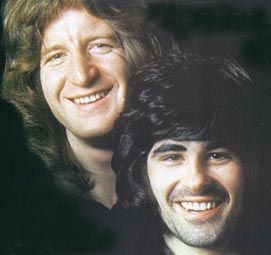
Hunters and Collectors singing ‘Throw Your Arms Around Me = http://www.youtube.com/watch?v=4H2Dl4bfySM
Bob Dylan singing ‘Make You Feel My Love’ = http://www.youtube.com/watch?v=zaP8NGML_QE
Leonard Cohen singing ‘Dance Me to the End of Love’ = http://www.youtube.com/watch?v=NGorjBVag0I
Townes van Zandt singing ‘If I Needed You = http://www.youtube.com/watch?v=zaP8NGML_QE
Nilsson singing ‘Without You’ = http://www.youtube.com/watch?v=_bQGRRolrg0
A Blue Room Book Review – Pictures of You – Caroline Leavitt

Nice. Nice is a word I notionally dislike – along with lot(s), got and thing(s). At the start of each school year, when I listed the rules for the oncoming terms to my treasures, there was always a stipulation to the students not to use these words in their creative writing:-
‘What’s wrong with them Mr L? I say them all the time,’ someone would undoubtedly cry.
‘My point exactly. We are programmed to use them in our speech and that’s fine. Use them the same amount in your written work and reading it becomes extremely boring. And Mr L hates being bored! If you use those words I’ll underline them all in nasty red ink, do a lot of frowning and that will not be a nice thing for you. Got it?’
Of course for the average to below average client it was water off a duck’s back and they still did it till the cows came home – you see, I taught in a rural school – but with them I turned a blind eye. But if those with a modicum, or more, of flair did so I kept my word and they soon received the message – with resulting improvement in their creative efforts. Similarly I forbade them starting a sentence with ‘And then I….’ as well as ending their masterpiece with ‘And then I woke up and it was only a dream.’
But for this book – well nice is the best word for it – it’s a nice, nice, nice read. Bookended by weightier, more worthy tomes, it was a salve to have such a nice, light read. Leavitt’s writing flows seamlessly from page to page, chapter to chapter; has a straight forward, easy to handle structure and it all wraps up satisfactorily – if perhaps not quite how the true romantics amongst us would have preferred. The narrative swirls around a most unlikely relationship forming between the two main protagonists. If the bliss and traps of following one’s heart is your ‘thing‘, then this is just the ticket. I enjoyed it immensely.
Another factor that attracted me to the book in the first place was that it also dealt with the addictiveness of one of my own favourite pastimes – photography. Therefore it had two of my passions covered. It’s not great literature, but its not Sparksian either – it is simply just, well – nice.
The book dates from 2011 so I suspect there may soon be a new publication from Ms Leavitt – so if it is as nice as ‘Pictures of You’ I’d be keen to read it as well when I wanted a respite from the heavier stuff – not to mention her back catalogue. Now on to those weightier and presumably worthier tomes waiting for me in a pile beside my bed!

Ms Leavitt’s website = http://www.carolineleavitt.com/home.htm
By the Yarra 1

Woody
Has ever an actress been more naked on screen than Cate Blanchett in Blue Jasmine?
Back in the early seventies, when your Blue Room scribe was a young lad about town, the cinema suddenly became a very interesting place if you were of a certain age, as I was. America had finally rolled away the Hayes Code and Ozploitation was beginning to peak. Breasts! Breasts could be seen on screens – both big and small (screens that is!). There were Abigail’s on ‘No96’ and a whole bevy of them, in the movie houses, chasing a young innocent called ‘Alvin Purple’ around Melbourne. The local ‘Star Theatre’ in my provincial town throbbed with excited young men, agog with displays of unfettered bosoms in those innocent years before before we lost our sense of wonder at all that.
When the aforementioned venue advertised something called ‘Everything You Always Wanted to Know About Sex But Was Too Afraid to Ask’, we all thought we were in for another eyeful. It didn’t quite turn out that way – in fact I was quite underwhelmed by the whole experience – but it did serve to introduce me to Woody. Now the convolutions of his love life are almost as famous as his remarkable oeuvre of cinematic offerings, but to me, when on song, he is in a league of his own. Although my expectations of the introductory sample were not realised by that collection of skits – there was virtually nothing to titillate and were of a style of humour I just didn’t get. It was, nonetheless, a harbinger of the cause of much joy to me in the years ahead.

It wasn’t long before Woody hit his straps, as far as I was concerned. He caused my first love affair with a screen beauty – if teenage infatuations with Marilyn Monroe, Brigitte Bardot and Annette Funicello are discounted – and I’ll always thank Woody for giving the world ‘Annie Hall’. Everyone, it seems, male or female, fell in love with Annie. With her quirkiness, kooky sense of fashion – starting a trend no less – and affinity with lobsters – check it out on YouTube – she was my first ‘it’ girl. Along with ‘The Graduate’, ‘Annie Hall’ set me on a path of cinema going I still follow to this day. It was also most people’s first introduction to the director/star’s now well known Jewish shtick – his New York-centric neuroticism. Multiple Oscar winning ‘Annie Hall’ was also notionally semi-autobiographical – as one presumes many of his movies are.
As if Annie wasn’t enough, next along came the gorgeous ‘Manhattan’, Woody’s homage to the city he, in part, defines. That glorious opening collage of Big Apple images to the tune of ‘Rhapsody in Blue’ are pure gold, as was his decision to film in lustrous black and white. As a bonus we get another dose of his main squeeze for a while – Ms Keaton – as well as the undeniable charms of Mariel Hemingway as Allen’s character’s exceedingly young mistress in the film. Two delights for the price of one. Keaton’s Mary woos Allen’s Isaac away from Hemingway’s Tracy. Meryl Streep also has one of her very early roles in this.
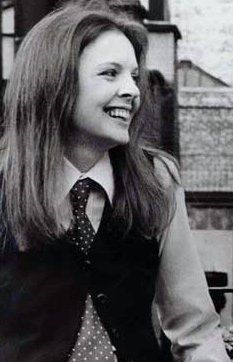
Keaton still has what it takes to woo on the screen too – even after all these years. Watch her in ‘Something’s Got to Give’ as she woos Jack Nicholson away from her screen daughter – she’s magic.
There’s a whole heap of wooing going on up on the screen whenever Keaton’s involved!
Woody has had his ups and downs – both in the quality of his product, as well as in his private life. In recent times I felt he had lost his mojo somewhat – that he wasn’t any longer living up to his earlier masterpieces. I cannot claim to have viewed every single movie of his these days – I tend to be guided by the reviews rather than going along and making up my own mind. A few years ago he enticed me back with another homage – this time to the City of Love. ‘Midnight in Paris’ was a fantasy/rom-com taking us back to the years when the French capital was the place to be for any artist or writer – the 1920s. Here a modern francophile, a delightful turn by Owen Wilson, is transported back to the era of his heroes – Hemingway, the Fitzgeralds, Cole Porter, Josephine Baker et al. It was so whimsical – I adored it.
His latest release is superb, but is a beast of a different nature – different from all before it. In it he features a very uncovered Cate Blanchett. We are used to her glacial poise and alabaster skin in most of her starring vehicles, or so it seems to me. Allen transforms her into a shrew. She is just so emotionally raw in ‘Blue Jasmine’ – the film is lit in such a manner it makes our Cate appear visually scoured and her flawless beauty is, for once, well, flawed.. There is nothing hidden in the close-ups. Here Cate’s face seems to give away all Jasmine/Jeanette Francis’ secrets. Her skin is blotchily brightly hued with every line magnified – either that, or it’s very good make up. As befits her role as a borderline alcoholic a few sheep short in the top paddock, her eyes are perennially red-rimmed. She is emotionally naked for the world to see. She is the anti-heroine, aka Claire Danes’ Carrie Mathison in ‘Homeland’, or Mireille Enos’ Sarah Lund in ‘The Killing’. Recoiling, as her world comes tumbling down, due to her husband’s (a smooth turn by Alec Baldwin) financial and romantic farragoes, Jasmine flees NYC for San Francisco to hole up with her much poorer sister till she gets back on her feet. Playing off Blanchett are a range of engaging performances, none more than Brit Sally Hawkins as her put upon sibling. The latter’s roughly hewn main squeeze is adeptly played by Bobby Cannavale, who Jasmine rightly pins as a yob, encouraging sis to move on to Louis CK’s character – who is perfect for her, apart from one minor issue. Hopefully Mr Oscar will recognise either Allen or Cate (or both) when he next appears. For the former, the movie is a late career marvel – it is stunning.

Now many on-liners have given some major pondering to rank ordering Woody’s films. For what it’s worth is the Blue Room’s Top 10
1. Annie Hall 1977
2. Manhattan 1979
3. Blue Jasmine 2013
4.Midnight in Paris 2011
5. Husbands and Wives 1992
6. Hannah and Her Sisters 1986
7. Melinda and Melinda 2004
8. Vicki Christina Barcelona 2008
9. Zelig 1983
10. Crimes and Misdemeanours 1984
Woody Allen on Cate in ‘The Big Issue’ = http://www.bigissue.com/features/interviews/3050/woody-allen-interview-cate-blanchett-has-amazing-gift
 The Blue Room, Riverside Drive