
All posts by stevestevelovellidau
Zak and Mia, Elise and Didier
For any family having a loved member afflicted by cancer is nightmare enough – having a young person battling their own body for survival, for those that love him/her; well that is beyond intolerable. It is one of the cruellest cuts life can impose. John Green’s ‘Fault in Our Stars’ is the fictional exposition of such heartbreak, winning hands down at the moment in top ten lists everywhere. In print form it has touched hearts all over the globe, with it now hitting the big screen as well. Critical reviews of the latter have been mixed, but I defy anyone to read the book and not be affected. But coming close to the above has been a tome and a movie I’ve cast my eyes on in recent weeks. So in order of perusal, let’s have a bo-peep at each offering.
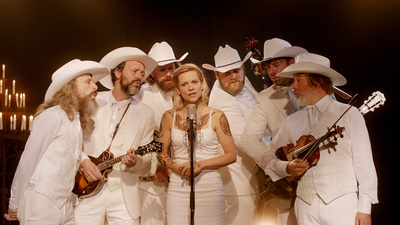
Take a bit of ‘Once’, a smidgeon of ‘O Brother, Where Art Thou’, a dash of ‘I Walk the Line’, as well as a splash of ‘Blue Valentine’ and you sort of get the idea of the acclaimed Belgian indie I had the pleasure of watching from director Felix van Groeningen. Coming together over blue grass music is an unlikely pair. She’s into tattoos in a big way – he’s a beefy, hairy bear of a man; a musician in a band that’s pure Appalachian of the Flemish (Walloon?) variety. Their union produces a daughter, Maybelle; they raising her in pure alternative bucolic splendour. But it eventuates that all is not well with their cherished offspring just as she reaches school age. It is heartbreaking – can the relationship survive the impositions this revelation imposes on their tightness as a unit? They try to use the music to take away their pain. When the band launched into Townes van Zandt’s ‘If I Needed You’, well that just finished me off big time. I was reaching for my hankie to dry away the tears.
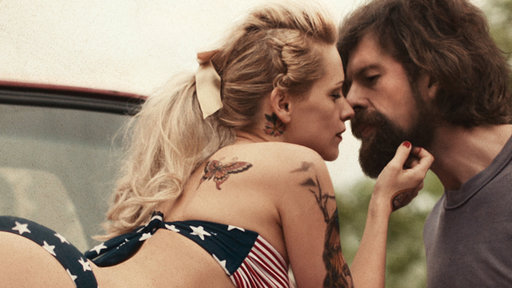
It is structurally a very clever movie. To view it requires having one’s wits about to keep track of the time shifts. Also the band’s climb to fame is very subtly done so as not to overshadow the devastating events of its main narrative. It was nominated for a best foreign movie Oscar at the most recent awards, understandably missing out to that Italian gem, an over-the-top classic, ‘The Great Beauty’. The more minimalist ‘The Broken Circle Breakdown’ is, though, a treat of a film even if, at its core, it is just so, so sad. For me it is one of the year’s best – there have been so many of those in 2014 and we are only half way through.
Although I initially viewed AJ Betts’ YA novel, ‘Zak and Mia’, as an inferior Aussie attempt to cash in on Green’s best seller, on reading it soon came out of the shadow of the American’s book. The latter grabbed me from the get go, although my enthusiasm had waned a tad by the end. With ‘Zac and Mia’ the reverse occurred. It perhaps won’t reach the stratospheric sales of its predecessor, but it certainly is no derivative clone. It is a magic book. By the time Mia reaches Zac’s family farm I was hooked and didn’t put it down till I finished it. The two characters – one a feisty party girl, estranged from her mother; the other a country lad with a mum doting on him. Both have cancer and meet whilst undergoing treatment. The last hundred pages I completed as the sun came up over Bridport, again wiping away my tears, this time with my bedsheets. Like the movie – just so, so sad.
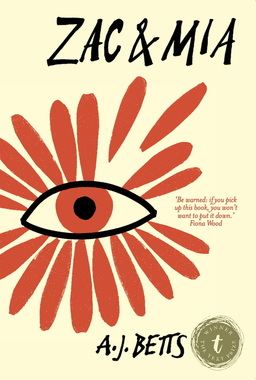
The disease and Lady Gaga bring these two together, but they are strange bedfellows, if you’ll excuse the pun. She goes on the run, thinking if she gets as far away from WA as possible her problems will resolve themselves. He is more pragmatic, concerned about his longevity, trawling the net to discover his odds at any given point. They fall into ‘love’ almost without realising it, but their cancers also drive them apart. Can there be the happy ever-afters for our brave protagonists as Betts skilfully builds towards a conclusion?
The author did her time in a hospital ward treating sufferers of the big C, so she knows what she’s on about. As the novel rolls on we get the impact of the events on the two very divergent mothers involved, as well as meeting Zac’s inspiring aunt, with her own story of survival. It is all rounded off beautifully by the author in a way that reaches deep into the reader’s humanity.

AJ Betts
Thank you darling daughter for recommending such a gem, one she considered was odds on for a CBC award, had the publisher remembered to list it. Thank you also to all those savvy film critics who enticed me to the State Cinema for that superior Belgian weepie.
Trailer for ‘The Broken Circle Breakdown’ = https://www.youtube.com/watch?v=3a50DJkCxqw
AJ Betts’ website = http://www.ajbetts.com/
Marvellous Melbourne's Arcades01

An American in Oz – Sara James
Would you credit this? ‘Mystifyingly a Red-bellied Black slithered its way up to our front door like a demented Avon lady and repeatedly beat its head against one of the glass panes…a deadly snake knocked on our front door.’
I’d believe it. Growing up I listened to tales my father told, as well as many from his mates, of Joe Blakes – so I’d believe it. My father and those of his ilk, back in their pomp, were bush-comfortable and saw plenty – and they wouldn’t tell porkies, or exaggerate, would they? Besides I once saw a copperhead do something pretty amazing – put the wind up me completely as far as those reptiles were concerned.
But Sara James, the Yank of ‘An American in Oz’, is a different kettle of fish. She’s a big city lass. Even if she, as correspondent for the US’s NBC Network, had been to some of the world’s most deadly war zones, nothing equipped her for the deadlies that exist on our island continent, nor the terror in the bush that Victoria’s Black Saturday fires engendered.

I first became aware of Sara James when she was profiled by ‘Australian Story’ in August last year. She fascinated me. Coming to terms with life in a new land would have been less arduous for her had she chosen one of our large littoral cities to swap the Big Apple for, but she and hubby opted for a tree-change up in the hills behind Yarra City. Soon she realised she was out of her depth. Her Aussie bush savvy partner was often away – and even he was flummoxed by the potential for disaster that that Saturday of gale driven inferno produced. Soon, though, she gathered around her a coterie of local friends and neighbours, together with the nearby parents of Andrew Butcher, the man from Down Under she fell in love with, so our Australian Yank learned to cope with the vicissitudes of the bush. It is fascinating reading Sara’s take on matters Oz, comparing it to life in her homeland – and she’s also seen a bit in her time. She witnessed conflicts in the Sudan and Somalia, was witness to terror declaring war on America, became mates with the Irwins before she arrived and of course, fell head over heels for her own suited Crocodile Dundee from Muckleford – a ‘blink and you’d miss it’ Victorian bush hamlet.
Added to all this, her second daughter was born with what the diagnosing doctor callously termed ‘a bad brain’. The cruelty of that moment was saved, as always, by a nurse – ‘I’ve looked at your little girl and she has bright eyes. Don’t give up.’ Nurses know, you know – and she didn’t – give up, our feisty heroine.
So part of the book informs on a different sort of journey – to put a name to what caused little Jacqueline’s mystery ailment. Finally, after many ups and downs, success comes. It turns out it is something called KCNQ2 – and they invent a delightful mnemonic to remember it by.
Sara gives us her opinion on the current inhumane refugee policy which she believes is ‘…way out of proportion to number of people begging for entry.’ Of course, it’s a given that she cannot fathom cricket, despite her hubby’s best efforts in educating her, nor can she make sense of Melbourne’s notorious hook turns. For a respected Emmy Award winning reporter her prose is nothing to write home about, but this reader was soon engrossed enough in her yarns for this to be of little consequence. The pages turned seamlessly and I was always pleased to get back to it after a break. Occasionally there’s a little ‘how wonderful am Iitis’, but that is a very minor irritation in a worthy tome. As an outsider’s view it is an ‘everyman’ effort, being none the less compelling for that. And if you’re raising a toddler who’s creating mayhem with the ‘terrible twos’ or ‘troublesome threes’, reading this would put it all into perspective.
Good on you Sara for your resilience in our country. Good on you for not being afraid to criticise your new land, as well as your old. And just good on you for your candour all round.
Sara James’ website = http://www.sarajames.com.au/
Newspaper article on James’ life in Oz = http://www.dailylife.com.au/life-and-love/real-life/i-live-in-a-place-that-doesnt-exist-20120629-216ao.html
Skyscrapers in the Rain
Belle and the Way It Was
Look at her in the 1779 Zoffany portrait – exotically turbaned and emerging cheekily from behind her cousin. The placement of the latter’s hand on hers indicates that the two, at least in Elizabeth Lindsay’s eyes, are equal. Quite astonishing when you think about it. She was no maidservant. If that was the case the white young lady’s hand wouldn’t have been within a bull’s roar of hers. In the past, had she appeared in a work of art of this nature, that is what she would have had to have been, or worse – a slave. For in Britain at this time slavery was at its zenith and fortunes were to made off the backs of the chained black man – and woman.
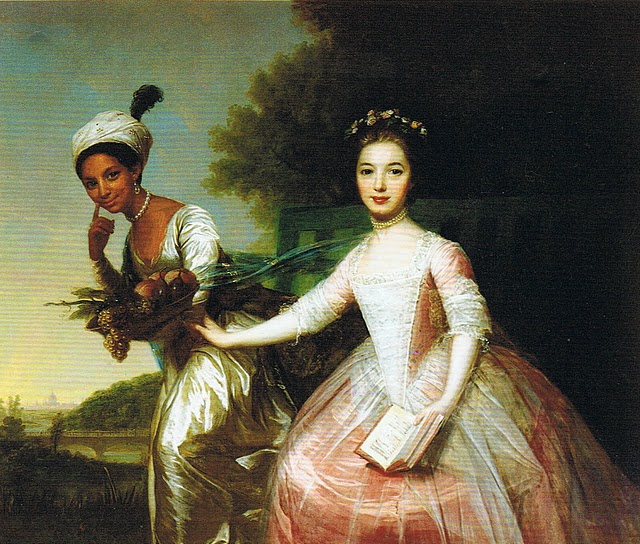
Slowly, though, society was becoming more liberal as the Age of Enlightenment took hold. Despite an upbringing surrounded by luxury, she was still up against it. She was illegitimate, a coffee coloured ‘mulatto’ and she was a woman – misogyny was rampant, stifling most attempts for the fairer sex to be their own person. Being, more or less, a chattel of a man was the go – an aspect the Amma Asante directed movie, ‘Belle’, well captures. But Dido’s real story is remarkable – and it has come to movie houses to such critical comments as ‘Elegant’ (Variety) and ‘Extraordinary’ (UK Guardian). Largely the praise is not overblown, just as long as you do not believe all the facts about her portrayed up there on the silver screen. Her tale actually needed no embellishment – but those associated with the movie have done plenty, playing very loosely with the ‘based on a true story’ facts.
Dido Elizabeth Belle certainly existed in the records, as well as in that astounding portrait. She was born the daughter of an admiral – one Sir John Lindsay to be exact. Her mother, quelle horreur, was a West Indian slave. The exact details of her conception are not known, only guessed at. Her upbringing was entrusted to a relative – but a very eminent one. He was no less than William Murray, First Earl of Mansfield and the Chief Justice of England. He treated her well and largely protected her from the trolls of the era – and there were plenty of those. Murray (skilfully played by Tom Wilkinson) was largely a man of his age, but had a stiff enough backbone to know what was right, even if it wasn’t socially acceptable. So, surrounded by wealth and all she could reasonably wish for as a child (then woman), Dido was still banished from the family table when guests were present. After her protector’s demise she was well-endowed financially and married a Frenchman – not the son (Sam Reid) of the local preacher, as presented in the movie.
It is historical fact that Murray’s high court decision over a case concerning a runaway slave – The Somersett Verdict – was the first step in the emancipation of the Negro from bondage in Britain. This journey’s culmination is also on the big screen in the fine ‘Amazing Grace’. Whether Dido played a role in his decision is unclear, although she certainly was employed by him as a clerk – also very forward for the time. In the movie she certainly has a defining role – although the nature of the case is entirely different – for dramatic effect I assume. On screen it involves the shocking mass drowning of slaves for insurance purposes.
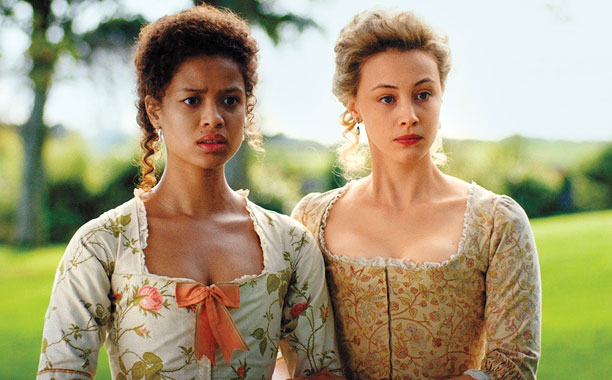
In the lead role Gugu Mbatha-Raw’ is, well, ‘elegant’ when she has to be, but hardly ‘extraordinary’. Emily Watson as Mrs Murray can act in such roles, as given here, in her sleep. It is the troubled, protective Murray as poignantly portrayed by one of the Brit’s finest that is the stand-out. It is a story with a happy ending and is well worth a bo-peep. The flick did put me in mind of my island’s own troubled past. A similar situation to Dido’s tale occurred in our early years – the ending of which was sadly not happy at all. The story concerns the ‘adoption’ of Mathinna, a young Tasmanian Aboriginal girl, by John Franklin, an early governor, together with his redoubtable wife, Jane. I guess the major difference here was the lack of ‘blood’, and it showed. This story has been bought to life in Richard Flanagan’s awesome novel ‘Wanting’.
We have largely left the misogyny of the past behind us, although in less civilised places Pakistan, the Sudan and India, horrible stories of it have emerged just in the past week alone. No, here though, there is no place for the ill treatment of women in our Western society. We have risen above all that, haven’t we? Well, maybe not as Wendy Squires elucidates:- http://www.theage.com.au/comment/how-the-misogynists-found-a-new-model-target-20140530-zrted.html
Trailer for the Movie = https://www.youtube.com/watch?v=cJ3VUbfJWD0
Rainy Afternoon Fed Square
A Little Bit of Doc
You knew they’d play it – it was a given. In forty teaching years – for at least two decades of that it was a given at any school social I attended. Along with ‘Nutbush’ and ‘The Time Warp’, it was a given. This tune, though, had a sting in its tail. – something that’d get the ‘too cool to dance’ set out on the floor – and even those too scared to normally would also join in. They knew, we knew, they’d soon be bellowing out the words that were forbidden in any school situation. And bellow they did – gleefully, with passion. For those few seconds, after each chorus, every kid was a rebel; snubbing their noses at the mainstream. They’d shed their cool, they’d shed inhibition. Up would go their fists, pumping in time with those beloved expletives – and there wasn’t a bloody thing we, as supervisors, could do about it. They were taunting us – daring us. But nor did we want to ruin the moment if the truth be known – for this was an Aussie anthem. It was almost sacred. Given half the chance we’d be bellowing it out with them. We all knew those words – it would be un-Australian not to. Where did it all start? Well the man himself knows. He’d have loved a dollar for the number of times he repeated the tale over the years – of that first time, when he looked down from on high, heard it – half amazed, half bemused. In part that refrain – those words, have made him a legend. And now he’ll rock it out no more in this life.

Australia has produced a pantheon of great front men; guys who could walk on stage to hushed anticipation and in minutes have a crowd in an ecstatic frenzy – be they playing to beer barns or stadiums. He was one of those. These are guys, who with their swagger and ‘mercurial’ struts, gave the punters more than value for their dollar. Most of all they possessed those great rock voices. You know the names – they’re etched into our lives. They had that special something – Stevie Wright, Bon Scott, Michael Hutchence, Dazza in his pomp, Barnesy of course. JO’K had it in the beginning – and for me Gerry Humphries was an under-rated master. But the Doc almost took it to Freddie levels. Dancing onto the stage, arms raised with that scarf between them – with the Doc it was as much about his show-stopping presence – dangerous, threatening – as it was the music. With the Angels behind him thumping out that pub rock beat, he was up there, spittle and sweat flying. The Doc, well, he just simply imposed himself.
When I saw him last year as part of the RocKwiz juggernaut, wending its way around the country, he really struggled up there on stage in his ‘Who Can It Be?’ role. He was ill – that was plain for all to see. Still he had to sing that song. And the crowd, packed into the showroom, responded with gusto, pounding back that inevitable response to him. It wasn’t long before word filtered through, later to be confirmed by his ‘Australian Story’ profile, that his remaining time with us would be short, unless a miracle occurred. The miracle never came.
After the show Julia, Brian, Jo Jo Zep and the Doc lined up to greet the fans. When I made it to him I asked if he’d have his photo taken with me me and he complied. I had a brief conversation – he was patently ‘spaced out’. Still he placed his arm across my shoulders and I responded. Sadly the photo didn’t come out. But all wasn’t lost. Doc had a signing pen in his hand and he inadvertently scrawled it across my jacket in indelible purple texta. Every time I wear that coat I think of Doc Neeson – and ever will. Tonight he’ll be up there, beyond the silver lining in the sky, belting out ‘Am I Ever Going to See Your Face Again’ to the angels.
Doc rocks it out one more time = https://www.youtube.com/watch?v=z87GJiNA7dE
Flag Reflected – Yarra City

Eagle
As much as I believe in a god I believe in totem – and in my case it has always been that of the eagle; specifically sea eagle and wedge-tailed. I regard them with much reverence. Espying one of these alpha-raptors evokes as much spirituality in me as occurred on seeing Uluru or Chartres for the first time, or indeed on the day I took that walk on a narrow strand of white sand by the sea at Oyster Cove.
In 2006 I had the good fortune to teach my school’s shiniest senior students for creative writing. As part of their first lesson for the year I felt that I should prove that I was able to ‘walk the talk’. I had little of the time I now possesses to indulge myself with scribbling, nor the time to polish – but this is the piece I presented.
SUMMER 0F THE SEA EAGLE
Each summer, in recent years, I have travelled south to my partner’s house of tranquility by the Derwent, on the semi-rural outskirts of Hobart. Here I find peace, respite and love. At the end of my lady’s street is a path that serpentines its way along the eastern bank of my island’s premier river, for five or six kilometres, towards New Norfolk. It has been my habit to walk the length of this track most days, partly to satisfy the adage that ‘half an hour’s exercise keeps old age away’, and partly because of the delights that may unfold on this ramble.
The path is named for a young lady kidnapped and murdered many years ago now – her body disposed of amongst the reeds that fringe the river’s edge. But no gloomy thoughts enter my mind as I traverse the length of the walkway, particularly on the glorious summer days we had through this January just past. Firstly there are the various moods of the river itself – from grey white-capped anger to glassy reflectiveness of the surrounding hills. On my outward walk along the Derwent the grey bulk of Mount Dromedary dominates. On the return journey the pinnacled head of Mount Wellington gradually emerges from behind the hills, flanking the western bank, as I close in on my destination.
Then nature can open up to me as well. At various times I can appraise numerous groups of black swans. During the warm weather months their flocks are often sprinkled by downy grey cygnets as well. One such quartet of mother and offsprings once blocked my path on the return journey – the protector of the group angrily hissing and flapping at me as I tried unsuccessfully to pass. I envisaged headlines in the Advocate –‘Yolla Teacher Severely Injured After Attack by Feral Swan’. I escaped by scurrying up the railway embankment that aligns itself with the river path. It is always a treat watching the blue wrens as they flash and twitter in the shrubbery, the brilliant male’s plumage glinting in the sun. Often scampering around are poo-cackers (such an inspired collective noun!) of native hens. In the shallows I often catch fleeting glances of a fisherman’s quarry. One day I watched a dozen or so pelicans take flight nearby, on another an echidna made a tortuous crossing of the railway tracks. But nothing beforehand matched my encounter with the resident raptor king of the Derwent on one particularly golden summer’s day.
Shortly after the turn of the New Year I stood transfixed on the decks of a catamaran on its journey down the Hobart’s estuary to Peppermint Bay as a screeching flurry of kelp gulls hooned in on a sea eagle. It had obvious designs on their eggs – this being my only previous contact with the magnificence of this feathered denizen of our coastlines. A few days later, on my walk, I spotted in the distance, high up, what I first took to be a circling hawk – only this bird seemed to be too big, too majestic – and there was that same distinctive undercarriage of pristine white. On later walks I repeatedly saw it, but always too tantalizingly far off to positively identify. One day, though, a fellow perambulator confirmed that this solitary bird was indeed a sea eagle.
The day of which I write will stay forever embedded with me. I was loping along the track, again on the return journey, when a certain feeling induced me to turn and look back towards Dromedary. Against the dun green hues of its flanks I was able to pick out the redoubtable avian of earlier sightings, gliding low to the river, obviously on the lookout for piscatorial delights. He (she?) was heading my way, so I remained to watch its progress. Closer and closer it flew. As it neared me the bird seemed to align its flight path with my stationary figure. He was so low his piercing eyes seemed to be at the same level as my own startled ones. For a brief time I indeed felt I was the sole focus of his interest. Then, when it was almost on me, up he soared to the heavens to hunt thermals. I felt a rush of air as he passed overhead. He knew who was the dominant species in this scenario, and it wasn’t the onlooker. The eagle then glided down again, up ahead of me, to continue his appraisal of the Derwent. I reluctantly returned to my trek towards the small car park that signifies the Bridgewater end of my promenade. A small gaggle of tourists were there, observing the sky and engaged in animated discussion about what they were gesturing towards – my eagle.
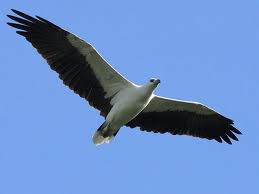
One asked if I could enlighten on its provenance so I regaled her with what I knew of a sea-eagle’s habits. For I time I stood with them in their observances as the raptor gradually disappeared downstream over the causeway. They’ll probably remember the thrill of it, but that momentary connection I made with my ‘kindred spirit’ is with me forever.
*****
And that is as good a way as any to segue into a discussion about ‘Healing’, a recent movie that had me weeping unashamedly into my hankie by its conclusion. I doubt if I’ll see a better Aussie movie this year. I know I’ll not view a more affecting one from anywhere in 2014 – that’s for sure.
Being picky – it wasn’t perfect. There were occasions of overt Aussie-ness that were cringe-worthy. The normally reliable Justine Clarke here was quite jarring. But anchored by Hugo Weaving and Don Hany, this fluid vehicle from director Craig Monahan would go a long way to charming any affected by the ‘black dog’ out of their despair. Of course Weaving is an old hand at this sort of stuff – it was Don Hany, making his big screen debut, who was the revelation. Playing Viktor Khaden, a long-termer in the prison system, his character’s chances of rejoining normal life were running out. He finds himself transferred to the low surveillance prison farm, Won Wron. He’s Iranian, in for committing a ‘saving face’ crime. He also seems a hopeless case for redemption, but Matt Perry (Weaving) is going to have a go. As a senior rehabilitation officer it’s his job to attempt this; it’s not his job to also believe in Viktor. Tony Barry, as Matt’s offsider, is cynical about it all. This movie is a throwback to Barry’s younger days of pomp when he was in the same position as Hany is now, a darling of the small screen. Also demonstrating actorly chops that are prescient of bright futures in the industry are Xavier Samuel and Mark Leonard Winter. But the real star of this Oz offering is Yasmine, the eagle – Viktor’s ticket to the future. She is awesome, – just so stunningly awesome. To see this movie is to believe my words – particularly as she imposes herself over the opening credits. What an introduction, till it all comes to a horrible end! That it is all based on a true story only increases the allure of Monahan’s engrossing fare.
I know this inspiring effort will not attract the mindless masses away from their brainwashing at the altar of Hollywood dross, but this is so worth tracking down when it is eventually makes it on to DVD. I know there are two very special young ladies who will receive it in their Christmas stockings from me.

‘Healing’ website = http://www.healingthemovie.com/
 The Blue Room, Riverside Drive