
All posts by stevestevelovellidau
The Black War – Nicholas Clements
In my latter years I shied away from it – I really did. The history needed to be taught – in fact, it should be a compulsory requirement in our island’s schools. But working with the Aboriginal community to improve the outcomes of indigenous students (one of the most enlightening and enjoyable aspects of a forty year career), I discovered there were divisions within their number over the story that needed to be told and so, from the classroom perspective, I became wary. I stuck to the big picture, the narrative over the whole of the country, conveniently ignoring that of the local peoples. I am now out of the loop, so to speak, so I am not sure if attitudes have changed – softened in recent times. I firmly believe no Tasmanian child should depart the process without a firm understanding of the clash between two cultures on this state’s historical frontiers.
‘The Black Wars’ is a fascinating, often troubling book. Clements has been courageous. He doesn’t shy away. Some of the factual accounts of what actually happened during the period covered does not make for pretty reading. With this whole, decidedly sorry saga, there are two words that have always troubled me – the notion that what happened out on the backblocks during this time was a ‘war’ – the notion that the result was a conscious policy of ‘genocide’. As for the former, the raw figures are minuscule compared to the great clashes of the last hundred years and it always seemed to me that the skirmishes that went on would be better described as a ‘conflict’. But when Clements boils it all down to percentages, then a different hue is cast on the events. It transforms the data. The military involvement he illuminates was also much larger that I had previously envisaged. As a result, ‘war’ now sits more comfortably.

Certainly there were calls for ‘extermination’ as the ‘war’ rolled over from the 1820s into the next decade – and on the North West Frontier on into the 1840s (it intrigued me that the final recorded skirmish of it occurred in the Table Cape area, the very region I spent the final years of my time teaching). During these years, as Clements so vividly describes, the fear and loathing on both sides of the ledger for the other were palpable. For a time the colony was nigh on paralysed by the atrocities committed by ‘white’ and ‘black’ and the terror that ensued. In some sectors of the settler community hotheads did call for the Aboriginals to pay the ultimate price – and there is no doubt of what, by the end, the latter were attempting to do. Of course their goal was futile and they knew it as their attacks went from targeted to indiscriminate. Never was it otherwise that the odds were stacked in favour of the invaders. The problem with all this is that, out in the remote rural areas, officialdom had little control – and the brutal background of many of the ‘white’ transgressors in these locations meant there occurred scenes of unmitigated inhumanity. This could not be tolerated by the native warrior chiefs – they were forced to retaliate in kind. It is worth remembering that, in the period just before the conflict heated up, Van Diemans Land had only just recovered from the debilitation caused by unrestrained bushranger gangs.
Clements, after placing what he intended to do with ‘The Black War’ in context, looked at it largely on the ground rather than in the halls of government. Using the reasonably considerable contemporary accounts to be had – at least on the invaders’ side – he successfully places the reader squarely in the middle of it all so he/she feels the desperation increase for both parties as no solutions to it, other than those of a violent nature, could be found. No soft gloves were used here by the author, as even the nobility of the ‘black’ cause gave way to heinous slaughter of the innocents – as well as the deserving.
Circling around all this was the work of George Augustus Robinson – once the hero of the times (as well as in the era of my own education), but these days more of a divisive figure. It’s his copious journal keeping that has largely provided Clements with the Aboriginal take on the events. The saddest, most heart wrenching data of all involves the incredibly small numbers that he retrieved from the bush as the last of the warrior groups surrendered. The settlers were incredulous that so few caused so much mayhem towards the end. For me much of the territory Clements wrote on was known in an overall sense – albeit not the gory detail. What really came as a surprise was how much of a shambles the notorious Black Line was. I knew how badly it failed, putting that down to the ingenuity of those they were attempting to ensnare. Largely, though, it was the complete mismanagement of the grand strategy by the authorities, as well as the lack of real enthusiasm by the settler/military participants once they had to do battle with the vagaries of a Tasmanian spring in a wild terrain.
Logically sex would have had to have been a factor in all this – the bulk of ‘white’ maledom wasn’t getting any, at least of the ‘legal’ variety, as a result of a substantial gender imbalance. Here the ‘blacks’ could provide a source for alleviating that need. In the main this was foul, unforgiving sex. The ‘gins’ became little more than slaves if captured, often ending their use with a bullet to the head – and the crass class that inhabited the fringes of ‘civilization’ liked their prey to be as tender in years as possible. Ugly, ugly stuff – at its most barbaric out on the Strait’s islands. It is this frontier that Clements suggests is worthy of a deeper examination in a future tome – only, at this stage, he isn’t prepared to write it. This is largely, I would think, for the same reasons that I wasn’t prepared to take what I knew into the classroom. He claims ample documentation for what went on is available and not all of it puts the blame squarely on the side of the colonials. Clements noted that Aboriginal women were used by their men folk as bargaining tools – in some cases readily prostituting their females to gain favour, tucker or other wares.
With ‘The Black War’ Clements complements others working in the same area such as Boyce and his mentor, Henry Reynolds. I would strongly suggest that this book be an insisted read for any educator intending to take our island’s dark history to his/her students. With his research you would also think that the so-called ‘history wars’ have well and truly been put to bed.
To complete this appraisal, here are two interesting facts that the author brings to our attention. The first was that the initial Tasmanians never attacked during the night when the spirits abounded, whereas their enemy usually preferred the cover of darkness to slaughter our first inhabitants in their camps. Secondly, contrary to expectation, although the killing of livestock by the ‘blacks’ was common, what they speared and waddied out of existence was never consumed.

Clements’ tome is a fine achievement, with the author greatly impressing at the recent launch of ‘The Black War’ in Hobart. I had the pleasure of sitting next to his mother at the event and she was justly proud of her son. His work is revelatory to say the least.
From The Australian = http://www.theaustralian.com.au/arts/review/beyond-black-and-white/story-fn9n8gph-1226895004177?nk=8fe21f338350b1ee60e8806adeac7887
Table Cape Tulips01

Writing Clementine – Kate Gordon
I am Burnie born and bred. Most of my life has been spent living in the town – my working life in teaching its youngsters and those of its satellite communities. Most of my time there I hankered to be somewhere else – but I was patient, knowing the town might have its limitations – but its people were wonderful. My retirement does indeed see me in another place – but in my mind I am still Burnie. I write Burnie Tales – it’s what I write about the most. About the lives of the people, like me, in someway still connected to the town. These are stories that are ‘…sometimes truth, but mainly fiction’. Few will ever read them. I plonk them on my blog and send them off to mates and family who have expressed some liking for them – but they are mainly written for me. Composing them is therapeutic – it makes me happy, content with life, my Burnie Tales.
And here’s a Burnie tale of three girls, three best of friends, growing up and going to high school in my home town. They weren’t the most popular trio of their cohort – but they weren’t the most unpopular either. As they journeyed through their senior years and on into college, to the cusp of adulthood, they shared so much. This included their passions for boy bands and Spice Girls, the Adelaide Crows and Hawthorn Hawks, as well as ultimately, the more perplexing matter of the opposite gender. They were there for each other when times were tough, as they sometimes could be. There were family issues and heartbreaks in love. But they celebrated with zest each others’ successes – of which there were more than a few. Most of all, the best bit, was that with these three girls goodness emanated from every pore of their being. It was my good fortune to share teaching duties with two of them at Yolla District School where I watched with delight as they grew into consummate, caring professionals in their chosen vocation. Children of all ages pick up on goodness – and these two had that quality in spades. This characteristic has also assisted them in becoming gorgeous mothers to beloved offspring. What happened to the third you may ask – what did she become? Well, she became a writer – and a bloody good one.
Burnie is, has always been, a town set on improving itself. Today it is a far cry from the place the citizens of far ‘sophisticated’ locales took delight in pillorying for its industrial ugliness. But those factories gave employment. Now they are gone and even if the town is far more ‘liveable’, something of its soul has been lost in the process. Especially now, as we have a federal government doing its level best to make life in communities such as Burnie even more untenable, people are being forced to desert it in order to make a living. And Burnie people are such good people. Sure it has its fair share of drop kicks and the much derided bogans like every community, but generally the resilient bunch that keep the town’s spirit going have done an amazing job. Burnie keeps bouncing back from adversity. It is sad, though, that it remains tougher to call Burnie home these days. So those remaining stick together; they support each other through the hits they take, but can party like mad when there’s a celebration to be had at a milestone of life passed. The Burnie people I know do their level best to be good citizens. It’s this inherent goodness that Kate Gordon, the author in the previous threesome, writes of in her marvellous saga of what its like to be young and in such a place. Kate knows the town facing Bass Strait so well. She is one of its daughters as well.
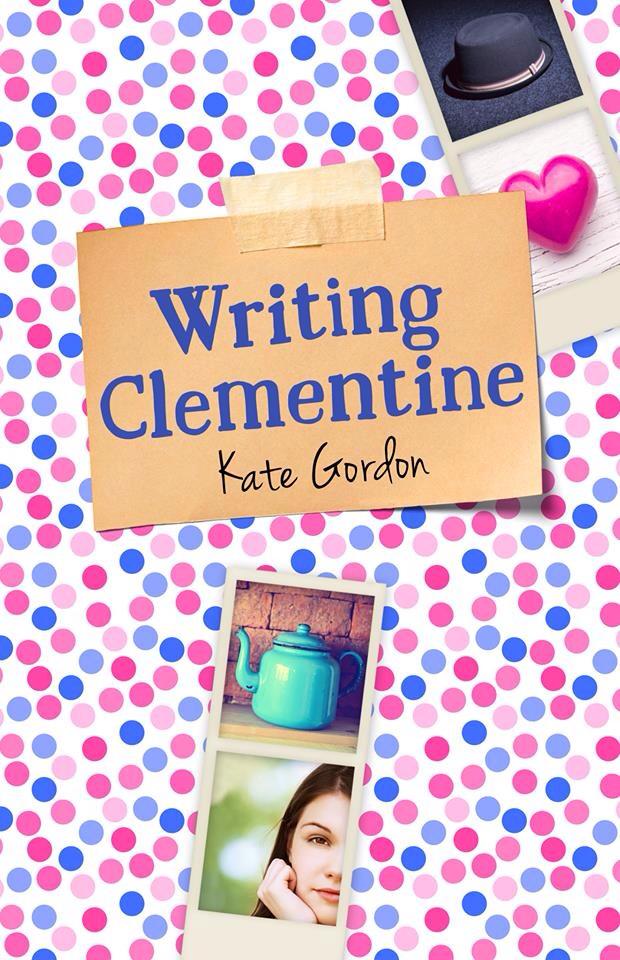
In ‘Writing Clementine’ there are also three friends with goodness at their core – Clem herself, Chelsea-Grace and Cleo. They are not facsimiles of the aforementioned threesome – in fact mostly different apart from the fact they they were also neither the most popular nor the most shunned. They’ve been tight for so long – ever since their junior years. But now that they’ve reached Grade 9 fissures are starting to show. Boys, and all the attendant angst they cause, have entered the scene. Clem starts to feel on the outer, has issues with her body image and starts to gravitate to a new kid on the block, the quirkily attired Fred. He is another outsider as she is starting to perceive herself to be. Fred – the Fred Paul – of that weird cape, opens up to her one of the area’s best kept secrets, the Burnie Steampunk Society.
In a town like Clemmie’s there’s precious little for a teenager to do if one isn’t into sport or riding in noisy cars interminably around the main drag. Kids have to invent their own fun and Kate Gordon, the BSS is a glorious invention, befitting the town’s heyday of steam emitting factory chimneys. Through making their own entertainment, Clem starts to find her place out in the world. Fred Paul is as supportive a boyfriend as an emerging lass could have and Gordon has constructed him perfectly. He’s the antithesis of the school jock Clem had so much trouble with on the banks of the Cam. He is, in contrast, an odious creation – but not an unrealistic one as misogyny is alive and well still in our schools, despite our educators best efforts.
Then there is our heroine’s family. There is a delightful dad, still gyrating to Jimmy Buffett with his daughter after all these years. He works from home, in contrast to his equally caring wife who labours long hours, but is still very much an involved figure. Both her big sister Soph and elder bother Fergus have issues – which Clemmie does her level best to solve for them. Neither prove easy challenges and here the author delves further into the negatives of teenage-dom – body image and depression.
Nothing becomes too dire though. Overall the novel possesses a lightness in tone. The target audience will find it a page turner. It is a book full of joy and hope – a welcome relief to some of the depressing fare that is dished up to our young people in some of the doom and dystopian gloom on the market. In fact, ‘Writing Clementine’ is a tad like a Jimmy Buffett song – sure there are bad bits, but the world overall is a pretty magic place so get out there and enjoy. Both JB’s parrothead whimsy and Kate Gordon’s novel will make you feel joyful. The offering is clever in its structure as it is written in the form of journal entries from Clem to one of her teachers – and here lies my only minor quibble. Coming from my background I would have enjoyed more of Ms Hiller’s feedback to her. But that is just being plain picky – I know. It’s the teacher coming out.
Over the years there have been so many beautiful young ladies I’ve taught like Clem – not popular, not unpopular – just unsure of their place in the world. Perhaps they may even harbour Kate Gordon’s and Clem’s deepest, darkest secret – a decidedly uncool love of country music. How I’d love to be in the position now to hand this book over to them all with the words, ‘Here, this will help. The hero is just like you. Heed its message of ‘never be afraid to swim against the tide’ and you’ll be okay in the world. The world will go easy on you.’ This is the adage I’ve always attempted to convey in my teaching, but Ms Gordon can do it so much better in the power of a book. In its considered way ‘Writing Clementine’ will have this sort of impact on all who read it – and they will grin broadly afterwards. The author knows her young readers so well.
I was fortunate to attend the launch of this lovely book at the wonderful Fullers in Hobart one vile Tasmanian winter’s morning. But with the support of those assembled, despite the lashing rain outside, Katie G, soon had her rapt audience following her every word, sharing the emotion of bringing her book of ‘…sometimes truth, but mainly fiction’ out into the world. Those who know her well understand that recent years haven’t been entirely easy – but surrounded by the love of those who patently adore her, as well as being cheered on by her amazing Tessa Tiger, she has come out the other side with a work that will bring Buffettesque summer sunshine-y smiles to all those who purchase and read. Later in the year she’ll take ‘Writing Clementine’ home to the region of the state that first nurtured her and it. The equally wonderful ‘Not Just Books’ in Burnie will host its northern launch, with a mini-tour of local schools involved as well. People attending, in that part of the world and reading ‘Writing Clementine’, will recognise much about what makes their community so special in the book – those people, like myself and the author, who are Burnie born and bred. Good on you Katie girl.

Kate Gordon
Kate Gordon’s website = http://www.kategordon.com.au/
The Inglis at Wynyard02

India Small
Think ’84 Charing Cross Road’, ‘Sleepless in Seattle’ or ‘You’ve Got Mail’ and you’ll have the basic premise behind this quiet Indian gem. Now take away the Hollywood happy-ever-afters to give it some reality, replace the above’s semi-affluent locales with an overcrowded, poverty riven city and a picture starts to emerge of how this sub-continental offering differs from the aforementioned.
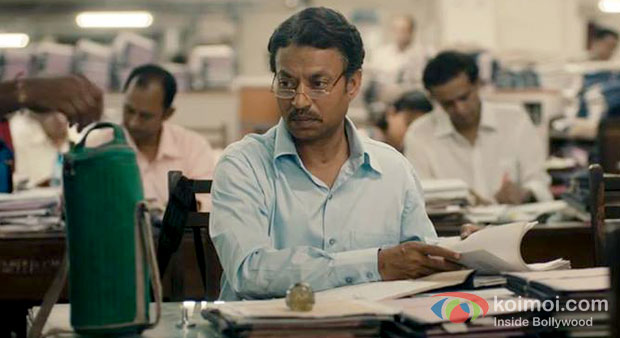
In a beautifully nuanced performance Irrfan Khan plays lonely, ageing widower Saajan Fernandes. He ponders over figures all day in a dreary insurance assessment office, one step up from a sweat shop, with little in life to give pleasure. Then something goes badly awry. The normally ever-reliable Mumbai dubbawalahs (lunch delivery men) have uncharacteristically stuffed up, with his tiffin (hot lunch) being delivered in the wrong dubba (tin lunch box). From a normally mediocre repast he is taken to food heaven. Rather than coming from a street stall, it emerges the preparer is the young, lustrous but maritally ignored Ila (the gorgeous Nimrat Kaar). When this error is perpetuated a paper, correspondence commences and they are taken into each others’ lives quite intimately, albeit never face to face. Ila soon realises that any attempt to curry favour – oh dear, terrible pun – through her culinary skills and other obvious attractions, with hubby, is doomed to failure. Her focus turns more decidedly to Saajan and she attempts to set up a meeting. At this point it all goes pear shaped. Meanwhile, our reluctant hero has developed another significant relationship – this time with an underling (Nawazuddin Siddiqui) whom he is supposedly meant to be training up to replace himself once he takes impending retirement. Between Shaikh and Ila Saajan starts to get a life back – but where will these relationships lead?
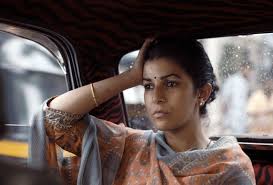
This is a treat of a movie, but when the end credits suddenly appeared there was an intake of breath from the audience Leigh and I shared the movie with. This was not meant to happen – all was supposed to come together perfectly with no issues unresolved. Hollywood life is like that, but is that always the case in the real world? What it did do was to give the lovely Leigh and I fodder for a discussion on our homeward bound journey over the ‘what ifs’ abounding in the movie’s abrupt termination. And maybe that was just the point of the piece. It was delightful, just delightful – so for something just a tad away from the usual do try and see it soon at a home of quality cinema near you.
‘The Lunchbox’ official trailer = https://www.youtube.com/watch?v=xwYN-XS92yY
The Inglis at Wynyard01
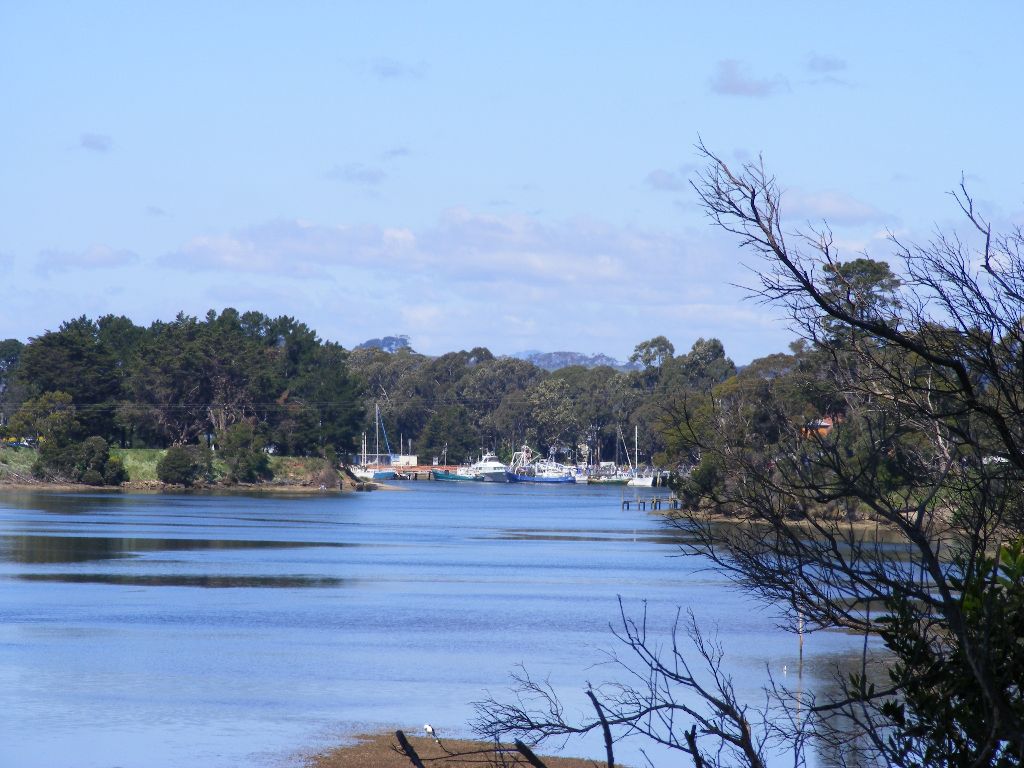
Death, Death Again
We laughed. We laughed till there were tears streaming, did Leigh, reclining opposite, as well as I. We probably fed a bit off each other – proving again how our senses of humour are usually in tune. We surely missed at least ten minutes of the show, holding our bellies till we could catch our breath – but a prolonged chortle is therapeutic. Proven fact. Billy will do that to one – as he has been doing for decades with his stand-up, movies and riding his three-wheeler to various locales for television. In this it was his tale of the ninety-degreed hunchback stiff and the issues that ensued trying to fit such a body into the narrow confines of a coffin – and the mayhem that developed when it all patently came unstuck during the viewing as the poor old bugger sprung upwards to attention. The way the Big Yin delivered it, in that lilting Scottish brogue he possesses, laughing along at the hilarity of it all, was, as always, priceless. It certainly defeated all the barriers I possess to uninhibited guffawry.
The topic of this ABC offering was something unavoidable, the thought of which we do not relish – death. This is not usually a topic redolent in levity – unless Billy Connolly is your guide. But his journey to look at the excesses and strangenesses involved also possessed pathos, a liberal dose of sadness and that song. You know the one – the one that ranks Number 3 in the hit parade of tunes to be played as one’s ultimate send off. It’s the one that comforted Christ in the irreverent pisstake that was ‘The Life of Brian’ and, along with ‘The Lumberjack Song’, is the Monty’s greatest contribution to the history of music. It was delivered by a still fine voiced, twinkly eyed Eric Idle, with Billy accompanying.

Sadly, though, our Billy is, like the rest of us mere mortals, not indestructible. He’s been quiet of late on our screens and for good reason. In the one week he was diagnosed with both prostate cancer and Parkinsons – the latter by a Tasmanian specialist who happened to notice his unsteady gait whilst in transit at an airport. The prognoses aren’t as bad as they could have been and we are reliably informed that he’ll be around for a while yet – thanks be to She in the sky. Once ageless, our beloved Billy is now showing everyone of his seventy-two years. In ‘The Big Send-off’ that marvellous mane is now snowy white, his face drawn and he’s seemingly lost his physical bounce, but certainly not his verbal. A world without Billy doesn’t bear thinking about. In his eyes, though, there is still that sparkle, still a sprinkle of forever-dust. And with this small screen offering he is still deliciously delighted by the absurdities of life on this planet. Long will he continue to point them out for our benefit.
Now neither I, nor I suggest Billy, or even you, dear reader, can possibly know the time, exact setting or, to a lesser degree, the cause of our ultimate demise. But what if that were not the case? What if, indeed, it was a mere seven days away? The location was to be a sandy strand and you possessed a strong suspicion as to whom would be administering your coup de grace.. Then, knowing these facts, which don’t involve languishing on death row, what if added there was an out clause if so desired – a possibility of avoiding it – well, you would take the out, wouldn’t you? That, though, was not entirely a given in the magnificent Irish movie ‘Calvary’. It is a stunner. Here there’s Chris O’Dowd and Dylan Moran as you’ve never seen them before. I’ve waxed lyrical on the charms of Kelly Reilly in another recent blog and yet again, she lights up the screen in this. Towering above them all, though, is Brendan Gleeson, in surely what will become his signature role. As the village priest he is informed, in the confessional, that this is his last week on earth and is given the precise details of his date with the hereafter. Sounds illogical? No, there is a good reason, even if Father James has no record of the usual misdemeanours associated with men of the cloth. He’s guiltless – and that’s the point of the exercise.
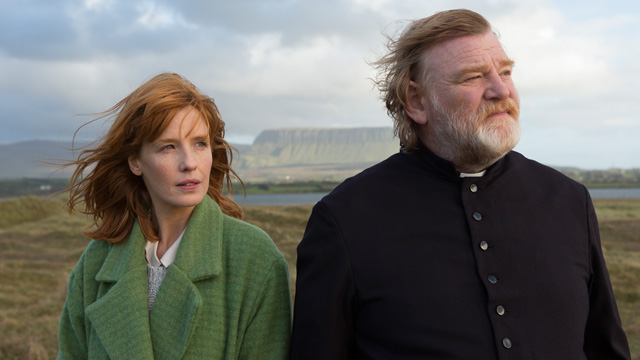
The narrative follows him through his last remaining week and we meet all the likely suspects – what a mixed bag they are! He has some big decisions to make, does our good man of the church – and not all to do with the should I go or should I stay quandary. In some quarters ‘Calvary’ is being pushed as a comedic gem, but there’s not too much humour to be had in the way the movie concludes. I was stunned. The cinema-goers I shared it with were stunned. It was so powerful – but there was also redemption at hand as well. The ending was almost too much for this punter to bear – wait for it if you dare! But do see it if it comes a-calling near you.
The Trailer to ‘Calvary’ = https://www.youtube.com/watch?v=Zl4a7TIw6YM
Doctors Rocks

All the Birds, Singing – Evie Wyld
It was a shock. I was genuinely shocked that it won. All the knowledgeable money was on Richard Flanagan. Had I been a betting man my hard earned would have been too. Leaving aside the predominately awe-struck reviews for what fellow nominee Winton described as a ‘masterpiece’, there were the sales. Never far, for months and months, from the top of the best-seller lists, ‘The Narrow Road to the Deep North’ is truly a remarkable book. I defy anyone to get through it without weeping at some stage – I certainly did so more than once. Not so it seems the flinty hearted on the judging panel. At the time of its gong Wyld’s winning title had sold a paltry 1200 – now of course the author will feel as if she’s won the lottery. Of course sales should never be the sole criteria – but public response must count for something. Maybe the ‘wise’ trio adjudicating were intent on giving a newbie a legs up, or were they still wearing the scars of sexism directed at another judging panel for the Miles Franklin a few years back. Perhaps they feel the last world war has been done to death (sorry about the pun) – although the story was surely about so much more. Admittedly Flanagan doesn’t need the exposure, nor reassuring that what he has produced is the real deal – but I suspect he must be wondering, as many are, how could they turn from his opus to this relatively unknown and palpably inferior effort. I cannot claim to have read all other tomes on the short-list, but as soon as I recovered from feeling miffed on Flanagan’s behalf, I got stuck into Wyld’s book, just in case it I had it all wrong. I hadn’t.
Now that I have completed it, I will admit ‘All the Birds, Singing’ is a fine novel. I have no qualms now about the praise the judging panel heaped on it :-
Commenting on behalf of the judging panel, State Library of New South Wales Mitchell Librarian, Richard Neville, described Ms Wyld’s writing as “spare, yet pitch perfect”, with her novel being both “visceral and powerfully measured in tone. ‘All the Birds, Singing’ draws the reader into its rhythm and mystery, through wonderfully and beautifully crafted prose, whose deceptive sparseness combines powerfully with an ingenious structure to create a compelling narrative of alienation, decline and finally, perhaps, some form of redemption,” Mr Neville said. “Flight from violence and abuse run through the core of the novel, yet never defeat its central character. ‘All the Birds, Singing’, an unusual but compelling novel, explores its themes with an unnervingly consistent clarity and confidence.”
After reading the tome, it is hard to disagree with those sentiments, but in my view it possesses none of the power of the favourite for the gong. I know Flanagan’s effort will become an Australian classic. Wyld’s sophomore book will have a brief honeymoon and then be largely forgotten.
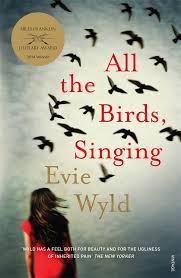
‘All the Birds, Singing’ had been sitting on my ‘to read’ shelf well before it was put forward for the major award. It was there due to the enjoyment I received from Ms Wyld’s first published offering, ‘After the Fire, A Still Small Voice’. In truth, although much the same theme was evident in both, her second was no disappointment, in itself, either. It was also based around fleeing one’s past/demons. In the first it was into the Australian bush/outback. In the follow-up it was to the fringes of our country’s central void – and then on to as far away as is possible – an island off the UK’s northern coast. Neither broke new ground on this well travelled path, but both were well wrought and worthy of their critical acclaim. The hero of the second, Jake, is a fractured soul plying her trade as a hooker at a truck stop in a Pilbara mining town. She escapes this to former customer Otto’s ‘care’ on his fly-blown property out on the desert rim. Here she picks up some handy hints on how to shear sheep. This puts her in good stead when she joins a motley crew working the sheds during the season – and finds a new partner to share her lodgings. But her past is never far away, so she decides to take her savings and chances to the other side of the world. The sun-blasted landscapes of this country are exchanged for an Arctic-wind chaffed isle in another hemisphere. By now she had graduated well and truly from using her orifices to raise a buck to becoming a fully fledged sheep farmer – but of course there are more roadblocks to come for our feisty Aussie lass. Something is taking her animals – something that is sinisterly bigger than the known local wildlife and she has had hints of it in the periphery of her vision. Are these flashbacks, or is she going cabin-crazy? She then develops a relationship of sorts with another fleer from reality as she attempts to move towards a form of atonement.

Yes, there is much to admire about Wyld’s work. She certainly knows her canines as dogs feature as major characters. Her narrative dips and weaves through the years forming a seamless narrative. For a second timer, she undoubtedly has a strong future in the industry as a result of the Miles Franklin misjudgement. But she is simply no Richard Flanagan.
Evie Wyld’s website = http://www.eviewyld.com/
 The Blue Room, Riverside Drive