
All posts by stevestevelovellidau
Two Wolves – Tristan Bancks
I could never quite see the attraction of those two enduring Aussie soaps, ‘Neighbours’ and ‘Home and Away’, although if you have the climate the Poms have to put up with I can see a reason for their adoration of them – a daily dose of Oz sunshiney-ness (yes, I know – not the right spelling. I just prefer the word that way) would bring light and colour to their dun world. It is, though, undoubtedly true that the twin mainstays of our early evening programming have provided an excellent breeding ground in the basics of acting for many who have gone on to wider fame nationally – even internationally – in the movies and music. Some have become household names – you know them! I don’t have to list! – as well as fodder for the celebrity rags.
One who has taken a road less travelled for ex-soapies is Tristan Bancks. He is now starting to attract attention as a wordsmith for younger people. He has tried his hand, post his role as Tag O’Neale in HandA, at all manner of vocations, including directing and anchoring tele shows here and in the UK. I suspect it is as a writer that he’ll find his forte. He surely will on the basis of ‘Two Wolves’. This is his latest and perhaps his most polished of now a very worthy list of titles, including ‘My Life and Other Stuff I Made Up’, ‘Mac Slater Cool Hunter’, ‘Galactic Adventures First Kids in Space’ and the ‘Nit Boy’ series (about a kid with the worst case of nits in world history). Most of these are seemingly designed to tickle the juvenile funny bone, but the content of ‘Two Wolves’ is decidedly no laughing matter. It would have many a young fella, as well as perhaps a lass or two, on the edge of their seats. I wish it was around in my teaching days.
This habitué of Byron Bay is right on the money with this novel. It measures up to his goal of producing a ‘…fast paced work appealing to youngsters.’ – with something here to inspire as well. There is excitement and suspense on every second page as Ben Silver and feisty little sis Olive try to find a way out of the pickles they get themselves in. You see, Ben, just entering teenagerdom, has a father who is – let’s not mince words – an out and out dropkick. What I do like about this nasty pasty, as horrid as he is to his long suffering missus and kids, is that, despite his depicableness, nary an expletive exits his mouth, no matter how much he does his block. Brainless bogan that he is, he doesn’t need the f-bomb to get his point across loud and clear. This would have been a temptation for many more ‘cutting edge’ practitioners, but thankfully Bancks doesn’t succumb.

The author has used, as a basis for his storyline, recent headlines about bank malfunctions, awarding surprised customers instant wealth. Most, of course, would do the right thing – despite the ‘big fours’ crusade to rip off its customers to the max – but a few souls have taken the money and run. Such a twit is Ben’s old man. With his family going bush in response and the cops hot on their trail, the young man, who has desires to be a law enforcer one day, has some decisions to make – does family or right come first. What happens is our ever resourceful hero tries to tread a fine path between the two – a path that becomes increasing fraught as the book proceeds apace. In all this Ben is mentored by Sam Gribley, with those who are au fait with children’s literature knowing all about his own battles on his side of the mountain. He’s a good lad to have in your corner.
This book would be the perfect offering to dish up to a class approximating the age of the main protagonist. Ideally, presenting it to a cohort of boys would achieve the best results. In the past I have found selecting class novels quite onerous as it is far easer keeping girls under the thumb than boys, so usually gender bias is skewered the latter’s way for peace – and I was guilty of that myself . I was aware of doing so and tried to make up for it in other ways ensuring, for example, most of my short stories, read aloud, had girls at the helm. Olive, as resilient as she is, because of her age, doesn’t cut the mustard here.
The ending is a ripper as Bancks’ pulls out all stops to have our hero, after all he went through, finally have to face his nemesis in a final showdown. This novel possesses much that is life affirming and is simply a thoroughly good read. I enjoyed it immensely and I am sixty plus!

Tristan Bancks’ website = http://www.tristanbancks.com/
Table Cape Tulips06

Yes DD, the BR Likes a List Too
The Blue Room cannot resist a challenge of this nature – especially one where it involves making a list within an interest area. So when Age regular David Dale constructed his on the subject – well this blog just had to follow suit. There was no alternative – it was a given.
Compiling such lists as I do, particularly at the end of a calendar year, can be, in DD’s words, ‘…intensely painful, but deeply pleasurable’, especially when excruciating decisions have to be made. What DD was attempting to do was a response to an American publication’s (‘Entertainment Weekly’) top characters on television ‘right now’. That revered mag duly ruminated and ultimately made its considered and weighty pontification. The ‘right now’ is a loose term as the resulting product encompassed the last twelve months or so – as did DD in his contribution. Our local scribe went on to break his down, as I will, into two sections – International and Australian. It seems it is implicit that only one protagonist from each small screen show can put in an appearance, thus DD’s angst. His quandary was whether to include Arya Syark or Tyrion Lannister from the monolithic ‘Game of Thrones’. I also enjoy that juggernaut – but it does not figure for me as a vehicle for idiosyncratic character. No, my ponderings were between the two leads in ‘The Bridge’ – the Scandinoir version of course. In the end I went with the Sara Norgen role – mainly because her partner-in-crime (solving), Kim Bobnia, who plays Rohde, in this tele-gem, didn’t like what was to happen to his character in the third season, so pulled up stumps. It remains to be seen how Ms Helin copes without her sidekick.
So – in your opinion, does what the Blue Room has produced measure up to DD’s? What would you, dear peruser, add and delete? Those list-addicted, like myself, might try your own hand at such a compilation. For those who know me, the first few are givens:-
International
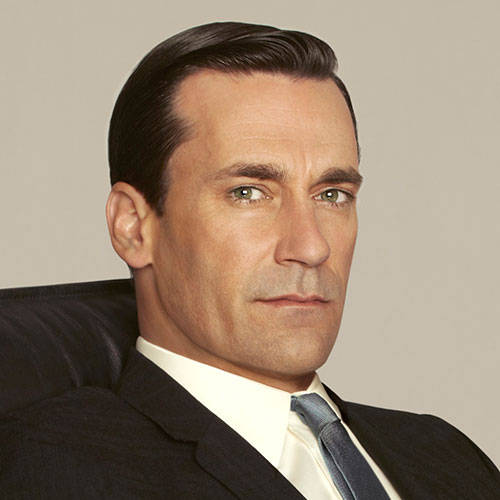
1. Don Draper Mad Men Jon Hamm
2. Hank Moody Californication David Duchovny
3. Sara Norgen The Bridge Sofia Helin
4. Birgitte Nyborg Borgen Sidse Babette Knudsen
5. Alec Hardy Broadchurch David Tennant
6. Frank Underwood House of Cards Kevin Spacey
7. Christopher Foyle Foyle’s War Michael Kitchen
8. Frank Tagliano Lilyhammer Steven Van Zandt
9. Lorne Malvo Fargo Billy Bob Thornton
10. Nucky Thompson Boardwalk Empire Steve Buscemi
Home Grown

1. Nina Proudman Offspring Asher Keddie
2. Cleaver Greene Rake Richard Roxburg
3. Janet King Janet King Marta Dusseldorp
4. Lucian Blake Dr Blake Mysteries Craig Maclachlan
5. Lewis Crabb House Husbands Gary Sweet
6. Luce Tivoli The Time of Our Lives Shane Jacobson
7. Jack Duncan A Place to Call Home Craig Hall
8. Ted McCabe Old School Sam Neill
9. Clarke Clarke and Dawe John Clarke
10. Cora Benson The Moodys Jane Harber
David Dale article – Part 1 = http://www.smh.com.au/entertainment/tv-and-radio/blogs/the-tribal-mind/these-are-the-best-international-characters-on-australian-tv-20140816-3dsxx.html
Table Cape Tulips05

Being In Love With My DLP (Darling Loving Partner) Makes Me Feel Like The Foam On The Crest Of A Wave
Isn’t that a beautiful simile for love? That’s exactly how I feel when I look at my beloved and count the many ways that I am so lucky to have her in my life. That she chooses to love me in return, even after all these twenty odd years, still gives me immense blissfulness
Who came up with that lovely allusion? It was twenty-three year old Julius Robertson, son of Kathy Lette and Geoffrey R.
I was right royally peeved last Saturday to discover my Age was missing its two best bits – ‘Spectrum’ and ‘Good Weekend’ – for my perusal the following week. It usually takes me that long to get through the weekend’s Australian and Age. Eventually, as well as inexplicably, they both turned up in Monday’s edition. I was delighted they did as they contained even more exceptional writing than usual – such delicious reading. It was ‘Spectrum’ that featured young Mr Robertson, as part of its ongoing ‘Two Of Us’ segment. Here we have a take on the ‘he says/she says’ format, with two connected persons telling of their relationship from their individual perspectives. Over the years this single and singular page has featured couples from all walks of life, as well as from all degrees of fame. Without fail, whether the duos involved are celebrities or ordinary Joes, perusing their musings is always time well spent. Often what is read here leads me to the ether for more research on the persons involved. The linkage between the two participants needn’t be one of love, but I mostly find it more interesting if it is.
As for the twosome in last Saturday’s offering, there certainly exists a great deal of affection between Julius and his mother Kathy, although the former has a unique way of expressing it. You see the young man is on the high end of the autism spectrum. In fact he has Aspergers.
Over my teaching years I have taught many a student diagnosed somewhere on the continuum. Hand on my heart there were a number I found it extremely difficult to contain, but with those I could connect with it was a hell of a ride – in a positive way. They were so intriguing and gave so much I felt privileged to be in their orbit.
Some, as with Julius, have a prodigious memory and are quite obsessive. As his mum puts it, he has fixated on everything from Serena Williams’ posterior to Hamlet, which he can recite rote. It’s the way their brain works. I found it fascinating with some of my students. Some of these guys ask very curly questions in class and were often responsible for very perceptive replies to mine. The article gave examples of Julius’ amazing queries:-
‘What is the speed of dark (if light has speed)?’
‘Is a harp just a nude piano?’
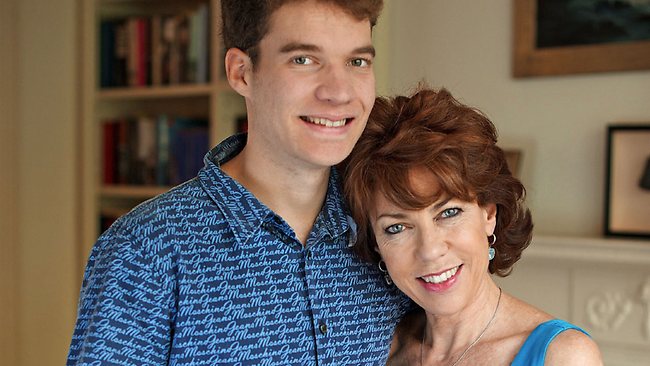
The wonderful Stephen Fry is the young man’s favourite from the cohort of his mother’s friends – describing him as ‘…like a honeybear.’ Kathy was once flirting with Hugh Jackman, only to have Julius draw the thespian’s attention to the dark hairs on his mother’s top lip, just in case Hugh hadn’t noticed them for himself. On meeting Kevin Spacey he was transfixed by ‘…his moonhead’, bald for a play. He regards his mum, Ms Lette, as ‘…the modern Shakespeare’, but wishes he could display the same emotions as she does. He is bemused by her gait, describing it as like ‘… a dolphin’s.’ Pleasingly, he reckons people are generally happier in Oz than the UK (I suppose you wouldn’t have to be all that bright to figure that one out!) and he thinks the animal his dad most resembles is a polar bear. He knows his authorly mum wouldn’t mind if he was gay, but he confesses he is’…very attracted to women’s bodies’ – and so he goes on. Despite his occasional social faux pas, there is no doubt of the adoration one of our best known ex-pats has for her boy.
Their relationship has been shared with the nation in print form elsewhere as well, including in the Womens Weekly. Her novel, ‘The Boy Who Fell To Earth’, tells the story of a single mother raising such a boy with Aspergers. This will soon feature in a Hollywood movie.
‘My love for you my DLP is like the foam on the crest of a wave.’ Try that line with your very own partner sometime soon. I am sure you’ll be happy with the results.
The ‘Two of Us’ column = http://www.smh.com.au/lifestyle/two-of-us-kathy-lette-and-julius-20140728-3coal.html
The ‘Women’s Weekly’ article = http://www.aww.com.au/news-features/in-the-mag/2012/2/kathy-lette-my-son-has-aspergers/
Table Cape Tulips04

Analogue Man – Nick Earls
I do miss Neville H. He’s my mate. Between us we could happily, contentedly feel like ‘…analogue men in a digital age.’ He’s still my mate, my best male mate. I just don’t get to see see him as often as I would like. We met aeons ago – shared a school uniform and a local footy team. His only downside is that he’s Collingwood through and through – and I cherish the ‘poo and piss’, as he repeatedly calls them – Hawthorn. We did uni together – shared digs at a residential hall – married our sweethearts and commenced our teaching careers. Then we moved to different locales, gained new mates, parted from our spouses and lost touch. Eventually he returned to my town, we reconnected, reviewed our pasts and made ready for the autumn years. Mine involved a beautiful woman from Hobart, his one from Thailand. I moved south to be with my Leigh – and now, sadly, I miss my mate.
I miss our Friday nights – together, us two ‘analogue men’, throwbacks to when it was all less complicated, less busy. The digital age has made our lives so full of crap. I tried to comprehend it and largely failed. He gave less ground than I. We’d sit around the table at 15 Lane Street, telling tales large and fantastical. I’d cook him tea, we’d sink a few reds. Then we’d get onto politics – always dangerous. He was rabidly Green, my beliefs of a lighter hue – but I couldn’t bring myself to vote for anyone else. Then we’d settle down to watch the footy – except if the Hawks were playing. Then we’d make it another night. But if the Maggies were on and they lost, it would always be the fault the ‘white maggots’. But this was a put on, an aberration for Neville H has more humanity in his little finger than Tony Abbot in his whole being. He looks out for the downtrodden and repressed – he’d give them the shirt off his back. I am extremely content with my new life by the river in Hobart Town and I trust he’s found similar in our old stomping ground up north. We will continue to get together on occasions, but there’s no regularity now. I wouldn’t swap what I have here by the river, but I do miss those Friday nights with Neville H.
That’s why I enjoyed Nick Earls’ take on it all in ‘Analogue Men’ so much. Reading it was akin to those Friday nights with Neville H, getting gently to the ‘Mr Wobbly’ (in joke) stage and talking, talking, talking. Earls’ central protagonist, Andrew Van Fleet, is about to enter the autumnal years – the years yours truly and Neville H inhabit (with some joy I might add). We know our pomp is substantially behind us, but like Andrew, reckon we’re not completely kaput. We have all downsized – although Neville H reverted to up-sizing a while ago – he’s had a second wind. Van Fleet has been a high flyer, but like many who have realised the digital age has taken away their lives, he has opted for a quieter existence on reaching the cusp. He wants more time with family – his missus Robyn; his offspring, Abi and Jack. And then there’s his dad out there in the granny flat – ailing in his late dotage, but once a legend in in his own lunch-box on the local radio airwaves.

And that’s what Andrew VF takes on – a managerial role in a radio station – as if that’s going to lead to a quiet life! It’s here he comes face to face with another legend in a terminal decline – albeit one of a different ilk – Brian Brightman. Once the king of the wireless in Brisbane, his star has long fallen- but he still battles on at the bottom of the ratings chart, trying to compete with the shock jocks and the new shiny hip kids on the block. He has a patter that has seen better days, often getting him in deep shit he is so out of touch with political correctness – or is he? Andrew soon finds he is drowning – he’s beyond his depth and now he just can’t swan away to NYC or HK on a business caper. There’s also family conundrums a plenty to deal with. Then comes the ill-conceived plan to combine both and solve all issues in one knockout blow. It involved minding BB at a comedy festival down on the GC, paralleling that onerous responsibility with a family holiday. It spells disaster – it was.
Earls has created some characters for the ages with this. From the two kids with digital apparatii hanging off every appendage to a constipated bulldog – he is back to the rare form of his earlier novels that bought so much Mangoland sunshine to a chillsome Tassie winter.
Of course Neville H and I never reached any great heights in our professional careers – which does not mean we weren’t successful at what we did. There is, though, in AVF a soul I can relate to. Luckily I do not have to compete with all that plurry technology as much with these days of retirement bliss. I loved this book. At times I laughed till the tears were streaming. All the trouble Andrew had with his buttocks is priceless. Sure the climax involving a shark and an errant tongue is a tad over the top – so weird it just may be a possibility (except in fiction) – but even with this I was happy to be taken along for the ride. So thank you Nick Earls. For a short time perusing your offering I was around that table again with Neville H, fixing up the world, with not a digital device in sight. Your book, Mr Earls, did that for me – even if it made me miss Neville H even more.

Nicks Earls’ website = http://nickearls.wordpress.com/
Table Cape Tulips03

Elizabeth
I am in need of music that would flow
Over my fretful, feeling fingertips,
Over my bitter-tainted, trembling lips,
With melody, deep, clear, and liquid-slow.
Oh, for the healing swaying, old and low,
Of some song sung to rest the tired dead,
A song to fall like water on my head,
And over quivering limbs, dream flushed to glow!
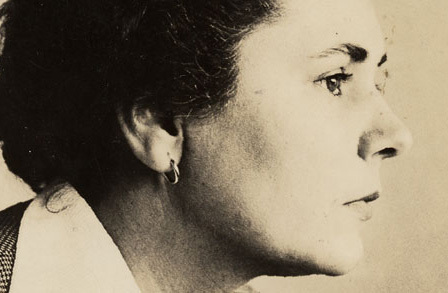
I wonder why, in my sixty plus years, I had never encountered her. I thought I was across all the great poets, particularly those of the last century. But her name had never entered my orbit. Despite her literary prominence she had remained invisible to me all this time – that is, until the movie. Then I had to move from screen to page – and with the wonders of the digital age, her stunning verse has opened up to me. Of course the movie gave what I discovered in the ether some added lustre, but it only concentrated on one of her two great love affairs. Here’s what I found out of this gem of a composer of words.
Poet Elizabeth Bishop was gay – lesbian at a time when it was shrouded off to the sidelines. Perhaps not regarded as being as prurient as its male counterpart, participants were still either shunned or treated with overheated curiosity. Born in 1911, Elizabeth had a fraught childhood that left her somewhat scarred and wary of the world. Her father had a premature demise when she was small, also causing her mother’s already fragile mental state to collapse and become as dead to the child, as a parent, as her spouse. Elizabeth had physical ailments to contend with, as well, all her life – asthma, a nut allergy and eczema. Despite her semi-orphan status she was a gifted student at school, discovering at an early age to use written words to their advantage. With them she could see her way forward in the world.
I am in need of music that would flow
Over my fretful, feeling fingertips,
Over my bitter-tainted, trembling lips,
With melody, deep, clear, and liquid-slow.
Oh, for the healing swaying, old and low,
Of some song sung to rest the tired dead,
A song to fall like water on my head,
And over quivering limbs, dream flushed to glow!
Early on she formed relationships with Mary McCarthy and fellow poet Marianne Moore. Her collection of verse, ‘North and South’, was picked up for publication, eventually coming to the attention of Robert Lowell. They met; he liked what he saw and read, so paved the way for her into the upper echelons of the American authorly establishment.
In 1951, at the age of forty, her life veered off in another direction. She fell in love twice over. She had an urge to see the Amazon and travelled to South America to do so. Here she became enamoured of Brazil – its culture and people. Simultaneously she became deeply enthralled by one of its leading citizens. Her heart was stolen by the prominent architect Lota de Macedo Soares. With this duo of addiction providing her first true happiness in life, her poetry soared, so much so that her signature collection, ‘North and South – A Cold Spring’, featuring poems old and new, won the 1956 Pulitzer.

The art of losing isn’t hard to master;
so many things seem filled with the intent
to be lost that their loss is no disaster,
Lose something every day. Accept the fluster
of lost door keys, the hour badly spent.
The art of losing isn’t hard to master.
Then practice losing farther, losing faster:
places, and names, and where it was you meant
to travel. None of these will bring disaster.
It is this period of the wordsmith’s life that the Bruno Barreto directed movie, ‘Reaching for the Moon’, focuses on. Delicate rose Elizabeth meets the swarthily feisty Lota and her world is turned on its axis. They fall intensely in love and into bed – although the film’s handling of the latter is almost chastely realised. As Elizabeth’s health and mental state improve, if not her alcoholism – so Lota’s does the opposite. She has been caught up in Rio’s toxic politics, whilst trying to complete her dream, the Parque do Flamengo – a beach-side swathe of parkland – now one of the world heritage listed city’s prime attractions. The relationship between the two women disintegrates into a fug of booze, depression, adultery and ultimately, for Lota, suicide – after fifteen years with her poetess.

I lost my mother’s watch. And look! my last, or
next-to-last, of three loved houses went.
The art of losing isn’t hard to master.
I lost two cities, lovely ones. And, vaster,
some realms I owned, two rivers, a continent.
I miss them, but it wasn’t a disaster.
Even losing you (the joking voice, a gesture
I love) I shan’t have lied. It’s evident
the art of losing’s not too hard to master
though it may look like (Write it!) like disaster.
The movie is based on a Brazilian best-seller, ‘Rare and Commonplace Flowers’. With this film their story will now reach a wider audience, for reportedly the book, with its convoluted machinations of the ruling class of the city of Ipanema and Copacabana, is impenetrable to anyone other than that nation’s readers. Aussie actress Miranda Otto and local fellow thespian Gloria Pires shine in this cinematic offering, but the narrative itself is largely paint by numbers. The fecund surroundings of the lovers does cast a spell. Of course, Rio cannot be otherwise than a star turn in the piece. In this place the two women’s love is perhaps more readily accepted than in northern climes, although they still have to be on their guard.
Times change – and despite the worst efforts of our unfortunate Prime Minster, the world is now more comfortable with non-hetero activities. ‘Reaching the Moon’ is of another time and place. Not a great movie by any stretch, but well worth time spent on it for its tale of two remarkable women.
After Soares’ passing Bishop gave up on Brazil and returned permanently to the US in 1970. She took up painting. By now she had met Alice Methfessel and loved her for the remainder of her life – the following poem is dedicated to Alice. The poet also took up painting and left us the worse for her passing in 1979.
Breakfast Song
My love, my saving grace,
your eyes are awfully blue.
I kiss your funny face,
your coffee-flavoured mouth.
Last night I slept with you.
Today I love you so
how can I bear to go
(as soon I must, I know)
to bed with ugly death
in that cold, filthy place,
to sleep there without you,
without the easy breath
and nightlong, limblong warmth
I’ve grown accustomed to?
—Nobody wants to die;
tell me it is a lie!
But no, I know it’s true.
It’s just the common case;
there’s nothing one can do.
My love, my saving grace,
your eyes are awfully blue
early and instant blue.
‘Reaching for the Moon’ trailer = https://www.youtube.com/watch?v=654X8V2bwA0

Bishop’s art work
 The Blue Room, Riverside Drive