
All posts by stevestevelovellidau
It Might Be Long Titled, But It Sure Hits the Funny Bone
Mash together the best elements of ‘Being There’, ‘Zelig’ and ‘Forest Gump’; mix in some sub-titles to make it comprehensible for us from its spoken Swedish and what do we have? Well perhaps the movie with the longest banner in some time required to promote it – ‘The Hundred Year-Old Man Who Climbed Out of the Window and Disappeared’.
But the banner did appeal to one who usually eschews those films requiring her to decipher dialogue from words appearing at screen bottom – so for a viewing I had the wonderful company of my DLP (Darling Loving Partner) and she giggled and chortled her way through this offering – there were even a few belly laughs. I concurred with a few guffaws of my own. It was a glorious romp of farce and addled history, with a soupçon of pathos thrown in for good measure.

Much has been made of in the reviews of how unrealistic Robert Gustafasson’s portrayal of a man who’s reached the century mark is. Well, I do not know too many of those to judge – although I am planning to make that milestone myself one day. Therefore it is hard for this scribe to make a call on this, but just maybe that’s the point. Evidently the actor/comedian makes a tidy sum portraying old men in his stand up routines around Scandinavia, making him already a well known star in those lands. His portrayal of this escapee from a retirement home has been cinematic gold there for him too. After his character’s fleeing from ‘death row’, the old fella ,Allan Karlsson, accidentally picks up a case load of drug money and the fun begins. He continues his wild flight, pursued by hapless criminal types and an equally hapless cop. There’s some hilarious shenanigans on Sweden’s byways before he circuitously ends up in Bali. We are also given a potted back story of the centenarian’s life on the planet. In these he gets up close and personal with Franco, Stalin, Einstein’s lesser known brother and President Reagan. He also has an aptitude for blowing up huge amounts of varied stuff with dynamite.

It’s all based on a highly successful novel by author Jonas Jonasson. Director Felix Herngren does the mouthful of a title proud with his vivid and at times, audacious adaptation. If you are fortunate enough to view it, wait for the elephant – he/she steals the show. If you’re anything like DLP and yours truly, you’ll get a hell of a tickle out of this Scandi-gem.
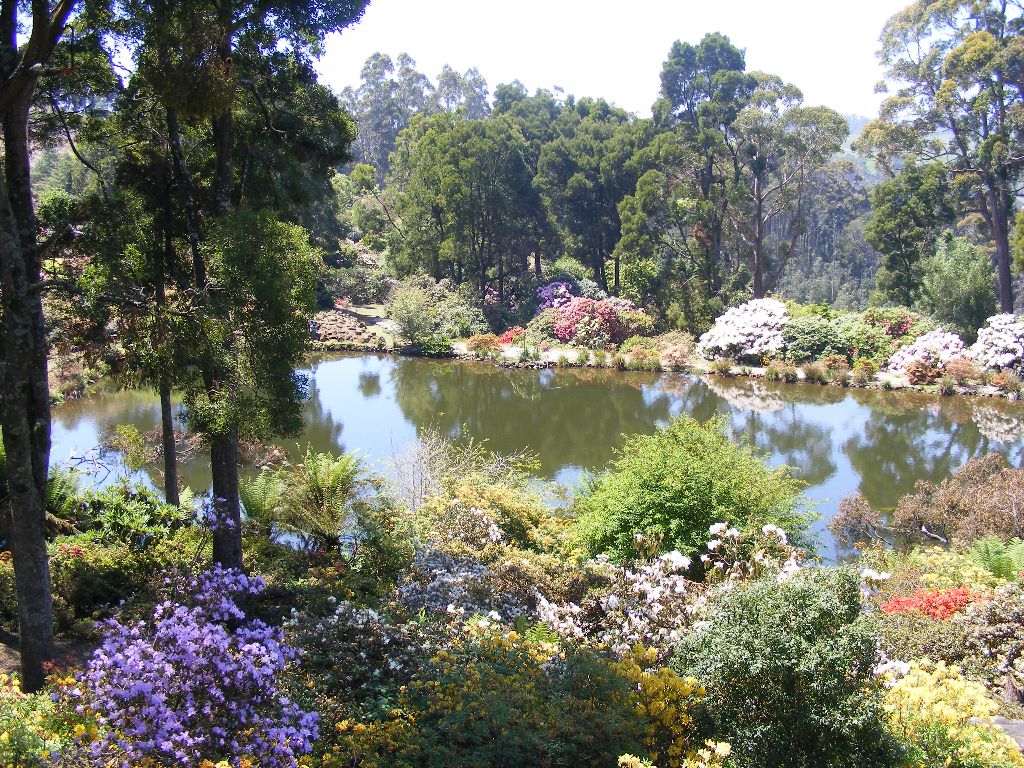
Emu Valley Rhodo Gardens, Burnie01
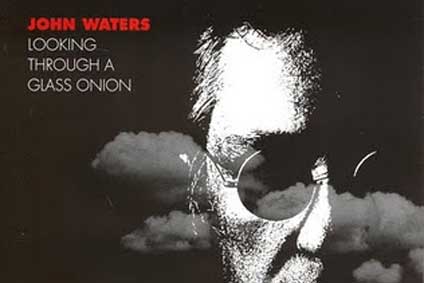
Glass Onion
It ducked and weaved, soared to the heights and fell to the troughs throughout the narrative most of us know so well. It cherry-picked from the array tuneful gems all of us also know so well – each selection being placed in a woven context that started at the end and then came back, ninety or so minutes later, to the bullets that rival those of Dallas as the final bows were taken. John Waters is stomping his ‘Looking Through the Glass Onion’ around the country for yet another time as a warm up to taking it to where it didn’t begin but tragically ended. Yes, he’s taking on NYC. And now I have seen it – one more item ticked off that vague bucket list of mine.
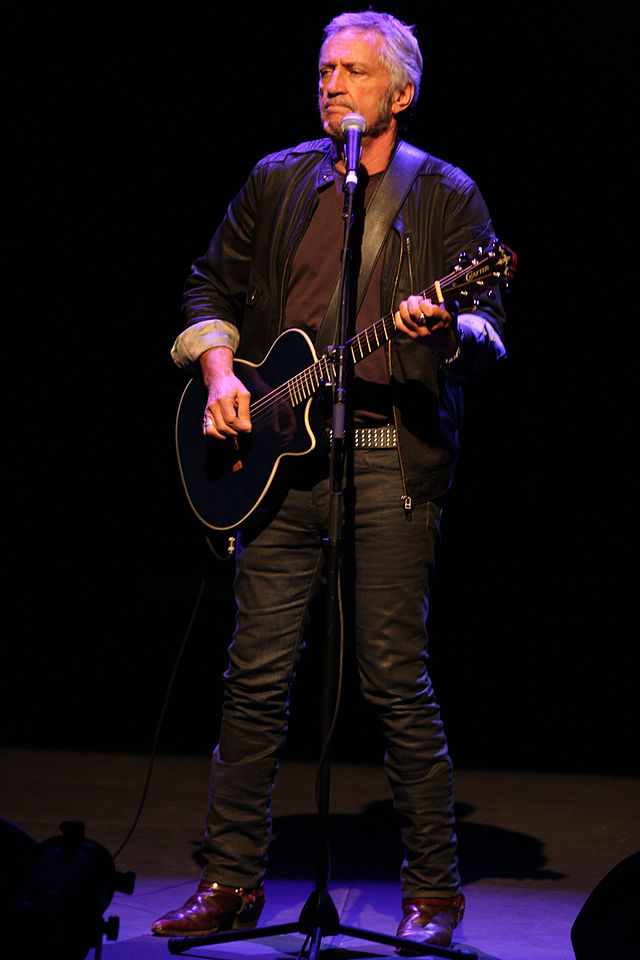
Waters does a fine interpretation of the man, with emphasis on ‘interpretation’. His take on John Lennon is no cheesy, cheerful nostalgic romp back into the past. Some of the gathered throng took it to be and tried to sing along with Waters, only to have it taken away from under them as he abruptly terminated proceedings before conclusion to return to a gritty, expletive punctuated monologue. The show throws around the order of songs as much as it does the events in Lennon’s life – and with such a catalogue to select from the choices are eclectic to fit the format. Don’t expect a Beatles ‘greatest hits’. He has the solo career to choose from too. The voice he uses is not a carbon copy of the original – it is Waters singing, not impersonating. Occasionally though, when the actor lets rip, as he does on ‘Mother’, the ‘primal bellow’ that Lennon could attain, the icon comes through. When this happens, well, they are sit up and take notice moments. This ultimate fan has serious chops. Then it could be Lennon up there.
The between-songs patter, delivered in high Merseyside ‘scouser’, was masterful – almost poetic. There was JL’s bent humour, his weary exhaustion at being a slave to fame and his rejection of being straight-jacketed. Being a role model for his generation was never going to happen – at least in a way the vested interests wished for. Waters covered it all – ‘Beatlemania’; growing up; mothers – or lack of them; ‘bagism’; PEACE; ‘bigger than Christ’; Yoko; sex; drugs and of course; glorious, glorious rock’n’roll. It’s the story of how four Liverpudlian lads made a genre of music pre-eminent and gave it the grunt for longevity They took its basic core and embellished it in a way that left their competitors floundering to keep up. They could never have the staying power of the Stones say, even had they all survived the times they lived in and the crazies out there. But they left behind something to transcend all that – and Lennon was always their wild-card.
Waters himself has graced our screens for decades now. He is a versatile trooper, resisting the ravages of time gamely. Now the patriarch of ‘Offspring’, those of us of long memory remember his days as the sexiest man on the small screen in ‘Rush’ and on ‘Play School’. It was a stark stage he played on last evening as this was a minimalist production. Musically it consisted of piano, kick-drum and single guitar – with a few well chosen sound effects for a tad of variation. Waters was dressed in the mode of the cover of Lennon’s album of rock covers. Lighting was used to simple effect at key points
At some stage this must come to an end. Waters is getting long in the tooth like the rest of us who were around when the ‘fab four’ were in their pomp, I count my luck at finally being able to view ‘Looking Through a Glass Onion’ before the final curtain is drawn. It was good to shake John Water’s hand after he graciously signed my programme.
A More Detailed Review = http://www.theaureview.com/arts/sydney/review/john-lennon-looking-through-a-glass-onion-by-john-waters-28-01-14
Bumblebee

The Lives of Stella Bain – Anita Shreve
We’ll be submerged in it. Just when we will think it’ll be safe to come up for air they’ll hit us with another fictional or factual offering on the unpleasant, inhumane events that happened one hundred years ago – as if we haven’t enough of those in our present-day. I’ve no doubt this’ll continue right up till the eleventh hour of the eleventh day of the eleventh month, 2018 – and possibly beyond. As far as this scribe is concerned, it was all done and dusted so long ago. And yes, the Aussies involved were heroic in proving their mettle in combat – but please, let us move on. As for it seeing our nation ‘coming of age’, that is just so much piffle. That occurred fourteen years previously. If you want a battle to mark it, look, as Paul Keating did, to Kokoda. He had it right. At least then we were defending home soil and not fighting somebody else’s war. For me, the ‘One Day of the Year’ is more than enough ‘celebration’. Tasmania’s late, esteemed governor certainly had the role of that right too.
So, for four long years, on our small screens and in the print media, we will be subjected to it. Most of it will be patriotic, possibly jingoistic mush – such as the ABC’s current ‘Anzac Girls’. I watched the first episode. It was indeed sudsy slush. Maybe some of the other offerings will be more worthy – but I think Peter Weir’s ‘Gallipoli’ says all that needs to be said and will never be bettered, so they’ll probably pass me by.
A print tale on the events is Anita Shreve’s ‘The Lives of Stella Bain’. I read Ms Shreve as a matter of course. She is a versatile and normally engrossing writer – if a tad uneven. As a take on what it was like to deal with the shattered results of the insanity that was trench warfare, this view of it leaves the aforementioned production in its wake. That being said, I still found the first half of the tome, concerning Stella Bain’s (not our heroine’s real name) convoluted war service a slog, to tell the honest to goodness So this is not Anita S’s finest effort, but it did become more palatable as we moved to the post-war period of her story.

In the latter part there was a court battle over the custody of her children. Then she faces a return to Britain to confront a number of issues that will not go away and we then move into Hollywood territory. These later stages I zoomed through – it became quite compulsive reading. It told us much about the attitudes of the age about the place of the fairer gender in society and under the law. It tells of of the treatment of the often shells of combatants who did not come back from the great conflict unscathed in body or mind, as well as giving an insight into the early gestation of the study of mental disease.
Little did she know it, but Stella and her ilk were at the forefront of the transition into equality for her sex. Because of her pluck she was placed on something approximating the same footing in so many ways as the male of the species. Her admirable resilience in fighting against the absurd legal mores of the times only serves to remind that this battle still needs to be won.
As the novel ends, Stella and her hubby sit down to work out how long it will be into the future before ‘…the last soldier of the Great War is dead?’ They figure it out pretty well. I remember the Anzac Days of my youth when a bevy of these survivors marched at the head of the parade. Later on, we saw them struggling to wave from cars – and then they were gone. Now that process is repeating with the veterans from the second conflict. My own father participated in that, but sadly has long departed. In both wars tremendous courage abounded with the call to arms. But the realisation soon came about the true nature of killing your fellow man. Now, sadly, this week, here we go again. We have a prime minister seemingly itching to commit young Australian men and women to another messy and probably unwinnable war in a foreign land. When will we ever learn?

The author’s website = http://www.anitashreve.com/
Another Floral Stunner
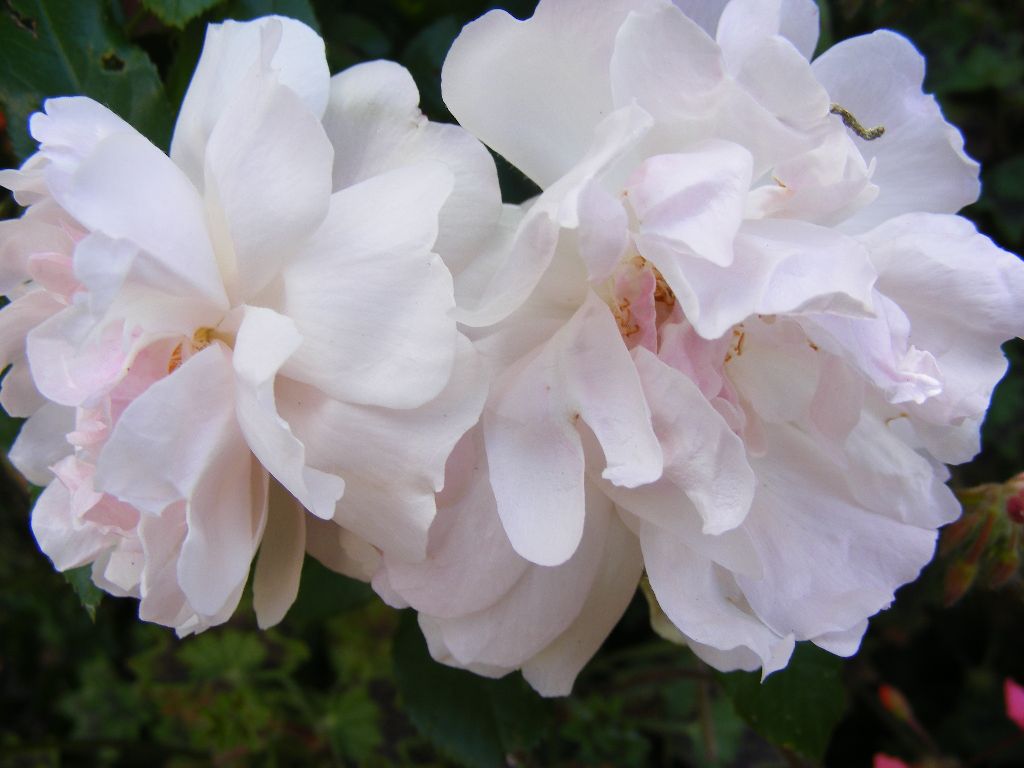
Tiger
I love Tiger. I am her doting grandfather. I freely admit I am besotted by the little mite, my daughter’s daughter. Her spirit, her brave-heartedness and her charm combine to ensure she is just simply adored by this old man. Of course Tiger is not her given name – and I have written before of the reasons our Tessa has been given that sobriquet – the appellation most now know her by. But this piece is not about her. It concerns another Tiger, one I delved back into the historical ether to discover more about. What I found was a remarkable woman – remarkable even when measured against the mores of any time, let alone the turbulent period she lived through. To meet her we need to travel back to when the Borgias were casting their spell over the Italian peninsula.
And, essentially, that’s where I first encountered this tigress, on the eponymous television series. It starred an actor I never tire of watching, Jeremy Irons. It ran for three series, but needed another to fully tell its tale. But a fourth instalment was not meant to be. In the telling we meet Pope Alexander VI (Rodrigo Borgia – Irons’ role), his son Cesare (François Arnaud) and daughter, the notorious Lucrezia (Holliday Grainger) – she comes off better in the show than she does in history. As well it features such notables of the time as Savonarola and Machiavelli. We also meet the amazing Caterina Sforza.
Born into wealthy Milanese nobility, but illegitimately so, in 1463, Caterina was nonetheless a welcome member of the Sforza family court through her childhood. She was educated, as was usual for the times, as per the boys of noble lineage. In other words, she had the classics, but was also taught the art of warfare and the skills required to govern. She also displayed her customary brave-heartedness from the get go. By her tenth year she was already wedded – although the marriage could not be consummated until she attained the age of consent, fourteen. Hubby number one – she had three – was reportedly the bastard son of Pope Sixtus IV. None of this celibacy nonsense in the Church of Rome back then that goes on today. Then they lustily got their rocks off with impunity and everybody was presumably happy – how much better off we’d be if that was the case in modern times. But I digress.
Marriage, of course, back then, was arranged amongst the upper classes for political or monetary gain. Soon after her vows became legal, Caterina did what was expected of her and she started producing offspring. The new mother and husband (Giralomo Riario) moved to the Eternal City and they soon found themselves at the centre of courtly proceedings and intrigue. Giralomo gave Caterina a stiff talking to and told her to keep her nose out of the men’s business, but she couldn’t help herself – still in her teens she became heartily embroiled.
All contemporary accounts remark on her allure as an extroverted and socially adventurous young woman. All were in thrall of her grace and beauty. Observe her portrait – was she not a Botticellian beauty? In fact, the artist used her likeness in a number of his works.

What first struck me, watching ‘The Borgias’, was the fact that this Renaissance femme fatale was played by an actress I am very partial to – Gina McKee – lately also seen on our small screens in ‘Secret State’. That started me wondering about the feisty, downright ballsy woman she portrayed. Was she historically accurate? From what I discovered, certainly the show’s writers played around with the facts somewhat, but history tells us she was every bit as courageous as the small screen saga would indicate. She could fight like a man, wore armour and would only take a backward step when she had absolutely no wriggle room. She was the amazing Amazon woman of her era.

Girolomo died prematurely, resulting in Caterina finding herself, through a combination of events too byzantine to go into here, in charge of the city state of Forli. It was small fry compared to powerful Venice, Milan, Florence and the Papal lands, but its location was strategic, so she became quite a central player in the charged world of Italian politics. The states squabbled, alliances were made and unmade, France invaded several times and Ms Sforza was up to her neck in it all. She personally took charge of the training of her army and it was during a spat with the Orsis family, who figured they had some claim to Forli, that her moment of infamy arose. Through another Machiavellian series of happenings, the Orsis lot had managed to take her children as hostage – the television series twists the story here somewhat. The youngsters were lined up in front of her battlements and were threatened with death if she did not surrender. When their supposed demise was imminent, Caterina hitched up her skirts, stood high afore all, pointed to her exposed genitalia and declared to the besieging forces –
‘Ho con me lo stampo per farne degli altri.’ – (‘I have the mold to make more.’)
Her enemy’s callous plot came immediately unstuck. She had successfully called their bluff and in the end she had the last laugh. Her kiddies duly survived, but Caterina’s vengeance on the Orsis clan was quite severe. She felt it was a strong enough message to put off any future threat to her dominion – but not so. In 1495 the thirty-two year old lost her beloved second husband (Giacoma Feo – a nasty piece of work by all accounts) in another attempt by her detractors to usurp her position. When it failed she pulled out all stops – slaughtering all whom she suspected – torturing them before execution – and that went for their wives and children as well. Torture them – exterminate them.
Life had given her a cruel streak and as a result she was never loved by the general populace – but she was totally respected.
By the end of the Fifteenth Century she had earnt the enmity of the Venetians, as well as the Borgias in their Papal palace. It was the ability of her self trained militia to defeat the former on the battlefield that she became known, throughout the length and breadth of the land, as ‘Il Tigre‘ – ‘The Tiger’ It couldn’t last though. Her little patch was invaded by Cesare Borgia and eventually she had to lower her ramparts to him – in more ways than one if the television take is to be believed. She was captured, but her bravery in standing up to her foes (by this time the French were also in the mix) was admired by all. As a result she didn’t suffer the ultimate price, but was allowed to retreat into a form of banishment with her children. She stayed under the radar for a while in Florence until, such was the labyrinthine nature of the times, the climate became suitable for a return to Forli. Unfortunately for our heroine the populace declared they would rise up in revolt if this occurred. They’d had more than enough of Il Tigre, so her plans were shelved. She saw out the remainder of her days quietly. In 1509 ‘The Tiger of Forli’ succumbed to pneumonia.
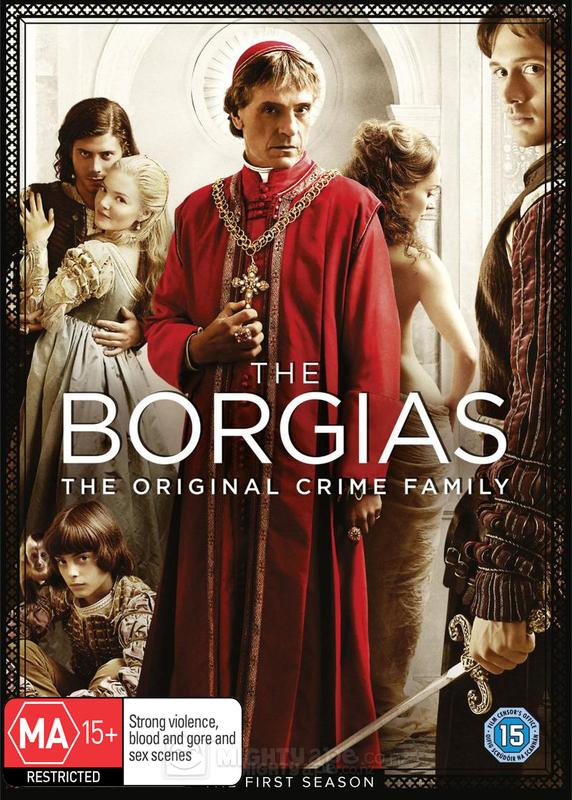
As for the representation of this Renaissance tale in ‘The Borgias’ itself? Well, it wasn’t a bad way to pass some time, for one is soon wrapped up in the Italianate intrigue presented. Season One lost me in places, but the remaining two were more accessible. Probably the damage had been done in the opening round and the story of the family, synonymous with putting power before anything else, didn’t have a final chapter. It would have been interesting to see how it all panned out, although it’s all revealed in Wikipedia. But through it I discovered a woman for the ages with a hell of a story – one who truly deserved the title worn by my own granddaughter – Tiger
Caterina in Art01= http://yelenacasale.blogspot.com.au/2013/11/friday-art-history-feature-caterina.html
Caterina in Art02= https://www.youtube.com/watch?v=zWgONBQrA8c
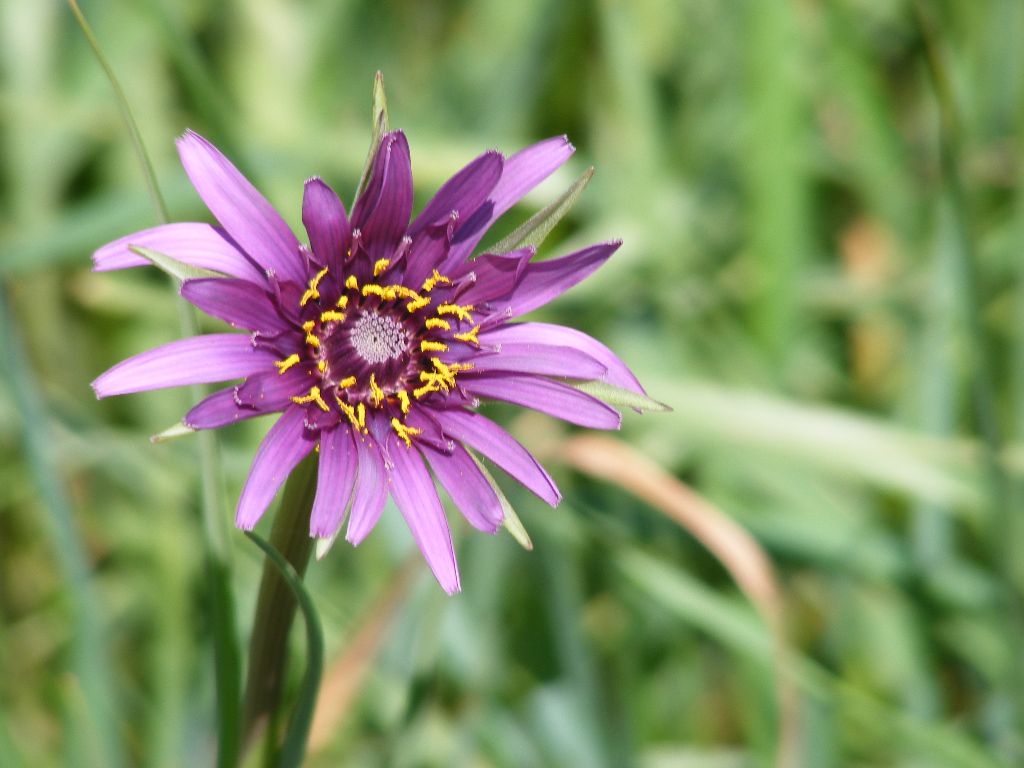
A Floral Stunner
Sam de Brito and Fathers Day
As weekends go, it was a ripper. A northern weekend – back up in the family homelands. Yes, it was a weekend all about family.
It commenced with my teaching family, on Friday eve. To Somerset I journeyed. It was the retirement function of a colleague who’d graced the classrooms of Cape Country – of Wynyard and Yolla. It was magic being amongst people I love and respect – those who have in the past enhanced my life, joined with those who continue to do so. And they so enhance the lives of those young people who are fortunate enough to come under their care on a daily basis.
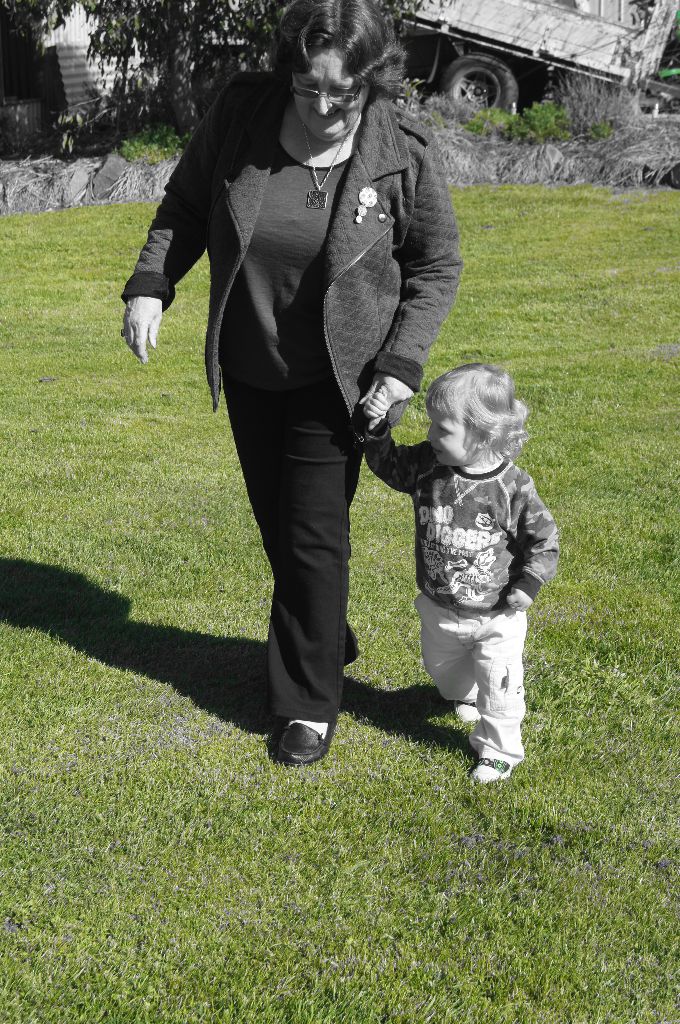
Then there was Saturday and it was all about my mate, Little Ford Man. He was celebrating his second year on the planet and my, did he celebrate! Sundry Lovells. Newlings, Kleins, Maskells, and Gordons turned up for the event, as well as an assortment of friends old and new. We were there to share in the delight of Brynner Newling’s dinosaur party. Our Sheffield hostess, Ilsa, together with the weather gods conspired to produce the perfect spring day and the little people went for it. They threw themselves into that freedom permitted to their age – that of being able to spread their wings on amassed mini-vehicles, as well as to gorging themselves on jellybean dino-droppings and other carefully planned and constructed fare. The green dinosaur cake was a humdinger – and Victor the goat observed from a respectable distance and approved of all he surveyed.

Sunday dawned with, as befits Fathers Day, wonderful messages in print, picture and voice that made me feel special. My son caught three flathead to mark the day and my daughter shared images of the place she loves – her in-law’s bucolic Aberdeen haven.
And later that day I read Sam de Brito. One of his Age columns was a paean to the first Sunday in September. Recently I have accused him of being jaded and curmudgeonly, but in ‘The Sound of ‘Daddy’ he lovingly encapsulates all that fatherhood is about – the feeling that I had/have for my Katie and Rich – even if they’re twenty-five years or so older that his precious, adored little mite. My two – by the people they are, by what they’ve been through and come out the other side of, as well as because of the terrific souls they’ve chosen to partner them in life – make it so easy to give them my unconditional love.
And then there’s Tessa Tiger – so I get what Sam has all over again. Using his words, Tiges is ‘…such a kind, smart, funny, fierce, beautiful and brave little person.’ The best bit is that I’ll always be her Poppy. And, boy, did she enjoy the dinosaur party. She milked it for every ounce of adventuring. With her and her ‘cousin’, Little Ford Man, my life is complete.
Read Sam’s column attached and you will no doubt react as I did. He so gets it. His piece, like my weekend, is a ripper.
Oh! And did I mention it? The mighty Hawks won too.
Sam de Brito’s Fathers Day column = http://www.smh.com.au/lifestyle/sam-de-brito-20140902-3erak.html
 The Blue Room, Riverside Drive