All posts by stevestevelovellidau

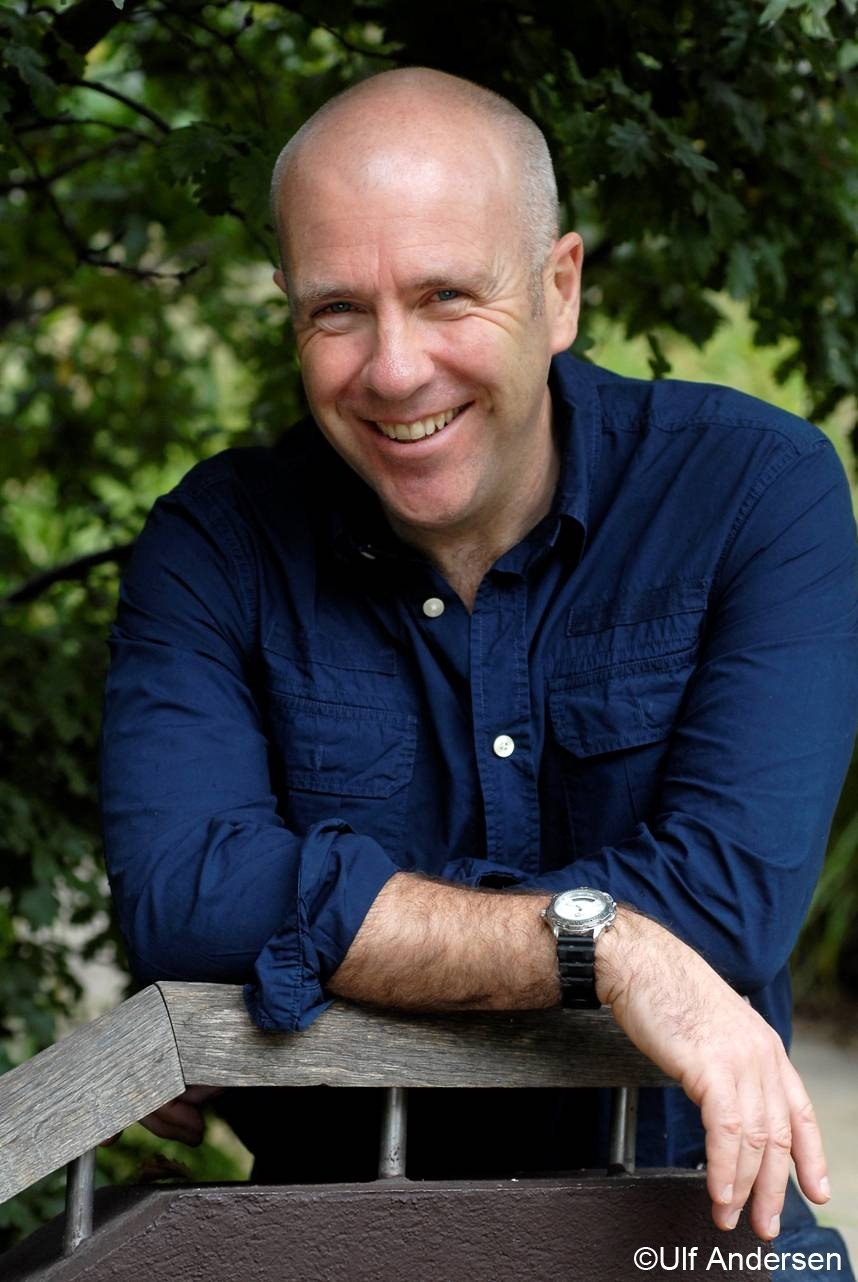
'And What Do You Do Mr Gable?' 'The Australian Disease' – Richard Flanagan

Although neither of us these days reside there, I suspect that he, like I, still regards the North West Coast as the homelands. So I liked this bit:- ‘She would sometimes halt our car…on the side of a new highway cutting that had sliced open the red earth of Tasmania’s north west coast, a flick-knife (great metaphor RF) of progress slashing the land. After looking furtively up and down the road, she would get out of the boot old fertiliser bags and order us children to fill them with that rich and sweating red earth. We would take that dirt all the way south to our Hobart home, where she would empty it over that part of our backyard she decreed would be a vegetable garden…With her foot she would scuff back the surface of some of the sour grey clay of southern Tasmania, and say:
‘Smell that son.’
And we would smell the richness together as she let it fall through her fingers, a shower of red earth saying:
‘Now that’s what I call soil.’

That red earth is the stuff of miracles; the same red earth that grows the world’s best spuds. I’ve a good life here in the sour-soiled south, but that dirt from the opposite end of the state, good enough to be placed on a plate and be served as a meal – well, I miss it, I really do. That, as well as the homeland’s accompanying fecundity, lushness, greenness. It’s a part of my soul, as it is for Richard Flanagan.

the-australian-disease

‘The Australian Disease’ is a short – and cheap at less than ten bucks – mash-up of several of the essays featured in the Man-Booker winning author’s ‘And What Do You Do Mr Gable? Much of the latter, particularly his railing against the obscenity that was the hold Gunns had on both sides of government here on our island for many years, I’d read before. And I do admit I found some of the other offerings too cerebral for my aged and addled brain. Others, though, I enjoyed immensely – some even moving me to the core, such as the reminiscence that contained the extract I used in the intro, simply entitled ‘Bread’. In this the great man writes of his fondness for ‘roo and wallaby chorizo (I wonder where he sources that from?) and gives us his own recipe for a loaf – so simple; its perfection being in the love imparted from maker to dough. And then there’s the view that the rot first set in on humankind when we transformed ourselves from hunter-gatherers to reapers of grains. Hmmm!

and-what-do-you-do-mr-gable-

He also gifts us his reflection on how Peter Dombrovskis’ images of wilderness changed the way we looked at wild places, Tasmanian or otherwise. In turn that camerasmith took his cues from the ground-breaking Olegas Truchanas – and uncannily both died in much the same way, out doing what they loved. ‘They created another Tasmania; an invitation to a dream open to all.‘Another image poignantly features in his ‘Family is Everything’, his take on the 2001 election campaign when a Kim Beazley decision to align his party to Howard’s hard-line attitude to legal refugee seekers, trying to find a better life for themselves and their children in our previously welcoming country, grew into the great shame that was the culmination of that policy under the thankfully now departed Abbott. Shorten has attached himself to that too – it is to be hoped that Turnbull can usher in a softer stance.

In ‘Sheep Management’ Flanagan makes a case for fiction as opposed to the prevailing plethora of factual tomes. Yet another campaign is covered when he joins the media pack following a Mark Latham trying to convince that being a nut case shouldn’t exclude one from being PM (‘The Rohypnol Decade’).

Flanagan, Richard

‘The Australian Disease’ gives a synopsis of the bigger collection, being the transcript to his Alan Missen Oration’, again from 2011. Back then there was a possibility, that he touches on, of a ticket of Putin/Palin ruling the world. What could be worse? Dare I suggest – Putin/Trump?

Richard Flanagan’s website = http://richardflanagan.com/

The Lecturer and the Thirk

He made his appearance in 1931. Let’s see. That’s exactly twenty years before my good self so that’d make him 84. And as far as I know, he’s still on the planet. Born Owen, he obviously preferred his second name of Michael. His first publication was in 1963 – a book on an early governor of colonial Oz, Philip Gidley King. His last recorded, around forty years later, detailed the wreck of a vessel back in early settlement days, the George the Third. He is credited with helping ‘…inspire the revival of scholarly interest in Tasmanian history.’ He departed from academia in 1996 – I’m hoping my retirement years will be as numerous as his. He was a lecturer of mine.

Soaking in fragrant suds this morning I endeavoured to recall the names of all the others who attempted to inspire me from a lectern during my own university days in the fervent early seventies. There were Johnston and Guiler in biology; also Rose in history; Boyce in political science and Cotgrove in geography. I know there are more – some I can picture – but their names are lost to me. The most awesome figure on campus back then was James McAuley – a versifier of exquisite quality and an Angry Penguins survivor. By then he had a reputation as a crabby old bugger but, to my later regret, he never addressed a lecture room I was seated in. But I certainly recollect Professor (gained at Cambridge and the ANU) Michael Roe. Tweedy in dress – as so many were – bespectacled, blonde-ish, upright in stance and invariably dour of expression, he was neither performer nor waffler. But he was thorough. With Roe you were getting value for the money, back then, that taxpayers were sinking into your tertiary education. No, he wasn’t inspirational, but he was well grounded and copiously prepared in his areas of historical expertise. In other words, he knew his stuff and did his level best to ensure that you did too.

thirkell

Now to the Thirk. I first encountered him, not in real life, as with Professor Roe, but in print. This took the form of a weighty tome entitled ‘The Sex Lives of Australians’. Despite its subject manner and a cover recommendation from no less of a figure than Michael Kirby, I found it a bit of a plod. The author, Frank Bongiorno, has since written a definitive history of our country in the eighties that’s meant to be the last word on the decade, but I won’t be buying into it. ‘TSLOA’ was pretty scholarly – evidenced by a dozen or so footnotes per page. Now and again, though, its dullness was enlivened by tantalising titbits that I felt, with some more filling out, could make for pretty good yarns for blogging purposes. And it was reading the fifth chapter, entitled ‘Tabbies, Amateurs and the Cream of Australian Manhood’ that I was introduced to the Thirk. What immediately attracted me to him was that he was obviously a Tasmanian who went on to have a most interesting life. As was stated in said book, quoting Hobart’s daily newspaper, ‘For a man from a downwardly mobile family living in an untidy suburb (Foster Street, New Town to be exact) where yesterday’s ‘Mercury’ (aforementioned daily) was today’s dunny paper…’ our hero had a very promising coming of age during the Great War years, particularly on the soil of the mother country. During that era he married into fame – but then it all went belly up.

George Lancelot Allnutt Thirkell was born, in 1891, in today’s tourist town of Richmond and was educated at Hutchins, the island’s premier school. This fact would lead one to believe that his family circumstances weren’t totally poverty stricken. On both sides his parents were several generations Tasmanian. His father’s people had been here since the 1820s, building a fine estate in the Midlands, Darlington Park, making him a descendant of local squattocracy. His mother’s forebears ran the coaching service between the colony’s two cities.

Come the conflict our man, with such lineage, was from early on seen as worthy of a commission – a lieutenant in the Engineers no less, based on the slant his education and talents took. A photo of him, published in the Tasmanian Mail, just before embarkation, shows a fellow described as ‘…a youth in chocolate soldier uniform, intent expression, an air of simplicity, even sweetness…rather long and sharp featured with slightly protruding ears, a strong face rather than handsome.’ And it was his very good fortune to be wounded at Gallipoli.

His brief few paragraphs in ‘The Sex Lives of Australians’ also describes him as feckless (def- useless, worthless, incompetent, inept, good-for-nothing, ne’er-do-well), but none-the-less charming. The author was able to deduce this as he had researched the man’s war diaries, held by the War Museum in Canberra.

His wounds in the nation’s revered campaign were serious enough to have him removed to England. There part of his recuperation was spent at Glamis Castle in Scotland, the seat of the Strathmores. Here the Thirk was under the charge of the Earl and his wife. Their daughter, Bongiorno reports, was ‘..a great admirer of men in uniform.’ and she and the Thirk became friends. I was interested to know if there was more to it that just friendship, as around this time this particular man in uniform was starting to garner some sort of reputation with the ladies. This blue-blooded daughter was none other than Lady Elizabeth Bowes-Lyon, a comely seventeen year old who would no doubt have attracted other desires in the charismatic Taswegian. As we all know, this lass later went on to marry the future George VI, himself having to be rescued by the Firm from the clutches of an antipodean temptress, causing the necessity to find a sweet diversion of a more suitable nature – Elizabeth. Our future Queen Mum, one would imagine, would have had to have been pure and unsullied to wed a prince – but as, at that stage, he wasn’t the heir to the throne, would that have mattered so much? I resolved to delve into cyberspace to see if there was any evidence of ‘impropriety’ between the two.

ebl

What I discovered was that Elizabeth’s family became so enamoured of our Hobart charmer that, once his wounds had sufficiently healed enough for him to depart their care, he was constantly invited back for sleepovers – a break from encampment life on the Salisbury Plain. There was a brief taking of leave back to Australia, but from his base on the Plain the Thirk made many forays to London. His newly acquired connections provided entry into the high society of the capital and there he attracted the eye of many a bejewelled damsel. His eventually fell on one belle, Hinda, who had French royal blood in her veins. There is all sorts of innuendo of what he got up to with Hinda in his diaries – references to dalliances in the back seat of taxis and when she was left in his ‘…tender care…’ by her ever-trusting parents. Why the feckless fellow even described the nature of her knickers, presumably as comfort for what lay ahead in the trenches of the Western Front. All this was occurring whilst he was receiving mail from his sweetheart back in Hobs. Then, towards the last year of the war, the Thirk met Angela McInnes and Borngiorno moved on to other matters. But I needed to know what became of the Tasmanian thereafter.

The ether told me that McInnes was a soon-to-be divorced woman, mother of two sons and it seemed a very rushed business her meeting of, squiring by and marriage to the Thirk. But then it was war-time, one never knew what was around the corner, so time was of the essence. The now Angela Thirkell was soon to become a noted author, far more in the limelight, on-line, than her husband who, after 1918, recedes into the background. He became a mere footnote to her. But we do know that the marriage was a disaster, as so many were, organised in such haste in uncertain times. Angela herself was of prominent stock, being related to Edward Burne-Jones of New Romantics fame, as well as Rudyard Kipling and PM Stanley Baldwin. In 1911 she was wedded to Campbell McInnes, a man with a reputation for promiscuity. She divorced him in 1919, citing his adultery, alcoholism and wife-beating. With the Thirk she was obviously on the rebound.

angela thirkell

In 1920 the couple left Old Blighty for the Thirk’s homeland. After a brief stay in Hobs – maybe too provincial for Mrs Thirkell’s tastes – they settled down in Melbourne and proceeded to have a son of their own, Lance. But it all soon soured. The Thirk’s missus was never one to withhold her abhorrence of her new environs and its denizens – uncouth colonial clods. It was only a matter of time. The draw of her own drizzly birth-land was eventually too much and she headed for home with their son. Her husband did not follow. They never saw each other again nor divorced – although she was not adverse to later affairs. With her return came literary fame. She, in thinly veiled form, recorded her time with the Australian in her novel ‘Trooper for the Southern Cross’. Her son, Colin, later added to the descriptions of their years together in his seminal ‘Road to Gundagai’. Neither were entirely unfavourable to the man, but obviously the distance between husband and wife was not aided by his own shortcomings. A noted historian stated, ‘The fevers of sex and war had done their work.’ on the relationship.

And its with their parting that cyberspace ends its recollection of the Thirk. Most of the above was garnered from various biographical articles on Angela. Of course, what I also desired to know, given there was still a long life ahead of the man, was how it all turned out for him. And here Michael Roe, my old lecturer, as well as the ‘noted historian’ from the previous paragraph, rides to the rescue. One of the aforementioned articles came with a reference to an article the good professor had written for the Meanjin Quarterly in December, 1969 – the year before I commenced my university studies at today’s UTAS. The excellent ladies at the State Library delved into their archives for me and produced what I required, for, with ‘Thirk: A Tragic Australian’, Roe takes the tale through to its conclusion.

From his account I discovered the Thirk completed his war as a captain and witnessed the end of Baron von Richthofen – in his diaries recording he believed the great German ace to have been shot down from the ground by a fellow digger. He also enlightens on just how our colonial lad met his future ‘…archetype of the English upper middle class..’ of a wife. He even pinpoints the date of this occurrence – September 9th, 1917. Roe refers to the man’s diaries, stating how the Thirk found his future stepsons to be ‘…two dear little kiddies.’ whilst referring to her ex with the words ‘…it beats me how a fellow can neglect such a lovely little soul (Angela) and such glorious kids.’ One of these kids later wrote of the occasion that his mother was entranced by GAL Thirkell’s looks, he being, in her view, ‘…a handsome captain with dark brown hair and freckles in the irises of his eyes.’ His ‘…strange, twangy lilt.’ helped win her over; not the only time the Aussie accent has worked its magic on hearts from the other hemisphere.

But, as we have seen, the rosiness of the couple’s first meeting was not to last. On the way home Thirkell displayed some gallantry in defusing a mutiny by fellow troopers at the conditions on board their ship. This placed him in an admirable light as far as his wife was concerned. In Melbourne, though, he soon went to seed. Angela herself won few friends with her reported peevishness and putting-down of most souls the couple came in contact with socially. The Thirk sought solace in the whiskey bottle. He spent most of his free time away from his shrewish wife, either at his club or with his nose buried in his stamp collection – a lifelong infatuation. As the bitterness between husband and wife increased, so did the Thirk’s girth. He, for a time, did okay in the workforce, being the managing director of an engineering firm – he is credited with patenting a tennis net stretching mechanism as a claim to fame. But, as with so many, when the Great Depression hit, his business closed. It was at this time Angela signalled she had had enough and deserted him. With these combined failures Roe reports he became ‘…an increasingly pathetic figure.’

Angela’s son Graham continued to remain in contact with him, stating that throughout his troubles his charm won a few favours back from old army mates in the form of some employment. By nature, it seems, he remained extremely generous with what little monies he was still able to accrue. But, eventually, his lack of funds started to show. His suits were shiny with age, his cuffs frayed, his homburg hat ancient and stained. One day stepfather and stepson met for lunch in a Melbourne hostelry. Over plates of oysters the younger informed the elder that he was next off to Canada to search for his real father. On hearing this the Thirk reached over and placed his hand on Colin’s arm and asked of him that, after chasing down his parent in the land of the maple leaf, please could he ‘… go on to see …(his) Mother (in the UK)… and just tell her I want her to come back.’ McInnes left with a vision of ‘…his sad brown face and long bloodhound nose…’ watching him go.

But a tragedy Michael Roe? Had his life continued its downward spiral then, yes, that would have been the case. But sometime during the years of the second worldwide conflict last century the Thirk found a soul-mate. Roe wasn’t forthcoming with many details – perhaps there was simply not any historical record pointing to her identity. But they were together, in one form or another, for nineteen years – up till his death in 1959. The woman inherited his estate of around one thousand pounds – his beloved stamp collection went to Lance. He suffered from diabetes, as well, in his final years. At least he seems he had someone by his side to share his life. So a tragedy? No, I don’t think so.

Still it remains that the days of his pomp came early during those years he helped defend the Empire. The Hobartian had hobnobbed within the top echelons of the English upper classes for a blissful period, although undoubtedly the fighting on the Western Front provided a sobering counter. He married a woman, destined for fame, with top-notch antecedents, if somewhat on the hoity-toity side when it came to her view of her station in life. And as for the initial reason for examining my fellow islander’s life? Well there was no hint of anything improper between a future Queen and the ‘feckless’ Taswegian. But it does seem to me that, as with another lad from Hobart who cut a swathe through the international jet-set a little later in the century just past, the Thirk deserves a bit more exposure. And it’s the type of synchronicity I just love that it was Michael Roe who rounded off his life for me, providing a Tasmanian yarn to savour.

roe

My Old Professor
Retro Portlanders – Ake and Bidegain

WARNING – DON’T READ IF YOU HAVEN’T A HEAD FOR CHEMICAL REACTIONS
Wet-collodion process, also called collodion process, is an early photographic technique invented by Englishman Frederick Scott Archer in 1851. The process involved adding a soluble iodide to a solution of collodion (cellulose nitrate) and coating a glass plate with the mixture. In the darkroom the plate was immersed in a solution of silver nitrate to form silver iodine. The plate, still wet, was exposed in the camera. It was then developed by pouring a solution of pyrogallic acid over it and was fixed with a strong solution of sodium thiosulfate, for which potassium cyanide was later substituted. Immediate developing and fixing were necessary because, after the collodion film had dried, it became waterproof and the reagent solutions could not penetrate it. The process was valued for the level of detail and clarity it allowed. A modification of the process, in which an underexposed negative was backed with black paper or velvet to form what was called an ambrotype, became very popular from the mid-to late 19th century, as did a version on black lacquered metal known as a tintype, or ferrotype.

No, I definitely went glassy eyed at the above. It sounds complicated and reportedly is. Film, of course, made it and other early processes quickly obsolete. If you’re a mere pointer and shooter, as I am, you’d be so pleased to see the end of the wastefulness of snapping to your heart’s content with film. I could never afford to do that pre-digitally – now I can.

But there are a growing posse of camerasmiths around the world going back to film – some in fact never left it behind. A smaller group are going way retro – back to the early days of the art and the processes, as well as the equipment, that marked the early years. One such is a revival of wet-collodion.

I found Ray Bidegain first, then via a link, Jody Ake. Now, when looking at their images, it takes some time to realise what is logical – that one is indeed looking at contemporary work. Then there’s the automatic jump to the conclusion that what they achieve is down to the gee-wizardry of Photoshop, or something equivalent. But no, these two have gone right back to the source. They are – and do excuse my use of this word – authentic.

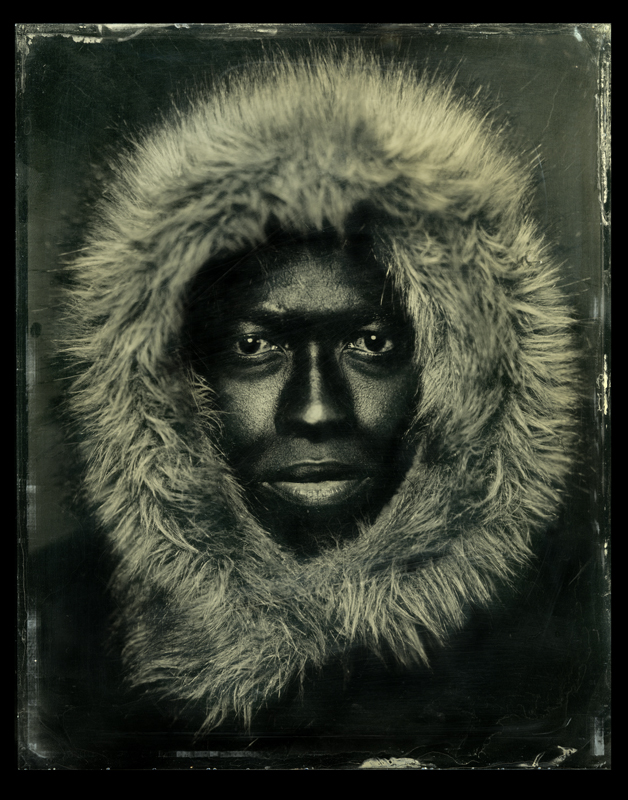
Jody Ake uses the process for his – yes, his despite the name – gorgeous portraits, still lifes, nudes and landscapes. – even to the degree of painstakingly mixing all the above chemicals. Initially he trained at the University of Oregon and later moved to NYC to explore his potential in the photographic industry of the big smoke, but now resides back in Portland. The deaths of three close friends in an accident twenty years ago, followed by a near death experience of his own, behind the wheel of a car, only a few months later, caused him to reassess his life and his values. He claims he still feels guilty over his survival, but sees the laborious way he goes about his photography calms him and is a salve to his pain. He claims a camera takes one under the surface of reality and this is therapeutic as it ‘…can see more than the naked eye, moving us past our persona and catching a glimpse of who we actually are.’

ake01

Now, to me, that’s just so much hairy-fairy, mumbo-psycho-babble until one looks at his output – then you could think there is actually something to it. Atmospheric, with a degree of the intangible, his is sure an eye-catchingly stark and beautiful product.

ake03

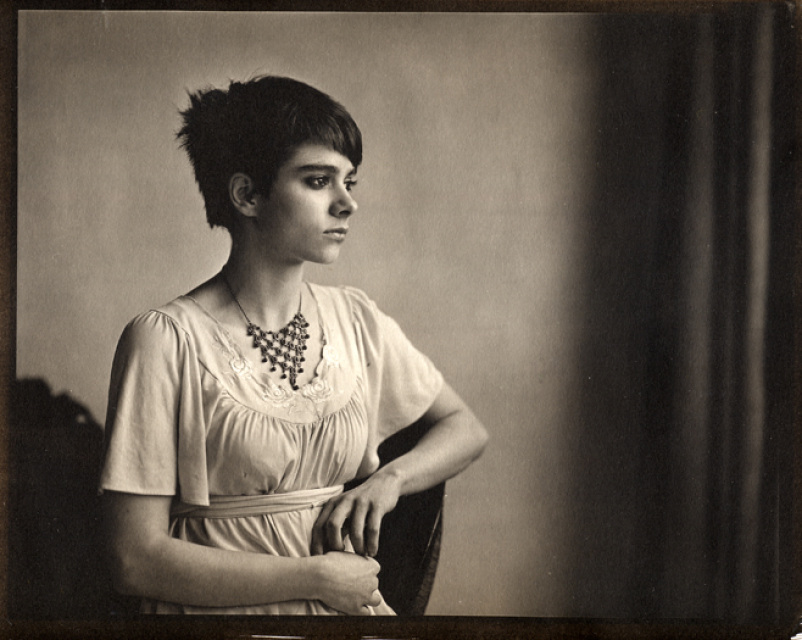
As is Bidegain’s, who also works using a platinum plate technique in conjunction. Both artists have images held in galleries around the Americas and beyond, also exhibiting on a regular basis. As their hometown is also shared, presumably they are known to each other. Ray B’s oeuvre has been described as exuding a ‘…glow as from an inner light.’

bidegain04

Initially he was a wedding photographer, a job Ray eventually found didn’t offer him the challenges he craved. So he spread his wings and began toying with old redundant processes and now has great acclaim for his mastery of them. He spends much time passing on his knowledge of these outmoded ways so they are not lost forever. To him, his images ‘…serve as visual reminders of moments and feelings I have experienced, signifying both the passage of time and the reverberation of consistency in all our lives.’

bidegain01

Yes, his work does have an inner peace about it, soothing the eye of those who will come and gaze and wonder about what we may have lost with the world so maniacally speeding up since his methods were in vogue. Inner peace, the old ways – should be more of it I reckon. Peering at the works of Bidegain and Ake are a positive advertisement for that notion.

Jody Ake’s website = http://www.jodyake.com/

Ray Bidegain’s website = http://www.rbstudio.com/

Caleb's Crossing – Geraldine Brooks

Christmas is coming and any author worth their salt knows this is the time to have a new offering in the display windows of bookshops all around the country – and this year is no exception. Conversely to what you may think, it is a time I dread. Perhaps it makes it easier for buying pressies, but I despair when favoured wordsmiths have new wares to sell, sitting there, tantalisingly under my nose, sort of demanding to be purchased for myself. And they’re there – newbies from some of my favourites: Winton, Theroux, Bryson, Douglas Kennedy and Seb Faulks. As to why I hate it? Well invariably their previous best seller is waiting in a pile in the man cave for me to get around to reading and low and behold, before I’m on to their last – well you get the idea.

But I avoided it with Geraldine Brooks. I put that to rights. Yes I did. Her latest, a biblical opus about King David, ‘The Secret Chord’ (not so sure I’m wholly tempted by the subject matter), is in the stores and I’ve just put down ‘Caleb’s Crossing’. But please don’t tell anyone – her ‘March’ is still in one those piles. But at least I’ve read her last. It seems like only yesterday I was at her book signing in Hobs for that offering, but when I checked its publication date I saw 2011. Golly gosh, I couldn’t believe it.

calebs crossing

But, gee, she’s very good with ‘Caleb’s Crossing’, is the Pulitzer Prize winner. Her prose fair zings off the page; a prose that may just represent the form of the language as spoken circa 1660 in the English colonies of the New World, with glorious words from the local Indian dialect thrown in as well.

As she states in her author’s note, the story as told is inspired by her discovery of, as well as being intrigued by, one Caleb Cheeshahteaumack of the Wôpanâak tribe, the traditional owners of Noepe – better known these days as Martha’s Vineyard. Brooks’ novel is largely set there, as well as on the mainland, at Cambridge. It’s the home of that august learning institution, Harvard.

Little is known of Caleb, but our author places fictional meat on what is there. She imparts the saga from the viewpoint of Bethia Mayfield from one of the of the settler families on the island. At the commencement she is a mere slip of a girl, meeting the salvage (savage) out in the wilderness that’s on her doorstep. As they nurture each other in their respective ways a bond builds between the two – she’s later his champion and semi-carer. He gradually makes the transition into white man’s society – and a man’s world it decidedly was then. As Ms Brooks tells it – what he left, though, had much to recommend it.

We sort of get a double whammy with this title. The initially civil relationships between the Indians and the interlopers has, by the end of Bethia’s life, morphed into open warfare (no guesses who wins that one). So it is a take on the constant that whenever Christian Europeans (be they empire-builders, escapees from another form of religious intolerance or fired with missionary zeal) and native populations collide, it it devastating for the latter. As well, in writing it from the position of a female inhabitant, we see the subjugated role of women during those times. Seems the natives were somewhat less so in that regard. Bethia comes from a reasonably enlightened family situation, but she is still stifled and all the important decisions about her are made by the men-folk. Her life in the most is protestantly bleak and confined, where the one god of her beliefs is all demanding. In contrast, the island’s original peoples are polytheist, but the big guns and better medicines of the newcomers convince them that they would be better off converting. But by the end Bethia is not so certain this is entirely as it should be.

In the final pages of the book Geraldine B relates, in more detail, how much of the tale had a factual basis. Little remains of Caleb’s existence though – a single example of his hand in Latin, which form the book’s endpapers, as well as some writings from contemporary observers. But it is an amazing construct the former Aussie has built around that. Rich in the detail of the period, it is sourced from perhaps what is a neglected era of America’s history, pre-Revolutionary War. In these years the nation’s future was also in the balance in terms of how it would all pan out with the clash of cultures. In the end the pagans were forcibly bent to the will of superior force. Nothing much changes.

Geraldine-Brooks_1

Author’s website = http://geraldinebrooks.com/

Our Toni Shines On

It was interesting going to an evening session, as I did recently at the State, to belatedly show my support for its leg of the Italian Film Festival. On this Tuesday eve the Hobartian institution was pumping. The place was jam-packed – foyer, café – upstairs and down – and when I reached it, early-ish as usual – there were already only a handful of seats left in my viewing room. The audience ensconced there seemed to be all happily murmuring to each other, sipping on wines or partaking of flat whites. The clients were decidedly better dressed than I, even if I wasn’t in my usual garb of trackies and crocs. In other words, I had made an effort – but even so, I felt slightly out of place when the other cinema goers obviously felt that, even in this day and age, attending the movies at night required dressing to the nines. But that’s all good, I reckon.

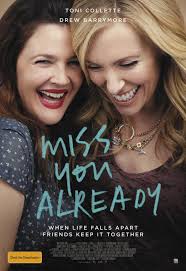
It was such a contrast when I ventured to the same venue last Monday. It is my usual wont to attend the first screening of the day of my film of choice. ‘Miss You Already’, the UK set latest vehicle of now veteran Toni Collette, was it on that day. I was one of only four viewees – another loner, female, and a middle-aged couple up the back. Sometimes, at this hour, I am the sole attendee in one the State’s eight or so cinemas. I like being early – having a coffee before hand, or puddling around in the attached bookshop. I carry a newspaper to peruse until the lights go down. I am quite happy and feel not at all self-conscious at being unpartnered. Any conversation by my fellow buffs seems to be amplified at that time of day, possibly due to diminished numbers. So, when the other loner received a call on her mobile, perfectly okay as the feature hadn’t started, I could not help but overhear. She proceeded to explain to the other party where she was and what she was about to see. She continued on that she had heard that our chosen movie was one that was terribly tragic and she’d been warned to have copious tissues in possession. So I therefore feared the worse. I notoriously tear-up at the drop of the hat.

missyou01

I knew, of course, that the subject matter was no laughing matter – although our lead did her best to keep on cracking funnies, despite the ordeal she was progressing through. Battling breast cancer is the situation Toni Collette finds herself in. Her character, Milly, was facing the cruellest of cruel outcomes. I reckon I had my hankie out by the ten minute mark and by the end of the first half hour I had shed more tears than in all the titles I’d seen so far in ’15 combined. Then it got better after that. No, her situation remained dire – but I seemed to be able to cope without being a blathering wreck as the heartstrings were pulled even tighter. Perhaps I’d simply run out of tears. The prognosis for Millie became bleaker and bleaker the longer the movie ran.

Before and in the early stages of the disease Milly was the life of the party. She was a ditzy and scatty; a thoroughly adorable high-flyer – but once the awfulness of her affliction took away her hair and then her breasts she, naturally, found it harder to keep up the pretence. Milly was married to a rock star who, as the disease progressed, found it difficult to cope with the triple whammy of her deterioration, her mood-swings and the two confused kiddies. He really blew it the first time the couple attempted intimacy after her mastectomy, which led our heroine into a fling before her condition made any of that sort of thing near impossible. It was with a bartender on the Yorkshire moors, no less.

missyou03

Until said fling, her bestie had been there for her. Jess (Drew Barrymore – expressly asked for by Collette to play the role) had issues of her own – in the conceiving department. As the news became worse for her mate, it became better and better for a Jess now on IVF. Barrymore was the grounded counter to Toni C’s zaniness and I enjoyed her considered performance. There were also fine turns from the men-folk involved – Dominic Cooper as struggling hubby and singer Tyson Ritter as her handsome, devil-may-care lover. I was especially impressed with Paddy Considine as the ever tolerant partner to Jess. He tries to hold it all together as the womenfolk veer off in all directions.

To my mind only the great Blanchett can match Collette as our best female product on the big screen – sorry Nicole. I enjoyed TC in last year’s ‘Lucky Them’ immensely – and of course there’s the roles she’s most noted for: ‘Muriel’s Wedding’, ‘About a Boy’ and a personal fav – ‘Japanese Story’.

missyou02

On the smaller screen she’s made the ground-breaking ‘The United States of Tara’. I suspect by the time my scribbling on it makes it to print this movie will have left the multiplexes. If you’ve missed it, no doubt it’ll be just as powerful on your very own small domestic platform – that’s the right up-to-date lingo, isn’t it?

Trailer for ‘Miss You Already’ = https://www.youtube.com/watch?v=K5LdNvLXddA

Apple and Rain – Sarah Crossan

She boobled down to the dirreny sonce
Alone, unarmed, her tickery jonced.
“What me? What my? What cooliers lie here?”
She whinnied furverly in the ghoulian ear.

And up he rose like a miney bront,
Waving his tammons in a sleery flont,
“Don’t wake me, don’t shake me,” the ghoulian gristled,
And piped his phantoms across the spistles.

A ploon bellowed out over the sheel
And she ran as fast as her miggens could reel,
“No more dirrenies,” she whispered aloud
And sluped back down to sleep on her mound.

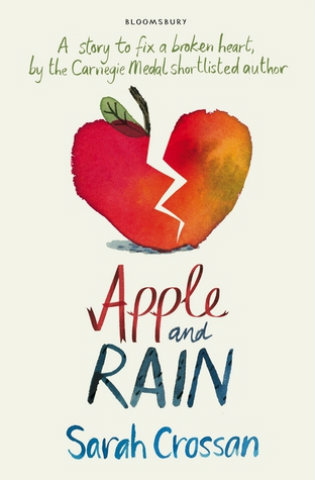
The above is Sarah Crossan’s take on Lewis Carroll’s nonsense-but-makes-total-sense versifying in ‘The Jabberwocky’, as composed by her mouthpiece in her novel, ‘Apple and Rain’. Her eponymous heroine (Apple) constructs this verse to entertain step-sister Rain, but excels at non-jibberish poetry as well, a fact she keeps very much to herself.

Apple-and-Rain

It’s a very fine novel, short-listed for this year’s Carnegie Medal. Some critics have likened its writer to UK YA legend, Jacqueline Wilson – and it is easy to see the similarity. In itself this is high praise. Ultimately Ms Crossan missed out to Tanya Landman’s ‘Buffalo Soldiers’ for the gong. Another title by Sarah C, ‘The Weight of Water’, had similarly been previously listed.

‘Apple and Rain’ deals with a splintered family trying to bring itself together, only to create new fractures. Apple is a sensitive soul – delighted, on one hand, to have her mum back after a long period of estrangement, but devastated to lose her one true school friend to the ‘in-crowd’, led by a particularly bitchy piece of work. Rain is the strange little sister our Apple never knew she had until her mother returned skint and deflated from chasing the rainbow on the other side of the Atlantic. We can forgive Apple, in her excitement at her parent’s reappearance, for treading all over the feelings of her nan who has largely, as well as strictly, raised her. The freedom under her mother’s control is at first heady, but she soon realises it comes at a cost.

Apple’s hoped for romantic entanglement with a much older boy doesn’t, to her embarrassment, eventuate, but she finds a much more worthy and age-appropriate soul mate soon after. This latter lad is a delightful creation by Crossan, one of the best features of the work. In the end both young gentlemen come through with flying colours, helping to put Apple’s world to rights.

When asked, in a recent interview, what prompted this particular narrative the author explained, ‘I wanted to write a book about just how important grandparents are but wanted to look at what would prompt a parent to leave a child. I have a child myself and I can’t imagine abandoning her ever, but people do this all the time. Why and how? These are the questions I wanted to explore.’

Although the answer to those queries are complex, the novel is anything but. It’s not a taxing read and nor does it wallow in sentimentality. Apple eventually finds she is no powder puff and with some help, finds the feistiness to snub her nose at her detractors. Unfortunately the device she uses to conspire this to happen is somewhat hackneyed – I was hoping for a less ‘Home and Away’ and more originality.

That being said, this is still a marvellously engrossing tale being told. I particularly enjoyed the character of Apple’s English teacher – a kind soul addicted to poetry, trying to inspire his students with the Brit greats. He’s on Apple’s wavelength and appreciates her own fine attempts at poetsmithing, once he unearths them. He is attuned and caring enough to step in when his talented pupil is about to sink.

Time flew as I powered through the pages of ‘Apple and Rain’, so it is with interest I await the arrival of SC’s new offering. She has set herself an impressive challenge with the subject matter – conjoined twins. I’m sure she’ll be up to it.

sarah c

Sarah Crossan’s website = http://www.sarahcrossan.com/

Those Gummer Girls

I was fooled. When she popped up again on the screen in the second of two movies I’d seen consecutively in recent times, I assumed it was the same actress. In both she had supporting roles. But my assumption was incorrect, but at least the two co-stars shared the same genes, so I wasn’t going completely ga-ga. I only discovered they weren’t the identical person when I took to the ether after the second film and wondered why the actress concerned didn’t receive a credit for the first production in her filmography. Finally I twigged – sisters. And what’s more, daughters of Hollywood royalty.

The eldest, Mamie (Mary Willa) Gummer was born in 1983 and has acted since she was a kid, occasionally in her mother’s movies. When I delved into it she had quite a resume of significant roles – as ‘Emily Owens MD’; in ‘The Good Wife’, ‘Off the Map’ and the wonderful ‘John Adams’ – all for the small screen. As well there’d been a spattering of movies, but it was in ‘Ricki and the Flash’ that she really caught my attention. I’d journeyed to this offering after a pleasant exile from movie going – hastening to add that partaking of the menu at the State is never a chore. There was something about Mamie G that made me really hone in on her after my enforced absence. Playing a jilted wife in the course of a meltdown, returning to the family home, I thought she was the best thing in the Jonathan Demme directed feature. That and her mum’s glorious belting it out as a minor league rock queen. I’d read Meryl Streep’s real life daughter had a role in it. Straight away one could notice something of her mother’s features in her but, in this, there were a few very rough edges thrown in as well.

mamie gummer

As well as a muted performance from the always watchable Kevin Kline, this unrealised gem also gave us our own Rick Springfield supporting Ms Streep in her band and as her love interest – finally. Although at times he seemed to be acting in a different movie than Meryl S, I still enjoyed his presence immensely. The actress has serenaded us before, most recently in the lamentable ‘Mama Mia’, but here she really lets rip – and she’s not bad. She’s a goodly set of pipes on her.

The movie itself has received a luke-warm response from the viewing public, as well as the critics, being in my judgement no earth-shaker – but neither is it without some serious charm. It has a pleasant vibe and the watcher knows it’ll all work out in the end from the get-go. But there are an array of toe-tappin’ tunes and it did introduce me to one of the great lady’s progeny in which long term hubby and sculptor, Don Gummer, also had a hand. I’ll watch out for her in other offerings, as I will for daughter number two.

In ‘Learning to Drive’ I thought I was casting my eyes over Mamie again, although in a lesser role in terms of screen time. I watched the credits at the end just to make sure, saw the name Gummer so felt I was. I knew that link between the two films could be the basis for this scribbling – as it still turned out despite the humble author completely having the wrong end of the stick for a while. But I did my research and discovered it before I had egg on my face.

grace g02

Grace was born in ’86. She’s had roles in ‘American Horror’, ‘The Newsroom’ and ‘Extant’. Out of Tinsel Town she’s featured in in a few roles, occasionally alongside her mum. She was also in ‘Frances Ha’, a movie I enjoyed very much.

In ‘Learning to Drive’ she has bookended appearances as Wendy’s (Patricia Clarkson) daughter – and gee, she bears a striking resemblance to her older sibling, thus my befuddlement. Again this is another sweet indie that deserved a better response all round. It’s faults, though, were more obvious than the aforementioned vehicle for elder sister and Ms Streep. For my money the ‘ghosts’ that regularly appeared did not add anything at all and Ben Kingsley was unconvincing as the Indian Sikh American trying to teach Wendy to handle a car. He has obviously played Indian before and it is part of his heritage, but he seemed very stilted and uncomfortable in the role. Wendy is again a jilted wife falling to pieces and the driving instructor, in a way, becomes her main means to cling on to reality – before he falls in love with her. The cultural divide, though, is too much, Wendy’s feelings are fluctuating, so in the end he enters into an arranged marriage – one that seems certain to flounder as another cultural divide emerges. Director Isobel Coixet manages her ensemble cast with aplomb – better than the make up artists did with Kingsley’s beard and hair do. For me it was a distraction, trying to workout out how it had all been affixed to his stately head.

Clarkson’s character, taking the step of trying to get her life in order by buying a car and learning to drive it, is all fragility and bitterness. She is a fine actor, is Clarkson, usually in small movies such as this. She is underused by the industry. It’s been a journey(wo)man career, but she garnered awards for her roles in ‘The Station Agent’ and ‘Pieces of April’. She doesn’t miss a beat in this outing, but I must admit I was disappointed with Kingsley, fine thesp that he is. It was no wonder his love was unrequited in the end, if that’s not giving too much away. It is worth, though, perusal on the small screen as it’s run on the larger was over almost before it began.

And, to round matters out, there is yet one more Gummer girl. Louisa is a model.

louisa g

Official trailer ‘Ricki and the Flash’ = https://www.youtube.com/watch?v=x8PVK6Hky2A

Official Trailer ‘Learning to Drive’ = https://www.youtube.com/watch?v=1WBnG3FiZk0

A Guide to Berlin – Gail Jones

Mitsuko was from Hagi, Japan. Her father was a potter, the last of thirteen generations excelling in producing the pots his town was nationally noted for. His daughter, instead, became a Lolita Girl. By sixteen she had moved to Tokyo, rebelled against an overly strict guardian aunt and joined street sub-culture. Young ladies, in her chosen group, dressed in the presumed style of Nabokov’s main claim to fame, although Ms M had no idea that her chosen icon had any origin other than Japanese. Even within this genre their were sub-sects. Mitsuko chose to be a goth Lolita.

jones

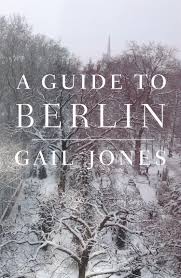
Mitsuko also became a rental-sister. It is a real job – a much needed one. Just Google it if you are in disbelief. Their calling is to work with hikikomori – young people, usually male, who lock themselves for years sometimes in their rooms, obviously causing great concern for their families. Girls such as Mitsuko are hired to coax them out. They offer nothing of a sexual nature, but trust that the procedures they employ will arose so much curiosity the lads will emerge blinking into daylight. It is largely a nocturnal profession as this is when the young recluses are active in their digital worlds. Such a hikikomori was Yukio. Mitsko charmed him out – but then the relationship became much more and the two fell in love. By this time, to her surprise, she had discovered the true origin of the notion of Lolita and soon she and her partner became devotees of the Russian master. Before he became a resident of the US, the author lived in Berlin for a short period and the Japanese pair travelled to the snow-blitzed German capital to check out the landmarks of the writer’s time there. Whilst visiting one of these they were cajoled into joining a small group who met regularly to share their impressions of the various works by the great man. These gatherings form the basis for Gail Jones’ evocative novel, ‘A Guide to Berlin’, taking its title from a Nabokovian short story.

Cass, an Australian, Victor (American), as well as an Italian pair, Marco and Gino, make up the remainder of the group. Initially they spend time pontificating on the author’s oeuvre, but eventually they branch into their own tales, courtesy of their ‘memory speak’, a play of words on the name of the author’s autobiography. These are a particularly compelling mechanism to set us up for a love affair within the group, some jealousy over that – and ultimately a tragedy that tears the group asunder.

Jones’ wrote the novel during her own visit to a Berlin quaking under the weight of one of the cruellest winters in memory. Her own little flat, over looking a cemetery – see cover photo – is also Cass’ base for her stay. The abode where Nabokov lived during his Weimar years was close by.

My first encounter with the sixty year old novelist was ‘Five Bells’. It could almost be a companion piece to ‘AGTB’. As the title of that book may indicate, it was set in Sydney, but followed the same template – that of relating the stories of a quintet who link up in a random manner. In this case, instead of all being followers of a particular literary giant, they all happened to be in the environs of Circular Quay on a particular day. In this Jones’ newbie, it’s a sextet. This relates to the symbolism scattered throughout – the six pointed Star of David, the shape of snowflakes – as well as being the author’s sixth offering.

Gail J, as with Nabokov, is a sublime wordsmith. I’ll be honest – I tried to read ‘Lolita’ once apon a time and had to give it away. But through Jones’ book his love of wonderful, largely redundant, words shone through. Here’s a few examples to try on for size: leminscate – the shape of infinity; conchometrist – one who measures the curves of seashells; drisk – a particularly European type of drizzle; ophryon – the third eye, site of headaches, migraines and epilepsy; – ensellure (the one I particularly like) – the concave depression formed in the lower back.

Interestingly, in reading some of the background to the book in the media, it was pointed out that there are far more courses in Australian literature available in Germany than here in Oz – one university even specialising on Gail Jones herself.

Jones, Gail

The telling of the this tale by the Australian is coolish, almost reserved in tone as befits the numbing chill of the darkest season in Mittel Europe. She almost holds her characters at arm’s length, making the reader feel little warmth for them. As this is a deliberate device, methinks, the novel loses nothing for that approach. Her prose is skilfully composed and that is the attraction. Her clever eloquence ensures that reading ‘A Guide to Berlin’ is never less than fascinating. And I suspect, as with ‘Five Bells’, it will linger in one’s mind eye longer than many a warmer tome.

Under the Cloak at Night

Every time I see a photographer use the dispersion effect I always think how it’d work really well with bats. With a bat theme in mind I set out to photograph a cave, settling on Kweebani Cave at Binna Burra National Park. I photographed myself in costume in my garage and Frankenstein-ed different body parts, hair, dress and cape flicks to make the final girl. I composited in a moon and a new sky from photos I’d shot separately. To create the bats I used different bat brushes found on DeviantArt and the dispersion effect, which you can learn about at http://www.exposingillusions.com

hayley roberts Under-the-Cloak-of-Night-

That’s how the Brisbane photographer describes the process involved in putting together her digitally manipulated photograph bearing the title of this piece. Similar ‘how tos’ can be found for many of her images at the listed URL. Her own website is fascinating as well, with links to her blog.

But it wasn’t that particular image that first took me to her. That one was of a mermaid in a purple-scaled sheath, seaweed clutched to her breasts, seemingly stranded beneath a wreck of a vessel, birds circling. When I investigated further I was strangely surprised that the creator of these surprising images – deliberate repetition there for effect – was Australian. No doubt I shouldn’t of been, but I’d recently been immersed in so many European stylists of similar ilk I was genuinely delighted to discover a local contributor. Perhaps I’m showing my age; my world had its formative years in the cultural cringe. Anyway, it is obvious that Hayley Roberts is extremely skilled in the magicking of her wonderful illusions. Books taking flight from library shelves as a white clad feminine form approaches down an aisle; a young lady of indiscriminate age wiping away a tear as a clipper ship commences its descent to Davy Jones in a very contained sea; a fairy on a unicorn taking a chilly rest-stop at Winterglen, with dragon in attendance are only a few examples of her engaging inventiveness.

hayley roberts

One can see Tim Burton and Shaun Tan in all of this and Ms Roberts does note that they have influenced her oeuvre. But the photos she produces are decidedly stamped with her own individual imprint.

hayley roberts - 793.8-

It doesn’t take an Einstein to work out that she is also under the spell of the possibilities that Photoshop allows for as she pays homage to concepts evoked by magic realism. Hayley, like many, in no way suspected she had the wherewithal to be in any way creative, but her increasing mastery of camerasmithing has enabled her to push the envelope away from her staples – event and nature photography. So now she knows how to tantalise her viewer with her eerily beguiling visual world. Ms Roberts is yet to make a full-time living from her artistic pursuit, working part-time, surrounded by her other great love, in a library. Her dream is to be in a position ‘...to travel around Australia taking creative portraits in rural and iconic locations.’ As she says,’…finding your passion makes anything possible.’

Hayley Roberts’ website = http://hayleyrobertsphoto.com/

Margaret Watkins, Anne Quirk

‘It was wrapped in brown paper and tied up with string. I had no idea what was inside, but I had to promise not to open it till she died.’

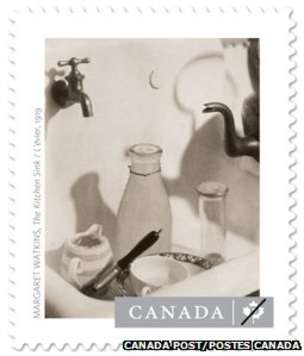
And he kept his promise, did journalist and later gallery owner, Joseph Mulholland. Until he opened that gift to him he had no idea who she had been. She never spoke of it during their friendship. At the time she passed over the present to him Joe’s daughter was battling leukaemia so he had much on his mind as he stashed the parcel away in the back of a linen cupboard. It was later, in 1969, when his neighbour did finally succumb to mother time, that Joe, who in the meantime had been invited to be executor of her will, remembered his vow from years before. What he found when he retrieved that package eventually bought Margaret Watkins back from obscurity – so much so that in 2013 Canada Post commemorated her on a stamp issue.

He thought he knew her back story pretty well. Margaret and Joe had become firm friends and on many occasions, over the years, had talked long into the night about their lives – but she never let on. To him she was the sweet elderly lady who shared the street with him. Nothing in her tales prepared him for what was revealed the day of the opening of her gift to him; her gift to two nations. Inside were thousands of photographs and negatives – a treasure trove of memories, a treasure trove of art. Joe Mulholland is now in his seventies and is Margaret Watkins’ champion; the keeper of her flame. Thanks to his efforts to bring her in from the chill of obscurity Watkins is now recognised as being ‘…a highly distinguished and important figure…’ in the story of photography. It is significant that two countries, Canada and Scotland, claim her as their own as galleries line up to display her oeuvre – an oeuvre partially contained in that package.

Watkins was born in Hamilton, Ontario in 1884. In 1913 she moved to Boston, gaining employment at a photographic studio. From that point on the art became her life – until circumstances took a more notable future in it away from her. But even after she ceased snapping, later events showed it was never far from her mind. She took photography seriously from the start, enrolling in Clarence H White’s Maine Summer School. White was a notable practitioner and not adverse to having relations with his students as well. That may or may not have been the case with Margaret, but he quickly caught on that she had the chops to make a name for herself and became her mentor. This led to one of her career setbacks. He willed her his artistic legacy, but was challenged in court by his widow. Bizarrely it was found that Margaret was entitled to his photographic images but she was ordered to sell them to the spouse for a fraction of their worth.

margaret watkins01

By 1920 Watkins was the editor of a leading journal as photography became increasingly well regarded as an art. She was also freelancing for advertising agencies. She taught her skills as well, passing on her knowledge to others who, like her, could see photography as their calling.

But then family called and she felt obliged to leave all she had achieved behind her and start anew across the Atlantic. Four aged aunts were in dire need of a carer and Margaret felt obligated. For a time she could continue on, establishing herself in Glasgow and taking on commissions that saw her travel around Britain and across the Channel. As the aunts became even more frail, though, she was forced to restrict herself to snapping industrial Glaswegian landscapes and the city’s denizens.

margaret-watkins-1931-paris

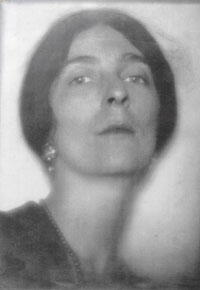
After Joe opened his package he wondered if more lay in her large residence opposite. It did – an incredible cache was found, much of it now housed in Mulholland’s own shop-front for her talent – Glasgow’s Hidden Lane Gallery. He found advertising images, her work in social commentary and luminously lit nudes. He also unearthed an image of her as a young lady and found it difficult to reconcile this ‘…imperious…’ self portrait with ‘…her dark hair tied in a chignon, looking down her nose, regally, at the camera.’ with the old dear of his friendship.

margaret watkins_stamp

The images he uncovered proved that Margaret W was a most versatile practitioner. Her early still lifes, such as the one featured on the Canadian stamp in her honour, ‘The Kitchen Sink’ (1919), caused some controversy amongst critics. Most, though, were of the opinion that, what she produced with these, were ‘…composed like a painter and tended to see ordinary things as very beautiful.’ There were also her portraits of the celebrities of the day taken in her Greenwich Village studio, including that of great composer Rachmaninoff. After being removed from the New York scene she was more limited in what she could produce. Now it tended to be more the everyday recording of what she discerned around her. Eventually her nursing duties made even this difficult and she more or less gave the game away, disappearing from view until her recent rediscovery. But her moment had really passed the day she left the US.

margaret watkins

Outwardly, according to Joe, she remained chipper till the end. He did find evidence in her abode that all was not as it seemed. There was a scribbled note that gave an insight to the real condition of her mind, to the effect that she ‘…was living in a state of curdled despair…I’m doing the utmost to cope with a well-nigh hopeless situation.’ He also found she had packed her bags to return to the scene of her days of photographic pomp – to return to New York.

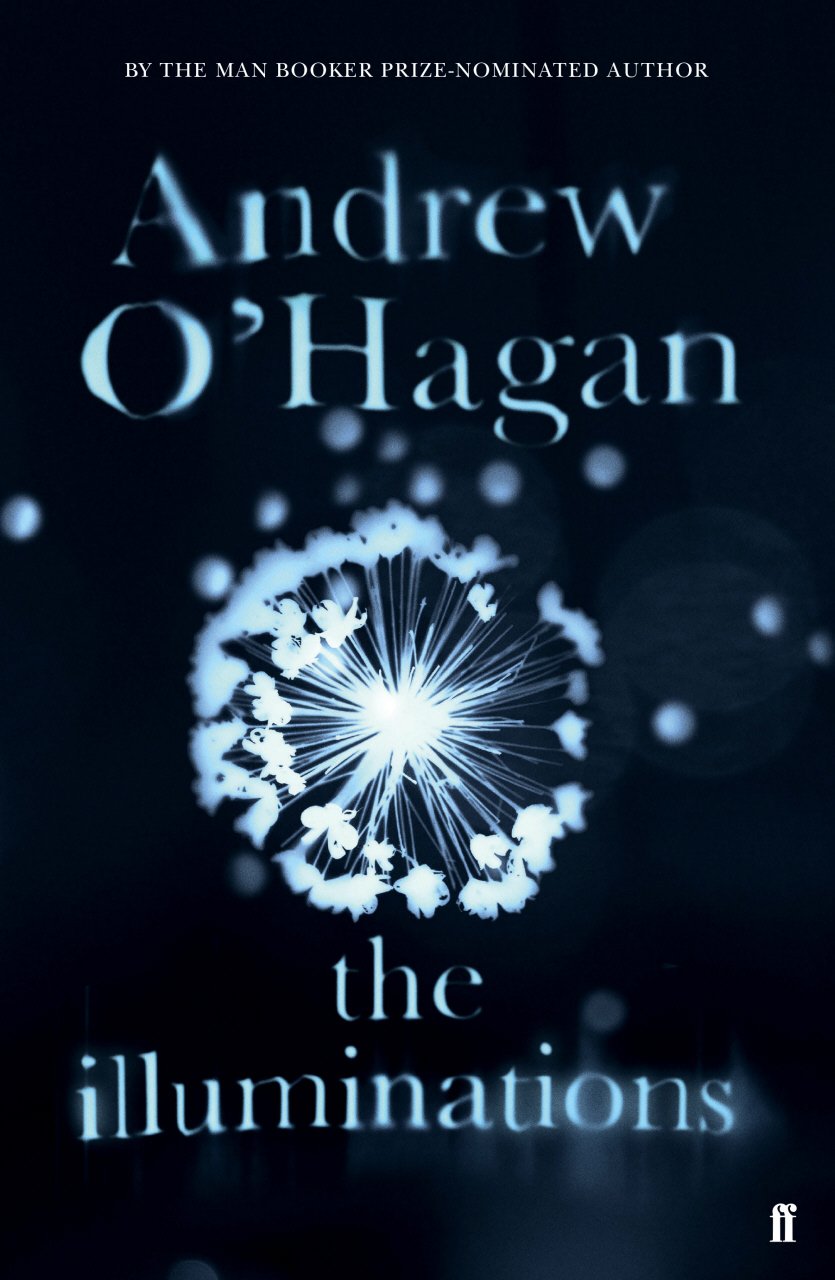
Anne Quirk is Margaret Watkins. The sublime novel, ‘The Illuminations’, has bought Watkins’ story back and to a wider audience in the guise of a fictional protagonist. Anne has dementia. Her memories of the past are fragmentary. She is struggling to remain semi-independent – not in a fine house next door to Joe M, but in supported accommodation. Here there is also a neighbour who takes her in hand, helping her through the day so she can cope. Maureen has had her troubles too, but she has commenced to piece together Anne’s back-story. Anne’s aggrieved daughter Alice fills in some gaps too, but it is with conflict-damaged soldier Luke, her grandson, that she shares her greatest bond. Through Luke, author Andrew O’Hagan presents all the ugliness of our current Middle East involvements. Luke has returned from Afghanistan battered and bruised mentally. He takes to the Mulholland task, once he discovers a similar trove of photographic images, to bring Anne back in from the cold. So it is potentially win-win. Anne’s legacy gives him something to focus on, he gives her one final escape from the fog that is enveloping her mind.

illum

And then there’s Harry, her mysterious lover from the post war years who encouraged her with her artistic pursuit. When it really counted, though, he left her in the lurch. A terrible tragedy followed that caused Anne to lose much of her will for a while. In her memory Blackpool, where her liaisons with the married beau occurred, was the place where she was happiest. So, at the end, that’s where Luke takes her. In doing so the remainder of her story is unravelled. Even the Beatles get a cameo. The pair arrive in time for the famous illuminations that light up the resort each year. By now the reader realises that the future of both these characters is on the up and up, even if poor Anne no longer has the wherewithal to fully realise that. This is helped immensely by a letter from a Canadian gallery, one that had cottoned on to her historical worth as well.

Through Anne Quirk, Andrew O’Hagan, together with good neighbour Joseph Mulholland, have seen to it that a champion of early women photographers has re-emerged and taken her rightful place. As for the novel itself, it is a fine and worthy book. By the end it is, as well, a compelling read. It was long listed for the Man Booker, but sadly didn’t make the final cut. Pity that. O’Hagan’s ultimately very moving and positive tome is thoroughly recommended by this reader.

Andrew-OHagan--001