All posts by stevestevelovellidau

France and Switzerland

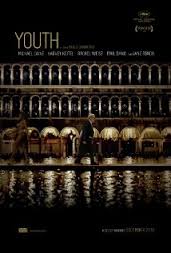
In the first week of this mint new year the Blue Room visited the above two nations courtesy of the silver screens at the State. In ‘Youth’ and ‘The Bélier Family’, 2016 took off to a rip-roaring start with this pair of diverse movies. They both entranced – they were mutually of the highest order.

Two old friends, chewing the fat whilst having a soak in the spa’s pool, are rudely – or perhaps not so rudely – interrupted from their musings on the state of the world and their respective bladders by something that leaves them open mouthed. In fact it completely takes their minds off the issues involved in taking a regular piss at their age. Dipping her toe in before joining them is the recently crowned Miss International (Madalina Diana Ghenea). They are gobsmacked. She isn’t wearing a stitch of clothing. One remarks to the other that what they are viewing is probably the last idyll of their lives.
This was only one of the memorable moments in a film overloaded with stunningly beautiful – and at times startlingly whimsical – imagery. A few years ago Paolo Sorrento delivered something just as wondrous with his hugely successful ‘The Great Beauty’. This English language offering is perhaps more accessible than its predecessor, but also maybe the lesser, just, for it. Both engorge our senses.

youth02

‘Youth’ is set in a rejuvenation centre for the rich and famous in the shadow of the Swiss Alps. Michael Caine is one of the old fellows being pampered and pummelled to within an inch of himself there, as well as being granted the sublime vision of that very generous and sultry young lady. He is also being pestered by an emissary from no less than the Queen to come out of retirement and provide her birthday pressie to her hubby. You see MC plays Fred Ballinger, a noted composer/conductor whom Her Majesty desperately wants to conduct, for her prince, some of his famous ‘Simple Songs’.

Michael Caine is not only a British national treasure, he’s a global one. He’s appeared in around 115 features and shows no sign of slowing down. I remember first seeing him in something called ‘Zulu’ (1964). But the movie that initially made this scribe sit up and take notice was the ‘Ipcress File’, his take on James Bond in the form of Harry Palmer There were several sequels. Of course his signature outing from this early period was 1966’s ‘Alfie’. It was remarkable for its time and his cockney lead protagonist is an indelible memento of a decade when a bright new Britain emerged from the dowdy shadows of the war-worn fifties.

youth03

Caine’s character has no desire to return to the stage, irrespective of who is requesting it happens. He’s lost a bit of life-interest since his wife’s departure from the world, despite the best efforts of his daughter/secretary (Rachel Weisz) to gee him up. She’s wedded to the wastrel son of his mate (Harvey Keitel). The hedonistic offspring is busy breaking up the marriage by flinging with pop-star Paloma Faith, playing herself. The two ageing buddies, through talk and surreal dreams, spend their days revisiting a time when they were in their pomp. Keitel’s Mick Boyle, a director, still reckons he is back there, busily writing his swansong which he trusts will mark the pinnacle of a long career. Enter a very revealing Jane Fonda to stymie this particular flight of fancy. Paul Dano is superb in his role as an actor about to play a great dictator. We are also delighted with visions of Caine conducting a field of cows, diners who refuse to utter a word to each other and the glorious Sumi Jo, also stupendously playing herself, in the closing scene of this fabulous cinema attraction. Described as a ‘…poignant story of friendship, family, love and loss, and yearning to make sense of it’, this took my breath away from the get-go. The Blue Room loved this ‘…swooningly beautiful dramatic comedy.’

youth01

As it did the French offering. Television talent quests are an ubiquitous staple these days. ‘(Insert country) Got Talent’, ‘The X-Factor’ and ‘The Voice’ are franchises that occasionally can deliver more than mediocrity – cite Jessica Mauboy here, Susan Boyle in the UK and Katy Perry Stateside. As terrific as these ladies may be, none have stolen away my heart in the same way as a semi-finalist from the French version of ‘The Voice’, Louane Emera. She turned heads in her country’s break-out movie of ’15, ‘The Bélier Family’, winning for herself a César Award in the process. She ‘…shines with the intensity of a thousand suns…’ in her role as Paula, a sixteen year old struggling with an infatuation for the new kid on the block at school and the late arrival of her periods. Compounding those adversities is the fact that she is the mouthpiece for her family as her parents and brother are aurally challenged. Then her music teacher (Eric Elmosnino) discovers she can sing. Boy, can she sing! His aspirations for her throw the family dynamic completely out of kilter. Karin Viard over-acts for all she is worth as the overtly ditsy mother, as well as one having to contend with the increasing spread of a vaginal infection as the movie proceeds. The audience will respond in the positive to her despite all this, as it will for a father, François Damiens, who, despite his handicap, gets it into his head that he would be ideal as their community’s next mayor. He gives a terrific performance and is responsible for much of this gem’s poignancy – which it dishes out in spades. It is a tad slow, in the beginning, to pick up speed, but once it does, it would give even the most flinty-hearted viewer a cause to reach for something to dry tear duct secretions. The French-speaking world loved it and I have no doubt it will make an impact on the art house circuit here. Its finale is pure Hollywood, but oh so life affirming – and ‘hearing’ a concert from the perspective of a deaf person was a master-stroke by director Eric Lartigau. This film lifts the spirits and I left the State in a state of almost blissfulness.

.belierfamily.poster.ws_

So there we have it – one movie featuring an old hand who has been giving his innumerable fans pleasure for decades – whilst the other gives us a luminous new star who lights up the screen and will hopefully give pleasure for decades to come.

belier01

Trailer for ‘Youth’ = https://www.youtube.com/watch?v=-T7CM4di_0c

Trailer for ”The Bélier Family’ =  https://www.youtube.com/watch?v=P9p0qnj4OC4

Dark Lady

We have just one image of her, a miniature, painted by Nicholas Hilliard, noted at the time for his mini-images of the shakers and movers of the Elizabethan world. Who was she? Well she was/is in the mix with the likes of Christopher Marlowe, Edward de Vere, Francis Bacon and others. A woman you might cry, as others have! A woman suspected of ghost writing Shakespeare’s plays! Preposterous has been the common refrain to the notion. But why not? Given, the evidence is by and large circumstantial as with all the other candidates – but, it is there. As there is for an affair with the playwright in 1598 – perhaps in doing so giving the poor fellow a dose of the clap. There is increasing suggestion that she was the ‘Dark Lady’ he refers to in his sonnets, produced the following year – the ‘dark’ being a linkage because of her Mediterranean complexion. It is not unknown for a famous man in his middle age – age 33 was considered this back then – to be bewitched by a known beauty. Think, dare I say it, Rupert Murdoch and Jerry Hall. Shakespeare had made certain promises to his Anne back in Stratford, but he was a low ebb through these years due to the death of his son. He’d be no doubt susceptible to her advances – and she certainly was not backward in coming forward, as we know from her history in contemporary sources. It is all certainly very interesting.

Emilia lanier01

Emilia Lanier was, from all accounts, stunningly beautiful and out to use her assets to work her way to the top of the pile – to the degree a maiden could in those times. Much of what we know of her wantonness comes from her doctor. Doctor was a very loose term back then – they were as much astrologists as medical practitioners and it is possible that the good Dr Simon Foreman was also very keen to bed her as well. It is thought he was rebuffed. He was one of the first to religiously keep notes on his patients, but there weren’t too many scruples involved in the information those notes contained. He refers to the young miss as one ‘to lie upon’ – women of easy virtue were termed ‘mattresses’ in the common vernacular. Lanier, around the time in question, was certainly moving in the same circles as William S. With her looks and being forward by disposition, there would be no doubt she’d be known to him – but many suggest there was far more to their relationship. Some of these ‘many’ are experts, particularly of his sonnets. But there is a great deal of drawing of a long bow between having a fling and the woman actually penning some of his plays. But she did have another string to her bow. At a time when it was frowned on for one of the fairer gender being engaged in such pursuits, in 1611 Emilia came out of the shadows and published her own book of poetry – the first English lady to do so. She was 42 by this stage – and ‘Salve Deus Rex Judaeorum’ (‘Hail, God, King of the Jews’) is a milestone. So, she had literary chops – but did she employ them on the great bard’s behalf. Even if there is not nearly enough evidence for this admittedly far-fetched claim, surely for the feat of being Britain’s first recognised poetess, it would be enough to have her join the pantheon of ground-breaking protofeminists (definition – the term is applied to a woman in a philosophical tradition anticipating modern feminist concepts, who lived in an era when the term “feminist” was unknown, that is, prior to the 20th century). There is, as well, much we do not know about her. Decades of her life are lost to the record. So here’s what we have ascertained about the ‘Dark Lady’ – and it is fascinating.

Lanier was born Aemilia Bassano in Bishopsgate in 1570-ish. Her father was an Italian – and possibly Jewish, hence her looks. He was a musician at Elizabeth’s court. Her mother was one Margret Johnson. When her father died at age six or seven she was sent to live with, or to serve, Susan Berlie, the Countess of Kent. For the rest of her childhood she resided with a number of the influential women of her time – thus possibly her strong streak of independence exhibited later in life? Soon after turning eighteen Ms Bassano became the mistress of Henry Carey, a baron some forty-five years her senior. She became pregnant to him, which was unfortunate as the imminent birth caused her to be palmed off to marry a cousin, Alfonso Lanier, another court musician. By this stage Mrs Lanier, as a heavyweight’s bit on the side, had accrued a fair amount of capital. But her wastrel hubby soon disposed of that in a short period of time, exercising his rights as a man. This found her heavily in debt. Needless to say the marriage was not a happy one – as the good Doctor Foreman was only too willing to report in his notes. A son was born to her in ’93, followed by a short-lived daughter. She was by now, though, a regular at court, as was the dramatist – and so the speculation begins. Into the picture comes a younger paramour, one William Herbert, whom Shakespeare also adored. Some have suggested it was a triangular tryst, others that the Bard was insanely jealous of Emilia’s relationship and of being usurped in her affections. All rumour, mind you, but where there’s smoke there may well be fire. William Herbert also figures in his sonnets.

We have no idea how all this panned out, or if indeed there really is any substance to the allegations at all. The next we know she is publishing her poetry. And again, after that, little is to be found. It has been discerned her husband departed this earth and she tried to support herself by running a school, but that all came to zilch when she became involved in legal action over some unpaid rent money, causing a fall from grace. In 1630 she sued a relative of her deceased husband’s over more owed monies. She died in 1645, being described on the death certificate as a pensioner.

Summing up, it would be a strange kettle of fish to discover that the hand that held the quill penning some of WS’s works was in fact that of a woman. But I reckon we’ll never conclusively know that, as is the case with the other pretenders. But whatever she may or may not have been to William S, I am of the opinion that as a flag-bearer for the cause of women, in a period that decidedly was a man’s world, she deserves credit and greater fame – as opposed to infamy. There is more than a tinge of mystery with this woman who, through her verse, attempted to give advice to her gender about loyalty to each other and the rampant male misogyny of the time. Here’s her take on my gender:-

Forgetting they were born of woman, nourished of women, and that if it were not by the means of women they would be quite extinguished out of the world, and a final end of them all, do like vipers deface the wombes wherein they were bred.
And here’s a taste of her work in ‘Salve Deus Rex Judaeorum’ :-

Salve_Deux_Rex_Judaeorum

Thrice happy women ! that obtain’d such grace
From Him whose worth the world could not containe,
Immediately to turne about his face,
As not remembering his great griefe and paine,
To comfort you, whose teares povvr’d forth apace
On Flora’s bankes, like showers of April’s raine :
Your cries inforced mercie, grace, and loue,
From Him whom greatest princes would not moue.

To speake one word, nor once to lift his eyes,
Vnto proud Pilate—no, nor Herod, king,
By all the questions that they would deuise,
Could make him answere to no manner of thing:
Yet these poore women, by their piteous cries,
Did mooue their Lord, their louer, and their king,
To take compassion, turne about and speake
To them whose hearts were ready now to breake.

Archipelago of Souls – Gregory Day

‘…, that day the storyteller and the listener were in an unlikely type of tuning, on either side of the roadside fire, as clouds went by seeking the east, and airy florets of moisture anointed them as they passed, the solid ground they were on as brief a reprieve as life itself from the sea of deeper time.’

Wesley Cress was camped by a King Island roadside, escaping the past by going to the unknown. She came cycling by, an ex-wild child, now wild-woman, giving Wes a future. But before all that could occur, he had a story to tell, but to only her. Yes, only her. And the island itself, this foreign bit of Tasmania? ‘…: the mist rises from the strait to meet the lenticular hovering like a halo above the swatch of land. The result is a sticky density of a dream. You can see the motion of the mist like a sculptured thing, the light too, streaming past as you cut the wood, or pouring down the gullies with the mobility of solid water itself…’

I recall, once upon a time, a Charles – at least that was his name as I remember it. He left uni to go a-teaching and his first appointment was Currie – or it could have been Grassy. He was only intending to stay awhile. But stayed a lifetime – the place hooked him. Such outliers sometimes do. He was drawn to its wildness and otherness. A certain place has hooked me too, being drawn to it by a beloved son. Not as isolated maybe, but isolated enough. I know the feeling. It happens. And this and more happened to Wesley.

And Gregory Day is some storyteller too. He’s been likened to Winton and called our best writer of nature. But I think he is more akin to Miller myself. Day is best known for his gong garnering ‘The Patron Saint of Eels’ from back in ’06. ‘Archipelago of Souls’ is my first Day – and hopefully not my last.

souls

The writer had a story he wanted to tell. It had been hovering around in his mind for a while but he needed a fulcrum to pin it down. He wanted to construct a tale involving our nation’s conflict experience – not by any stretch a novel notion. It was not to be about Gallipoli or Kokoda, but more ‘… the Australian male psyche in relation to trauma and war…’ In his travels, as a younger man, Day had visited and fallen in love with Crete, its people and the fact that so many cafés had, on their white-washed walls, old tattered images of Aussie serviceman arm in arm with local resistance fighters. He, as an Australian, was embraced by the natives. His German travelling companion – not so much. And that actual World War 2 campaign, in itself, was unusual. It was an unseemly, chaotic affair with the Nazis drifting down from above.

Still he needed that nub. It came with a tale he was told of the British evacuation from Crete. One of the ships, the Imperial, lost its steering. All the troops were taken off and the ship was sunk by friendly fire to stop it falling into enemy hands. Only trouble was there were a few Australian soldiers, below decks, comatose from the drink. They drowned. Now Day had the trigger for Wes to behave the way he did. His hero missed the evacuation because he was busy with a local lass behind a wall. He was thus stranded on the Mediterranean island.

The author’s narrative alternates between Crete and events on King. Essentially it deals with what the lone soldier had to do to survive – that is murder, man and beast. He assists, at various stages, in attacks against the invaders by the Cretan guerillas. This results in the Germans trying to counter through the auspices of repeated atrocity. It’s not pretty reading. It’s been likened to Flanagan’s ‘The Narrow Road to the Deep North’, but decidedly, for this reader, doesn’t have nearly the same impact. That being stated, some of what half-addled Wes does to ensure he stays living is truly terrible – and in some cases, terribly futile. But on the Bass Strait island time is on his side to try and come to terms with it all.

Leonie Fermoy, a generationally entrenched islander, has some forgetting to do too. She is wayward and perhaps she is a tad mad as well. Before Wes can convince her to love him he must unburden himself – open out to her the darker side that shrouds his mind. He’s hoping the King Island weather will leach it all out of him and that she’ll take care of the rest. Tentatively, in fits and starts, the pair come together – and the telling of it is terrific wordsmithery.

Gregory Day lives on a spot just sixty-four kilometres north of the Bass Strait island he writes about in this tome. He’s a frequent visitor and he loves the place – is transfixed by it. And I have been too, these days, by the aforementioned location of my son’s residence – by a place also attuned to the briny. We are so lucky that our island, in the southern seas, affords such bolt holes where nature is in balance with the incursions of mankind. Wes found it led to his salvation.

gregory day

Hallmark Cards? What's Wrong With Them Turi?

Those who know me know of my generous support of the greeting card industry. I love purchasing what catches my attention, mailing them off to the folks I care about. So, I’m wondering Turi, what’s wrong with the Hallmark variety – apart from their ever escalating cost? Yes, yes – I agree that some of the artwork is quite twee, or to use her word – sentimental; so much so they border on being kitsch. And those are not my cup of tea either. But there’s variety with Hallmark – and many of them carry art or photographic work that is tasteful; pleasantly engaging the finer of our senses.

But Turi was worried that her response to the difficult months of her annus horribilis skirted the very fine line between Hallmarkish sentimentality and something that was acceptable to the more discerning buying public. Would they appreciate her ravens circling various beasts?

maccombie01

The worst year in Turi’s longish life saw the death of her husband as well as her forty year old daughter. Even more shattering, perhaps, was the decision of her son-in-law to take her beloved grandchild away from her locality. With all this – her past, present and future, in a short span, had been impacted on, leaving her reeling.

Turi did the sensible thing and sought guidance from a shock that would have sent many spiralling to a dark place. A counsellor put to her that she needed to take on a task that would offer a challenge, that would take her mind off her woes. Something, in other words, that would also have real meaning for her.

And thus she came up with ravens – angry ravens. Ravens attacking, or at least worrying at, various beasts. The latter, admittedly, seemed to be just bemused by all the attention. It helped. As time passed her canvases for this series morphed into a more benign tone as her mind settled. And, despite her doubts about them, these large scale paintings – their majesty so difficult to pick up just with an on-line perusal – did strike a chord with many. So the death of loved ones did have an up in the end. It gave her artistic pursuits a new lease of life.

maccombie02

And what makes her offerings to us in this series so special? It’s the lack of sky – or, conversely, the large amount of blank whiteness. Turi MacCombie is the first to admit she has issues with sky – therefore much simpler to leave it out completely. Doing so tends to give the works more immediacy, the critics opined. Perhaps sky would have made them more generic, perhaps even sentimental.

It was the gift of a book on birds, illustrated, that gave Turi the impetus for a life long infatuation – and this occurred around age ten. When she attempted to draw the avians for herself, to her eyes she didn’t make such a bad fist of it. She began to think that maybe some sort of artistic pursuit could be her vocation. It was a while before her dream was fully realised.

In school she displayed talent and later on, during her painterly education at Syracuse University School of Art, New York State, she came under the influence of a mentor in Douglas Unger. He showed her how to instil more depth in her work with a defter use of watercolours, fast becoming her favoured medium. She started gaining some success as an illustrator of children’s books, her work on display in an edition of Margery Williams’ classic ‘The Velveteen Rabbit’, as well as other co-productions with writers and some put together solely under her own name. And then she fell in love, marrying her Bruce, a composer and academic. Much later, when he was promoted to dean, she was at last free to pursue her dream. She now had the financial security to move from illustrating to the big canvas.

maccombie03

Today Turi lives in Amherst Massachusetts and thanks to that sage advice from her counsellor, she continues to work on the aforementioned series she terms ‘Confrontations’. And if Hallmark ever decide to commission her skills for a series of their own, then I’d reckon they’d be onto a good thing. I’d buy them, for to me they’re not at all .

turi macc

On-line galleries of Turi’s work = http://www.rmichelson.com/artists/turi-maccombie/

The Polisher of Broken Souls

It came in a song, at night, as if in a dream. Maybe it was. It was about him. It was about her. More than that I do not know.

Ash and Daisy-girl arrived, as they always did, around ten. They motored up from down below, from their home, near where the city first kissed the hills. Whilst the heat wave melted the metropolis, up on the ridge it was a little cooler – just. They were in the habit, in these days of extreme fire danger, of heading over to the rim rather than first going inside their pub to greet their help and make a start to a publican’s day.

Inside that help took the form of Beryl, a fusty blonde who showed every bit of her years on the planet. She could have been fifty, but she appeared every bit of sixty. Her employers knew something of her history, but nothing of her age. She had been up for hours, bustling around. She liked her bosses, particularly Daisy-girl. It’s what Ash always called her and it caught on with the locals too. Not that there were that many of those in the little hamlet perched on the ridge. And she knew that when Ash took over from Clarrie, a decade or so ago, he wasn’t real keen on keeping her on. He wanted fresh faced, youthful staff for the customers whom he hoped he would attract from the ‘burbs below. He’d run metropolitan hostelries and he knew what worked there. Ash felt he could transfer this knowledge to his new watering hole in the hills. He had. When he bought in it truly was on its last legs. Clarrie, towards the end, had let it go as he lost interest. In truth he had been running it off the sniff of an oily rag for years. He had enough sense to realise that he was old school and his time had passed; he was ripe for moving on. Ash gave old Marge her marching orders and employed a new, foreign bloke he’d worked with before to run the kitchen. Gone were roasts, seafood baskets and slabs of steak. The menu now was pretty flash, but not so flash as to be overly dear. And New Cook, as she called him to his bemusement, always made sure that there was plenty on the plate. Out went big brewery beer and in came artisan ales and ciders to the taps. The carpets had been replaced and new skylights put in to give the front bar and dining area an airier feel And gone too were the dozen or so regulars from this area. They definitely wouldn’t be good for custom. But Daisy-girl convinced him to renovate a room out back as she figured the old buggers still would need a place to go – there was nothing else for them in the village. She was soft-hearted, was Daisy-girl. She proposed it to Ash as keeping in with the community – and what’s more suggested that Beryl was the person to retain to run it. These days a few of the old fellas have passed on and most nights there were only one or two drinkers out back. As a result Beryl also helped New Cook in the kitchen, prepping and washing up. She didn’t mind. She’d do anything to keep her room upstairs. Pleasingly now she was also paid a bit of a wage and had regular time off. Clarrie had expected her to do it all for board and tucker. Still, he was once her life-saver. And then there was Bert. Old Bert was always there, in the back bar – a fixture.

beers

The couple did not peer out across the city to the gulf and beyond (Daisy-girl reckoned she could see forever) as the punters did. Their clientele loved the view – a factor in tempting them out of town. Rather the pair looked down – down into the gully. Ash was twitchy about bush fires and knew there were units fighting blazes further into the hills. There had been thunder overnight, although no rain. He was wary of lightning strikes. There’d been no soaking precipitation for months and down there it was tinder dry. And yes, this Saturday morning, there was smoke – and quite an amount of it, it seemed to Ash, down in their gully. ‘Shit,’ he muttered and drew out his mobile. He placed a call into the CFA and spoke to a bloke called Pat. He was promised the first available chopper would make its way over and take a gander. There had been, Ash was informed, other calls alerting them to the outbreak. After he put the mobile back in his shirt pocket, he and Daisy-girl turned and walked back across the car-park to their pub. Being Saturday, at the height of the season, they knew they’d be flat chat.

That Saturday, early, Bert had seen the smoke too on his morning constitutional. As soon as he spotted the tell-tale sign he produced an about turn and hurried, as fast as his old pins could manage, back to his place, ringing the firies on the landline. He was too set in his ways for a mobile – who’d he call anyway? But that being said, he had recently discovered the joys of the internet. He reckoned there was hope yet for him in the digital age. He then settled down to his Advertiser and perused it as he waited for the pub doors to open at eleven. Saturday was his serious drinking day.

He knew he’d drink himself into a stupor. It kept the memories away. He went easier during the week – that is, unless the looking back became too much. He wasn’t silly. He realised what was his problem. Doing something about it was the issue. He made the excuse his lack of action was due to him being stuck up in the hills – but he knew there was more to it than that. It had been better up on the ridge, he would admit that to himself, than when he had the heebie-geebies down in the city – but he could feel he was still struggling with it. He knew how this Saturday night would pan out – just like all the others. But she was a haven of sorts. He could cope as long as he had her. Beryl.

The woman in question was hard at it polishing the cutlery in the front dining area when Ash and Daisy-girl walked in. They informed her what they’d seen down in the gully and then went upstairs to check progress on what they hoped would be their living area in days to come – their quarters, as they had started referring to the five small rooms that were being knocked into one large studio type apartment. Builders and the like had been busy the previous week doing some finishing touches. It was almost there. They could think about selling down below, moving permanently up and calling it home. It had been a long time coming. Beryl wondered what it would be like sharing the upstairs with other people again. During Clarrie’s tenure there were already other permanents aboding at the pub when he first put the proposition to her. A couple paid him a few bucks rent, others stayed for nix, just doing odd-jobs around the place. When she quizzed Clarrie as to why the discrepancy, he simply replied that he owed them.

Bert was at the door when Beryl opened up the back bar at eleven, as she knew he would be. She’d be worried if he wasn’t. He patted her on the bum as she walked past him to her station where she pulled his first of the day. There was only one tap – Coopers. Most of her morning would be spent helping New Cook in the kitchen put together his fancy fare, but she’d make regular checks on Bert, as well as any other strays that might wander in, to pour refills. She’d long since given up trying to convince Bert of the folly of his ways. He’d drink himself to oblivion every Saturday night, with her dutifully picking up the pieces. He was better on week nights, reasonably with it when he left – if he left.

As Bert nursed the first of the morning he thought back, as was inevitable, to those days when he fought that dirty war. He’d found out back then how pointless all of what he did; all of what he witnessed being there was. Bert was regular army, not nasho, so he should have been trained in what to expect. But the war was like no training he underwent. And yes, he was only nineteen when he was shipped over. That song. That bloody song. He was quite euphoric when he first heard it. He could turn any bludger away who might query what the hell was up with him and point the clueless clot in the direction of the tune. These days, if the Redgum classic came on the radio, he simply cried. He thought it’d become easier as he aged, but it didn’t. The memories of the blood and guts, of what a land mine did to a man, the burnt babies – how do you get over that? And then he was sent in to deal with friend and foe in the aftermath of Long Tan. It was a friggin’ mess and it almost finished him. But the drink made it better – and if that failed, there was always Beryl. She’d take it away – for a while.

beers

Beryl’s thoughts were in the past too as she trimmed the beans. They all had to be the exact same length now with New Cook. He’d steam lightly before serving them up, almost raw. In the old days they would be boiled to within an inch of themselves and then dolloped on the plate. Today it’s as much about presentation as it is taste – but New Cook wasn’t as bad as some with their artistic micro-meals at fabulous prices. How it all changes, she mused – just as it had all changed for her. Her life pre-Clarrie had been a mess – although it started out okay. Now all she has is the pub – and Bert, when he needs her.

She was raised on the river at Murray Bridge. Finishing top of her class at high school, she thought she was destined for great things. She was brainy and had years of ballet training behind her. For a while she contemplated that as a career option, but as her body changed during her teenage years she lost her lithesome shape. Her breasts became fuller and yet fuller. She had a dancer’s figure no more so there was one idea scrubbed. Beryl reset her mind to becoming a lawyer and to the uni in Adelaide she headed. Beryl soon found she hated it – all that boring study. In no time she was skipping lectures, having taken up with a fellow law student, Stewart. He was a year or so older and he was almost as lackadaisical as she. Trouble was, he was much, much brighter too. He had a bit of family money behind him and they were soon shacked up together. They got along okay, smoked some dope together and he told her she was pretty good in the sack. The L word was never mentioned by either. Were it, would she be where she was now? They lived fairly openly – she knew he was seeing other girls and she had one or two fellas on the side as well. But it was like that back in those days – it didn’t mean much.

When she saw the ad she raised it with Stewart. He just shrugged his shoulders and muttered something about your life, your body. So she turned up for the audition, soon realising exotic dancing was just a euphemism for stripping. But as the money they were talking about was a tidy sum for back then, she gritted her teeth and performed a semblance of a routine for three fellows, done out in bling to the max, and a lone, brassy lady. She was required just to be topless – and she reckoned she could handle that. The woman, Pearl, took her aside, told her she’d been successful and gave her a date for starting. Pearl told her to come along to the Hindley Street address the day before she was due to face an audience for the first time. When she did, Pearl gave her some costumes, a stage name (Belle Angel – very cheesy) and a run through with the music she’d be removing her garments to the following evening. They hit it off, she and Pearl. She was hard on the outside, soft in the centre and they were soon bosom mates, despite the age difference. The first couple of nights Beryl was nervous. The punters didn’t seem overly interested. As time went on and she perfected the stagecraft, with Pearl’s advice, she became more at ease. Beryl soon figured out what got a man’s attention – or, at least, the type of men who patronised strip joints. She couldn’t say she enjoyed it having men ogling her tits, but the club wasn’t the worst place to work and management saw to it the men watching knew their place.

So, sashaying out onto a small stage and taking her gear off wasn’t so hard – but what increasingly became a pain in the butt was living with Stewart. When she offered, Beryl jumped at the chance of taking a room in Pearl’s inner city terrace abode. They rubbed along pretty well and Stewart drifted out of her life. When last she heard he was married and running a successful practice in Mount Gambier. That he got his act together to pass law was amazing. Any thoughts Beryl had of quitting stripping were soon gone – while she still had the figure she was going to milk it for all she was worth. Soon she had enough put aside to be able to afford her own place. During the seventies and eighties (her twenties and early thirties) the club was good to her and she for it. But time catches up and tastes change. Now to be competitive there was pressure to add more raunch. When management put the hard words on her to do so she knew going all the way was a place too far for her. Pearl tried to dissuade her, but she quit. She was told there were younger ones willing to do what she wouldn’t – and that was the refrain she received constantly as she shopped her wares around. Beryl was soon down to relying on the occasional topless photo-shoot for girlie magazines, buck’s parties and bookings in suburban pubs. She knew she was getting past it. As well, she had to deal with the sleaze factor – she hated what her life was becoming. The cash flow ceased and she found she had to give up some of her independence and move back in with Pearl.

It wasn’t long before it all became rather tense with her former mentor who, after a long hiatus, had a new fellow in her life. The sod was pressuring her to rid herself of her tenant so he could move in. Beryl had to find a new living arrangement, but how on the peanuts she was existing on? In stepped Clarrie. She took a shine to the man straight away. He’d booked her for a spot at his pub up in the hills. It was a fair drive, but beggars couldn’t be choosers. She found on arrival she was the only act at the advertised strip show – the first he’d put on to spice things up to see if he could attract more patronage. She did three routines during the evening to a crowd, she estimated, of less than thirty. Between performances she chatted to Clarrie, when he wasn’t pulling beers – in fact she unburdened herself of her woes to him. As she packed up he approached her. He stated that he had a proposition that may be of mutual benefit. He was also on the lookout for topless barmaids at weekends to go with the strip nights. If she was interested she could tend the bar other nights as well. He’d teach her the ropes. They’d be other bits and pieces she could do around the place in return for a room upstairs, all the tucker she could eat and assuming his plans went well, a percentage of the take. It didn’t – go well, that is. The other girls he employed were soon let go. Shortly he was telling Beryl to cover up as well. She was relieved – she knew her boobs weren’t what they once were. She was even more relieved, though, when he informed her that she was welcome to stay on. And that night they became lovers.

beers

Clarrie was older than she was by close to a decade and was married. His wife, he told her that first night, was content living down in the city with their only daughter looking after the grandkids while the single mother was at work. He had a son too. He lived in the US these days. Marge rarely put in an appearance up on the ridge. He joined her down below for outings and although he was very fond of her, they hadn’t been intimate for years. He took his pleasure where he could, but was by no means what you’d call sexually active any more. Beryl reckoned she’d change all that – and she did. He was lovely to her, but she could see the pub was struggling and after a few years of togetherness, he announced to her one day, out of the blue, he’d found a buyer. He was retiring. Then Ash and Daisy-girl came into her world.

As he was helping serve the midday meals Ash realised he hadn’t heard a helicopter in the vicinity. But as none of the customers had mentioned smoke, he wasn’t unduly worried. Many would have sauntered to the rim to take in the sights offered from it. He’d double check for himself as soon as the rush was over, just to rest his mind.

Meanwhile, Bert in the back bar had his recalling on a roll. He was ruminating on how, on his return from ‘Nam, the Aussie public had turned their backs on the diggers in the Whitlam years. They didn’t want to know, compounding his problems. As for his fiancée, she tried for a while, she really did. But the man who came back was not a remote semblance of the happy-go-lucky lad who’d left – as in love with the army as he was with her. He received the engagement ring back in the mail. Bert quit the army and went bush. He intended to get as far away as he could, but in the end, when he found the little place he still owns up the road, he snavelled it. It was cheap. The area had yet to become popular with the tree-changers. He knew getting far, far away wouldn’t solve anything in any case. There was a pub nearby – the cottage, the pub and an occasional drive down to the city – when he was sober enough – that was his life for years. As the tourist boom hit the hills he found on-going work labouring for builders. Then, at fifty, he retired to the booze. He sold his car and now he relies on a bus to get him to the city and to the nearest supermarket for supplies – when he can be bothered. Sometimes he feels like a movie or just a change of scene, pub-wise, but mostly he doesn’t stray too far from from his spot on the ridge. And besides, it’s where he’s close to Beryl when he needs her.

He’d had a few women down through the years – but generally they didn’t hang around once they figured out they weren’t going to cure him. He thought, at one stage, a surfeit of sex would be beneficial, but in the end that too was only transitory. And these days the hope of any real relationship was fanciful. He knows how lucky he is to have Beryl just down the way. He knew in the past she was Clarrie’s woman – and when he’d up and left, for a while she was anybody’s. Back then she’d tried to sweet-talk him into her bed. Then, he wasn’t remotely interested – but he always declined politely. He’d seen her strip. He’d seen her serve topless. Still, he was mildly surprised that the old publican didn’t take Beryl with him when the new couple took over. He wasn’t rapt, in the beginning, when he was asked to retreat to out of sight, but he could see the licensee’s point. And what Ash has done has now given the old watering hole a new lease on life. Ash and Daisy-girl, he could see, would provide him and Beryl with a drinking hole and home away from home for the foreseeable future. Ash rarely visited the back bar, but his wife was regularly in there. He’d immediately taken a liking to her, who wouldn’t? She had laughing eyes and a ready smile,. She was free and easy with the customers, whereas Ash was more reserved. He was the brains, but it was his lovely lady who made the place so welcoming that the city diners would view positively her constant invitation to come back soon. In his view it was down to her as much as Ash’s good management that the place was running so well. He could see Daisy-girl had once been beautiful – in her youth – but she was one of these women who only grew more interesting as they aged. She was still easy on the eye and he could see that Beryl was similarly enamoured. The pair were always gossiping, whispering and giggling behind the bar. Where would he be now if things hadn’t changed with Beryl? Beryl, she was his constant in this place.

After the lunchtime activity had died down, Ash moseyed across the car park to take another look down at the gully. If he peered really hard he could just make out a whiff of smoke, but certainly, to him, there didn’t seem any imminent danger. He knew the firies had a real battle on their hands further inland. He noticed the traffic on the road opposite heading back down to the city was heavier than normal, perhaps indicating that some fleeing of what was happening in the back country was going on. Ash decided not to trouble fire central again.

Beryl was also taken aback, as well as very hurt, that she didn’t figure in Clarrie’s life post retirement. His wife had long gone to meet her maker, but she also suspected that her bloke had become more than friendly with an old mate’s widow. She visited the pub a few times and Beryl could tell, the way Clarrie behaved around her. She knew it was her past as a stripper that he was leery of. It devastated her for a while, but she picked up the pieces and got on with it.

Come the evening dinner rush all thought of the gully and potential danger had gone from Ash’s mind. He was just too busy. As well as the usual full house of a Saturday, the situation inland was becoming more dire and the passing trade increased as many evacuees stopped on their journey for a cold one, or to pick up some grog. Even the back bar was chockers that Saturday eve and as poor Beryl was being so run off her feet, he sent Daisy-girl there to help out.

beers

For Bert, his change of mind about Beryl came five or so years back – and it was all down to that blessed song. The radio was always on in the bar, tuned to a city station playing a classic format. It came on – ‘Only Nineteen’. He screamed out for someone to turn it off. Screamed out over and over – bought the bar to a standstill. Beryl was the first to react. She switched off the offending song, rushed over to him, took hold of his head and pulled it in to her ample and soft old breasts – and let him stay there, sobbing. The few other customers discreetly left. When he had calmed down, she whispered to him, ‘Please stay’. An hour or so later, come closing time, he was still there, head in his hands. She told him she was locking up – he made no move to go. After she latched the door, she took his hand and guided him up to her room. ‘Undress, and hop in,’ she said, indicating the bed. ‘I’ll be back in a jiff.’ She quickly finished her duties downstairs. Ash and Daisy-girl had long gone – then returned, dispensed of her own clothing too before she joined him. She took his grizzled, bristly head again and settled it in to her ample cleavage. She reached down and gently stroked, before guiding him in. He cried some more, then he pulled her close and fell asleep. And now it is a habit – once or twice a week – and every Saturday night. He still enjoys the closeness, although the sex has largely disappeared. When he felt in need of her he simply remained settled as she finished up. Saturdays were different – she had to half carry him up those stairs. If Ash and Daisy-girl knew about the relationship, they didn’t let on. Beryl thought Daisy-girl would have a fair idea and that it wouldn’t worry her. About Ash she wasn’t so sure.

That particular Saturday night the owners were exhausted. Neither gave a thought to their morning’s discovery, down in the gully, as they left Beryl to do her usual tidy up. They knew she wouldn’t let them down, this or any other night. As for Beryl, she saw Bert was all but passed out. After she did her final checks, she took him upstairs, helped him undress and snuggled up beside him as he began to sleep it off. It was enough for her that he’d nuzzle down into her breasts, for she knew that helped the poor old bugger as he tried to forget. He’d told her a bit about it. She was sure, though, that he hadn’t told her the half of it. But Beryl was happy that she, as well as her breasts, were still doing some good in the world. The last thing she noticed as she drifted off into the land of nod was that there was now a cooling breeze coming in through the open window. That it was quite a pleasant change. And indeed it was, but it also indicated that the wind had altered direction; that it was now coming from the south.

Much later, down below on the fringes of the city, dawn was breaking as Ash was awakened by the mobile beside the bed. He was given a run down of what had happened. That southerly had rejuvenated the smouldering embers down in the gully and soon a substantial fire was heading up the steep incline towards the car park, licking at the wooden walls of his work place. It gained ferocity as it rushed up, fuelled by the parched scrub. The car park was no obstacle to it. Someone had raised the alarm that his pub was on fire and a unit rushed to the scene. They managed to save Bert’s cottage and the remaining buildings that made up the village on the ridge, but the hamlet’s only commercial enterprise was already gone – well before they arrived.

When the licensee and his wife arrived the flames were out and there was little remaining of their pub. Ash’s first thoughts were for the building itself, Daisy-girl’s for Beryl. The couple were told that the remains of not one, but two fatalities were found within. The bodies were together – that of a woman who died seemingly protecting the other, a man. Daisy-girl knew straight away that man would be Bert.

By the time they left the ruin of their dreams, Ash had resolved to rebuild on the site. Daisy-girl left knowing Beryl had polished her last broken soul.
There's So Much More To Dinh

Rising from abject poverty to become a leading purveyor in the effort to perfectly capture the female form, Dinh, some might suggest is living the dream. But that would be to place a western sensibility on it. The man himself is so much more, just as his photography is so much more.

As with his nudes, all his photography is infused with the same contemporary orientalism as is the product of the great painters of the east and south-east Asian region. Look at his image of a tiger slinking through the night, or his goldfish, or indeed, perhaps this scribe’s favourite, some peasants of Myanmar hard at their labour and I would suggest this is easily surmised. There are his clothed female beauties to consider as well. I would think any reasonable lover of the art of photography would agree that the rave reviews he has received are justified. That being said, his nudes are stunning and have rightly been praised the world over, but investigating, I found the man himself to be mercurial. Not for the first time he is leaving a successful career behind to embark on a new direction. Initially the odds were certainly against him getting anywhere in life – I think his story is remarkable.

dqd_by_duongquocdinh

Duong Quoc Dinh was raised in the poorest of circumstances in the outskirts of Ho Chi Minh City in the aftermath of the Vietnam War. He walked five kilometres to school and back each day. It was there, thanks to one perceptive teacher spotting his talent for drawing, that he began to dream. His gift was nurtured and worked at until it was enough for him to be taken in by a local college for the decorative arts after he became dux of his school in his final year. But, sadly, he was too poor to further hone his artistic pursuits and was forced to try and earn a living from what he had garnered to that date. He took any job he could find in his field to earn enough to keep the wolf from the door – costume design, magazine ads, company logos. It became even more crucial when he fell in love with a gorgeous woman. He married Quach Thi Mong Ha and soon found himself himself with a young family to support.

dqd_by_duongquocdinh-

In the year the world entered a new millennium Dinh happened to be wandering in a park when he espied a professional photographer at work, taking snaps of families enjoying themselves in the sunshine. He would then encourage his subjects to buy the resulting images. It was his light-bulb moment. A sister working in Germany bought Dinh a camera adequate enough to get him started and because of his artistic training, he was soon gaining a reputation for freshness and originality. His family portraits far more resembled the popular and sophisticated painting style in vogue at the time, rather than the staid traditional groupings that were usually churned out by his competitors. The new camerasmith was soon pocketing good money and he stuck at it until his business was the most popular in his province. He worked incredibly long hours filling orders, often sleeping in the studio he was eventually able to purchase. He now knew he had made it and could have continued down that successful route till the end of his working life – but he felt unfulfilled. As he saw it, he was letting down those who had encouraged him to become an artist in his training days. He wanted more than just monetary comfort – he still had his dream. So, just when he’s at the top of his game, he changes course into uncharted territory. He wanted to be true to himself rather than a mere snapper of happy people.

girl_ocean_by_duongquocdinh

His wife demurred, thought he was mad abandoning a more than steady income. What was to become of herself and the kids? His retort went something akin to this – ‘If I don’t make it in three years, dear, feel free to leave me.’

Even more radical was his decision to make the canvas for his leap into the unknown the nude female body. He’d been exploring the internet you see – just for inspiration. He observed what contemporary Vietnamese painters were doing with the womanly form and figured he could do something similar wielding a camera, particularly if his artistic training could be further evoked. He thought he had a formula – would it work? Would it what!

His first model was none other than his wife – despite her doubts, she had faith in him and was prepared to do what was required for him to succeed. Her beauty lit up his first attempts to put his ideas into practice. The results were an instant hit. The money that started to come in as a result almost caused his wife to swoon with joy. She therefore resolved to remain by his side throughout the journey this would take them on – and she has been a great aid in assisting him to gather other models to pose. To the shock of his friends, he has also festooned the living areas of their home with his images of her. ‘Why not?’ is his response. ‘Surely you can see how beautiful she is. Why should she hide it?’ Quite something in a conservative communist country.

myanmar_by_duongquocdinh-d9hbsdp

But soon lovers of the art form world wide were festooning their own wall spaces with the beauteous images he produced of her and the other young women prepared trust him. None of them had any experience and his rota always numbered just nine. As it was their beauty that was essential to the demand for the work he bought them in on the business side as well, ensuring that they would never want for anything if he could help it. Of course, to ensure their comfort in posing, he was scrupulous in his treatment of them, his wife always present at such times. By now he was becoming stricter in his Buddhist beliefs and this has helped in a country where the boundary between life modelling and pornography is still somewhat clouded. Even the slightest whiff of impropriety would ruin him. In following his heart, his talent has attracted much acclaim and relative wealth – and now he is walking away from that as well to return to his first passion – the pencil and the brush.

nam_phuong_by_duongquocdinh-

His remaining original photographs he plans to sell and distribute the earnings amongst his models. He intends to promote their role in his success as much as possible, wanting them to be remembered as much as himself for the achievements he’s had. He yearns to teach his skills to a younger generation of Vietnamese photographers so, in the past three years he has mentored over three hundred needy students without payment. He was also struggling once upon a time. But painting, he points out, will be his main focus in the foreseeable future. ‘Art is endless. Once you’ve reached your goal, you’ll find nothing waiting for you but the abyss.’ To avoid that abyss, Vinh changes course. As he approaches his half century it remains to be seen if he’ll find fame for a third time.

Meanwhile, with the usual warning, we are all able to enjoy his work, if not in those galleries world wide, at least on-line. And if you can drag your eyes away from those alluring women he captures, explore around for there is much, much more in his oeuvre to please the eye. And I think his own personal story has been one worth telling.

dinh

Dunh’s Deviant Art Gallery = http://duongquocdinh.deviantart.com/gallery/

Five Days – Douglas Kennedy

Two marriages. One just chuggin’ along in Maine mundanity; the other brim full of New England chill. And then there was Boston.

In some quarters ‘Five Days’ has been seen as a defence of marital infidelity. In doing the rounds, spruiking this 2013 novel, Kennedy himself offered up the following – that if ‘…you are no longer responsible for the day-to-day welfare of your children and you accept that your marriage has flat-lined – what then? I fully believe that the only person responsible for your happiness (or lack thereof) is yourself.’ The author cites the French and their less strictured views on adultery, compared to those of his country of birth. He should know, he’s lived in that European nation off and on for fifteen years. The French, he muses, live with the idea that ‘…you can manifold different rooms within for your own intimate life.’ But that notion is not the path taken by Kennedy’s protagonists in this readable tome. For them, it’s all or nothing

five d

Radiologist Laura (RL) is in town to attend a professional conference. Mr Insurance Man (MIM) is there on business. The two first encounter each other and exchange a few pleasantries in lining up to be processed into the nondescript rooms of a nondescript Boston hotel. Initially, to RL, MIM is the epitome of nondescript as well, so initially she thinks little of this chance meeting. It is only after, when she finds herself randomly sharing a revivalist cinema room with him and they again chat, that she feels there may be some substance to this fellow. To the pair’s delight, over a drink, they discover they have oh so much in common. Both share a love of, obviously, old movies, but there’s much, much more. Both have been thwarted in life when it comes to achieving their great ambitions; both have a love for pushing the envelope when it comes to peppering their conversation with literary devices and both have rebounded from a great wasn’t-to-be love affair into direly unrewarding wedlock. And, would you believe, both can quote to each other from the great works of American literature. The two, just to add an extra cause for comparing notes, both have male offspring with distressing mental health issues. Of course, with so much commonality, RL decides that MIM is quite a lively and attractive guy, despite his beige tones. MIM comes quickly to the opinion that he may well be in the presence of the second great love of his life. What the reader discovers, as they open up to each other about their back stories, is that, whereas RL has a modicum of spine, MIM has zilch.

What is undeniable is that there’s mutual attraction – but will they act on it? They don’t dally around these two. They are soon planning a life together once they also discover how super-charged their lovemaking is. So what if RL has a hubby back up in Maine struggling through his own mid-life crisis and a daughter engaging with all the vicissitudes of emerging into womanhood. MIM has his family business to run, albeit not much else going in his life to rave about. His wife is an icicle. Are they going to totally throw their present flawed lives away so readily.? You betcha they are. Their love, after a couple of days knowing each other, is just so right it has to be. The sparks in the bedroom, as well as their complete and utter in-synch-ness in all of life’s important stuff, soon have them looking at Boston apartments to co-habit. And then there are romantic trips to Paris to plan. In the process RL is transforming MIM into a funky and hot-to-trot bohemian, in terms of his attire. If you think it’s all too good to be true and that there is a fall coming once reality and common sense intervene, well then, you don’t know these two. But they’ll need spine to achieve it.

Now really I should have disliked this novel intensely. Both RL and MIM are, to put it bluntly, gits. And their conversations, as a twosome, are simply way too clever and nuanced for besotted lovers so caught up in infatuation and lust. The whole scenario is not in any way believable to this reader. Are there two people, anywhere, so pompously stupid? So it must be a rare talent that can turn what Kennedy has chosen to work with into a narrative that is almost unputdownable. I just had to find out if these two self-absorbed and woe-is-me beings would defy the odds and find true one hundred percent happiness in each other’s arms. Or would RL see through MIM’s complete sappiness? Such an unlikely pairing, it sure couldn’t come up all smelling of roses, could it?

I like Douglas Kennedy’s work. Not all his product, it must be said, has caught me in the same way as this one. ‘Five Days’ really appealed against the odds, but I can see, for some, it may be just too preposterous for words; the love-struck beings so totally annoying. Admittedly there have been a couple of lemons in the fair number of this wordsmith’s back product that I have read. But he is definitely an author I’d recommend. even if perhaps not with this tome as a starting point. Kennedy isn’t someone I rush out to buy as soon as a book bearing his moniker is published, but I dare-say his new offering, ‘The Blue Hour’, will eventually end up on my shelves.

douglas kennedy

Kennedy’s website = http://www.douglaskennedynovelist.com/

The Blue Room's Pick of the Movies of 2015

Oscar agreed. It was without peer in the productions of 2014 and was seen by your scribe way back in January. Just as nothing matched it before its gong, nothing has come close since. The only disappointment was that its born again star didn’t get the accolades as well, so:-

birdman

1. Birdman – simply sublime.

2. Inherent Vice – Many critics disagreed and I freely admit I had little clue to what was going on in it – but what a trip, in both senses of the word, it took us on. And Joaquin Phoenix, together with his sideburns, was almost as mesmerising as Michael Keaton in the above.

3. 5 to 7 – A Frenchified frolic from Hollywood with delightful results. And Bérénice Marlohe? Yum.

4. Wild Tales – Murder and black, black mayhem from Argentina. I squirmed in my seat but was transfixed.

5. Mr Turner – No doubt it will be Timothy Spall’s signature role – one great artist portraying another.

6. Far From the Madding Crowd – Perhaps not quite with the same impact on the sensibilities as the Julie Christie 1967 vehicle, but Carey Mulligan shines playing off Belgium’s pride, Matthias Schoenaerts.

7. Gemma Bovary – Another classic, this time in a contemporary setting, with the beauteous Gemma Arterton dazzling French veteran Fabrice Luchini – and she dazzled me as well.

8. Last Cab to Darwin – At the recent AACTA Awards Michael Caton deservedly won best actor for his role in this, his second best on screen performance – to date.

9. St Vincent – Bill Murray. Nothing more to say.

10. Love and Mercy – A loopy Brian Wilson played by two actors. The story behind the music of the summers of my youth.

HMs – Ex-Machina, The Dressmaker, Infinity Polar Bear, The Imitation Game, Ricki and the Flash, Testament of Youth, The Theory of Everything, X + Y, Samba, The Second Best Exotic Marigold Hotel.

The Blue Room Best Television 2015

1. I’m excited. Ben Pobjie is excited – excited for those of us who, unlike him, have not seen the finale yet. It’s on tonight. I’ll be riveted. Leigh and I have binged watched the hard-drived previous episodes leading up to what we expect to be its, no doubt, explosive and perhaps somewhat weird conclusion. How weird? We can hardly wait to find out – but I’ll let Ben take over:-

Imagine how big a towel an actor would need to mop up their drool after being told they were up for a role in Fargo (SBS1, 9.30pm). There are many ways in which this show breathes the same air as the Coen Brothers oeuvre that spawned it, but perhaps the greatest one is its ability to write its characters ineradicably into your mind. Look at Ed Blumquist, the hapless butcher who in this season of Fargo has found his dreams of a peaceful life as husband, father and small-town butcher shattered by a combination of appalling luck and being married to Kirsten Dunst. Ed, an ordinary decent twit in well over his head, is played by Jesse Plemons, who rose to fame as Breaking Bad’s chillingly polite monster, Todd. Plemons plays pudgy, befuddled Ed with enough stupefied innocence mixed with burgeoning rat cunning to make even his terrifying portrayal of Todd take second place on his career highlights reel.
But in Fargo, damn near every character is as unforgettable and magnetic as the next. Season two’s moral centre is Lou Solverson, inhabited by Patrick Wilson with a stunning stillness, the quiet and incorruptible decency that bad guys underestimate, but is a relentless tide of justice that all the evils of the world can’t hold back. Fargo’s epic morality tale places Lou as the light on the horizon, the heroic gunslinger of a hundred westerns, come to clean up the town. But Fargo’s genius is the ability to make you cheer for bad guys as much as good, and as much as we love Lou, we might love Mike Milligan even more.
Bokeem Woodbine is the mob enforcer taking on the world with boundless confidence, effortless style, and a rarely shown but unmistakable sense of burning resentment, a desire to prove himself and stick it to the world.
Vengeful anger bubbles away beneath the surface of one of the coolest characters in the history of fiction. And then there’s Zahn McClarnon as the implacable angel of death, leaving a trail of corpses chasing his own revenge; and Kirsten Dunst as Peggy Blumquist, the beautician seeking to be her best self amid a bloodbath. They all come together in Wednesday’s finale, the explosive release of Fargo’s unbearable tension. It’s Shakespearean, it’s biblical, it’s the Coens and Tarantino and John Ford crashing together to make something as good as TV can be. Plus … maybe aliens?

The first season was excellent, but the second has taken excellence to a whole new level. Nothing else on free-to-air tele came close to it this year – and there was some darn good viewing to be had, even if one had to search to find it at times. Commercial television continued to show its total disregard for its clientele with inconsistent programming and late starts. Worryingly, ABC and SBS also had a few issues with the former problem – and all those repeats everywhere! So Fargo, Season Two was the stand-out of the last twelve months, but let’s see what followed it in the Blue Room’s opinion.

fargo

2. The Killing Season (ABC) – Rudd and Gillard battled it out for the historical high ground and by the end of this I knew who my money would be on – sorry Kevin07. The Libs promised government by adults in return for our vote but instead we got a buffoon. Neither of the previous two were that, at least. Sarah Ferguson’s stakes rose even higher due to her incisive reporting on this – I didn’t dare leave my chair.

3. Witnesses (SBS) – The French try their hand at Scandi-noir and the result is a most accomplished police procedural. Thierry Lhermitte and Marie Dompnier are compelling as the two investigators seeking to unravel what was behind the placing of disinterred bodies in suburban homes.

4. Wallander (SBS) – As magnificent as Sir Kenneth B was in the UK version, nothing – not even Branagh – is a match for Krister Henriksson in the Swedish original. SBS aired the third series this year – I must invest in the first two. Never has Kurt Wallander looked so shambolic and crusty as he battled crims and the vagaries of an ageing mind.

5. The Principal (SBS) – Alex Dimitriades was great in the lead, yet another flawed figure, trying to get a school on the skids back up and running. Tyler De Nawi, though, stole the show in his role as the most hard done by student under the sun.

6. Grantchester (ABC) – Pleasingly a second season of this comfy village police procedural has been commissioned. Terrific to see Robson Green back on our screens in a drama centred around a priest who cannot but help giving his assistance to solving crime, wanted or not.

7. The Secret River (ABC) – The book is unsurpassed, but this visual version, a long time coming, certainly did it justice.

8. Rachel Khoo’s Kictchen Notebook/ Gourmet Farmer Afloat (SBS) – tied in the obligatory foodie’s slot. These have to have a guernsey as so much of my tele watching is spent on those offerings with culinary formats.

9. Esio Trot (ABC) – Dustin Hoffman and Dame Judi delight in this take on the Roald Dahl classic.

10. Hipsters (SBS) – Hidden away on SBS2, this featured Samuel Johnson, at his quirky best, taking us into the badlands of bearded living in inner suburbia world-wide.

HMs – as always Downton Abbey and House Husbands, but also The Fall (S2), Broadchurch (S2), Toast of London (S1+2), Kitchen Cabinet, Tony Robinson’s World War One, Renovation Man, Mad as Hell, Glitch, Utopia, The Weekly with Charlie Pickering, The Last Leg.

The Blue Room's Year in Music 2015

The Spin Doctor, Iain Shedden, is always worth a read in the Weekend Oz as in each issue he gives a run-down on the latest music goss that piques his interest. And as it’s almost a given, at this time of year, that he, along with many other print pundits, will produce a best of for the last twelve months. Iain, judging by the image that accompanies his column, looks as though he is not that far off my age – sorry Iain – and it seems from a long reading of him that our tastes are similar. So I give a great deal of credence to his lists. For 2015 they are three in number – best live performances, best local albums and the best from overseas.

Father John Misty recently gigged in Yarra City and Iain went along, was blown away so listed him No.1 in the first category. I liked him too back in the day when he was simply known as John Tillman and I possessed a CD of his under that moniker. So when ‘I Love You Honeybear’ came out to some critical acclaim earlier this year I purchased it. Shedden himself listed it as his second fav overseas album. But I was disappointed with it after I had a listen. Despite all of the positive fuss about it, its hardly rotated in my music machine since.

So its all rather subjective you see, these lists. But they’re fun to compile. And there was much in the product of 2015 I did adore so the below rankings took a deal of thought – especially as one arrived at the lower reaches and there was much excellence remaining. So, for what it’s worth:-

archie

1. Charcoal Lane 25th Anniversary Edition – Archie Roach (and friends) . Those ‘friends’ are the reason I purchased this as I already had the original in my collection, now passed on to my Katie. I know she’ll treasure it. The package contains a second CD of other artists presenting their takes on the iconic tunes the album contained. These include some duets between the great man and his lovely partner, Ruby Hunter, now sadly deceased. Artists of the calibre of Paul Kelly, Courtney Barnett, Dan Sultan, Gurrumul and Marlon Williams are featured. And I even love what rappers, Radical Son and Urthboy, do with ‘No, No, No’. Fancy that!

2. Sermon on the Rocks/Home Recordings – Josh Ritter.  A signed copy of this came all the way from the US courtesy of my Josh-loving daughter and the whole shebang is a great vehicle for the diverse range of this singing troubadour. Belatedly his albums are now available in Oz.

3. Hollow Meadows – Richard Hawley . After an appealing aberration with his last collection, this former member of Pulp returns to what he does best. The Sheffielder is back in his croon groove and we’re all the better for that.

4. Sometimes I Sit and Think, Sometimes I Just Sit – Courtney Barnett. Partly raised under the benevolent gaze of kunanyi, this grungy Aussie songstress has taken the world by storm with her gritty, wittty vignettes of urban existence.

5. Beneath the Skin – Of Monsters and Men. The second issue from this Icelandic band even eclipses its acclaimed first – in this humble scribe’s opinion.

6. Carrie and Lowell – Sufjan Stevens. I’d largely forgotten about Sufjan after a purchasing a couple of his oeuvre a decade or so back. The reviews for this caused me to revisit him and I was not disappointed.

7. Faded Gloryville – Lindi Ortega. Last year Myf introduced me to Ray Lamontagne on 2JJ during my extended Briddy stay and this year it has been Ms Ortega. An Emmylou in the making. Thanks Myf.
8. The Travellin’ Kind – Emmylou Harris and Rodney Crowell.  And speaking of the above, the first collaboration of these two won a Grammy. This follow up, I feel, has a much better song selection.

9. Terraplane – Steve Earl and the Dukes. The old Copperhead Road man shows he has lost none of his alt country chops in this rollicking collection.

10. Absent Fathers – Justin Townes Earle. Son of the above chides his old man for the obvious – but these songs also celebrate the emergence from a dark place.

HMs – Eternal Return – Sara Blasko, May Day – Mark Seymour and the Undertow, Nanna – Xavier Rudd, Sound and Colour – Alabama Shakes, Marlon Williams, Hank Jr Sings Hank Sr – Hank Williams Jr, Django and Jimmie – Willie Nelson and Merle Haggard, Tracker – Mark Knopfler.
Discoveries – She and Him, Ryan Bingham

Iain Shedden’s lists = http://www.theaustralian.com.au/arts/review/father-john-misty-ryan-adams-2015s-top-10-top-gigs-albums/news-story/efe41fd2f1a0038b118e3ef1ec5339e2